

Horror books often address some of humanity's greatest fears: danger and, ultimately, death. So why do we willingly put ourselves into stories that so thoroughly explore the topic? And so often in unsettling ways?
To find an answer, we spoke with Jake Martin, a member of the Freewrite Fam who spent the last year completing a very unique challenge: writing the unofficial novelization of Halloween 5: The Revenge of Michael Myers.
Jake has always gravitated toward horror (though he doesn't want to pigeonhole himself as a writer) and had some interesting thoughts about the human experience and its intersection with horror. Check out the interview!
--
First off, where are you located and is Jake Martin your real name?
I reside, write, and enjoy life in Sioux Falls, South Dakota. It's often overlooked as a flyover region, but when autumn arrives, it provides me with all the inspiration I could ever want as a horror writer. The season changes beautifully. We’re just now getting into fall after a rather brutally hot summer — I only wish fall lasted longer before heading into our frigid winters. You’ve never experienced wind until you’ve experienced a February Sioux Falls blizzard at 6 a.m. while you’re on your way to work. I promise.
In publishing, I go by the pen name Jake Martin instead of my actual name because the pronunciation of my real last name has always been up for debate. Interestingly, this decision did lead to some confusion when I published the novelization for Halloween 5 because there's another author named Jack Martin who wrote the novelizations for Halloween II and Halloween III: Season of the Witch. It certainly made fans do a double-take!
What does your writing life look like?
My writing repertoire spans from essays covering a wide range of topics, from movies to politics, to personal journal entries. Freewrite has been a true savior for my mental well-being. The act of emptying my thoughts onto the page has proven to be the best thing I've ever done for myself. Maintaining a consistent writing practice has become the most therapeutic habit in my life. And I also, of course, write fiction.
When it comes to writing fiction, I must be in the right frame of mind to begin. My writing process tends to oscillate between periods of inactivity and days when I produce over a thousand words. When I enter that elusive state of flow, it becomes a challenge to break away. Just ask my partner — sometimes, he has to pry me away from my work when I'm on a writing binge!
A personal question: to outline or not to outline?
I often find myself grappling with the concept of outlining, and I usually just dive in at Chapter One and let the story unfold as I go. I reserve the editing and additional content for later, once the narrative starts taking shape in my mind as I write.
A true Freewriter!
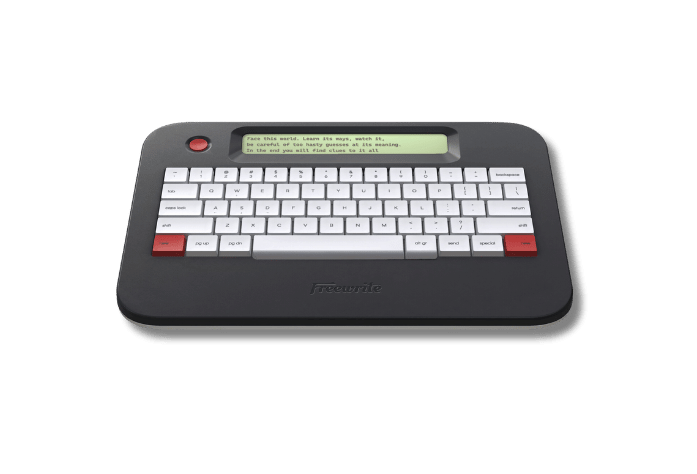
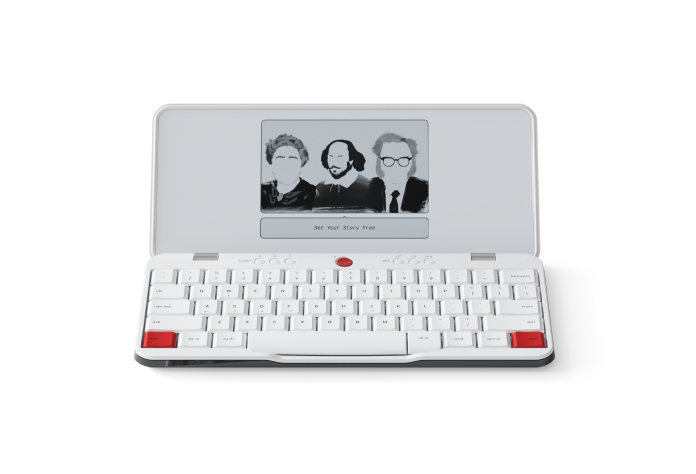
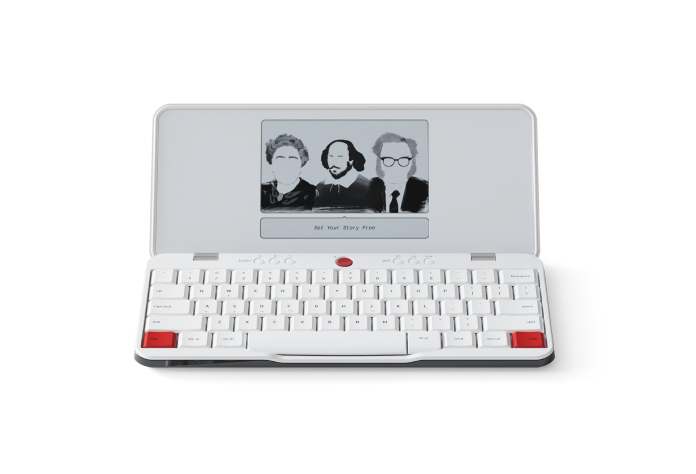
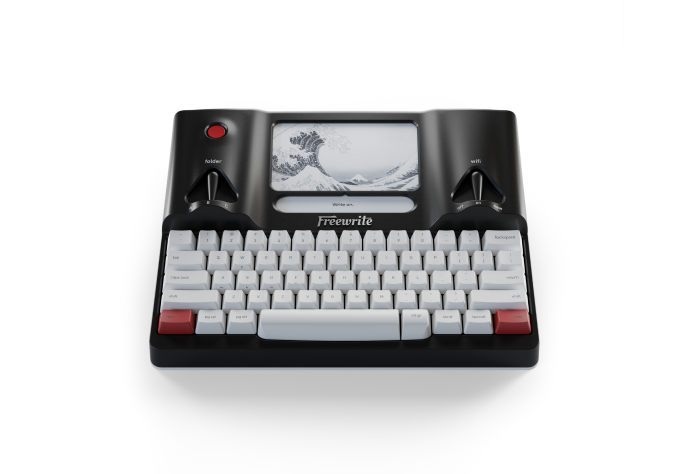
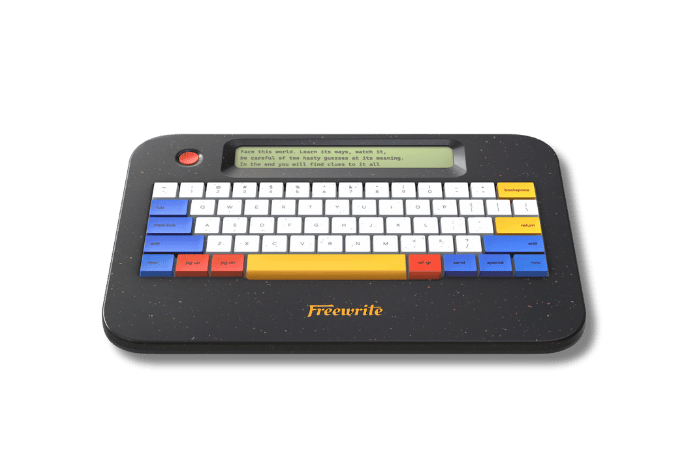
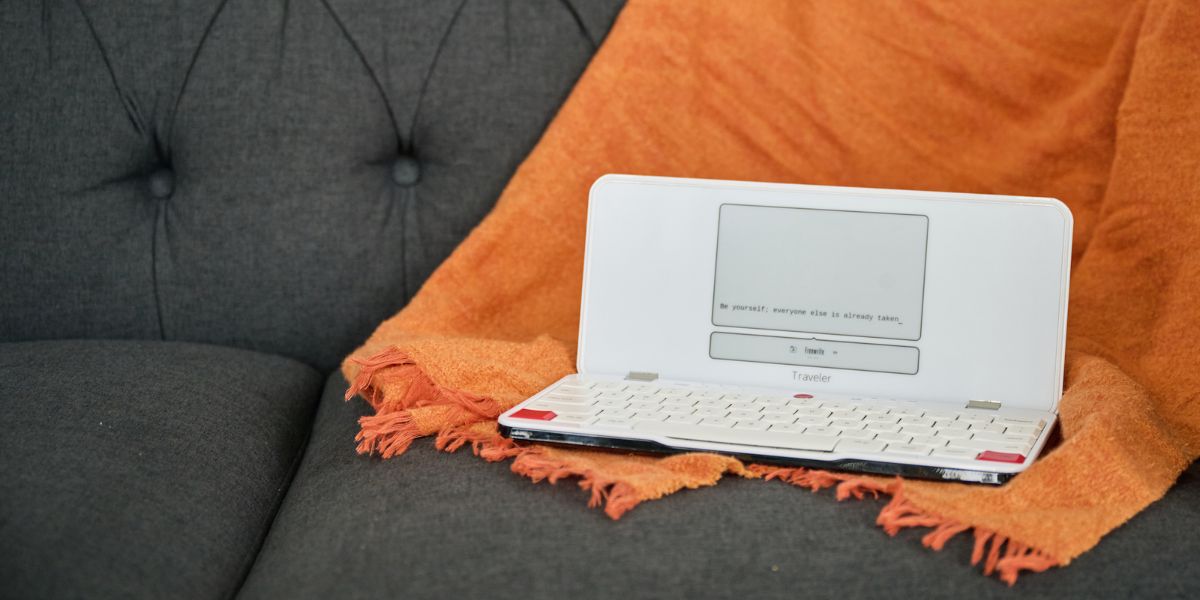
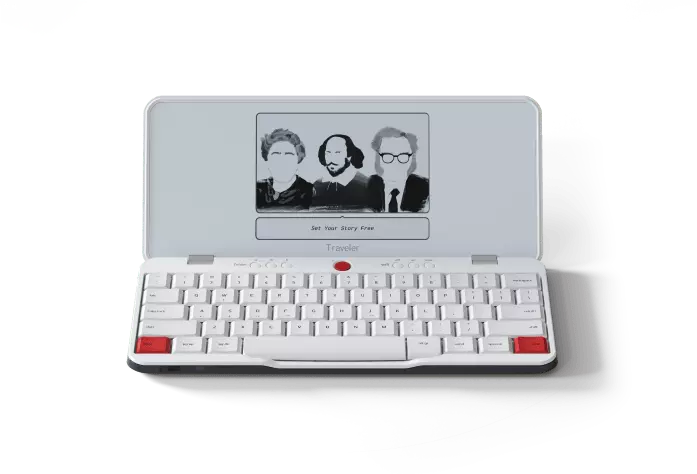
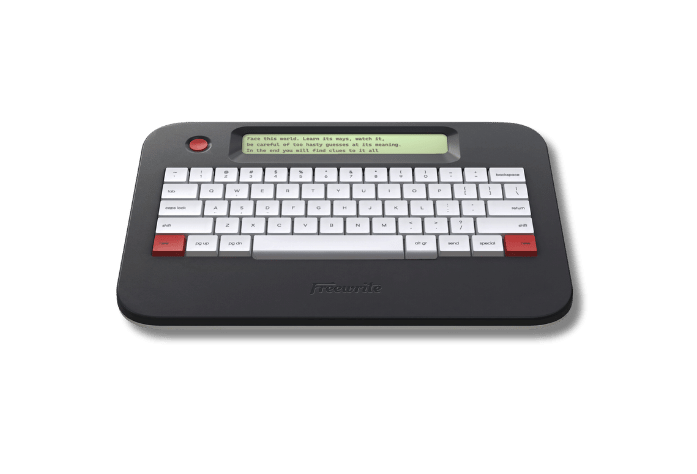
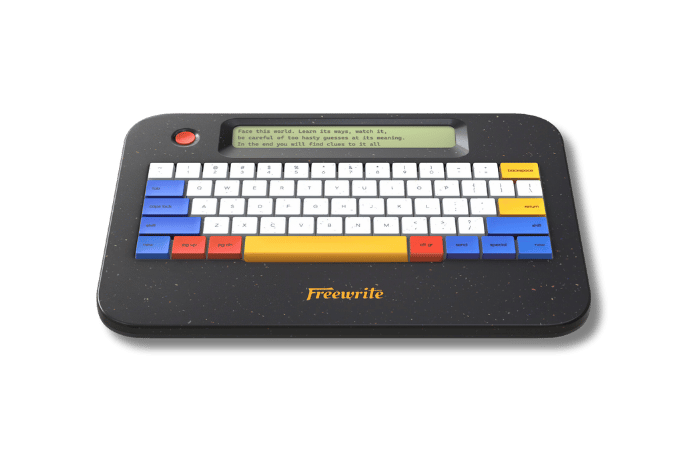
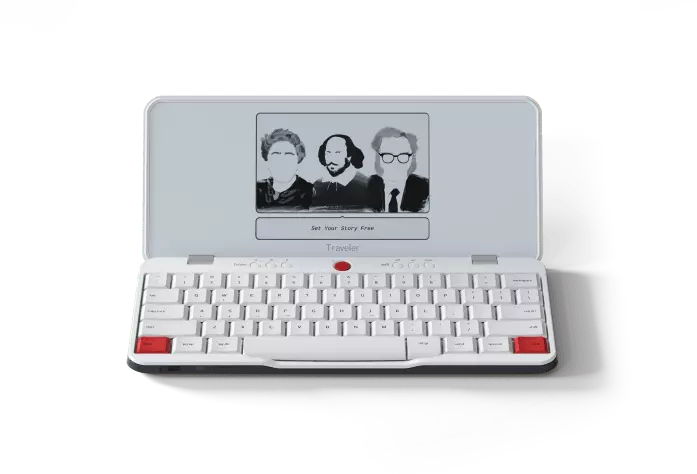
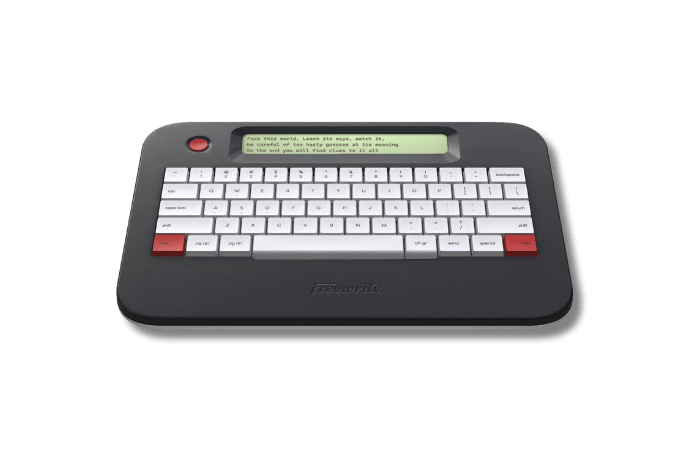
Yes, in the first month that I had Traveler, it rarely left my side. I took it everywhere with me. As I established a more structured writing routine, it found a special place on my bedside table. We transformed a part of our house into a dedicated writing space, and there, I connected an external keyboard to the Traveler, effectively turning it into a desktop writing unit. However, I always knew that when I set up my writing office, I wanted a dedicated desktop device. I had no intention of using my PC for long-form writing (that was strictly reserved for editing), and I had been eyeing the Smart Typewriter.
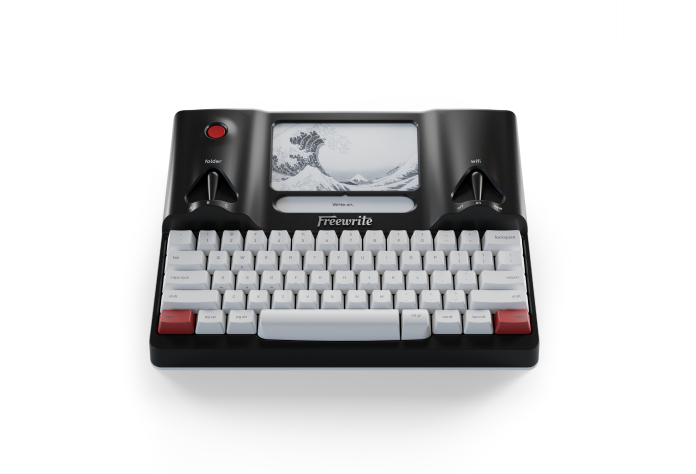
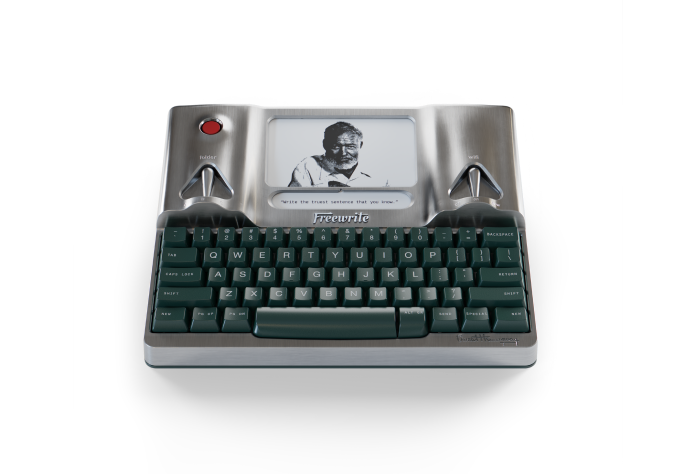
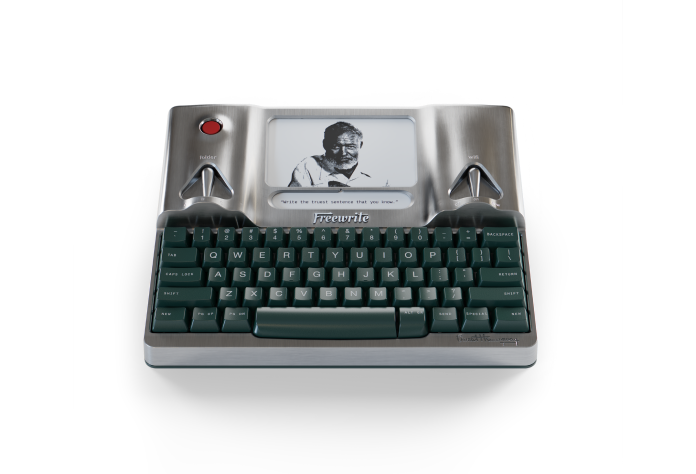
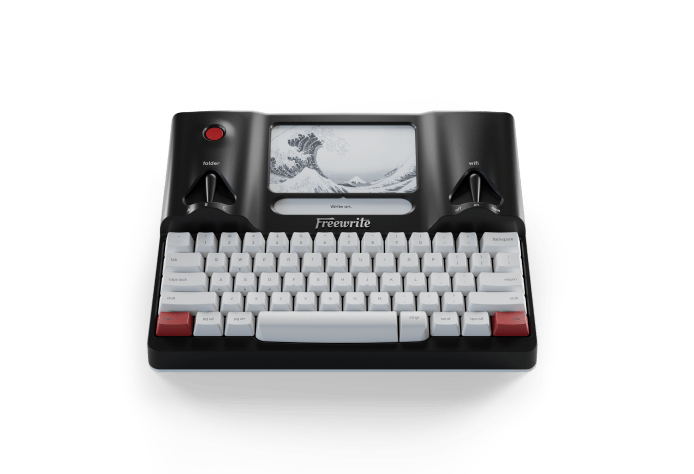
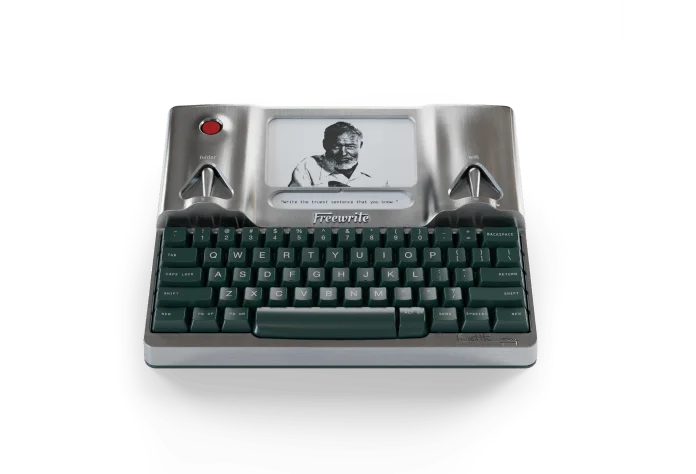
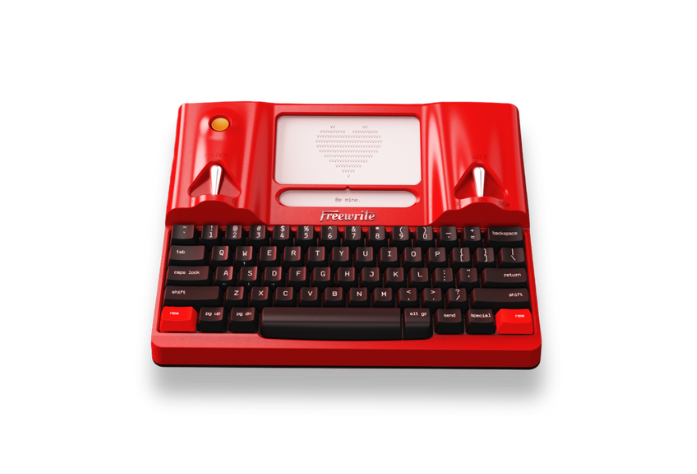
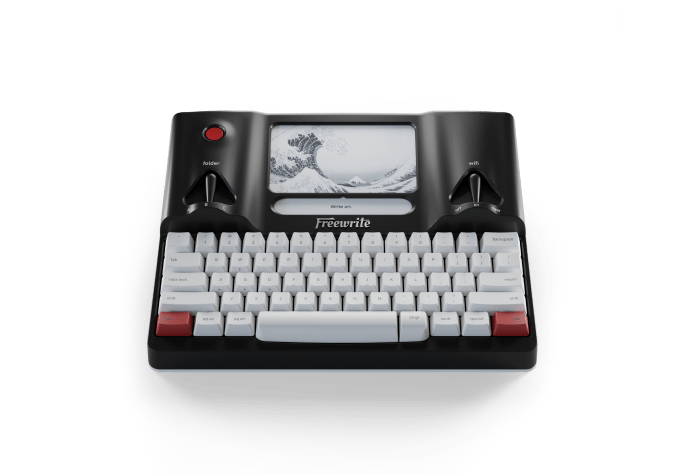
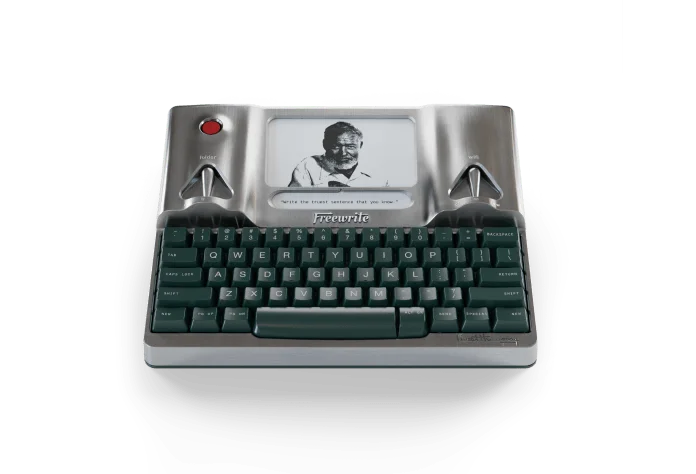
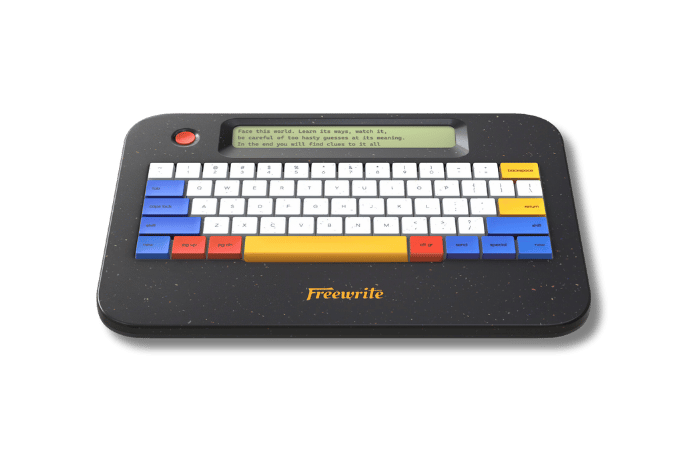
The decision between the standard Smart Typewriter and the Hemingwrite presented a dilemma, but the Hemingwrite's aesthetics were irresistible! After some contemplation, I made the decision to go for the Hemingwrite (thanks for the pay-over-time option, by the way!). It arrived at my doorstep just two days later, and I was over the moon. I find it nearly impossible to resist the urge to start typing every time I glance at it.
What genre(s) of fiction do you write?
My first piece of serious writing, Halloween 5, was more of a personal challenge, a test to see if I could actually complete a project. It took me a year to finish the book (my father was a huge help in the editing department), and by the time it was done, I was exhausted (as much as I love it) from all the slashy, stabby content.
I felt the need to explore something different, so I started delving into more supernatural fiction with a series of short stories. However, even in my drama and romance-focused stories, there's often a subtle undercurrent of horror. I just can't seem to let go of horror completely!

Who are some of your literary influences?
Stephen King reigns supreme at the top of my list (as I'm sure he does on many others). I love his knack for character development, a skill I took to heart. Halloween 5 as a film didn't invest much time in character development, and I aimed to rectify that shortcoming in my novelization. I believe that my exposure to King's work significantly aided me in that department.
One of my major writing priorities is to incorporate elements that make the audience squirm, and authors of the more gnarly, extreme horror, like Duncan Ralston ("Woom"), Aron Beauregard ("The Slob"), Edward Lee ("The Bighead"), and Eric LaRocca ("Things Have Gotten a Lot Worse Since We Last Spoke") come to mind. Their works have left a lasting impact on me.
No, seriously, there are images that will NEVER leave my head.
You're a musician, as well. How does music affect your creative process?
I can't write without it. In the realm of music, John 5 (known for his work with Rob Zombie and Motley Crue) is undoubtedly my biggest influence. Witnessing his career evolve over the past two decades has been a true pleasure. If you haven't already, do check out his solo instrumental albums like "Vertigo," "The Devil Knows My Name," and "Careful With That Axe" — they're absolutely mind-blowing!
However, when I'm in writing mode, I turn to film scores for inspiration. Find my suggested horror playlist below to see what keeps me motivated and in the creative zone.
Why do you think people are drawn to scary stories?
I should only really speak for myself in this regard, but I believe my reasons are shared by many. We are drawn to the themes that horror presents us because they resonate with deep-seated aspects of our human experience.
Personally, I grapple with a rather intense fear of death, to the extent that I occasionally experience panic attacks when I dwell on the subject, but sometimes, the thoughts just come. It's terrifying. This fear has been a lifelong challenge for me, particularly as an atheist, where my belief is that death leads to eternal nothingness. It's a concept that can really mess with one's day-to-day.
So, why do I immerse myself in horror? Why confront the very thing I fear the most? While I appreciate the gore and intensity often found in horror fiction, what truly resonates with me is when the heroes persevere and live to fight another day. When I witness characters like Laurie Strode and Nancy Thompson standing up to the likes of Michael Myers and Freddy Krueger, I feel a sense of empowerment. When I see the Loser's Club facing off against Pennywise, fully aware that they could be literally eaten to death, or worse, trapped in "It"'s Deadlights, I'm deeply inspired. It instills in me a real desire to resist the inevitability of death at every turn, or at the very least, to embrace life with all its vigor.
We only have this one life, and I believe we should shout, fight, kick, and scream our way through it until the end. Death will ultimately claim us, there is no doubt about that, but I'm convinced that we don't have to make it easy for death to do so. I believe we need to kick death's ass as much as humanly possible until the inevitable.

Where can people read your work?
Currently, my unofficial novelization for Halloween 5: The Revenge of Michael Myers can be read for free on my website. I'm eagerly looking forward to releasing more of my work in the future!
What are you working on next?
I feel the need to move beyond the world of Michael Myers and carve out my own creative path. I'm currently immersed in developing a new set of stories for a short story collection entitled "Empty Stomach."
Short stories can be tricky, but I think I've got a handful of good ones so far. Among them, you can expect to encounter a haunting tale set within the walls of a mysterious casino, an exploration of an obsession that transcends the boundaries of the living, and a poignant story of a departed lover offering solace to the bereaved partner they left behind. This has been quite a journey, and my goal is to have it ready for release by July 2024.
Jake's Horror Playlist
- John Carpenter and Alan Howarth's Halloween score
- The Firestarter soundtrack album by Tangerine Dream
- The Fog score by John Carpenter and Alan Howarth
- Goblin's mesmerizing score for Suspiria
- Disasterpeace's score for It Follows
- Escape from New York score by (you guessed it) John Carpenter and Alan Howarth
- Kyle Dixon and Michael Stein's work on Stranger Things
--

When not writing, Jake Martin is an avid guitar player and film collector. He is also a full-time assistant teacher for a non-profit organization. He lives in Sioux Falls, South Dakota, with his partner, Jimmy; a dog named Donut; two cats, Kitsu and Mochi; and two guinea pigs named Picasso and Pumpkin. He's an animal lover, but that's quite enough of them for now, don't you think?
Follow him on Instagram @jakemartintele or Twitter @jakemartinwrite, or visit his website.