

devices
Find Your Freewrite
Prolific writing sessions are born on dedicated drafting tools. Maximize your productivity by writing 2X more.


September 29, 2026
•
2 min read
Official Rules for the Promotion
No purchase necessary to enter or win. A purchase will not increase your changes of wining. Void where prohibited or restricted by law.
1. Eligibility
The "Hemingwrite Giveaway" ("Promotion") is open only to legal residents of the 50 United States and the District of Columbia, who are 18 years of age or older at the time of entry. Employees, officers, and directors of Astrohaus ("Sponsor") and its affiliates, subsidiaries, advertising and promotion agencies, and their immediate family members (spouse, parents, siblings, and children) and/or those living in the same household are not eligible. The Promotion is subject to all applicable federal, state, and local laws and regulations.
2. Promotion Period
The Promotion begins at 8 a.m. EST Sept 1, and ends at 11:59 p.m. EST on September 30 ("Promotion Period"). Sponsor's computer is the official timekeeping device for this Promotion.
3. How to Enter
There are two (2) ways to enter:
a) Purchase Method:
During the Promotion Period, fill out the form here: https://getfreewrite.com/a/ps/landing_pages/28761/hemingwrite-giveaway-2026Limit one (1) entry per person.
4. Prize
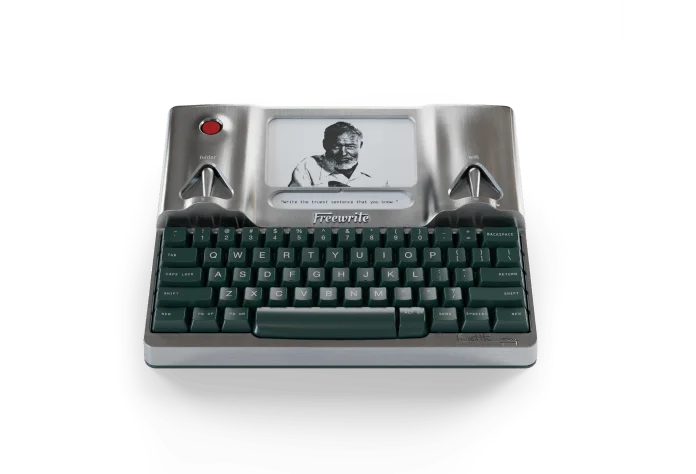
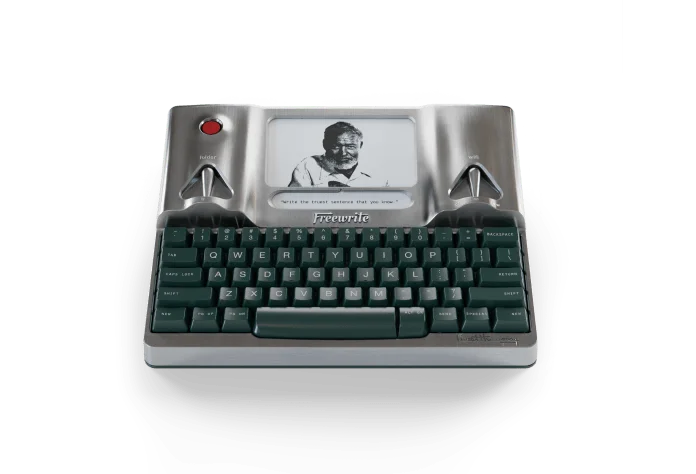
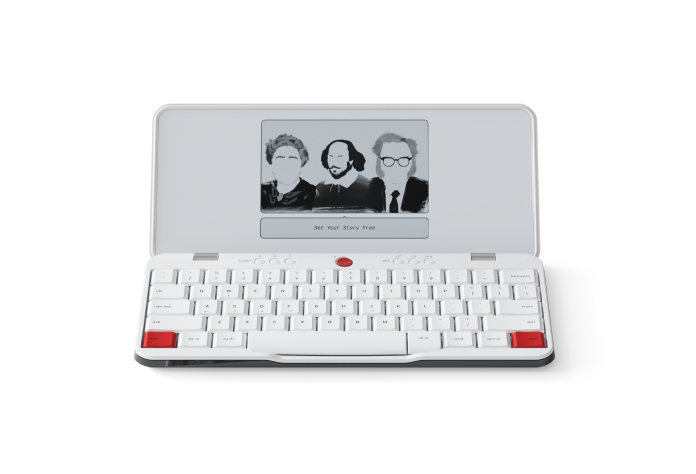
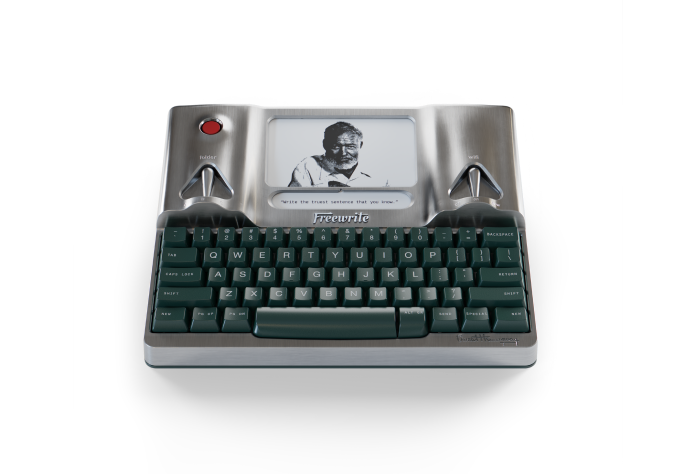
One (1) Grand Prize: A Freewrite Ernest Hemingway Special Edition Smart Typewriter (value $1,099.00 USD).
Approximate Retail Value (“ARV”): up to $1,099.00 USD.
5. Winner Selection
One (1) potential winner will be selected in a random drawing on or about October 1, from among all eligible entries received during the Promotion Period. Odds of winning depend on the total number of eligible entries received.
6. Winner Notification
The potential winner will be notified by email within five (5) business days following the drawing. The potential winner may be required to complete and return an Affidavit of Eligibility, Liability & Publicity Release within seven (7) days of notification. If a selected winner cannot be contacted, is ineligible, fails to claim the prize, or fails to timely return the required documents, the prize may be forfeited and an alternate winner selected.
7. General Conditions
By participating, entrants agree to abide by these Official Rules and the decisions of the Sponsor, which are final. The Sponsor reserves the right to cancel, modify, or suspend the Promotion if it becomes technically corrupted or cannot be conducted as planned. The prize is non-transferable. All federal, state, and local taxes are the responsibility of the winner.
8. Limitation of Liability
Sponsor is not responsible for lost, late, misdirected, damaged, or illegible entries or for any technical or human error that may occur in the administration of the Promotion.
9. Privacy
Any personal information collected will be used in accordance with the Sponsor’s Privacy Policy located at https://getfreewrite.com/pages/privacy-policy.
9. Sponsor
Astrohaus
1632 1st Avenue #29179
New York, NY 10028

September 18, 2026
•
5 min read
I spent a decade correcting people's grammar. (Not in an insufferable way. I was getting paid to do it.) Now I write without correcting my own.


September 18, 2026
•
7 min read
Whether he's acting or writing, Wesley MacInnes finds a starting point for each creative project in freewriting.