overlaylink

5 Writing Lessons from Acclaimed Poet & Environmentalist Wendell Berry

Annie Cosby
September 02, 2026 | 6 min read

Kentucky farmer and poet Wendell Berry entranced readers across the globe with his poems extolling the power of knowing the natural world. 

For writers who want to do the same, there’s deep knowledge to be gleaned from Berry.

Born in 1934 to a farming family that had worked the same Kentucky ground for generations, Wendell Berry went on to have Stanford fellowships, a post at NYU, and a nascent career among the literary establishments of the coasts. But he ultimately went home, bought a farm, and spent the rest of his life proving that a writer could be just as ambitious rooted in one place.

He spent the next six decades (and more than 50 books) making the case for living local: focusing on land, neighbors, and the slow accumulation of local knowledge, the type that can’t be googled or optimized. He was also, of course, a fierce activist warning against industrial agriculture, environmental heedlessness, and a culture that had lost touch with the physical world.

What can we learn about writing from Wendell’s lifelong experiment in a rooted, unhurried life tied to land and community?

Well, it turns out, quite a lot.


1. Writing is work.

"There are, it seems, two muses: the Muse of Inspiration, who gives us inarticulate visions and desires, and the Muse of Realization, who returns again and again to say, ‘It is yet more difficult than you thought.’ This is the muse of form. It may be then that form serves us best when it works as an obstruction, to baffle us and deflect our intended course... The mind that is not baffled is not employed. The impeded stream is the one that sings."

Berry believe that writing was work. Even more importantly, he preached that when the "form" — that is, the attempt to put visions and ideas into words — became difficult, that's when it is most important. That's the "real work."

"The mind that is not baffled is not employed."

2. Language is physical.

"At first glance, writing may seem not nearly so much an art of the body as, say, dancing or gardening or carpentry. And yet language is the most intimately physical of all the artistic means.”

According to Berry, physicality was one of the major things missing from our modern world. Our ability to go outside and be, physically, in nature. Our willingness to pay attention to the physical act of writing. This physicality is integral to the human experience, and it's all about paying attention. (More on that later.)

Writing is the same. Think about it: words, phrases, sentences, they all come from inside us. Literally inside our body — our brain, our heart, up through our threat as a blast of air, or as an electrical signal down through our arms into our fingers.

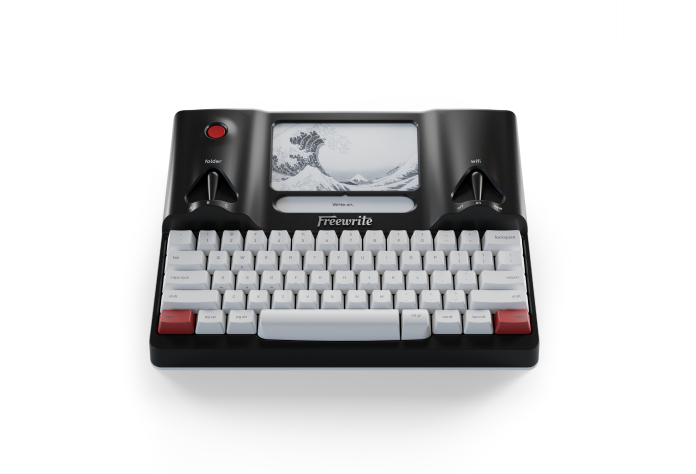
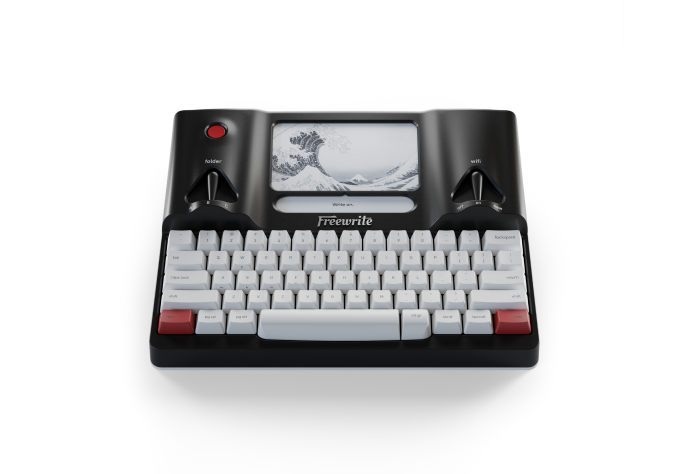
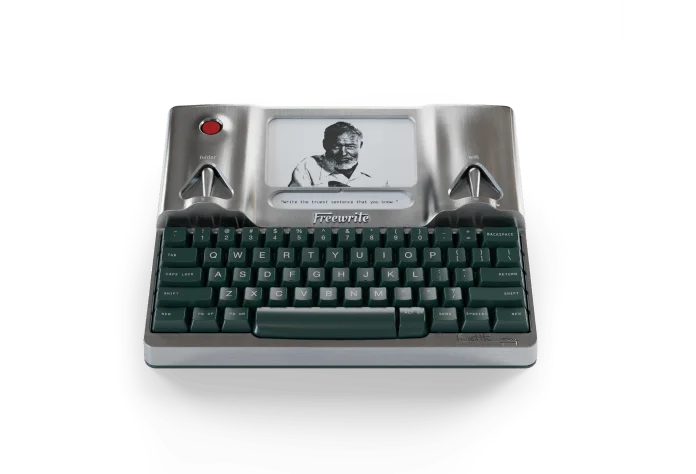
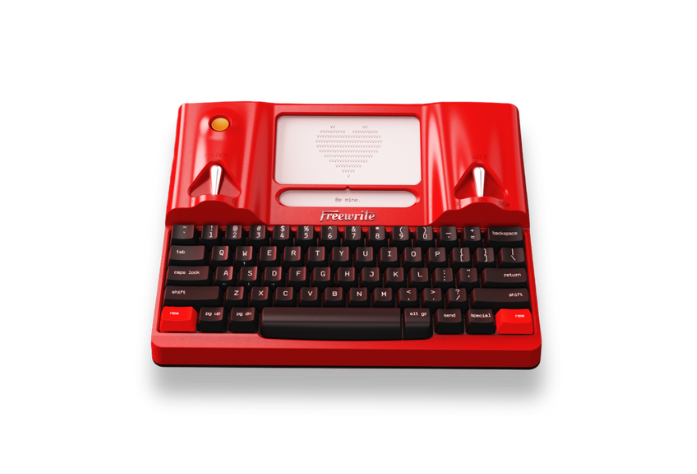
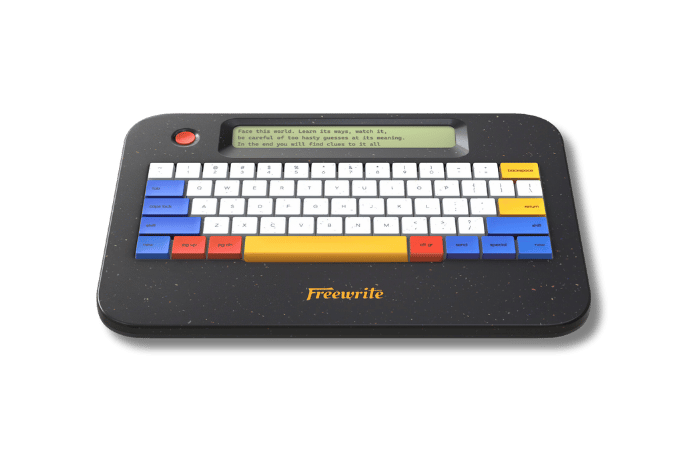
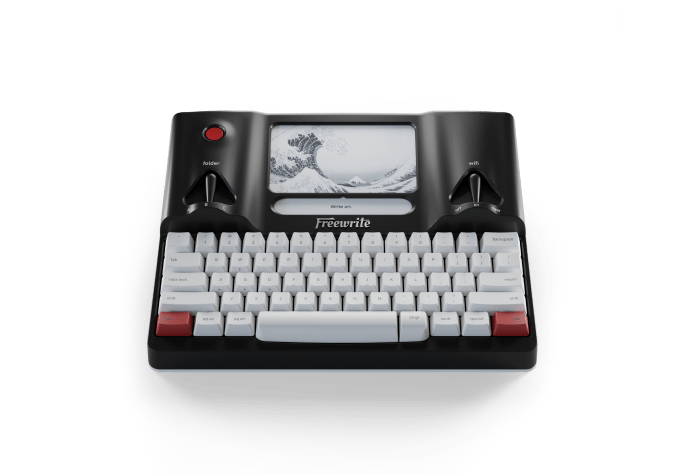
Some writers stay connected to this physicality from writing with pen and paper. Others find that deep connection in the physical feedback of a mechanical keyboard.

If you haven't explored the world of keyboards and key switches, you haven't scratched the surface of the options open to the modern writer in channeling a physical connection with writing.

3. Write for you.

"A poet could not write a poem in order to earn a place in literary history. His place in literary history is another subject, and such a distraction. He writes because he has a poem to write, he knows how, the work pleases him, and he has forgotten all else."

Berry's work, while famous and in textbooks around the world, is unpretentious and accessible. This is likely an effect of his belief that the end product or critical reception was inconsequential. He didn't worry about future readers or critics. He wrote because he had a poem to write.

For writers struggling with writer's block, which is often caused by stressful internal or external expectations or the fear of failure, this is invaluable advice.

Write because the work pleases you. Nothing else.

He didn't worry about future readers or critics. He wrote because he had a poem to write.

4. Inspiration lives in a lack of expectation.

"When the weather is good, sometimes when it is only tolerable, I am drawn to the woods on the local hillsides or along the streams… In such places, on the best of these sabbath days, I experience a lovely freedom from expectations — other people’s and also my own. I go free from the tasks and intentions of my workdays, and so my mind becomes hospitable to unintended thoughts: to what I am very willing to call inspiration."

Let's talk a little bit more about expectations. The same way Berry eschews the expectations of critics or future readers when he's writing, he also lets go of all expectations or rumination of the mind in order to invite inspiration.

He equates inspiration to "unintended thoughts," an idea shared by many prolific and beloved authors. (Think of Julia Cameron's concept of author dates. The idea is the same: feed your mind other things, whether it be creative works, or Wendell Berry's wilderness, and let your mind wander.)

Similarly, in What Are People For? Berry says:

"True solitude is found in the wild places, where one is without human obligation. One’s inner voices become audible. One feels the attraction of one’s most intimate sources."

It's no secret that the modern world is loud. For all the convenience technology brings to our everyday lives, it also brings unending notifications, blaring screens, and distraction.

So how, exactly, are we supposed to hear this inner voice?

5. "Make a place to sit down. Sit down. Be quiet.”

"Accept what comes from silence / Make the best you can of it. / Of the little words that come / out of the silence, like prayers / prayed back to the one who prays, / make a poem that does not disturb / the silence from which it came."

If you haven't read Berry's famous poem, "How to Be a Poet," you have homework. Read it here and then try our Wendell Berry-inspired writing exercise below.


Try It Yourself: Write Local

Try this Wendell Berry-inspired writing exercise to connect with your literal, geographical place in the world, find a little peace in your day, and invite your inner voice to overcome the deafening sounds of your phone, your computer, your TV...

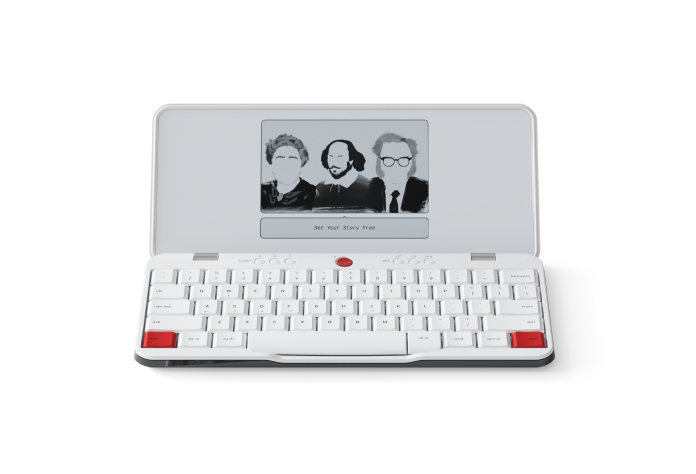
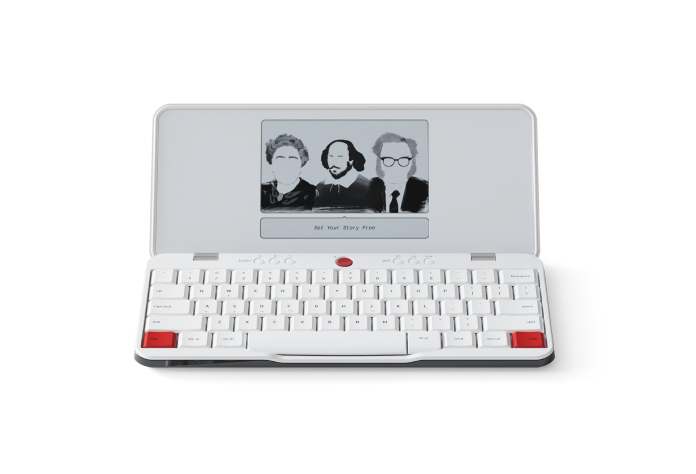
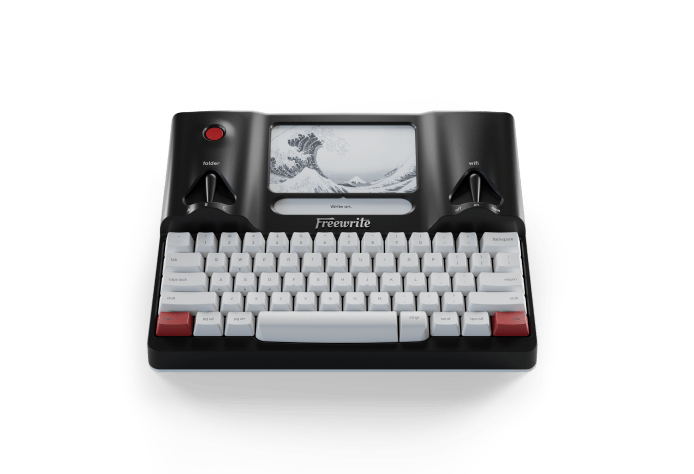
1. Grab your Freewrite & find a place outside. Today.

Maybe you're going on an amazing trip to the mountains or the sea in a few months. That's great, but don't wait for that awe-inspiring view in order to write. This exercise is all about connecting to your everyday natural world.

With a writing instrument in hand, go outside today and find nature, no matter how small. It could be:

  • Your backyard
  • A local park
  • Beneath a lone tree planted in a parking lot
  • That thin strip of grass between the street and the sidewalk
  • An open window

2. Make your chosen spot quiet.

We can hear you now: "But I can't turn off the traffic!"

No, but you can quiet your mind. That might mean turning your phone off, putting your computer in a different room, or asking those you live with for a few moments of solitude. (Parents, we can hear you rolling your eyes. Kids who are old enough can participate in this writing exercise!)

Do your best.

3. "Breathe with unconditional breath the unconditioned air..."

Once you're set up in your spot, and have shut off as many distractions as you can, take a deep breath. Slowly release it, feeling the breath leave your lungs.

Repeat 10 times.

3. Write.

Set a timer for 5, 10, or 15 minutes — however long you have — and start writing. Here are some prompts to get you started:

  • Write an inventory of every item that is in your immediate vicinity.Everything from the weeds to the sunlight to the Big Mac wrapper.
  • Catalogue every creature within one mile of you right now and give them a name.Not just "Rabbit," but a real, individual name. Be imaginative about what may be in the ground beneath you or in the sky above you.
  • Write a list of all the things from the earth that have sustained you in the past month. Food, water, plants, animals, soaps, cosmetics, chemicals, etc.
  • Pretend the spot you've chosen for this exercise is a living creature and write a short story from its point of view. What does this stretch of sidewalk see every day? Or how do people treat this park? How does the space itself feel about that?
  • Write a scene in which a character is performing a physical, repetitive chore, and focus on the rhythm and physical sensation. Some ideas: digging a hole in the garden, kneading dough, chopping wood. Does that physicality help quiet their mind (and yours)?
  • Write a to-do list for Future You about what it takes to get to this point of absorption in your writing. Start with: "Sit down. Be quiet.”
August 26, 2026 5 min read

Freewriter Mike Somerby left a lucrative marketing career in e-commerce to start a print-only literary magazine by and for Montanans. Yes, you read that right.

We sat down with Mike to find out how ... and why.

Mike Somerby identifies as a writer — with some reservation.

"I think all who write are 'writers,'" he says, "even if the writing itself amounts to a simple letter to a friend or a personal journal entry."

We couldn't agree more. And we're thrilled that this particular writer writes his essays on Freewrite. Maybe that's why we felt comfortable asking him:

What inspires a professional brand marketer to leave his 9-5 and jump feet-first into the literary world of Bozeman, Montana?

Luckily, he was happy to tell us.

AC: Before we get into the lit mag, it actually isn't your first foray into the literary community, right?

MS: For about ten years — the lion's share of my professional chapter — I worked, in some capacity, as a brand marketer. Last spring, while enduring a particularly grueling stint as CMO for a Montanan e-commerce brand (yes, those exist), I found myself revisited by the remarks of an old journalism school professor: from his perspective, journalism students who apply their storytelling talents toward PR and marketing have crossed over to "the dark side."

While I find this a touch heavy-handed, I get the point, and I believe his notion resurfaced to meet the moment: we live in a world sorely hurting for analog (human) creativity and high-quality longform.

So I quit, traveled west with my dog in a 1986 U-Haul I'd converted into a camper, and plotted.

Step one: I founded Pulphead, a lounge (named after John Jeremiah Sullivan’s seminal 2011 essay collection) where Bozeman writers commune and grind out their prose until 2 a.m. Entry is a flat $5, which comes with unlimited drip coffee and tea.

Step two: leverage the Pulphead regulars and its online following to secure contributors for my new literary magazine, ANEMONE. Thus far, everything is going to plan.

We live in a world sorely hurting for analog (human) creativity and high-quality longform.

AC: Why do you think it's so important to create and preserve these spaces for authentic writing?

MS: Writing is a solitary act. Nonetheless, younger generations, in particular, struggle to forge IRL community in the way older generations might understand as an ordinary facet of being human.

By building a space that is as homey as it is supportive of their literary interests, we’re not only helping these individuals find their birds of a feather, but also providing them with a dojo that mandates setting aside blocks of time away from phones, home lives, and the other distractions. Win-win?

Incidentally, Livingston boasts the highest per-capita concentration of professional writers anywhere in the country. Couple this with another statistic — that Montana has more bookstores per capita than any other state — and it becomes clear southwest Montana is as fertile a place as any to invest in literature and its related industries.


AC: That's so interesting. What have you learned from being in community with creatives in Bozeman?

MS: In terms of writing, I've learned plenty. What has excited me most, however, is what I’ve learned from a small group of Indigenous women who come to the shop to write poetry and make beaded clothing in the traditions of their respective tribes (most notably, Crow, Cheyenne, Shoshone).

This is a group I’d otherwise have limited opportunity to engage with outside of Pulphead, and learning about their traditions, beliefs, hopes — even a little vocabulary — through firsthand conversation has proved incredibly edifying.

AC: And you mentioned you've seen Freewrites pop up in Pulphead. You use one, right?

MS: Yes. About seven years ago, not long after moving to Montana from New York, I purchased an Olivetti Lettera 32 typewriter from eBay. It appeared that a romanticizing of my newfound remoteness had rekindled my interest in writing.

I loved the mechanical feel and distraction-free interface, but the inability to edit line by line proved a notable annoyance for a mind habituated to modern computers. A few years down the road, some digging for alternatives led me to a blog post about smart/electronic typewriters. Voilà.

I purchased a Freewrite Gen3 Smart Typewriter, and I've been hooked ever since.

AC: That's awesome. So tell us about ANEMONE. What is it?

MS: ANEMONE is a print-only magazine (printed in a traditional broadsheet newspaper format). As for for theme, broadly, the world as told by Montanans. Short fiction, creative nonfiction, poetry, reportage, photography, and visiual illustrations comprise the submission categories.

AC: Print-only!

MS: Print is only dying because we let it.

AC: Is there a story about the name?

MS: Most people know the word anemone to describe a family of flowers — a 200-plus-species family of buttercups, comprising varieties both wild and domesticated. Dubbed “windflowers,” their delicate petals are said to blow open in the breeze; the ancient Greek word anemos means “wind.” I was drawn to the metaphorical value of beauty and how it can be revealed to us through an invisible force.

To add another layer, when I was a boy my father and I would spend weekends at the beaches north of San Francisco, where I was born and raised until I was seven. We would study the massive turqoise, kelly green, and purple sea anemones clinging to rocks left exposed by the receding Pacific tides (as to why, I can't say, outside of them looking funny, almost alien). A good memory.

Finally, “Anemone” is the name of an exquisite song by The Brian Jonestown Massacre, an irreverent and controversial rock band led by Anton Newcombe, an obsessive creative who rejects the surrender of culture and art to commercial interests. The track has a hold on me. It's like a portal to another era.

AC: Why do you think this sort of analog creativity is important?

MS:  I'm told the unending deluge of digital interface is leaving humans less and less capable of “deep work.” Will we ever know the difference?

Will we recognize what a society incapable of deep work looks like compared with those that came before it? Or will the transition manifest as a gradual degradation of quality, much as Coca-Cola was slowly, but surely, divorced from real sugar, such that to taste what Coke used to be like, one must order a Mexican Coke, still made with real cane sugar?

For me, analog perspective (and any creativity wrung from it) is rooted in continuity, tangibility, lived experience, slowness, spatial relation, nuance, emphasis on process, and grace for imperfection — antithetical to one of replicability, speed, binary outcomes, predictability, and optimization.

I prefer the former, and I suspect those who prefer the latter don't read or write much — life is a beautiful, taxing mess, and good writers find merit in this duality.

For me, analog perspective (and any creativity wrung from it) is rooted in continuity, tangibility, lived experience, slowness, spatial relation, nuance, emphasis on process, and grace for imperfection — antithetical to one of replicability, speed, binary outcomes, predictability, and optimization.

AC: Who is invited to submit to ANEMONE?

MS: We do limit submissions to Montanans, past and present, though we will feature writers from other states should the content of their writing bear an obvious relation to Montana — a requirement not imposed on Montanan writers.

All information regarding submissions can be found at www.anemonereview.com, along with all other facets of the magazine.

August 26, 2026 1 min read

Love the Freewrite 500? Here are 3 more writing contests for competitive short fiction writers.

1) Writers' Hour Magazine Prompts

The London Writer's Salon (a global writing group — no London residence necessary!) regularly host a writing contest via their Writers' Hour Magazine. Want to know a secret? Their September theme is all about freewriting.

Join them for a free workshop, Introduction to Freewriting, on Thursday, September 3, and get all the details about the contest.

The winner of the contest will win something Freewrite-shaped. 👀

2) NYC Midnight Challenges

This organization (again, no affiliation with NYC necessary) regularly hosts short story contests. Their next challenge is all about writing a rhyming story.

Learn more and register here.

Note: NYC Midnight writing contests generally have a fee to enter.

3) Henshaw Press Short Story Competition

This short story competition is open to anyone over age 16. And the best part? There is a cash prize, and profits go to charity.

Learn more here.

July 30, 2026 2 min read

PRESENTED IN COLLABORATION WITH

Calling all micro-fiction storytellers! 🏁

For the second year in a row, Freewrite is teaming up with Grant Faulkner, co-founder of the Flash Fiction Institute and author of The Art of Brevity, to bring you the fastest, most adrenaline-pumping writing event of the year.

Whether you're a seasoned writer or a creative rookie, the Freewrite 500 is your chance to rev up your imagination, write a 500-word story, and win big.

You do not need to own a Freewrite to participate.

[REGISTRATION CLOSED]


How It Works

🎟️ Fill out the form above to secure your spot. It's totally free. (You must register to participate.)

📖 Watch the free mini flash fiction lesson by Grant Faulkner, which includes the announcement of the prompt for the contest. WATCH IT HERE.

📝 You'll have the weekend to finish and submit your 500-word storybased on the prompt by end of day on Monday, August 17. Entries must be 500 words or less. The entry form is plain text. Any necessary formatting should be noted in [brackets]. [SUBMISSIONS CLOSED]

✏️ Our judging panel, led by Faulkner and made up of writers from the Freewrite team and the Flash Fiction Institute, will judge each piece based on: length (500 words), relevance to the prompt, and creativity.

🥇 NEW THIS YEAR: The panel will select three finalists, and then announce one grand prize winner.

All work must be submitted by 11:59 p.m. ET on Monday, August 17, 2026.

The Prize Pack

One winner will receive:

  • Publication on the Freewrite blog and Flash Fiction Institute blog
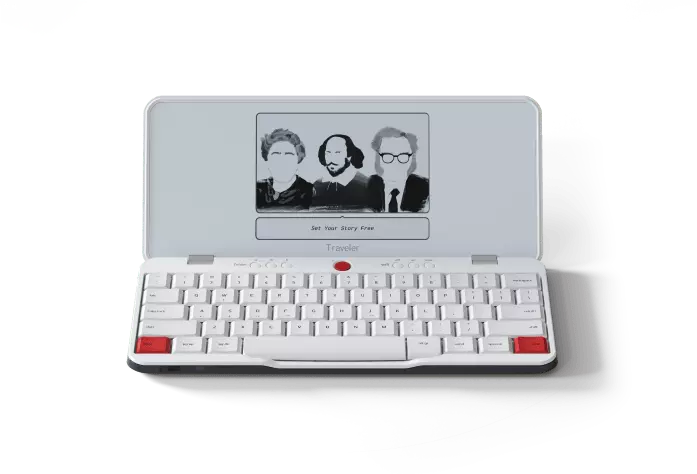
  • 1 Freewrite Traveler
  • 1 hour-long one-on-one coaching session with Grant Faulkner
  • 1 free Flash Gym session with the Flash Fiction Institute
  • 1 Words Are Hard prompt deck
  • A paperback copy of Set Your Story Free, the ultimate guide to freewriting
  • A digital copy of the opening chapter of Grant Faulkner's book, The Art of Brevity

Second and third place writers will each receive:

  • Publication on the Freewrite blog and Flash Fiction Institute blog
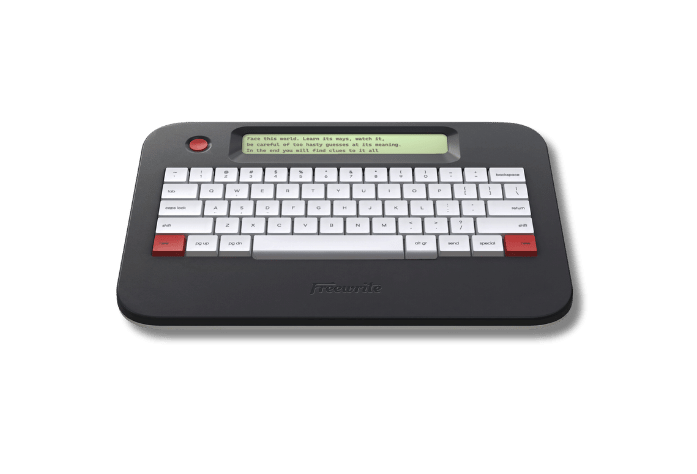
  • 1 Freewrite Alpha
  • 1 free Flash Gym session with the Flash Fiction Institute
  • Words Are Hard prompt deck
  • A paperback copy of Set Your Story Free, the ultimate guide to freewriting
  • A digital copy of the opening chapter of Grant Faulkner's book, The Art of Brevity

The Schedule

  • Thursday, Aug 13: Lesson & prompt announcement
  • Monday, Aug 17: Submissions deadline
  • Monday, Aug 31: Finalists announced
  • Monday, September 7: Grand prize winner announced

Questions? You can reach us at hello@getfreewrite.com.

Write on.

The Freewrite 500 Pit Crew 🏁 

Full contest terms and conditions