overlaylink

Path to Publication: Bobby Miller

Annie Cosby
March 20, 2025 | 6 min read

A book deal without an agent? An agent offer after the book deal?

Learn how writer Bobby Miller took his unconventional publishing journey into his own hands. 

"Big, sick, glorious imagination" - Rainn Wilson

New Jersey native Bobby Miller has been living in LA and making movies for years now. He loves blending genres, from horror to comedy, and his films have premiered at Sundance, SXSW, and Fantasia.

But it isn't until 2025 that the world will read his unconventional debut novel. And that's largely thanks to Bobby's unconventional approach to the publishing process.

I got the chance to pick Bobby's "big, sick, glorious" brain about his approach to publishing...

ANNIE COSBY: You've been writing in different industries a long time, but Situation Nowhere is your debut novel. Congrats! Can you give us the elevator pitch?

BOBBY MILLER: If you enjoyed the American satire of Idiocracy but wished there were more exploding bodies ... boy, do I have a novel for you!

AC: You know, satire just doesn't have enough exploding bodies these days, does it? How long did it take you to write Situation Nowhere?

BM: I started writing in August 2021 and accepted a deal with my publisher in June 2024. So, it was roughly three years, but there was plenty of development time before that.

AC: And did you use Freewrite to write it?

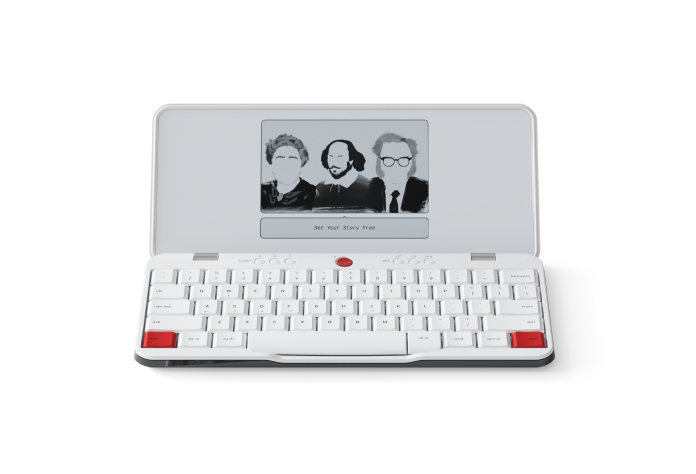
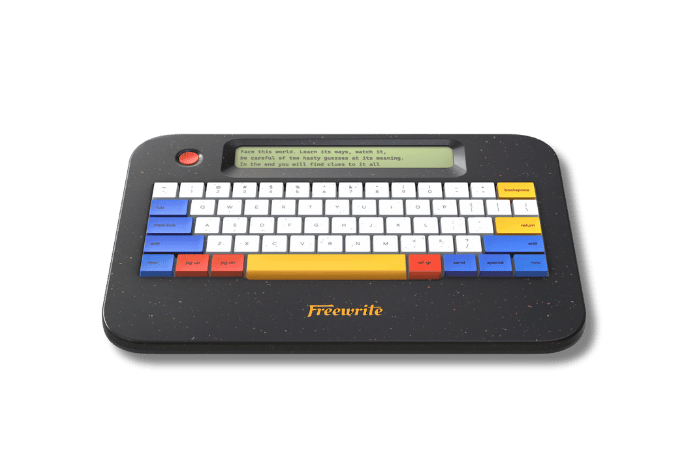
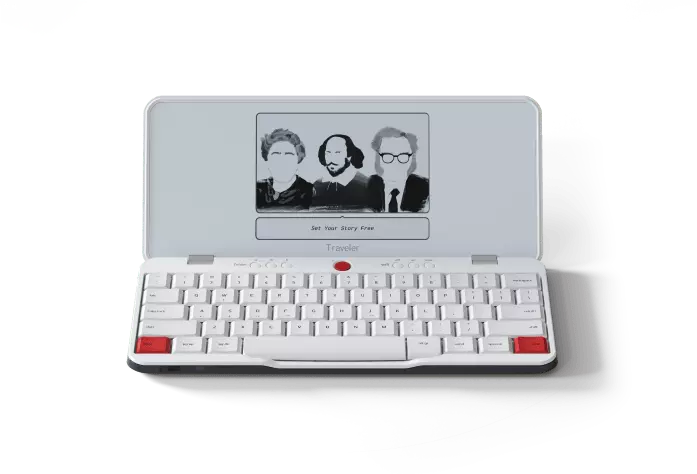
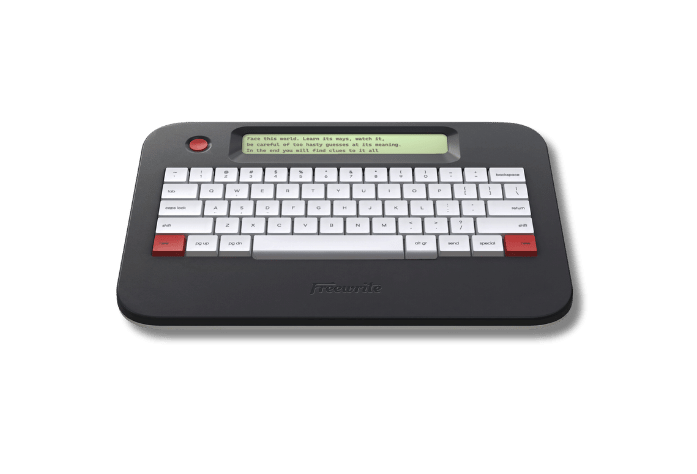
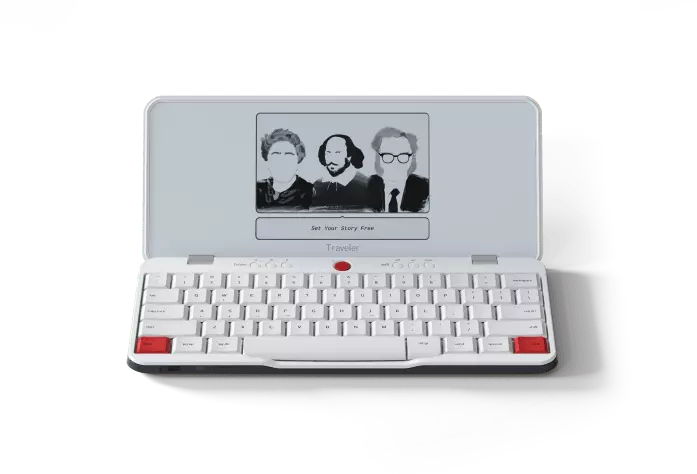
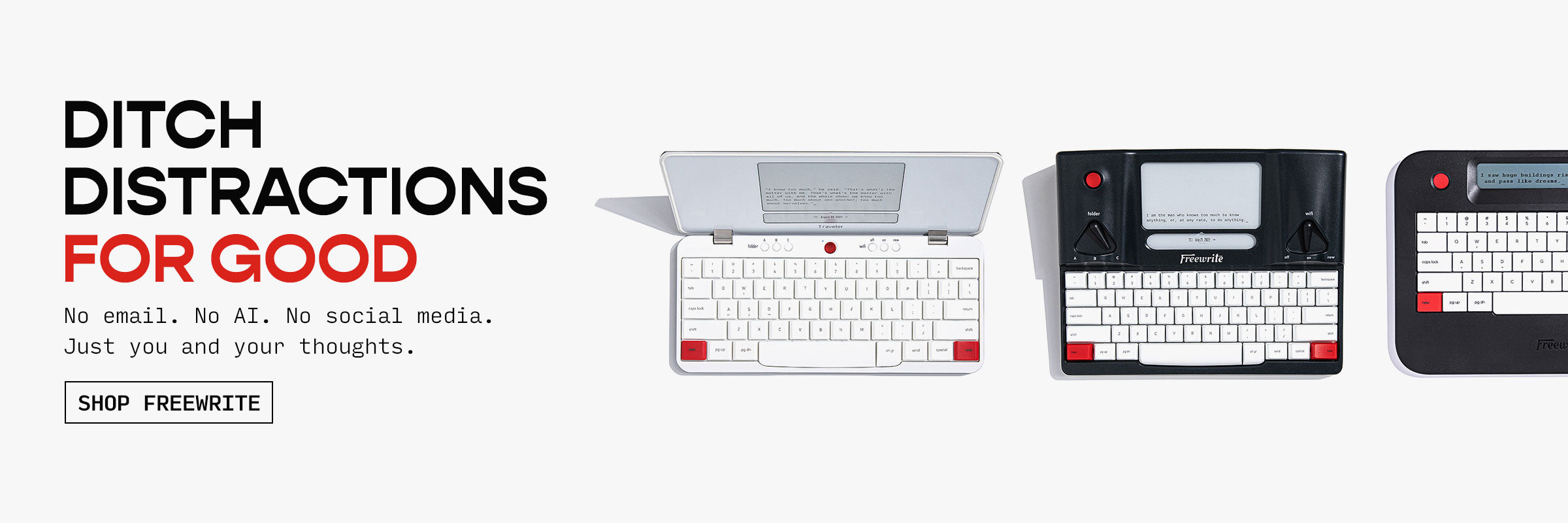
BM: Yeah,  I wrote the entire first draft on Freewrite Traveler, and it was a wonderful experience.

I’m a big fan of the “flow state” mentality — that is, writing without looking back. Surprisingly, I also used it a fair bit during rewrites.

Bobby often wrote in the middle of the night with "a baby who would wake me up" (his firstborn child). So his Traveler was often accompanied by a baby monitor.

AC: Also surprisingly, you got a publishing deal without even having an agent. That's not the traditional route to publishing. Were you submitting to publishers and querying agents at the same time?

BM: I sure was.

I’m a big fan of the “flow state” mentality — that is, writing without looking back.

AC: What made you decide to do it that way?

BM: I read a lot about the publishing industry and follow many authors on social media. It seemed like a lot of exciting work was being done at the indie level, and you don't need an agent to submit to many indie publishers.

So, I was fully on board going indie before I even started writing. Then I received a few offers from indie presses, including Maudlin House. They were the first place to publish one of my short stories during the pandemic.

Financially, the offers for Situation Nowhere were all the same, but ultimately it was Editor-in-Chief Mallory’s enthusiasm for the book and plan of action that won me over.

AC: And then you got an offer from an agent, right? How did that come about?

BM: It happened very late in the game — so late that I was growing comfortable with not having an agent. I queried agents for six months. I had some nibbles, but they were non-committal.

Then, as I was firming up the deal with Maudlin House, an agent swooped in, really pumped on the book and my writing. I kid you not, he was my first choice, so it was very surreal to hear from him so many months later.

We agreed the indie route was best for Situation Nowhere, but perhaps my second book will be different. Who knows?

AC: They do say every book is different. How has the publishing process been so far, compared to your expectations?

BM: Coming from the film and TV industry, indie book publishing has been a dream come true. Maudlin House has been super supportive, has given great notes, and understands the book.

Coming from the film and TV industry, indie book publishing has been a dream come true.

AC: That's so interesting! As authors, we love to complain about the publishing industry — and, sure, there's plenty wrong with it. But I have also heard the movie industry is even more cut-throat and demoralizing.

BM: On my first movie, I don’t think the financiers knew what we were making until it screened at SXSW.

AC: That does seem like the opposite of publishing! What was your editing process like on Situation Nowhere?

BM: Multiple authors advised me to work with a copy editor BEFORE querying, especially because I was a first-timer.

I worked with Sam Pink on the early copy edit, and he’s a genius. He helped me streamline things.

After Maudlin House picked up the book, I also edited it with Mallory and worked with more readers, but by that point, we all felt pretty good about it.

AC: Did you have any say in other promotional materials for the novel, like the cover?

BM: Oh yeah! There were a couple of cover artists in the mix. Alexander Naughton does illustrations for a Substack I like, and he had this image of an exploding head, which felt VERY RIGHT for this book.

He did a completely new cover for us, but Maudlin was very open to the process and great about feedback. And not dumb feedback, mind you, really thoughtful design-oriented stuff.

Shout out to Bulent at Maudlin House too!

AC: And you got a stellar blurb from Rainn Wilson! Well, it's more of an endorsement of your "big, sick, glorious imagination."

BM:I worked with Rainn at his company, SoulPancake, in 2013. I knew he had a dark sense of humor and figured he might dig the book.

I didn't expect such a generous blurb, though. I remember sending it to my publisher and saying, "We gotta put this on the cover, right?" It was really exciting.

AC: As a filmmaker, does adapting your own novel to film sound fun?

BM: That's a tricky question. Because for me, the novel is the thing. It’s the ultimate form of the idea.

I think the only way it would be fun for me is if we treated the book as source material. In other words, I would be completely unfaithful to my book! I’d pretend some other jerk wrote it.

I think that’s the only way to make it work for film or TV. At least with me doing the adaptation. It's a different medium and I truly believe "straight adaptations" rarely work.

[If I adapted my own book to film], I would be completely unfaithful to my book! I’d pretend some other jerk wrote it.

BM:  Late in the process, I used Fiverr to get reader feedback. I found it useful and would start that process sooner. Rip the band-aid off and see what people outside your friend circle think.

AC: Any other things you want to share?

BM:This book saved my life — I really mean it. I started writing it at the tail end of the pandemic, as a new father with lots of uncertainty in the world.

It was an absurd joy to work on it. I hope it will be a balm for others in this chaotic time.

This book saved my life — I really mean it. I started writing it at the tail end of the pandemic, as a new father with lots of uncertainty in the world ... I hope it will be a balm for others in this chaotic time.

"If you're like me, and find Idiocracy to be a more accurate depiction of where we're headed than let's say 1984 or Brave New World, this book is for you! Bobby Miller nails the gallows humor of a rotting, stupid world."

Kent Osborne, Head Writer of Adventure Time

SITUATION NOWHERE

A DYSTOPIAN COMIC NOVEL FOR INSANE TIMES

Barry Gray isn't the sharpest tool in the shed, but that hasn't stopped him from becoming the middle-aged CEO of Atlas Wake, the corporation behind the most addictive energy drink in the world.

After an awkward date, Barry is "X-ed" — a fate worse than getting canceled ... just days before the company's biggest beverage launch. The reason? An ancient social media post.

As the Atlas Wake executives scramble to find a replacement for Barry, they stumble upon Lo, a sardonic barista with no social media history. Lo eagerly steps into the CEO role, anticipating stacks of cash, only to be jolted by a shocking discovery about the company's new energy drink — it's causing people to explode.

Fearing his new life as a social pariah, Barry is rescued by the Brotherhood of the Resigned, a group of X-ed outcasts hiding in the sewers. They believe Atlas Wake is part of a giant conspiracy in which Lo is now entangled. Stories collide as our crew faces a corporate-dominated world on the brink of destruction in this darkly humorous, dystopian tale of power, deceit, and survival.
ORDER NOW AT SITUATIONNOWHERE.COM

December 30, 2025 3 min read

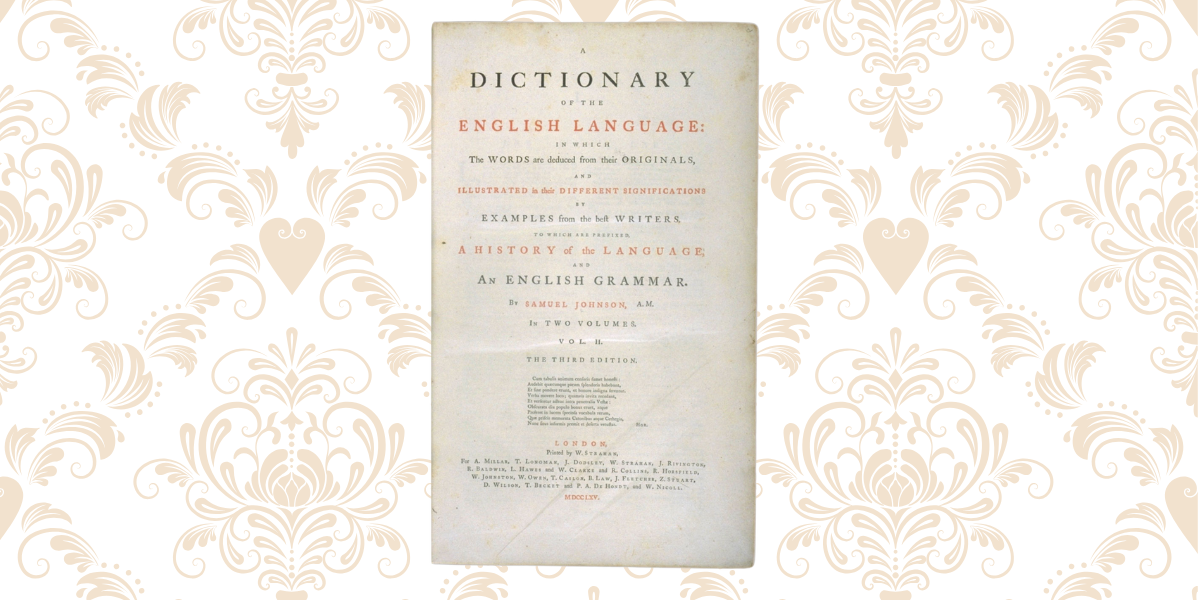
It’s Freewrite’s favorite time of year. When dictionaries around the world examine language use of the previous year and select a “Word of the Year.”

Of course, there are many different dictionaries in use in the English language, and they all have different ideas about what word was the most influential or saw the most growth in the previous year. They individually review new slang and culturally relevant vocabulary, examine spikes or dips in usage, and pour over internet trend data.

Let’s see what some of the biggest dictionaries decided for 2025. And read to the end for a chance to submit your own Word of the Year — and win a Freewrite gift card.

[SUBMIT YOUR WORD OF THE YEAR]


Merriam-Webster: "slop"

Merriam-Webster chose "slop" as its Word of the Year for 2025 to describe "all that stuff dumped on our screens, captured in just four letters."

The dictionary lists "absurd videos, off-kilter advertising images, cheesy propaganda, fake news that looks pretty real, junky AI-written books, 'workslop' reports that waste coworkers’ time … and lots of talking cats" as examples of slop.

The original sense of the word "slop" from the 1700s was “soft mud” and eventually evolved to mean "food waste" and "rubbish." 2025 linked the term to AI, and the rest is history.

Honorable mentions: conclave, gerrymander, touch grass, performative, tariff, 67.

Dictionary.com: "67"

The team at Dictionary.com likes to pick a word that serves as “a linguistic time capsule, reflecting social trends and global events that defined the year.”

For 2025, they decided that “word” was actually a number. Or two numbers, to be exact.

If you’re an old, like me, and don’t know many school-age children, you may not have heard “67” in use. (Note that this is not “sixty-seven,” but “six, seven.”)

Dictionary.com claims the origin of “67” is a song called “Doot Doot (6 7)” by Skrilla, quickly made infamous by viral TikTok videos, most notably featuring a child who will for the rest of his life be known as the “6-7 Kid.” But according to my nine-year-old cousin, the origins of something so mystical can’t ever truly be known.

(My third grade expert also demonstrated the accompanying signature hand gesture, where you place both hands palms up and alternately move up and down.)

And if you happen to find yourself in a fourth-grade classroom, watch your mouth, because there’s a good chance this term has been banned for the teacher’s sanity.

Annoyed yet? Don’t be. As Dictionary.com points out, 6-7 is a rather delightful example at how fast language can develop as a new generation joins the conversation.

Dictionary.com honorable mentions: agentic, aura farming, broligarchy, clanker, Gen Z stare, kiss cam, overtourism, tariff, tradwife.

Oxford Dictionary: "rage bait"

With input from more than 30,000 users and expert analysis, Oxford Dictionary chose "rage bait" for their word of the year.

Specifically, the dictionary pointed to 2025’s news cycle, online manipulation tactics, and growing awareness of where we spend our time and attention online.

While closely paralleling its etymological cousin "clickbait," rage bait more specifically denotes content that evokes anger, discord, or polarization.

Oxford's experts report that use of the term has tripled in the last 12 months.

Oxford Dictionary's honorable mentions:aura farming, biohack.

Cambridge Dictionary: "parasocial"

The Cambridge Dictionary examined a sustained trend of increased searches to choose "parasocial" as its Word of the Year.

Believe it or not, this term was coined by sociologists in 1956, combining “social” with the Greek-derived prefix para-, which in this case means “similar to or parallel to, but separate from.”

But interest in and use of the term exploded this year, finally moving from a mainly academic context to the mainstream.

Cambridge Dictionary's honorable mentions: slop, delulu, skibidi, tradwife

Freewrite: TBD

This year, the Freewrite Fam is picking our own Word of the Year.

Click below to submit what you think the Word of 2025 should be, and we'll pick one submission to receive a Freewrite gift card.

[SUBMIT HERE] 

--

Sources

December 18, 2025 7 min read

What can Jane Austen's personal letters teach writers of today?

December 10, 2025 6 min read

Singer-songwriter Abner James finds his creativity in the quiet freedom of analog tools. Learn how his creative process transcends different media.

Abner James went to school for film directing. But the success of the band he and his brother formed together, Eighty Ninety, knocked him onto a different trajectory.

The band has accrued more than 40 million streams since the release of their debut EP “Elizabeth," and their work was even co-signed by Taylor Swift when the singer added Eighty Ninety to her playlist "Songs Taylor Loves.”

Now, Abner is returning to long-form writing in addition to songwriting, and with a change in media comes an examination of the creative process. We sat down to chat about what's the same — and what's different. 

ANNIE COSBY: Tell us about your songwriting process.

ABNER JAMES: The way I tend to write my songs is hunched over a guitar and just seeing what comes. Sounds become words become shapes. It's a very physical process that is really about turning my brain off.

And one of the things that occurred to me when I was traveling, actually, was that I would love to be able to do that but from a writing perspective. What would happen if I sat down and approached writing in the same way that I approached music? In a more intuitive and free-form kind of way? What would that dig up?

AC: That's basically the ethos of Freewrite.

AJ: Yes. We had just put out a record, and I was thinking about how to get into writing for the next one. It occurred to me that regardless of how I started, I always finished on a screen. And I wondered: what's the acoustic guitar version of writing?

Where there's not blue light hitting me in the face. Even if I'm using my Notes app, it's the same thing. It really gets me into a different mindset.

 "I wondered: what's the acoustic guitar version of writing?"

I grew up playing piano. That was my first instrument. And I found an old typewriter at a thrift store, and I love it. It actually reminded me a lot of playing piano, the kind of physical, the feeling of it. And it was really fun, but pretty impractical, especially because I travel a fair amount.

And so I wondered, is there such a thing as a digital typewriter? And I googled it, and I found Freewrite.

AC: What about Freewrite helps you write?

AJ:I think, pragmatically, just the E Ink screen is a huge deal, because it doesn't exhaust me in the same way. And the idea of having a tool specifically set aside for the process is appealing in an aesthetic way but also a mental-emotional way. When it comes out, it's kind of like ... It's like having an office you work out of. It's just for that.

"The way I tend to write my songs is hunched over a guitar and just seeing what comes. Sounds become words become shapes. It's a very physical process that is really about turning my brain off."

And all of the pragmatic limitations — like you're not getting texts on it, and you're not doing all that stuff on the internet — that's really helpful, too. But just having the mindset....

When I pick up a guitar, or I sit down at the piano, it very much puts me into that space. Having a tool just for words does the same thing. I find that to be really cool and inspiring.

"When I pick up a guitar, or I sit down at the piano, it very much puts me into that space. Having a tool just for words does the same thing."

AC: So mentally it gets you ready for writing.

AJ: Yeah, and also, when you write a Microsoft Word, it looks so finished that it's hard to keep going. If every time I strummed a chord, I was hearing it back, mixed and mastered and produced...?

It's hard to stay in that space when I'm seeing it fully written out and formatted in, like, Times New Roman, looking all seriously back at me.

AC: I get that. I have terrible instincts to edit stuff over and over again and never finish a story.

AJ:  Also, the way you just open it and it's ready to go. So you don't have the stages of the computer turning on, that kind of puts this pressure, this tension on.

It's working at the edges in all these different ways that on their own could feel a little bit like it's not really necessary. All these amorphous things where you could look at it and be like, well, I don't really need any of those. But they add up to a critical mass that actually is significant.

And sometimes, if I want to bring it on a plane, I've found it's replaced reading for me. Rather than pick up a book or bring a book on the plane, I bring Traveler and just kind of hang out in that space and see if anything comes up.

I've found that it's kind of like writing songs on a different instrument, you get different styles of music that you wouldn't have otherwise. I've found that writing from words towards music, I get different kinds of songs than I have in the past, which has been interesting.

In that way, like sitting at a piano, you just write differently than you do on a guitar, or even a bass, because of the things those instruments tend to encourage or that they can do.

It feels almost like a little synthesizer, a different kind of instrument that has unlocked a different kind of approach for me.

"I've found that it's kind of like writing songs on a different instrument, you get different styles of music that you wouldn't have otherwise... [Traveler] feels almost like a little synthesizer, a different kind of instrument that has unlocked a different kind of approach for me."

AC: As someone who doesn't know the first thing about writing music, that's fascinating. It's all magic to me.

AJ: Yeah.

AC: What else are you interested in writing?

AJ: I went to school for film directing. That was kind of what I thought I was going to do. And then my brother and I started the band and that kind of happened first and knocked me onto a different track for a little while after college.

Growing up, though, writing was my way into everything. In directing, I wanted to be in control of the thing that I wrote. And in music, it was the same — the songwriting really feels like it came from that same place. And then the idea of writing longer form, like fiction, almost feels just like the next step from song to EP to album to novel.

For whatever reason, that started feeling like a challenge that would be deeply related to the kinds of work that we do in the studio.

AC: Do you have any advice for aspiring songwriters?

AJ: This sounds like a cliche, but it's totally true: whatever success that I've had as a songwriter — judge that for yourself — but whatever success I have had, has been directly proportional to just writing the song that I wanted to hear.

What I mean by that is, even if you're being coldly, cynically, late-stage capitalist about it, it's by far the most success I've had. The good news is that you don't have to choose. And in fact, when you start making those little compromises, or even begin to inch in that direction, it just doesn't work. So you can forget about it.

Just make music you want to hear. And that will be the music that resonates with most people.

I think there's a temptation to have an imaginary focus group in your head of like 500 people. But the problem is all those people are fake. They're not real. None of those people are actually real people. You're a focus group of one, you're one real person. There are more real people in that focus group than in the imaginary one.

And I just don't think that we're that different, in the end. So that would be my advice.

AC: That seems like generally great creative advice. Because fiction writers talk about that too, right? Do you write to market or do you write the book you want to read. Same thing. And that imaginary focus group has been debilitating for me. I have to silence that focus group before I can write.

AJ: Absolutely.

"I think there's a temptation to have an imaginary focus group in your head of like 500 people. But the problem is all those people are fake... You're a focus group of one, you're one real person. There are more real people in that focus group than in the imaginary one."

--

Learn more about Abner James, his brother, and their band, Eighty Ninety, on Instagram.