The Freewrite 500 Writing Contest — Terms and Conditions
Last Updated: 30-07-2026
By submitting an entry to The Freewrite 500 Writing Contest (the “Contest”), you agree to abide by the following Terms and Conditions.
1. Organizer
The Contest is organized by Freewrite, a brand owned and operated by Astrohaus, Inc. (hereinafter referred to as “Freewrite”, “we”, “our”, or “us”).
2. Eligibility
-
The Contest is open to individuals who are 18 years of age or older at the time of entry.
-
Employees of Freewrite, the Flash Fiction Institute, and their immediate families are not eligible to enter.
-
Void where prohibited by law.
3. How to Enter
-
All entrants must register at https://getfreewrite.com/blogs/writing-success/the-second-annual-freewrite-500
-
Entries must be submitted through the official entry form before Monday, August 17.
-
Entries must be original works of flash fiction no longer than 500 words.
-
All submissions must be the original work of the entrant.
-
Only one entry per person is allowed.
-
Entries must be written in English.
-
The deadline for submission is 11:59 p.m. EST on August 17, 2026. Late or incomplete entries will not be accepted.
4. Entry Requirements
-
Submissions must be the entrant’s own original work and must not have been previously published, including on personal blogs or social media.
-
Entries must not contain any material that is obscene, offensive, defamatory, or otherwise inappropriate.
-
By entering, you confirm that your submission does not infringe on any third-party rights, including copyright, trademark, or privacy rights.
5. Judging and Winner Selection
-
All eligible entries will be judged by a panel of reviewers affiliated with Freewrite and the Flash Fiction Institute.
-
Judging criteria include length, creativity, and adherence to theme, and overall quality of writing.
-
The winner(s) will be notified via email.
6. Use of Generative AI Prohibited
-
The use of generative AI in the creation of a submission for this competition is prohibited.
- The organizers reserve the right to disqualify any entry that is suspected to have been generated, in whole or in part, using generative AI tools (including but not limited to text-generating algorithms, large language models, or similar technologies).
7. Prize
-
The winning entry will be published on both the Freewrite Blog and the Flash Fiction Institute Blog.
-
The winner will receive recognition across Freewrite and Flash Fiction Institute's social media platforms.
-
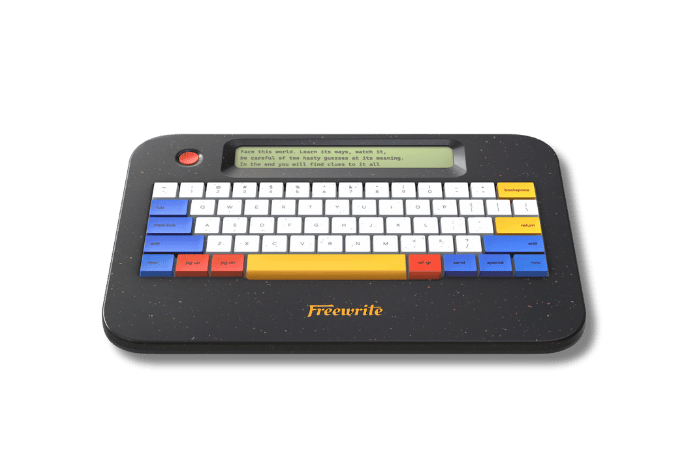
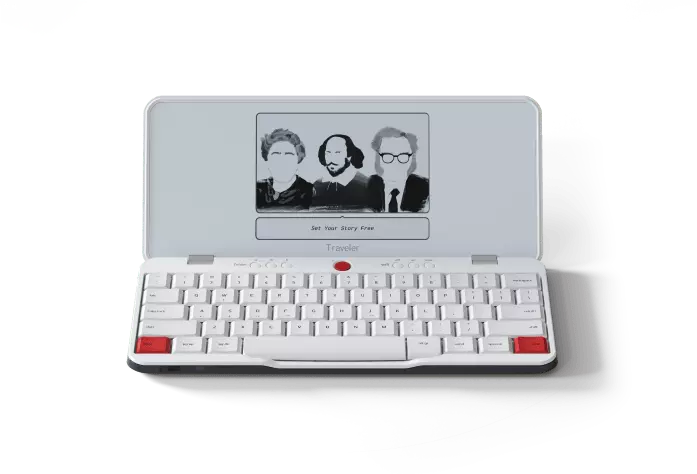
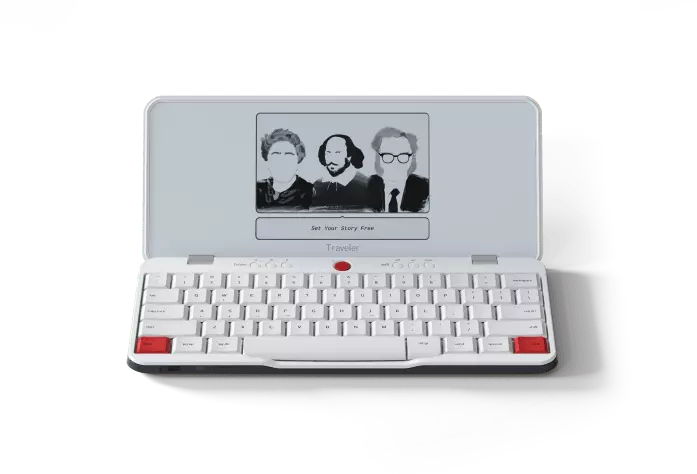
No cash prizes will be offered. Prizes include a Freewrite Traveler, a Words Are Hard writing prompt deck, publication on the Freewrite blog and the Flash Fiction Institute blog, a free flash gym session hosted by the Flash Fiction Institute, and more, at the discretion of Organizer(s).
8. Rights and Usage
-
By entering the contest, entrants grant Freewrite and the Flash Fiction Institute first publication rights. This means Freewrite and the Flash Fiction Institute have a non-exclusive, royalty-free, worldwide license to publish, reproduce, and distribute the submitted entry in connection with the promotion of the Contest, including on their websites, blogs, email newsletters, social media channels, and more.
-
After initial publication, all rights revert back to the author, who is then free to republish or distribute their work elsewhere. However, we request that any subsequent publication acknowledges Freewrite and the Flash Fiction Institute as the original place of publication.
-
The winning author(s) will be credited by name or preferred pen name when their work is published.
9. Privacy
-
Personal information collected during the entry process will be used only for the administration of the Contest and in accordance with Freewrite’s Privacy Policy.
-
Entrants may be contacted by Freewrite regarding their submission or related opportunities.
10. Disqualification
Freewrite reserves the right to disqualify any entry that:
-
Violates these Terms and Conditions,
-
Is found to contain plagiarized material,
-
Is deemed offensive or inappropriate,
-
Is submitted by someone ineligible.
11. Limitation of Liability
Freewrite is not responsible for:
-
Lost, late, incomplete, or misdirected entries;
-
Technical failures of any kind;
-
Any injury or damage to persons or property related to participation in the Contest.
12. Governing Law
These Terms and Conditions shall be governed by and construed in accordance with the laws of the State of [Insert State], without regard to its conflict of laws principles.
13. Contact
For any questions regarding the Contest, please contact us at:
📧 hello@getfreewrite.com.