















Many people view libraries as timeless monuments to the pursuit of knowledge. Others think they're outdated relics of the past.
In a rapidly evolving world dominated by digital technology, the role of libraries comes under scrutiny more and more often. With information at our fingertips through the internet, what do physical libraries have to offer?
Join us as we delve into the role of libraries through history alongside Phoenix Grimm, a writer and library technician based in Delaware.

One of the earliest known libraries was located in the ancient city of Nineveh in Mesopotamia (in modern-day Iraq), where King Ashurbanipal assembled a vast collection of clay tablets. In ancient Egypt, the famous Library of Alexandria was renowned as the intellectual capital of the ancient world, housing an unparalleled collection of scrolls and attracting scholars from far and wide.
During the Middle Ages, monastic libraries played a pivotal role in preserving knowledge in Europe, thanks to the monks who diligently copied and preserved manuscripts. The Renaissance witnessed a revival of interest in classical learning and the proliferation of private libraries among European elite. Of course, the rise of the printing press in the 15th century revolutionized the dissemination of knowledge, making books more accessible to a wider audience.
Benjamin Franklin founded the Library Company of Philadelphia in 1731, establishing the first successful subscription library in the American colonies, and the following centuries saw a rapid expansion of libraries across the globe, fueled by advancements in literacy, technology, and public education.
More recently, the digital revolution brought profound changes in the way information is created and accessed, and the rise of the internet enabled the creation of virtual libraries and digital archives. Does that mean brick-and-mortar libraries have outlived their use?

Phoenix Grimm is a writer and library technician at a small public library in Delaware. Working at a smaller institution, they handle a wide array of work, from circulation to programming, and even driving the mobile library. Phoenix carves out time to write on their Freewrite Traveler during lunch breaks and weekends and evenings.
When asked about the evolution of libraries, Phoenix says,
But should libraries have to evolve? Or this evolution simply a sign that they've become obsolete and are no longer necessary for accessing information?
"Ah, yes, the internet has all the answers," Phoenix says. "Except it doesn't. It has responses, which aren't necessarily accurate."
Phoenix emphasizes that libraries don't just provide information — they provide accurate, peer-reviewed information. In fact, they provide community members free access to entire databases of peer-reviewed articles and papers that are often locked behind a paywall on the internet.
If libraries are stewards of knowledge, like the ancients believed, then the internet is a minefield of informational hazards and pitfalls.
While the internet gives the impression of democratizing the dissemination of information, the origin and veracity of that knowledge is often difficult to verify, especially for young people. Libraries provide a space where people of all ages can discover knowledge — and explore it in more depth, for free and with scholarly guidance.
Besides all that, Phoenix says, libraries don't just lend books anymore. Most libraries have audiobooks, MP3s, DVDs, Blu-Rays, video games, board games, laptops, and Wi-Fi hotspots. Not everyone has internet access at home, and libraries level the playing field by bridging the "digital divide" and providing access to everyone in the community. This, at the end of the day, is the sharing of knowledge that early libraries intended — but in a thoroughly modern way.
That's before even touching on programming: many libraries host story-times and summer reading programs, concerts, lectures, book clubs, and craft classes. In Delaware, Phoenix says, several libraries have telehealth kiosks, and many have librarians dedicated to employment and business services, on-staff social workers, and more.
"Libraries have absolutely assumed roles beyond their traditional scope," Phoenix explains. "A lot of these roles should be filled by other government agencies, but they are overwhelmed, and I would rather those people come to libraries than fall through the cracks entirely."
In other words? "Libraries are the hearts of modern communities."

As the demands of the community shift, so, too, do the obstacles libraries face. From book bans to the never-ending debate over public spending, questions continue to arise about the relevance of public libraries in today's world.
"Budgeting is the eternal woe of libraries everywhere," Phoenix says. "There's never enough money, because there's always more people to help, more technology coming out, more materials."
Phoenix challenges readers with a simple question: Have you ever benefited from a library? (This author can confidently say yes.)
Did you have one in your school? (Yes, it was my favorite place in the school.) Have you ever needed assistance finding a job or even locating a notary? (Yes, I went to the library for a notary twice last year.) Have you ever needed to use a computer when you didn't have one? (I'm lucky enough to have a computer at home, but I've gone to the library to use the printer!)
"Libraries are absolutely essential today," Phoenix says. "They provide everything from information to entertainment, and studies have shown their benefit. And honestly, I can assure them, you lose more in pocket change than you pay to libraries yearly."
It's true that studies have consistently shown that libraries yield substantial returns, both economically and socially. For every dollar invested in libraries, communities reap benefits like enhanced literacy rates, increased workforce readiness, and bolstered community cohesion.
Phoenix adds that the biggest help community members can give to any library is support. If enough community members come together and say they want their libraries to be funded, politicians will cave.
In Delaware, the library system just held "Leg Day," where individuals from the community and libraries across the state traveled to Legislative Hall to meet with representatives and advocate on behalf of libraries.

From traditional print collections to digital repositories, libraries continue to adapt and thrive in the digital age, reaffirming their enduring relevance as guardians of knowledge and culture. As humanity's habits and technologies change, so, too, will libraries' guardianship of knowledge and the community as a whole.
Ultimately, investing in libraries is not just a prudent fiscal decision but a reaffirmation of our commitment to education, equality, and the common good.
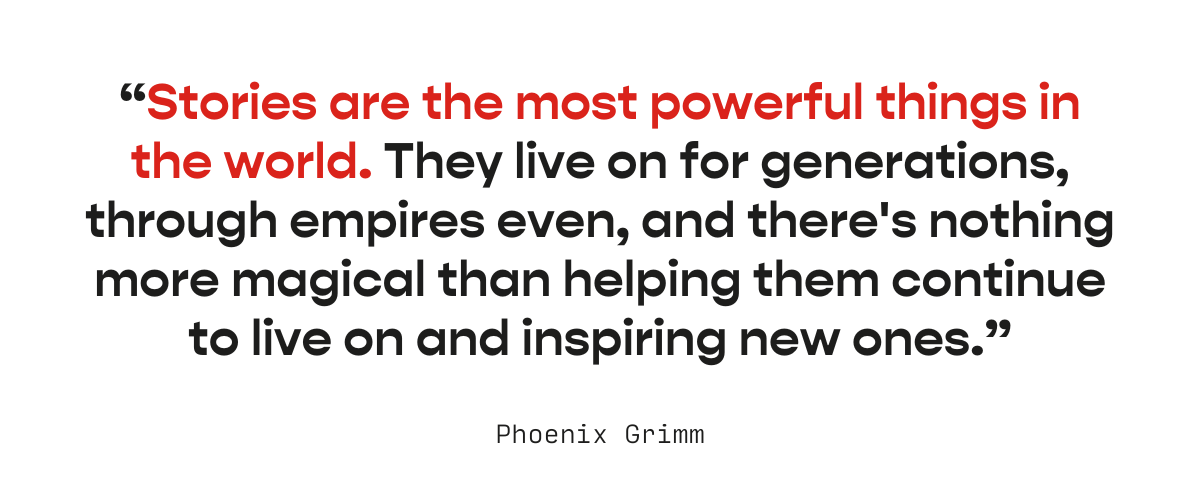
In the face of discouragement, Phoenix offers a poignant reminder for library workers and patrons:
--