








The page is blank and the cursor is blinking at you accusingly. You’ve been sitting at your computer for an hour and you’ve written a sum total of nothing. It’s not that you don’t want to write – it’s that you can’t. The words that yesterday flowed so easily have disappeared into the ether – and you’re wondering despairingly if they’re ever going to return.
Most (if not all) writers are familiar with this scenario. The dreaded writer’s block – that, for me at least, usually turns up when there’s an important deadline looming. Recently, however, I got into an argument with a friend – another writer – who insisted that writer’s block doesn’t exist. Writer’s block, he said, was all in my mind.
He’s not the first to suggest that idea. I headed straight to Google to find out what others have to say about it (hoping to be able to present my friend with proof that I was right and he was wrong). Instead, I stumbled across some fascinating research from the world of neuropsychology and neuroscience. It turns out that writer’s block is just in my head – but not in the way that my friend was suggesting.
The Neuropsychology of Writer’s Block
Neuropsychology is a complex field that combines psychological understandings of the mind with a more physiological investigation of the way that the brain works. For example, neuropsychology might look at what neurons are firing when we experience certain feelings, or what the parts of the brain that are active during specific experiences or actions. So, what does neuropsychology have to say about writer’s block?
Neurologists, psychologists, neuropsychologists and neuroscientists have been studying and debating for decades why things like writer’s block occur. While some psychologists will conclude that writer’s block is more of an excuse than a phenomenon, there have been studies that have set out to demonstrate that there’s neuropsychological evidence for the reality of writer’s block.
Executive Dysfunction
Neuropsychologists Elkhonon Goldberg and Russell Barkley have both investigated a set of complex mental functions that happen in (or are controlled by) the pre-frontal cortex known as ‘executive functions’. It is these executive functions that allow us to do things like plan, organize, prioritize, self-monitor, initiate and sustain certain behaviors as we pursue goals.
When there’s disruption to executive functions, we enter a state Russell Barkley has called ‘executive dysfunction’. A sign of executive dysfunction is an inability to stop ourselves from doing something that’s preventing us from achieving a goal-focused activity. A prime example of this is when you’ve set yourself a goal of writing a blog post but spend the time set aside for writing watching videos of dogs on YouTube.
When writers are experiencing writer’s block, then, it’s a form of executive dysfunction. Certainly, there are problems with executive functions when you feel that your creativity is blocked. These problems can include:
- Difficulties with getting started (initiation)
- Distraction
- Trouble prioritizing
- Struggling to pace ourselves
Emotional Roots
Another key neuropsychological view of writer’s block came from Gene Parret. His theory is that not only is writer’s block a genuine malady, but it is also rooted in underlying fears. Neuroscience backs up this idea. Everything that we do is the result of neurons firing in our brains – and strong emotions, such as fear, can have a profound effect on neuron functions.
Parret’s view is that the way that we perceive our writing abilities plays a huge role in our experience of writer’s block. For example, if you have a negative mindset (such as thinking that no one will want to read what you’re writing) and sit down to write, the negativity will impact on your neuron pathways and cause difficulties with the writing process.
The Psychology of Writing
Ronald Kellogg is the author of ‘The Psychology of Writing’ and he has highlighted the way that certain environments, schedules and rituals can either increase or inhibit writing processes. There’s a neuropsychological link with this, as it’s been shown that neural pathways can be activated by associations with places, times of day, and so on.
Circadian Rhythm Rules
There are links, too, with the circadian rhythms (otherwise known as the sleep-wake cycle). For example, many writers find that their creative juices flow better at certain times of day. This is another area that has been backed up by neuroscience – albeit in studies done with mice.
Neuroscientific studies have revealed that circadian rhythms aren’t just about when we’re awake and when we’re asleep. There are also times of the day that are better suited to different types of tasks. To make this more complicated, everyone’s circadian rhythm for specific tasks is different, so there are no rules when it comes to the specific times when you should be doing something.
What the circadian rhythm studies have shown, though, is that if you don’t understand your own circadian rhythms, you could find yourself trying to write when your brain is better optimized for research (knowledge-processing). There are different neural processes involved in creativity (such as writing) compared with more structured tasks (such as research), so when you experience writer’s block, it could actually be that you’re trying to be creative when your brain wants to be learning.
Interestingly, we’re notoriously bad at correctly understanding our own circadian rhythm, too. Some research has proved that self-proclaimed ‘morning-people’ are actually more productive in the evening, and those who call themselves ‘night-owls’ are more productive during the morning. Could beating writer’s block be as simple as better understanding your circadian rhythm?
Using Neuropsychology to Combat Writer’s Block
Now that we’ve taken a quick tour through some of the complexities of neuropsychology, it’s time to get practical. How can you use neuropsychology to combat writer’s block? There are actually a number of techniques you can use that have their roots in neuropsychological thinking.
1. Cognitive Cueing
Cognitive cueing is based on Kellogg’s understanding of how certain places can impact on the efficiency of certain processes. It’s not an immediate fix, as it takes time to establish cognitive cues, but it’s a technique that’s been shown to help break the cycle of writer’s block.
With cognitive cueing, you need to create a specific space that is only used for writing. It will only be effective if that space is exclusively for writing – if you use it for anything else, the cognitive cues won’t work. Your brain will come to associate the space with the act of writing, and the neural pathways that are formed will kick-start the writing process when you return to the space to write.
2. Circadian Self-Reflection
Since our circadian rhythms have such a big impact on our ability to perform specific tasks, it makes sense that another means of beating writer’s block lies in understanding the times of day that are most suited to writing. It’s different for everyone, so the only way to figure out the times of day that are suited to research and those that are better suited for creativity is through self-reflection.
Keep a journal or notes about your daily activities and reflect on how easy (or difficult) the different types of tasks seemed. Vary the times of day that you complete tasks so that you can begin to see patterns. When you understand your circadian rhythm, you can focus your writing activities at the most creative times of day, and reduce your risk of writer’s block.
3. Incubate Your Creativity
Incubation of ideas is a neuropsychological principle that’s been tested on mice. It’s based on the idea that when you work on a task (or learn a skill) and then take a break or begin a different task, the neural pathways involved in the original task or skill remain active.
Applying this to writer’s block, if you find that you’re struggling to get the words onto the page (or screen), then taking a break and doing something else – going for a walk, reading a book, and so on – can allow ideas to incubate, since the neural pathways that related to your writing task will stay active. Writers regularly report that their best ideas come when they’re doing something completely unrelated, so it’s worth trying incubation to beat writer’s block.
4. Motivational Methods
In neuropsychology, there are different types of motivation that have been identified, and people tend to have one or the other. These are known as ‘approach motivation’ and ‘avoidance motivation’. ‘Approach motivated’ people are optimistic about what they can achieve, and positively motivated to complete tasks. ‘Avoidance motivated’ people, by contrast, are negative and motivated by a fear of failure.
Neuroscience shows that changes in neuronal activity can be affected by perceived outcomes – so what we think will be the result impacts on our performance. If we start writing worried that no one will want to read what we’re writing, this perceived outcome will negatively impact our neurons, and the writing task will become more difficult.
The solution to this problem is to change our motivational type and use approach motivation. To do this, we focus on positive outcomes and set easily attainable goals that will reinforce the positivity. The more we attain these ‘easy’ goals, the better the impact on our neurons, and the less likely we are to experience writer’s block.
5. Background Noise
I was skeptical about this technique – until I tried it myself. Apparently, studies have shown that writers are often more productive in coffee shops or other similar environments where others are being productive. This has something to do with background noise – and there are now apps that will actually replicate the ambient noise of a coffee shop for writers who aren’t able to physically go out and sit in a coffee shop to write when they’re feeling blocked.
Different types of background noise can either positively or negatively affect our creativity and productivity, so it’s important to note that you need to find the kind of background noise that works for you. Some people, for example, are more sensitive to noise, so a very busy coffee shop could have a negative impact on their ability to write, but a quieter shop could help to combat writer’s block.
6. Unplug and Reset
In the modern world, it sometimes feels like we’re slaves to our technological devices. Smartphones, tablets, and laptops keep us constantly connected to emails, social media, online videos and other distractions – which can be bad news if you’re already prone to experiencing writer’s block.
There are a range of psychological benefits to unplugging from technology for a while. Unplugging can help when you’re feeling depressed and anxious or overwhelmed in any way. It can also help with writer’s block, by removing distractions and allowing you the opportunity to reset and get back in touch with your creativity.
If you’re used to writing on a laptop or desktop computer, switching off all your technology can help unblock you when you feel like your creativity has dried up. The abundance of distractions on the internet can make it impossible to focus on anything and get into a rhythm. It’s a simple technique that increases your ability to focus and helps get those creative juices flowing again.

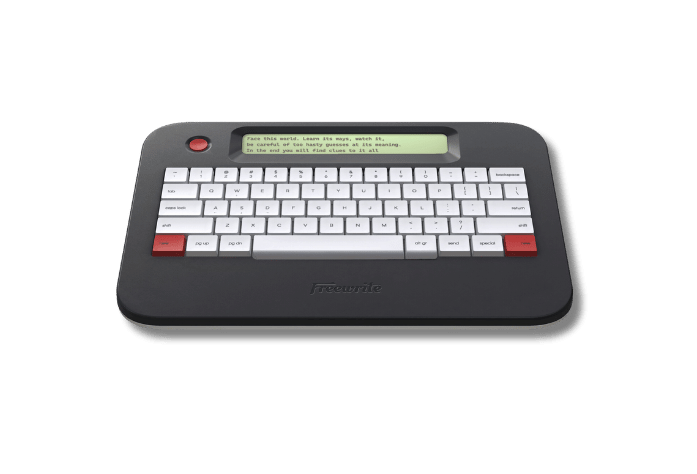
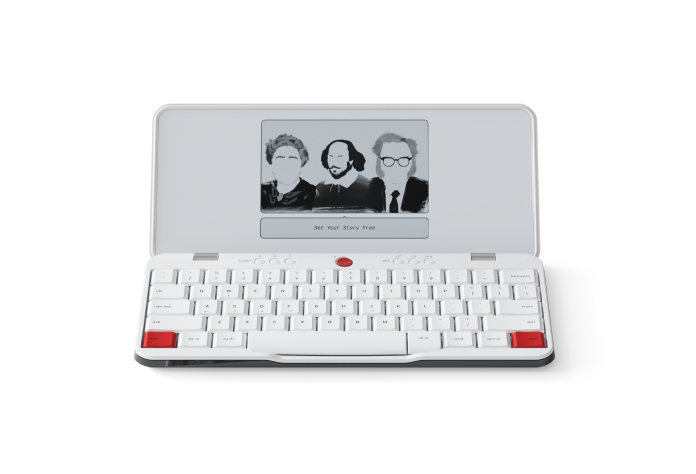
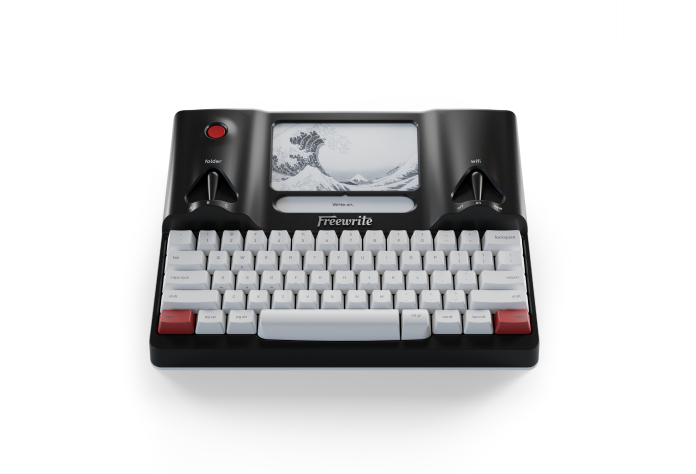
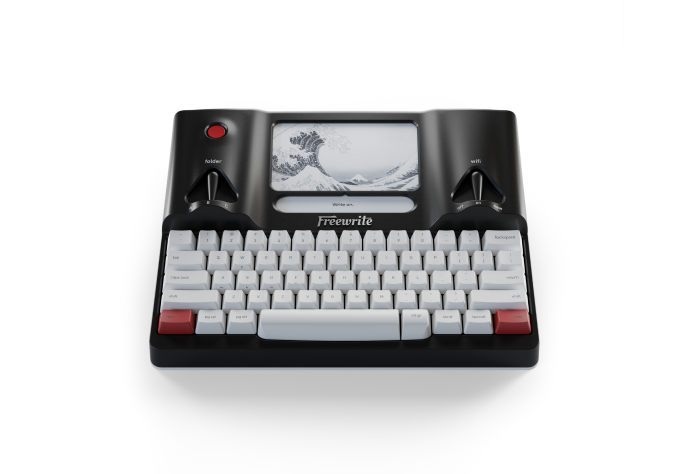
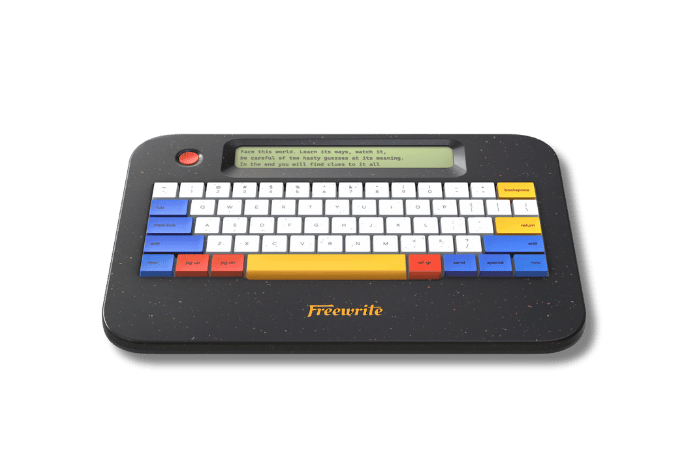
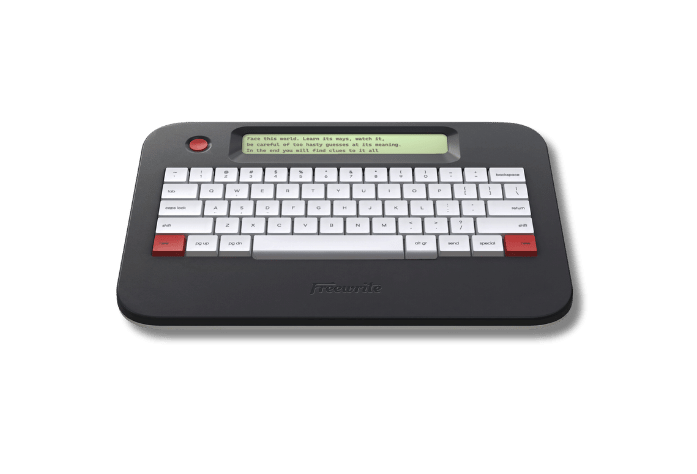
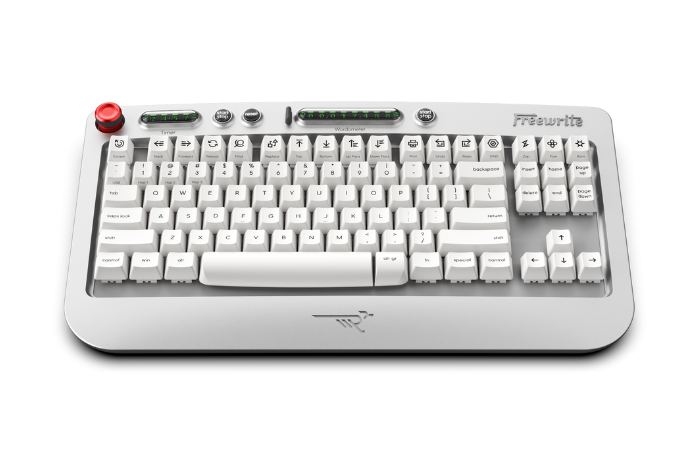
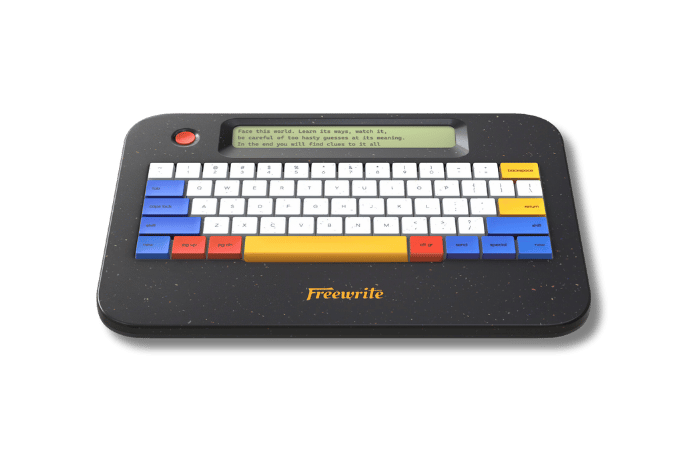
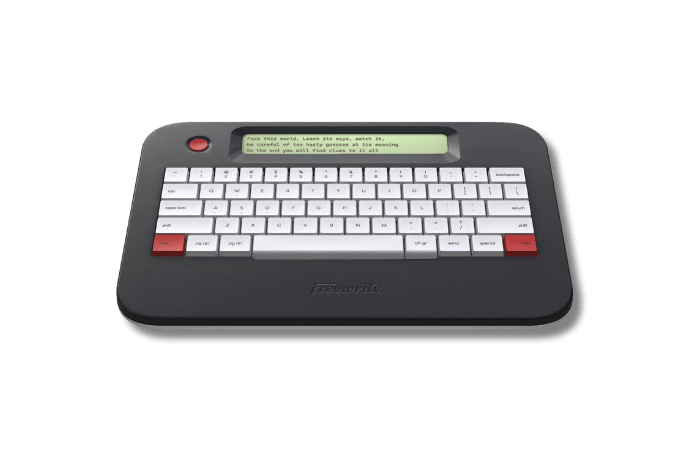
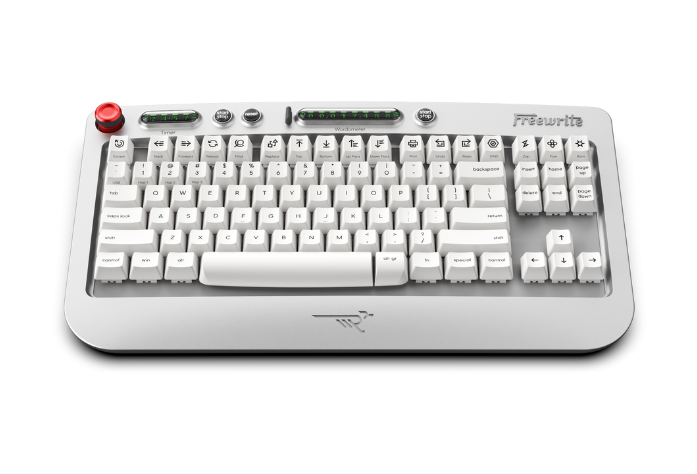
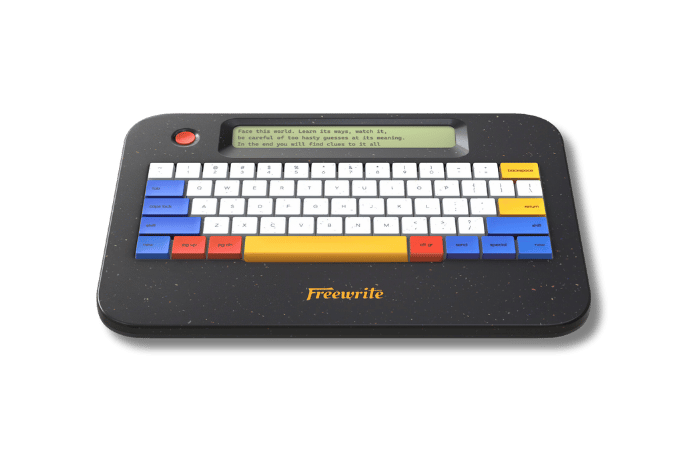
While you could abandon technology completely and go back to the basics with pen/paper, most of us can type much faster than we write. Plus, re-transcribing handwritten notes to the computer is extremely tedious. Luckily, there is a way to unplug but still reap the benefits of technology: Freewrite’s distraction-free writing devices. With a typewriter-like feel and automatic syncing to the cloud, you can get writing again quickly. Find out more about the range of available devices here.
A Treatment Plan for Writer’s Block
Neuropsychology shows us that there’s scientific evidence for the existence of writer’s block – and it isn’t just excuses and/or laziness. Treating writer’s block with neuropsychology offers a range of techniques that can be used individually or combined into your own personal treatment plan. Experiment with the different techniques and find the ones that work best for you, so that you can combat the dreaded blank-page syndrome that writers fear.
Sources
https://www.psychologytoday.com/gb/blog/psychology-writers/201108/writers-block-and-burnout-getting-unstuckhttps://www.psychologytoday.com/gb/blog/one-true-thing/201307/writers-block-it-may-not-be-all-in-your-head
https://www.brainpickings.org/2014/08/25/the-psychology-of-writing-daily-routine/
https://www.brainpickings.org/2012/10/01/breakthrough-alex-cornell/
https://psychcentral.com/blog/the-psychology-behind-writers-block/
http://www.writing-world.com/life/block.shtml
https://scienceblogs.com/neurontic/2006/02/04/on-writers-block
https://www.theguardian.com/lifeandstyle/2017/mar/17/is-writers-block-a-real-thing-oliver-burkeman
https://www.apa.org/gradpsych/2015/11/writers-block
https://rainmaker.fm/audio/writer/best-writers-brain-four/
https://www.pri.org/stories/2016-04-05/creative-block-here-s-neuroscience-how-fix
https://www.copyblogger.com/outsmart-writers-block/