overlaylink

7 Pieces of Writing Advice from Jane Austen's Letters

Annie Cosby
December 18, 2025 | 7 min read

That's what I might write if given the chance to correspond with the legend herself. Did I take this exercise too far? Maybe. But it's a big occasion — Jane Austen turns 250 this year!

Luckily, we can imagine a bit of what Jane might reply to my letter (aside from "Who are you?") because Jane Austen was a loyal correspondent.

In addition to her novels, she left behind countless personal letters full of insight into her life and writing process.

Of course, these are personal letters, meaning Jane never set out to teach others how to write. Except maybe her niece, Anna, who asked the literary genius to read her manuscript. Can you imagine asking THE Jane Austen to read your work? I'd rather be forced to dance all night with Mr. Collins.

Can you imagine asking THE Jane Austen to read your work? I'd rather be forced to dance all night with Mr. Collins.

Jane once wrote to Anna:

"We have been very much amused by your 3 books, but I have a good many criticisms to make more than you will like."

Yikes.

We, as her loyal readers, are lucky that somebody else had the guts to ask for her critique and that the replies have been preserved through the centuries.

Here are 7 pieces of writing advice we can take away from the letters of a master storyteller:

1. Make your characters real.

Judging purely on the evidence of her characters, which have been beloved throughout centuries, I think it's clear that Jane placed great emphasis on character development.

In one letter she says of Elizabeth Bennet:

"I must say that I think her as delightful a creature as ever appeared in print, and how I shall be able to tolerate those who do not like her at least, I do not know."

She wrote characters with genuine flaws and motivations rather than the stock literary types that were quite common among her contemporaries.

She also unabashedly thought of her characters as real people. She wrote to her sister Cassandra once that she'd found "a small portrait of Mrs. Bingley" in a museum. And then she lamented not being able to find one of Mrs. Darcy! She went so far as to say:

"I can only imagine that Mr. D prizes any picture of her too much to like it should be exposed to the public eye. I can imagine he wd. have that sort of feeling — that mixture of love, pride and delicacy."

She was also known to give further details of her characters that did not make it into her books. A little like deleted scenes! For example, Kitty Bennet married a clergyman, did you know? That definitely fits.

2. Unapologetically love your work.

One of the first things that stood out to me when I read Jane Austen's letters is how entirely, hopelessly in love she was with her own stories and the characters in them.

This was a big revelation for me, an anxious and self-deprecating writer. The way Jane talked about her stories was so positive and complimentary!

In a letter to Cassandra in January 1813, after receiving feedback on Pride and Prejudice, Jane writes:

"I want to tell you that I have got my own darling Child from London... "

Her "own darling child"! She wrote to her niece once:

"As I wish very much to see your Jemima, I am sure you will like to see my Emma."

Jemima is an actual human baby, and Emma is a book. What confidence!

In a December 1815 letter to her nephew, Jane talks about creating a heroine "whom no one but myself will much like." (That was Emma, of course.)

When people ask me about my books, I stutter something and change the subject. But Jane? Jane wrote of Sense and Sensibility:

"I am never too busy to think of S. and S. I can no more forget it than a mother can forget her sucking child; and I am much obliged to you for your enquiries."

Her language began to make me wonder, could I alter my own enjoyment and perception of my work, and my career, simply by changing the way I talk about it?

Consider this my official declaration that I promise to never again call my WIP "a hot pile of steaming garbage" or "an ongoing dumpster fire." I might think it, but I won't say it.

3. Be concise.

In another letter to Anna in September 1814, Jane cautioned against excessive description:

"You describe a sweet place, but your descriptions are often more minute than will be liked. You give too many particulars of right hand & left."

This is my biggest writerly faux pas, as well. I tend to describe every little detail when the best writing actually leaves room for the reader's imagination to fill in the gaps.

This comment really does reflect Jane's spare prose. She provided enough detail to establish a character, a setting, or atmosphere — a vibe, if you will — without overwhelming the narrative pacing.

Again, though, can you imagine sending your manuscript to Jane Austen to critique? Young Anna had guts.

4. Trust your writerly intuition.

Jane actually found a readership within her lifetime (that can't be said for every classic author), and this occasionally comes up in her letters. Her first book (Sense and Sensibility) was published with the byline "By a Lady," which was common for that time period, and the follow-up, Pride and Prejudice, was "By the Author of Sense and Sensibility."

But some did uncover her identity, including the Prince Regent. Yes, the prince read — and loved — Jane Austen's books, and that did not phase Jane in the least.

In fact, the prince's librarian wrote Jane a letter with suggestions for her next book and she responded completely disinterested ... and a touch mocking.

"I am quite honoured by your thinking me capable of drawing such a clergyman as you gave the sketch of in your note of Nov. 16. But I assure you I am not..."

She even goes on to say:

"I think I must boast myself to be, with all possible vanity, the most unlearned and uninformed female who ever dared to be an authoress."

May we all have the gall to respond thusly to every person who says, "Hey, you should write about..."

Jane took this whole jest so far as to write a short satirical work called "Plan of a Novel, according to Hints from Various Quarters" to further mock the suggestions from the royal sphere.

Instead, Jane stuck to the stories she wanted to tell. As she tells Anna in one letter:

"You are now collecting your People delightfully, getting them exactly into such a spot as is the delight of my life;—3 or 4 Families in a Country Village is the very thing to work on & I hope you will write a great deal more, & make full use of them while they are so very favourably arranged."

And it is because such a story was the delight of Jane's life that she was able to do it justice, and we are able to enjoy them to this day.


5. Be your own best advocate.

Did you know that Jane Austen was self-published?

Seriously.

She paid for the cost of the publication of Sense and Sensibility in 1811. All 750 copies sold, which enabled her to sell the rights to her next book, Pride & Prejudice.

While her brother did some of the publishing negotiating for her, she was known to jump in herself. In 1809, when a publisher bought and then failed to publish one of her manuscripts, she wrote directly to them. She even used a fake name, "Mrs. Ashton Dennis," to hide her identity and to be able to sign it M.A.D. 

Check out the scathing last line:

"Should no notice be taken of this address, I shall feel myself at liberty to secure the publication of my work by applying elsewhere."

(Their spiteful reply refused her wishes, but she did eventually get the rights back.)

Later in life, you can see that same tenacity in her letters where she discusses her publisher.

Publishing is an industry where writers often feel they have to "play nice" in order to have a successful career. But I know firsthand that it's as important today as it was in the nineteenth century to advocate for yourself and your work.

6. Revision is a necessary evil.

Jane was a meticulous reviser. In her correspondence with her publisher, she mentions making "many corrections" to her manuscripts before submission.

To her sister Cassandra, she wrote about the satisfaction of improving her work through careful editing:

"I have lopt and cropt so successfully, however, that I imagine it must be rather shorter than 'Sense & Sensibility' altogether."

Can you imagine referencing an icon of British literature like that? (Here, she's talking about the manuscript that would become Pride and Prejudice, which would be her sophomore published novel.)

She also told Anna:

"I hope when you have written a great deal more you will be equal to scratching out some of the past."

This meticulous revision no doubt led to her precise, economical style of prose. And her stories are all the better for it!

7. Write no matter what.

Despite a very hefty travel schedule, domestic duties, and constant correspondence with her loved ones, Jane maintained a disciplined writing practice. In her letters, she often mentions writing amid a whirlwind household activity.

Her niece Marianne recalled her aunt "quietly working beside the fire" (meaning sewing) and then suddenly laughing and running to write something down, before going back to sewing. How familiar that is — just substituting my Notes app for pen and ink!

I was tickled by one complaint in a letter to Cassandra in which Jane discusses a leaky closet at the house. Later in the letter she says of writing:

"Could my ideas flow as fast as the rain in the store closet it would be charming."

What characteristic Jane wit!

And of course there's that famous line from a letter of Jane's that I repeat to myself more often than I'd care to admit:

"I am not at all in a humour for writing; I must write on till I am."

It's that spirit that helped her complete six gorgeous novels before her untimely death at the age of 41.

By following Jane's example, those of us writing two centuries later can still build a beautiful and prolific writing life.

And an honorary #8: Money is nice.

"People are more ready to borrow and praise, than to buy — which I cannot wonder at; but tho' I like praise as well as anybody, I like what Edward calls Pewter too."

Amen, Jane!

There are many different collections of Jane Austen's personal letters, thanks to her beloved nieces and nephews who gathered them after her death. I've read several, but the edition I own and return to again and again (and used for this piece) is The Illustrated Letters of Jane Austen, selected and introduced by Penelope Hughes-Hellett. Happy reading!
December 30, 2025 3 min read

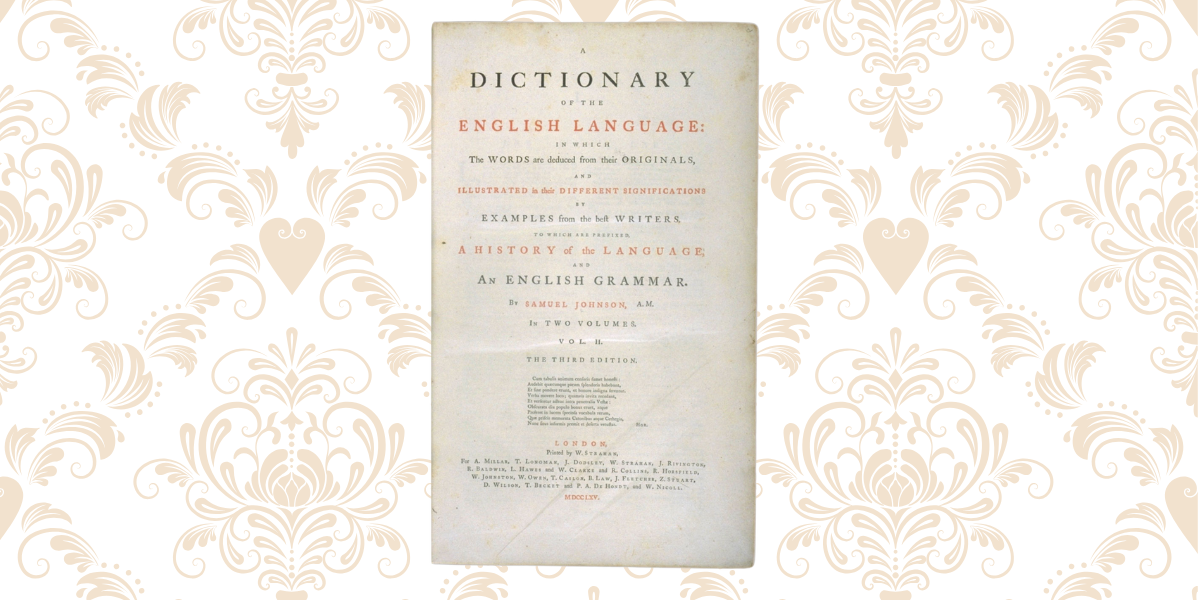
It’s Freewrite’s favorite time of year. When dictionaries around the world examine language use of the previous year and select a “Word of the Year.”

Of course, there are many different dictionaries in use in the English language, and they all have different ideas about what word was the most influential or saw the most growth in the previous year. They individually review new slang and culturally relevant vocabulary, examine spikes or dips in usage, and pour over internet trend data.

Let’s see what some of the biggest dictionaries decided for 2025. And read to the end for a chance to submit your own Word of the Year — and win a Freewrite gift card.

[SUBMIT YOUR WORD OF THE YEAR]


Merriam-Webster: "slop"

Merriam-Webster chose "slop" as its Word of the Year for 2025 to describe "all that stuff dumped on our screens, captured in just four letters."

The dictionary lists "absurd videos, off-kilter advertising images, cheesy propaganda, fake news that looks pretty real, junky AI-written books, 'workslop' reports that waste coworkers’ time … and lots of talking cats" as examples of slop.

The original sense of the word "slop" from the 1700s was “soft mud” and eventually evolved to mean "food waste" and "rubbish." 2025 linked the term to AI, and the rest is history.

Honorable mentions: conclave, gerrymander, touch grass, performative, tariff, 67.

Dictionary.com: "67"

The team at Dictionary.com likes to pick a word that serves as “a linguistic time capsule, reflecting social trends and global events that defined the year.”

For 2025, they decided that “word” was actually a number. Or two numbers, to be exact.

If you’re an old, like me, and don’t know many school-age children, you may not have heard “67” in use. (Note that this is not “sixty-seven,” but “six, seven.”)

Dictionary.com claims the origin of “67” is a song called “Doot Doot (6 7)” by Skrilla, quickly made infamous by viral TikTok videos, most notably featuring a child who will for the rest of his life be known as the “6-7 Kid.” But according to my nine-year-old cousin, the origins of something so mystical can’t ever truly be known.

(My third grade expert also demonstrated the accompanying signature hand gesture, where you place both hands palms up and alternately move up and down.)

And if you happen to find yourself in a fourth-grade classroom, watch your mouth, because there’s a good chance this term has been banned for the teacher’s sanity.

Annoyed yet? Don’t be. As Dictionary.com points out, 6-7 is a rather delightful example at how fast language can develop as a new generation joins the conversation.

Dictionary.com honorable mentions: agentic, aura farming, broligarchy, clanker, Gen Z stare, kiss cam, overtourism, tariff, tradwife.

Oxford Dictionary: "rage bait"

With input from more than 30,000 users and expert analysis, Oxford Dictionary chose "rage bait" for their word of the year.

Specifically, the dictionary pointed to 2025’s news cycle, online manipulation tactics, and growing awareness of where we spend our time and attention online.

While closely paralleling its etymological cousin "clickbait," rage bait more specifically denotes content that evokes anger, discord, or polarization.

Oxford's experts report that use of the term has tripled in the last 12 months.

Oxford Dictionary's honorable mentions:aura farming, biohack.

Cambridge Dictionary: "parasocial"

The Cambridge Dictionary examined a sustained trend of increased searches to choose "parasocial" as its Word of the Year.

Believe it or not, this term was coined by sociologists in 1956, combining “social” with the Greek-derived prefix para-, which in this case means “similar to or parallel to, but separate from.”

But interest in and use of the term exploded this year, finally moving from a mainly academic context to the mainstream.

Cambridge Dictionary's honorable mentions: slop, delulu, skibidi, tradwife

Freewrite: TBD

This year, the Freewrite Fam is picking our own Word of the Year.

Click below to submit what you think the Word of 2025 should be, and we'll pick one submission to receive a Freewrite gift card.

[SUBMIT HERE] 

--

Sources

December 10, 2025 6 min read

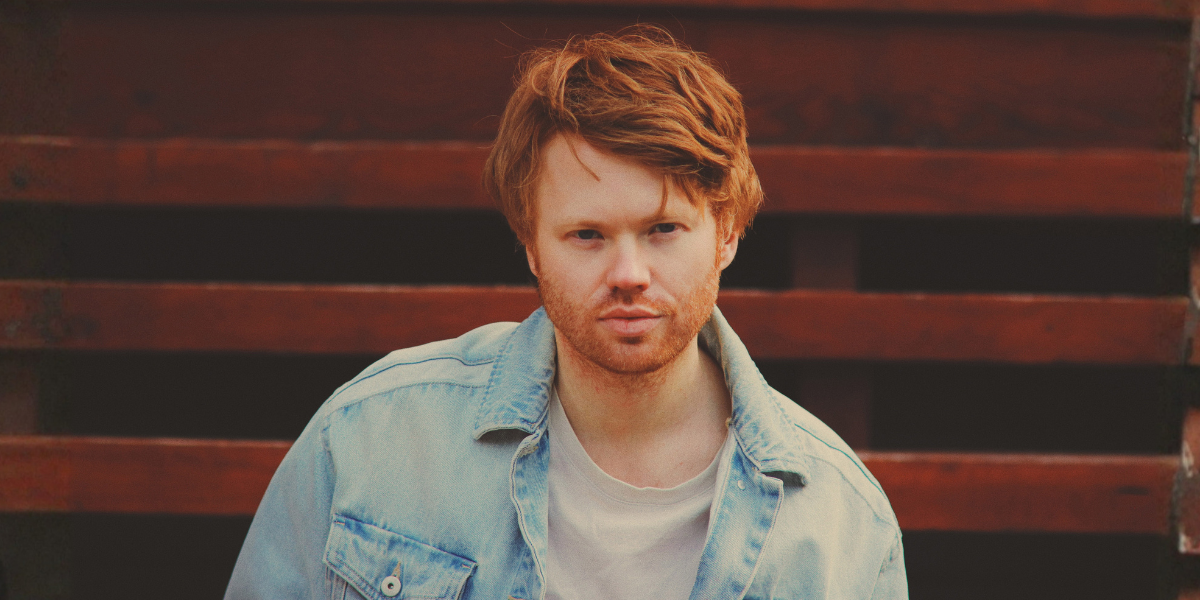
Singer-songwriter Abner James finds his creativity in the quiet freedom of analog tools. Learn how his creative process transcends different media.

Abner James went to school for film directing. But the success of the band he and his brother formed together, Eighty Ninety, knocked him onto a different trajectory.

The band has accrued more than 40 million streams since the release of their debut EP “Elizabeth," and their work was even co-signed by Taylor Swift when the singer added Eighty Ninety to her playlist "Songs Taylor Loves.”

Now, Abner is returning to long-form writing in addition to songwriting, and with a change in media comes an examination of the creative process. We sat down to chat about what's the same — and what's different. 

ANNIE COSBY: Tell us about your songwriting process.

ABNER JAMES: The way I tend to write my songs is hunched over a guitar and just seeing what comes. Sounds become words become shapes. It's a very physical process that is really about turning my brain off.

And one of the things that occurred to me when I was traveling, actually, was that I would love to be able to do that but from a writing perspective. What would happen if I sat down and approached writing in the same way that I approached music? In a more intuitive and free-form kind of way? What would that dig up?

AC: That's basically the ethos of Freewrite.

AJ: Yes. We had just put out a record, and I was thinking about how to get into writing for the next one. It occurred to me that regardless of how I started, I always finished on a screen. And I wondered: what's the acoustic guitar version of writing?

Where there's not blue light hitting me in the face. Even if I'm using my Notes app, it's the same thing. It really gets me into a different mindset.

 "I wondered: what's the acoustic guitar version of writing?"

I grew up playing piano. That was my first instrument. And I found an old typewriter at a thrift store, and I love it. It actually reminded me a lot of playing piano, the kind of physical, the feeling of it. And it was really fun, but pretty impractical, especially because I travel a fair amount.

And so I wondered, is there such a thing as a digital typewriter? And I googled it, and I found Freewrite.

AC: What about Freewrite helps you write?

AJ:I think, pragmatically, just the E Ink screen is a huge deal, because it doesn't exhaust me in the same way. And the idea of having a tool specifically set aside for the process is appealing in an aesthetic way but also a mental-emotional way. When it comes out, it's kind of like ... It's like having an office you work out of. It's just for that.

"The way I tend to write my songs is hunched over a guitar and just seeing what comes. Sounds become words become shapes. It's a very physical process that is really about turning my brain off."

And all of the pragmatic limitations — like you're not getting texts on it, and you're not doing all that stuff on the internet — that's really helpful, too. But just having the mindset....

When I pick up a guitar, or I sit down at the piano, it very much puts me into that space. Having a tool just for words does the same thing. I find that to be really cool and inspiring.

"When I pick up a guitar, or I sit down at the piano, it very much puts me into that space. Having a tool just for words does the same thing."

AC: So mentally it gets you ready for writing.

AJ: Yeah, and also, when you write a Microsoft Word, it looks so finished that it's hard to keep going. If every time I strummed a chord, I was hearing it back, mixed and mastered and produced...?

It's hard to stay in that space when I'm seeing it fully written out and formatted in, like, Times New Roman, looking all seriously back at me.

AC: I get that. I have terrible instincts to edit stuff over and over again and never finish a story.

AJ:  Also, the way you just open it and it's ready to go. So you don't have the stages of the computer turning on, that kind of puts this pressure, this tension on.

It's working at the edges in all these different ways that on their own could feel a little bit like it's not really necessary. All these amorphous things where you could look at it and be like, well, I don't really need any of those. But they add up to a critical mass that actually is significant.

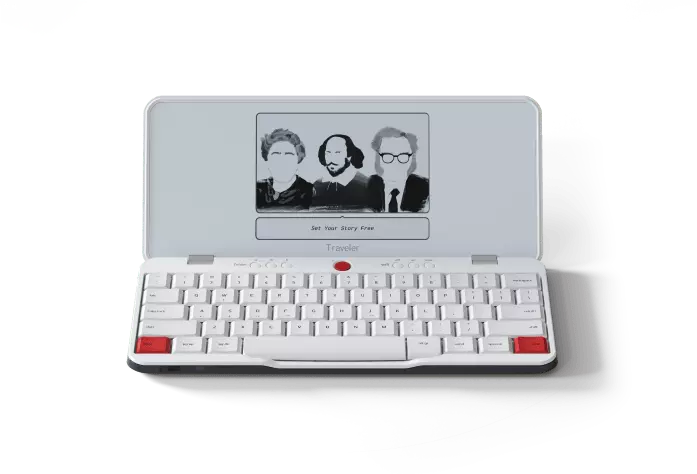
And sometimes, if I want to bring it on a plane, I've found it's replaced reading for me. Rather than pick up a book or bring a book on the plane, I bring Traveler and just kind of hang out in that space and see if anything comes up.

I've found that it's kind of like writing songs on a different instrument, you get different styles of music that you wouldn't have otherwise. I've found that writing from words towards music, I get different kinds of songs than I have in the past, which has been interesting.

In that way, like sitting at a piano, you just write differently than you do on a guitar, or even a bass, because of the things those instruments tend to encourage or that they can do.

It feels almost like a little synthesizer, a different kind of instrument that has unlocked a different kind of approach for me.

"I've found that it's kind of like writing songs on a different instrument, you get different styles of music that you wouldn't have otherwise... [Traveler] feels almost like a little synthesizer, a different kind of instrument that has unlocked a different kind of approach for me."

AC: As someone who doesn't know the first thing about writing music, that's fascinating. It's all magic to me.

AJ: Yeah.

AC: What else are you interested in writing?

AJ: I went to school for film directing. That was kind of what I thought I was going to do. And then my brother and I started the band and that kind of happened first and knocked me onto a different track for a little while after college.

Growing up, though, writing was my way into everything. In directing, I wanted to be in control of the thing that I wrote. And in music, it was the same — the songwriting really feels like it came from that same place. And then the idea of writing longer form, like fiction, almost feels just like the next step from song to EP to album to novel.

For whatever reason, that started feeling like a challenge that would be deeply related to the kinds of work that we do in the studio.

AC: Do you have any advice for aspiring songwriters?

AJ: This sounds like a cliche, but it's totally true: whatever success that I've had as a songwriter — judge that for yourself — but whatever success I have had, has been directly proportional to just writing the song that I wanted to hear.

What I mean by that is, even if you're being coldly, cynically, late-stage capitalist about it, it's by far the most success I've had. The good news is that you don't have to choose. And in fact, when you start making those little compromises, or even begin to inch in that direction, it just doesn't work. So you can forget about it.

Just make music you want to hear. And that will be the music that resonates with most people.

I think there's a temptation to have an imaginary focus group in your head of like 500 people. But the problem is all those people are fake. They're not real. None of those people are actually real people. You're a focus group of one, you're one real person. There are more real people in that focus group than in the imaginary one.

And I just don't think that we're that different, in the end. So that would be my advice.

AC: That seems like generally great creative advice. Because fiction writers talk about that too, right? Do you write to market or do you write the book you want to read. Same thing. And that imaginary focus group has been debilitating for me. I have to silence that focus group before I can write.

AJ: Absolutely.

"I think there's a temptation to have an imaginary focus group in your head of like 500 people. But the problem is all those people are fake... You're a focus group of one, you're one real person. There are more real people in that focus group than in the imaginary one."

--

Learn more about Abner James, his brother, and their band, Eighty Ninety, on Instagram.

November 29, 2025 4 min read

The Great Freewrite Séance: A Ghost'ly Charity Auction Full Terms & Conditions

These Terms and Conditions (“Terms”) govern participation in The Great Freewrite Séance: A Ghost'ly Charity Auction (“Auction”), organized by Freewrite (“Organizer,” “we,” “us,” or “our”). By registering for, bidding in, or otherwise participating in the Auction, you (“Participant,” “Bidder,” or “Winner”) agree to be bound by these Terms.

1. Auction Overview

1.1. The Auction offers for sale a limited number of Freewrite Traveler Ghost Edition units (“Items” or “Ghost Traveler units”), each personally signed and drawn on by a featured author.

1.2. All proceeds, net of explicitly disclosed administrative costs, will be donated to the charity or charitable initiative (“Charity”) identified on each auction item’s page, as chosen by the respective author.

2. Eligibility

2.1. Participants must be at least 18 years old or the age of majority in their jurisdiction, whichever is higher.

2.2. Employees of Freewrite, the participating authors, or any affiliates directly involved in the Auction are not eligible to bid.

2.3. By participating, you represent that you are legally permitted to take part in online auctions and to pay for any bids you win.

3. Auction Registration

3.1. Participants must create an account on the auction platform or otherwise register using accurate, current, and complete information.

3.2. Freewrite reserves the right to verify identity and to disqualify any Participant who provides false or misleading information.

4. Bidding Rules

4.1. All bids are binding, final, and non-retractable.

4.2. Bidders are responsible for monitoring their bids; Freewrite is not liable for missed notifications or technical issues on the auction platform or the Participant’s device.

4.3. Freewrite reserves the right to:

  • set minimum bids or bid increments;
  • reject bids deemed in bad faith or intended to disrupt the Auction;
  • extend, pause, or cancel the Auction in case of technical difficulties, fraud, or events beyond reasonable control.

5. Winning Bids and Payment

5.1. The highest valid bid at the close of the Auction is the Winning Bid, and the corresponding Participant becomes the Winner.

5.2. Winners will receive payment instructions and must complete payment within 48 hours of the auction’s close unless otherwise stated.

5.3. Failure to complete payment on time may result in forfeiture, and Freewrite may offer the Item to the next highest bidder.

5.4. Accepted payment methods will be listed on the Auction platform. All payments must be made in the currency specified.

6. Item Description and Condition

6.1. Each Ghost Traveler unit is authentic, and the signatures, doodles, and messages are original works created by the participating author. These are authors, not artists. By bidding on the Item, you acknowledge that you are receiving a one-of-a-kind unit marked with unique art and messages and you agree to these terms and conditions.

6.2. Because Items are customized and signed by hand, variations, imperfections, or unique marks are to be expected. These are considered part of the Item’s character and not defects.

6.3. Items are provided “as-is” and “as-available.” Freewrite makes no warranties of merchantability or fitness for a particular purpose.

7. Shipping & Delivery

7.1. Shipping costs, import duties, and taxes may apply unless explicitly stated otherwise.

7.2. Freewrite will make reasonable efforts to ship Items within the estimated timeline but cannot guarantee delivery dates.

7.3. Title and risk of loss transfer to the Winner upon delivery to the carrier.

7.4. Freewrite is not responsible for delays, damage, or loss caused by the courier or customs agencies.

8. Charity Donation

8.1. Net proceeds from the Auction will be donated to the Charity designated on each Item page.

8.2. Donation amounts and recipients may be disclosed publicly unless prohibited by law.

8.3. Winners acknowledge that they are purchasing Items, not making a tax-deductible donation to Freewrite; therefore, Winners will not receive charitable tax receipts unless Freewrite explicitly states otherwise in compliance with applicable laws.

9. Intellectual Property

9.1. All trademarks, brand names, product names, and creative materials associated with Freewrite and the Ghost Traveler remain the exclusive property of Freewrite or their respective rights holders.

9.2. Participants may not reproduce, distribute, or publicly display the authors’ doodles without permission where such rights are applicable, except as allowed by law (e.g., resale of the physical Item).

10. Privacy

10.1. By participating, you consent to Freewrite’s collection, use, and storage of your personal data in accordance with our Privacy Policy.

10.2. Freewrite may publicly announce auction results, including Winner’s first name, last initial, city, state/country, and winning bid amount unless prohibited by law or unless you formally request anonymity when possible.

11. Prohibited Conduct

Participants may not:

  • engage in bid manipulation, fraud, or collusive bidding;
  • use automated systems (bots, scripts, scrapers) to place or monitor bids;
  • interfere with the Auction, platform, or other participants

Freewrite may ban or disqualify any Participant violating these rules.

12. Limitation of Liability

To the fullest extent permitted by law:

12.1. Freewrite is not liable for indirect, incidental, special, or consequential damages arising from the Auction or purchase of Items.

12.2. Freewrite’s total liability in connection with these Terms shall not exceed the amount of the Winning Bid actually paid by the Participant.

12.3. Freewrite is not responsible for technical malfunctions, internet outages, system failures, or other issues beyond its control.

13. Cancellation and Force Majeure

Freewrite may cancel, postpone, or modify the Auction due to unforeseen circumstances, including but not limited to natural disasters, system failures, strikes, or events affecting participating authors or the Charity.

14. Governing Law & Dispute Resolution

14.1. These Terms are governed by the laws of Michigan, without regard to conflict-of-law rules.

14.2. Any disputes arising under these Terms will be resolved through binding arbitration or the courts of the specified jurisdiction, as applicable.

14.3. Participants waive any right to participate in class-action lawsuits relating to the Auction.

15. Amendments

Freewrite may update these Terms at any time. Continued participation in the Auction after updates constitutes acceptance of the revised Terms.

16. Contact Information

For questions or concerns regarding the Auction or these Terms, contact: hello@getfreewrite.com.