overlaylink

Pourquoi Focus est en train de mourir

Concetta Cucchiarelli
janvier 06, 2025 | 4 lire la lecture

Attendez. Notre concentration est-elle vraiment en train de mourir ?

Eh bien, les experts semblent certainement le penser…

Gloria Mark, dans son fascinant ouvrage Attention Span: A Groundbreaking Way to Restore Balance, Happiness and Productivity , révèle des résultats surprenants issus de ses décennies de recherche sur l'impact de la technologie sur notre attention. J'apprécie également la liste exhaustive des éléments qui influencent profondément notre concentration, dressée par Johann Hari dans son fantastique ouvrage Stolen Focus .

Évaluer l'attention, un processus très complexe, est un véritable défi. Nous ne saurons donc probablement jamais si notre concentration diminue réellement par rapport à celle d'autrefois. Mais il est clair qu'au cours des dernières décennies, nos modes de vie et notre façon de nous concentrer ont subi une transformation radicale, que nous ne comprenons toujours pas complètement.

Dans cet article, je souhaite me concentrer sur les quatre facteurs que je considère comme les plus importants en termes de perturbation dans nos vies :

La capacité de concentration est une combinaison délicate de nombreux éléments, et la période sans précédent que nous traversons l’affecte sérieusement.

Voici les quatre éléments qui, selon moi, perturbent le plus nos vies :

1. Surcharge d'informations

Il s'agit d'un phénomène très nouveau. Jamais notre cerveau n'avait traité autant d'informations au quotidien.

La surcharge d'information se produit à un niveau inconscient. Pour comprendre ce concept, il est utile de comprendre que « la fonction la plus importante de l'attention n'est pas d'assimiler l'information, mais de la filtrer » (extrait de l'ouvrage « The Attention Economy » de Thomas H. Davenport et John C. Beck).

Notre cerveau a une capacité limitée à traiter l'information pour une raison évolutive : cela garantit qu'il n'est pas submergé d'informations. C'est pourquoi, dans un environnement surchargé d'informations, comme notre environnement moderne, la tâche la plus importante de notre cerveau est le filtrage, une tâche de plus en plus exigeante.

La charge sur ce filtre est énorme ( comme nous l'avons déjà évoqué ). Elle requiert beaucoup d'énergie cognitive et physique, ce qui peut engendrer de nombreux problèmes, même émotionnels.

[LIRE PLUS DANS « LES DÉFIS AUXQUELS SONT CONFRONTÉS LES ÉCRIVAINS À L'ÈRE NUMÉRIQUE. »]

2. L'attention comme monnaie

Alors que nous sommes submergés d'informations, un marché rivalise férocement pour capter notre attention. Pour ce faire, les internautes cherchent à rendre les choses toujours plus intéressantes et à nous captiver par d'autres moyens.

Les entreprises et leurs algorithmes façonnent nos expériences en ligne en sélectionnant le contenu que nous voyons et en cherchant à nous fidéliser plus longtemps. Si cela semble utile, le véritable objectif est la monétisation : les algorithmes maximisent les revenus publicitaires en utilisant nos données pour cibler efficacement les publicités.

Notre attention, et non l'argent, est la monnaie d'échange de l'« économie de l'attention ». Ce changement réduit encore notre capacité à détourner notre attention de ce que les annonceurs souhaitent pour la concentrer sur ce qui nous intéresse.

[LIRE PLUS DANS « COMMENT LES ALGORITHMES INTERNET SONT CONÇUS POUR NOUS PIÉGER. »]

3. Multitâche

Nous essayons souvent de détourner notre attention des contenus et médias en ligne addictifs en faisant plusieurs choses à la fois. Nous l'avons tous déjà fait. Nous « travaillons » peut-être tout en regardant Netflix et en parcourant Instagram.

Mauvaise nouvelle si cela vous semble familier : le multitâche n'existe pas.

Au lieu de cela, nous passons rapidement d'une tâche à l'autre, ce qui réduit notre concentration et augmente les erreurs. Ce changement crée un « résidu d'attention », où des parties des tâches précédentes persistent, nuisant à nos performances.

Pour couronner le tout, il est prouvé que le multitâche nuit à la capacité du cerveau à mémoriser des informations.

[LIRE PLUS DANS « LES EFFETS DU MULTITÂCHE SUR VOTRE CERVEAU. »]

4. Technologie moderne

Comme nous utilisons des outils conçus pour effectuer plusieurs tâches à la fois, nous sommes souvent amenés à effectuer plusieurs tâches à la fois. (Voir le multitâche mentionné précédemment.)

Il y a encore quelque temps, conduire en lisant un SMS aurait été étrange et considéré comme dangereux. Aujourd'hui, nous conduisons en regardant l'écran du tableau de bord qui nous indique le chemin à suivre.

Et nous nous y sommes de plus en plus habitués. Nos ordinateurs portables, téléphones et tablettes sont conçus pour faire mille choses, mais cela ne fait que contribuer à notre multitâche. Et comme nous l'avons déjà constaté, ce n'est pas une bonne chose.

[LIRE PLUS DANS « VOTRE ORDINATEUR PORTABLE TUE VOTRE NOMBRE DE MOTS (ET VOTRE SANTÉ MENTALE) ».]

Apporter des changements

Tout cela n'entraîne pas seulement une perte de concentration et d'intérêt ; c'est une menace potentielle pour le bon fonctionnement de notre cerveau. Mais est-ce notre capacité à nous concentrer qui diminue ? Ou est-ce notre volonté de nous concentrer ?

Quoi qu’il en soit, cela ne doit pas forcément se passer comme ça.

Il y a certaines choses que nous pouvons et devons faire, car l'attention et la concentration sont les outils les plus essentiels pour créer la vie que nous souhaitons et nous épanouir. C'est aussi le fondement de la mémoire, ce que nous retenons de notre passé, dont dépend notre vision de l'avenir.

Alors, comment inverser ces tendances alarmantes ? Voici un point de départ :

1. Travaillez votre motivation. Apprendre à trouver un but ou un sens à ce que vous faites est comme un code de triche. Cela augmentera instantanément votre motivation. Et vous pouvez le faire pour n'importe quelle tâche, petite ou grande.

2. Entraînez votre attention. Vous pouvez apprendre à mieux gérer votre attention et à trouver une solution durable pour votre corps et votre cerveau. Repensez au mythe de la productivité et de la concentration 24h/24 et 7j/7, car cela ne fera que vous épuiser. Apprenez plutôt à concentrer votre attention là où elle est nécessaire, quand elle est nécessaire.

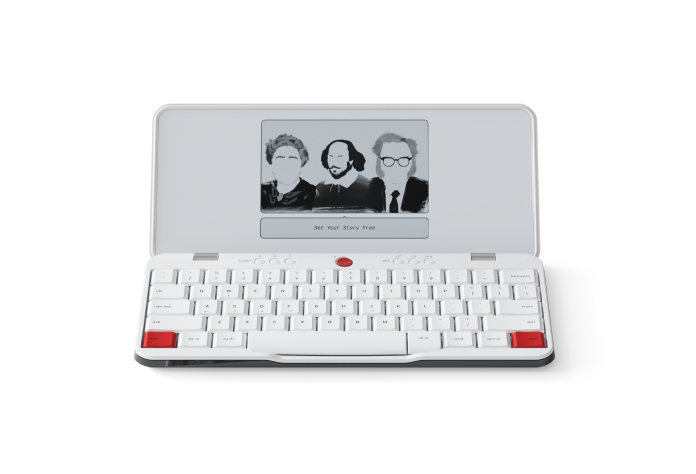
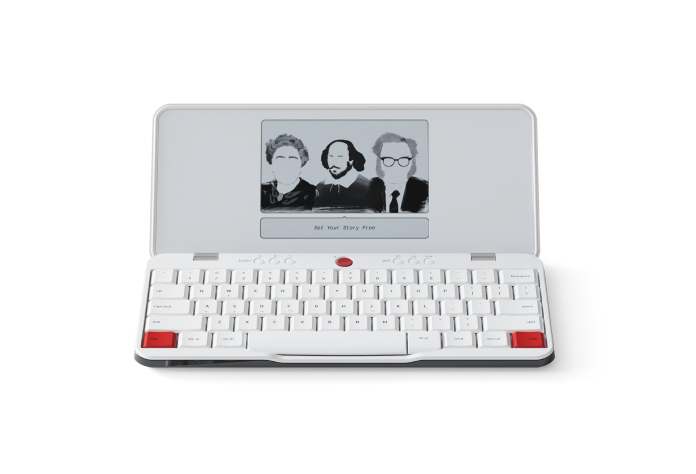
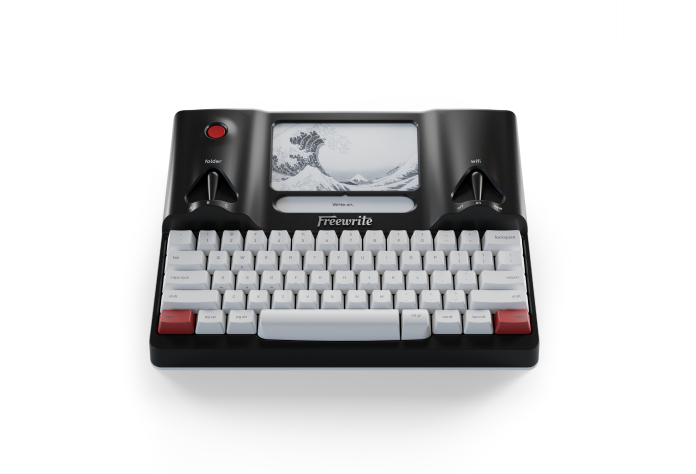
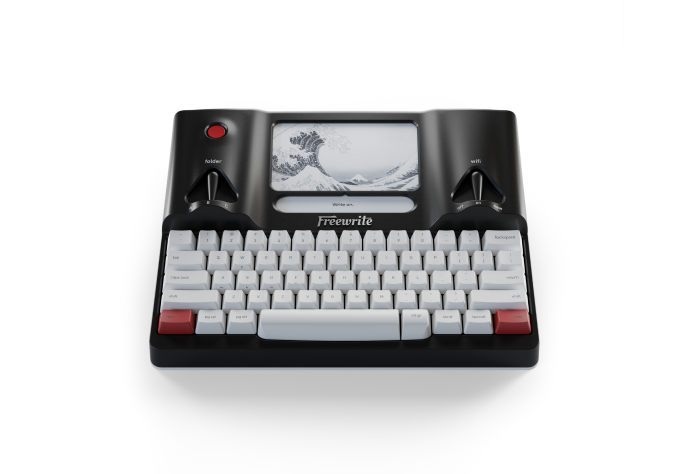
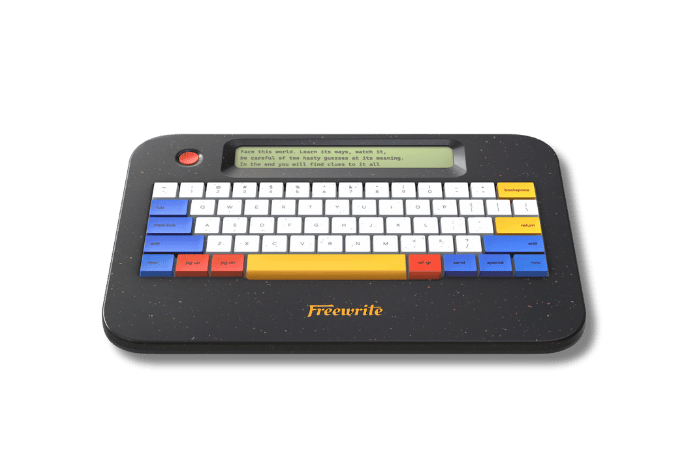
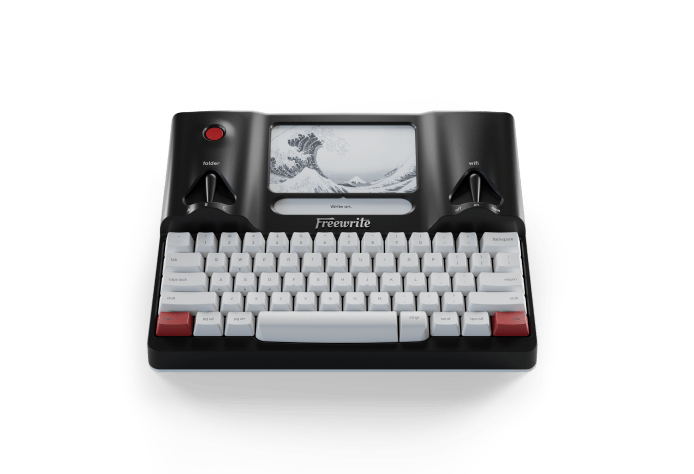
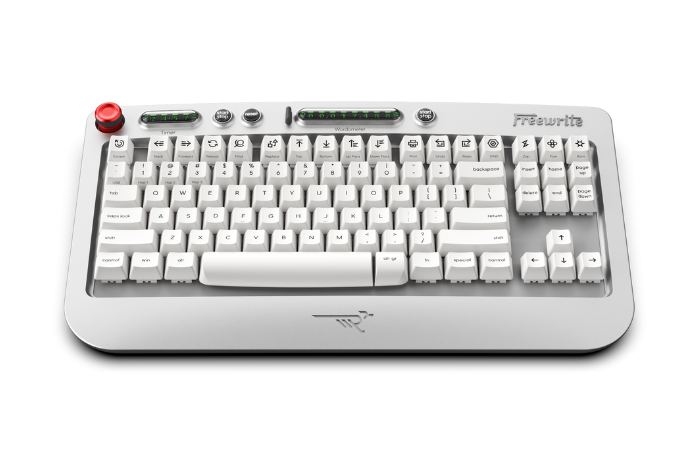
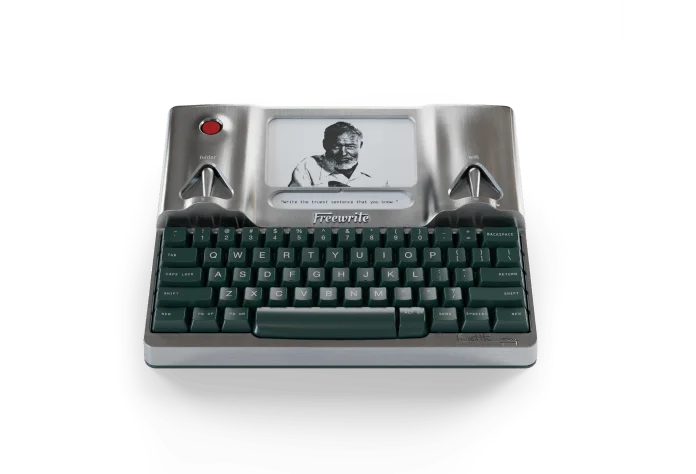
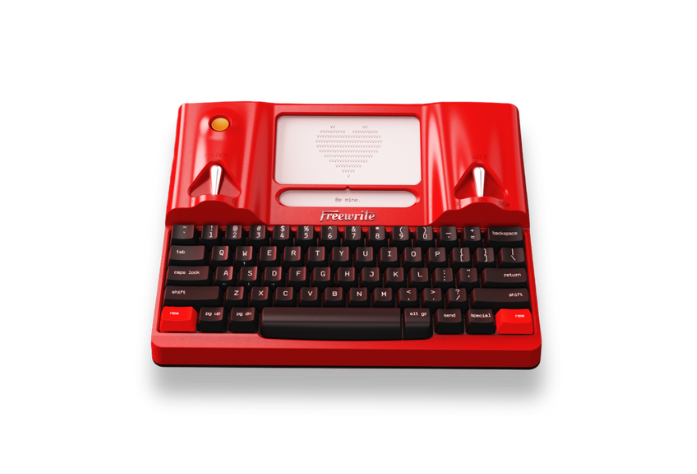
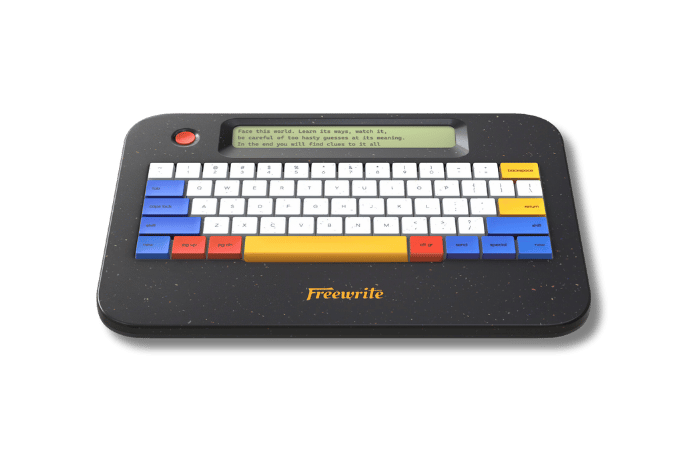
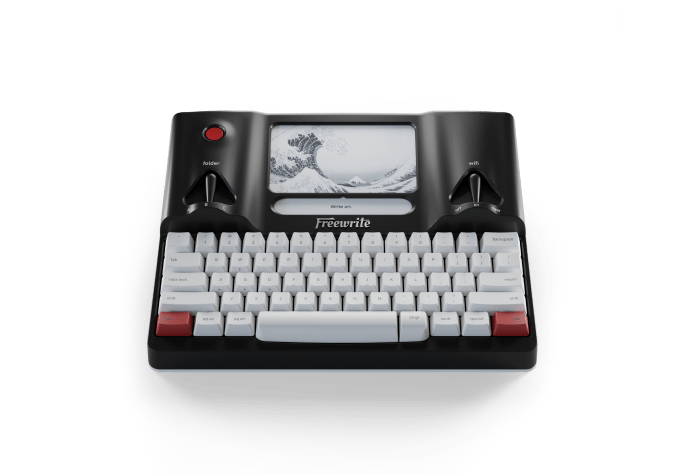
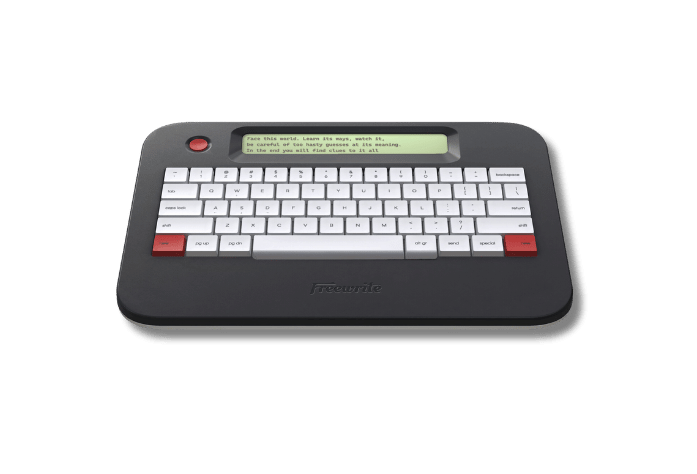
3. Gérez votre exposition à l'information et aux stimuli. La meilleure solution que j'ai trouvée est d'avoir un outil spécialement conçu pour les tâches les plus importantes de votre vie. Si vous passez beaucoup de temps au téléphone, optez pour un téléphone qui ne soit qu'un téléphone . Si vous êtes écrivain, utilisez un Freewrite . Dans ce cas, la contrainte est synonyme de plus de liberté, car vous concentrez intentionnellement votre attention sur une seule chose.

Voici quelques tactiques que vous pouvez essayer pour adopter un mode de vie où votre concentration n'est pas constamment fragmentée et où vous pouvez atteindre vos objectifs.
août 26, 2026 5 lire la lecture

Freewriter Mike Somerby left a lucrative marketing career in e-commerce to start a print-only literary magazine by and for Montanans. Yes, you read that right.

We sat down with Mike to find out how ... and why.

Mike Somerby identifies as a writer — with some reservation.

"I think all who write are 'writers,'" he says, "even if the writing itself amounts to a simple letter to a friend or a personal journal entry."

We couldn't agree more. And we're thrilled that this particular writer writes his essays on Freewrite. Maybe that's why we felt comfortable asking him:

What inspires a professional brand marketer to leave his 9-5 and jump feet-first into the literary world of Bozeman, Montana?

Luckily, he was happy to tell us.

AC: Before we get into the lit mag, it actually isn't your first foray into the literary community, right?

MS: For about ten years — the lion's share of my professional chapter — I worked, in some capacity, as a brand marketer. Last spring, while enduring a particularly grueling stint as CMO for a Montanan e-commerce brand (yes, those exist), I found myself revisited by the remarks of an old journalism school professor: from his perspective, journalism students who apply their storytelling talents toward PR and marketing have crossed over to "the dark side."

While I find this a touch heavy-handed, I get the point, and I believe his notion resurfaced to meet the moment: we live in a world sorely hurting for analog (human) creativity and high-quality longform.

So I quit, traveled west with my dog in a 1986 U-Haul I'd converted into a camper, and plotted.

Step one: I founded Pulphead, a lounge (named after John Jeremiah Sullivan’s seminal 2011 essay collection) where Bozeman writers commune and grind out their prose until 2 a.m. Entry is a flat $5, which comes with unlimited drip coffee and tea.

Step two: leverage the Pulphead regulars and its online following to secure contributors for my new literary magazine, ANEMONE. Thus far, everything is going to plan.

We live in a world sorely hurting for analog (human) creativity and high-quality longform.

AC: Why do you think it's so important to create and preserve these spaces for authentic writing?

MS: Writing is a solitary act. Nonetheless, younger generations, in particular, struggle to forge IRL community in the way older generations might understand as an ordinary facet of being human.

By building a space that is as homey as it is supportive of their literary interests, we’re not only helping these individuals find their birds of a feather, but also providing them with a dojo that mandates setting aside blocks of time away from phones, home lives, and the other distractions. Win-win?

Incidentally, Livingston boasts the highest per-capita concentration of professional writers anywhere in the country. Couple this with another statistic — that Montana has more bookstores per capita than any other state — and it becomes clear southwest Montana is as fertile a place as any to invest in literature and its related industries.


AC: That's so interesting. What have you learned from being in community with creatives in Bozeman?

MS: In terms of writing, I've learned plenty. What has excited me most, however, is what I’ve learned from a small group of Indigenous women who come to the shop to write poetry and make beaded clothing in the traditions of their respective tribes (most notably, Crow, Cheyenne, Shoshone).

This is a group I’d otherwise have limited opportunity to engage with outside of Pulphead, and learning about their traditions, beliefs, hopes — even a little vocabulary — through firsthand conversation has proved incredibly edifying.

AC: And you mentioned you've seen Freewrites pop up in Pulphead. You use one, right?

MS: Yes. About seven years ago, not long after moving to Montana from New York, I purchased an Olivetti Lettera 32 typewriter from eBay. It appeared that a romanticizing of my newfound remoteness had rekindled my interest in writing.

I loved the mechanical feel and distraction-free interface, but the inability to edit line by line proved a notable annoyance for a mind habituated to modern computers. A few years down the road, some digging for alternatives led me to a blog post about smart/electronic typewriters. Voilà.

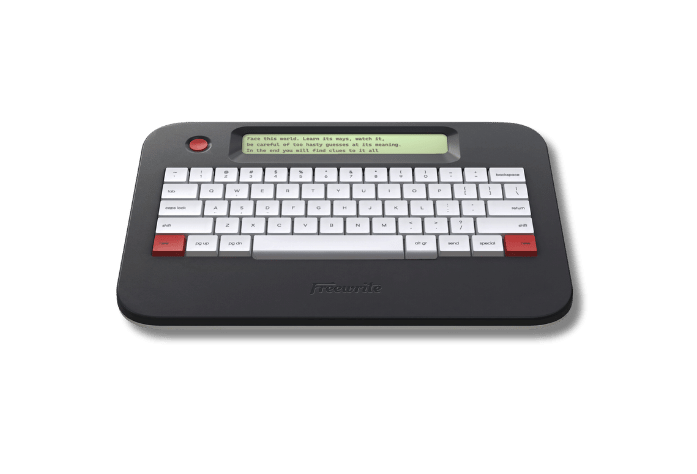
I purchased a Freewrite Gen3 Smart Typewriter, and I've been hooked ever since.

AC: That's awesome. So tell us about ANEMONE. What is it?

MS: ANEMONE is a print-only magazine (printed in a traditional broadsheet newspaper format). As for for theme, broadly, the world as told by Montanans. Short fiction, creative nonfiction, poetry, reportage, photography, and visiual illustrations comprise the submission categories.

AC: Print-only!

MS: Print is only dying because we let it.

AC: Is there a story about the name?

MS: Most people know the word anemone to describe a family of flowers — a 200-plus-species family of buttercups, comprising varieties both wild and domesticated. Dubbed “windflowers,” their delicate petals are said to blow open in the breeze; the ancient Greek word anemos means “wind.” I was drawn to the metaphorical value of beauty and how it can be revealed to us through an invisible force.

To add another layer, when I was a boy my father and I would spend weekends at the beaches north of San Francisco, where I was born and raised until I was seven. We would study the massive turqoise, kelly green, and purple sea anemones clinging to rocks left exposed by the receding Pacific tides (as to why, I can't say, outside of them looking funny, almost alien). A good memory.

Finally, “Anemone” is the name of an exquisite song by The Brian Jonestown Massacre, an irreverent and controversial rock band led by Anton Newcombe, an obsessive creative who rejects the surrender of culture and art to commercial interests. The track has a hold on me. It's like a portal to another era.

AC: Why do you think this sort of analog creativity is important?

MS:  I'm told the unending deluge of digital interface is leaving humans less and less capable of “deep work.” Will we ever know the difference?

Will we recognize what a society incapable of deep work looks like compared with those that came before it? Or will the transition manifest as a gradual degradation of quality, much as Coca-Cola was slowly, but surely, divorced from real sugar, such that to taste what Coke used to be like, one must order a Mexican Coke, still made with real cane sugar?

For me, analog perspective (and any creativity wrung from it) is rooted in continuity, tangibility, lived experience, slowness, spatial relation, nuance, emphasis on process, and grace for imperfection — antithetical to one of replicability, speed, binary outcomes, predictability, and optimization.

I prefer the former, and I suspect those who prefer the latter don't read or write much — life is a beautiful, taxing mess, and good writers find merit in this duality.

For me, analog perspective (and any creativity wrung from it) is rooted in continuity, tangibility, lived experience, slowness, spatial relation, nuance, emphasis on process, and grace for imperfection — antithetical to one of replicability, speed, binary outcomes, predictability, and optimization.

AC: Who is invited to submit to ANEMONE?

MS: We do limit submissions to Montanans, past and present, though we will feature writers from other states should the content of their writing bear an obvious relation to Montana — a requirement not imposed on Montanan writers.

All information regarding submissions can be found at www.anemonereview.com, along with all other facets of the magazine.

août 26, 2026 1 lire la lecture

Love the Freewrite 500? Here are 3 more writing contests for competitive short fiction writers.

1) Writers' Hour Magazine Prompts

The London Writer's Salon (a global writing group — no London residence necessary!) regularly host a writing contest via their Writers' Hour Magazine. Want to know a secret? Their September theme is all about freewriting.

Join them for a free workshop, Introduction to Freewriting, on Thursday, September 3, and get all the details about the contest.

The winner of the contest will win something Freewrite-shaped. 👀

2) NYC Midnight Challenges

This organization (again, no affiliation with NYC necessary) regularly hosts short story contests. Their next challenge is all about writing a rhyming story.

Learn more and register here.

Note: NYC Midnight writing contests generally have a fee to enter.

3) Henshaw Press Short Story Competition

This short story competition is open to anyone over age 16. And the best part? There is a cash prize, and profits go to charity.

Learn more here.

juillet 30, 2026 2 lire la lecture

PRESENTED IN COLLABORATION WITH

Calling all micro-fiction storytellers! 🏁

For the second year in a row, Freewrite is teaming up with Grant Faulkner, co-founder of the Flash Fiction Institute and author of The Art of Brevity, to bring you the fastest, most adrenaline-pumping writing event of the year.

Whether you're a seasoned writer or a creative rookie, the Freewrite 500 is your chance to rev up your imagination, write a 500-word story, and win big.

You do not need to own a Freewrite to participate.

[REGISTRATION CLOSED]


How It Works

🎟️ Fill out the form above to secure your spot. It's totally free. (You must register to participate.)

📖 Watch the free mini flash fiction lesson by Grant Faulkner, which includes the announcement of the prompt for the contest. WATCH IT HERE.

📝 You'll have the weekend to finish and submit your 500-word storybased on the prompt by end of day on Monday, August 17. Entries must be 500 words or less. The entry form is plain text. Any necessary formatting should be noted in [brackets]. [SUBMISSIONS CLOSED]

✏️ Our judging panel, led by Faulkner and made up of writers from the Freewrite team and the Flash Fiction Institute, will judge each piece based on: length (500 words), relevance to the prompt, and creativity.

🥇 NEW THIS YEAR: The panel will select three finalists, and then announce one grand prize winner.

All work must be submitted by 11:59 p.m. ET on Monday, August 17, 2026.

The Prize Pack

One winner will receive:

  • Publication on the Freewrite blog and Flash Fiction Institute blog
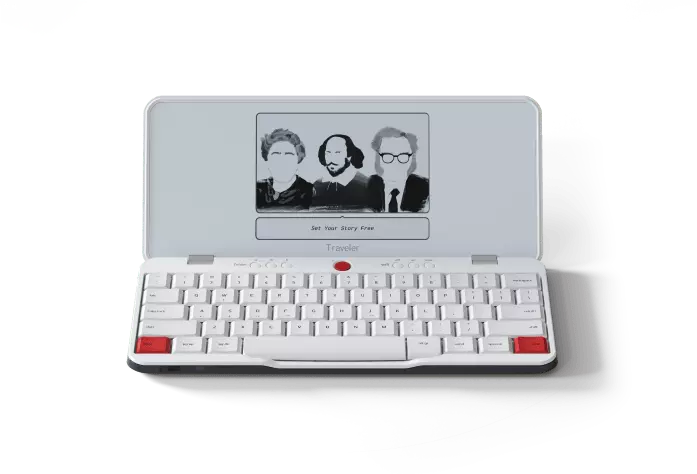
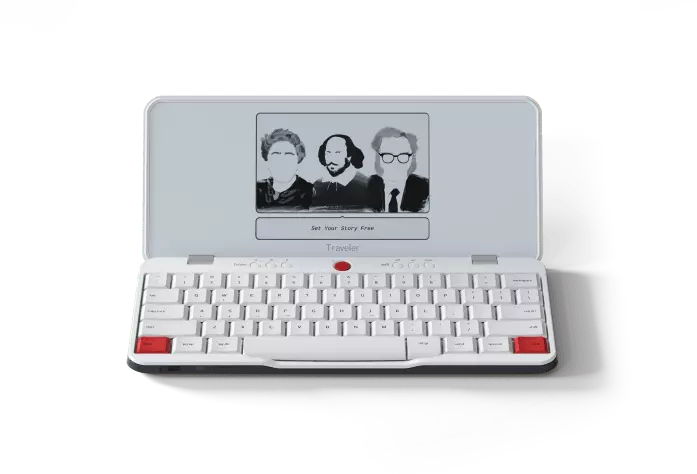
  • 1 Freewrite Traveler
  • 1 hour-long one-on-one coaching session with Grant Faulkner
  • 1 free Flash Gym session with the Flash Fiction Institute
  • 1 Words Are Hard prompt deck
  • A paperback copy of Set Your Story Free, the ultimate guide to freewriting
  • A digital copy of the opening chapter of Grant Faulkner's book, The Art of Brevity

Second and third place writers will each receive:

  • Publication on the Freewrite blog and Flash Fiction Institute blog
  • 1 Freewrite Alpha
  • 1 free Flash Gym session with the Flash Fiction Institute
  • Words Are Hard prompt deck
  • A paperback copy of Set Your Story Free, the ultimate guide to freewriting
  • A digital copy of the opening chapter of Grant Faulkner's book, The Art of Brevity

The Schedule

  • Thursday, Aug 13: Lesson & prompt announcement
  • Monday, Aug 17: Submissions deadline
  • Monday, Aug 31: Finalists announced
  • Monday, September 7: Grand prize winner announced

Questions? You can reach us at hello@getfreewrite.com.

Write on.

The Freewrite 500 Pit Crew 🏁 

Full contest terms and conditions