overlaylink

The Haunted Traveler Giveaway Official Rules

octobre 21, 2025 | 2 lire la lecture

Official Rules for the Giveaway

No purchase necessary to enter or win. A purchase will not increase your changes of wining. Void where prohibited or restricted by law.

1. Sponsor

The Haunted Traveler Giveaway (“Giveaway”) is sponsored by Freewrite (a product of Astrohaus Inc.), located at Astrohaus, 1632 1st Avenue #29179, New York, NY 10028 (“Sponsor”).

2. Eligibility

The Giveaway is open to legal residents of the 50 United States and the District of Columbia who are at least 18 years of age at the time of entry. Employees of Sponsor and their immediate family members or persons living in the same household are not eligible to enter. The Giveaway is subject to all applicable federal, state, and local laws and regulations and is void where prohibited.

3. Giveaway Period

The Giveaway begins at 12:01 a.m. EST on Tuesday, October 21, and ends at 11:59 p.m. EST on Thursday, October 30 (“Giveaway Period”). Entries submitted before or after the Giveaway Period will not be eligible. Sponsor's computer is the official timekeeping device for this Promotion.

4. How to Enter

To enter the Giveaway, participants must submit the official giveaway form with their name and email address. Limit one (1) entry per person unless otherwise stated. Entries that are incomplete or do not adhere to the rules or specifications may be disqualified. Find the form here:https://getfreewrite.com/#hauntedtraveler

5. Prize

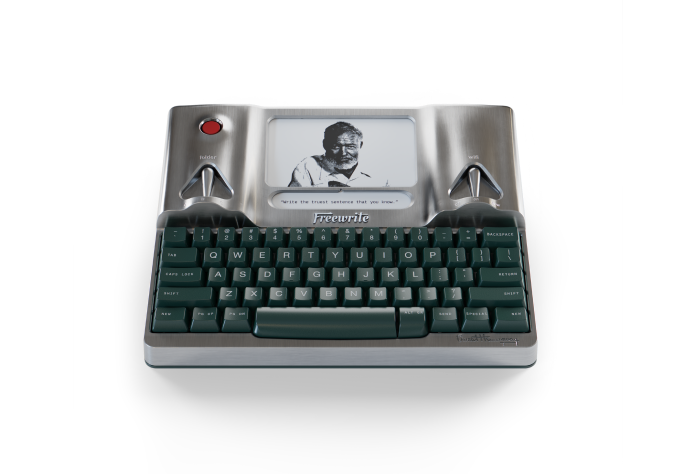
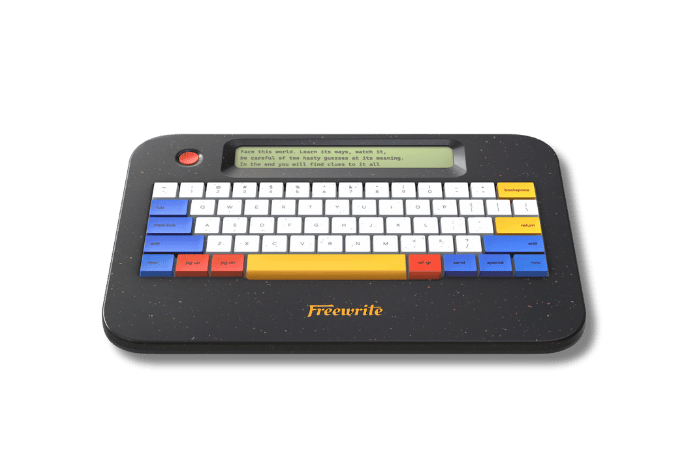
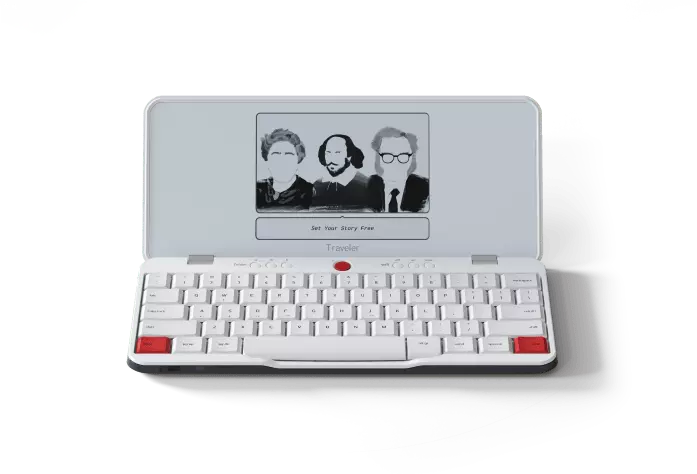
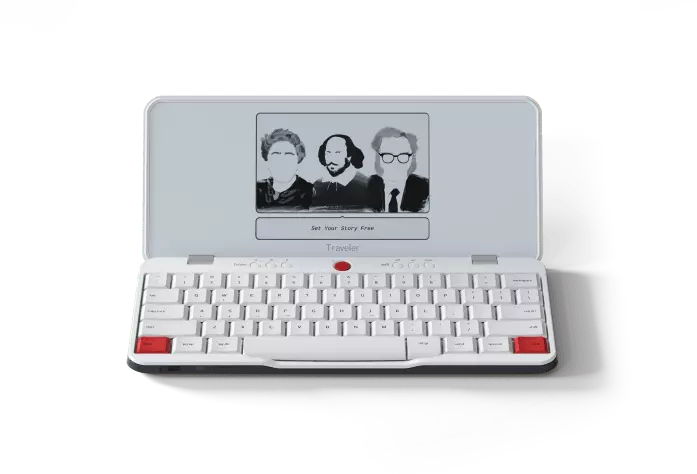
One (1) winner will receive one (1) Freewrite Traveler with an approximate retail value of $549. Prize is non-transferable and no substitution or cash equivalent is allowed, except at Sponsor’s sole discretion.

6. Winner Selection and Notification

Winner will be selected at random from all eligible entries received during the Giveaway Period. The drawing will take place on or about October 31. The winner will be notified via email within 5 business days of selection. If the winner cannot be contacted, is ineligible, or fails to respond within 3 business days, the prize may be forfeited and an alternate winner selected.

7. Publicity

By entering, participants grant Sponsor the right to use their name, likeness, and entry for promotional and marketing purposes without further compensation, unless prohibited by law.

8. General Conditions

By participating, entrants agree to abide by these Official Rules and the decisions of the Sponsor, which are final. The Sponsor reserves the right to cancel, modify, or suspend the Promotion if it becomes technically corrupted or cannot be conducted as planned. The prize is non-transferable. All federal, state, and local taxes are the responsibility of the winner. Sponsor reserves the right, in its sole discretion, to disqualify any individual who tampers with the entry process or otherwise violates these Terms and Conditions.

9. Limitation of Liability

By participating, entrants agree to release and hold harmless the Sponsor, its affiliates, and their respective officers, directors, employees, and agents from any and all liability arising from or in connection with participation in the Giveaway or acceptance, use, or misuse of the prize.

10. Privacy

Information submitted with an entry is subject to the Sponsor’s Privacy Policy.
avril 15, 2026 4 lire la lecture

Break up with Final Draft for good. Get the best screenplay workflow in Hollywood: Freewrite + Highland Pro.

avril 01, 2026 0 lire la lecture
mars 22, 2026 3 lire la lecture

If you're new here, freewriting is “an unfiltered and non-stop writing practice.” It’s sometimes known as stream-of-consciousness writing.

To do it, you simply need to write continuously, without pausing to rephrase, self-edit, or spellcheck. Freewriting is letting your words flow in their raw, natural state.

When writing the first draft of a novel, freewriting is the approach we, and many authors, recommend because it frees you from many of the stumbling blocks writers face.

This method helps you get to a state of feeling focused and uninhibited, so you can power through to the finish line.

How Freewriting Gives You Mental Clarity

Freewriting is like thinking with your hands. Some writers have described it as "telling yourself the story for the first time."

Writing for Inside Higher Ed, Steven Mintz says, “Writing is not simply a matter of expressing pre-existing thoughts clearly. It’s the process through which ideas are produced and refined.” And that’s the magic of putting pen to paper, or fingertips to keyboard. The way you learned to ride a bike by wobbling until suddenly you were pedaling? The way you learned certain skills by doing as well as revising? It works for writing, too.

The act of writing turns on your creative brain and kicks it into high gear. You’re finally able to articulate that complex idea the way you want to express it when you write, not when you stare at a blank page and inwardly think until the mythical perfect sentence comes to mind.

Writing isn’t just the way we express ideas, but it’s how we extract them in the first place. Writing is thinking.

Or, as Flannery O'Connor put it:

“I write because I don't know what I think until I read what I say.”

Writing isn’t just the way we express ideas, but it’s how we extract them in the first place. Writing is thinking.


Freewriting to Freethinking

But how and why does it work? Freewriting makes fresh ideas tumble onto the page because this type of writing helps you get into a meditative flow state, where the distractions of the world around you slip away.

Julie Cameron, acclaimed author of The Artist’s Way, proposed the idea that flow-state creativity comes from a divine source. And sure, it certainly feels like wizardry when the words come pouring out and scenes seem to arrange themselves on the page fully formed. But that magic, in-the-zone writing feeling doesn’t have to happen only once in a blue moon. It’s time to bust that myth.

By practicing regular freewriting and getting your mind (and hands) used to writing unfiltered, uncensored, and uninterrupted, you start freethinking and letting the words flow. And the science backs it up.

According to Psychology Today, the dorsolateral prefrontal cortex goes quiet during flow state. This part of the brain is in charge of “self-monitoring and impulse control” – in other words, the DLPFC is the tiny home of your loud inner critic. And while that mean little voice in your head takes a long-overdue nap, you’re free to write without doubt or negative self-talk.

“With this area [of the brain] deactivated, we’re far less critical and far more courageous, both augmenting our ability to imagine new possibilities and share those possibilities with the world.”

Freewriting helps us connect with ourselves and our own thoughts, stories, beliefs, fears, and desires. But working your creative brain is like working a muscle. It needs regular flexing to stay strong.

So, if freewriting helps us think and organize our thoughts and ideas, what happens if we stop writing? If we only consume and hardly ever create, do we lose the ability to think for ourselves? Up next, read "Are We Living through a Creativity Crisis?"


Learn More About Freewriting

Get the ultimate guide to boosting creativity and productivity with freewriting absolutely free right here.You'll learn how to overcome perfectionism, enhance flow, and reignite the joy of writing.

SYSF-book-mockup.webp