overlaylink

Writing Prompts: 60 Ideas You Can Use Today

August 23, 2018 | 4 min read

When I was in elementary school, I had a teacher who would have us freewrite to writing prompts he would write on the whiteboard. Every Monday morning, we would spend the first 10 minutes of class writing about dragons, time travel, or our weekends.

I had stopped using writing prompts after that 4th grade English class.  This changed once I began writing thousands of words per day. Some days, I just didn’t know what to write about. Other days, I already had a topic in hand, but I couldn’t find the words. Writing prompts have been a great tool to help me defeat writer’s block and swiftly put pen to paper.

A writing prompt is a topic around which you start writing ideas. You’re free to stick to the subject or let your mind wander.

Benefits of Writing Prompts

1. Put pen to paper. Instead of thinking about what to write about, writing prompts give you a topic to start writing about immediately.

2. Practice makes perfect. Writing prompts help you build your writing “muscles”. This habit will help make it easier for you to start writing and will teach you to write longer.

3. Increase your creativity. Writing prompts can make you see the world in a new light, or a way you’ve never imagined.

Maybe you want to buckle down and finish that novel. Or perhaps you needed to complete that blog post yesterday. Regardless of your circumstance, prompts can be your ticket out of uncreative purgatory and back to the writing promised land.


Freewrite writing prompts and inspiration


60 Writing Prompts to Spark Your Imagination

1. What was your favorite childhood vacation?

2. The last words of your novel are, “As night became day, he started to understand the truth.” Now, go write the rest.

3. Turn one of the last texts you sent into a story.

4. Add an original scene to the last movie you watched.

5. Two friends have a disagreement.

6. Write about your favorite teacher.

7. Outside the window, you see something you can’t believe.

8. Write about the first time you held someone's hand.

9. Write about the last thing/person that made you smile.

10. Write about a time you were lost.

11. Write about your first job.

12. Write a letter to your 14-year old self.

13. Write about why you write.

14. Five years from now, I will be.

15. Write about your dream vacation.

16. Do you like to be alone or with company?

17. You have $300 and a Prius, describe the 2,800 mile road trip from NYC to LA.

18. Write about your biggest goal.

19. Write about your biggest fear.

20. A conversation you and a stranger have on a plane.

21. A time you or someone you love was scammed.

22. Turn the last song you listened to into a story.

23. Describe the life of your favorite singer.

24. Write about a piece of furniture in the room you’re in.

25. If I knew then what I know now.

26. If you could travel back in time, where would you go?

27. You have a billion dollars in your bank account. How did you make it?

28. You’ve discovered a new planet. Describe what you see.

29. If you could do anything for work, what would you do?

30. You live on an abandoned island, describe your morning routine.

31. You’re in a foreign country and don’t speak the native language.

32. Describe how you think your grandparents met.

33. Write about a time you failed.

34. You wake up today with the superpower of your choosing.

35. You’re a dog, describe your interaction with a human.

36. Write about someone you admire.

37. Go to Twitter or Facebook and write about the first post you see.

38. Write about a time you were uncomfortable.

39. She tried to forget him, but never could.

40. Just as your flight takes off, you discover a shocking note under your seat.

41. None of your friends remember you, describe yourself to them.

42. An island rose from the sea.

43. Out of the ashes, arose a hero.

44. The whales grew feet.

45. I open the last book on earth.

46. You knock louder and louder on the door, but nobody answers.

47. The door you had locked, is wide open.

48. Just as you fall asleep, the phone rings.

49. She had the perfect party planned, only to have it ruined by her ex.

50. She said her final words and left, there’s no turning back now.

51. A blind man falls in love, describe his feelings.

52. You have the power to stop time, what do you do?

53. The sun rose for the final time.

54. You discover that your partner is a robot.

55. You have 10 days to live.

56. How will cars look in 50 years?

57. This needs to be cleaned, the police will be here any minute.

58. For years, he carefully planned out this day.

59. The birds didn’t go south for the winter.

60. It’s June 13th, the snow won’t stop falling.


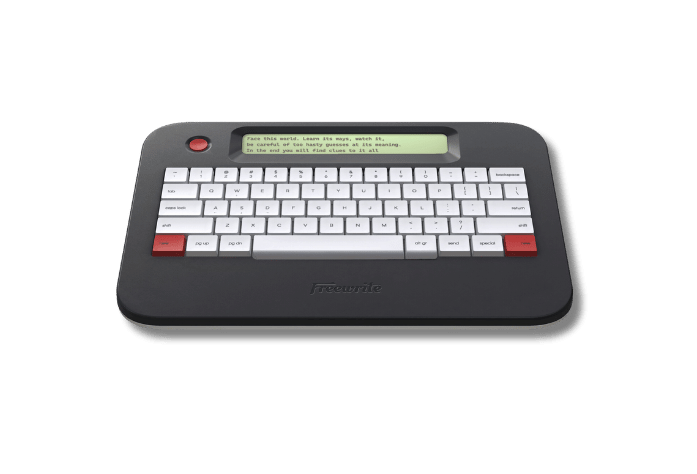
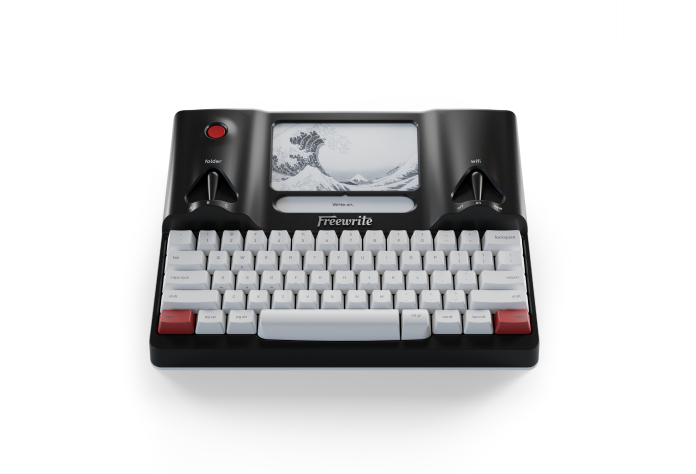
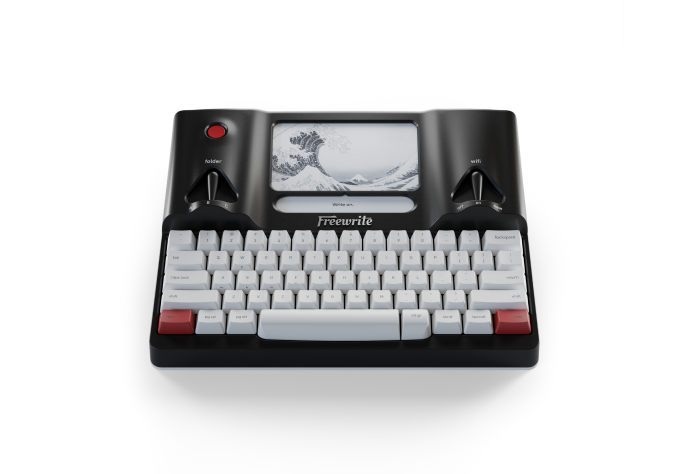
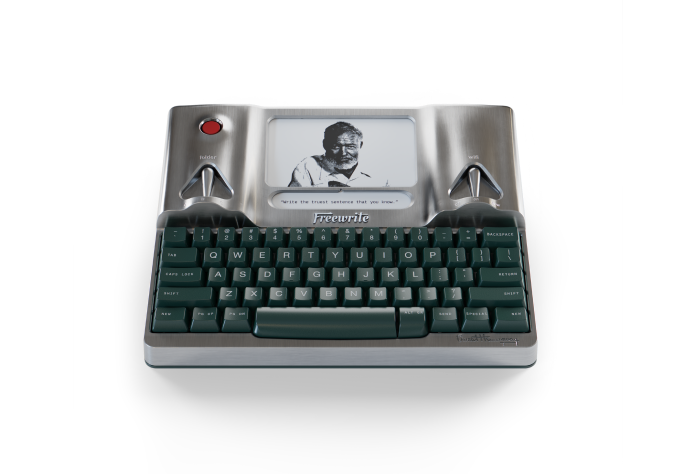
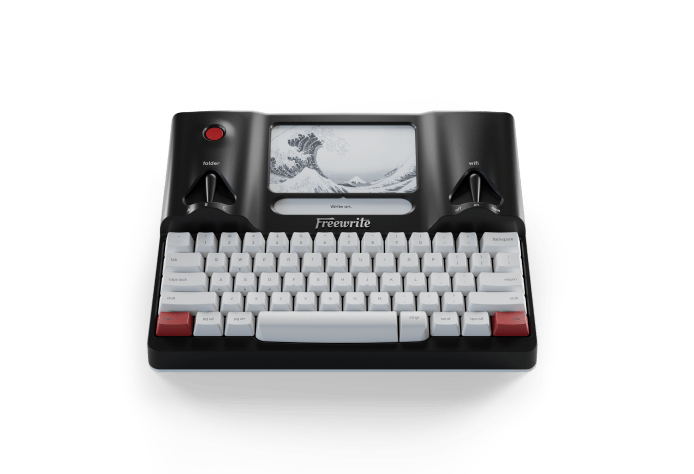
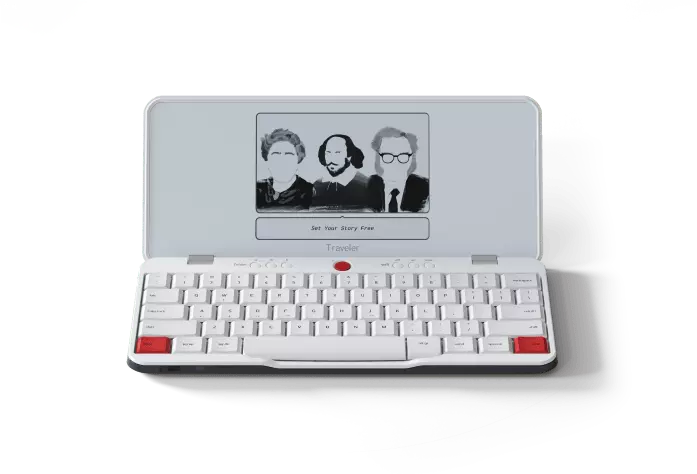
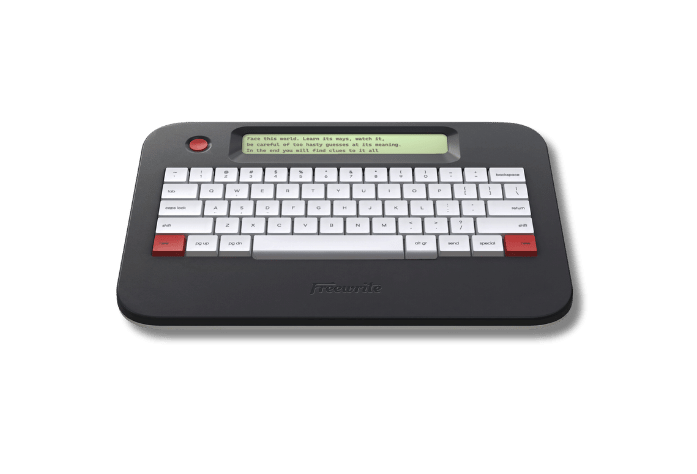
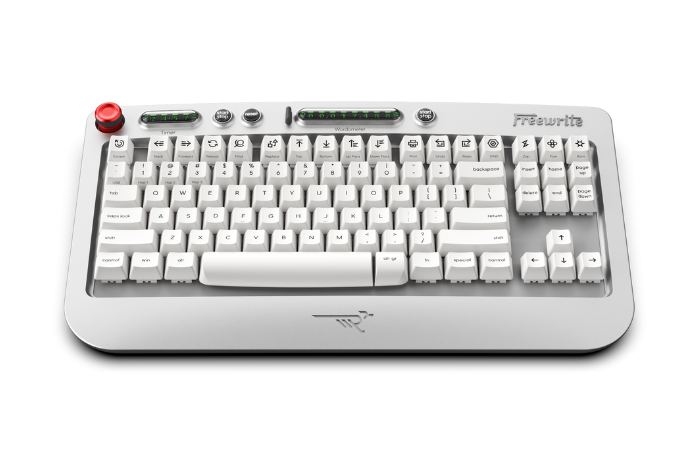
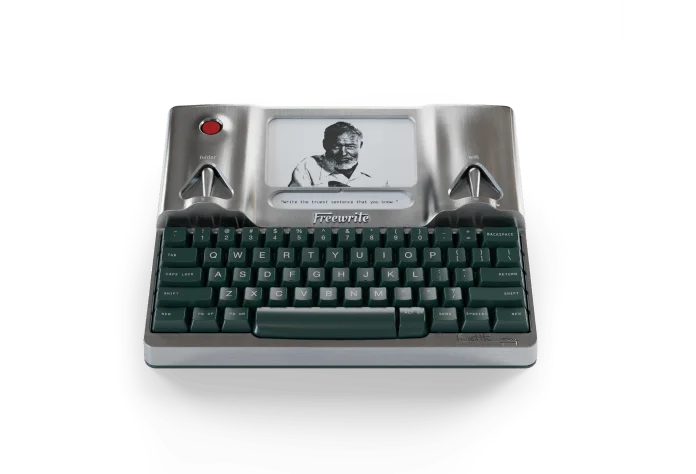
Now that you've been inspired, the next step is writing consistently! Writers who use our Freewrite distraction-free writing tools have seen their word counts double. Could a Freewrite be right for you?!

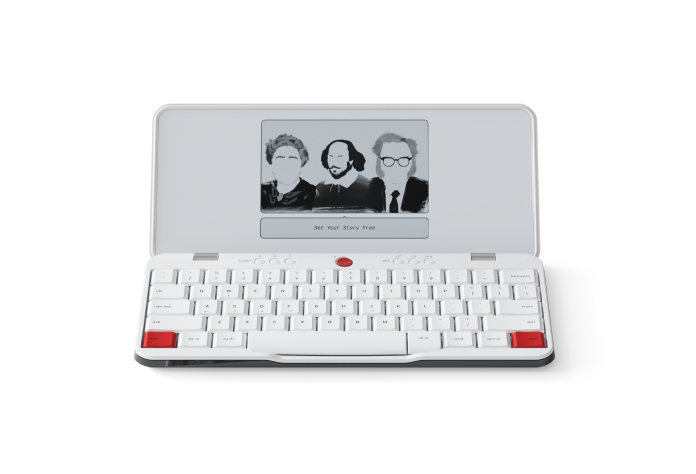
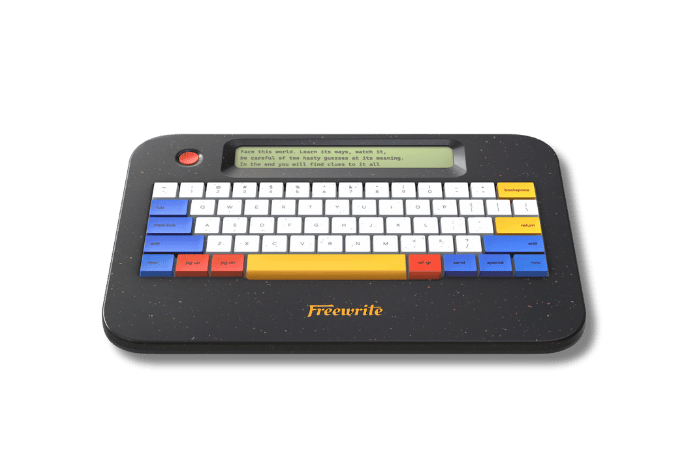
Learn more about the "Draft First, Edit Later" Freewrite philosophy that drives prolific output. And, check out the Freewrite Alpha for an on-the-go writing partner.

For even more prompts, check out the Words Are Hard Creative Prompt Pack from Freewrite.

Freewrite Writing Prompts


-- 

Carlton Clark
Carlton Clark loves is a writer, marketer, and entrepreneur. At the age of 14, he founded the media company ballplayerplus.com. Currently, Carlton helps businesses share their stories through social media and blogging.
When he’s not writing or creating content, Carlton coaches youth baseball and plays guitar. You can find him online on Instagram @itscarltonclark and on Twitter @carlton_mukasa.


December 30, 2025 3 min read

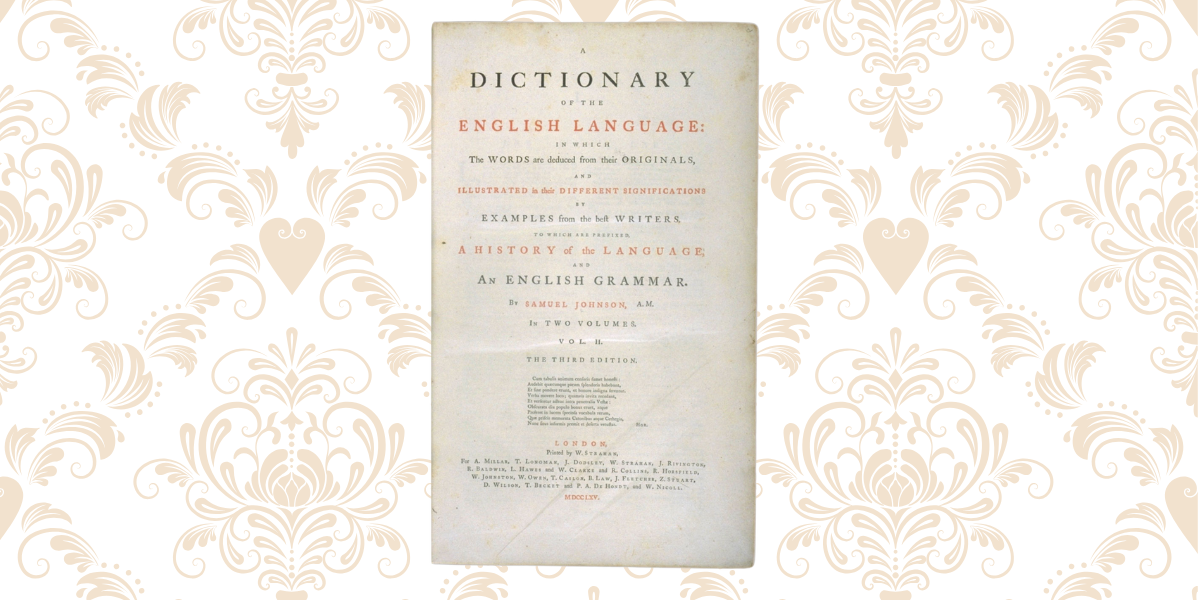
It’s Freewrite’s favorite time of year. When dictionaries around the world examine language use of the previous year and select a “Word of the Year.”

Of course, there are many different dictionaries in use in the English language, and they all have different ideas about what word was the most influential or saw the most growth in the previous year. They individually review new slang and culturally relevant vocabulary, examine spikes or dips in usage, and pour over internet trend data.

Let’s see what some of the biggest dictionaries decided for 2025. And read to the end for a chance to submit your own Word of the Year — and win a Freewrite gift card.

[SUBMIT YOUR WORD OF THE YEAR]


Merriam-Webster: "slop"

Merriam-Webster chose "slop" as its Word of the Year for 2025 to describe "all that stuff dumped on our screens, captured in just four letters."

The dictionary lists "absurd videos, off-kilter advertising images, cheesy propaganda, fake news that looks pretty real, junky AI-written books, 'workslop' reports that waste coworkers’ time … and lots of talking cats" as examples of slop.

The original sense of the word "slop" from the 1700s was “soft mud” and eventually evolved to mean "food waste" and "rubbish." 2025 linked the term to AI, and the rest is history.

Honorable mentions: conclave, gerrymander, touch grass, performative, tariff, 67.

Dictionary.com: "67"

The team at Dictionary.com likes to pick a word that serves as “a linguistic time capsule, reflecting social trends and global events that defined the year.”

For 2025, they decided that “word” was actually a number. Or two numbers, to be exact.

If you’re an old, like me, and don’t know many school-age children, you may not have heard “67” in use. (Note that this is not “sixty-seven,” but “six, seven.”)

Dictionary.com claims the origin of “67” is a song called “Doot Doot (6 7)” by Skrilla, quickly made infamous by viral TikTok videos, most notably featuring a child who will for the rest of his life be known as the “6-7 Kid.” But according to my nine-year-old cousin, the origins of something so mystical can’t ever truly be known.

(My third grade expert also demonstrated the accompanying signature hand gesture, where you place both hands palms up and alternately move up and down.)

And if you happen to find yourself in a fourth-grade classroom, watch your mouth, because there’s a good chance this term has been banned for the teacher’s sanity.

Annoyed yet? Don’t be. As Dictionary.com points out, 6-7 is a rather delightful example at how fast language can develop as a new generation joins the conversation.

Dictionary.com honorable mentions: agentic, aura farming, broligarchy, clanker, Gen Z stare, kiss cam, overtourism, tariff, tradwife.

Oxford Dictionary: "rage bait"

With input from more than 30,000 users and expert analysis, Oxford Dictionary chose "rage bait" for their word of the year.

Specifically, the dictionary pointed to 2025’s news cycle, online manipulation tactics, and growing awareness of where we spend our time and attention online.

While closely paralleling its etymological cousin "clickbait," rage bait more specifically denotes content that evokes anger, discord, or polarization.

Oxford's experts report that use of the term has tripled in the last 12 months.

Oxford Dictionary's honorable mentions:aura farming, biohack.

Cambridge Dictionary: "parasocial"

The Cambridge Dictionary examined a sustained trend of increased searches to choose "parasocial" as its Word of the Year.

Believe it or not, this term was coined by sociologists in 1956, combining “social” with the Greek-derived prefix para-, which in this case means “similar to or parallel to, but separate from.”

But interest in and use of the term exploded this year, finally moving from a mainly academic context to the mainstream.

Cambridge Dictionary's honorable mentions: slop, delulu, skibidi, tradwife

Freewrite: TBD

This year, the Freewrite Fam is picking our own Word of the Year.

Click below to submit what you think the Word of 2025 should be, and we'll pick one submission to receive a Freewrite gift card.

[SUBMIT HERE] 

--

Sources

December 18, 2025 7 min read

What can Jane Austen's personal letters teach writers of today?

December 10, 2025 6 min read

Singer-songwriter Abner James finds his creativity in the quiet freedom of analog tools. Learn how his creative process transcends different media.

Abner James went to school for film directing. But the success of the band he and his brother formed together, Eighty Ninety, knocked him onto a different trajectory.

The band has accrued more than 40 million streams since the release of their debut EP “Elizabeth," and their work was even co-signed by Taylor Swift when the singer added Eighty Ninety to her playlist "Songs Taylor Loves.”

Now, Abner is returning to long-form writing in addition to songwriting, and with a change in media comes an examination of the creative process. We sat down to chat about what's the same — and what's different. 

ANNIE COSBY: Tell us about your songwriting process.

ABNER JAMES: The way I tend to write my songs is hunched over a guitar and just seeing what comes. Sounds become words become shapes. It's a very physical process that is really about turning my brain off.

And one of the things that occurred to me when I was traveling, actually, was that I would love to be able to do that but from a writing perspective. What would happen if I sat down and approached writing in the same way that I approached music? In a more intuitive and free-form kind of way? What would that dig up?

AC: That's basically the ethos of Freewrite.

AJ: Yes. We had just put out a record, and I was thinking about how to get into writing for the next one. It occurred to me that regardless of how I started, I always finished on a screen. And I wondered: what's the acoustic guitar version of writing?

Where there's not blue light hitting me in the face. Even if I'm using my Notes app, it's the same thing. It really gets me into a different mindset.

 "I wondered: what's the acoustic guitar version of writing?"

I grew up playing piano. That was my first instrument. And I found an old typewriter at a thrift store, and I love it. It actually reminded me a lot of playing piano, the kind of physical, the feeling of it. And it was really fun, but pretty impractical, especially because I travel a fair amount.

And so I wondered, is there such a thing as a digital typewriter? And I googled it, and I found Freewrite.

AC: What about Freewrite helps you write?

AJ:I think, pragmatically, just the E Ink screen is a huge deal, because it doesn't exhaust me in the same way. And the idea of having a tool specifically set aside for the process is appealing in an aesthetic way but also a mental-emotional way. When it comes out, it's kind of like ... It's like having an office you work out of. It's just for that.

"The way I tend to write my songs is hunched over a guitar and just seeing what comes. Sounds become words become shapes. It's a very physical process that is really about turning my brain off."

And all of the pragmatic limitations — like you're not getting texts on it, and you're not doing all that stuff on the internet — that's really helpful, too. But just having the mindset....

When I pick up a guitar, or I sit down at the piano, it very much puts me into that space. Having a tool just for words does the same thing. I find that to be really cool and inspiring.

"When I pick up a guitar, or I sit down at the piano, it very much puts me into that space. Having a tool just for words does the same thing."

AC: So mentally it gets you ready for writing.

AJ: Yeah, and also, when you write a Microsoft Word, it looks so finished that it's hard to keep going. If every time I strummed a chord, I was hearing it back, mixed and mastered and produced...?

It's hard to stay in that space when I'm seeing it fully written out and formatted in, like, Times New Roman, looking all seriously back at me.

AC: I get that. I have terrible instincts to edit stuff over and over again and never finish a story.

AJ:  Also, the way you just open it and it's ready to go. So you don't have the stages of the computer turning on, that kind of puts this pressure, this tension on.

It's working at the edges in all these different ways that on their own could feel a little bit like it's not really necessary. All these amorphous things where you could look at it and be like, well, I don't really need any of those. But they add up to a critical mass that actually is significant.

And sometimes, if I want to bring it on a plane, I've found it's replaced reading for me. Rather than pick up a book or bring a book on the plane, I bring Traveler and just kind of hang out in that space and see if anything comes up.

I've found that it's kind of like writing songs on a different instrument, you get different styles of music that you wouldn't have otherwise. I've found that writing from words towards music, I get different kinds of songs than I have in the past, which has been interesting.

In that way, like sitting at a piano, you just write differently than you do on a guitar, or even a bass, because of the things those instruments tend to encourage or that they can do.

It feels almost like a little synthesizer, a different kind of instrument that has unlocked a different kind of approach for me.

"I've found that it's kind of like writing songs on a different instrument, you get different styles of music that you wouldn't have otherwise... [Traveler] feels almost like a little synthesizer, a different kind of instrument that has unlocked a different kind of approach for me."

AC: As someone who doesn't know the first thing about writing music, that's fascinating. It's all magic to me.

AJ: Yeah.

AC: What else are you interested in writing?

AJ: I went to school for film directing. That was kind of what I thought I was going to do. And then my brother and I started the band and that kind of happened first and knocked me onto a different track for a little while after college.

Growing up, though, writing was my way into everything. In directing, I wanted to be in control of the thing that I wrote. And in music, it was the same — the songwriting really feels like it came from that same place. And then the idea of writing longer form, like fiction, almost feels just like the next step from song to EP to album to novel.

For whatever reason, that started feeling like a challenge that would be deeply related to the kinds of work that we do in the studio.

AC: Do you have any advice for aspiring songwriters?

AJ: This sounds like a cliche, but it's totally true: whatever success that I've had as a songwriter — judge that for yourself — but whatever success I have had, has been directly proportional to just writing the song that I wanted to hear.

What I mean by that is, even if you're being coldly, cynically, late-stage capitalist about it, it's by far the most success I've had. The good news is that you don't have to choose. And in fact, when you start making those little compromises, or even begin to inch in that direction, it just doesn't work. So you can forget about it.

Just make music you want to hear. And that will be the music that resonates with most people.

I think there's a temptation to have an imaginary focus group in your head of like 500 people. But the problem is all those people are fake. They're not real. None of those people are actually real people. You're a focus group of one, you're one real person. There are more real people in that focus group than in the imaginary one.

And I just don't think that we're that different, in the end. So that would be my advice.

AC: That seems like generally great creative advice. Because fiction writers talk about that too, right? Do you write to market or do you write the book you want to read. Same thing. And that imaginary focus group has been debilitating for me. I have to silence that focus group before I can write.

AJ: Absolutely.

"I think there's a temptation to have an imaginary focus group in your head of like 500 people. But the problem is all those people are fake... You're a focus group of one, you're one real person. There are more real people in that focus group than in the imaginary one."

--

Learn more about Abner James, his brother, and their band, Eighty Ninety, on Instagram.