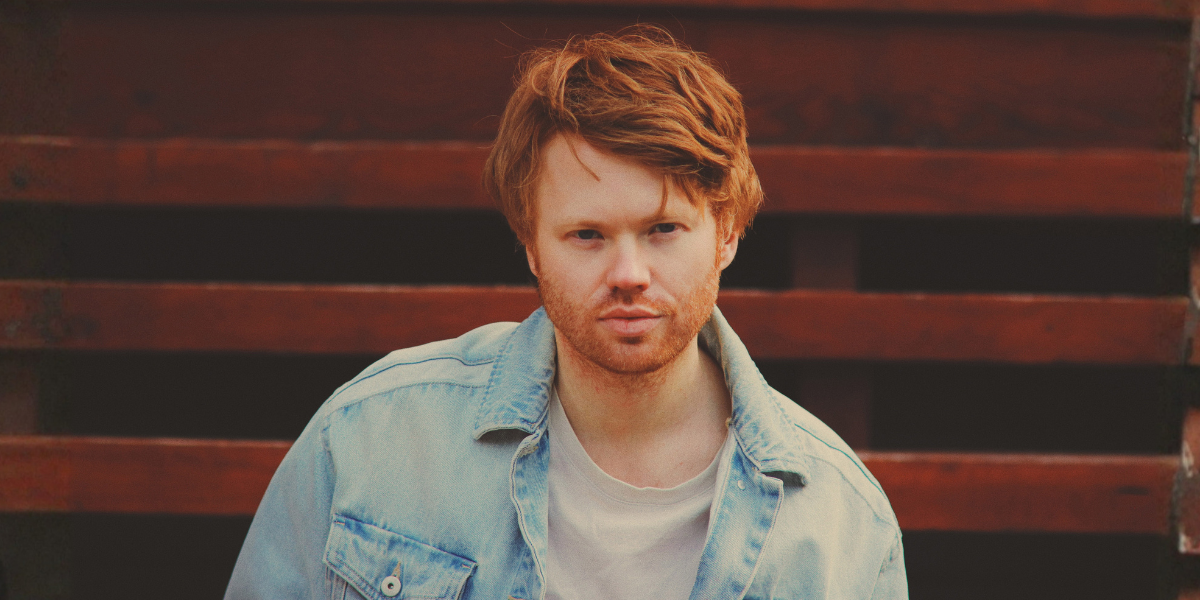
The lyrics of JP Saxe’s most popular songs read more like poems than Top 40 tunes.
Turns out there’s a reason for that.
This Grammy-nominated songwriter found his first community in Los Angeles at Da Poetry Lounge, where he met and befriended bonafide poets like Tonya Ingram, Alyesha Wise, Cuban Hernandez, and Edwin Bodney — names he recites with reverence.
And that community has led to a vibrant career in songwriting, including this recent milestone JP shared on Instagram: his songs have been streamed one billion times on Spotify.
His songs have been streamed one billion times on Spotify.
It’s difficult to visualize that number, but his other accomplishments are a little easier to wrap your brain around:
His hit “If the World Was Ending,” cowritten with and featuring Julia Michaels, was nominated for a Grammy. After a 30-stop tour opening for music legend John Mayer, JP did his own 70-stop headline tour that took him all over the world. He’s written songs with artists like Sabrina Carpenter, and "Wish You the Best," written with Lewis Capaldi, reached number one in the UK.
So how does a poetic songwriter turn his thoughts and emotions into chart-topping hits?
The short answer: Freewriting.
Read on for the long answer as we get into the nitty gritty of JP's creative process...

ANNIE COSBY: So it’s safe to say you’re majorly inspired by poetry?
JP SAXE: Most of my favorite writers are poets. I think the secret weapon of my career has been that I've been seeking the approval of poets, not other songwriters.
Because when I aim for the perspective of poets, I just write in such a different way.
Look, I love songwriters, so I don't mean to talk shit. But as a songwriter, you can hide some bullshit in a pretty melody and people will still buy it. It can still be nice to listen to.
As a poet, you have less to hide behind. It's just you and your sincerity, and the way you articulate that sincerity. I love the simplicity of that as an art form.
My first community when I moved to Los Angeles was Da Poetry Lounge, based out of the Greenway Court Theatre. Anyone in L.A. reading this, if you're a writer, I highly recommend going.
Those poets have become family to me and really have pushed me to be a better writer. Because if I do something that is lazy or contrived, they don't care how pretty it sounds.
If I do something that is lazy or contrived, [poets] don't care how pretty it sounds.
AC: What kind of writer do you consider yourself?
JP: Professionally, I'm a songwriter. That's the only kind of writing I've ever been paid for. But creatively, I just consider myself a writer.
I find myself and I articulate to myself who I am via writing. In more ways than just songs.
AC: How did you first get started writing?
JP: Songwriting was the first place I ever learned what it meant to have a good relationship with myself. I quite disliked myself as a young person, as I think young people often do. Because when you see yourself through the lens of the society around you, there are very few versions of being a person that seem acceptable.
And it was sitting down at a piano or a guitar with a journal and writing songs where I first understood what it felt like to see myself and like it.
When you see yourself through the lens of the society around you, there are very few versions of being a person that seem acceptable. And it was sitting down at a piano or a guitar with a journal and writing songs where I first understood what it felt like to see myself and like it.
To me, the magic of songwriting and creative expression in general is, in my experience, as a tool of self-understanding. But because we are so much less unique than we think, when you look for yourself in your art, other people find themselves in it, too.
That was such a major realization for me a few years ago — that what made my writing effective for others wasn't what made me unique, it was what made me basic. And that there was such power in the expression of my basicness.
AC: Are you always writing for yourself first?
JP: Usually, the first format I'm writing in is just freewriting.
AC: You know we love to hear that!
JP: Yes. I will sit down with a journal, and I will just heart-barf onto a page.
AC: *laughs* Do you have "heart-barf" copyrighted?
JP: I should at this point. I've used that terminology in a number of different mediums, t-shirts included.
But, yes, freewriting is usually the beginning of the process. First, I just have to barf onto a page, just let words happen, and then I can go back through with an editor's mentality and figure out whether I'm writing songs or poems or whatever.
Of course, if I'm going with another artist into the studio, that's a little bit different in that it's targeted to a specific format or a specific person's perspective.
I will sit down with a journal, and I will just heart-barf onto a page.
AC: You write very deeply emotional lyrics. Do you have to be in a certain state of mind for that, or can you sit down in the middle of, like, the airport and heart-barf?
JP: Well, I have two answers to that.
Firstly, I find I am more honest before I think about anyone reading it. So that's why I try not to think about what the writing is for when I start. It allows me to be more sincere when I don't have a reader or a listener in mind.
Something I’ve been noticing recently is I am stumbling into the ideas that interest me the most after I've started writing when I didn't feel like it.
Almost as if when I feel like writing, it's because there are ideas closer to the surface. But when I don't feel like writing and I do it anyway, the ideas that I arrive at were buried a little deeper down. They didn't want to come out as badly and therefore they are more intriguing.
I am stumbling into the ideas that interest me the most after I've started writing when I didn't feel like it.
AC: That’s so interesting. Almost like when you feel like writing, your subconscious already has an agenda.
JP: Yeah, my favorite things I've written recently happened when I started writing when I didn't want to.
AC: I remember reading an interview with you where you mentioned Fleabag and a quote by Phoebe Waller-Bridge where she's like, and this is paraphrased, if it scares you, it needs to be in the final edit.
JP: Totally. I saw that interview around the time of my first album. There's a song on my first album that got kept on the track list because of that interview.
I just really related to that. You know, one, Fleabag is one of my favorite shows of all time. So great.
AC: The hot priest!
JP: Phenomenal, iconic characters. Overall, I think that being a writer is such a blessing and I'm so grateful to do it, so if I am playing it safe with my subject matter, I'm kind of doing it a disservice.
Every job comes with its professional hazards. If it's your dream to be a hockey player, you accept that you might get CTE or lose some teeth.
If you get the blessing of being a writer, you accept that people are going to see more of you than you're comfortable with sometimes.
If you get the blessing of being a writer, you accept that people are going to see more of you than you're comfortable with sometimes.
AC: Were you always OK with that, or did you have to learn to get used to that?
JP: I think I just came to the conclusion along the way that trying to formulate my identity was far less exciting than trying to unravel it.
AC: That's interesting, especially in the context of our modern music scene, where you see a lot of created, pre-packaged personas.
JP: Well, occasionally it's a persona that is derived as a mechanism, a delivery mechanism for something that was uncovered. I think there's maybe a subtle distinction there, but one that feels really significant.
For example, one of my favorite artists right now is Chappell Roan. And obviously there's a very creative, formulated artist statement there, but it is so sincere. It feels so derived from a human experience, but they've captured it in a way that is elevating that sincerity rather than disguising it.
AC: I'm glad you made that distinction! I love Chappell Roan. Go, Missouri! We’re both from the Show-Me State. You often work with collaborators, right?
JP: I love writing as a team sport. I think often there is a mentality that there is more value to writing that is done independently, and I just don't subscribe to that.
If anything, I think co-writing really elevates the work. I think it's just as much of a craft to know how to navigate multiple creative voices in a room as it is to express your own.
I love writing as a team sport.
AC: That's amazing to hear, because that's kind of what we're trying to do here at Freewrite — elevating the idea of writing within a community. Writing is traditionally a very solitary exercise, but it doesn't have to be.
JP: There's so much about movie and television writing that I think is a couple steps ahead of songwriting.
AC: Like the writers’ room?
JP: Yeah, TV writers know this. It’s a very established concept that writers work collaboratively on a script.
AC: I would say book publishing is even farther behind songwriting in that regard. So what does your creative process look like? Are you always writing, always recording?
JP: I have to compartmentalize a little bit. There are three major parts of my career and it's very hard for me to do more than one of them well at a time.
Those three things are: touring and performing; writing and creating; and audience building and marketing.
Of course, all three of those things are intertwined, but in order to do any one of those things very well, I can only really prioritize one of them fully at a time.
AC: Interesting. And you’re home from tour and writing now, right?
JP: Yes, I’m very much in this right now. I have a writing week coming up, where I will be with co-writers and in the studio every day.
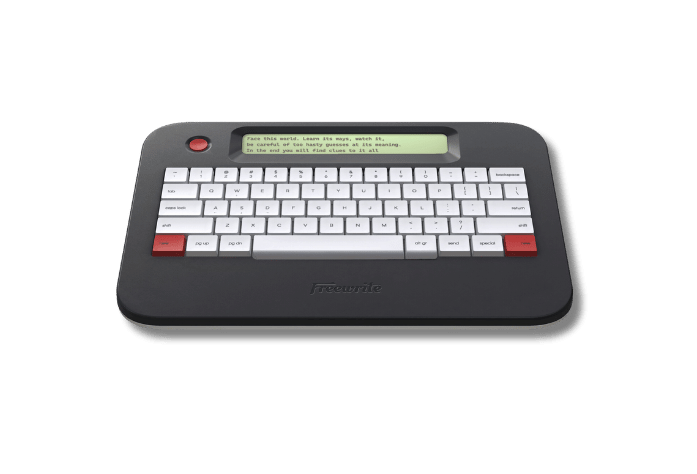
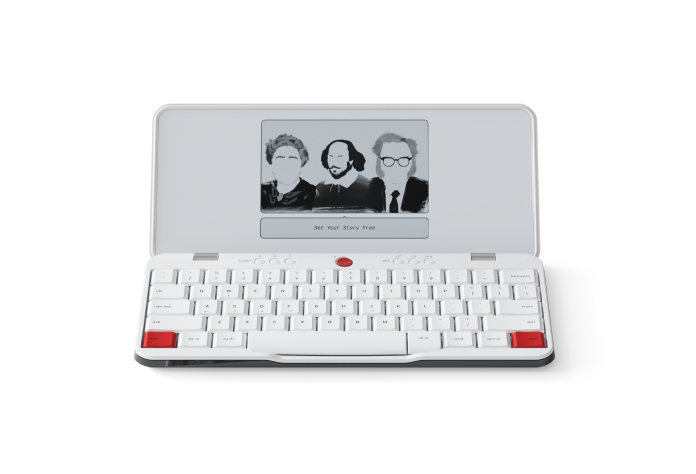
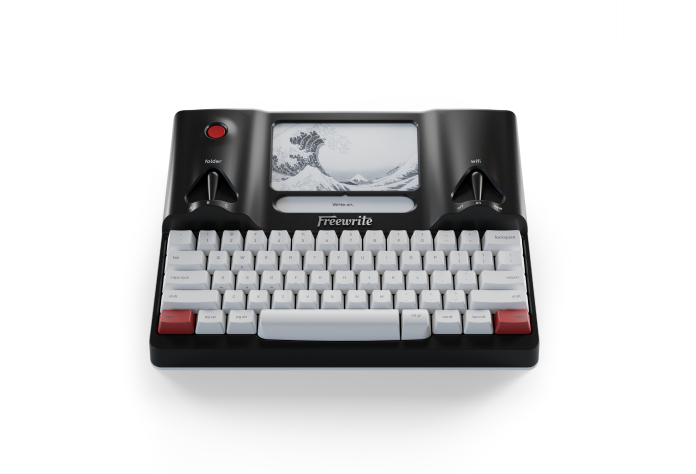
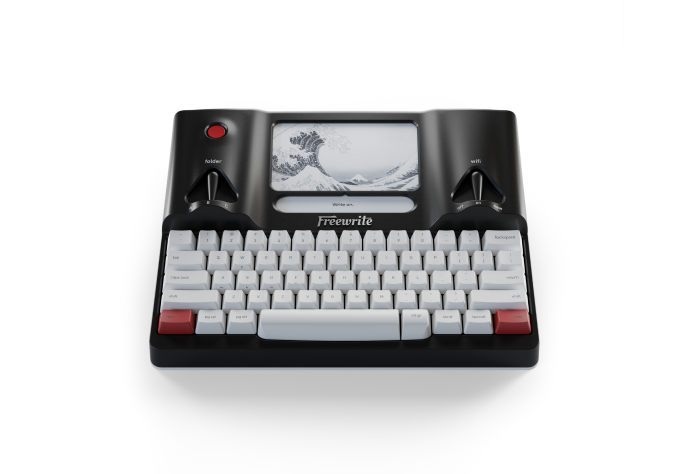
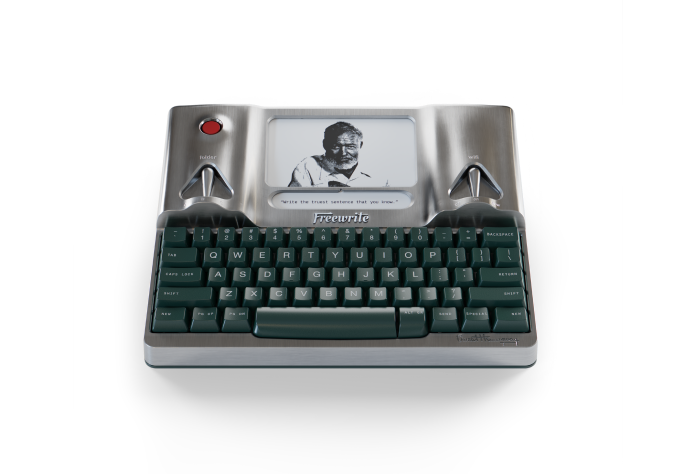
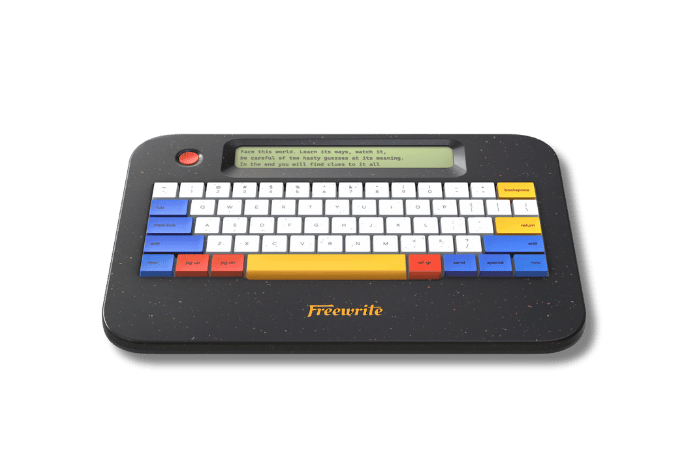
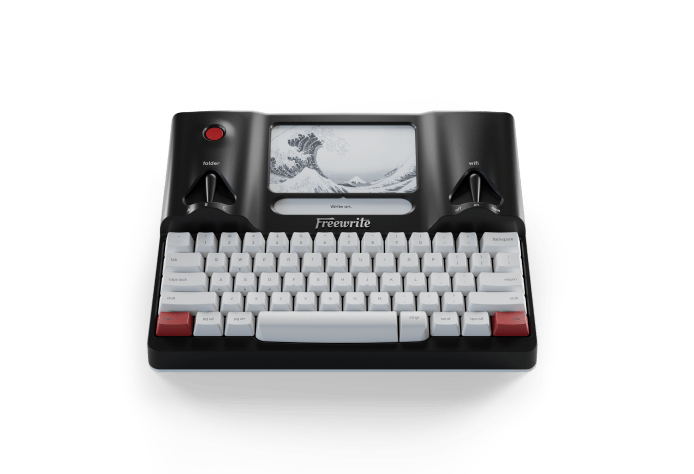
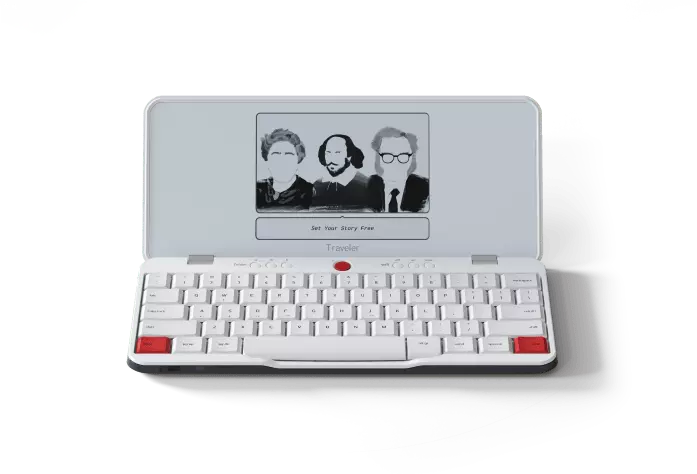
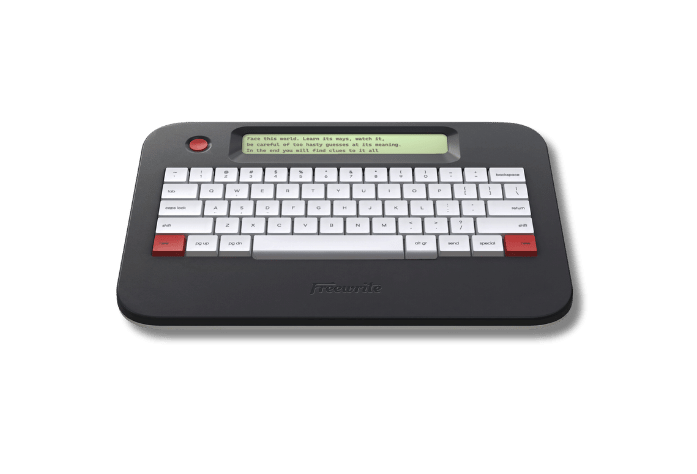
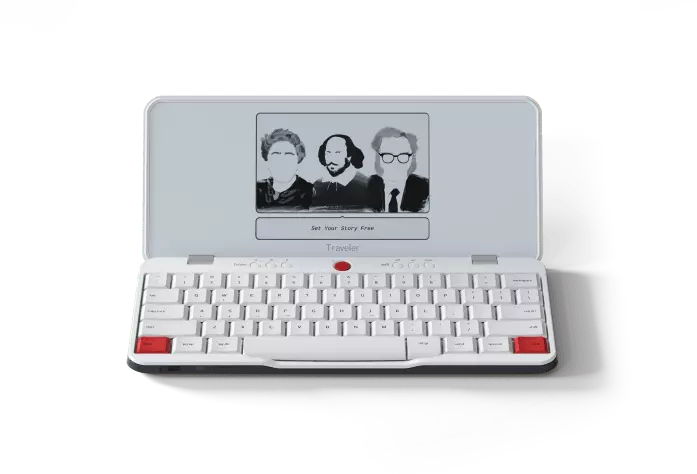
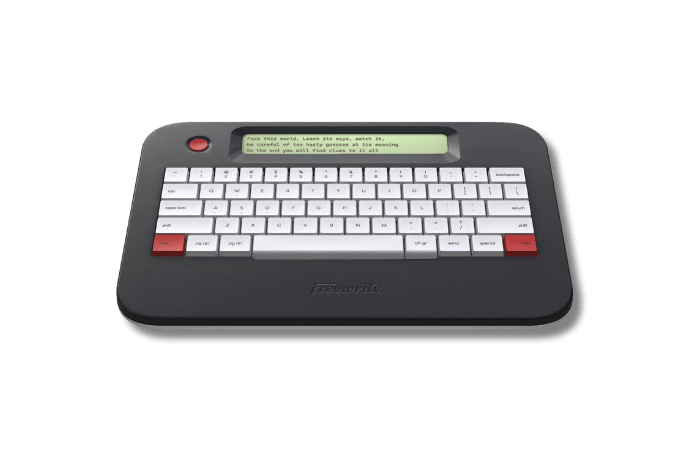
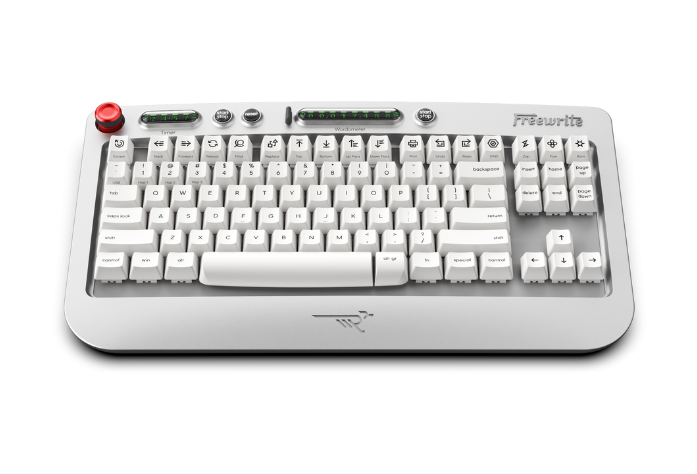
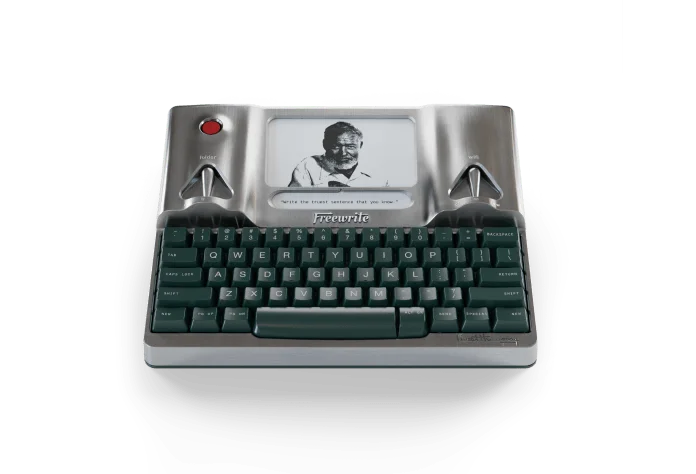
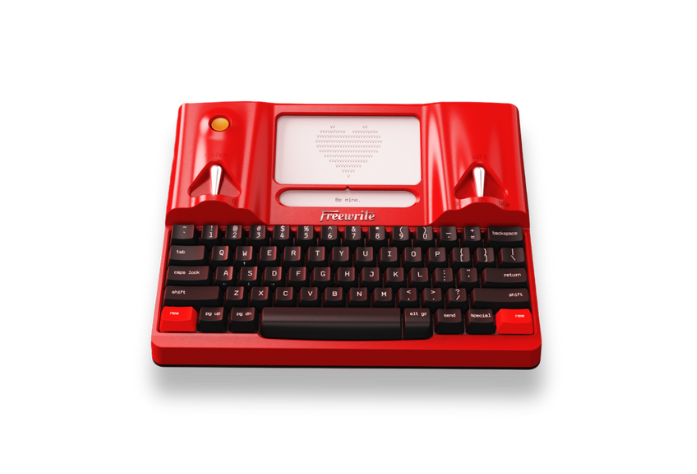
So I am currently using my Traveler every day to heart-barf, as a way to create my source material for those sessions.
I’ll just do pages and pages and pages of unedited, unrefined feelings, thoughts, explorations, stories, ideas, looking at what I've written already, trying to figure out what pieces are missing in the emotional spectrum I'm trying to capture on this album.
And then in the few days before those sessions, I'll read through all of it. If something seems interesting to me, then I'll take those pieces and further delve into them, either on my own or with co-writers in our writing sessions.
And that's how it starts to shape into something that has a form that a listener can take in.
So I am currently using my Traveler every day to heart-barf, as a way to create my source material for those [co-writing] sessions.
AC: I, not being a songwriter, had never thought of songwriting has having that same division as prose — writing or freewriting first, and then studio work as editing.
JP: I think every writer knows how different the feeling of creative brain and editing brain is. I really need to separate that process because I literally feel like a different person as an editor than I do as a creator.
I have to start by not considering who's reading it, who's hearing it, who it's for, what the melody is … I just have to put it there.
I think every writer knows how different the feeling of creative brain and editing brain is. I really need to separate that process because I literally feel like a different person as an editor than I do as a creator.
AC: So is that what drew you to Freewrite?
JP: Yes. And, I mean, I think part of the fun of being a writer is romanticizing the life of being a writer, too.
When I sit on the rooftop of a cafe in Lima, Peru, and write on Traveler, that is a different moment than being up there with an iPad — I was just in Lima on tour, and this is a real moment I'm describing.
I sat on this just spectacularly romantic gallery cafe rooftop in Barranco, this neighborhood of Lima, and as I'm sitting there and I'm writing, I start up a conversation with this group of people who look friendly sitting beside me, and they ended up being a choreographer and an artist and a dancer. And then they're like, “What's that you're writing on?” And I'm like, “It's a digital typewriter.”
And then I show them and they're like, “What are you writing?” And then I hand it over to them, and they're reading it on the rooftop. And then someone shows up with a guitar.
And there was this moment on that roof that I will never forget where there were like maybe 10 of us. And on one side, there was someone drawing a portrait of me, while I was kind of on the other side of the social dynamic, writing. And then everyone in the middle was laughing, drinking, talking. And it was just this symbiosis of both creatively representing the moment and being present in the moment.
It was life and art so intertwined on that Lima rooftop.
And if I'm painting that picture, like if I'm writing that scene in a movie, or I'm painting it to put it on a wall, an iPad is such a fucking eyesore.
AC: Are we going to get a song about that rooftop?
JP: Probably. The amount of journal entries that occurred on that rooftop is… The word-to-location ratio on that rooftop is probably higher than anywhere else in the world at this point.
AC: Last question: What's your #1 piece of advice for aspiring songwriters?
JP: Write as many bad songs as possible. If you spend a month trying to write a good song, I think you are less likely to get something that you love than if you write a bad song every day for a month.
I think bad writing is the soil in which good writing is allowed to grow. And if you don't have a pile of shit big enough, your good stuff can't grow out of it.
I think bad writing is the soil in which good writing is allowed to grow. And if you don't have a pile of shit big enough, your good stuff can't grow out of it.
AC: You heard it hear first, folks: Write more shit.
Find JP's music wherever you like to listen: Spotify | Apple | YouTube