overlaylink

Introducing Traveler Ghost

November 14, 2023 | 2 min read

Ghost Header Launch

Tired of the monotony of modern tech? So are we. Let’s go back to the future. 👻

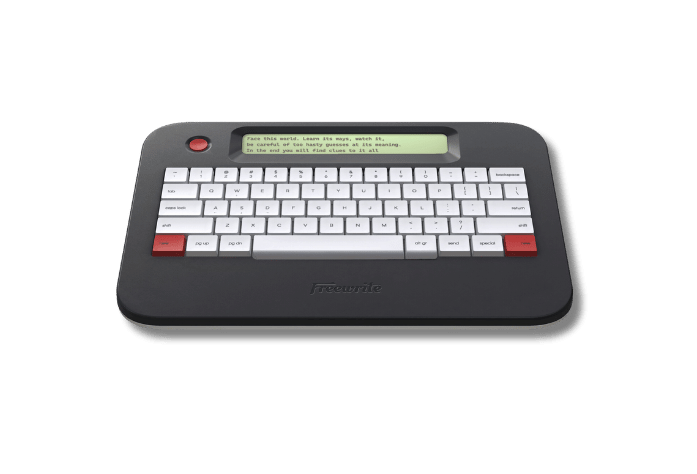
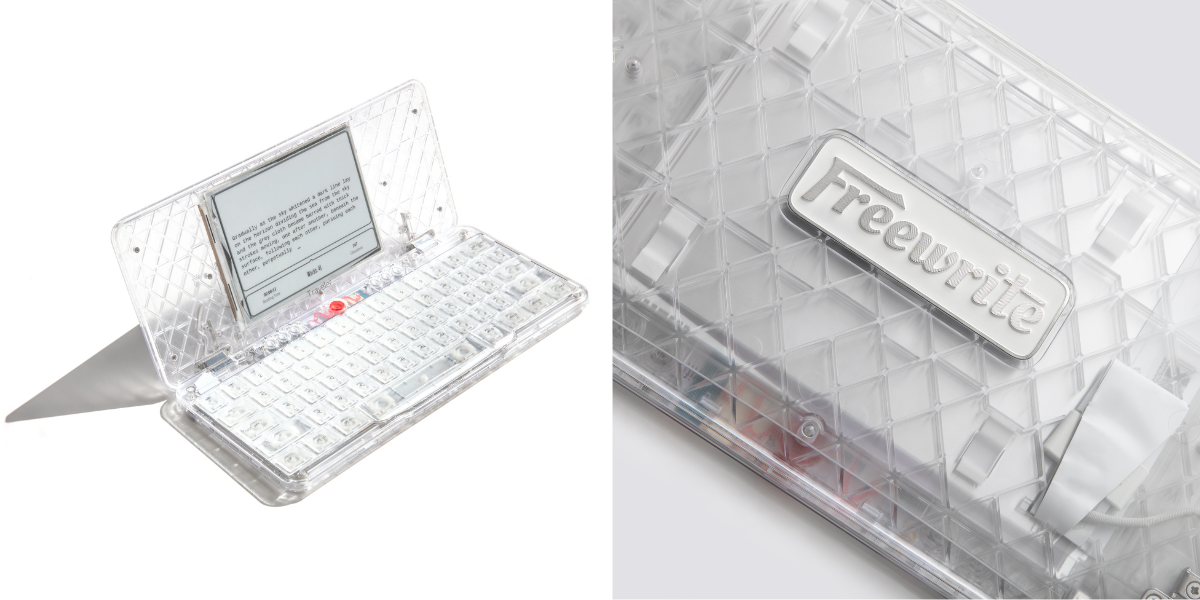
From Dave Grohl’s see-through guitar to your Nintendo controller, we humans have always been fascinated by the inner workings of the tools that help us live our lives. To that end, let us introduce the new Special Edition "Ghost" Traveler.

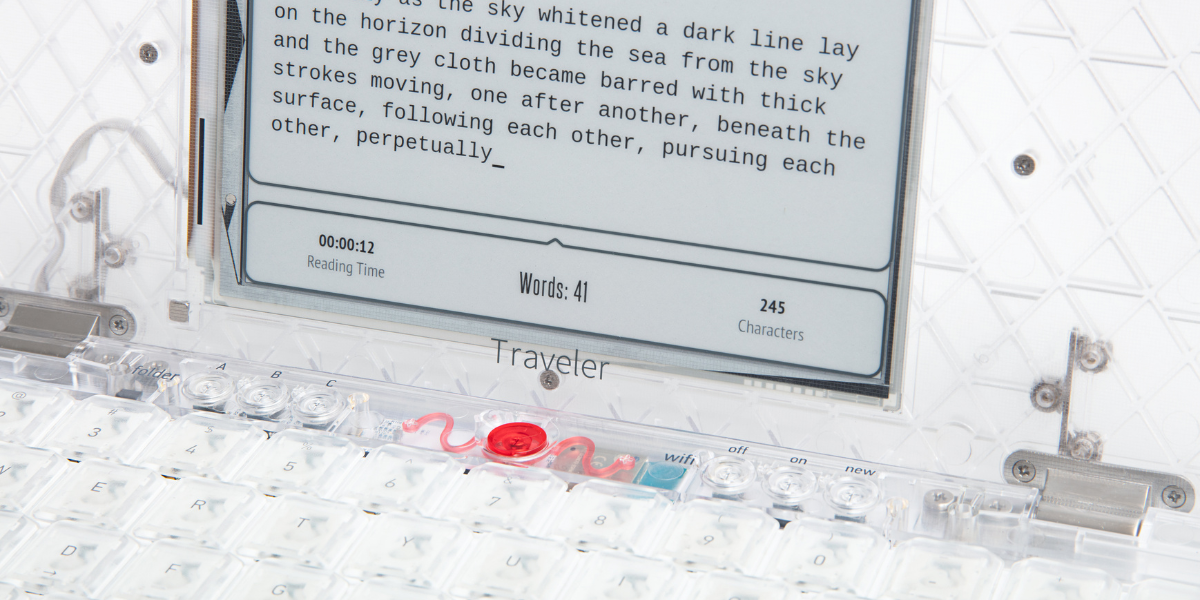
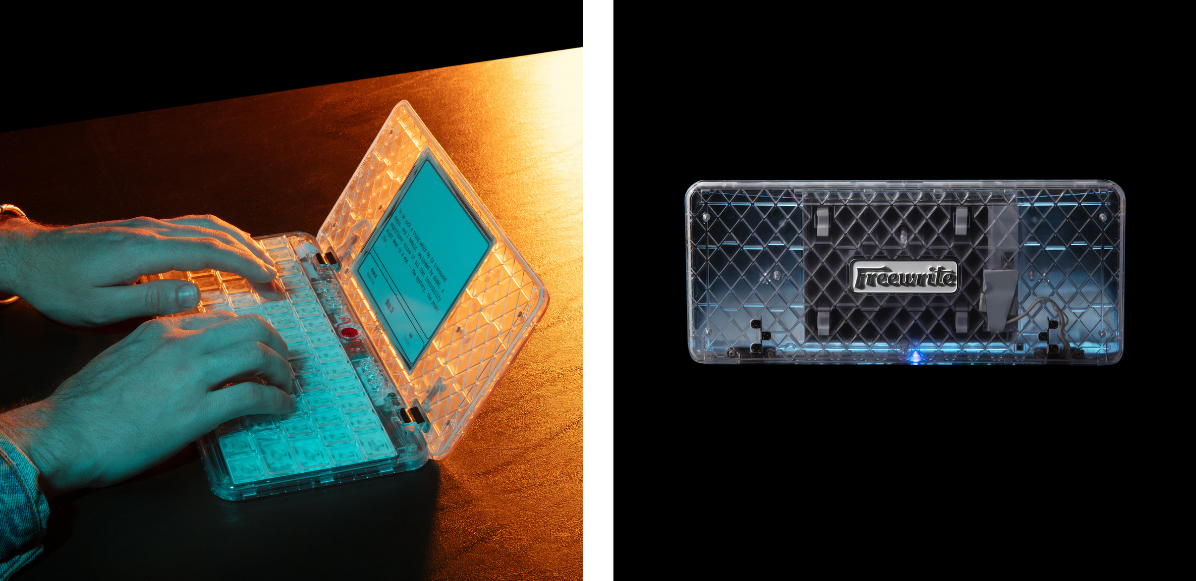
An affectionate callback to the futuristic tech of Y2K and beyond, this unique Traveler design features a clear body that will help you see things in a whole new way as you work through the guts of your story.
Ghost Double Pane

Ghost Closeup 2

Transparency At Its Finest

What do the 1939 World’s Fair and your childhood Nintendo controller have in common?

The Clear Craze.

Complex products in clear housing have been wowing audiences since 1939, when General Motors unveiled the Pontiac Ghost, the first transparent car in the U.S., as part of their “Futurama” exhibit. The Pontiac Ghost gave people a peek under the hood — literally — and was supposed to be a glimpse of the future.

Well, we’re not all driving around in clear cars these days. But you probably did notice the Clear Craze in the 80s and 90s.

From Crystal Pepsi to Tamagotchis, translucent iMacs and that Conair Clear Light-up phone that your sister used to tie up the phone line, transparent products became ubiquitous.

(They were also common in prisons, for security reasons, but we don’t expect you to know about that.)
Ghost in use

It’s What’s On The Inside That Counts

Feel like a kid again and rediscover the joy of writing without boundaries. When you bring a little play back to your writing process, you’ll never guess where the stories will take you.

So be weird. Do the unexpected. Grab Ghost before it’s gone.

We’ve only made one batch, so get your order in and start seeing things like never before.
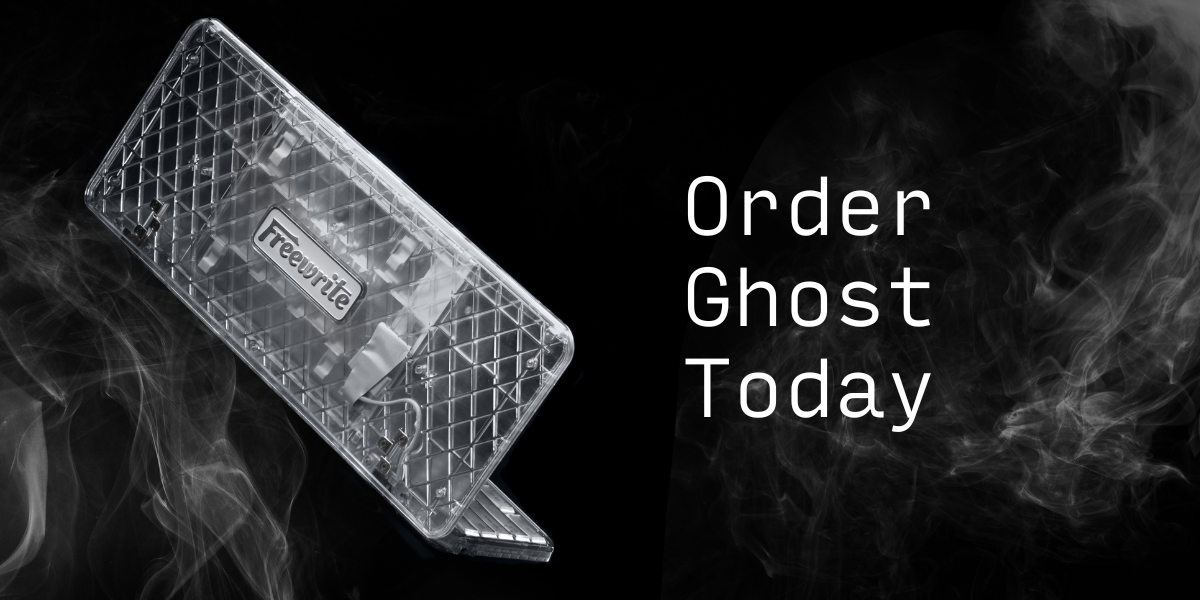
Ghost Order Now

April 01, 2026 0 min read
March 22, 2026 3 min read

If you're new here, freewriting is “an unfiltered and non-stop writing practice.” It’s sometimes known as stream-of-consciousness writing.

To do it, you simply need to write continuously, without pausing to rephrase, self-edit, or spellcheck. Freewriting is letting your words flow in their raw, natural state.

When writing the first draft of a novel, freewriting is the approach we, and many authors, recommend because it frees you from many of the stumbling blocks writers face.

This method helps you get to a state of feeling focused and uninhibited, so you can power through to the finish line.

How Freewriting Gives You Mental Clarity

Freewriting is like thinking with your hands. Some writers have described it as "telling yourself the story for the first time."

Writing for Inside Higher Ed, Steven Mintz says, “Writing is not simply a matter of expressing pre-existing thoughts clearly. It’s the process through which ideas are produced and refined.” And that’s the magic of putting pen to paper, or fingertips to keyboard. The way you learned to ride a bike by wobbling until suddenly you were pedaling? The way you learned certain skills by doing as well as revising? It works for writing, too.

The act of writing turns on your creative brain and kicks it into high gear. You’re finally able to articulate that complex idea the way you want to express it when you write, not when you stare at a blank page and inwardly think until the mythical perfect sentence comes to mind.

Writing isn’t just the way we express ideas, but it’s how we extract them in the first place. Writing is thinking.

Or, as Flannery O'Connor put it:

“I write because I don't know what I think until I read what I say.”

Writing isn’t just the way we express ideas, but it’s how we extract them in the first place. Writing is thinking.


Freewriting to Freethinking

But how and why does it work? Freewriting makes fresh ideas tumble onto the page because this type of writing helps you get into a meditative flow state, where the distractions of the world around you slip away.

Julie Cameron, acclaimed author of The Artist’s Way, proposed the idea that flow-state creativity comes from a divine source. And sure, it certainly feels like wizardry when the words come pouring out and scenes seem to arrange themselves on the page fully formed. But that magic, in-the-zone writing feeling doesn’t have to happen only once in a blue moon. It’s time to bust that myth.

By practicing regular freewriting and getting your mind (and hands) used to writing unfiltered, uncensored, and uninterrupted, you start freethinking and letting the words flow. And the science backs it up.

According to Psychology Today, the dorsolateral prefrontal cortex goes quiet during flow state. This part of the brain is in charge of “self-monitoring and impulse control” – in other words, the DLPFC is the tiny home of your loud inner critic. And while that mean little voice in your head takes a long-overdue nap, you’re free to write without doubt or negative self-talk.

“With this area [of the brain] deactivated, we’re far less critical and far more courageous, both augmenting our ability to imagine new possibilities and share those possibilities with the world.”

Freewriting helps us connect with ourselves and our own thoughts, stories, beliefs, fears, and desires. But working your creative brain is like working a muscle. It needs regular flexing to stay strong.

So, if freewriting helps us think and organize our thoughts and ideas, what happens if we stop writing? If we only consume and hardly ever create, do we lose the ability to think for ourselves? Up next, read "Are We Living through a Creativity Crisis?"


Learn More About Freewriting

Get the ultimate guide to boosting creativity and productivity with freewriting absolutely free right here.You'll learn how to overcome perfectionism, enhance flow, and reignite the joy of writing.

SYSF-book-mockup.webp

March 16, 2026 2 min read

Picturethis. Imaginetryingtoreadapagethatlookedlikethis,withnospacestoseparateonewordfromthenext. No pauses. No breath. Just an endless procession of letters that your brain must laboriously slice into meaning, one syllable at a time.