The "Freewrite Stories" Series -
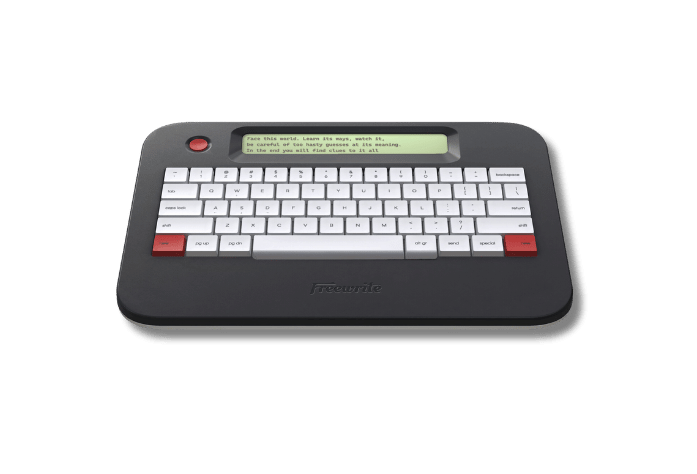
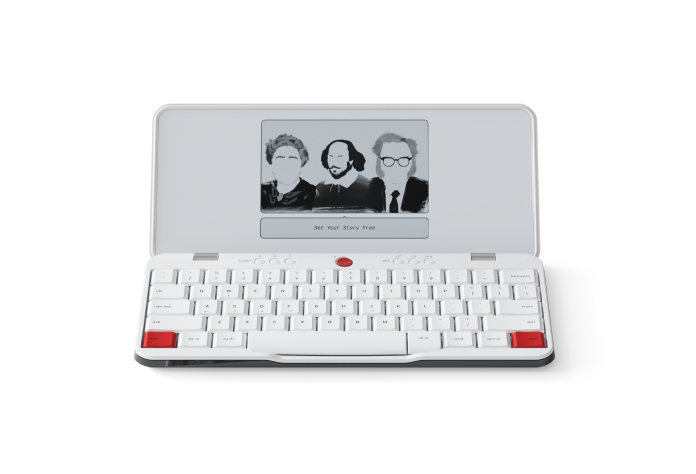
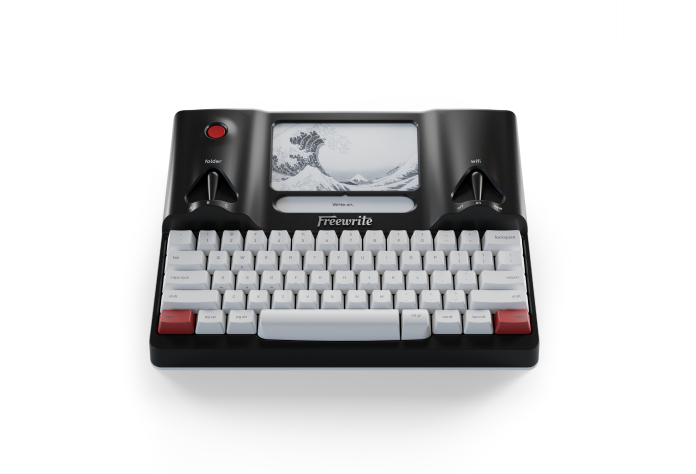
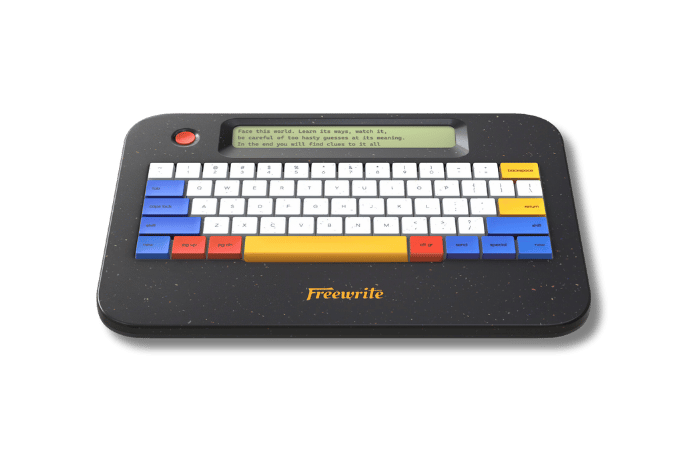
We at Astrohaus are always looking for ways to support and encourage passionate writers like yourself. The Freewrite Distraction-Free Smart Typewriter has helped thousands of writers get more writing done. Freewrite Stories is an initiative where we ask our community of great writers to share some of their stories and experiences. We’d like to foster a community where writers help other writers, and we hope this series does just that. The Freewrite Stories series will come in all shapes and sizes from short stories, poems, and tidbits to entire eBook collections. The series will also be divided into themes from “Writing Process” to “Publishing.”
Freewrite Stories: Writing Process Vol. 1 -
In this first article, we asked a few active Freewrite users to answer one simple question: Once you have an idea, what is your daily writing process? Below are some of the unfiltered responses. Click the graphic below to view the eBook version, or continue reading!

Ivo Senden, The Netherlands
Me and my Freewrite find a happy place. In the summertime, this might be outside, in the sun. During the dark ages from October until march, we tend to crawl on the couch and hide away from the cold. This is where I write. Two hours at least, four when I'm lucky. I do the talking, my Freewrite listens patiently. Everyone and everything else will be ignored. Both by my Freewrite and by me. Once a chapter is finished, I transfer it from my Freewrite to an e-reader, in order to proofread and mark every bump in the road of my written journey. I correct, I shorten, I kill my proverbial darlings. After drafting, re-reading and marking on E Ink displays, I grind my teeth for a bit, to prepare myself for working on my laptop, on which I use Scrivener to sort my drafts and make the final corrections. I celebrate every finished chapter by giving the old laptop a firm smack on the back. If I were a writer in a Hollywood flick, I'd pop a bottle and smoke a mighty cigar. Then again, I'm an ordinary fellow in The Netherlands who has to work for a living, so that's where I go. Until it's time for the next chapter, which lingers in my head while my Freewrite waits patiently.
 Born on the première day of Star Wars (May 25, 1977), I grew up with an overactive imagination and started writing short stories at the age of nine. My first book, about the history of an old movie theater, was published in 2008. In 2015, my first novel, 'Zwarte droom' was published and in 2016 'Gevallen land' became not only my second published novel, but also my first book written on the Freewrite.Ivosenden.wix.com/boeken, facebook.com/ivo.enspike
Rachel O'Laughlin, Maine, USA
Usually, it starts at 5:00 am with a slight headache and a cup of java with too much cream. Sometimes I'm clutching 200 printed pages and sporting a red pen. Sometimes I'm hugging my laptop. Sometimes there's a baby in my lap playing with a wooden crab in a waiting room while I attempt to mend on an elusive phrase on a phone with a dying battery.
Each day I'm in a different phase of composition. A little less scattered, a little more inspired, an equal dose of each...there's nothing consistent about this girl in the day to day, but in the month-to-month, season-to-season, there are vestiges of order.
First, notebooks. Notebooks small enough to fit in an oversized purse, large enough not to fill up with less than four month of brain blurt. A fountain pen that smudges and flows too fast for the words I want it to birth. A scene, a timeline, an idea, sometimes just a phrase. Usually the most shocking, most horrendous moments of a story are the ones that come to me first.
Then, a typewritten chapter, an Evernote text file, a random doc in my writings folder on my eight-year-old Macbook. A novel from my shelf with prose that will be my guide for tense and perspective -- something weighty but not too thick, like Crichton's Timeline or Doyle's A Study in Scarlet. I used to curl up in corners or the passenger seat with my phone and a Bluetooth keyboard for this phase; now I have spoiled myself with a portable typewriter that has the dreamiest keys, is too durable to destroy, and sports an e-ink screen that I could stare at for ages.
When a manuscript gets its own folder in Documents, it is a real, true thing. The threshold has been passed. Dropbox cannot contain it all. There are pieces of past works being copied and pasted, saved as, "add to third draft? maybe?" and "this could just be crap".
Deadlines are the final stage. A deadline is the only thing that can make me sit down and write linearly. Linear drafting is a necessity for my undisciplined brain -- without it, the strung together scenes will be a time-travel journal that couldn't qualify as the lowest b-flik of the 70s. Deadlines require word counts, chapters I can drag and drop, and compile-with-a-click for saving seventh, eighth, ninth revisions. Deadlines require Scrivener. Word plays its part with track changes. Two or three critique partners give me the major markups, four or five beta readers catch the bothersome afterthoughts that are haunting my casual or tired paragraphs. Before a project is finished, I'm glad there's Paypal and Adobe so I can hire my incredible editor who lives 1,600 miles away to put the actual polish on my roughage. A final run-through is bliss after that.
I've done this with three novels to date. Took me two years to complete each. Of course, I still have five or six other manuscripts in various stages of limbo. Are there any parts of this process that I hate? Actually, no. Each one is a lot like babysitting someone else's child. I adore them while I'm there and do my best to give them the best of me, but there's always the tension of not being sure I'm doing any of it right, of wondering if I'm helping or hindering the finished product.
But hey, there's another mid-sized notebook. And I have a fresh cartridge in my fountain pen.
 I grew up writing kidnapping tales in a dark corner of a noisy house. After high school, I pushed them to the back burner to tour with my bluegrass band, rant in a blog, and immerse myself in sustainable living. After the birth of my first child, I returned to fiction (and kidnapping tales). I live in New England with my husband and three children, listen to The Fray, and drink too much organic Guatemalan coffee. My published works include high fantasy based on Russian history -- my unpublished works include literary historical based on my fantasies of becoming Anthony Doerr.rachelolaughlin.com, twitter.com/rachelolaughlin,instagram.com/rachelolaughlin

Jo Richter, Germany
A LONG WALK ALONG A LONG RIVER
Identity is about the dents that shape the I - and the protrusions that jot out to dent and shape others as well as the environment whenever this I does not fit in. As a poet - this atmospheric phenomenon of morning mist covering individual gestalts and linguistically gleaning them from these casts, these dents in your own shape - I have become quite aware of that. Little black books protrude from my pockets, eager to be filled in the cracks of time, in the rifts between social and professional demands exerted on me or initiated by me. As a poet, my identity is evasive, in-between.
Whenever I give in to prose, things are different. I do not only have to arrange that one odd afternoon or night to be with what has asked or has been invited to be present as a narration. Prose composition is like a long walk along a long river. I need endurance, equipment and adequate landmarks for structuring progress. I have to know when to take a break and what to do when darker clouds gather above me. The little black books might do for quibs that flutter past. That's all they are good for when writing prose. Butterfly impressions.
A river is a mass of water driven by a common force. It is pressure exerted on the banks and the bed. It is the pure willpower of directional gravity, idling every now and then only to turn into torrents of spray and waterfall the next instant. It is structure in the raw. To cope with it, you have to have a vessel capable of holding this serene brutality. Typewriters and computers used to do this job for me. Whenever my inner shape was fit, I could just ask them to contain the rushing flow of imagination for me. Especially with computers, however, I could not help noticing that their demanding quirks and bothersome mechanics sought to invade on my fitness to write. Now that there is the Freewrite to paddle along the plotlines, I feel less restrained and have been emboldened to arrange for an extended sabbatical from bread-winning activities - to do just my bit of serious hiking and paddling.
No one can walk forever. Times of rest and distance to regain focus are vital. I do not write every day in the week and every month in the year. The structure of my writing process is mostly shaped by inside growth and levels of readiness. Outside structures - the rigid timetables of society, work, care and self-care - abound anyhow. I write responsibly, which is to say that I see to my mental and linguistic fitness, the agility of my awareness, the vividness of my experience and the sensitivity of my imagination. I write when the narration is present, ready to emerge, allowing for its unique silences and outbursts. I write when I know which flowers to pick and which to watch growing.
Of course, sometimes I just walk on. This is what I do when I fill those extra pages (and pages, and then some) that do not become part of final narrative. I keep what connects and enriches, I question what embellishes. I rewrite. But this is hardly a structure of outer time. This is inner timing rather, phrasing the good spells and surviving the poor ones. The real writing happens whenever the story and I fit. This is what the identity of a prose writer of my ilk is about. Anything else means to give in or to suffer a blow. Which might help as well, every now and then.
Jo Richter, *1963, living, working and writing on the Lake Constance shoreline, Germany. There is a website called richtersportfolio.wordpress.com that displays some of my poems, most of them in German. Also, you'll find my writers biography on the respective "Impressum" page, also in German.

Carsten Damm, Germany
There is no daily routine. Schedule-wise, my life is as chaotic as it can get. Three kids, a wife working shifts on an unsteady and ever-changing schedule, and a demanding day job kill every attempt to even think about a daily routine. Believe me, I tried.
Before the kids, times were different. I got up very early—around 5am, got in front of my computer with a mug of coffee and happily typed away for two hours before hitting the shower and getting off to work. Flexible spare time in the afternoons and the evenings allowed me to increase my word count almost every day. Those were the times, right?!
These days, the evenings are all that’s left. But with our kids getting older and staying up longer, even those hours are in danger. Not to mention being bleary-eyed after they have finally found their way into their beds and all those chores, friends, relatives, and (ultimately) the wife have been tended to.
But there is still plenty of creative energy left at the end of each day, however, and the desire to release it into the world remains strong. I love those late hours, but use them mostly to refine the material I wrote during the day, or put other material into layout—because that’s something I can only do at the computer I have at home.
So the only thing I can actually call a routine is getting my writing done in the cracks of daily life, whenever I would otherwise be idle. Mobility is the key, and being able to write a few paragraphs every now and then is the only way to get anything down. In the waiting room when my son is taking his karate or guitar classes, or my daughters’ dancing lessons. When waiting for a doctor’s appointment. While cooking for a family of five. On the train. On a lunch break. Whenever and wherever there are a few minutes to beat. Sometimes even at home.
I keep my projects organized using agile methods usually employed in software development. Some digitally on the web, some physically in an old-fashioned notebook. The network of writers and developers I collaborate with is a global one—and even though we all know our efforts are just a hobby, we enjoy it with a certain sincerity. There’s heart blood involved in what we do, after all.
Granted, the overall output is smaller than it would be if I had no kids and did all this full-time. But the kids will grow up and I never said I wanted to trade. Each day is different, but every day, something gets done. An outline, an article, the section of a chapter, brainstorming notes, descriptions of illustrations we need, an edited file, a plan for the coming month—whatever it is, its progress. A routine, if you will.
Carsten Damm (born in '74) is a father, writer, translator, game designer, and publisher from Germany. He develops and writes roleplaying games and similar material under the Vagrant Workshop and Pro Indie labels, in both English and German languages. As a father of three, project manager, full-time geek, and metalhead, his time for writing is at a premium and not tied to a rigid schedule. vagrantworkshop.com, pro-indie.com, twitter.com/VagrantWorkshop, facebook.com/VagrantWorkshop/
So, what now?
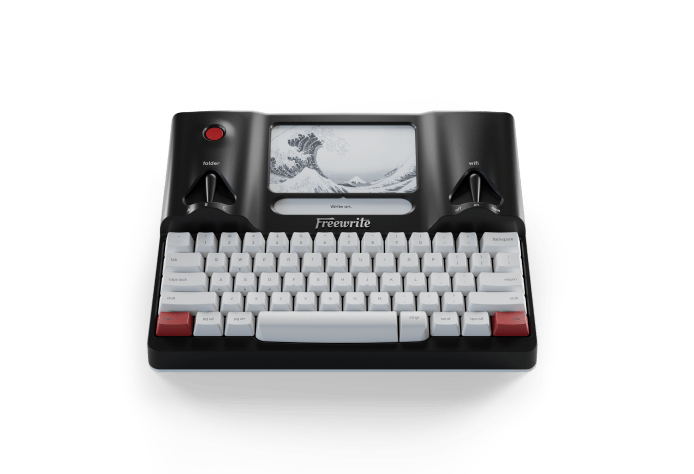
You've got the inside scoop on how four different writers work, but every writer's journey will be uniquecan design a rigid routine and stick to it religiously. Others have found much success with the help of a writing tool. See if the Freewrite could be just "write" for you by clicking the image below for more information.