overlaylink

Match My Freak: ¿La pandemia mató nuestra vergüenza de leer?

Harrison Cook
septiembre 05, 2024 | 8 lectura mínima

Todos tenemos una historia sobre la pandemia. Algunos recordarán el día en que se declaró el estado de emergencia en su país; otros habrán tomado precauciones meses antes.

Recuerdo la rapidez con la que todo esto ocurrió: las normas sociales cambiando, dando vueltas y dando tumbos, lo que todavía me marea cuando leo una entrada temprana en mis cuadernos que data de 2020. Se suponía que sería el año de la renovación. Todos íbamos a tener un nuevo comienzo. Recuerdo haber hablado de esto en el porche de mi amigo durante las primeras etapas de la pandemia.

La tenue posibilidad de nuestro año flotaba en el aire como el deshielo de un fuego artificial, disipándose para dar paso al futuro abrupto que se nos presentaba. Como parte de un pequeño grupo de amigos que se tomaban en serio el aislamiento social, estábamos solos, pero al menos podíamos estar solos juntos. Me sentaba con mi amigo, recordando el sonido de los coches pasando zumbando por la calle.

«Las cosas se van a poner raras», recuerdo haberle dicho. «Sobre todo el arte».

“Eso espero”, dijo ella.

Mirando hacia atrás en los años siguientes, 2021, 2022 y 2023, lo extraño se convirtió en la norma: con los libros, con las películas, con todo. A24 lanzó algunos de sus títulos más grandes y exagerados, como El Caballero Verde y Todo en Todas Partes, Todo a la Vez , que incluso ganó el Premio de la Academia a la Mejor Película en 2023. Amazon Studios intentó copiar la estética con éxitos como Saltburn . Las narrativas de crímenes reales dramatizadas se dispararon —¿recuerdan aquella serie llamada Tiger King ?—.

Disculpen que use la frase “la nueva normalidad”, pero la irrealidad que presentó la pandemia afectó nuestro consumo artístico, convirtiendo la nueva normalidad en algo absolutamente extraño.

De hecho, creo que nuestra experiencia colectiva de la pandemia dio lugar a la popularidad actual de las narrativas con premisas fantásticas y extrañas y a la aceptación generalizada de estas cosas que alguna vez se consideraron “raras”.

«Las cosas se van a poner raras», recuerdo haberle dicho. «Sobre todo el arte».

El auge del porno

Sarah J. Mass, autora de Trono de Cristal , Una Corte de Rosas y Espinas y la serie Crescent City , experimentó un aumento repentino en las ventas gracias a su popularidad en BookTok . Una Corte de Rosas y Espinas , publicada inicialmente en mayo de 2015, y su última entrega en 2021, le valió el apodo de " La Reina Mortal de la Obscenidad Hada ". Publishers Weekly elogió la "estética académica, oscura y atractiva" del libro, además de otorgarle una reseña destacada.

En el verano de 2023, parecía que todos leían una saga de Maas. Miraba a mi alrededor en la sala de descanso y encontraba a mis compañeros leyendo un libro de Maas, e incluso un amigo mío llegó a leer en voz alta un pasaje (sin contexto previo) del protagonista acariciando a otro personaje. (Generalizo para no arruinar "Una Corte de Rosas y Espinas" a quienes, como yo, no se desvían de las tendencias).

El significado original de la palabra "smut" se refiere a una pequeña mancha de hollín u otra suciedad. Llamar a un libro "smut" evoca esta definición de suciedad, esta mancha, que, en mi opinión, solo enfatiza su necesidad.

De la noche a la mañana, parecía que todo el mundo estaba leyendo Fourth Wing (libro número uno de la serie Empyrean ) de Rebecca Yarros, que acaba de ganar el premio al Libro Internacional del Año en los premios TikTok Book. Apodada una " romance llena de dragones", a menudo les preguntaba a mis compañeros de trabajo si hoy estaban leyendo obscenidades de dragones o de hadas. Sin embargo, mis amigos que leyeron Fourth Wing me aseguraron que el punto principal de la serie no eran los "momentos picantes", sino más bien la trama, que puede o no incluir algunos momentos picantes. "Ya verás cuando la escojan como serie de televisión", me dijo mi compañero de trabajo. La editorial de Fourth Wing acaba de confirmar una posible compra y desarrollo de la serie por parte de Amazon Studios .

Incluso los cuentos y ensayos personales (y otra prosa no relacionada con el género) elevaron el mérito artístico de la escena sexual. Al hojear una revista de moda o una revista literaria en línea, era muy probable que los personajes cercanos aceptaran besuquearse consensualmente. La pandemia nos excitó por las escenas de intimidad, y no puedo culpar a los lectores. Durante un largo período de incertidumbre donde la intimidad corría un riesgo real, nuestra imaginación creó la mejor alternativa.

La pandemia nos excitó por las escenas de intimidad, y no puedo culpar a los lectores. Durante un largo período de incertidumbre donde la intimidad corría un riesgo real, nuestra imaginación creó la mejor alternativa.

Pero no toda la obscenidad es igual.

Si bien los elementos fantásticos de Una corte de rosas y espinas y Cuarta ala aportaron una nueva perspectiva a la vertical sexy, algunos autores e historias tomaron la tendencia de la intimidad y, bueno, la convirtieron en un arma.

Títulos como Kissing the Coronavirus , Morning Glory Milking Farm o Get in My Swamp: An Ogre Love Story provocan una "vergüenza" diferente de la vergüenza ahora aceptada por la corriente principal en los romances sobre hadas o dragones.

Podríamos llamar a este otro grupo de ejemplos "escritura marginal". A diferencia de los éxitos comerciales de Maas y Yarros, estos otros títulos existen principalmente en Amazon, no en el mundo editorial tradicional. En otras palabras: probablemente no los encontrará en las estanterías de Barnes & Noble.

Sin embargo, también me gustaría mencionar que, en mi carrera como escritor, nunca pensé que estaría examinando la línea entre el buen material obsceno y el material obsceno que va demasiado lejos, y, honestamente, vivo para ello.

Despojándonos de nuestra vergüenza

¿Quizás al definir esa línea es donde entra en juego la vergüenza? La vergüenza es una emoción muy social y autoconsciente, similar a la vergüenza. La raíz de la vergüenza es principalmente el miedo, generalmente el miedo al juicio ajeno, pero en una época de aislamiento social esporádico entre 2020 y 2022, nos dejaron solos, con un contacto humano limitado, lo que podría haber desajustado la autopercepción de nuestros hábitos y gustos de lectura. Estuvimos solos durante mucho tiempo, lo que también significó que nuestros cuerpos sufrieron un reinicio completo. La crudeza de la realidad endureció las partes de nuestro cerebro que se preocupaban por lo que sentían los demás y, en cambio, puso el énfasis en uno mismo y en sus propios gustos.

Como dice otra tendencia de TikTok: "He sido una chica desagradable/iguala mi monstruo/iguala mi monstruo".

Parece que la humanidad finalmente está llegando a la conclusión de que está bien que te guste lo que a ti te gusta, desde la obscenidad sobre dragones hasta los fanfictions de Shrek para adultos, incluso si hay personas que te juzgarán por ello.

Parece que la humanidad finalmente está llegando a la conclusión de que está bien que te guste lo que a ti te gusta, desde las obscenidades de los dragones hasta los fanfiction de Shrek para adultos...

El significado original de la palabra "smut" se refiere a una pequeña mancha de hollín u otra suciedad. Llamar a un libro "smut" evoca esta definición de suciedad, esta mancha, que, en mi opinión, solo enfatiza su necesidad. Una sociedad que tiene este término para libros con intimidad indica que es represiva, y el mero acto de escribir sobre placer o sexualidad implica cierta rebeldía. Como escritora, conozco bien el poder de un beso, un abrazo o los actos de intimidad en la página. Como escritora y artista queer, siento que debo intimidad a mis personajes gays como un medio para hablar con mi yo gay más joven y escribir un futuro para ellos donde dicha intimidad pueda existir sin vergüenza.

Tal vez, con los libros “considerados obscenos” siendo tendencia en las plataformas de redes sociales y otras listas de libros importantes, estemos ante nada menos que una revolución sexual, donde las minorías sexuales y siglos de vergüenza finalmente sean puestos bajo control.

Tal vez, con los libros “considerados obscenos” siendo tendencia en las plataformas de redes sociales y otras listas de libros importantes, estemos ante nada menos que una revolución sexual, donde las minorías sexuales y siglos de vergüenza finalmente sean puestos bajo control.

Sólo hizo falta una pandemia mundial para llevarnos a este punto.

Vamos a ponernos raros

Todo el mundo tiene una historia sobre la pandemia. Recuerdo la tranquilidad del primer día de la pandemia "oficial". El tiempo corría como la melaza. Sentía que cada minuto se convertía en una hora. El silencio no ayudaba. A menudo ponía música ambiental mientras lavaba los platos, reorganizaba los muebles o regaba las plantas. Al terminar mis tareas matutinas, me dedicaba a leer los artículos para una revista literaria.

Como editor, busqué prosa (ficción o no ficción creativa) que impulsara el género, prosa que se remontara a las raíces originales del ensayo para "intentar" un tema, escenario o análisis, y frases que buscaran redefinir lo común de maneras inusuales. Los mismos temas parecían presentarse, aunque presentados por diferentes escritores, y siempre consideré la pila de manuscritos no deseados como una placa de Petri para las preocupaciones colectivas de los ensayistas. Si bien cada obra surgió de su propia conciencia, había corrientes subyacentes, pulsos que entrelazaban las obras en un tapiz más amplio.

Nunca había leído tantos ensayos sobre la soledad, el aislamiento y el duelo. Casas y apartamentos servían como metáforas de hábitats o prisiones. Algunos aprovecharon su creatividad para adoptar una mentalidad de "residencia artística" y documentaron su progreso en una oportuna propuesta de artículo.

También estaba el miedo constante de contraer el virus, la culpa de contagiar a un ser querido y el dolor de que otros no tomaran las mismas precauciones que uno. Estos ensayos eran difíciles de leer. Eran más difíciles de olvidar. Pero lo más importante, como editor, sentí que era demasiado pronto para escribir sobre una pandemia que aún estaba en desarrollo. Terminé no aceptando ningún ensayo ni relato corto relacionado con la pandemia, sin importar el calibre de la escritura, ya que aún necesitábamos tiempo. Tiempo que aún necesitamos. Tiempo que aún necesito.

Las personas con ansiedad suelen ver las mismas películas , leer los mismos libros o jugar a los mismos videojuegos una y otra vez. Existe una sensación de control al interactuar con los mismos medios, los mismos arcos argumentales y las mismas sorpresas que aparecen a la vuelta de la esquina. Todos tuvimos nuestras series favoritas y personajes que nos ofrecieron refugio en 2020. Nuestra familiaridad con un mundo, con una historia, juega con la raíz de la nostalgia, que significa "un dolor por el hogar". Un dolor por volver a 2019, un dolor por la época anterior a la COVID, un dolor por una realidad alternativa.

Pero casi cinco años después, por fin estoy listo para sumarme a este anhelo por lo nuevo y lo extraño. La ciencia ficción dura y la alta fantasía son pilares de la cultura pop, pero aún más después de un evento que demostró la necesidad de escapismo.

Estamos listos como lectores y como consumidores para comenzar una nueva aventura, finalmente, juntos.

Da la casualidad de que, tal como sugieren las tendencias, esta nueva aventura es sexy.
diciembre 30, 2025 3 lectura mínima

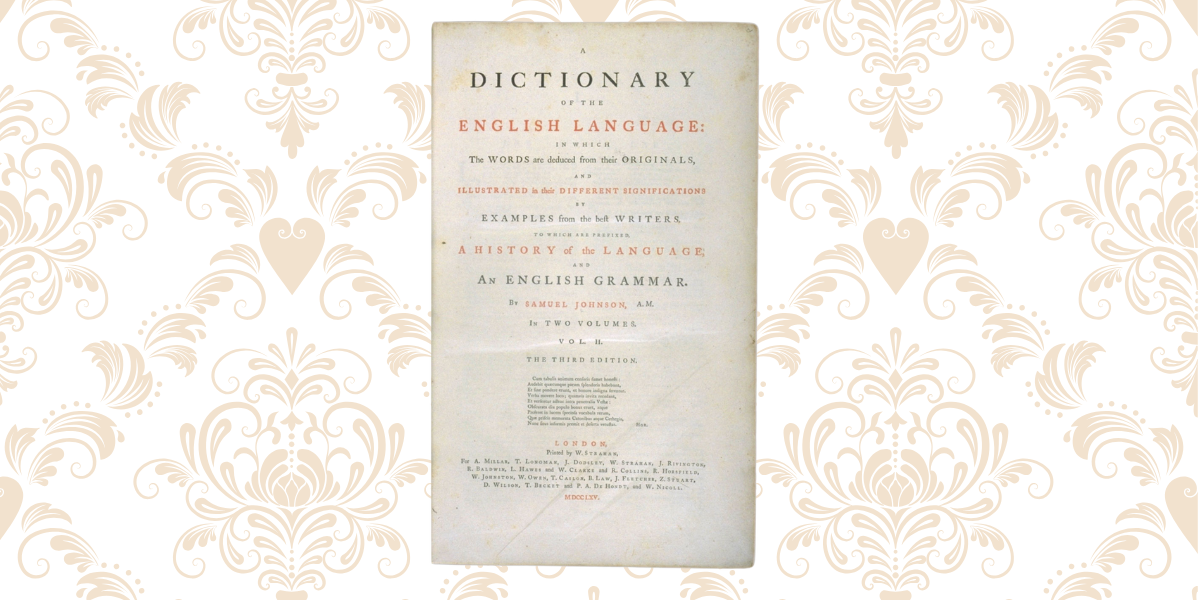
It’s Freewrite’s favorite time of year. When dictionaries around the world examine language use of the previous year and select a “Word of the Year.”

Of course, there are many different dictionaries in use in the English language, and they all have different ideas about what word was the most influential or saw the most growth in the previous year. They individually review new slang and culturally relevant vocabulary, examine spikes or dips in usage, and pour over internet trend data.

Let’s see what some of the biggest dictionaries decided for 2025. And read to the end for a chance to submit your own Word of the Year — and win a Freewrite gift card.

[SUBMIT YOUR WORD OF THE YEAR]


Merriam-Webster: "slop"

Merriam-Webster chose "slop" as its Word of the Year for 2025 to describe "all that stuff dumped on our screens, captured in just four letters."

The dictionary lists "absurd videos, off-kilter advertising images, cheesy propaganda, fake news that looks pretty real, junky AI-written books, 'workslop' reports that waste coworkers’ time … and lots of talking cats" as examples of slop.

The original sense of the word "slop" from the 1700s was “soft mud” and eventually evolved to mean "food waste" and "rubbish." 2025 linked the term to AI, and the rest is history.

Honorable mentions: conclave, gerrymander, touch grass, performative, tariff, 67.

Dictionary.com: "67"

The team at Dictionary.com likes to pick a word that serves as “a linguistic time capsule, reflecting social trends and global events that defined the year.”

For 2025, they decided that “word” was actually a number. Or two numbers, to be exact.

If you’re an old, like me, and don’t know many school-age children, you may not have heard “67” in use. (Note that this is not “sixty-seven,” but “six, seven.”)

Dictionary.com claims the origin of “67” is a song called “Doot Doot (6 7)” by Skrilla, quickly made infamous by viral TikTok videos, most notably featuring a child who will for the rest of his life be known as the “6-7 Kid.” But according to my nine-year-old cousin, the origins of something so mystical can’t ever truly be known.

(My third grade expert also demonstrated the accompanying signature hand gesture, where you place both hands palms up and alternately move up and down.)

And if you happen to find yourself in a fourth-grade classroom, watch your mouth, because there’s a good chance this term has been banned for the teacher’s sanity.

Annoyed yet? Don’t be. As Dictionary.com points out, 6-7 is a rather delightful example at how fast language can develop as a new generation joins the conversation.

Dictionary.com honorable mentions: agentic, aura farming, broligarchy, clanker, Gen Z stare, kiss cam, overtourism, tariff, tradwife.

Oxford Dictionary: "rage bait"

With input from more than 30,000 users and expert analysis, Oxford Dictionary chose "rage bait" for their word of the year.

Specifically, the dictionary pointed to 2025’s news cycle, online manipulation tactics, and growing awareness of where we spend our time and attention online.

While closely paralleling its etymological cousin "clickbait," rage bait more specifically denotes content that evokes anger, discord, or polarization.

Oxford's experts report that use of the term has tripled in the last 12 months.

Oxford Dictionary's honorable mentions:aura farming, biohack.

Cambridge Dictionary: "parasocial"

The Cambridge Dictionary examined a sustained trend of increased searches to choose "parasocial" as its Word of the Year.

Believe it or not, this term was coined by sociologists in 1956, combining “social” with the Greek-derived prefix para-, which in this case means “similar to or parallel to, but separate from.”

But interest in and use of the term exploded this year, finally moving from a mainly academic context to the mainstream.

Cambridge Dictionary's honorable mentions: slop, delulu, skibidi, tradwife

Freewrite: TBD

This year, the Freewrite Fam is picking our own Word of the Year.

Click below to submit what you think the Word of 2025 should be, and we'll pick one submission to receive a Freewrite gift card.

[SUBMIT HERE] 

--

Sources

diciembre 18, 2025 5 lectura mínima

¿Qué pueden enseñar las cartas personales de Jane Austen a los escritores?

diciembre 10, 2025 6 lectura mínima

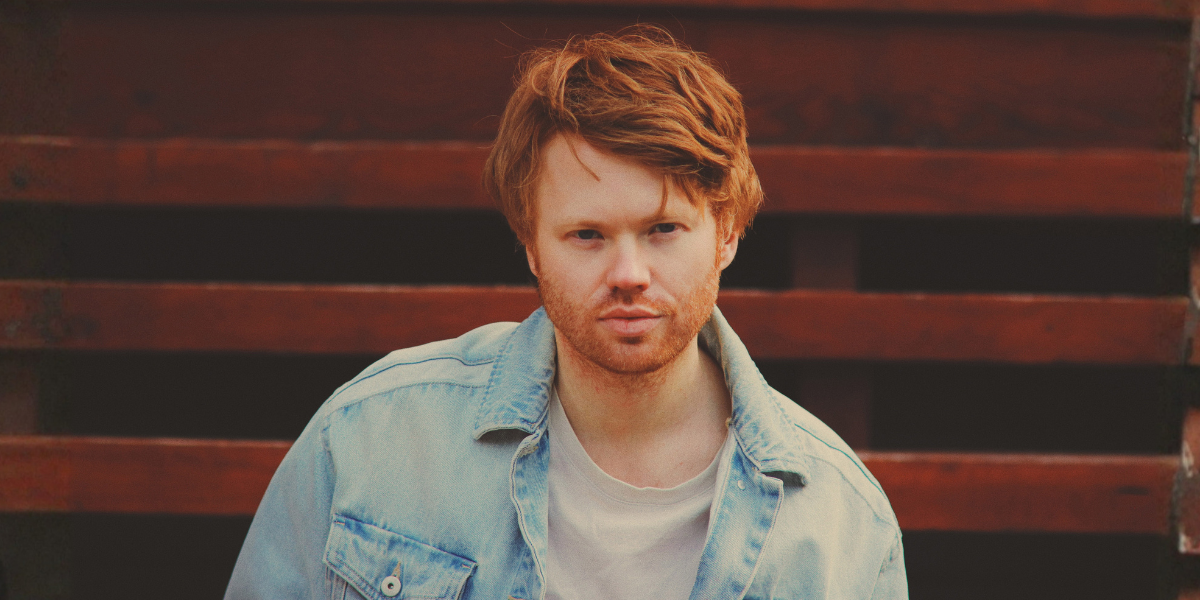
Singer-songwriter Abner James finds his creativity in the quiet freedom of analog tools. Learn how his creative process transcends different media.

Abner James went to school for film directing. But the success of the band he and his brother formed together, Eighty Ninety, knocked him onto a different trajectory.

The band has accrued more than 40 million streams since the release of their debut EP “Elizabeth," and their work was even co-signed by Taylor Swift when the singer added Eighty Ninety to her playlist "Songs Taylor Loves.”

Now, Abner is returning to long-form writing in addition to songwriting, and with a change in media comes an examination of the creative process. We sat down to chat about what's the same — and what's different. 

ANNIE COSBY: Tell us about your songwriting process.

ABNER JAMES: The way I tend to write my songs is hunched over a guitar and just seeing what comes. Sounds become words become shapes. It's a very physical process that is really about turning my brain off.

And one of the things that occurred to me when I was traveling, actually, was that I would love to be able to do that but from a writing perspective. What would happen if I sat down and approached writing in the same way that I approached music? In a more intuitive and free-form kind of way? What would that dig up?

AC: That's basically the ethos of Freewrite.

AJ: Yes. We had just put out a record, and I was thinking about how to get into writing for the next one. It occurred to me that regardless of how I started, I always finished on a screen. And I wondered: what's the acoustic guitar version of writing?

Where there's not blue light hitting me in the face. Even if I'm using my Notes app, it's the same thing. It really gets me into a different mindset.

 "I wondered: what's the acoustic guitar version of writing?"

I grew up playing piano. That was my first instrument. And I found an old typewriter at a thrift store, and I love it. It actually reminded me a lot of playing piano, the kind of physical, the feeling of it. And it was really fun, but pretty impractical, especially because I travel a fair amount.

And so I wondered, is there such a thing as a digital typewriter? And I googled it, and I found Freewrite.

AC: What about Freewrite helps you write?

AJ:I think, pragmatically, just the E Ink screen is a huge deal, because it doesn't exhaust me in the same way. And the idea of having a tool specifically set aside for the process is appealing in an aesthetic way but also a mental-emotional way. When it comes out, it's kind of like ... It's like having an office you work out of. It's just for that.

"The way I tend to write my songs is hunched over a guitar and just seeing what comes. Sounds become words become shapes. It's a very physical process that is really about turning my brain off."

And all of the pragmatic limitations — like you're not getting texts on it, and you're not doing all that stuff on the internet — that's really helpful, too. But just having the mindset....

When I pick up a guitar, or I sit down at the piano, it very much puts me into that space. Having a tool just for words does the same thing. I find that to be really cool and inspiring.

"When I pick up a guitar, or I sit down at the piano, it very much puts me into that space. Having a tool just for words does the same thing."

AC: So mentally it gets you ready for writing.

AJ: Yeah, and also, when you write a Microsoft Word, it looks so finished that it's hard to keep going. If every time I strummed a chord, I was hearing it back, mixed and mastered and produced...?

It's hard to stay in that space when I'm seeing it fully written out and formatted in, like, Times New Roman, looking all seriously back at me.

AC: I get that. I have terrible instincts to edit stuff over and over again and never finish a story.

AJ:  Also, the way you just open it and it's ready to go. So you don't have the stages of the computer turning on, that kind of puts this pressure, this tension on.

It's working at the edges in all these different ways that on their own could feel a little bit like it's not really necessary. All these amorphous things where you could look at it and be like, well, I don't really need any of those. But they add up to a critical mass that actually is significant.

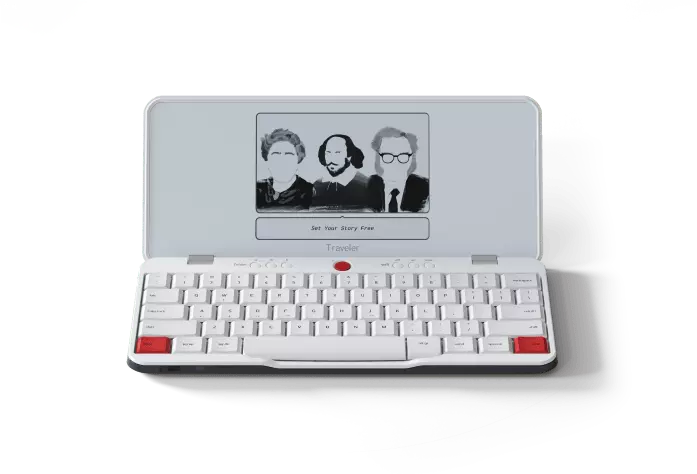
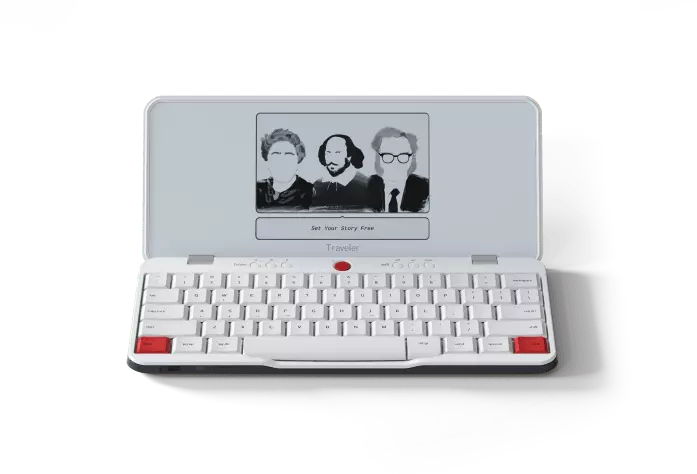
And sometimes, if I want to bring it on a plane, I've found it's replaced reading for me. Rather than pick up a book or bring a book on the plane, I bring Traveler and just kind of hang out in that space and see if anything comes up.

I've found that it's kind of like writing songs on a different instrument, you get different styles of music that you wouldn't have otherwise. I've found that writing from words towards music, I get different kinds of songs than I have in the past, which has been interesting.

In that way, like sitting at a piano, you just write differently than you do on a guitar, or even a bass, because of the things those instruments tend to encourage or that they can do.

It feels almost like a little synthesizer, a different kind of instrument that has unlocked a different kind of approach for me.

"I've found that it's kind of like writing songs on a different instrument, you get different styles of music that you wouldn't have otherwise... [Traveler] feels almost like a little synthesizer, a different kind of instrument that has unlocked a different kind of approach for me."

AC: As someone who doesn't know the first thing about writing music, that's fascinating. It's all magic to me.

AJ: Yeah.

AC: What else are you interested in writing?

AJ: I went to school for film directing. That was kind of what I thought I was going to do. And then my brother and I started the band and that kind of happened first and knocked me onto a different track for a little while after college.

Growing up, though, writing was my way into everything. In directing, I wanted to be in control of the thing that I wrote. And in music, it was the same — the songwriting really feels like it came from that same place. And then the idea of writing longer form, like fiction, almost feels just like the next step from song to EP to album to novel.

For whatever reason, that started feeling like a challenge that would be deeply related to the kinds of work that we do in the studio.

AC: Do you have any advice for aspiring songwriters?

AJ: This sounds like a cliche, but it's totally true: whatever success that I've had as a songwriter — judge that for yourself — but whatever success I have had, has been directly proportional to just writing the song that I wanted to hear.

What I mean by that is, even if you're being coldly, cynically, late-stage capitalist about it, it's by far the most success I've had. The good news is that you don't have to choose. And in fact, when you start making those little compromises, or even begin to inch in that direction, it just doesn't work. So you can forget about it.

Just make music you want to hear. And that will be the music that resonates with most people.

I think there's a temptation to have an imaginary focus group in your head of like 500 people. But the problem is all those people are fake. They're not real. None of those people are actually real people. You're a focus group of one, you're one real person. There are more real people in that focus group than in the imaginary one.

And I just don't think that we're that different, in the end. So that would be my advice.

AC: That seems like generally great creative advice. Because fiction writers talk about that too, right? Do you write to market or do you write the book you want to read. Same thing. And that imaginary focus group has been debilitating for me. I have to silence that focus group before I can write.

AJ: Absolutely.

"I think there's a temptation to have an imaginary focus group in your head of like 500 people. But the problem is all those people are fake... You're a focus group of one, you're one real person. There are more real people in that focus group than in the imaginary one."

--

Learn more about Abner James, his brother, and their band, Eighty Ninety, on Instagram.