overlaylink

Dominando el arte del diálogo

junio 14, 2019 | 9 lectura mínima

A algunos escritores les resulta natural producir diálogos que suenen auténticos. Sin embargo, para una mayoría mucho mayor, dominar el arte del diálogo requiere mucho tiempo, esfuerzo y experimentación. Aunque te resulte fácil escribir pasajes de diálogo, eso no significa que lo estés haciendo bien. Dominar el diálogo implica mucho más que llenar página tras página con las conversaciones de tus personajes.

Esa es una lección que aprendí a las malas. Escribir diálogos no me intimidaba; de hecho, los disfrutaba, pero no conseguí el equilibrio adecuado, y como resultado, mi escritura se resintió. Mis primeras novelas y relatos estaban llenos de largos pasajes con diálogos, bueno, sin sentido, que no hacían avanzar la historia. Cuando volví, varios años después, para reescribir esos primeros libros, reduje un manuscrito de 120.000 palabras a 89.000, simplemente ajustando los diálogos.

En este artículo, parte de una serie sobre cómo desarrollar y fortalecer tus técnicas de escritura, analizaremos tres errores comunes que cometen los escritores al dialogar y descubriremos cómo dominar el arte del diálogo practicando tres métodos (relativamente) sencillos. No prometo que te encante escribir diálogos, pero sí puedo ayudarte a ejercitar tus habilidades de forma productiva.

¿Por qué es tan importante tener un diálogo correcto?

El diálogo juega un papel fundamental en tu escritura, así que si no lo haces bien, tendrás menos probabilidades de tener éxito como autor. Los lectores son muy exigentes y se fijan en cosas como un diálogo mal escrito o poco efectivo.

Como escritores, somos esclavos de los deseos, necesidades y anhelos de nuestros lectores, así que no podemos esperar que acepten nuestra propia forma de escribir diálogos. Si no les gusta nuestro diálogo, no volverán y probablemente dejarán reseñas mordaces expresando su decepción.

Ese es el peor escenario posible, por supuesto, y existen diferentes grados de diálogo deficiente (que pueden causar desde una leve molestia hasta una indignación absoluta en nuestros lectores). Lo que hay que entender es que el diálogo cumple tantas funciones en una novela que un error puede tener un gran impacto.

En un diálogo novedoso:

  • Revela emoción
  • Rompe la narrativa
  • Mueve la historia a lo largo del tiempo
  • Revela rasgos de carácter

¿Cometes estos 3 errores al escribir diálogos?

Hay más de tres errores que puedes cometer al escribir diálogos, pero estos son los más comunes y los más problemáticos. Intenta ser muy consciente de ellos para que puedas detectarlos en el acto y evitar tener que editarlos mucho después.

#1 Dejar que las reglas gramaticales le roben autenticidad a tu diálogo

Cuando estaba en la escuela, no aprendí gramática. Nací en el Reino Unido, y en aquella época existía la teoría de que no era necesario enseñarles a los niños las reglas gramaticales. No tengo ni idea de por qué, pero mis primeras historias no se vieron afectadas por preocupaciones gramaticales. Después estudié inglés y la gramática entró con fuerza en mi escritura.

No todo fue malo. Algunas cosas mejoraron. Desafortunadamente, mi diálogo no fue una de ellas. Descubrí que ser tan estricto con las reglas gramaticales solo conduce a una cosa en el diálogo: falta de autenticidad. Cuando me ataba a las reglas gramaticales, mi diálogo se volvió formal y poco natural. Así:

Ashley dejó su bolso sobre la cómoda. «Buenas noches, Martin», dijo.

“Buenas noches, Ashley”, respondió Martin. “Debo informarle que la Sra. Edmundson llamó durante su ausencia. Le solicitamos que devuelva la llamada lo antes posible”.

Ahora bien, puede haber casos en los que esté bien usar este tipo de diálogo, por ejemplo, si retrata rasgos de carácter. Sin embargo, como regla general, en un diálogo no es necesario apegarse al 100% a las reglas gramaticales. Las oraciones deben tener sentido, pero las personas no se adhieren estrictamente a las reglas gramaticales al hablar, así que tu diálogo tampoco debería hacerlo.

Ashley dejó caer su bolso sobre la cómoda. «Hola, Martin», gritó mientras entraba en la cocina.

—Hola, cariño —dijo Martin, levantando la vista de su portátil—. Tu mamá llamó mientras estabas fuera; me preguntó si podías devolverle la llamada.

¿No suena esto mucho más realista?

#2 Usar el diálogo para explicar la historia de fondo de forma obvia

Cada vez que veo esto en una novela, me estremezco. Entiendo por qué los autores cometen este error, y probablemente yo también lo cometo. Usar diálogos para explicar la historia o ofrecer datos importantes que el lector necesita saber es muy común, pero para los lectores, simplemente está mal. Veamos un ejemplo:

“Como sabes, Matt, hemos estado investigando este aspecto de nuestra historia familiar durante diez años”, comenzó Theo.

Sí, es cierto, Theo. Empezamos cuando tuvimos que hacer un proyecto en el instituto, ¿verdad? ¡Ha sido toda una aventura! Descubrimos cosas realmente escandalosas allá por el siglo XVIII.

—¡Lo sé! —respondió Theo, riendo—. Pero ahora podemos hacer el análisis de ADN de Ancestry y averiguar aún más. Envié el kit la semana pasada y llegó esta mañana.

No hay nada natural en este intercambio. Los personajes saben claramente todo esto, así que no hay razón para que se cuenten los detalles; es puramente para beneficio de los lectores, y eso resulta bastante chocante. Si realmente necesitas transmitir algo de trasfondo en el diálogo (aunque hay muchas otras maneras de explicar tu trasfondo de forma creativa), entonces necesitas asegurarte de que la conversación suene más natural. Así:

Theo tomó el kit de ADN de Ancestry del mostrador y se giró para mirar a su hermano. "Oye, Matt, ¿qué es lo que más te gusta de lo que hemos descubierto sobre la historia familiar?", preguntó.

Matt pensó un momento. "No sé. Hay tantos escándalos para elegir", respondió. "Pero supongo que sería el bebé abandonado en las escaleras de la iglesia. O sea, eso es lo que nos enganchó con todo esto de la historia familiar".

—Sí —coincidió Theo—. ¡No puedo creer que llevemos diez años investigando esto! Es como una adicción rara.

"Es mejor ser adicto a la investigación que a lo que se volvieron adictos los otros chicos que hicieron el mismo proyecto en el instituto", dijo Matt, suspirando. "¿Oíste que Johnny tuvo una sobredosis la semana pasada?"

Transmitir la historia de fondo de esta manera hace que la conversación suene más natural y auténtica, y no es una descarga obvia de historia de fondo en un intercambio de diálogo entre personajes.

#3 Abusar de los nombres de los personajes

Esto es una de mis manías cuando leo una novela. Interrumpe el ritmo y hace que los diálogos suenen muy poco naturales. Tomemos esto como ejemplo:

Hola Dominic, ¿cómo vas?

—No está mal, Alex. ¿Y tú?

—Oh, todo va bien, Dominic. ¿Sigues trabajando en el mismo sitio?

Sí, Alex. Llevo diez años trabajando allí. Oí que has ascendido profesionalmente.

¡Has oído bien, Dominic! Me ascendieron el año pasado y este año también estoy en la contienda por otro.

Piensa en las conversaciones que tienes a diario. ¿Usas el nombre de la otra persona en cada pregunta o respuesta? Me arriesgaré a suponer que no. No es natural. Quizás una vez, pero no siempre, como muestra este ejemplo.

Suena raro, y aunque entiendo que podrías probar esta técnica para evitar el uso excesivo de etiquetas de diálogo, no lo hagas. Por favor. Hay maneras mucho mejores de estructurar tus diálogos sin etiquetas que te evitan escribir diálogos tan artificiales.

Convierta la redacción de diálogos en su superpoder: 3 métodos que debe implementar

Convertirse en una superestrella de la escritura de diálogos no es tan difícil. Solo requiere cambiar la forma en que abordas las escenas de diálogo. Estos tres métodos me han ayudado a mejorar mis habilidades de diálogo, y pueden ayudarte a ti también.

#1 Grabar conversaciones de la vida real como referencia

Hablamos con gente constantemente, pero a menos que tengas una memoria superpoderosa, es poco probable que recuerdes exactamente cómo se desarrollan. Recordamos la esencia de las conversaciones, y quizás algunas frases, pero la conversación es tan común que no es algo que recordemos textualmente.

Puede ser muy útil tener grabaciones de conversaciones reales que puedas consultar al escribir. Esto puede ayudar a que tus diálogos suenen naturales y también a trabajar con estilos de diálogo y cómo la forma de hablar de las personas puede transmitir aspectos de su personalidad.

Una advertencia: nunca jamás grabes una conversación con alguien sin pedirle permiso primero. Dile por qué la grabas y, si tiene alguna duda, simplemente no la grabes. Grabar tus interacciones sin su conocimiento puede meterte en problemas, y no vale la pena correr el riesgo. Es probable que haya mucha gente a la que no le importe que grabes; simplemente es importante ser transparente.

#2 No te esfuerces por ser 100% realista

Empecé intentando que mis diálogos fueran realistas, y aunque lo conseguí bastante bien, no era la mejor manera de abordar el diálogo. Verán, los diálogos realistas están llenos de… bueno, de tonterías. Tenemos conversaciones con personas que se van por las ramas, están llenas de charlas triviales y frases que se desvían. Los humanos se interrumpen, no siempre usan la forma más concisa de explicarse y a menudo tartamudean o pierden tiempo buscando la palabra adecuada.

Si incluyes todo eso en tu novela, crearás diálogos 100 % realistas, pero dejarás a tus lectores confundidos, frustrados o simplemente huyendo, jurando no volver a leer nada de lo que escribas. Bueno, eso último es un poco exagerado, pero así es como me siento cuando leo libros con diálogos "realistas" (¡aunque yo también lo hago!).

Claro que, aunque tu diálogo no debe ser 100 % realista, necesitas lograr la dosis justa de realismo. Es un delicado equilibrio entre demasiado realismo y muy poco. Aun así, necesitas incorporar ciertos aspectos del habla humana real, o tu diálogo no sonará natural.

Si esto suena como intentar navegar por un campo minado con los ojos vendados, aquí hay algunos consejos para ayudarle a lograr el equilibrio adecuado en su diálogo:

  • Lee tu diálogo en voz alta mientras lo escribes. Esto te permitirá observar cómo suenan los diálogos y si suenan forzados, artificiales o poco naturales. Podrás identificar pasajes que no fluyen bien y también podrías encontrarte con dificultades con las palabras, lo cual es un claro indicador de que tu diálogo no es tan natural como te gustaría (o, quizás, si es un dialecto complejo, demasiado realista).
  • Dale a tus personajes diferentes patrones de habla , y no dudes en copiarlos de tus conocidos. Que tus personajes hablen de una forma determinada (usando palabras, dialectos, etc.) con la que estés familiarizado facilita la creación del nivel de realismo adecuado.
  • Haz que tus personajes se interrumpan o se desvíen de lo que dicen. Ten cuidado con esto y úsalo con moderación. Crea realismo, pero si lo usas demasiado, empezarás a molestar a tus lectores.
  • Ten cuidado con los acentos y dialectos. Aunque los acentos y dialectos juegan un papel importante en la creación de patrones de habla distintivos para tus personajes, no te excedas. Está bien que tus personajes usen algunas palabras dialectales, pero si tienes un personaje con un acento marcado y lo transmites en el diálogo, puede resultar… confuso. Establece que tu personaje tiene acento o dialecto, pero no dejes que esto haga que tus diálogos sean confusos o ilegibles.

#3 Trabajando con etiquetas de diálogo y ritmos de acción

Las etiquetas de diálogo (él dijo, ella dijo, etc.) pueden resultar intrusivas en los pasajes de diálogo si no se usan correctamente, pero también son necesarias para que los lectores sepan quién dice qué. Quienes se inician en la escritura a menudo caen en la trampa de intentar evitar usar "dijo" constantemente, ideando todo tipo de formas creativas de usar las etiquetas de diálogo.

No hay nada de malo en usar "dijo" y, de hecho, es una de las etiquetas de diálogo menos intrusivas. Por supuesto, se pueden usar otras etiquetas, y es recomendable usar otros verbos para atribuir diálogo ocasionalmente. Los lectores están tan familiarizados con la palabra "dijo" que, en realidad, no le prestan mucha atención, como ocurre con palabras como "el" y "y".

Algo que debes evitar al escribir diálogos es usar adverbios. Estos adverbios son ejemplos como «ella dijo enfadada» o «él murmuró gruñón». Son muy comunes en la ficción, y aunque los lectores no los detestan, en realidad son señal de un escritor perezoso.

Lo que quiero decir es que usar una etiqueta como "dijo con enfado" es una trampa: les estás diciendo a tus lectores que tu personaje está enojado sin tomarte el esfuerzo de usar sus palabras para demostrarlo . También puedes demostrarlo con sus acciones. Simplemente no hagas trampa recurriendo a la etiqueta adverbial.

Esto nos lleva a los momentos de acción. Estos momentos son las partes de tus diálogos donde describe cosas como expresiones faciales, gestos y (con moderación) los pensamientos de tus personajes. Es recomendable usar momentos de acción en tus diálogos para evitar las etiquetas monótonas de "él dijo/ella dijo". Veamos un ejemplo:

Sin ritmos de acción:

“El hospital me llamó hoy”, dijo Becca.

“¿Qué dijeron?”, preguntó Michael.

“Ya llegaron los resultados”, dijo Becca. “¡Mis niveles se normalizaron!”

“¡Es una noticia maravillosa!” dijo Michael.

Con ritmos de acción:

Becca respiró hondo y se giró para mirar a su marido. «Llamaron del hospital».

“¿Y?” Michael se quedó congelado con un vaso de agua a medio camino de sus labios.

“¡Ya tenemos los resultados y mis niveles han vuelto a la normalidad!”

—¡Oh, gracias a Dios! —Michael dejó el vaso en el mostrador y abrazó a su esposa.

Los ritmos de acción aportan mucho más impacto a tus diálogos y pueden usarse para transmitir todo tipo de emociones, reacciones, etc. Pruébalo en diálogos ya existentes y comprueba la diferencia.

Convertirse en un maestro del arte del diálogo

No siempre conseguirás un diálogo perfecto. Incluso siendo un maestro en la escritura de diálogos, a veces cometerás algún error. Incluso los nombres más importantes de la ficción lo hacen a veces.

Sin embargo, puedes seguir ejercitando tus habilidades para escribir diálogos, así no tendrás que pensar tanto en estructurarlos y construirlos mientras escribes. Con el tiempo, escribir diálogos auténticos y efectivos se volverá más natural. Cometerás menos errores, usarás las etiquetas de diálogo correctamente y tus lectores apreciarán el esfuerzo que has dedicado a perfeccionar tu arte como escritor.

¿Qué esperas? ¡Empieza a practicar el arte de escribir diálogos geniales!
diciembre 18, 2025 5 lectura mínima

¿Qué pueden enseñar las cartas personales de Jane Austen a los escritores?

diciembre 10, 2025 6 lectura mínima

Singer-songwriter Abner James finds his creativity in the quiet freedom of analog tools. Learn how his creative process transcends different media.

Abner James went to school for film directing. But the success of the band he and his brother formed together, Eighty Ninety, knocked him onto a different trajectory.

The band has accrued more than 40 million streams since the release of their debut EP “Elizabeth," and their work was even co-signed by Taylor Swift when the singer added Eighty Ninety to her playlist "Songs Taylor Loves.”

Now, Abner is returning to long-form writing in addition to songwriting, and with a change in media comes an examination of the creative process. We sat down to chat about what's the same — and what's different. 

ANNIE COSBY: Tell us about your songwriting process.

ABNER JAMES: The way I tend to write my songs is hunched over a guitar and just seeing what comes. Sounds become words become shapes. It's a very physical process that is really about turning my brain off.

And one of the things that occurred to me when I was traveling, actually, was that I would love to be able to do that but from a writing perspective. What would happen if I sat down and approached writing in the same way that I approached music? In a more intuitive and free-form kind of way? What would that dig up?

AC: That's basically the ethos of Freewrite.

AJ: Yes. We had just put out a record, and I was thinking about how to get into writing for the next one. It occurred to me that regardless of how I started, I always finished on a screen. And I wondered: what's the acoustic guitar version of writing?

Where there's not blue light hitting me in the face. Even if I'm using my Notes app, it's the same thing. It really gets me into a different mindset.

 "I wondered: what's the acoustic guitar version of writing?"

I grew up playing piano. That was my first instrument. And I found an old typewriter at a thrift store, and I love it. It actually reminded me a lot of playing piano, the kind of physical, the feeling of it. And it was really fun, but pretty impractical, especially because I travel a fair amount.

And so I wondered, is there such a thing as a digital typewriter? And I googled it, and I found Freewrite.

AC: What about Freewrite helps you write?

AJ:I think, pragmatically, just the E Ink screen is a huge deal, because it doesn't exhaust me in the same way. And the idea of having a tool specifically set aside for the process is appealing in an aesthetic way but also a mental-emotional way. When it comes out, it's kind of like ... It's like having an office you work out of. It's just for that.

"The way I tend to write my songs is hunched over a guitar and just seeing what comes. Sounds become words become shapes. It's a very physical process that is really about turning my brain off."

And all of the pragmatic limitations — like you're not getting texts on it, and you're not doing all that stuff on the internet — that's really helpful, too. But just having the mindset....

When I pick up a guitar, or I sit down at the piano, it very much puts me into that space. Having a tool just for words does the same thing. I find that to be really cool and inspiring.

"When I pick up a guitar, or I sit down at the piano, it very much puts me into that space. Having a tool just for words does the same thing."

AC: So mentally it gets you ready for writing.

AJ: Yeah, and also, when you write a Microsoft Word, it looks so finished that it's hard to keep going. If every time I strummed a chord, I was hearing it back, mixed and mastered and produced...?

It's hard to stay in that space when I'm seeing it fully written out and formatted in, like, Times New Roman, looking all seriously back at me.

AC: I get that. I have terrible instincts to edit stuff over and over again and never finish a story.

AJ:  Also, the way you just open it and it's ready to go. So you don't have the stages of the computer turning on, that kind of puts this pressure, this tension on.

It's working at the edges in all these different ways that on their own could feel a little bit like it's not really necessary. All these amorphous things where you could look at it and be like, well, I don't really need any of those. But they add up to a critical mass that actually is significant.

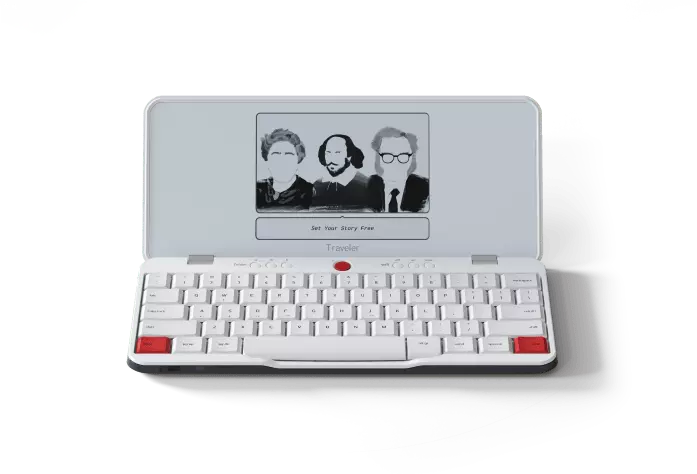
And sometimes, if I want to bring it on a plane, I've found it's replaced reading for me. Rather than pick up a book or bring a book on the plane, I bring Traveler and just kind of hang out in that space and see if anything comes up.

I've found that it's kind of like writing songs on a different instrument, you get different styles of music that you wouldn't have otherwise. I've found that writing from words towards music, I get different kinds of songs than I have in the past, which has been interesting.

In that way, like sitting at a piano, you just write differently than you do on a guitar, or even a bass, because of the things those instruments tend to encourage or that they can do.

It feels almost like a little synthesizer, a different kind of instrument that has unlocked a different kind of approach for me.

"I've found that it's kind of like writing songs on a different instrument, you get different styles of music that you wouldn't have otherwise... [Traveler] feels almost like a little synthesizer, a different kind of instrument that has unlocked a different kind of approach for me."

AC: As someone who doesn't know the first thing about writing music, that's fascinating. It's all magic to me.

AJ: Yeah.

AC: What else are you interested in writing?

AJ: I went to school for film directing. That was kind of what I thought I was going to do. And then my brother and I started the band and that kind of happened first and knocked me onto a different track for a little while after college.

Growing up, though, writing was my way into everything. In directing, I wanted to be in control of the thing that I wrote. And in music, it was the same — the songwriting really feels like it came from that same place. And then the idea of writing longer form, like fiction, almost feels just like the next step from song to EP to album to novel.

For whatever reason, that started feeling like a challenge that would be deeply related to the kinds of work that we do in the studio.

AC: Do you have any advice for aspiring songwriters?

AJ: This sounds like a cliche, but it's totally true: whatever success that I've had as a songwriter — judge that for yourself — but whatever success I have had, has been directly proportional to just writing the song that I wanted to hear.

What I mean by that is, even if you're being coldly, cynically, late-stage capitalist about it, it's by far the most success I've had. The good news is that you don't have to choose. And in fact, when you start making those little compromises, or even begin to inch in that direction, it just doesn't work. So you can forget about it.

Just make music you want to hear. And that will be the music that resonates with most people.

I think there's a temptation to have an imaginary focus group in your head of like 500 people. But the problem is all those people are fake. They're not real. None of those people are actually real people. You're a focus group of one, you're one real person. There are more real people in that focus group than in the imaginary one.

And I just don't think that we're that different, in the end. So that would be my advice.

AC: That seems like generally great creative advice. Because fiction writers talk about that too, right? Do you write to market or do you write the book you want to read. Same thing. And that imaginary focus group has been debilitating for me. I have to silence that focus group before I can write.

AJ: Absolutely.

"I think there's a temptation to have an imaginary focus group in your head of like 500 people. But the problem is all those people are fake... You're a focus group of one, you're one real person. There are more real people in that focus group than in the imaginary one."

--

Learn more about Abner James, his brother, and their band, Eighty Ninety, on Instagram.

noviembre 29, 2025 4 lectura mínima

The Great Freewrite Séance: A Ghost'ly Charity Auction Full Terms & Conditions

These Terms and Conditions (“Terms”) govern participation in The Great Freewrite Séance: A Ghost'ly Charity Auction (“Auction”), organized by Freewrite (“Organizer,” “we,” “us,” or “our”). By registering for, bidding in, or otherwise participating in the Auction, you (“Participant,” “Bidder,” or “Winner”) agree to be bound by these Terms.

1. Auction Overview

1.1. The Auction offers for sale a limited number of Freewrite Traveler Ghost Edition units (“Items” or “Ghost Traveler units”), each personally signed and drawn on by a featured author.

1.2. All proceeds, net of explicitly disclosed administrative costs, will be donated to the charity or charitable initiative (“Charity”) identified on each auction item’s page, as chosen by the respective author.

2. Eligibility

2.1. Participants must be at least 18 years old or the age of majority in their jurisdiction, whichever is higher.

2.2. Employees of Freewrite, the participating authors, or any affiliates directly involved in the Auction are not eligible to bid.

2.3. By participating, you represent that you are legally permitted to take part in online auctions and to pay for any bids you win.

3. Auction Registration

3.1. Participants must create an account on the auction platform or otherwise register using accurate, current, and complete information.

3.2. Freewrite reserves the right to verify identity and to disqualify any Participant who provides false or misleading information.

4. Bidding Rules

4.1. All bids are binding, final, and non-retractable.

4.2. Bidders are responsible for monitoring their bids; Freewrite is not liable for missed notifications or technical issues on the auction platform or the Participant’s device.

4.3. Freewrite reserves the right to:

  • set minimum bids or bid increments;
  • reject bids deemed in bad faith or intended to disrupt the Auction;
  • extend, pause, or cancel the Auction in case of technical difficulties, fraud, or events beyond reasonable control.

5. Winning Bids and Payment

5.1. The highest valid bid at the close of the Auction is the Winning Bid, and the corresponding Participant becomes the Winner.

5.2. Winners will receive payment instructions and must complete payment within 48 hours of the auction’s close unless otherwise stated.

5.3. Failure to complete payment on time may result in forfeiture, and Freewrite may offer the Item to the next highest bidder.

5.4. Accepted payment methods will be listed on the Auction platform. All payments must be made in the currency specified.

6. Item Description and Condition

6.1. Each Ghost Traveler unit is authentic, and the signatures, doodles, and messages are original works created by the participating author. These are authors, not artists. By bidding on the Item, you acknowledge that you are receiving a one-of-a-kind unit marked with unique art and messages and you agree to these terms and conditions.

6.2. Because Items are customized and signed by hand, variations, imperfections, or unique marks are to be expected. These are considered part of the Item’s character and not defects.

6.3. Items are provided “as-is” and “as-available.” Freewrite makes no warranties of merchantability or fitness for a particular purpose.

7. Shipping & Delivery

7.1. Shipping costs, import duties, and taxes may apply unless explicitly stated otherwise.

7.2. Freewrite will make reasonable efforts to ship Items within the estimated timeline but cannot guarantee delivery dates.

7.3. Title and risk of loss transfer to the Winner upon delivery to the carrier.

7.4. Freewrite is not responsible for delays, damage, or loss caused by the courier or customs agencies.

8. Charity Donation

8.1. Net proceeds from the Auction will be donated to the Charity designated on each Item page.

8.2. Donation amounts and recipients may be disclosed publicly unless prohibited by law.

8.3. Winners acknowledge that they are purchasing Items, not making a tax-deductible donation to Freewrite; therefore, Winners will not receive charitable tax receipts unless Freewrite explicitly states otherwise in compliance with applicable laws.

9. Intellectual Property

9.1. All trademarks, brand names, product names, and creative materials associated with Freewrite and the Ghost Traveler remain the exclusive property of Freewrite or their respective rights holders.

9.2. Participants may not reproduce, distribute, or publicly display the authors’ doodles without permission where such rights are applicable, except as allowed by law (e.g., resale of the physical Item).

10. Privacy

10.1. By participating, you consent to Freewrite’s collection, use, and storage of your personal data in accordance with our Privacy Policy.

10.2. Freewrite may publicly announce auction results, including Winner’s first name, last initial, city, state/country, and winning bid amount unless prohibited by law or unless you formally request anonymity when possible.

11. Prohibited Conduct

Participants may not:

  • engage in bid manipulation, fraud, or collusive bidding;
  • use automated systems (bots, scripts, scrapers) to place or monitor bids;
  • interfere with the Auction, platform, or other participants

Freewrite may ban or disqualify any Participant violating these rules.

12. Limitation of Liability

To the fullest extent permitted by law:

12.1. Freewrite is not liable for indirect, incidental, special, or consequential damages arising from the Auction or purchase of Items.

12.2. Freewrite’s total liability in connection with these Terms shall not exceed the amount of the Winning Bid actually paid by the Participant.

12.3. Freewrite is not responsible for technical malfunctions, internet outages, system failures, or other issues beyond its control.

13. Cancellation and Force Majeure

Freewrite may cancel, postpone, or modify the Auction due to unforeseen circumstances, including but not limited to natural disasters, system failures, strikes, or events affecting participating authors or the Charity.

14. Governing Law & Dispute Resolution

14.1. These Terms are governed by the laws of Michigan, without regard to conflict-of-law rules.

14.2. Any disputes arising under these Terms will be resolved through binding arbitration or the courts of the specified jurisdiction, as applicable.

14.3. Participants waive any right to participate in class-action lawsuits relating to the Auction.

15. Amendments

Freewrite may update these Terms at any time. Continued participation in the Auction after updates constitutes acceptance of the revised Terms.

16. Contact Information

For questions or concerns regarding the Auction or these Terms, contact: hello@getfreewrite.com.