overlaylink

Caras marrones y malas críticas: autores que se portan mal

junio 17, 2024 | 7 lectura mínima

A menudo pensamos en los escritores como seres amables, sensibles y reflexivos. Ya sea un autor superventas escribiendo su última obra maestra o un escritor en ciernes compartiendo sus primeras historias en línea, es posible que te imagines a alguien saboreando dulcemente una taza de té y escribiendo a máquina desde una cabaña en el bosque.

Pero los escritores, como todos los demás, no somos perfectos. No estamos exentos de tener conflictos, de caer en pequeñas disputas y, a veces, de comportarnos de forma terrible.

Como dice Anthony Arthur en su libro Literary Feuds : “Nos preguntamos cómo las personas que describen tan vívidamente el fracaso humano (así como el triunfo) pueden no alcanzar la perfección”.

Desde lo impactante hasta lo cómico, profundicemos en los casos más comentados de autores que se comportan mal.

Autores modernos que se portan mal

El misterioso autor con múltiples identidades falsas

Los lectores y escritores de Book Twitter (ahora X) no son ajenos al drama y las disputas. Pero esta historia en particular es un laberinto de engaños, mentiras y caras pintadas de marrón .

Taylor Barton, autora trans de libros como "La Novena Vida" , ganó popularidad en Twitter. Escribiendo bajo varios seudónimos, como Taylor Brooke y Brooklyn Ray, Barton publicó ciencia ficción, fantasía, romance paranormal y literatura erótica.

Ahora bien, no hay nada de malo ni sospechoso en escribir bajo varios seudónimos . Muchos autores que escriben novelas y relatos de diversos géneros lo hacen para diferenciar su obra para distintos tipos de lectores o para crear una sensación de anonimato dentro de ciertos géneros. Pero la razón detrás del uso de seudónimos por parte de Barton resultó ser un poco más siniestra.

En 2020, miembros de la comunidad literaria en línea presentaron acusaciones de racismo y acoso contra Barton. Tras esto, Barton emitió una disculpa pública, prometió aprender y cambiar, y emitió un recibo por una donación de $500 al Proyecto Trevor. Sin embargo, muchos señalaron que el Proyecto Trevor no es una organización específica para personas de color, lo que desmintió la disculpa de Barton tras las acusaciones de acoso racista.

Luego, Barton fue expulsado de su editorial y se dirigió a su otra cuenta de Twitter, bajo el seudónimo de Brooklyn Ray, donde el drama continuó y su disculpa fue prácticamente retractada.

Más tarde, en 2021, los investigadores comenzaron a comparar a Taylor Barton con el nuevo autor Jupiter Wyse. Al observar similitudes entre la decoración de la casa, las cartas astrales y los ejemplos de escritura de ambos, la comunidad literaria se sumergió de nuevo en el drama.

El usuario anónimo @AlertsBarton compartió un hilo sobre las conexiones entre Taylor Barton y los autores Hunter Barton, Stacey Anthony y Freydís Moon. Taylor Barton no solo parecía usar múltiples identidades falsas, sino que, como Freydís Moon/Jupiter Wyse, se hacía pasar por una persona latina de color.

Esto dio lugar a acusaciones no solo de catfishing, sino también de "brownface" (cuando una persona blanca finge ser de piel morena), en lo que parecía ser un intento de eludir la condena que Barton recibió tras acusaciones previas de racismo. Posteriormente, Jupiter Wyse también fue despedido por su agente.

Con tantas capas en esta historia, los usuarios de Twitter llevaron a cabo sus propias investigaciones en profundidad (uno creó un documento de Google de 69 páginas sobre el tema ) y los YouTubers de libros también analizaron la historia en detalle.

En términos de drama de libros en Twitter, este se lleva la palma.

¿Malas críticas, catfishing y hasta acoso?

La escritora y periodista Kathleen Hale es autora de novelas de misterio y asesinato para jóvenes y de un libro de ensayos titulado "Kathleen Hale es una acosadora loca" . El drama que se desencadenó tras la publicación de su primera novela es una historia que supera la ficción.

Cuando se enviaron copias preliminares de "Nadie más puede tenerte" a blogueros literarios populares, Kathleen Hale recibió una advertencia: no mires las reseñas de Goodreads, ni mucho menos las comentes. En un artículo que escribió para The Guardian , Hale dijo: «Escribir para ganarse la vida significa trabajar en una industria donde el éxito o el fracaso dependen de las reacciones subjetivas del público». Sabía que era una mala idea leer reseñas de su libro en línea. Pero no pudo resistirse.

Hale encontró una crítica mordaz de una estrella de la bloguera literaria Blythe Harris, quien dijo: «Creo que este libro está terriblemente escrito y es ofensivo; su ejecución, en todos los aspectos, es horrible y, sinceramente, inexistente». Según los comentarios en la plataforma, la reseña de Harris pareció influir en otras reseñas y disuadir a otros de leer el libro.

Hale empezó a obsesionarse con esta reseña y se obsesionó con la propia Harris. Comía muchos dulces y se dedicaba a acecharla, revisando el Instagram y el Twitter de Harris, leyendo sus otras reseñas e incluso estudiando fotos de los pasteles y las vacaciones de la desconocida. A medida que se interesaba más por la imagen de Harris en línea, empezó a encontrar discrepancias y sospechó que era una estafadora. Finalmente, Hale se emborrachó de buena gana y respondió a la reseña de Harris, ofendiendo a los blogueros literarios en el proceso, y la red social Book Twitter estalló. Hale intentó resolver el problema, pero solo se metió en un lío más profundo.

Segura de que alguien la había trolleado con una identidad falsa, Hale pagó una verificación de antecedentes para averiguarlo e incluso localizó una dirección relacionada con Harris. Alquiló un coche para ir a su casa y verla en persona.

El artículo de Hale sobre su experiencia generó más de 900 comentarios en The Guardian, muchos de los cuales la criticaron por invadir la privacidad de Harris e incluso la acusaron de idealizar el acoso. Como era de esperar, la comunidad literaria reaccionó con dureza ante toda esta farsa.

Para escritores y aspirantes a autores, es fácil empatizar con la lucha de Hale por mantenerse alejada de Goodreads . Intentar evitar las reseñas de un libro en el que has puesto toda tu alma debe ser como intentar ignorar una picazón que te mueres por satisfacer. Y descubrir reseñas de una estrella de inmediato debe doler. Pero investigar la identidad de un crítico, contactarlo por teléfono sin su consentimiento y presentarse en su casa sin avisar es inexcusable.

Ejemplos históricos de autores con mal comportamiento

La disputa de Ernest Hemingway con William Faulkner

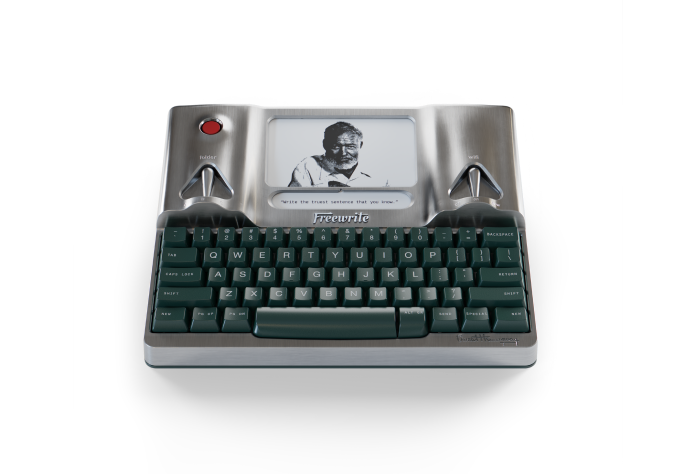
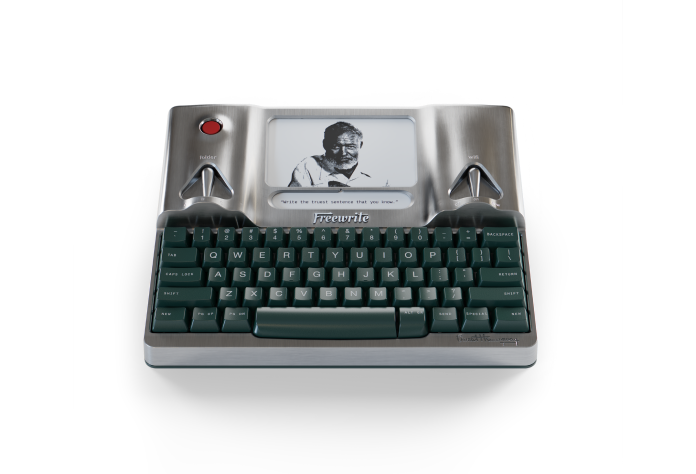
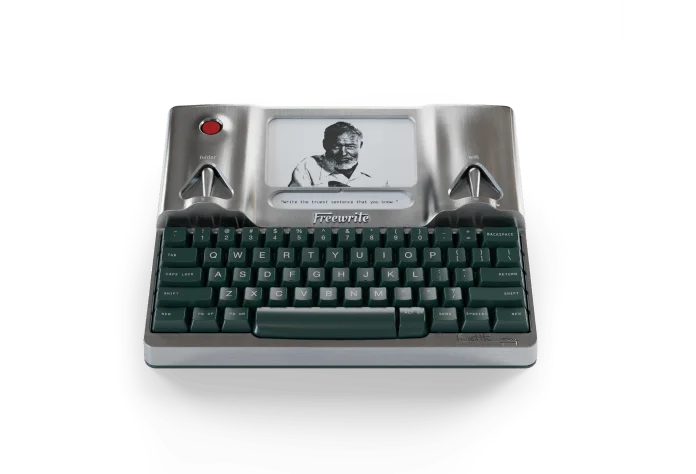
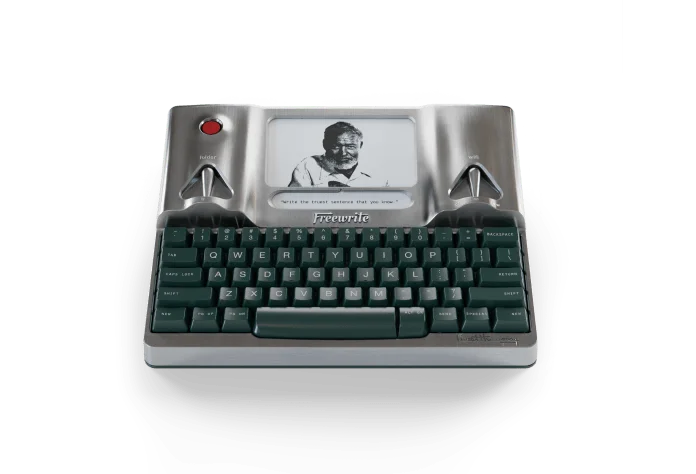
Las disputas literarias son muy anteriores a Book Twitter y BookTok . Incluso el homónimo de Hemingwrite tuvo riñas con otros autores.

Se puede afirmar con seguridad que a William Faulkner, autor de obras maestras como El ruido y la furia y Mientras agonizo , no le gustaba el estilo sobrio de Ernest Hemingway . AE Hotchner, biógrafo de Faulkner, le dijo a Hemingway: «El señor Faulkner dijo que usted nunca se arriesga. Dijo que no tenía valor, que nunca se le había conocido por usar una palabra que pudiera remitir al lector al diccionario».

Como era de esperar, Hemingway se ofendió. Respondió: «Pobre Faulkner. ¿De verdad cree que las grandes emociones provienen de grandes palabras? Cree que no conozco las palabras de diez dólares. Las conozco perfectamente. Pero hay palabras más antiguas, más sencillas y mejores, y esas son las que uso».

Para echar más sal a la herida, Hemingway dijo: "¿Leíste su último libro? Ahora todo es escritura con sabor a salsa, pero antes era bueno. Antes de la salsa, o cuando sabía cómo manejarla".

Si Book Twitter hubiera existido en la época de Hemingway, los lectores habrían cogido palomitas para este. Todos habríamos estado esperando con gran expectación la siguiente serie de subtuits que se convertiría en una auténtica rabieta.

¿Quién habría salido victorioso? Con su respuesta mordaz y sus insultos descarados, apuesto por Hemingway.

Las macabras aventuras de Mary Shelley en el amor gótico

En el mundo literario pre-internet, no solo los hombres se portaban mal. Mary Shelley, autora de Frankenstein , también tenía una vena rebelde. De hecho, se dice que Shelley perdió la virginidad en la tumba de su madre .

Rumores descabellados como este sobre personajes históricos suelen descartarse como simples rumores. Pero, pensándolo bien, son bastante representativos de la madre del terror gótico. Y los estudiosos creen que Shelley consumó su relación con su futuro esposo, el poeta Percy Bysshe Shelley, en el mismo lugar donde su amada y pionera madre fue enterrada tan solo diez días después de dar a luz.

Una de esas estudiosas es Charlotte Gordon, autora de Romantic Outlaws: The Extraordinary Lives of Mary Wollstonecraft and Mary Shelley , quien dijo que “tradicionalmente se acepta” que este rumor es, de hecho, cierto .

“Según una carta que escribió Percy, fue allí donde ella le declaró su amor…”, dice Gordon. “No sabemos hasta dónde llegaron. Pero siempre se referían a ese día como el cumpleaños de Percy.”

Claramente fanáticos de lo macabro y romántico, las aventuras de los Shelley en el cementerio podrían haberle dado competencia a Gomez y Morticia Addams.

Consumar una relación sobre una tumba probablemente se consideraría un insulto en una sociedad civilizada, un gran "a la mierda" para el difunto que está abajo. Pero algo me dice que esa no era la intención de Shelley.

La tumba de la madre de Shelley fue una parte importante de su infancia. Estaba cerca de su casa y la familia la visitaba con frecuencia durante su infancia. También se dice que aprendió a leer allí trazando las letras de la lápida de su madre y leyendo sus obras. La extraña decisión de perder su virginidad en este lugar podría haber sido, en realidad, la forma en que Shelley honraba a su difunta madre, la madre que nunca conoció, pero con la que ansiaba conectar desesperadamente .

Probablemente podría pensar en otras formas menos espeluznantes de rendir homenaje a los difuntos, pero bueno, cada uno con lo suyo.

El mundo literario siempre ha prosperado gracias al drama

Claro, los dramas literarios, las historias picantes y las disputas entre autores en línea son jugosas y, a menudo, simplemente espantosas. Pero es con la ayuda —o, mejor dicho, el obstáculo— de internet y las redes sociales que se volvieron virales.

Nuestras comunidades literarias hiperconectadas pueden brindar a la gente común la plataforma para alcanzar el éxito y el reconocimiento de la crítica, algo que siglos atrás era inimaginable. Pero este mundo siempre conectado también puede propiciar que los trapos sucios de los autores salgan a la luz, se refriton, se analicen y se reaviven una y otra vez.

Las redes sociales pueden amplificar el drama, pero no se dejen engañar. Siempre ha habido autores que se portan mal.
agosto 26, 2026 5 lectura mínima

Freewriter Mike Somerby left a lucrative marketing career in e-commerce to start a print-only literary magazine by and for Montanans. Yes, you read that right.

We sat down with Mike to find out how ... and why.

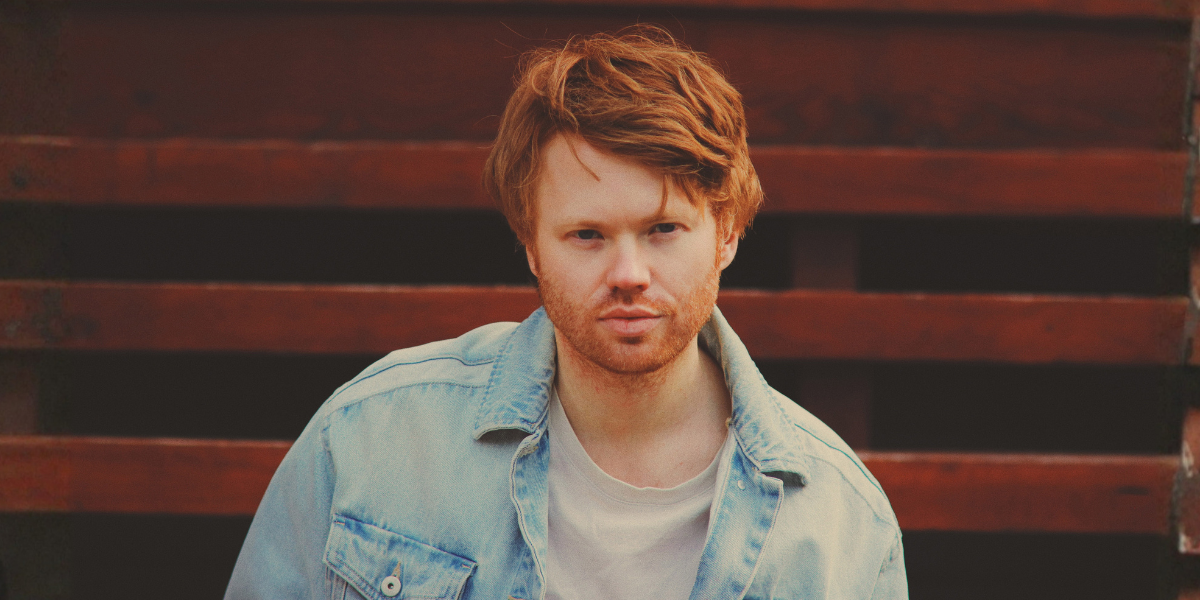
Mike Somerby identifies as a writer — with some reservation.

"I think all who write are 'writers,'" he says, "even if the writing itself amounts to a simple letter to a friend or a personal journal entry."

We couldn't agree more. And we're thrilled that this particular writer writes his essays on Freewrite. Maybe that's why we felt comfortable asking him:

What inspires a professional brand marketer to leave his 9-5 and jump feet-first into the literary world of Bozeman, Montana?

Luckily, he was happy to tell us.

AC: Before we get into the lit mag, it actually isn't your first foray into the literary community, right?

MS: For about ten years — the lion's share of my professional chapter — I worked, in some capacity, as a brand marketer. Last spring, while enduring a particularly grueling stint as CMO for a Montanan e-commerce brand (yes, those exist), I found myself revisited by the remarks of an old journalism school professor: from his perspective, journalism students who apply their storytelling talents toward PR and marketing have crossed over to "the dark side."

While I find this a touch heavy-handed, I get the point, and I believe his notion resurfaced to meet the moment: we live in a world sorely hurting for analog (human) creativity and high-quality longform.

So I quit, traveled west with my dog in a 1986 U-Haul I'd converted into a camper, and plotted.

Step one: I founded Pulphead, a lounge (named after John Jeremiah Sullivan’s seminal 2011 essay collection) where Bozeman writers commune and grind out their prose until 2 a.m. Entry is a flat $5, which comes with unlimited drip coffee and tea.

Step two: leverage the Pulphead regulars and its online following to secure contributors for my new literary magazine, ANEMONE. Thus far, everything is going to plan.

We live in a world sorely hurting for analog (human) creativity and high-quality longform.

AC: Why do you think it's so important to create and preserve these spaces for authentic writing?

MS: Writing is a solitary act. Nonetheless, younger generations, in particular, struggle to forge IRL community in the way older generations might understand as an ordinary facet of being human.

By building a space that is as homey as it is supportive of their literary interests, we’re not only helping these individuals find their birds of a feather, but also providing them with a dojo that mandates setting aside blocks of time away from phones, home lives, and the other distractions. Win-win?

Incidentally, Livingston boasts the highest per-capita concentration of professional writers anywhere in the country. Couple this with another statistic — that Montana has more bookstores per capita than any other state — and it becomes clear southwest Montana is as fertile a place as any to invest in literature and its related industries.


AC: That's so interesting. What have you learned from being in community with creatives in Bozeman?

MS: In terms of writing, I've learned plenty. What has excited me most, however, is what I’ve learned from a small group of Indigenous women who come to the shop to write poetry and make beaded clothing in the traditions of their respective tribes (most notably, Crow, Cheyenne, Shoshone).

This is a group I’d otherwise have limited opportunity to engage with outside of Pulphead, and learning about their traditions, beliefs, hopes — even a little vocabulary — through firsthand conversation has proved incredibly edifying.

AC: And you mentioned you've seen Freewrites pop up in Pulphead. You use one, right?

MS: Yes. About seven years ago, not long after moving to Montana from New York, I purchased an Olivetti Lettera 32 typewriter from eBay. It appeared that a romanticizing of my newfound remoteness had rekindled my interest in writing.

I loved the mechanical feel and distraction-free interface, but the inability to edit line by line proved a notable annoyance for a mind habituated to modern computers. A few years down the road, some digging for alternatives led me to a blog post about smart/electronic typewriters. Voilà.

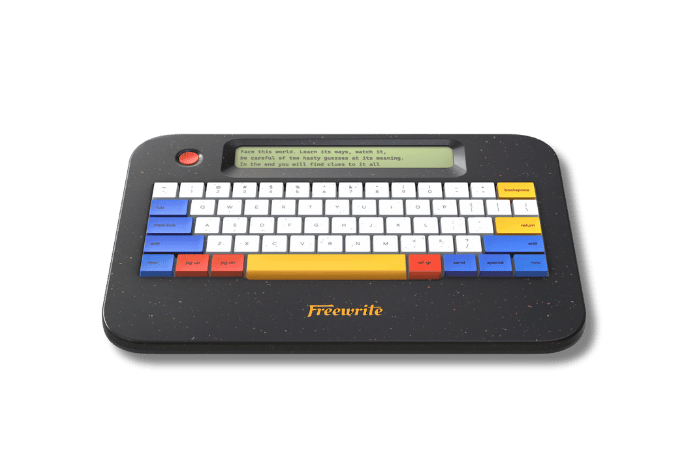
I purchased a Freewrite Gen3 Smart Typewriter, and I've been hooked ever since.

AC: That's awesome. So tell us about ANEMONE. What is it?

MS: ANEMONE is a print-only magazine (printed in a traditional broadsheet newspaper format). As for for theme, broadly, the world as told by Montanans. Short fiction, creative nonfiction, poetry, reportage, photography, and visiual illustrations comprise the submission categories.

AC: Print-only!

MS: Print is only dying because we let it.

AC: Is there a story about the name?

MS: Most people know the word anemone to describe a family of flowers — a 200-plus-species family of buttercups, comprising varieties both wild and domesticated. Dubbed “windflowers,” their delicate petals are said to blow open in the breeze; the ancient Greek word anemos means “wind.” I was drawn to the metaphorical value of beauty and how it can be revealed to us through an invisible force.

To add another layer, when I was a boy my father and I would spend weekends at the beaches north of San Francisco, where I was born and raised until I was seven. We would study the massive turqoise, kelly green, and purple sea anemones clinging to rocks left exposed by the receding Pacific tides (as to why, I can't say, outside of them looking funny, almost alien). A good memory.

Finally, “Anemone” is the name of an exquisite song by The Brian Jonestown Massacre, an irreverent and controversial rock band led by Anton Newcombe, an obsessive creative who rejects the surrender of culture and art to commercial interests. The track has a hold on me. It's like a portal to another era.

AC: Why do you think this sort of analog creativity is important?

MS:  I'm told the unending deluge of digital interface is leaving humans less and less capable of “deep work.” Will we ever know the difference?

Will we recognize what a society incapable of deep work looks like compared with those that came before it? Or will the transition manifest as a gradual degradation of quality, much as Coca-Cola was slowly, but surely, divorced from real sugar, such that to taste what Coke used to be like, one must order a Mexican Coke, still made with real cane sugar?

For me, analog perspective (and any creativity wrung from it) is rooted in continuity, tangibility, lived experience, slowness, spatial relation, nuance, emphasis on process, and grace for imperfection — antithetical to one of replicability, speed, binary outcomes, predictability, and optimization.

I prefer the former, and I suspect those who prefer the latter don't read or write much — life is a beautiful, taxing mess, and good writers find merit in this duality.

For me, analog perspective (and any creativity wrung from it) is rooted in continuity, tangibility, lived experience, slowness, spatial relation, nuance, emphasis on process, and grace for imperfection — antithetical to one of replicability, speed, binary outcomes, predictability, and optimization.

AC: Who is invited to submit to ANEMONE?

MS: We do limit submissions to Montanans, past and present, though we will feature writers from other states should the content of their writing bear an obvious relation to Montana — a requirement not imposed on Montanan writers.

All information regarding submissions can be found at www.anemonereview.com, along with all other facets of the magazine.

agosto 26, 2026 1 lectura mínima

Love the Freewrite 500? Here are 3 more writing contests for competitive short fiction writers.

1) Writers' Hour Magazine Prompts

The London Writer's Salon (a global writing group — no London residence necessary!) regularly host a writing contest via their Writers' Hour Magazine. Want to know a secret? Their September theme is all about freewriting.

Join them for a free workshop, Introduction to Freewriting, on Thursday, September 3, and get all the details about the contest.

The winner of the contest will win something Freewrite-shaped. 👀

2) NYC Midnight Challenges

This organization (again, no affiliation with NYC necessary) regularly hosts short story contests. Their next challenge is all about writing a rhyming story.

Learn more and register here.

Note: NYC Midnight writing contests generally have a fee to enter.

3) Henshaw Press Short Story Competition

This short story competition is open to anyone over age 16. And the best part? There is a cash prize, and profits go to charity.

Learn more here.

julio 30, 2026 2 lectura mínima

PRESENTED IN COLLABORATION WITH

Calling all micro-fiction storytellers! 🏁

For the second year in a row, Freewrite is teaming up with Grant Faulkner, co-founder of the Flash Fiction Institute and author of The Art of Brevity, to bring you the fastest, most adrenaline-pumping writing event of the year.

Whether you're a seasoned writer or a creative rookie, the Freewrite 500 is your chance to rev up your imagination, write a 500-word story, and win big.

You do not need to own a Freewrite to participate.

[REGISTRATION CLOSED]


How It Works

🎟️ Fill out the form above to secure your spot. It's totally free. (You must register to participate.)

📖 Watch the free mini flash fiction lesson by Grant Faulkner, which includes the announcement of the prompt for the contest. WATCH IT HERE.

📝 You'll have the weekend to finish and submit your 500-word storybased on the prompt by end of day on Monday, August 17. Entries must be 500 words or less. The entry form is plain text. Any necessary formatting should be noted in [brackets]. [SUBMISSIONS CLOSED]

✏️ Our judging panel, led by Faulkner and made up of writers from the Freewrite team and the Flash Fiction Institute, will judge each piece based on: length (500 words), relevance to the prompt, and creativity.

🥇 NEW THIS YEAR: The panel will select three finalists, and then announce one grand prize winner.

All work must be submitted by 11:59 p.m. ET on Monday, August 17, 2026.

The Prize Pack

One winner will receive:

  • Publication on the Freewrite blog and Flash Fiction Institute blog
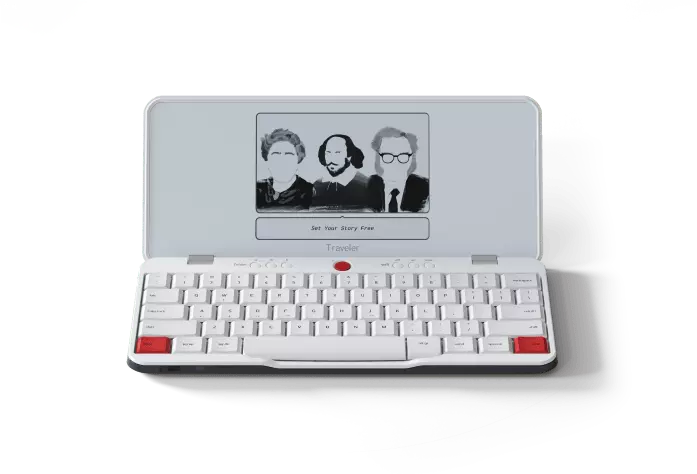
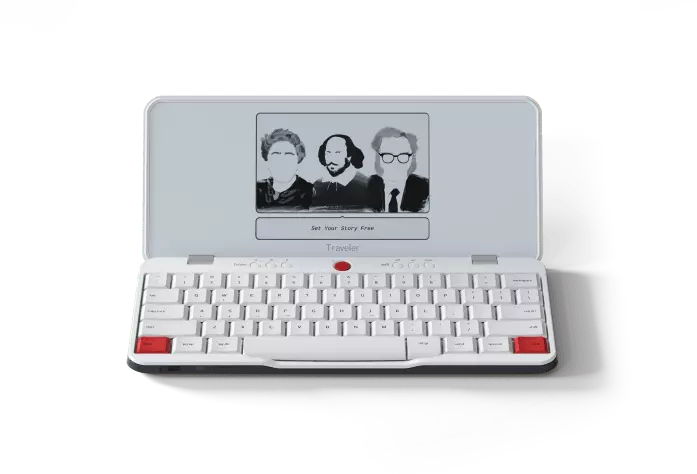
  • 1 Freewrite Traveler
  • 1 hour-long one-on-one coaching session with Grant Faulkner
  • 1 free Flash Gym session with the Flash Fiction Institute
  • 1 Words Are Hard prompt deck
  • A paperback copy of Set Your Story Free, the ultimate guide to freewriting
  • A digital copy of the opening chapter of Grant Faulkner's book, The Art of Brevity

Second and third place writers will each receive:

  • Publication on the Freewrite blog and Flash Fiction Institute blog
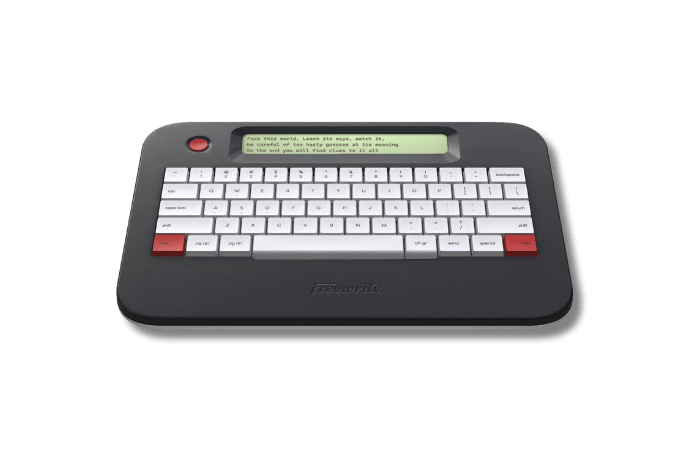
  • 1 Freewrite Alpha
  • 1 free Flash Gym session with the Flash Fiction Institute
  • Words Are Hard prompt deck
  • A paperback copy of Set Your Story Free, the ultimate guide to freewriting
  • A digital copy of the opening chapter of Grant Faulkner's book, The Art of Brevity

The Schedule

  • Thursday, Aug 13: Lesson & prompt announcement
  • Monday, Aug 17: Submissions deadline
  • Monday, Aug 31: Finalists announced
  • Monday, September 7: Grand prize winner announced

Questions? You can reach us at hello@getfreewrite.com.

Write on.

The Freewrite 500 Pit Crew 🏁 

Full contest terms and conditions