overlaylink

40 libros en: Lo que me hubiera gustado saber al principio

marzo 28, 2024 | 6 lectura mínima

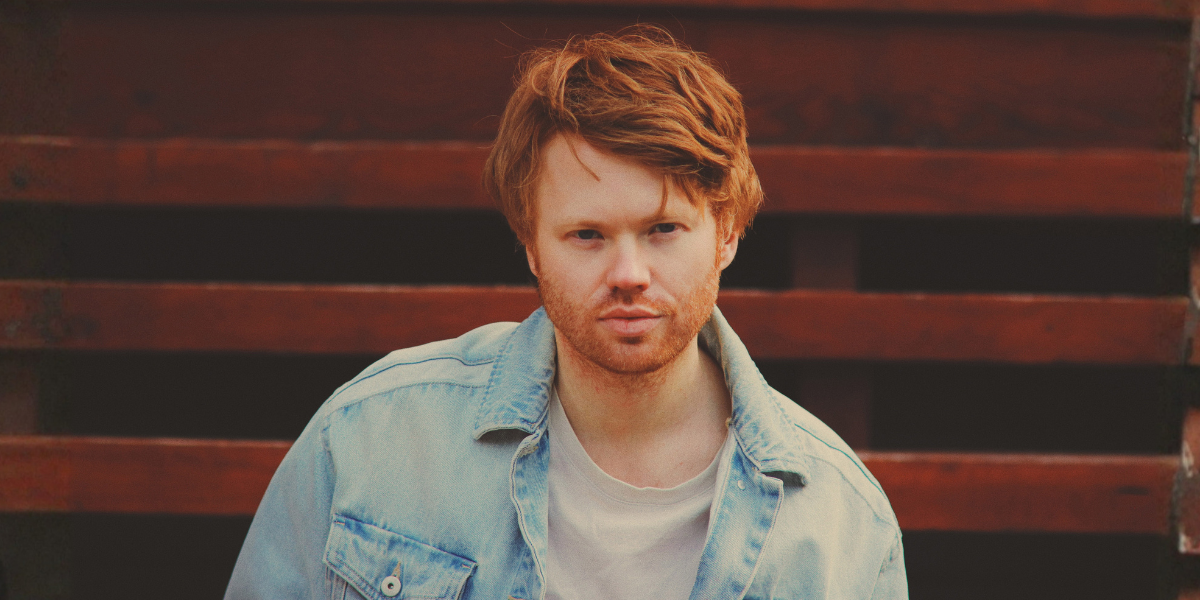
Jayce Carter ha escrito más de 40 libros y ha conseguido una base de lectores ávidos de sus novelas románticas paranormales.

Si la frase "40 libros" te deja boquiabierto y sin palabras, no estás solo.

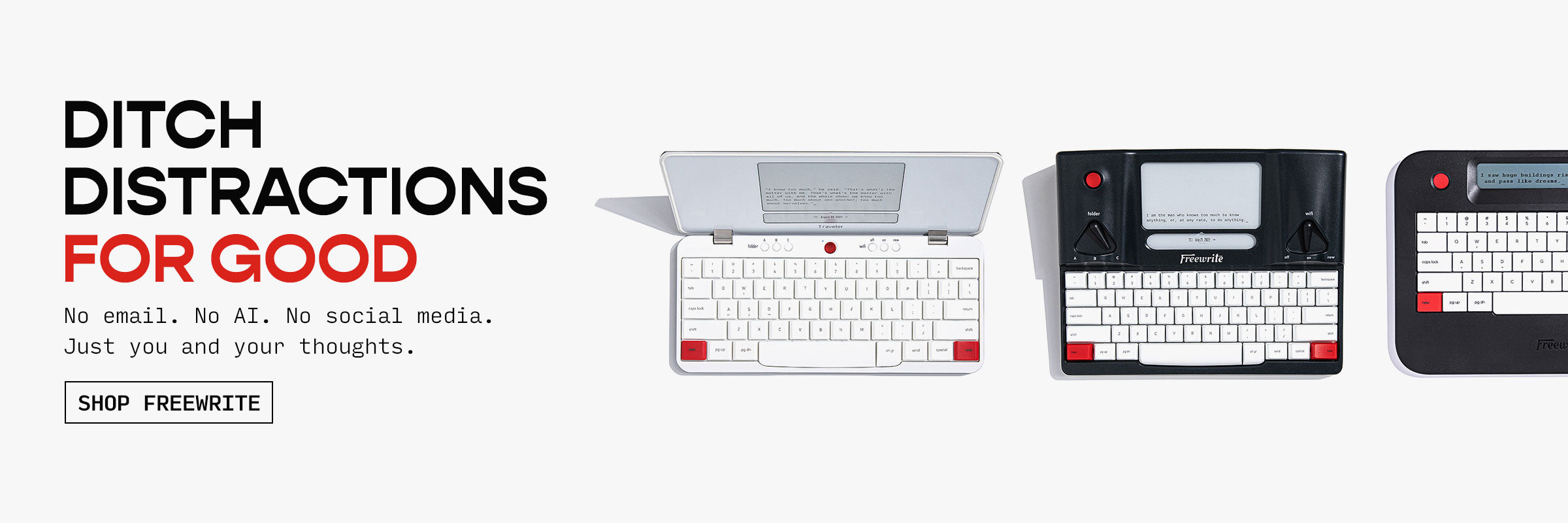
Jayce redacta sus trabajos en Freewrite para disfrutar de la mejor experiencia de escritura sin distracciones, pero ¿qué más hace para seguir creando ficción fantástica? Descubrámoslo.

Empecemos con: 40 libros. ¡Guau! ¿Cómo lo conseguiste?

Una vez tuve un mentor que me dijo que escribiera 1000 palabras cada día. Incluso lo hizo durante el nacimiento de mis hijos, el matrimonio, el divorcio y la enfermedad, sin fallar ni un solo día. No puedo decir que sea tan devoto —al fin y al cabo, he fallado días—, pero esa mentalidad me ha ayudado mucho a escribir a diario.

He descubierto que cuanto más rutinario se vuelve, menos necesito depender de la motivación o la autodisciplina. Incluso si solo escribo unas pocas palabras, escribir cualquier cosa me ayuda a mantener ese impulso.

¿Cómo es tu rutina de escritura?

Escribir es mi trabajo a tiempo completo, lo que significa que suelo trabajar ocho horas al día, cinco días a la semana. Claro que no dedico todo ese tiempo solo a redactar, sino que lo divido entre escribir, editar y realizar tareas administrativas.

Prefiero terminar de escribir temprano por la mañana y suelo empezar el día sobre las 5:00, ¡antes de que los niños se despierten y decidan que necesitan cosas! Dejo el trabajo administrativo (marketing, contratos, promociones, etc.) para más tarde.

Mi recuento diario de palabras puede estar entre 500 y 10 000, pero generalmente intento llegar a alrededor de 5000 en un buen día de escritura.

Los lectores de novelas románticas son notoriamente voraces. Una estadística que hemos visto es que el 78 % de los lectores de novelas románticas leen más de una novela al mes, una cifra muy superior a la media. ¿Sientes presión por escribir rápido para mantener el ritmo?

El apetito voraz de los lectores de novela romántica es una de las razones por las que el género me encaja tan bien. Esbozo mis historias rápidamente. Esto me viene de maravilla, porque si me dedicara a otro género, me temo que me cansaría del lector.

Pero por muy rápido que publique libros, siempre habrá un lector que me pregunte cuándo sale el siguiente. No niego que esto puede causar algo de presión, pero lo encuentro motivador en lugar de agobiante. Soy una persona que se maneja bien con los plazos y la presión. Era ese niño que no leía nada en la escuela hasta cinco minutos antes del examen, cuando hojeaba frenéticamente las páginas del texto solo para, de alguna manera, sacar una buena nota.

Ese tipo de presión me ayuda a trabajar, honestamente, y aprecio lo increíblemente obsesivos y amables que siempre son mis lectores.

Nombra 3 técnicas concretas que utilizas para escribir rápido.

1) Me encanta escribir de madrugada. Esto es antes de que todas las demás tonterías de la vida me lo impidan.

2) Me encanta llevar un registro de palabras. Uso un bullet journal, donde tengo un calendario anual completo para poder registrar mi recuento exacto de palabras cada día. Esto me ayuda mucho a mantenerme motivado para seguir escribiendo, ya que sé que tendré que mirar esa cifra el resto del año.

3) También utilizo sprints de palabras: escribo tan rápido como puedo durante un período de tiempo determinado y, a menudo, con otras personas que me hacen responsables.

¿Qué Freewrite utilizas?

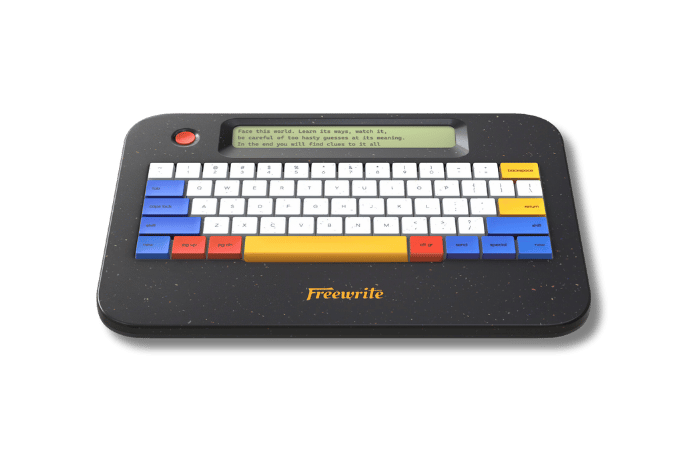
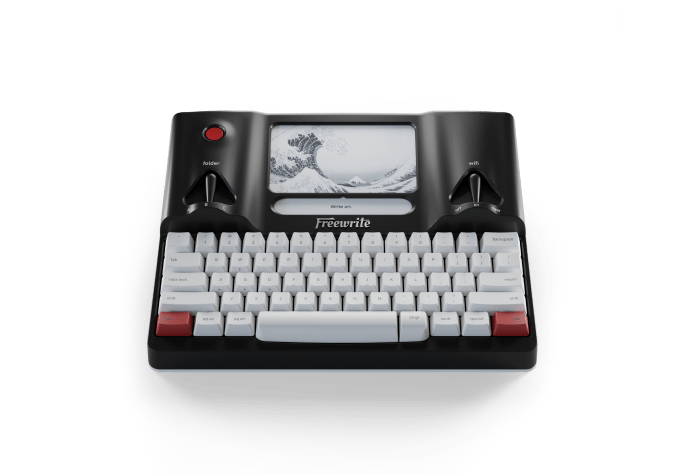
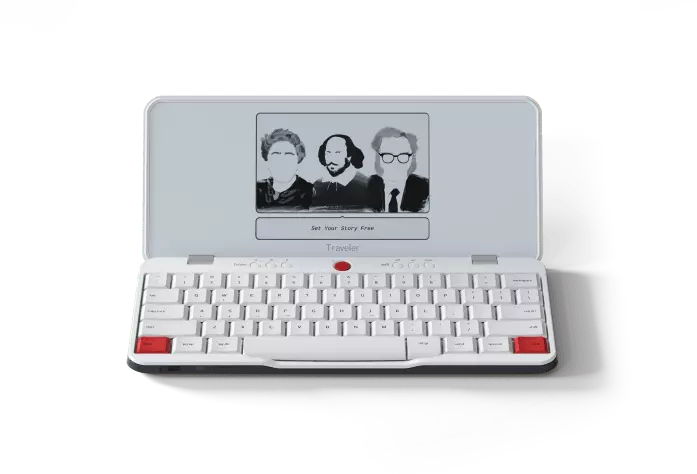
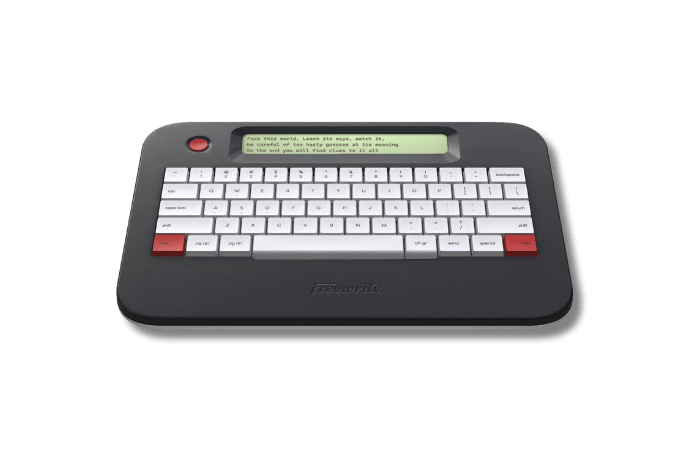
¿Es aquí donde tengo que revelar mi identidad? De hecho, tengo los tres modelos principales de Freewrite.

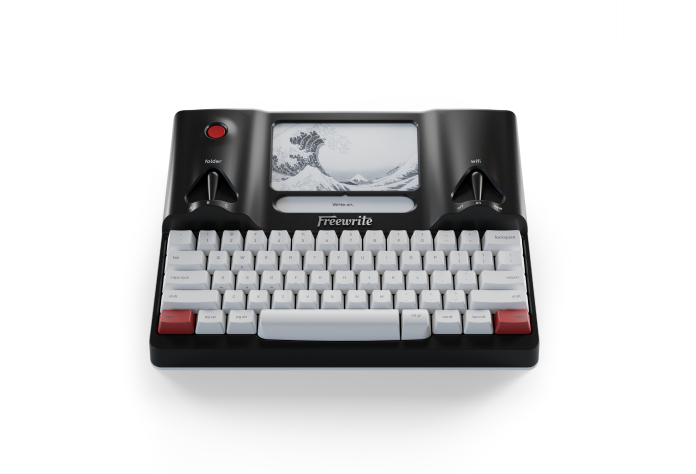
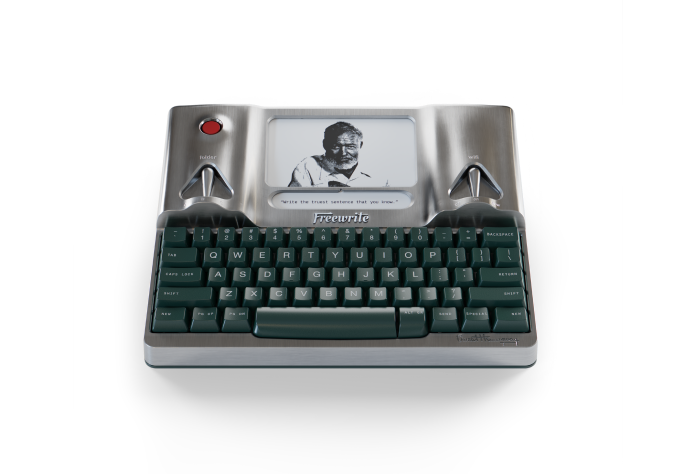
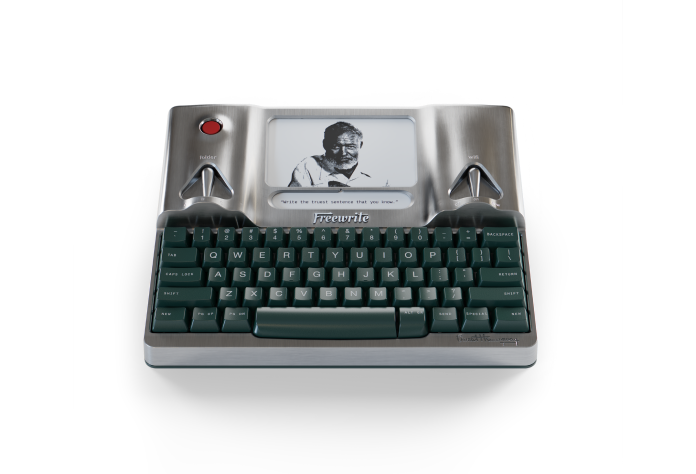
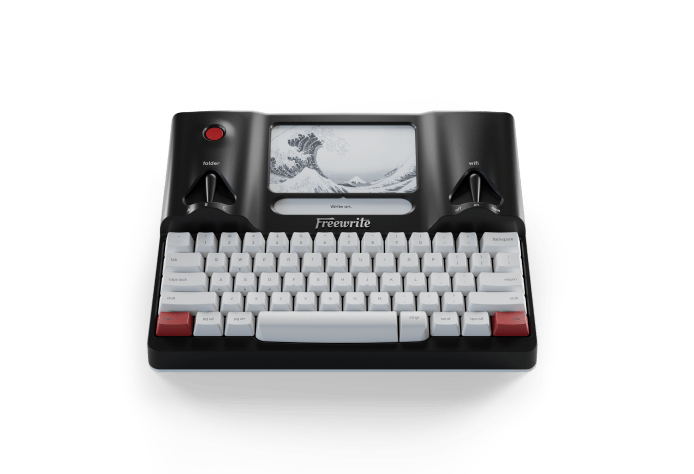
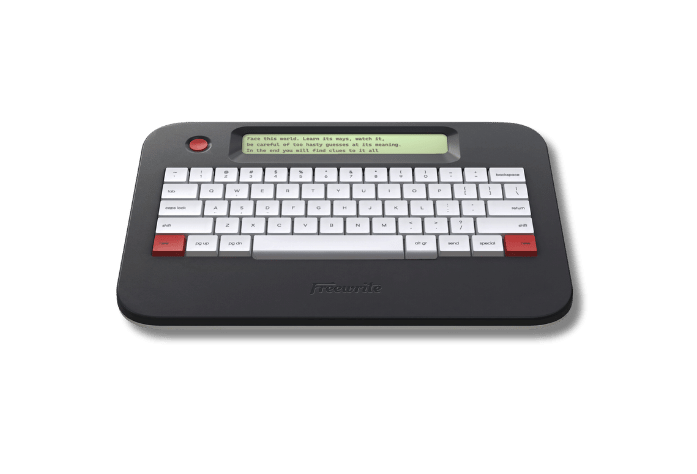
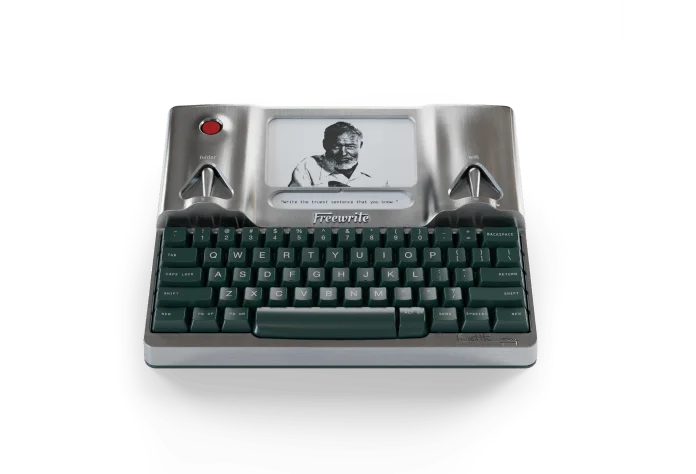
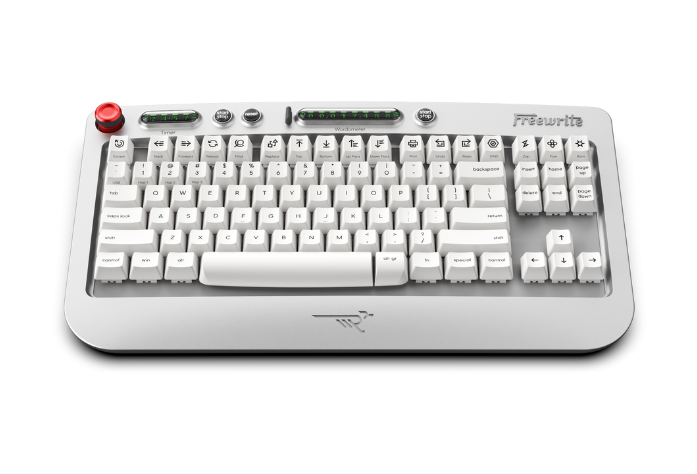
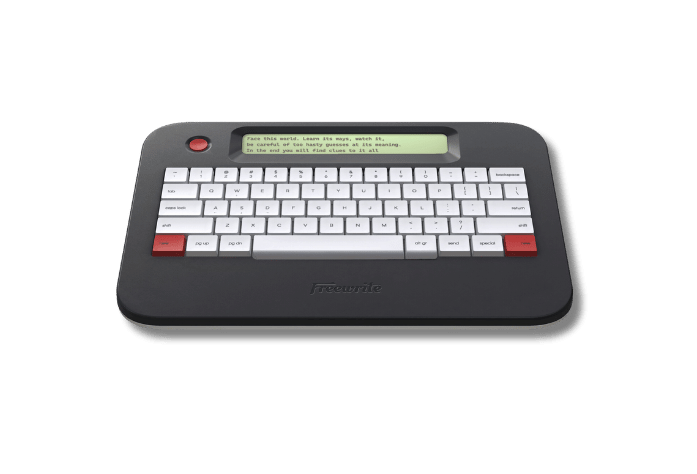
Tengo mi original, llamado Bob, que tiene teclas negras elegantes. Lo compré cuando salió al mercado. Me encanta por la retroiluminación y funciona mejor en un escritorio, pero seguro que lo he sacado a pasear un par de veces.

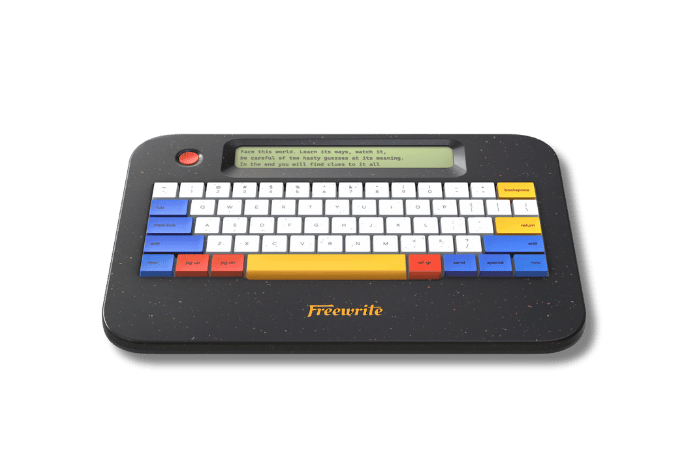
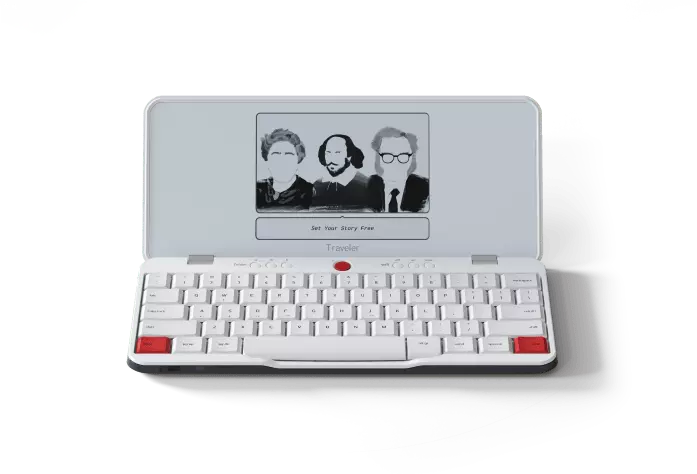
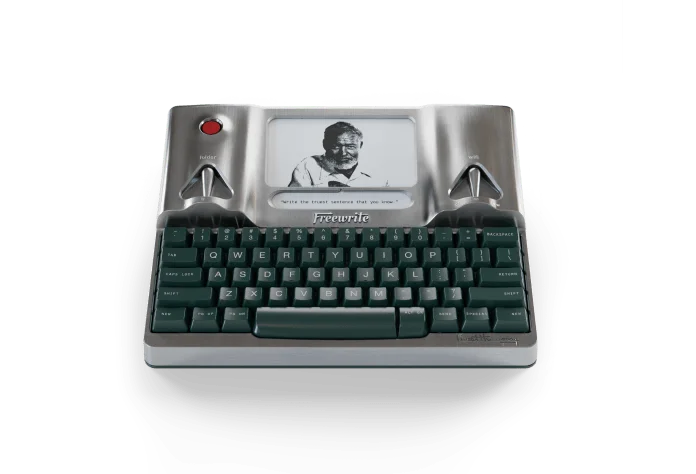
Compré a Traveler cuando salió al mercado —lo llamé Travis— y lo he llevado en dos viajes por carretera por todo el país. Es fantástico por su pequeño tamaño y movilidad, ¡por eso siempre me acompaña en mis viajes! He escrito muchísimas palabras en habitaciones de hotel o en la parte trasera del coche mientras conducíamos.

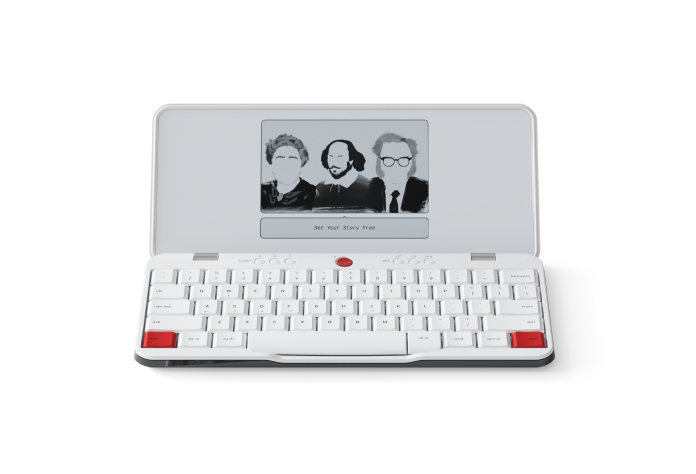
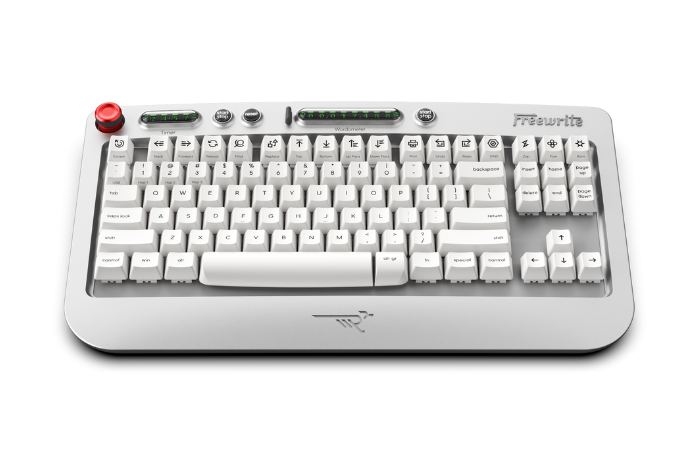
Por último, mi Alfa, llamado Adam, es mi nuevo compañero de escritura. Ahora es el que más uso y lo tengo junto a mi cama para escribir un rato por las noches mientras veo telebasura. Adam nunca me juzga.

Nuestro director ejecutivo se llama Adam. Le va a encantar. ¿Cuál es tu favorito?

No puedo decirlo porque para mí todos tienen usos muy específicos y me alegro de tenerlos todos por diferentes razones.

Eso es una excusa, pero lo aceptaremos.

Hablemos de tu rutina de escritura a lo largo de 40 libros. ¿Ha cambiado algo?

¡Hay muchísimo! Empecé como ama de casa y escribía poniendo mi Freewrite encima de la lavadora en la cocina mientras cuidaba a mis hijos. Anotaba cientos de palabras sentada en el coche mientras esperaba a que los recogieran del colegio.

Ahora, sin embargo, tengo mi propia oficina; resulta que un escritorio es mucho mejor que una lavadora. Mis hijos van a la preparatoria, lo que significa que puedo concentrarme durante horas al día en mi trabajo de una manera que antes no era posible.

Tener ese tiempo extra para concentrarme es agradable, por supuesto, pero la verdad es que a veces extraño el caos de antes.

Escribir ese primer libro es especial. Todos somos un poco ingenuos sobre cómo irá, y echo de menos esa sensación de magia, ese entusiasmo por haber hecho algo tan increíble. Para el libro 40, sigo estando orgulloso, por supuesto, pero ya no brilla como al principio.

¿Qué es lo más importante que desearías haber sabido mientras escribías el libro 1 y que sabes ahora?

Ojalá hubiera confiado más en mí. Pasé muchos años con miedo de intentarlo.

Me dije a mí mismo que necesitaba aprender más, crecer más como escritor, convencido de que llegaría un punto en el que estaría "listo" para ello.

En cambio, al mirar atrás, me doy cuenta de que era solo el miedo lo que me mantenía estancado. Tenía miedo de oír un "no" de las editoriales, de fracasar en algo que significaba tanto para mí, así que seguí practicando, diciéndome que era lo mejor. Me parecía más seguro no intentarlo que arriesgarme a intentarlo y fracasar estrepitosamente.

¿Cuál es tu consejo número uno para los escritores que buscan ser más prolíficos?

Tengo dos.

1) ¡ Establece metas razonables! Con demasiada frecuencia veo a personas que no escriben nada y deciden escribir 5000 palabras al día, siete días a la semana. Sin embargo, ignoran la realidad de sus vidas y se preparan para el fracaso. En lugar de sentirse motivados y orgullosos por lo que logran, terminan desmoralizados y derrotados desde el primer día cuando, inevitablemente, no pueden alcanzar la meta descabellada que se fijaron.

He descubierto que fijarme metas más bajas siempre es mejor. Si me digo que escribiré 100 palabras, casi siempre escribo más. La presión se siente menos imponente y siento esa dosis de dopamina al lograrlo cada vez.

Así que asegúrate de establecer metas que realmente puedas alcanzar y recuerda que siempre podrás establecer metas más altas una vez que se convierta en rutina.

2) Siguiendo con esa misma idea, no seas demasiado duro contigo mismo. Soy de esas personas raras que adoran los lunes, pero ¿sabes por qué? Porque el lunes es el comienzo de una nueva semana. No importa cómo haya sido la semana pasada, no importa cuánto o qué tan poco haya hecho, el lunes me ofrece un nuevo comienzo. Puedo decidir cómo irá esta semana.

Hay semanas en las que no logro hacer lo que quiero, en las que mis hijos son… bueno, adolescentes, en las que termino enferma, en las que nada sale bien y me siento mal por todo. Es tan fácil dejar que eso nos afecte, pensar que una semana nos define, pero no es así. Siempre podemos empezar de nuevo.

Así que cada lunes empiezo de nuevo. Dejo de culparme por la semana anterior, dejo de sentirme mal por ella y simplemente sigo adelante con mis planes para esta semana. Creo que a la gente le iría mejor si todos fuéramos un poco más amables con nosotros mismos y viéramos los lunes como el nuevo comienzo que merecemos.

--

Jayce Carter vive y escribe en el desierto del sur de California con su esposo y dos hijos adolescentes. Empezó escribiendo microrrelatos y obras literarias, pero llegó a sentir que no había suficiente literatura indecente en el mercado. Su madre siempre le decía que fuera el cambio que quería ver en el mundo... un consejo del que ahora se arrepiente.

Jayce escribe historias picantes de harén inverso con personajes femeninos que deben aprender a tener su propio poder y tomar las riendas de sus vidas. Prefiere las historias paranormales para las demás chicas que se decepcionaron cuando la bestia se convirtió en una humana aburrida.

Obtenga más información sobre Jayce en jaycecarter.com o sígala en Instagram y Facebook .
diciembre 30, 2025 3 lectura mínima

It’s Freewrite’s favorite time of year. When dictionaries around the world examine language use of the previous year and select a “Word of the Year.”

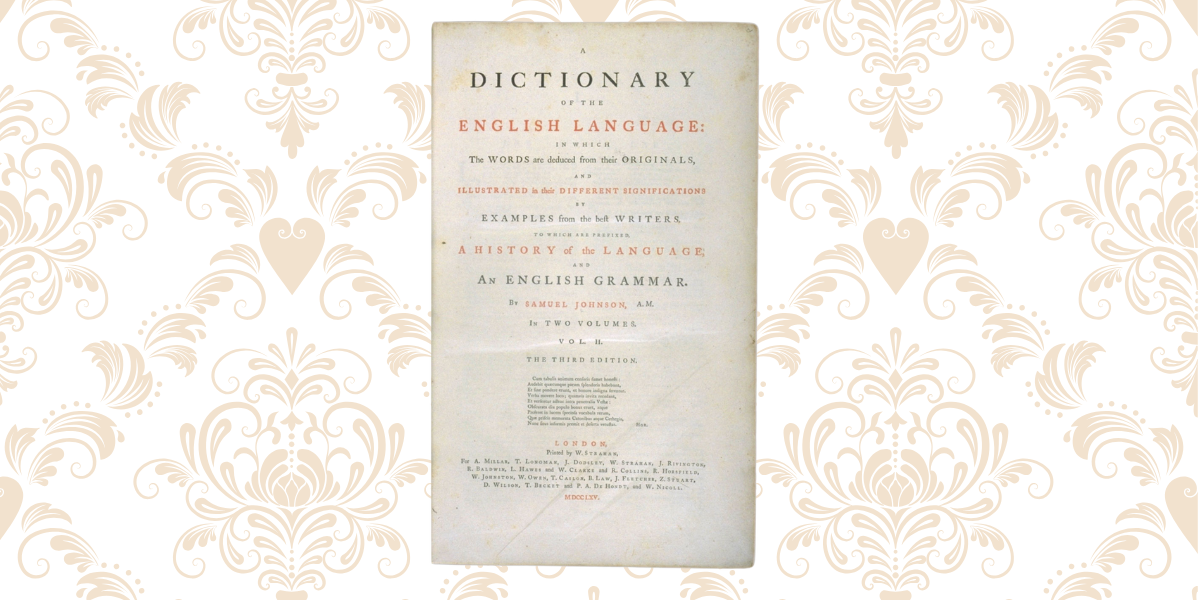
Of course, there are many different dictionaries in use in the English language, and they all have different ideas about what word was the most influential or saw the most growth in the previous year. They individually review new slang and culturally relevant vocabulary, examine spikes or dips in usage, and pour over internet trend data.

Let’s see what some of the biggest dictionaries decided for 2025. And read to the end for a chance to submit your own Word of the Year — and win a Freewrite gift card.

[SUBMIT YOUR WORD OF THE YEAR]


Merriam-Webster: "slop"

Merriam-Webster chose "slop" as its Word of the Year for 2025 to describe "all that stuff dumped on our screens, captured in just four letters."

The dictionary lists "absurd videos, off-kilter advertising images, cheesy propaganda, fake news that looks pretty real, junky AI-written books, 'workslop' reports that waste coworkers’ time … and lots of talking cats" as examples of slop.

The original sense of the word "slop" from the 1700s was “soft mud” and eventually evolved to mean "food waste" and "rubbish." 2025 linked the term to AI, and the rest is history.

Honorable mentions: conclave, gerrymander, touch grass, performative, tariff, 67.

Dictionary.com: "67"

The team at Dictionary.com likes to pick a word that serves as “a linguistic time capsule, reflecting social trends and global events that defined the year.”

For 2025, they decided that “word” was actually a number. Or two numbers, to be exact.

If you’re an old, like me, and don’t know many school-age children, you may not have heard “67” in use. (Note that this is not “sixty-seven,” but “six, seven.”)

Dictionary.com claims the origin of “67” is a song called “Doot Doot (6 7)” by Skrilla, quickly made infamous by viral TikTok videos, most notably featuring a child who will for the rest of his life be known as the “6-7 Kid.” But according to my nine-year-old cousin, the origins of something so mystical can’t ever truly be known.

(My third grade expert also demonstrated the accompanying signature hand gesture, where you place both hands palms up and alternately move up and down.)

And if you happen to find yourself in a fourth-grade classroom, watch your mouth, because there’s a good chance this term has been banned for the teacher’s sanity.

Annoyed yet? Don’t be. As Dictionary.com points out, 6-7 is a rather delightful example at how fast language can develop as a new generation joins the conversation.

Dictionary.com honorable mentions: agentic, aura farming, broligarchy, clanker, Gen Z stare, kiss cam, overtourism, tariff, tradwife.

Oxford Dictionary: "rage bait"

With input from more than 30,000 users and expert analysis, Oxford Dictionary chose "rage bait" for their word of the year.

Specifically, the dictionary pointed to 2025’s news cycle, online manipulation tactics, and growing awareness of where we spend our time and attention online.

While closely paralleling its etymological cousin "clickbait," rage bait more specifically denotes content that evokes anger, discord, or polarization.

Oxford's experts report that use of the term has tripled in the last 12 months.

Oxford Dictionary's honorable mentions:aura farming, biohack.

Cambridge Dictionary: "parasocial"

The Cambridge Dictionary examined a sustained trend of increased searches to choose "parasocial" as its Word of the Year.

Believe it or not, this term was coined by sociologists in 1956, combining “social” with the Greek-derived prefix para-, which in this case means “similar to or parallel to, but separate from.”

But interest in and use of the term exploded this year, finally moving from a mainly academic context to the mainstream.

Cambridge Dictionary's honorable mentions: slop, delulu, skibidi, tradwife

Freewrite: TBD

This year, the Freewrite Fam is picking our own Word of the Year.

Click below to submit what you think the Word of 2025 should be, and we'll pick one submission to receive a Freewrite gift card.

[SUBMIT HERE] 

--

Sources

diciembre 18, 2025 5 lectura mínima

¿Qué pueden enseñar las cartas personales de Jane Austen a los escritores?

diciembre 10, 2025 6 lectura mínima

Singer-songwriter Abner James finds his creativity in the quiet freedom of analog tools. Learn how his creative process transcends different media.

Abner James went to school for film directing. But the success of the band he and his brother formed together, Eighty Ninety, knocked him onto a different trajectory.

The band has accrued more than 40 million streams since the release of their debut EP “Elizabeth," and their work was even co-signed by Taylor Swift when the singer added Eighty Ninety to her playlist "Songs Taylor Loves.”

Now, Abner is returning to long-form writing in addition to songwriting, and with a change in media comes an examination of the creative process. We sat down to chat about what's the same — and what's different. 

ANNIE COSBY: Tell us about your songwriting process.

ABNER JAMES: The way I tend to write my songs is hunched over a guitar and just seeing what comes. Sounds become words become shapes. It's a very physical process that is really about turning my brain off.

And one of the things that occurred to me when I was traveling, actually, was that I would love to be able to do that but from a writing perspective. What would happen if I sat down and approached writing in the same way that I approached music? In a more intuitive and free-form kind of way? What would that dig up?

AC: That's basically the ethos of Freewrite.

AJ: Yes. We had just put out a record, and I was thinking about how to get into writing for the next one. It occurred to me that regardless of how I started, I always finished on a screen. And I wondered: what's the acoustic guitar version of writing?

Where there's not blue light hitting me in the face. Even if I'm using my Notes app, it's the same thing. It really gets me into a different mindset.

 "I wondered: what's the acoustic guitar version of writing?"

I grew up playing piano. That was my first instrument. And I found an old typewriter at a thrift store, and I love it. It actually reminded me a lot of playing piano, the kind of physical, the feeling of it. And it was really fun, but pretty impractical, especially because I travel a fair amount.

And so I wondered, is there such a thing as a digital typewriter? And I googled it, and I found Freewrite.

AC: What about Freewrite helps you write?

AJ:I think, pragmatically, just the E Ink screen is a huge deal, because it doesn't exhaust me in the same way. And the idea of having a tool specifically set aside for the process is appealing in an aesthetic way but also a mental-emotional way. When it comes out, it's kind of like ... It's like having an office you work out of. It's just for that.

"The way I tend to write my songs is hunched over a guitar and just seeing what comes. Sounds become words become shapes. It's a very physical process that is really about turning my brain off."

And all of the pragmatic limitations — like you're not getting texts on it, and you're not doing all that stuff on the internet — that's really helpful, too. But just having the mindset....

When I pick up a guitar, or I sit down at the piano, it very much puts me into that space. Having a tool just for words does the same thing. I find that to be really cool and inspiring.

"When I pick up a guitar, or I sit down at the piano, it very much puts me into that space. Having a tool just for words does the same thing."

AC: So mentally it gets you ready for writing.

AJ: Yeah, and also, when you write a Microsoft Word, it looks so finished that it's hard to keep going. If every time I strummed a chord, I was hearing it back, mixed and mastered and produced...?

It's hard to stay in that space when I'm seeing it fully written out and formatted in, like, Times New Roman, looking all seriously back at me.

AC: I get that. I have terrible instincts to edit stuff over and over again and never finish a story.

AJ:  Also, the way you just open it and it's ready to go. So you don't have the stages of the computer turning on, that kind of puts this pressure, this tension on.

It's working at the edges in all these different ways that on their own could feel a little bit like it's not really necessary. All these amorphous things where you could look at it and be like, well, I don't really need any of those. But they add up to a critical mass that actually is significant.

And sometimes, if I want to bring it on a plane, I've found it's replaced reading for me. Rather than pick up a book or bring a book on the plane, I bring Traveler and just kind of hang out in that space and see if anything comes up.

I've found that it's kind of like writing songs on a different instrument, you get different styles of music that you wouldn't have otherwise. I've found that writing from words towards music, I get different kinds of songs than I have in the past, which has been interesting.

In that way, like sitting at a piano, you just write differently than you do on a guitar, or even a bass, because of the things those instruments tend to encourage or that they can do.

It feels almost like a little synthesizer, a different kind of instrument that has unlocked a different kind of approach for me.

"I've found that it's kind of like writing songs on a different instrument, you get different styles of music that you wouldn't have otherwise... [Traveler] feels almost like a little synthesizer, a different kind of instrument that has unlocked a different kind of approach for me."

AC: As someone who doesn't know the first thing about writing music, that's fascinating. It's all magic to me.

AJ: Yeah.

AC: What else are you interested in writing?

AJ: I went to school for film directing. That was kind of what I thought I was going to do. And then my brother and I started the band and that kind of happened first and knocked me onto a different track for a little while after college.

Growing up, though, writing was my way into everything. In directing, I wanted to be in control of the thing that I wrote. And in music, it was the same — the songwriting really feels like it came from that same place. And then the idea of writing longer form, like fiction, almost feels just like the next step from song to EP to album to novel.

For whatever reason, that started feeling like a challenge that would be deeply related to the kinds of work that we do in the studio.

AC: Do you have any advice for aspiring songwriters?

AJ: This sounds like a cliche, but it's totally true: whatever success that I've had as a songwriter — judge that for yourself — but whatever success I have had, has been directly proportional to just writing the song that I wanted to hear.

What I mean by that is, even if you're being coldly, cynically, late-stage capitalist about it, it's by far the most success I've had. The good news is that you don't have to choose. And in fact, when you start making those little compromises, or even begin to inch in that direction, it just doesn't work. So you can forget about it.

Just make music you want to hear. And that will be the music that resonates with most people.

I think there's a temptation to have an imaginary focus group in your head of like 500 people. But the problem is all those people are fake. They're not real. None of those people are actually real people. You're a focus group of one, you're one real person. There are more real people in that focus group than in the imaginary one.

And I just don't think that we're that different, in the end. So that would be my advice.

AC: That seems like generally great creative advice. Because fiction writers talk about that too, right? Do you write to market or do you write the book you want to read. Same thing. And that imaginary focus group has been debilitating for me. I have to silence that focus group before I can write.

AJ: Absolutely.

"I think there's a temptation to have an imaginary focus group in your head of like 500 people. But the problem is all those people are fake... You're a focus group of one, you're one real person. There are more real people in that focus group than in the imaginary one."

--

Learn more about Abner James, his brother, and their band, Eighty Ninety, on Instagram.