overlaylink

Il n'y a pas de livres ratés : 3 façons de sauver un roman de coffre

septembre 28, 2017 | 6 lire la lecture


L'article invité du jour est celui de Jeff Somers . Il a publié neuf romans, dont la série de romans noirs de science-fiction Avery Cates chez Orbit Books, le roman policier hilarant et sombre Chum chez Tyrus Books, et plus récemment des récits de magie du sang et de courtes escroqueries dans le cycle Ustari .


À sa mort en 1984, Truman Capote n'avait pas publié d'œuvre majeure depuis le classique De sang-froid de 1965. Certes, il avait produit des œuvres, principalement des nouvelles et quelques scénarios. Certaines de ces œuvres avaient été très appréciées, mais rien de comparable à l'ampleur et à l'ambition de De sang-froid ou de Diamants sur canapé. Au cours de ces deux décennies, Capote s'était transformé d'une figure essentiellement littéraire en une célébrité générale, un homme connu pour ses soirées, son cercle d'amis célèbres, son esprit et ses apparitions à la télévision plus que pour ses écrits.

Le roman de Truman Capote Mais Capote n'était pas resté inactif. En janvier 1966, il signa un contrat avec Random House pour un nouveau roman, recevant une avance de 25 000 dollars (près de 200 000 dollars en 2017). Le projet de livre était ambitieux : une refonte moderne de l'immense À la recherche du temps perdu de Proust. Capote travailla sur le livre (intitulé Prières exaucées ) pendant les vingt années suivantes, en publiant occasionnellement des chapitres et renégociant son contrat à deux reprises (obtenant 750 000 dollars supplémentaires en 1969 et une promesse d'un million de dollars s'il finissait le livre en 1980, une somme qu'il ne vit jamais). Il déclara un jour à propos du livre : « Soit je le tue, soit il me tue », et l'histoire montrera qui a gagné cette bataille. La version inachevée du roman fut publiée à titre posthume.

Il existe de nombreuses raisons possibles pour lesquelles Capote n'a pas pu terminer ce roman. Peut-être sa célébrité était-elle trop attirante et lui a-t-elle fait perdre son élan créatif. Ou peut-être était-ce dû à la réaction des premiers chapitres : une grande partie du livre était une description à peine voilée de ses amis de la haute société et de leur comportement très embarrassant, ce qui lui a coûté ces amis – une expérience que Capote aurait vécue très durement. Ou peut-être était-ce simplement un de ces livres que tous les auteurs commencent et trimballent avec eux pendant des années, voire des décennies, parfois toute leur vie. On les appelle des romans de tronc – des romans qui commencent avec tant de promesses, tant d'enthousiasme, et qui continuent ensuite à consommer des centaines de milliers de mots et d'immenses périodes de temps sans jamais parvenir à une cohérence quelconque. Chaque auteur en a au moins un. La plupart d'entre nous en ont plusieurs.

Trop beau pour échouer

Le problème avec un roman de poche, c'est qu'il y a quelque chose dedans. Une prémisse ou une expérience, une énergie, un défi – quelque chose qui vous y ramène sans cesse, même si vous n'y parvenez jamais. Vous le révisez, vous le jetez et le recommencez , vous le remaniez dans différents genres, vous essayez de le ranger et de l'oublier, mais vous n'y parvenez pas. Et même si vous parvenez finalement à le mettre de côté, le devriez-vous ? Après tout, vous y avez investi beaucoup de travail. Beaucoup de temps, d'idées et une écriture solide. Au lieu d'abandonner les romans de poche, repensez-les : voici trois stratégies pour les sortir de votre malle et les rendre publiables sans perdre davantage de temps ni de raison.

Méthode 1 : Le Mashup

Si vous avez plusieurs romans de la série Trunk qui encombrent votre disque dur de leur tristesse imparfaite, une stratégie ambitieuse, mais potentiellement brillante, consiste à les combiner . Cela nécessite bien sûr un certain chevauchement de genres et de styles (même si l'adéquation n'est pas forcément parfaite, car de nombreux genres se marient à merveille, comme la romance et l'horreur) et nécessitera probablement quelques retouches, mais cela peut fonctionner.
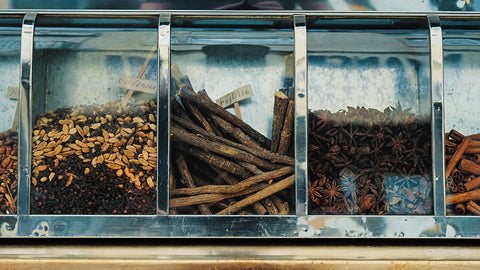
Mélange de romans Trunk
(Photo par Erwan Hesry sur Unsplash )
La raison pour laquelle cela fonctionne est simple : de nombreux Trunk Novels contiennent d'excellents éléments, souvent complémentaires. Un roman sur lequel je travaillais depuis des années avait une intrigue solide, une bonne trame d'événements et de motivations, mais manquait de personnages intéressants et de descriptions riches . Un deuxième livre, séparé du premier par plusieurs années, comportait une galerie de personnages que j'adorais côtoyer, mais qui erraient dans une intrigue à peine satisfaisante. En combinant les deux, on a créé un roman puissant et percutant. Je n'ai pas encore vendu ce roman, mais mon agent est enthousiaste.

Méthode 2 : Appelez-le

On peut parfois se laisser prendre par les prétendues « règles » de l'écriture professionnelle. L'une d'elles concerne la commercialisation d'un roman et précise que, pour avoir une chance d'être publié, il doit atteindre un certain nombre de mots (80 000 est généralement le nombre cité, bien que vous puissiez entendre des variantes). C'est ainsi qu'un million de Trunk Novels sont nés parce que les écrivains hésitent à admettre qu'ils ont réellement écrit une nouvelle ou une nouvelle.

Les écrivains tentent parfois désespérément de transformer leurs œuvres en romans, pensant que les nouvelles sont impossibles à vendre et que les nouvelles ne valent ni le coup ni l'attention. Mais les nouvelles sont aujourd'hui plus faciles à vendre que par le passé, grâce aux plateformes numériques qui ne se soucient guère du nombre de mots. Les nouvelles connaissent un succès grandissant, car elles sont de plus en plus souvent adaptées au cinéma et à la télévision (voir Arrival , The Grey et Total Recall) , ce qui pousse de nombreux agents à réévaluer la pertinence de consacrer du temps et des efforts à des œuvres plus courtes.

Les romans du tronc l'appellent (Photo de Simson Petrol sur Unsplash )
Alors, si vous avez un roman qui traîne dans le coffre depuis un moment, demandez-vous si le problème ne vient pas de l'histoire ou de l'écriture, mais plutôt de son épaisseur . S'agit-il d'une nouvelle ou d'une nouvelle que vous essayez d'étoffer au format roman ? Essayez de la réduire sans ménagement et voyez ce que vous obtenez. Vous pourriez être surpris.

Méthode 3 : L'inversion

Une autre façon de sauver un Trunk Novel de l'oubli est de porter un regard critique sur vos hypothèses concernant le livre. Ce premier moment d'inspiration est souvent puissant ; l'un des plus grands avantages de la créativité est cette poussée d'énergie lorsque l'on a « l'idée ». Cette force grave également certaines choses dans votre esprit, comme le personnage principal ou le point de vue, le ton nécessaire à l'histoire ou le rythme précis des événements. Au fil du temps, ces idées se transforment en suppositions : même si vous attaquez le livre sans succès, vous ne songez jamais à modifier le fondement de cette inspiration initiale. Vous devenez aveugle aux possibilités offertes par d'autres personnages qui pourraient être promus ou explorés, d'autres choix stylistiques ou d'autres troisièmes actes qui partent dans des directions insensées.

Inversion du roman du tronc (Photo de Dardan Mu sur Unsplash )

Le secret de cette approche ne réside pas tant dans le fait d'avoir eu tort sur tout dès le début, mais dans le frisson de l'inconnu. Avant d'admettre qu'un livre est un Trunk Novel, il y a de fortes chances que vous ayez revu chaque scène, chaque ligne de dialogue et chaque rebondissement de l'intrigue à maintes reprises. C'est familier, et la familiarité engendre le mépris et l'aveuglement. Vous ne le voyez plus. Changer quelque chose de fondamental dans le livre vous entraîne en territoire inconnu, ravivant un peu de cette excitation électrique de la découverte et révélant de nouvelles perspectives. Un livre bloqué en Trunk Novel peut relancer le processus créatif et vous permettre de franchir la ligne d'arrivée.

Tous les romans ne peuvent pas être sauvés, et écrire un mauvais livre fait partie du métier d'écrivain. Mais si vous avez un roman qui refuse de disparaître dans ce tiroir poussiéreux, essayez l'une de ces techniques pour le sauver une fois pour toutes. Alors, combien de romans de la malle trimballez- vous avec vous ? Avez-vous déjà réussi à en faire un ? Dites-nous si vous y êtes parvenu et, si oui, comment !


Jeff Somers

Jeff Somers ( www.jeffreysomers.com ) a commencé à écrire sur décision de justice pour tenter de détourner son élan créatif des grotesques génétiques. Il a publié neuf romans, dont la série Avery Cates de science-fiction noire chez Orbit Books ( www.avery-cates.com ) et la série Ustari Cycle de romans de fantasy urbaine. Sa nouvelle « Ringing the Changes » a été sélectionnée pour figurer dans le Best American Mystery Stories 2006 , son récit « Sift, Almost Invisible, Through » a été publié dans l'anthologie Crimes by Moonlight éditée par Charlaine Harris, et son récit « Three Cups of Tea » a été publié dans l'anthologie Hanzai Japan . Il écrit également sur les livres pour Barnes and Noble et About.com , ainsi que sur l'art d'écrire pour Writer's Digest , qui publiera son livre sur l'art d'écrire, Writing Without Rules, en 2018. Il vit à Hoboken avec sa femme, la duchesse, et leurs chats. Il considère que le pantalon est toujours facultatif.
novembre 29, 2025 4 lire la lecture

The Great Freewrite Séance: A Ghost'ly Charity Auction Full Terms & Conditions

These Terms and Conditions (“Terms”) govern participation in The Great Freewrite Séance: A Ghost'ly Charity Auction (“Auction”), organized by Freewrite (“Organizer,” “we,” “us,” or “our”). By registering for, bidding in, or otherwise participating in the Auction, you (“Participant,” “Bidder,” or “Winner”) agree to be bound by these Terms.

1. Auction Overview

1.1. The Auction offers for sale a limited number of Freewrite Traveler Ghost Edition units (“Items” or “Ghost Traveler units”), each personally signed and drawn on by a featured author.

1.2. All proceeds, net of explicitly disclosed administrative costs, will be donated to the charity or charitable initiative (“Charity”) identified on each auction item’s page, as chosen by the respective author.

2. Eligibility

2.1. Participants must be at least 18 years old or the age of majority in their jurisdiction, whichever is higher.

2.2. Employees of Freewrite, the participating authors, or any affiliates directly involved in the Auction are not eligible to bid.

2.3. By participating, you represent that you are legally permitted to take part in online auctions and to pay for any bids you win.

3. Auction Registration

3.1. Participants must create an account on the auction platform or otherwise register using accurate, current, and complete information.

3.2. Freewrite reserves the right to verify identity and to disqualify any Participant who provides false or misleading information.

4. Bidding Rules

4.1. All bids are binding, final, and non-retractable.

4.2. Bidders are responsible for monitoring their bids; Freewrite is not liable for missed notifications or technical issues on the auction platform or the Participant’s device.

4.3. Freewrite reserves the right to:

  • set minimum bids or bid increments;
  • reject bids deemed in bad faith or intended to disrupt the Auction;
  • extend, pause, or cancel the Auction in case of technical difficulties, fraud, or events beyond reasonable control.

5. Winning Bids and Payment

5.1. The highest valid bid at the close of the Auction is the Winning Bid, and the corresponding Participant becomes the Winner.

5.2. Winners will receive payment instructions and must complete payment within 48 hours of the auction’s close unless otherwise stated.

5.3. Failure to complete payment on time may result in forfeiture, and Freewrite may offer the Item to the next highest bidder.

5.4. Accepted payment methods will be listed on the Auction platform. All payments must be made in the currency specified.

6. Item Description and Condition

6.1. Each Ghost Traveler unit is authentic, and the signatures, doodles, and messages are original works created by the participating author. These are authors, not artists. By bidding on the Item, you acknowledge that you are receiving a one-of-a-kind unit marked with unique art and messages and you agree to these terms and conditions.

6.2. Because Items are customized and signed by hand, variations, imperfections, or unique marks are to be expected. These are considered part of the Item’s character and not defects.

6.3. Items are provided “as-is” and “as-available.” Freewrite makes no warranties of merchantability or fitness for a particular purpose.

7. Shipping & Delivery

7.1. Shipping costs, import duties, and taxes may apply unless explicitly stated otherwise.

7.2. Freewrite will make reasonable efforts to ship Items within the estimated timeline but cannot guarantee delivery dates.

7.3. Title and risk of loss transfer to the Winner upon delivery to the carrier.

7.4. Freewrite is not responsible for delays, damage, or loss caused by the courier or customs agencies.

8. Charity Donation

8.1. Net proceeds from the Auction will be donated to the Charity designated on each Item page.

8.2. Donation amounts and recipients may be disclosed publicly unless prohibited by law.

8.3. Winners acknowledge that they are purchasing Items, not making a tax-deductible donation to Freewrite; therefore, Winners will not receive charitable tax receipts unless Freewrite explicitly states otherwise in compliance with applicable laws.

9. Intellectual Property

9.1. All trademarks, brand names, product names, and creative materials associated with Freewrite and the Ghost Traveler remain the exclusive property of Freewrite or their respective rights holders.

9.2. Participants may not reproduce, distribute, or publicly display the authors’ doodles without permission where such rights are applicable, except as allowed by law (e.g., resale of the physical Item).

10. Privacy

10.1. By participating, you consent to Freewrite’s collection, use, and storage of your personal data in accordance with our Privacy Policy.

10.2. Freewrite may publicly announce auction results, including Winner’s first name, last initial, city, state/country, and winning bid amount unless prohibited by law or unless you formally request anonymity when possible.

11. Prohibited Conduct

Participants may not:

  • engage in bid manipulation, fraud, or collusive bidding;
  • use automated systems (bots, scripts, scrapers) to place or monitor bids;
  • interfere with the Auction, platform, or other participants

Freewrite may ban or disqualify any Participant violating these rules.

12. Limitation of Liability

To the fullest extent permitted by law:

12.1. Freewrite is not liable for indirect, incidental, special, or consequential damages arising from the Auction or purchase of Items.

12.2. Freewrite’s total liability in connection with these Terms shall not exceed the amount of the Winning Bid actually paid by the Participant.

12.3. Freewrite is not responsible for technical malfunctions, internet outages, system failures, or other issues beyond its control.

13. Cancellation and Force Majeure

Freewrite may cancel, postpone, or modify the Auction due to unforeseen circumstances, including but not limited to natural disasters, system failures, strikes, or events affecting participating authors or the Charity.

14. Governing Law & Dispute Resolution

14.1. These Terms are governed by the laws of Michigan, without regard to conflict-of-law rules.

14.2. Any disputes arising under these Terms will be resolved through binding arbitration or the courts of the specified jurisdiction, as applicable.

14.3. Participants waive any right to participate in class-action lawsuits relating to the Auction.

15. Amendments

Freewrite may update these Terms at any time. Continued participation in the Auction after updates constitutes acceptance of the revised Terms.

16. Contact Information

For questions or concerns regarding the Auction or these Terms, contact: hello@getfreewrite.com.

novembre 25, 2025 1 lire la lecture

This is a great gratitude writing exercise to be done alone or in a group, with people of any age.

How to Play

    1. Designate someone to read out each prompt below. (Feel free to add your own prompts.)
    2. After each prompt is read, set a timer for one minute. (With younger kids, this can be shortened. For older folks who want to freewrite meaningfully, more time can be added.)
    3. Each person freewrites by finishing the sentence and elaborating until the timer goes off. (For little kids, this can be done verbally with an adult recording their answers. Hilarity will ensue.)
    4. Remeber that freewriting — allowing yourself to write with abandon — enables you to let go, tapping into your subconscious to explore your thoughts more deeply.
    5. When everyone is done with all the prompts, take turns going through some your answers. Some people may be eager to share. Others may not want to. Respect their decision.

The Prompts

  • I'm grateful for... [After you've finished this prompt, repeat it five times. Challenge yourself and others not to repeat a singe word with each new answer.]
  • The silliest thing I'm grateful for is...
  • The littlest thing I'm grateful for is...
  • The biggest thing I'm grateful for is...
  • The grossest thing I'm grateful for is...
  • One thing I love about myself is...
  • My favorite thing that happened this year was...
  • My hope for next year is...

This writing exercise has resulted in some sweet answers — and many hilarious ones, too. If you try it out, do let us know.

Write on.

novembre 21, 2025 4 lire la lecture

For the release of Sailfish, our new firmware update for Smart Typewriter Gen3 and Traveler, we created a brand-new boot-up animation to surprise and delight our writers.

We worked with talented Danish animator Mathias Lynge to bring our experience of the writer's journey to life.

We had a blast visualizing the writer's journey in this new way. Our engineers also had a blast (or something less than a blast) figuring out how to adjust this fun, playful animation to E Ink's very tricky specifications. Hello, refresh rate woes! But we think the result is pretty fun.

"The little animation made my day when I noticed. I love a good flourish."

- Freewrite user

The process of creating this animation was long and full of Zoom calls where we deeply discussed the writing process. We were struck through those conversations by how much overlap there is in creative processes of all disciplines.

So we sat down to chat with Mathias about his creative process and what it's like being a full-time animator.

ANNIE COSBY: Let's start with the basics. What kind of art do you make?

MATHIAS LYNGE: I'm a 2D animator and motion designer working freelance with a wide range of clients. The style varies depending on the project, but it’s usually either a hand-drawn look animated frame-by-frame on a drawing tablet, or a more digital, vectorized look made in After Effects.

While much of what I do is commercial work, I try to keep up with my own passion projects as well. That could be a 10-second Instagram loop of a nature scene, or an interesting character design I’ve sketched down with a pencil. It’s there that I get to sharpen my skills and try out new techniques, which often find their way into later client projects.

AC: You often share educational content on social media for other artists. Are you formally trained, or did you teach yourself?

ML: I’m mostly self-taught. I’ve been drawing for as long as I can remember, but it wasn’t until I went to university that I realized drawing could become a career.

When I first heard terms like “motion design” and “The 12 Principles of Animation” I was on a student exchange program at UCSB in California, where I had chosen a class called "Introduction to Animation." It was a big eye-opener for me, and from that point I was hooked.

But it’s mainly been online YouTube tutorials and my existing drawing experience that have taught me what I know.

Now, I have a big presence on social media, where I share my art as well as educational content centered around animation in Adobe After Effects, so I guess you could say that I'm also an animation influencer!

I’ve been drawing for as long as I can remember, but it wasn’t until I went to university that I realized drawing could become a career.

AC: That's actually how I first found your work. Do you have any specific artists who inspire you?

ML:In the world of 2D animation, I have a list of personal heroes that inspire me with their unique style: Reece Parker, Ariel Costa a.k.a. BlinkMyBrain, and Tony Babel, to name a few.

I also find a lot of inspiration from illustrators and painters I discover online, on platforms such as Pinterest. Last year I made a sparkling water animation that was heavily inspired by Cornwall-based artist Gordon Hunt. He makes these beautiful nature-inspired pointillist paintings that capture how light hits the ocean using colorful dots of paint. I tried to recreate that effect using After Effects to bring it to life, and it led me to a whole new way of animating within the program.

AC: Where else do you draw inspiration to create your work?

ML: I’m heavily inspired by the nature and cityscapes around me in Copenhagen, and I find that taking long walks through parks or down the streets of my neighborhood really sparks my imagination.

I’ll often carry around a sketchbook to quickly scribble down an idea or a loose sketch of something I find interesting, such as seeing how the light from a lamppost hits the surrounding leaves, or how the wind moves the tree in a certain way.

Then I’ll think to myself, “I wonder if I can recreate that motion using a specific technique in After Effects?”

I’m heavily inspired by the nature and cityscapes around me in Copenhagen...

AC: What does your daily routine look like as a full-time artist?

ML: It varies a lot, but I’m usually either working hard on a client project or tinkering away with a new animation tutorial for my social media channels.

I love being able to switch between the two, and when I’m going through a client dry spell, I find that staying creative and posting animation-related content helps keep me inspired while also putting things out into the world that may lead to my next client down the road.

AC: What's your #1 piece of advice for animators new to the industry?

ML: Keep experimenting and trying out new techniques. There’s no such thing as running out of creativity, and even though many of the things you try don’t necessarily go anywhere, it’s all experience that adds up and expands your toolbox. It’s a muscle that needs to be worked out regularly.

Plus, you’ll have more awesome animation to choose from when you’re putting together your next showreel or portfolio!

There’s no such thing as running out of creativity...

AC: What's one fun fact about you completely unrelated to animation?

ML:I’m a big sucker for history podcasts, especially if they are about ancient civilizations, such as The History of Rome by Mike Duncan.

I find it fascinating to hear how mankind was able to build such great empires without ever knowing what electricity, cars, or the internet are.

--

Follow along on Mathias's creative journey and find his free educational content on Instagram.

To learn more about working together, find him on LinkedIn or visit his website at www.mathiaslynge.com.

Learn more about Sailfish here.