overlaylink

Présentation de Smart Typewriter : un combo limonade classique

août 09, 2023 | 1 lire la lecture

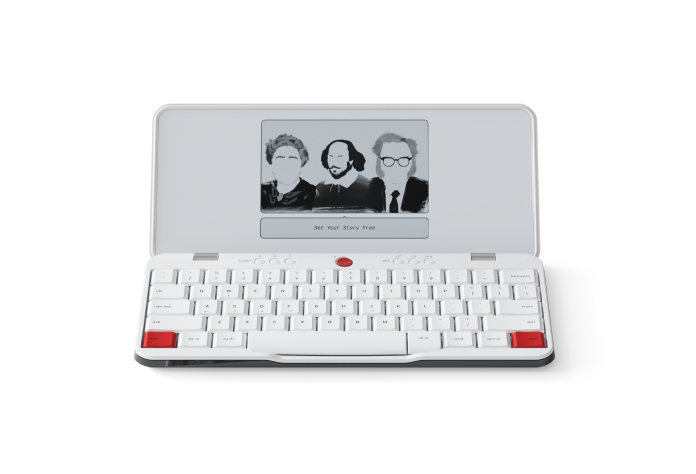
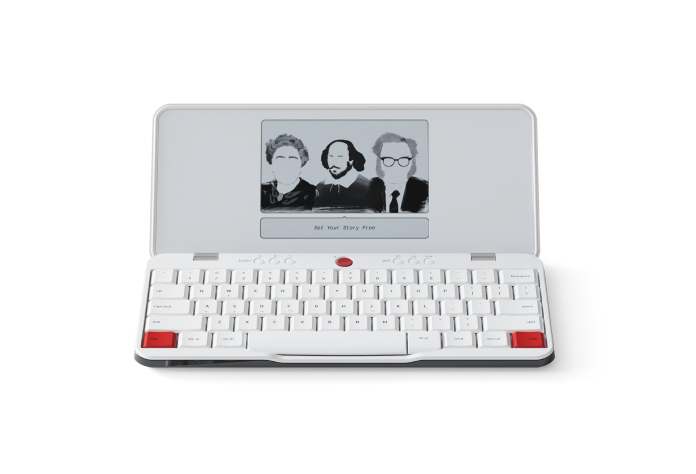
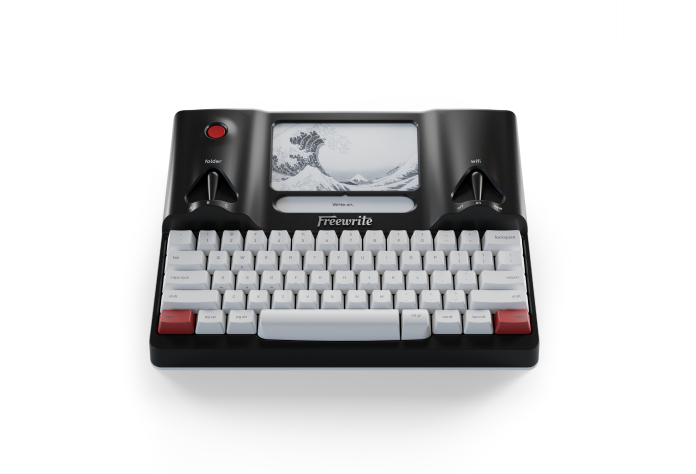
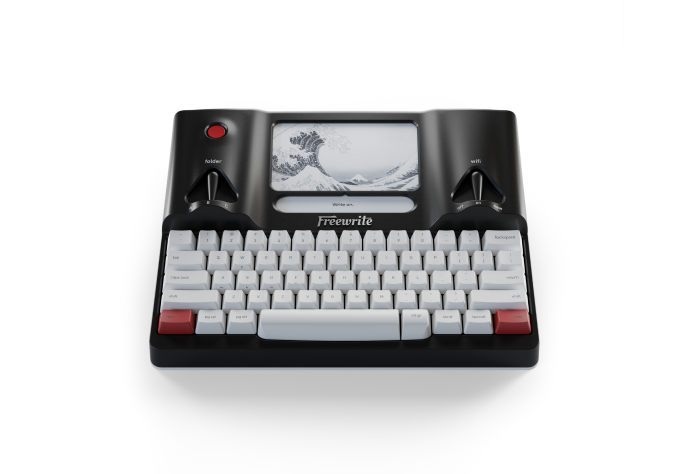
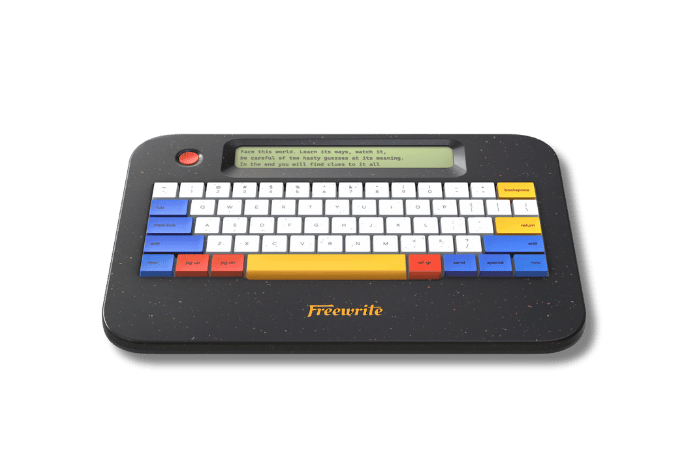
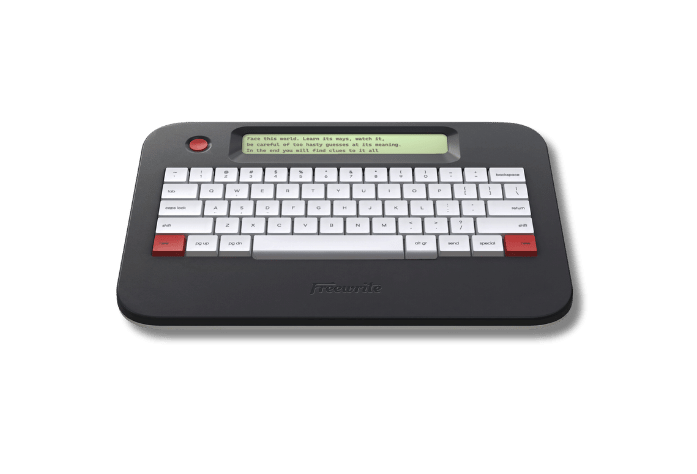
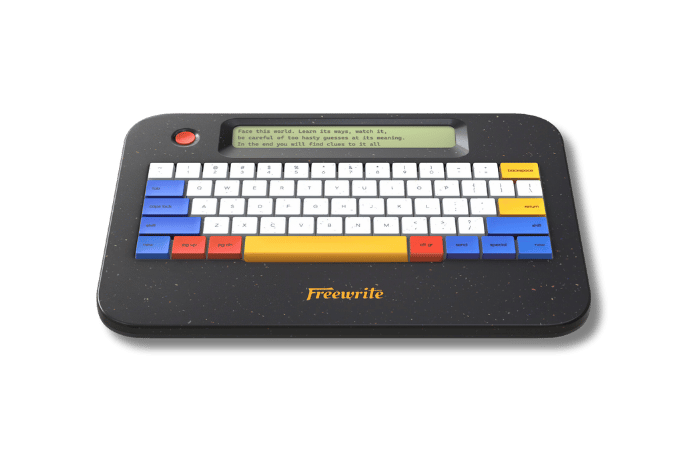
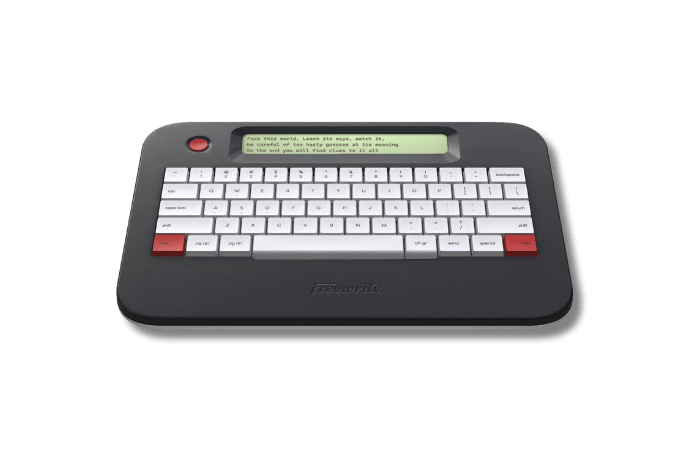
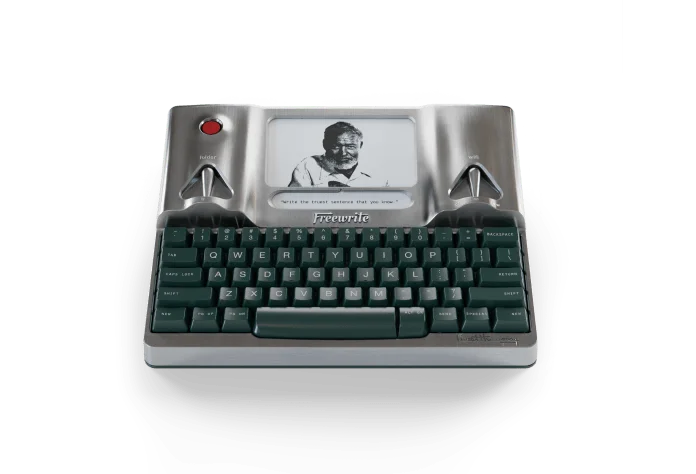
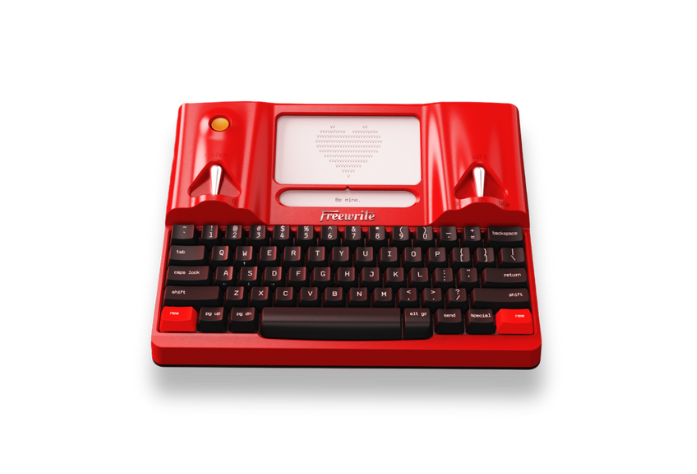
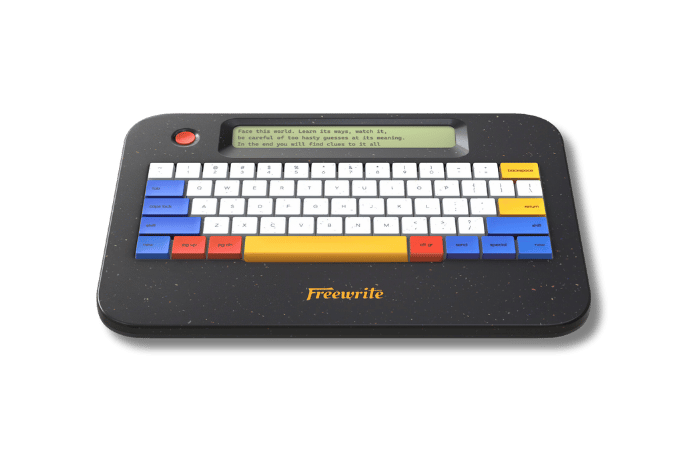
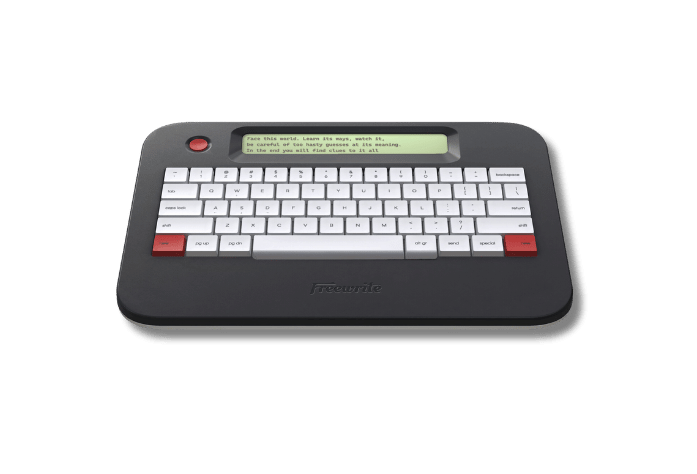
Aussi rafraîchissantes qu'une boisson glacée, deux éditions spéciales de la machine à écrire intelligente Freewrite vous permettront de retrouver le plaisir d'écrire. Libérez-vous du stress et découvrez ce qui se passe lorsque votre imagination prend un goût de citron et de menthe.

Dactylographie intelligente en citron

Les pirates d'autrefois accumulaient des citrons pour se protéger du scorbut. Les Parisiens du XVIIe siècle ont alimenté une véritable folie de la limonade, qui a peut-être permis de lutter contre la peste. Aujourd'hui, le citron fait peau neuve pour raviver votre créativité et vous inspirer de nouveaux mots.


Cette édition spéciale dynamique de la machine à écrire intelligente Freewrite évoque des journées ensoleillées et des histoires douces-amères, et elle vous apportera l'énergie dont vous avez besoin pour écrire encore et encore.

Depuis l'Antiquité, la menthe est appréciée pour son arôme, son goût et ses propriétés médicinales. Dès les années 1620, les médecins la recommandaient pour diverses affections, affirmant qu'elle :

« …conforte grandement le cerveau et l’esprit, stimule les sens, surtout la mémoire, et réjouit le cœur. » (Source : JSTOR)

Aujourd'hui, la menthe est plus fraîche que jamais. C'est pourquoi nous avons créé la Smart Typewriter couleur menthe : pour offrir une expérience d'écriture élégante, témoin de siècles de sagesse et de vitalité.


Alors, inspirez-vous des anciens et commandez votre nouvelle édition spéciale « Menthe » de la Smart Typewriter pour éveiller vos sens et écrire mieux et plus vite. Les éditions spéciales « Citron » et « Menthe » de la Smart Typewriter sont disponibles dès maintenant. Vive les nouveaux mots et les nouveaux looks ! 🍋🌿
avril 15, 2026 4 lire la lecture

Break up with Final Draft for good. Get the best screenplay workflow in Hollywood: Freewrite + Highland Pro.

avril 01, 2026 0 lire la lecture
mars 22, 2026 3 lire la lecture

If you're new here, freewriting is “an unfiltered and non-stop writing practice.” It’s sometimes known as stream-of-consciousness writing.

To do it, you simply need to write continuously, without pausing to rephrase, self-edit, or spellcheck. Freewriting is letting your words flow in their raw, natural state.

When writing the first draft of a novel, freewriting is the approach we, and many authors, recommend because it frees you from many of the stumbling blocks writers face.

This method helps you get to a state of feeling focused and uninhibited, so you can power through to the finish line.

How Freewriting Gives You Mental Clarity

Freewriting is like thinking with your hands. Some writers have described it as "telling yourself the story for the first time."

Writing for Inside Higher Ed, Steven Mintz says, “Writing is not simply a matter of expressing pre-existing thoughts clearly. It’s the process through which ideas are produced and refined.” And that’s the magic of putting pen to paper, or fingertips to keyboard. The way you learned to ride a bike by wobbling until suddenly you were pedaling? The way you learned certain skills by doing as well as revising? It works for writing, too.

The act of writing turns on your creative brain and kicks it into high gear. You’re finally able to articulate that complex idea the way you want to express it when you write, not when you stare at a blank page and inwardly think until the mythical perfect sentence comes to mind.

Writing isn’t just the way we express ideas, but it’s how we extract them in the first place. Writing is thinking.

Or, as Flannery O'Connor put it:

“I write because I don't know what I think until I read what I say.”

Writing isn’t just the way we express ideas, but it’s how we extract them in the first place. Writing is thinking.


Freewriting to Freethinking

But how and why does it work? Freewriting makes fresh ideas tumble onto the page because this type of writing helps you get into a meditative flow state, where the distractions of the world around you slip away.

Julie Cameron, acclaimed author of The Artist’s Way, proposed the idea that flow-state creativity comes from a divine source. And sure, it certainly feels like wizardry when the words come pouring out and scenes seem to arrange themselves on the page fully formed. But that magic, in-the-zone writing feeling doesn’t have to happen only once in a blue moon. It’s time to bust that myth.

By practicing regular freewriting and getting your mind (and hands) used to writing unfiltered, uncensored, and uninterrupted, you start freethinking and letting the words flow. And the science backs it up.

According to Psychology Today, the dorsolateral prefrontal cortex goes quiet during flow state. This part of the brain is in charge of “self-monitoring and impulse control” – in other words, the DLPFC is the tiny home of your loud inner critic. And while that mean little voice in your head takes a long-overdue nap, you’re free to write without doubt or negative self-talk.

“With this area [of the brain] deactivated, we’re far less critical and far more courageous, both augmenting our ability to imagine new possibilities and share those possibilities with the world.”

Freewriting helps us connect with ourselves and our own thoughts, stories, beliefs, fears, and desires. But working your creative brain is like working a muscle. It needs regular flexing to stay strong.

So, if freewriting helps us think and organize our thoughts and ideas, what happens if we stop writing? If we only consume and hardly ever create, do we lose the ability to think for ourselves? Up next, read "Are We Living through a Creativity Crisis?"


Learn More About Freewriting

Get the ultimate guide to boosting creativity and productivity with freewriting absolutely free right here.You'll learn how to overcome perfectionism, enhance flow, and reignite the joy of writing.

SYSF-book-mockup.webp