overlaylink

Ideas para escribir: 60 ideas que puedes usar hoy

agosto 23, 2018 | 4 lectura mínima

Cuando estaba en primaria, tenía un profesor que nos hacía escribir libremente siguiendo indicaciones que él escribía en la pizarra. Todos los lunes por la mañana, dedicábamos los primeros 10 minutos de clase a escribir sobre dragones, viajes en el tiempo o nuestros fines de semana.

Dejé de usar consignas de escritura después de aquella clase de inglés de cuarto grado. Esto cambió cuando empecé a escribir miles de palabras al día. Algunos días, simplemente no sabía sobre qué escribir. Otros, ya tenía un tema en mente, pero no encontraba las palabras. Las consignas de escritura han sido una gran herramienta para ayudarme a superar el bloqueo del escritor y ponerme a escribir rápidamente.

Un tema de escritura es un tema en torno al cual empiezas a escribir ideas. Puedes ceñirte al tema o dejar que tu mente divague.

Beneficios de las indicaciones para escribir

1. Ponte a escribir. En lugar de pensar sobre qué escribir, las indicaciones de escritura te dan un tema para empezar a escribir de inmediato.

2. La práctica hace al maestro. Las consignas de escritura te ayudan a desarrollar tus habilidades de escritura. Este hábito te facilitará empezar a escribir y te enseñará a escribir más.

3. Aumenta tu creatividad. Las propuestas de escritura pueden hacerte ver el mundo desde una nueva perspectiva, o de una forma que nunca imaginaste.

Quizás quieras ponerte manos a la obra y terminar esa novela. O quizás necesitabas terminar esa entrada del blog de ayer. Sea cual sea tu situación, las indicaciones pueden ser tu boleto para escapar del purgatorio de la falta de creatividad y regresar a la tierra prometida de la escritura.

Indicaciones e inspiración para escribir libremente

60 sugerencias de escritura para despertar tu imaginación

1. ¿Cuáles fueron tus vacaciones favoritas de la infancia?

2. Las últimas palabras de tu novela son: «Cuando la noche se convirtió en día, empezó a comprender la verdad». Ahora, escribe el resto.

3. Convierte uno de los últimos textos que enviaste en una historia.

4. Agrega una escena original a la última película que viste.

5. Dos amigos tienen un desacuerdo.

6. Escribe sobre tu profesor favorito.

7. Fuera de la ventana ves algo que no puedes creer.

8. Escribe sobre la primera vez que tomaste la mano de alguien.

9. Escribe sobre la última cosa/persona que te hizo sonreír.

10. Escribe sobre una ocasión en la que te sentiste perdido.

11. Escribe sobre tu primer trabajo.

12. Escribe una carta a ti mismo cuando tenías 14 años.

13. Escribe sobre por qué escribes.

14. Dentro de cinco años, lo seré.

15. Escribe sobre las vacaciones de tus sueños.

16. ¿Te gusta estar solo o acompañado?

17. Tienes $300 y un Prius, describe el viaje por carretera de 2.800 millas desde Nueva York a Los Ángeles.

18. Escribe sobre tu objetivo más grande.

19. Escribe sobre tu mayor miedo.

20. Una conversación que tú y un extraño tienen en un avión.

21. Una ocasión en la que tú o alguien a quien amas fue estafado.

22. Convierte la última canción que escuchaste en una historia.

23. Describe la vida de tu cantante favorito.

24. Escribe sobre un mueble de la habitación en la que te encuentras.

25. Si supiera entonces lo que sé ahora.

26. Si pudieras viajar en el tiempo, ¿a dónde irías?

27. Tienes mil millones de dólares en tu cuenta bancaria. ¿Cómo lo lograste?

28. Descubriste un nuevo planeta. Describe lo que ves.

29. Si pudieras hacer cualquier cosa para trabajar, ¿qué harías?

30. Vives en una isla abandonada, describe tu rutina matutina.

31. Estás en un país extranjero y no hablas el idioma nativo.

32. Describe cómo crees que se conocieron tus abuelos.

33. Escribe sobre una ocasión en la que fallaste.

34. Hoy te despiertas con el superpoder que elijas.

35. Eres un perro, describe tu interacción con un humano.

36. Escribe sobre alguien que admires.

37. Ve a Twitter o Facebook y escribe sobre la primera publicación que veas.

38. Escribe sobre una ocasión en la que te sentiste incómodo.

39. Ella trató de olvidarlo, pero nunca pudo.

40. Justo cuando tu vuelo despega, descubres una nota impactante debajo de tu asiento.

41. Ninguno de tus amigos te recuerda, descríbete ante ellos.

42. Una isla surgió del mar.

43. De las cenizas surgió un héroe.

44. A las ballenas les crecieron pies.

45. Abro el último libro de la tierra.

46. ​​Llamas cada vez más fuerte a la puerta, pero nadie responde.

47. La puerta que habías cerrado, está abierta de par en par.

48. Justo cuando te quedas dormido, suena el teléfono.

49. Ella había planeado la fiesta perfecta, sólo para que su ex la arruinara.

50. Dijo sus últimas palabras y se fue, ya no hay vuelta atrás.

51. Un hombre ciego se enamora, describe sus sentimientos.

52. Tienes el poder de detener el tiempo, ¿qué haces?

53. El sol salió por última vez.

54. Descubres que tu pareja es un robot.

55. Tienes 10 días de vida.

56. ¿Cómo se verán los coches dentro de 50 años?

57. Esto necesita ser limpiado, la policía llegará en cualquier momento.

58. Durante años, planeó cuidadosamente este día.

59. Los pájaros no fueron al sur para pasar el invierno.

60. Es 13 de junio, la nieve no para de caer.

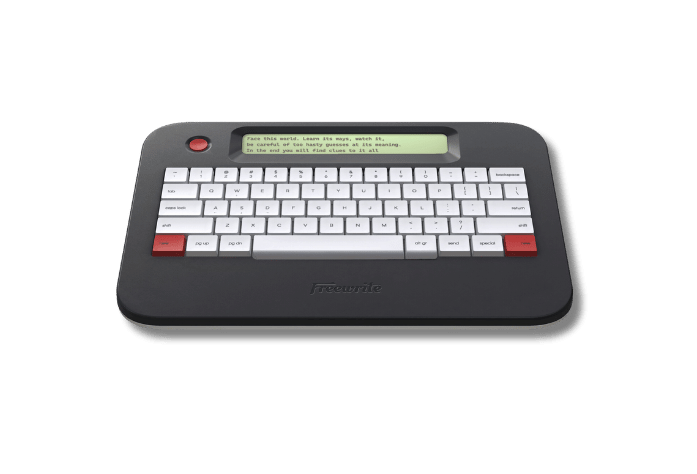
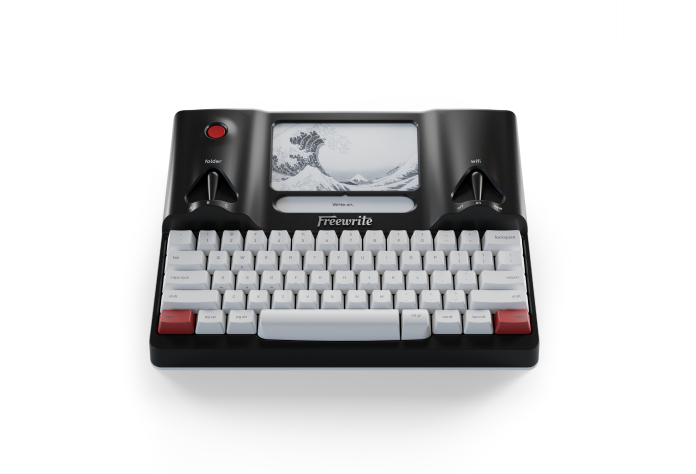
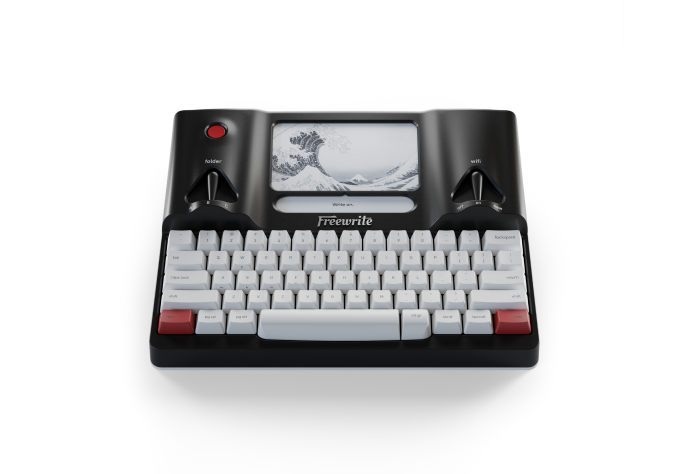
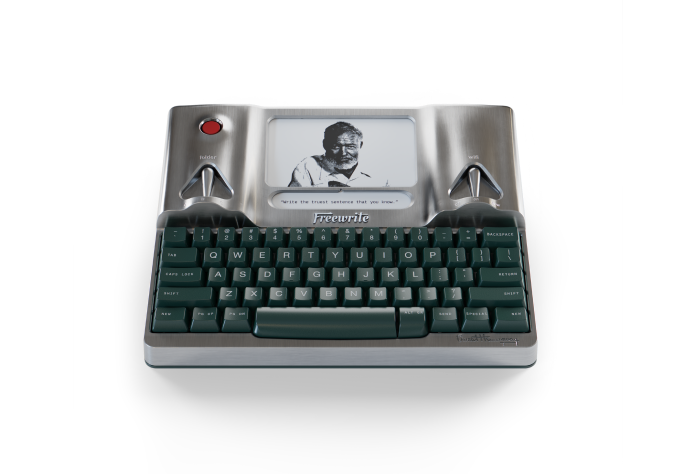
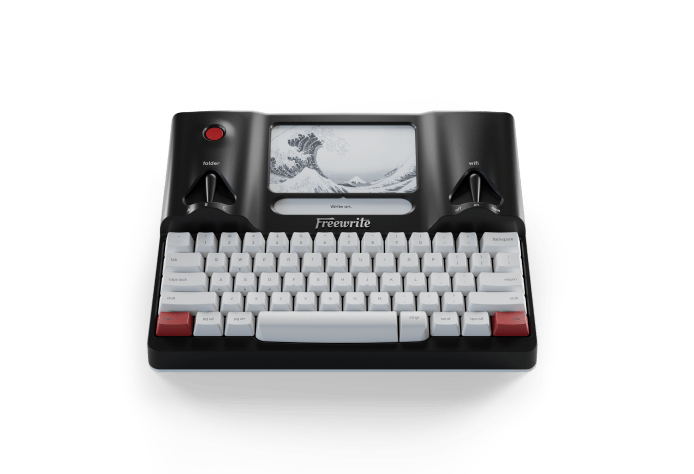
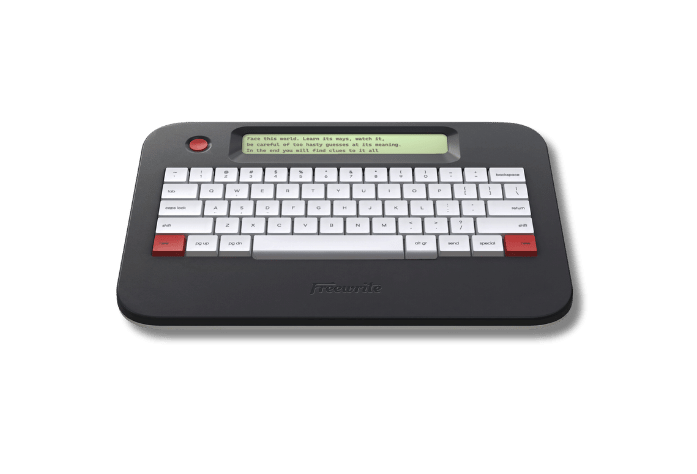
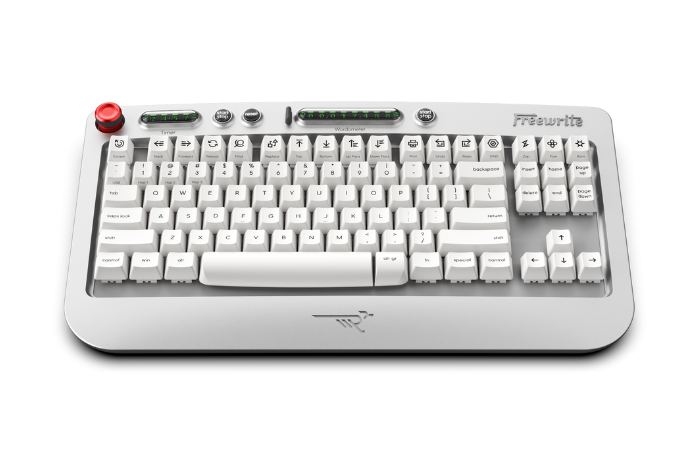
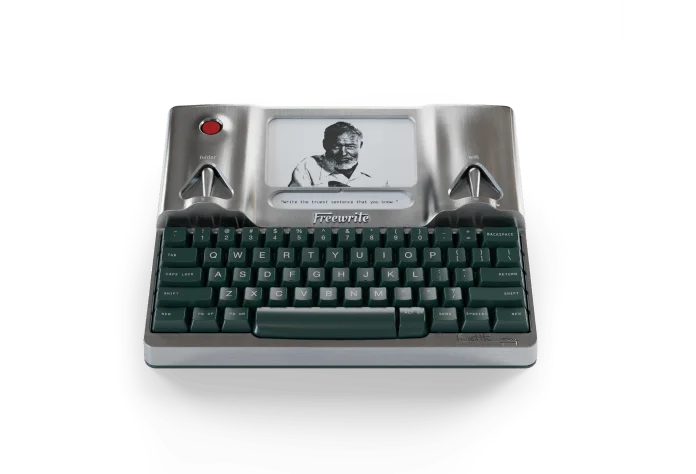
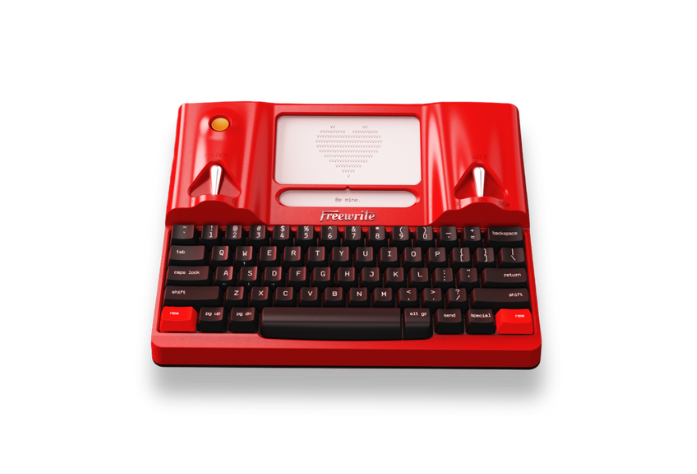
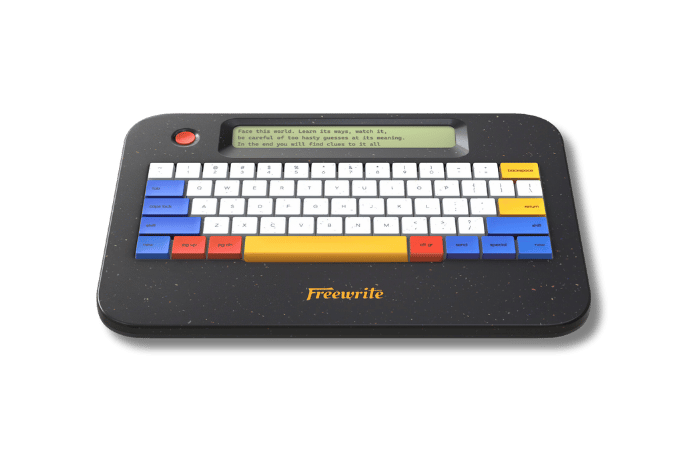
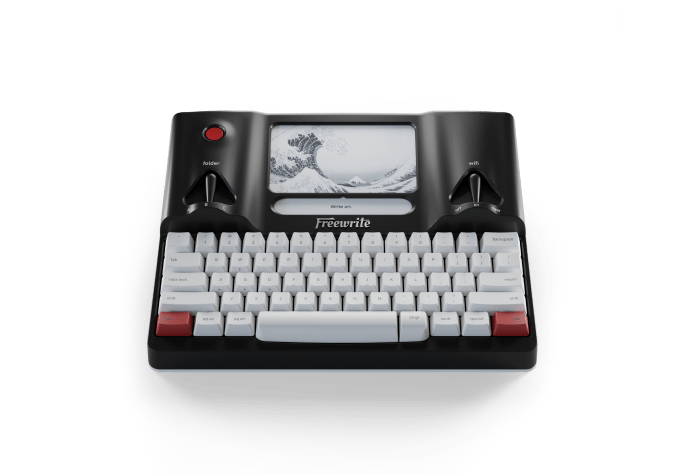
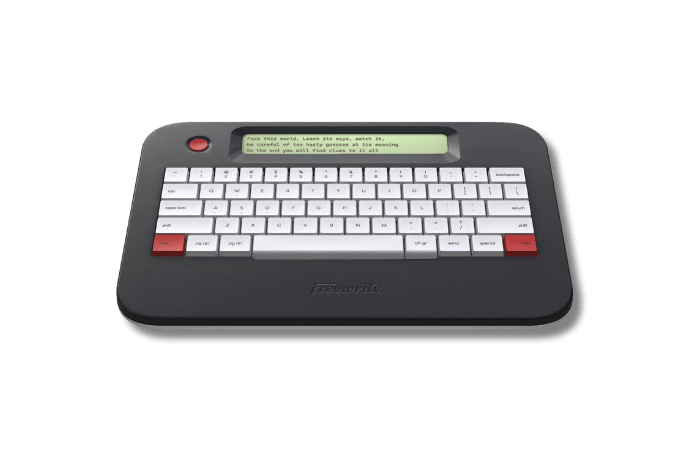
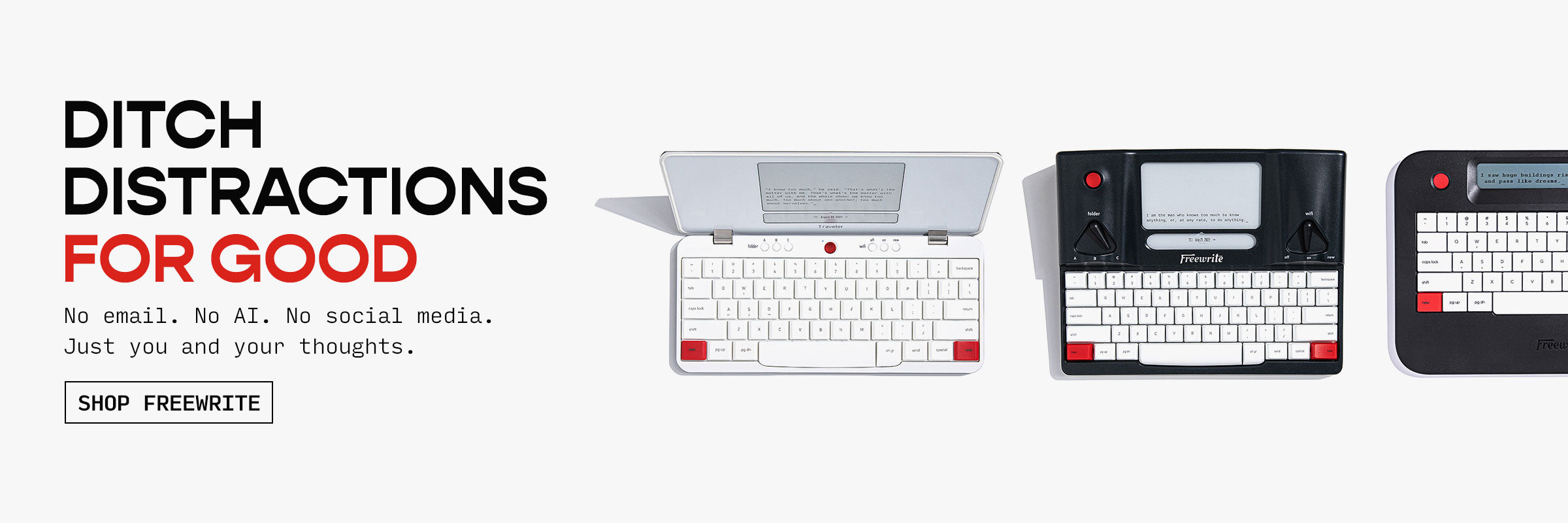
Ahora que te has inspirado, ¡el siguiente paso es escribir con constancia! Quienes usan nuestras herramientas de escritura sin distracciones Freewrite han duplicado su número de palabras. ¿Será Freewrite la solución ideal para ti?

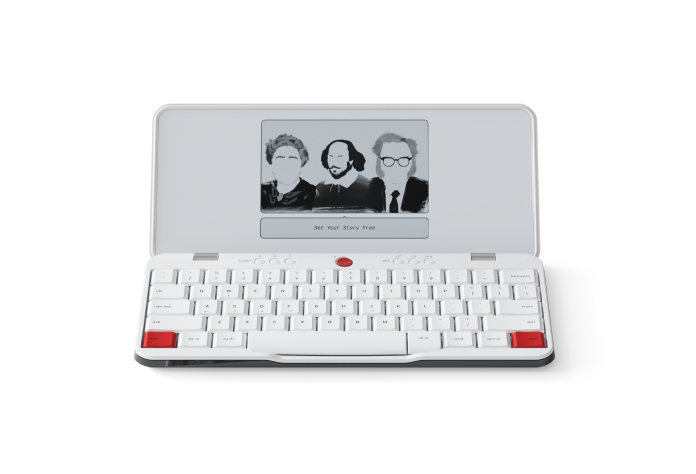
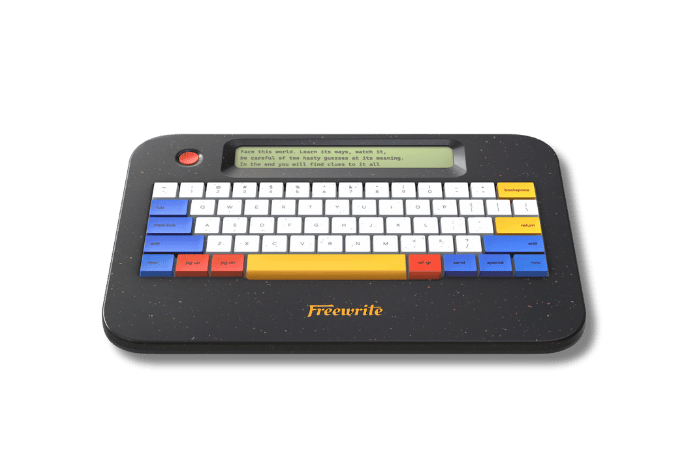
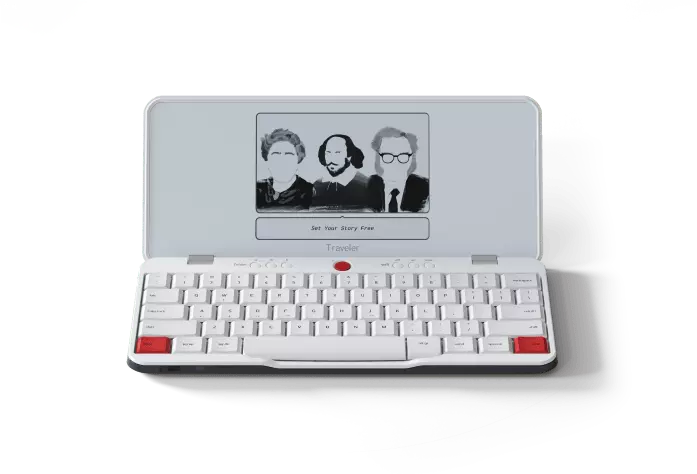
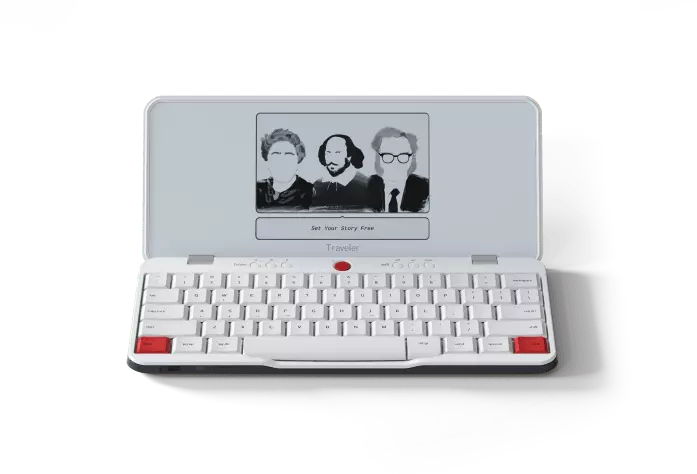
Descubre más sobre la filosofía de Freewrite "Primero Borrador, Editar Después" , que impulsa una producción prolífica. Y echa un vistazo a Freewrite Alpha , un compañero de escritura para llevar.

Para obtener aún más sugerencias, consulte el paquete de sugerencias creativas Words Are Hard de Freewrite.

Indicaciones de escritura de escritura libre

--

Carlton Clark
Carlton Clark Loves es escritor, especialista en marketing y emprendedor. A los 14 años, fundó la empresa de medios ballplayerplus.com. Actualmente, Carlton ayuda a las empresas a compartir sus historias a través de las redes sociales y blogs.
Cuando no está escribiendo ni creando contenido, Carlton entrena béisbol juvenil y toca la guitarra. Puedes encontrarlo en Instagram @itscarltonclark y en Twitter @carlton_mukasa.

septiembre 02, 2026 6 lectura mínima

Kentucky farmer and poet Wendell Berry entranced readers across the globe with his poems extolling the power of knowing the natural world. 

For writers who want to do the same, there’s deep knowledge to be gleaned from Berry.

agosto 26, 2026 5 lectura mínima

Freewriter Mike Somerby left a lucrative marketing career in e-commerce to start a print-only literary magazine by and for Montanans. Yes, you read that right.

We sat down with Mike to find out how ... and why.

Mike Somerby identifies as a writer — with some reservation.

"I think all who write are 'writers,'" he says, "even if the writing itself amounts to a simple letter to a friend or a personal journal entry."

We couldn't agree more. And we're thrilled that this particular writer writes his essays on Freewrite. Maybe that's why we felt comfortable asking him:

What inspires a professional brand marketer to leave his 9-5 and jump feet-first into the literary world of Bozeman, Montana?

Luckily, he was happy to tell us.

AC: Before we get into the lit mag, it actually isn't your first foray into the literary community, right?

MS: For about ten years — the lion's share of my professional chapter — I worked, in some capacity, as a brand marketer. Last spring, while enduring a particularly grueling stint as CMO for a Montanan e-commerce brand (yes, those exist), I found myself revisited by the remarks of an old journalism school professor: from his perspective, journalism students who apply their storytelling talents toward PR and marketing have crossed over to "the dark side."

While I find this a touch heavy-handed, I get the point, and I believe his notion resurfaced to meet the moment: we live in a world sorely hurting for analog (human) creativity and high-quality longform.

So I quit, traveled west with my dog in a 1986 U-Haul I'd converted into a camper, and plotted.

Step one: I founded Pulphead, a lounge (named after John Jeremiah Sullivan’s seminal 2011 essay collection) where Bozeman writers commune and grind out their prose until 2 a.m. Entry is a flat $5, which comes with unlimited drip coffee and tea.

Step two: leverage the Pulphead regulars and its online following to secure contributors for my new literary magazine, ANEMONE. Thus far, everything is going to plan.

We live in a world sorely hurting for analog (human) creativity and high-quality longform.

AC: Why do you think it's so important to create and preserve these spaces for authentic writing?

MS: Writing is a solitary act. Nonetheless, younger generations, in particular, struggle to forge IRL community in the way older generations might understand as an ordinary facet of being human.

By building a space that is as homey as it is supportive of their literary interests, we’re not only helping these individuals find their birds of a feather, but also providing them with a dojo that mandates setting aside blocks of time away from phones, home lives, and the other distractions. Win-win?

Incidentally, Livingston boasts the highest per-capita concentration of professional writers anywhere in the country. Couple this with another statistic — that Montana has more bookstores per capita than any other state — and it becomes clear southwest Montana is as fertile a place as any to invest in literature and its related industries.


AC: That's so interesting. What have you learned from being in community with creatives in Bozeman?

MS: In terms of writing, I've learned plenty. What has excited me most, however, is what I’ve learned from a small group of Indigenous women who come to the shop to write poetry and make beaded clothing in the traditions of their respective tribes (most notably, Crow, Cheyenne, Shoshone).

This is a group I’d otherwise have limited opportunity to engage with outside of Pulphead, and learning about their traditions, beliefs, hopes — even a little vocabulary — through firsthand conversation has proved incredibly edifying.

AC: And you mentioned you've seen Freewrites pop up in Pulphead. You use one, right?

MS: Yes. About seven years ago, not long after moving to Montana from New York, I purchased an Olivetti Lettera 32 typewriter from eBay. It appeared that a romanticizing of my newfound remoteness had rekindled my interest in writing.

I loved the mechanical feel and distraction-free interface, but the inability to edit line by line proved a notable annoyance for a mind habituated to modern computers. A few years down the road, some digging for alternatives led me to a blog post about smart/electronic typewriters. Voilà.

I purchased a Freewrite Gen3 Smart Typewriter, and I've been hooked ever since.

AC: That's awesome. So tell us about ANEMONE. What is it?

MS: ANEMONE is a print-only magazine (printed in a traditional broadsheet newspaper format). As for for theme, broadly, the world as told by Montanans. Short fiction, creative nonfiction, poetry, reportage, photography, and visiual illustrations comprise the submission categories.

AC: Print-only!

MS: Print is only dying because we let it.

AC: Is there a story about the name?

MS: Most people know the word anemone to describe a family of flowers — a 200-plus-species family of buttercups, comprising varieties both wild and domesticated. Dubbed “windflowers,” their delicate petals are said to blow open in the breeze; the ancient Greek word anemos means “wind.” I was drawn to the metaphorical value of beauty and how it can be revealed to us through an invisible force.

To add another layer, when I was a boy my father and I would spend weekends at the beaches north of San Francisco, where I was born and raised until I was seven. We would study the massive turqoise, kelly green, and purple sea anemones clinging to rocks left exposed by the receding Pacific tides (as to why, I can't say, outside of them looking funny, almost alien). A good memory.

Finally, “Anemone” is the name of an exquisite song by The Brian Jonestown Massacre, an irreverent and controversial rock band led by Anton Newcombe, an obsessive creative who rejects the surrender of culture and art to commercial interests. The track has a hold on me. It's like a portal to another era.

AC: Why do you think this sort of analog creativity is important?

MS:  I'm told the unending deluge of digital interface is leaving humans less and less capable of “deep work.” Will we ever know the difference?

Will we recognize what a society incapable of deep work looks like compared with those that came before it? Or will the transition manifest as a gradual degradation of quality, much as Coca-Cola was slowly, but surely, divorced from real sugar, such that to taste what Coke used to be like, one must order a Mexican Coke, still made with real cane sugar?

For me, analog perspective (and any creativity wrung from it) is rooted in continuity, tangibility, lived experience, slowness, spatial relation, nuance, emphasis on process, and grace for imperfection — antithetical to one of replicability, speed, binary outcomes, predictability, and optimization.

I prefer the former, and I suspect those who prefer the latter don't read or write much — life is a beautiful, taxing mess, and good writers find merit in this duality.

For me, analog perspective (and any creativity wrung from it) is rooted in continuity, tangibility, lived experience, slowness, spatial relation, nuance, emphasis on process, and grace for imperfection — antithetical to one of replicability, speed, binary outcomes, predictability, and optimization.

AC: Who is invited to submit to ANEMONE?

MS: We do limit submissions to Montanans, past and present, though we will feature writers from other states should the content of their writing bear an obvious relation to Montana — a requirement not imposed on Montanan writers.

All information regarding submissions can be found at www.anemonereview.com, along with all other facets of the magazine.

agosto 26, 2026 1 lectura mínima

Love the Freewrite 500? Here are 3 more writing contests for competitive short fiction writers.

1) Writers' Hour Magazine Prompts

The London Writer's Salon (a global writing group — no London residence necessary!) regularly host a writing contest via their Writers' Hour Magazine. Want to know a secret? Their September theme is all about freewriting.

Join them for a free workshop, Introduction to Freewriting, on Thursday, September 3, and get all the details about the contest.

The winner of the contest will win something Freewrite-shaped. 👀

2) NYC Midnight Challenges

This organization (again, no affiliation with NYC necessary) regularly hosts short story contests. Their next challenge is all about writing a rhyming story.

Learn more and register here.

Note: NYC Midnight writing contests generally have a fee to enter.

3) Henshaw Press Short Story Competition

This short story competition is open to anyone over age 16. And the best part? There is a cash prize, and profits go to charity.

Learn more here.