overlaylink

La guía literaria de Taylor Swift

Annie Cosby
mayo 17, 2024 | 6 lectura mínima

Como letrista, Taylor Swift ha cautivado al público mundial. ¿Pero sabías que también ha tejido un sutil tapiz de referencias literarias a lo largo de su discografía?

Swift, lectora de toda la vida, suele hablar de las grandes figuras literarias que han influido en su composición, así como de sus hábitos de lectura de la infancia; incluso admite haber escrito un libro de 400 páginas sobre sus amigos y familiares cuando era niña . ¡Qué chica tan especial!

(Aunque todavía estamos tratando de perdonar aquella frase del Departamento de Poetas Torturados sobre las máquinas de escribir ).

Ya sea que la ames o la odies (estamos hablando de ustedes, papás, Brads y Chads), quedarán impresionados con estas referencias literarias ocultas en las canciones de Swift…

Alerta de spoiler: A continuación, hay muchos spoilers de literatura clásica. No finjas que los ibas a leer.

1. Romeo y Julieta

Empecemos por lo obvio. En su éxito de 2008, "Love Story", Swift se inspira en la icónica historia de los amantes desventurados del Bardo, tejiendo un romance moderno que evoca los temas del amor prohibido y los conflictos familiares.

La letra menciona a Romeo y deja poco a la imaginación, lo cual tiene sentido, porque Swift apenas había terminado sus clases de inglés en la escuela secundaria en ese momento.

Incluso admitió que le encantó la historia en una entrevista con Pandora Music , "excepto por el final". Así que le dio a Romeo y su amor un nuevo final en la canción.


2. El gran Gatsby

Las alusiones a la novela seminal de F. Scott Fitzgerald aparecen en varias canciones de Swift. La primera, de su sexto álbum, Reputation , es obvia ("me siento como Gatsby"), en referencia a organizar una fiesta extravagante.

Pero la siguiente referencia, en Evermore de 2020, muestra su crecimiento como letrista y requiere un poco más de análisis. En la canción "Happiness", canta:

"Espero que sea una bella tonta."

Esto viene directamente de la boca del personaje de Gatsby , Daisy Buchanan , quien expresa su consternación por las perspectivas de su hija en la vida como mujer:

“Espero que sea una tonta; eso es lo mejor que una chica puede ser en este mundo, una hermosa y pequeña tonta”.

En esa misma canción, Swift redobla su oda a Fitzgerald, haciendo referencia a la luz verde simbólica de la novela.

3. Jane Eyre

Muchos oyentes perspicaces compararon las imágenes de Swift en "Invisible String" con una famosa frase de Jane Eyre, de Charlotte Brontë. En el clásico, el Sr. Rochester le dice a Jane:

“A veces tengo una extraña sensación respecto a ti, especialmente cuando estás cerca de mí, como ahora: es como si tuviera una cuerda en algún lugar debajo de mis costillas izquierdas, firmemente e inextricablemente anudada a una cuerda similar situada en el cuarto correspondiente de tu pequeño cuerpo”.

Otros lo atribuyen al hilo rojo de los proverbios chinos , que se dice une a quienes están destinados a encontrarse. Sea cual sea el origen de esta imagen, es indudablemente poderosa.

Existen más paralelismos entre las letras de Swift y Jane Eyre , en particular en sus descripciones del arquetipo de la «loca». Crucificada por los medios a lo largo de los años por estar «loca», Swift canta:

“Cada vez que me llamas loca / me vuelvo más loca.”

Al igual que la primera esposa del Sr. Rochester, a quien consideran "loca" y encarcelan en el ático. En la novela, después de que Jane huye de la finca, envía cartas, solo para descubrir más tarde que la casa se ha incendiado. La canción de Swift "Evermore" contiene una imagen paralela con el verso:

“Escribiendo cartas dirigidas al fuego”.

Además, la forma en que Swift rompe la cuarta pared y se dirige al oyente en el título de su canción "Dear Reader" es probablemente una referencia a una de las líneas más famosas de la literatura inglesa , directamente de Jane Eyre:

“Lector, me casé con él”.

4. El sol también sale

Entre las innumerables influencias entretejidas en sus canciones, el legado del gigante literario y premio Nobel Ernest Hemingway emerge como un hilo sutil pero significativo.

Mucha gente relaciona erróneamente un verso de la canción de Swift "The Last Great American Dynasty", en el que un perro es teñido de verde, con la excéntrica vecina de Hemingway, quien, como es bien sabido, tiñó a sus gatos. Pero es la propia Rebekah Harkness, la socialité protagonista de la canción de Swift, quien cometió sus propios crímenes al teñir mascotas. (En la vida real, fue un gato, no un perro ).

Pero hay referencias reales a la obra de Hemingway en la discografía de Swift.

En “The 1”, Swift canta: “Pero habría sido divertido / Si hubieras sido tú”. Esto recuerda a la novela de Hemingway de la década de 1920, Fiesta , que termina con esta poderosa escena:

"Ay, Jake", dijo Brett, "Podríamos haberlo pasado genial juntos". El coche aminoró la marcha de repente, apretando a Brett contra mí. "Sí", dije. "¿No es bonito pensarlo?"

¿Notas otro paralelismo? Vuelve a aparecer ese verso de «Invisible String»: «¿No es demasiado bonito pensar que / todo este tiempo hubo un hilo invisible que te ataba a mí?».

5. La letra escarlata

Las referencias al clásico de Nathaniel Hawthorne aparecen tanto en “New Romantics” como en “Love Story”. En la primera, Swift canta sobre mostrar “nuestras diferentes letras escarlatas” y en la segunda, la narradora se llama a sí misma una letra escarlata.

6. Una historia de dos ciudades

Al principio de "Getaway Car", una de las canciones favoritas de Swiftie de Reputation (2017), Swift le da un nuevo giro a una frase inicial literaria mundialmente famosa. El libro dice: "Fueron los mejores tiempos, fueron los peores tiempos..."

Swift canta una línea similar con un giro de rima inteligente.

7. Peter Pan

El clásico de JM Barrie recibe un guiño en "Cardigan" de Swift, quien nuevamente expresa su deseo de cambiar el final de una obra maestra literaria tan querida como trágica. En esta ocasión, es la historia de amor entre Peter Pan y Wendy la que Swift desea darle un final más feliz.

8. Rebeca

Nos encantan las referencias escalofriantes. Y la interpretación de Taylor sobre Rebecca es esa. Incluso confirmó en una entrevista con Rolling Stone que había leído a Rebecca antes de escribir su álbum Evermore .

El clásico de Daphne Du Maurier de 1938 sigue a una mujer que se casa con un hombre que aún está enamorado de su difunta esposa, Rebecca. ¿El giro inesperado? Él mató a su anterior esposa.

En Rebecca , la protagonista es inexperta en comparación con su nuevo esposo y, al igual que la narradora de la canción de Swift "Tolerate It", se compara con una niña en la relación. En una entrevista con Apple Music , Swift admitió que la historia le recordó cómo se había sentido en relaciones anteriores.

En la canción de Swift "No Body No Crime", del mismo álbum, la forma en que asesinan al esposo resulta sorprendentemente familiar para los lectores de Rebecca . Swift habla de una licencia de navegación, mientras que en Rebecca , el cuerpo del trágico personaje finalmente se encuentra en un barco hundido.

9. El jardín secreto

La letra sobre escapar a jardines secretos en su mente en el reciente álbum de Swift The Tortured Poets Department hace referencia al clásico libro infantil de Frances Hodgson Burnett.

La letra continúa confirmando esto, diciendo:

“Lo leí en un libro cuando era un niño precoz”.

10. Toda la vida de Emily Dickinson

Esta canción es picante y una de las favoritas de los fans de Swift en internet. Poco después del lanzamiento de Evermore en 2020, los fans de Swift comenzaron a notar paralelismos con la vida y los escritos de Emily Dickinson.

No sólo parecía evocar la misma morosidad del siglo XIX por la que Dickinson es conocido, sino que Evermore también fue anunciado el 10 de diciembre, el cumpleaños de Dickinson.

Una canción en particular cautivó a los Swifties de todo el mundo: "Ivy". La canción trata sobre una mujer casada que tiene una aventura con otro individuo. Actualmente, los estudiosos suelen pensar que Dickinson estaba enamorado de una mujer llamada Sue Gilbert, su amiga de la infancia, quien además estaba casada con el hermano de Dickinson.

La serie de televisión Dickinson , sobre la vida del poeta, incluso incluyó la canción de Swift en los créditos después de una escena importante. Y más recientemente, se ha revelado que genealogistas han descubierto que Swift tiene un parentesco lejano con Dickinson .

Pero es un simple verso el que confirma la conexión para la mayoría de los oyentes. Uno de los poemas que se dice que Dickinson escribió por amor a su cuñada, «Una hermana tengo en nuestra casa», termina con este simple verso :

"Sue - ¡para siempre!"

diciembre 30, 2025 3 lectura mínima

It’s Freewrite’s favorite time of year. When dictionaries around the world examine language use of the previous year and select a “Word of the Year.”

Of course, there are many different dictionaries in use in the English language, and they all have different ideas about what word was the most influential or saw the most growth in the previous year. They individually review new slang and culturally relevant vocabulary, examine spikes or dips in usage, and pour over internet trend data.

Let’s see what some of the biggest dictionaries decided for 2025. And read to the end for a chance to submit your own Word of the Year — and win a Freewrite gift card.

[SUBMIT YOUR WORD OF THE YEAR]


Merriam-Webster: "slop"

Merriam-Webster chose "slop" as its Word of the Year for 2025 to describe "all that stuff dumped on our screens, captured in just four letters."

The dictionary lists "absurd videos, off-kilter advertising images, cheesy propaganda, fake news that looks pretty real, junky AI-written books, 'workslop' reports that waste coworkers’ time … and lots of talking cats" as examples of slop.

The original sense of the word "slop" from the 1700s was “soft mud” and eventually evolved to mean "food waste" and "rubbish." 2025 linked the term to AI, and the rest is history.

Honorable mentions: conclave, gerrymander, touch grass, performative, tariff, 67.

Dictionary.com: "67"

The team at Dictionary.com likes to pick a word that serves as “a linguistic time capsule, reflecting social trends and global events that defined the year.”

For 2025, they decided that “word” was actually a number. Or two numbers, to be exact.

If you’re an old, like me, and don’t know many school-age children, you may not have heard “67” in use. (Note that this is not “sixty-seven,” but “six, seven.”)

Dictionary.com claims the origin of “67” is a song called “Doot Doot (6 7)” by Skrilla, quickly made infamous by viral TikTok videos, most notably featuring a child who will for the rest of his life be known as the “6-7 Kid.” But according to my nine-year-old cousin, the origins of something so mystical can’t ever truly be known.

(My third grade expert also demonstrated the accompanying signature hand gesture, where you place both hands palms up and alternately move up and down.)

And if you happen to find yourself in a fourth-grade classroom, watch your mouth, because there’s a good chance this term has been banned for the teacher’s sanity.

Annoyed yet? Don’t be. As Dictionary.com points out, 6-7 is a rather delightful example at how fast language can develop as a new generation joins the conversation.

Dictionary.com honorable mentions: agentic, aura farming, broligarchy, clanker, Gen Z stare, kiss cam, overtourism, tariff, tradwife.

Oxford Dictionary: "rage bait"

With input from more than 30,000 users and expert analysis, Oxford Dictionary chose "rage bait" for their word of the year.

Specifically, the dictionary pointed to 2025’s news cycle, online manipulation tactics, and growing awareness of where we spend our time and attention online.

While closely paralleling its etymological cousin "clickbait," rage bait more specifically denotes content that evokes anger, discord, or polarization.

Oxford's experts report that use of the term has tripled in the last 12 months.

Oxford Dictionary's honorable mentions:aura farming, biohack.

Cambridge Dictionary: "parasocial"

The Cambridge Dictionary examined a sustained trend of increased searches to choose "parasocial" as its Word of the Year.

Believe it or not, this term was coined by sociologists in 1956, combining “social” with the Greek-derived prefix para-, which in this case means “similar to or parallel to, but separate from.”

But interest in and use of the term exploded this year, finally moving from a mainly academic context to the mainstream.

Cambridge Dictionary's honorable mentions: slop, delulu, skibidi, tradwife

Freewrite: TBD

This year, the Freewrite Fam is picking our own Word of the Year.

Click below to submit what you think the Word of 2025 should be, and we'll pick one submission to receive a Freewrite gift card.

[SUBMIT HERE] 

--

Sources

diciembre 18, 2025 5 lectura mínima

¿Qué pueden enseñar las cartas personales de Jane Austen a los escritores?

diciembre 10, 2025 6 lectura mínima

Singer-songwriter Abner James finds his creativity in the quiet freedom of analog tools. Learn how his creative process transcends different media.

Abner James went to school for film directing. But the success of the band he and his brother formed together, Eighty Ninety, knocked him onto a different trajectory.

The band has accrued more than 40 million streams since the release of their debut EP “Elizabeth," and their work was even co-signed by Taylor Swift when the singer added Eighty Ninety to her playlist "Songs Taylor Loves.”

Now, Abner is returning to long-form writing in addition to songwriting, and with a change in media comes an examination of the creative process. We sat down to chat about what's the same — and what's different. 

ANNIE COSBY: Tell us about your songwriting process.

ABNER JAMES: The way I tend to write my songs is hunched over a guitar and just seeing what comes. Sounds become words become shapes. It's a very physical process that is really about turning my brain off.

And one of the things that occurred to me when I was traveling, actually, was that I would love to be able to do that but from a writing perspective. What would happen if I sat down and approached writing in the same way that I approached music? In a more intuitive and free-form kind of way? What would that dig up?

AC: That's basically the ethos of Freewrite.

AJ: Yes. We had just put out a record, and I was thinking about how to get into writing for the next one. It occurred to me that regardless of how I started, I always finished on a screen. And I wondered: what's the acoustic guitar version of writing?

Where there's not blue light hitting me in the face. Even if I'm using my Notes app, it's the same thing. It really gets me into a different mindset.

 "I wondered: what's the acoustic guitar version of writing?"

I grew up playing piano. That was my first instrument. And I found an old typewriter at a thrift store, and I love it. It actually reminded me a lot of playing piano, the kind of physical, the feeling of it. And it was really fun, but pretty impractical, especially because I travel a fair amount.

And so I wondered, is there such a thing as a digital typewriter? And I googled it, and I found Freewrite.

AC: What about Freewrite helps you write?

AJ:I think, pragmatically, just the E Ink screen is a huge deal, because it doesn't exhaust me in the same way. And the idea of having a tool specifically set aside for the process is appealing in an aesthetic way but also a mental-emotional way. When it comes out, it's kind of like ... It's like having an office you work out of. It's just for that.

"The way I tend to write my songs is hunched over a guitar and just seeing what comes. Sounds become words become shapes. It's a very physical process that is really about turning my brain off."

And all of the pragmatic limitations — like you're not getting texts on it, and you're not doing all that stuff on the internet — that's really helpful, too. But just having the mindset....

When I pick up a guitar, or I sit down at the piano, it very much puts me into that space. Having a tool just for words does the same thing. I find that to be really cool and inspiring.

"When I pick up a guitar, or I sit down at the piano, it very much puts me into that space. Having a tool just for words does the same thing."

AC: So mentally it gets you ready for writing.

AJ: Yeah, and also, when you write a Microsoft Word, it looks so finished that it's hard to keep going. If every time I strummed a chord, I was hearing it back, mixed and mastered and produced...?

It's hard to stay in that space when I'm seeing it fully written out and formatted in, like, Times New Roman, looking all seriously back at me.

AC: I get that. I have terrible instincts to edit stuff over and over again and never finish a story.

AJ:  Also, the way you just open it and it's ready to go. So you don't have the stages of the computer turning on, that kind of puts this pressure, this tension on.

It's working at the edges in all these different ways that on their own could feel a little bit like it's not really necessary. All these amorphous things where you could look at it and be like, well, I don't really need any of those. But they add up to a critical mass that actually is significant.

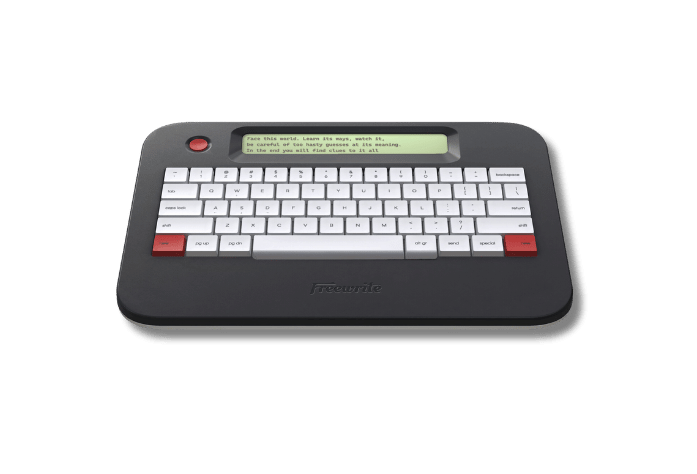
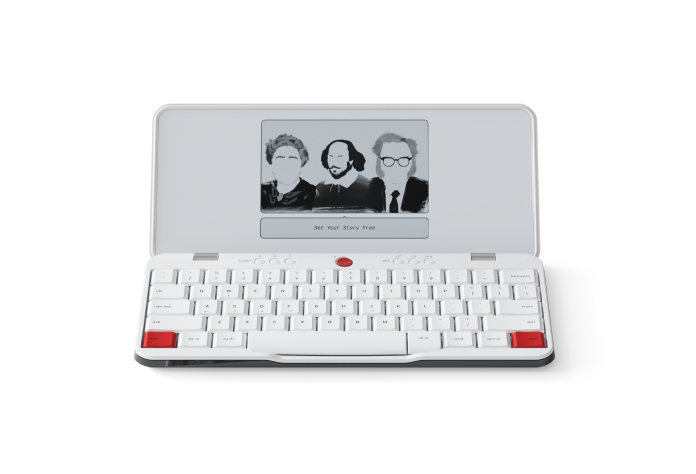
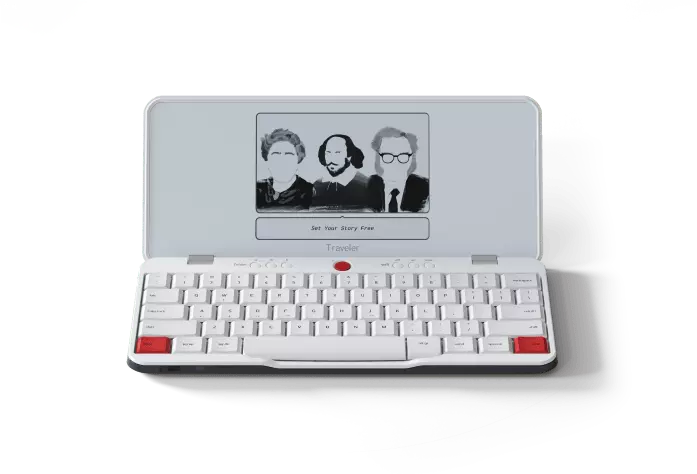
And sometimes, if I want to bring it on a plane, I've found it's replaced reading for me. Rather than pick up a book or bring a book on the plane, I bring Traveler and just kind of hang out in that space and see if anything comes up.

I've found that it's kind of like writing songs on a different instrument, you get different styles of music that you wouldn't have otherwise. I've found that writing from words towards music, I get different kinds of songs than I have in the past, which has been interesting.

In that way, like sitting at a piano, you just write differently than you do on a guitar, or even a bass, because of the things those instruments tend to encourage or that they can do.

It feels almost like a little synthesizer, a different kind of instrument that has unlocked a different kind of approach for me.

"I've found that it's kind of like writing songs on a different instrument, you get different styles of music that you wouldn't have otherwise... [Traveler] feels almost like a little synthesizer, a different kind of instrument that has unlocked a different kind of approach for me."

AC: As someone who doesn't know the first thing about writing music, that's fascinating. It's all magic to me.

AJ: Yeah.

AC: What else are you interested in writing?

AJ: I went to school for film directing. That was kind of what I thought I was going to do. And then my brother and I started the band and that kind of happened first and knocked me onto a different track for a little while after college.

Growing up, though, writing was my way into everything. In directing, I wanted to be in control of the thing that I wrote. And in music, it was the same — the songwriting really feels like it came from that same place. And then the idea of writing longer form, like fiction, almost feels just like the next step from song to EP to album to novel.

For whatever reason, that started feeling like a challenge that would be deeply related to the kinds of work that we do in the studio.

AC: Do you have any advice for aspiring songwriters?

AJ: This sounds like a cliche, but it's totally true: whatever success that I've had as a songwriter — judge that for yourself — but whatever success I have had, has been directly proportional to just writing the song that I wanted to hear.

What I mean by that is, even if you're being coldly, cynically, late-stage capitalist about it, it's by far the most success I've had. The good news is that you don't have to choose. And in fact, when you start making those little compromises, or even begin to inch in that direction, it just doesn't work. So you can forget about it.

Just make music you want to hear. And that will be the music that resonates with most people.

I think there's a temptation to have an imaginary focus group in your head of like 500 people. But the problem is all those people are fake. They're not real. None of those people are actually real people. You're a focus group of one, you're one real person. There are more real people in that focus group than in the imaginary one.

And I just don't think that we're that different, in the end. So that would be my advice.

AC: That seems like generally great creative advice. Because fiction writers talk about that too, right? Do you write to market or do you write the book you want to read. Same thing. And that imaginary focus group has been debilitating for me. I have to silence that focus group before I can write.

AJ: Absolutely.

"I think there's a temptation to have an imaginary focus group in your head of like 500 people. But the problem is all those people are fake... You're a focus group of one, you're one real person. There are more real people in that focus group than in the imaginary one."

--

Learn more about Abner James, his brother, and their band, Eighty Ninety, on Instagram.