overlaylink

De los pergaminos al desplazamiento: ¿las bibliotecas están obsoletas?

abril 05, 2024 | 5 lectura mínima

Mucha gente considera las bibliotecas como monumentos atemporales a la búsqueda del conocimiento. Otros las consideran reliquias obsoletas del pasado.

En un mundo en rápida evolución dominado por la tecnología digital, el papel de las bibliotecas se cuestiona cada vez más. Con la información al alcance de la mano a través de internet, ¿qué ofrecen las bibliotecas físicas?

Únase a nosotros mientras profundizamos en el papel de las bibliotecas a lo largo de la historia junto a Phoenix Grimm, un escritor y técnico de biblioteca con sede en Delaware.
De Gutenberg a Google

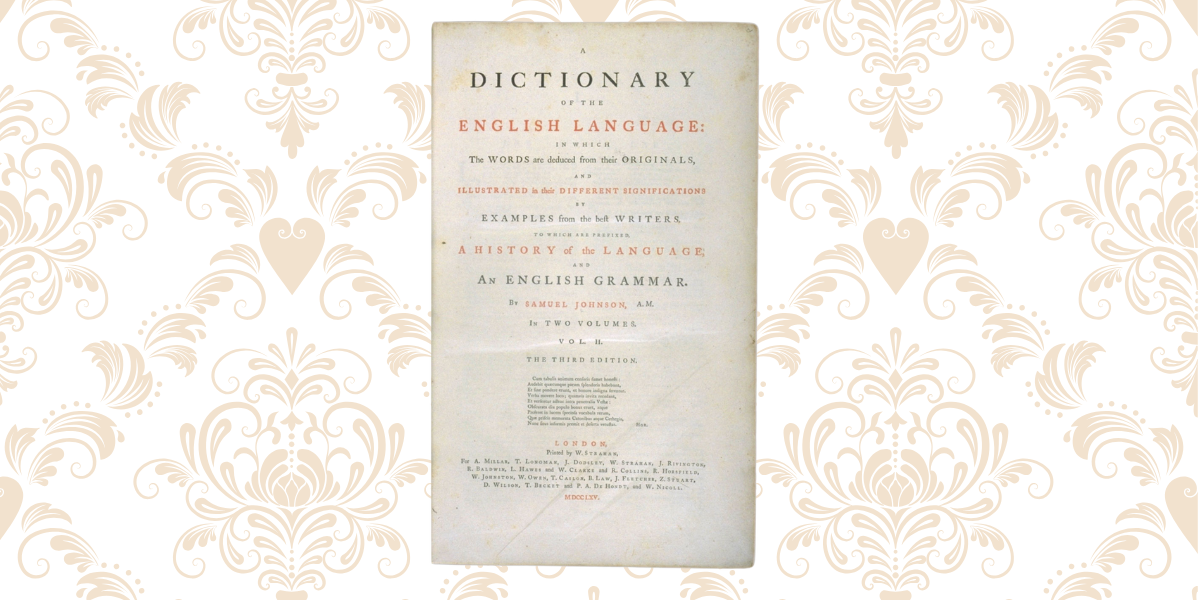
Una de las bibliotecas más antiguas conocidas se encontraba en la antigua ciudad de Nínive, en Mesopotamia (actual Irak), donde el rey Asurbanipal reunió una vasta colección de tablillas de arcilla . En el antiguo Egipto, la famosa Biblioteca de Alejandría era reconocida como la capital intelectual del mundo antiguo, albergando una colección de pergaminos sin igual y atrayendo a eruditos de todo el mundo.

Durante la Edad Media, las bibliotecas monásticas desempeñaron un papel fundamental en la preservación del conocimiento en Europa, gracias a los monjes que copiaban y preservaban diligentemente los manuscritos. El Renacimiento presenció un resurgimiento del interés por el saber clásico y la proliferación de bibliotecas privadas entre la élite europea. Por supuesto, el auge de la imprenta en el siglo XV revolucionó la difusión del conocimiento, haciendo que los libros fueran más accesibles a un público más amplio.

Benjamin Franklin fundó la Library Company of Philadelphia en 1731 , estableciendo la primera biblioteca por suscripción exitosa en las colonias americanas, y los siglos siguientes vieron una rápida expansión de las bibliotecas en todo el mundo, impulsada por los avances en alfabetización, tecnología y educación pública.

Más recientemente, la revolución digital trajo consigo cambios profundos en la forma de crear y acceder a la información, y el auge de internet permitió la creación de bibliotecas virtuales y archivos digitales. ¿Significa esto que las bibliotecas físicas han dejado de ser útiles?
Administradores modernos del conocimiento

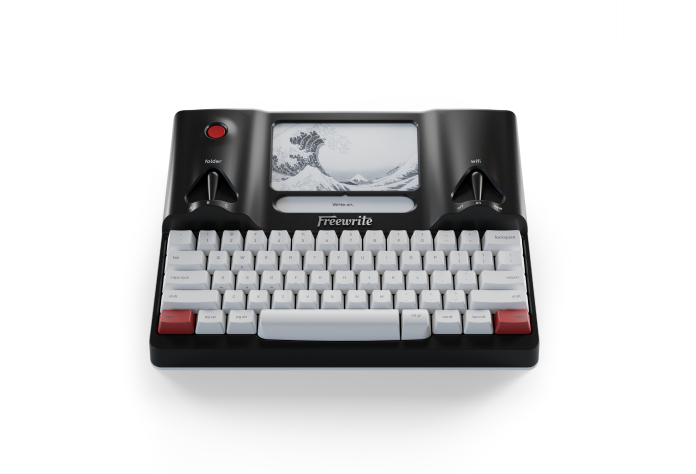
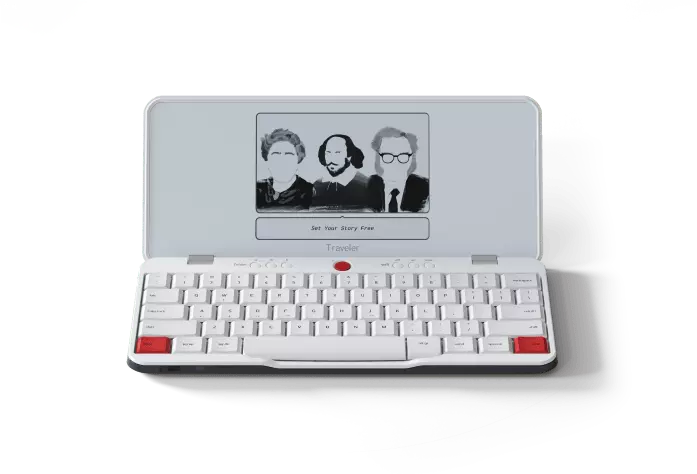
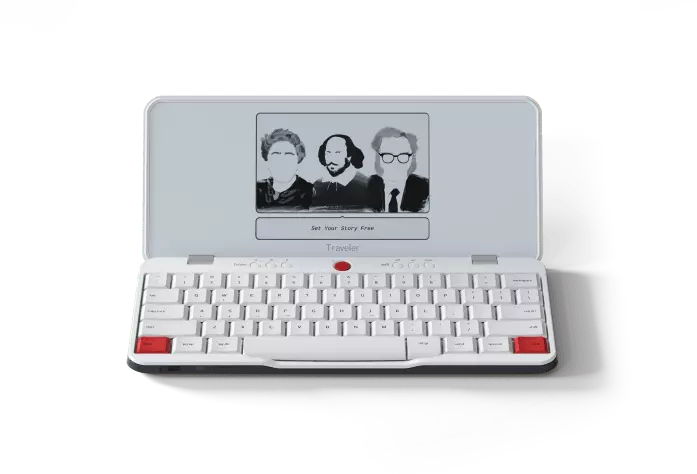
Phoenix Grimm es escritor y técnico bibliotecario en una pequeña biblioteca pública de Delaware. Trabaja en una institución más pequeña y gestiona una amplia gama de tareas, desde la circulación hasta la programación, e incluso la gestión de la biblioteca móvil. Phoenix dedica tiempo a escribir en su Freewrite Traveler durante las pausas de almuerzo, los fines de semana y las tardes.

Cuando se le pregunta sobre la evolución de las bibliotecas, Phoenix dice:

Las bibliotecas son expertas en adaptarse. Empecé en bibliotecas en 2020, cuando todo cambió. Cuando la COVID-19 puso fin a la programación presencial, las bibliotecas optaron por la recogida en la acera y la programación virtual, y muchas bibliotecas, incluso hoy en día, siguen ofreciendo una programación híbrida. Las cosas han cambiado desde entonces y seguirán cambiando, porque a medida que las tecnologías y la sociedad evolucionan, las demandas cambian.

Pero ¿deberían evolucionar las bibliotecas? ¿O esta evolución es simplemente una señal de que se han vuelto obsoletas y ya no son necesarias para acceder a la información?

"Ah, sí, internet tiene todas las respuestas", dice Phoenix. "Solo que no las tiene. Tiene respuestas, que no son necesariamente precisas".

Phoenix enfatiza que las bibliotecas no solo proporcionan información, sino que también proporcionan información precisa y revisada por pares. De hecho, brindan a los miembros de la comunidad acceso gratuito a bases de datos completas de artículos y trabajos revisados ​​por pares, que a menudo están bloqueados tras un muro de pago en internet.

Si las bibliotecas son guardianas del conocimiento, como creían los antiguos, entonces Internet es un campo minado de peligros y trampas informativas.

Si bien internet da la impresión de democratizar la difusión de información, el origen y la veracidad de ese conocimiento suelen ser difíciles de verificar, especialmente para los jóvenes. Las bibliotecas ofrecen un espacio donde personas de todas las edades pueden descubrir el conocimiento y explorarlo con mayor profundidad, de forma gratuita y con orientación académica.

Además de todo eso, dice Phoenix, las bibliotecas ya no se limitan al préstamo de libros. La mayoría de las bibliotecas ofrecen audiolibros, MP3, DVD, Blu-ray, videojuegos, juegos de mesa, portátiles y puntos de acceso wifi. No todo el mundo tiene acceso a internet en casa, y las bibliotecas nivelan las condiciones al reducir la brecha digital y brindar acceso a toda la comunidad. En definitiva, esto es compartir el conocimiento que las primeras bibliotecas buscaban, pero de una manera completamente moderna.

Y eso sin mencionar siquiera la programación: muchas bibliotecas ofrecen horas de cuentos y programas de lectura de verano, conciertos, conferencias, clubes de lectura y clases de manualidades. En Delaware, según Phoenix, varias bibliotecas tienen quioscos de telesalud y muchas cuentan con bibliotecarios dedicados a servicios de empleo y empresariales, trabajadores sociales en plantilla y más.

"Las bibliotecas han asumido funciones que van más allá de su ámbito tradicional", explica Phoenix. "Muchas de estas funciones deberían estar a cargo de otras agencias gubernamentales, pero están desbordadas, y preferiría que esas personas vinieran a las bibliotecas a que quedaran completamente desatendidas".

En otras palabras: « Las bibliotecas son el corazón de las comunidades modernas ».

En el frente de batalla

A medida que cambian las demandas de la comunidad, también cambian los obstáculos que enfrentan las bibliotecas. Desde la prohibición de libros hasta el interminable debate sobre el gasto público, siguen surgiendo preguntas sobre la relevancia de las bibliotecas públicas en el mundo actual.

"El presupuesto es el eterno problema de las bibliotecas en todas partes", dice Phoenix. "Nunca hay suficiente dinero, porque siempre hay más gente que ayuda, más tecnología disponible, más materiales".

Phoenix desafía a los lectores con una pregunta sencilla: ¿Alguna vez te has beneficiado de una biblioteca? (Este autor puede decir que sí con seguridad).

¿Tenías una en tu escuela? (Sí, era mi lugar favorito). ¿Alguna vez has necesitado ayuda para encontrar trabajo o incluso para encontrar un notario? (Sí, fui a la biblioteca dos veces el año pasado para que me atendiera un notario). ¿Alguna vez has necesitado usar una computadora cuando no tenías una? (Tengo la suerte de tener una computadora en casa, ¡pero he ido a la biblioteca a usar la impresora!).

"Las bibliotecas son absolutamente esenciales hoy en día", dice Phoenix. "Ofrecen de todo, desde información hasta entretenimiento, y los estudios han demostrado sus beneficios. Y, sinceramente, puedo asegurarles que se pierde más en dinero de lo que se paga anualmente a las bibliotecas".

Es cierto que los estudios han demostrado sistemáticamente que las bibliotecas generan importantes beneficios, tanto económicos como sociales . Por cada dólar invertido en bibliotecas, las comunidades obtienen beneficios como mayores tasas de alfabetización , mayor preparación de la fuerza laboral y mayor cohesión comunitaria .

Phoenix añade que la mayor ayuda que los miembros de la comunidad pueden brindar a cualquier biblioteca es su apoyo. Si suficientes miembros de la comunidad se unen y expresan su deseo de que sus bibliotecas reciban financiación, los políticos cederán.

En Delaware, el sistema de bibliotecas acaba de celebrar el "Día de las piernas", donde personas de la comunidad y bibliotecas de todo el estado viajaron al Salón Legislativo para reunirse con representantes y defender a las bibliotecas.

El futuro de las bibliotecas

Desde las colecciones impresas tradicionales hasta los repositorios digitales, las bibliotecas continúan adaptándose y prosperando en la era digital, reafirmando su perdurable relevancia como guardianas del conocimiento y la cultura. A medida que cambian los hábitos y las tecnologías de la humanidad, también cambiará la función de las bibliotecas en la custodia del conocimiento y de la comunidad en su conjunto.

En última instancia, invertir en bibliotecas no es sólo una decisión fiscal prudente, sino una reafirmación de nuestro compromiso con la educación, la igualdad y el bien común.

Ante el desánimo, Phoenix ofrece un conmovedor recordatorio para los trabajadores y usuarios de las bibliotecas:
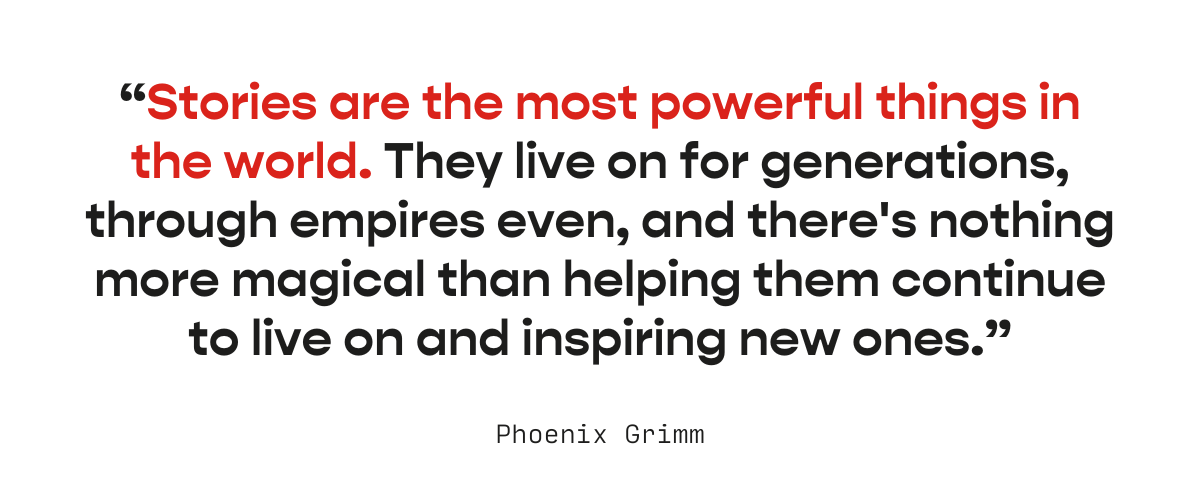
Las historias son lo más poderoso del mundo. Perduran por generaciones, incluso a través de imperios, y no hay nada más mágico que ayudarlas a perdurar e inspirar a otras nuevas.

--

Annie Cosby es la directora de marketing de Freewrite, exeditora de ficción y autora de siete libros, y sigue sumando. Su obra trata sobre la mitología celta y ha ganado dos veces el Premio al Proyecto de Autores Independientes para Jóvenes Adultos (YA) en Misuri. Descubre lo que escribe en Freewrite.

Suscríbase a nuestro boletín informativo por correo electrónico

noviembre 29, 2025 4 lectura mínima

The Great Freewrite Séance: A Ghost'ly Charity Auction Full Terms & Conditions

These Terms and Conditions (“Terms”) govern participation in The Great Freewrite Séance: A Ghost'ly Charity Auction (“Auction”), organized by Freewrite (“Organizer,” “we,” “us,” or “our”). By registering for, bidding in, or otherwise participating in the Auction, you (“Participant,” “Bidder,” or “Winner”) agree to be bound by these Terms.

1. Auction Overview

1.1. The Auction offers for sale a limited number of Freewrite Traveler Ghost Edition units (“Items” or “Ghost Traveler units”), each personally signed and drawn on by a featured author.

1.2. All proceeds, net of explicitly disclosed administrative costs, will be donated to the charity or charitable initiative (“Charity”) identified on each auction item’s page, as chosen by the respective author.

2. Eligibility

2.1. Participants must be at least 18 years old or the age of majority in their jurisdiction, whichever is higher.

2.2. Employees of Freewrite, the participating authors, or any affiliates directly involved in the Auction are not eligible to bid.

2.3. By participating, you represent that you are legally permitted to take part in online auctions and to pay for any bids you win.

3. Auction Registration

3.1. Participants must create an account on the auction platform or otherwise register using accurate, current, and complete information.

3.2. Freewrite reserves the right to verify identity and to disqualify any Participant who provides false or misleading information.

4. Bidding Rules

4.1. All bids are binding, final, and non-retractable.

4.2. Bidders are responsible for monitoring their bids; Freewrite is not liable for missed notifications or technical issues on the auction platform or the Participant’s device.

4.3. Freewrite reserves the right to:

  • set minimum bids or bid increments;
  • reject bids deemed in bad faith or intended to disrupt the Auction;
  • extend, pause, or cancel the Auction in case of technical difficulties, fraud, or events beyond reasonable control.

5. Winning Bids and Payment

5.1. The highest valid bid at the close of the Auction is the Winning Bid, and the corresponding Participant becomes the Winner.

5.2. Winners will receive payment instructions and must complete payment within 48 hours of the auction’s close unless otherwise stated.

5.3. Failure to complete payment on time may result in forfeiture, and Freewrite may offer the Item to the next highest bidder.

5.4. Accepted payment methods will be listed on the Auction platform. All payments must be made in the currency specified.

6. Item Description and Condition

6.1. Each Ghost Traveler unit is authentic, and the signatures, doodles, and messages are original works created by the participating author. These are authors, not artists. By bidding on the Item, you acknowledge that you are receiving a one-of-a-kind unit marked with unique art and messages and you agree to these terms and conditions.

6.2. Because Items are customized and signed by hand, variations, imperfections, or unique marks are to be expected. These are considered part of the Item’s character and not defects.

6.3. Items are provided “as-is” and “as-available.” Freewrite makes no warranties of merchantability or fitness for a particular purpose.

7. Shipping & Delivery

7.1. Shipping costs, import duties, and taxes may apply unless explicitly stated otherwise.

7.2. Freewrite will make reasonable efforts to ship Items within the estimated timeline but cannot guarantee delivery dates.

7.3. Title and risk of loss transfer to the Winner upon delivery to the carrier.

7.4. Freewrite is not responsible for delays, damage, or loss caused by the courier or customs agencies.

8. Charity Donation

8.1. Net proceeds from the Auction will be donated to the Charity designated on each Item page.

8.2. Donation amounts and recipients may be disclosed publicly unless prohibited by law.

8.3. Winners acknowledge that they are purchasing Items, not making a tax-deductible donation to Freewrite; therefore, Winners will not receive charitable tax receipts unless Freewrite explicitly states otherwise in compliance with applicable laws.

9. Intellectual Property

9.1. All trademarks, brand names, product names, and creative materials associated with Freewrite and the Ghost Traveler remain the exclusive property of Freewrite or their respective rights holders.

9.2. Participants may not reproduce, distribute, or publicly display the authors’ doodles without permission where such rights are applicable, except as allowed by law (e.g., resale of the physical Item).

10. Privacy

10.1. By participating, you consent to Freewrite’s collection, use, and storage of your personal data in accordance with our Privacy Policy.

10.2. Freewrite may publicly announce auction results, including Winner’s first name, last initial, city, state/country, and winning bid amount unless prohibited by law or unless you formally request anonymity when possible.

11. Prohibited Conduct

Participants may not:

  • engage in bid manipulation, fraud, or collusive bidding;
  • use automated systems (bots, scripts, scrapers) to place or monitor bids;
  • interfere with the Auction, platform, or other participants

Freewrite may ban or disqualify any Participant violating these rules.

12. Limitation of Liability

To the fullest extent permitted by law:

12.1. Freewrite is not liable for indirect, incidental, special, or consequential damages arising from the Auction or purchase of Items.

12.2. Freewrite’s total liability in connection with these Terms shall not exceed the amount of the Winning Bid actually paid by the Participant.

12.3. Freewrite is not responsible for technical malfunctions, internet outages, system failures, or other issues beyond its control.

13. Cancellation and Force Majeure

Freewrite may cancel, postpone, or modify the Auction due to unforeseen circumstances, including but not limited to natural disasters, system failures, strikes, or events affecting participating authors or the Charity.

14. Governing Law & Dispute Resolution

14.1. These Terms are governed by the laws of Michigan, without regard to conflict-of-law rules.

14.2. Any disputes arising under these Terms will be resolved through binding arbitration or the courts of the specified jurisdiction, as applicable.

14.3. Participants waive any right to participate in class-action lawsuits relating to the Auction.

15. Amendments

Freewrite may update these Terms at any time. Continued participation in the Auction after updates constitutes acceptance of the revised Terms.

16. Contact Information

For questions or concerns regarding the Auction or these Terms, contact: hello@getfreewrite.com.

noviembre 25, 2025 1 lectura mínima

This is a great gratitude writing exercise to be done alone or in a group, with people of any age.

How to Play

    1. Designate someone to read out each prompt below. (Feel free to add your own prompts.)
    2. After each prompt is read, set a timer for one minute. (With younger kids, this can be shortened. For older folks who want to freewrite meaningfully, more time can be added.)
    3. Each person freewrites by finishing the sentence and elaborating until the timer goes off. (For little kids, this can be done verbally with an adult recording their answers. Hilarity will ensue.)
    4. Remeber that freewriting — allowing yourself to write with abandon — enables you to let go, tapping into your subconscious to explore your thoughts more deeply.
    5. When everyone is done with all the prompts, take turns going through some your answers. Some people may be eager to share. Others may not want to. Respect their decision.

The Prompts

  • I'm grateful for... [After you've finished this prompt, repeat it five times. Challenge yourself and others not to repeat a singe word with each new answer.]
  • The silliest thing I'm grateful for is...
  • The littlest thing I'm grateful for is...
  • The biggest thing I'm grateful for is...
  • The grossest thing I'm grateful for is...
  • One thing I love about myself is...
  • My favorite thing that happened this year was...
  • My hope for next year is...

This writing exercise has resulted in some sweet answers — and many hilarious ones, too. If you try it out, do let us know.

Write on.

noviembre 21, 2025 4 lectura mínima

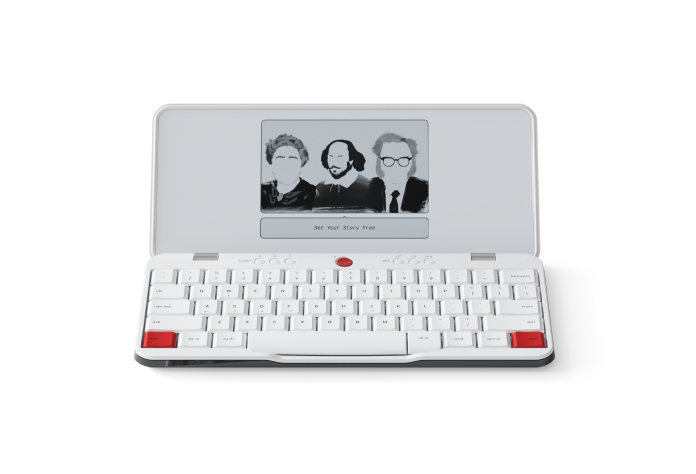
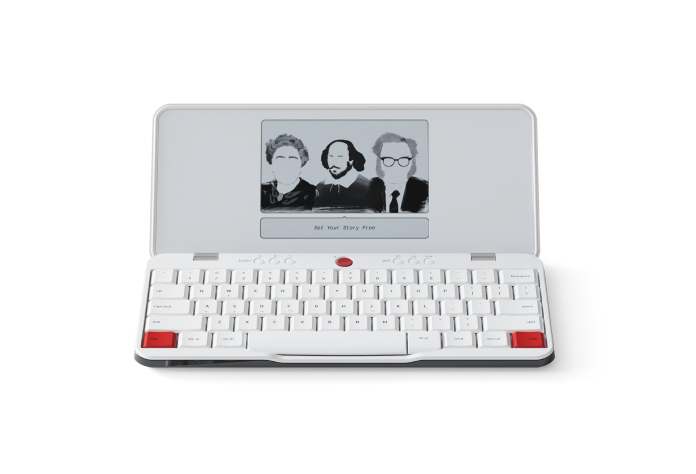
For the release of Sailfish, our new firmware update for Smart Typewriter Gen3 and Traveler, we created a brand-new boot-up animation to surprise and delight our writers.

We worked with talented Danish animator Mathias Lynge to bring our experience of the writer's journey to life.

We had a blast visualizing the writer's journey in this new way. Our engineers also had a blast (or something less than a blast) figuring out how to adjust this fun, playful animation to E Ink's very tricky specifications. Hello, refresh rate woes! But we think the result is pretty fun.

"The little animation made my day when I noticed. I love a good flourish."

- Freewrite user

The process of creating this animation was long and full of Zoom calls where we deeply discussed the writing process. We were struck through those conversations by how much overlap there is in creative processes of all disciplines.

So we sat down to chat with Mathias about his creative process and what it's like being a full-time animator.

ANNIE COSBY: Let's start with the basics. What kind of art do you make?

MATHIAS LYNGE: I'm a 2D animator and motion designer working freelance with a wide range of clients. The style varies depending on the project, but it’s usually either a hand-drawn look animated frame-by-frame on a drawing tablet, or a more digital, vectorized look made in After Effects.

While much of what I do is commercial work, I try to keep up with my own passion projects as well. That could be a 10-second Instagram loop of a nature scene, or an interesting character design I’ve sketched down with a pencil. It’s there that I get to sharpen my skills and try out new techniques, which often find their way into later client projects.

AC: You often share educational content on social media for other artists. Are you formally trained, or did you teach yourself?

ML: I’m mostly self-taught. I’ve been drawing for as long as I can remember, but it wasn’t until I went to university that I realized drawing could become a career.

When I first heard terms like “motion design” and “The 12 Principles of Animation” I was on a student exchange program at UCSB in California, where I had chosen a class called "Introduction to Animation." It was a big eye-opener for me, and from that point I was hooked.

But it’s mainly been online YouTube tutorials and my existing drawing experience that have taught me what I know.

Now, I have a big presence on social media, where I share my art as well as educational content centered around animation in Adobe After Effects, so I guess you could say that I'm also an animation influencer!

I’ve been drawing for as long as I can remember, but it wasn’t until I went to university that I realized drawing could become a career.

AC: That's actually how I first found your work. Do you have any specific artists who inspire you?

ML:In the world of 2D animation, I have a list of personal heroes that inspire me with their unique style: Reece Parker, Ariel Costa a.k.a. BlinkMyBrain, and Tony Babel, to name a few.

I also find a lot of inspiration from illustrators and painters I discover online, on platforms such as Pinterest. Last year I made a sparkling water animation that was heavily inspired by Cornwall-based artist Gordon Hunt. He makes these beautiful nature-inspired pointillist paintings that capture how light hits the ocean using colorful dots of paint. I tried to recreate that effect using After Effects to bring it to life, and it led me to a whole new way of animating within the program.

AC: Where else do you draw inspiration to create your work?

ML: I’m heavily inspired by the nature and cityscapes around me in Copenhagen, and I find that taking long walks through parks or down the streets of my neighborhood really sparks my imagination.

I’ll often carry around a sketchbook to quickly scribble down an idea or a loose sketch of something I find interesting, such as seeing how the light from a lamppost hits the surrounding leaves, or how the wind moves the tree in a certain way.

Then I’ll think to myself, “I wonder if I can recreate that motion using a specific technique in After Effects?”

I’m heavily inspired by the nature and cityscapes around me in Copenhagen...

AC: What does your daily routine look like as a full-time artist?

ML: It varies a lot, but I’m usually either working hard on a client project or tinkering away with a new animation tutorial for my social media channels.

I love being able to switch between the two, and when I’m going through a client dry spell, I find that staying creative and posting animation-related content helps keep me inspired while also putting things out into the world that may lead to my next client down the road.

AC: What's your #1 piece of advice for animators new to the industry?

ML: Keep experimenting and trying out new techniques. There’s no such thing as running out of creativity, and even though many of the things you try don’t necessarily go anywhere, it’s all experience that adds up and expands your toolbox. It’s a muscle that needs to be worked out regularly.

Plus, you’ll have more awesome animation to choose from when you’re putting together your next showreel or portfolio!

There’s no such thing as running out of creativity...

AC: What's one fun fact about you completely unrelated to animation?

ML:I’m a big sucker for history podcasts, especially if they are about ancient civilizations, such as The History of Rome by Mike Duncan.

I find it fascinating to hear how mankind was able to build such great empires without ever knowing what electricity, cars, or the internet are.

--

Follow along on Mathias's creative journey and find his free educational content on Instagram.

To learn more about working together, find him on LinkedIn or visit his website at www.mathiaslynge.com.

Learn more about Sailfish here.