overlaylink

Olvídate de publicar: la libertad de escribir para ti mismo

Annie Cosby
julio 15, 2024 | 5 lectura mínima

Muchos, si no la mayoría, de los escritores inéditos sueñan con publicar. Es lo que muchos anhelamos. Para muchos, es la razón por la que escriben.

Pero ¿qué pierdes cuando solo escribes con el objetivo de publicar? ¿Qué pasa cuando no buscas publicar?

Bueno, el escritor de toda la vida Patrick McCafferty dice que lo que sucede es la libertad.

Conocí a Patrick McCafferty, quien vive y escribe en Wichita, Kansas, cuando ganó nuestrosorteo "Empieza con Alpha" . Antes de ganar, comenta que escribía principalmente en Sprinter , nuestro software de escritura libre integrado en el navegador, y que estaba deseando tener su propio Freewrite.

Mientras hablaba con él, se me escapó algo que me llegó al alma:

Llevo escribiendo desde que tenía veintipocos años. Por aquel entonces, ansiaba desesperadamente publicar; era muy ambicioso, pero la vida me lo impidió. Ahora tengo 70 años y no me siento tan obligado a publicar, así que escribo principalmente por placer. No quiero que escribir se convierta en algo que me estrese.

No lo dijo con arrepentimiento. De hecho, Patrick parecía seguro y cómodo con su vida de escritor. Incluso enamorado de ella.

Como escritor que prácticamente siempre ha buscado publicar, esto me hizo reflexionar y preguntarme: ¿Qué me estaba perdiendo al no escribir cosas sólo para ?

Continúe leyendo para conocer lo que Patrick tenía para decir sobre su amor de toda la vida por la escritura y compartir con los demás.

Ya tengo 70 años y no me siento tan obligado a publicar, así que escribo principalmente por placer. No quiero que escribir se convierta en algo que me estrese.

ANNIE COSBY: Empecemos por el principio. ¿Cuándo empezaste a escribir?

PATRICK MCCAFFERTY: Mi primera inspiración como escritor fue un proyecto de escritura que mi hermano estaba haciendo en la primaria. (Es tres años mayor que yo).

Era una historia de fantasía sobre un grupo de amigos que viajaban a un planeta diferente y vivían aventuras.

Todos estos años después, recuerdo las imágenes en mi cabeza como si fuera ayer.

AC: ¡Esa es la marca de una buena historia!

PM: Sí. Luego, cuando tenía veintipocos años, empecé a escribir cuentos. He escrito casi a diario desde entonces, salvo algunos momentos en los que he estado distraído con otra cosa.

A lo largo de los años, no he tenido la misma aplicación para escribir, así que no siempre llevo la cuenta de mis rachas. Mi perfil de Postbox me ha ayudado con eso.

La mayor parte de lo que escribo ahora es un diario; necesito manifestar los pensamientos en mi cabeza en forma física para verlos y procesarlos.

Escribí una novela durante el NaNoWriMo hace unos años y la disfruté mucho. También me encanta escribir textos muy cortos que me vienen a la mente, basados ​​en personajes o situaciones. Cuando escribo ficción, escribo "para" alguien; sobre todo, para mi hermano.

Pero escribir un diario puede tratar cualquier tema. Libera mi creatividad y puede adoptar cualquier forma. Es muy liberador.

También me permite descubrir algunos de mis propios deseos y necesidades. Y, a veces, la diferencia entre ambos.

Llevar un diario también puede ayudar con el temido bloqueo del escritor. Si me quedo atascado, suelo recurrir a mi diario y escribir algo, lo que sea, que me ayude a salir de la rutina.

AC: Sin duda, escribir solo para uno mismo tiene cierto poder. ¿Qué crees que la gente puede ganar al dejar de obsesionarse con publicar?

PM: Creo que no preocuparme por si una obra se publica o no me da la libertad de escribir lo que quiero en lugar de lo que creo que quieren los demás. Sin duda, elimina la presión de escribir "cosas geniales" que se vendan.

Creo que hay mucha gente que se fija en lo que se vende y luego intenta escribir algo que se sume a la última tendencia. No tengo nada en contra de quienes se ganan la vida con eso; simplemente no es lo mío.

Pero una de las cosas que perdemos al escribir sólo para nosotros mismos es que es fácil olvidar que el propósito principal de la escritura es comunicarnos con los demás.

Para mí es importante seguir escribiendo como si mis palabras fueran para que alguien más las leyera. Leer mucho nos ayuda a saber qué le gusta y entiende a la gente.

AC: Siempre pensamos en publicar, pero también hay otras maneras muy gratificantes de compartir nuestro trabajo. Mencionaste escribir para tu hermano. ¿Compartes tu trabajo de otras maneras?

PM: Cuando era más joven, un grupo de amigos solía reunirse y elegir un tema y comenzar a escribir historias ultracortas y luego las leíamos.

Fue un poco como estar desnudo frente a estas personas, pero todos estaban a salvo y fuimos amables entre nosotros.

Aprendí que todos tenemos nuestros momentos brillantes y nuestros momentos aburridos, pero uno simplemente sigue escribiendo, dejando que la creatividad fluya a través de ti.

AC: Qué buena forma de decirlo. Dejar que alguien lea tu obra da esa sensación. ¿ Cómo decides sobre qué escribir?

PM: Me gusta elegir un tema y dedicar 40 minutos a escribir lo que me inspire. Me encanta el proceso de dejar fluir mi creatividad.

Los títulos de libros son una excelente fuente de temas. Me gusta coleccionar títulos de la sección de ficción de una librería o biblioteca. Sé que podría buscar en internet un millón de títulos diferentes a la vez, pero me gusta encontrar uno espontáneamente y dejar que me cuente. Es mejor no saber nada del libro. Recopilo los títulos que encuentro y, cuando busco un tema, elijo uno al azar.

Personalmente, tengo una hoja de cálculo con títulos que me han gustado. Las pinturas, los dibujos y otras obras de arte son excelentes fuentes de inspiración para escribir, al igual que los títulos de las propias pinturas.

Si no consigo que la historia fluya en mi interior al elegir un tema, puedo añadir un personaje. Utilizo familiares, amigos y conocidos cuyas personalidades conozco para ello. Usar su nombre al escribir me ayuda a tener presente su personalidad y cómo reaccionarían en una situación concreta. ¡Por supuesto, cambio el nombre si alguna vez dejo que alguien lo lea!

Tal vez soy adicto a ese flujo de escritura que me permite sumergirme en la vida de los personajes en mi imaginación.

Tal vez soy adicto a ese flujo de escritura que me permite sumergirme en la vida de los personajes en mi imaginación.

AC: A menudo utilizas nuestra aplicación, Sprinter , para escribir, ¿correcto?

PM: Sí, disfruto usar Sprinter porque me permite expresar las palabras lo mejor posible y luego puedo editarlas. (Excepto cuando escribo en un diario, que no las edito después).

Normalmente escribo directamente en mi diario con un encabezado con el nombre del tema y luego otro encabezado para indicar el final, para que en mi editor, que a veces es Google Docs, Dabble Writer o Drafts, pueda encontrarlos fácilmente. Puedo seleccionarlos, colocarlos en su propio proyecto y seguir trabajando en ellos.

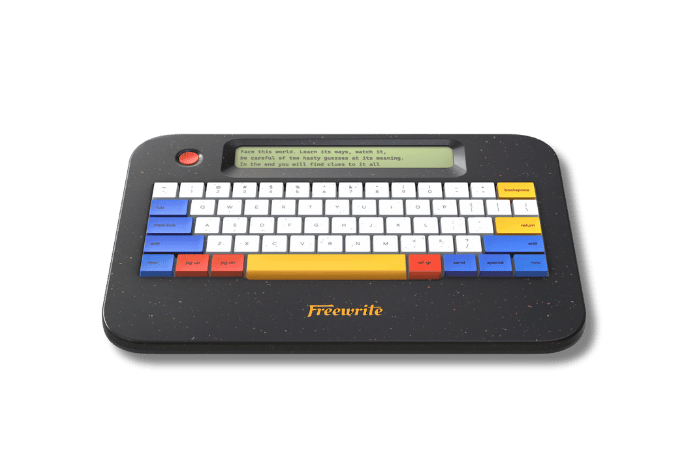
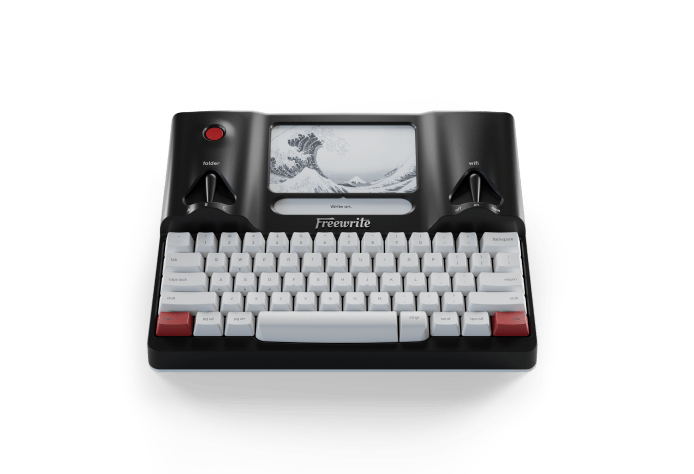
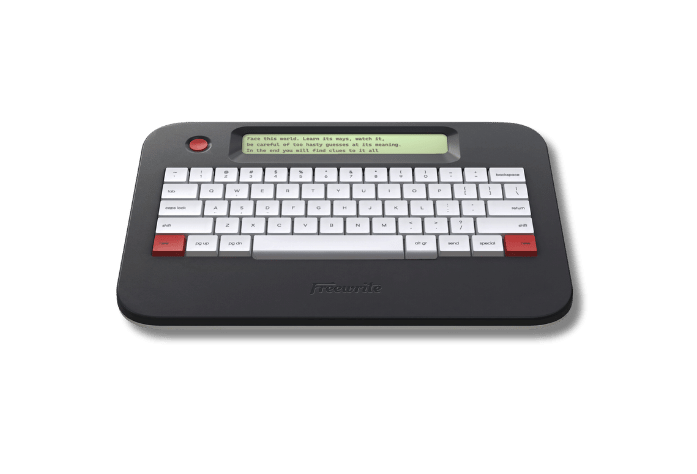
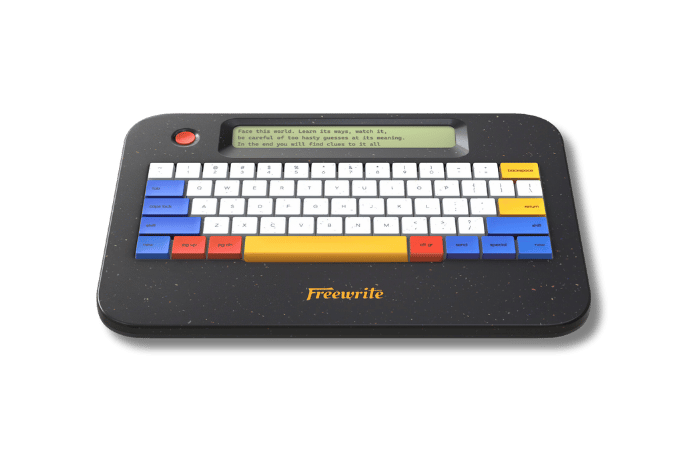
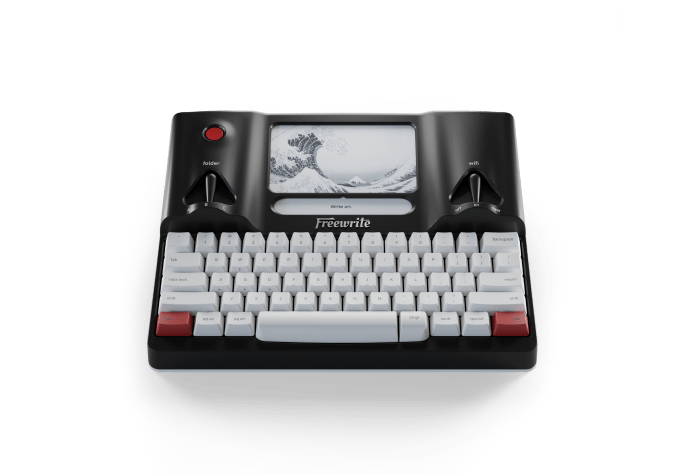
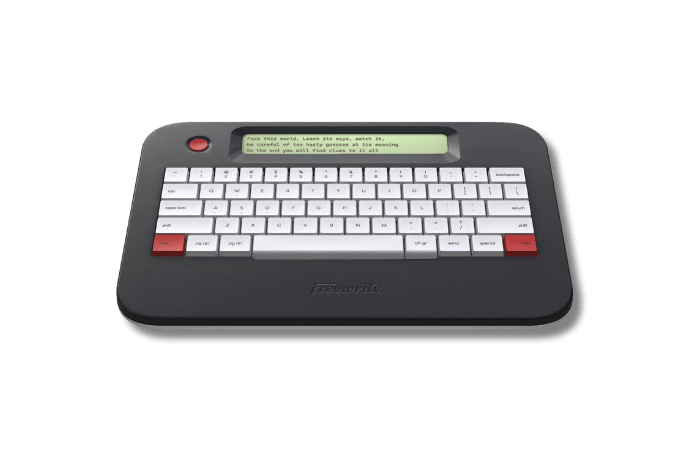
Pero estoy deseando recibir pronto mi primer dispositivo Freewrite. Usé un dispositivo AlphaSmart antes, pero no me resultó fiable. Gracias al sorteo, pedí la Smart Typewriter y Alpha.

AC: ¿Crees que la gente necesita escribir cosas que nunca verán la luz del día?

PM: Creo que necesito escribir mis pensamientos. Puede ser muy doloroso o vergonzoso admitir algo a otra persona, pero escribirlo puede ser muy catártico.

Como seres humanos, necesitamos expresarnos creativamente, ya sea a través de diversas formas de arte o de nuestro trabajo, sea lo que sea. Para muchos, se trata de contar historias.

Hay infinitas historias que contar, así como infinitas maneras de enseñar a otros a hacer las cosas y de crear música. Nos llena de alegría.

Pienso que necesitamos eso.

AC: Yo también lo creo. Gracias por conversar con nosotros sobre tu vida como escritor, Patrick. Espero que la gente encuentre inspiración y motivación en tus palabras, como yo.

Consulte las estadísticas de escritura de Patrick en Postbox .
diciembre 30, 2025 3 lectura mínima

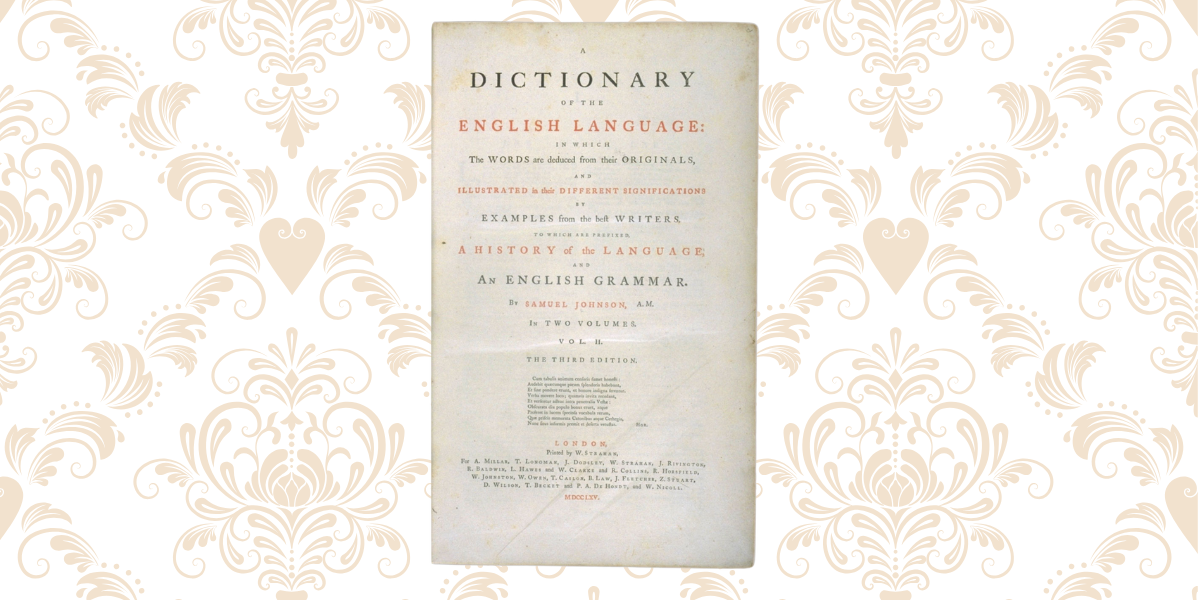
It’s Freewrite’s favorite time of year. When dictionaries around the world examine language use of the previous year and select a “Word of the Year.”

Of course, there are many different dictionaries in use in the English language, and they all have different ideas about what word was the most influential or saw the most growth in the previous year. They individually review new slang and culturally relevant vocabulary, examine spikes or dips in usage, and pour over internet trend data.

Let’s see what some of the biggest dictionaries decided for 2025. And read to the end for a chance to submit your own Word of the Year — and win a Freewrite gift card.

[SUBMIT YOUR WORD OF THE YEAR]


Merriam-Webster: "slop"

Merriam-Webster chose "slop" as its Word of the Year for 2025 to describe "all that stuff dumped on our screens, captured in just four letters."

The dictionary lists "absurd videos, off-kilter advertising images, cheesy propaganda, fake news that looks pretty real, junky AI-written books, 'workslop' reports that waste coworkers’ time … and lots of talking cats" as examples of slop.

The original sense of the word "slop" from the 1700s was “soft mud” and eventually evolved to mean "food waste" and "rubbish." 2025 linked the term to AI, and the rest is history.

Honorable mentions: conclave, gerrymander, touch grass, performative, tariff, 67.

Dictionary.com: "67"

The team at Dictionary.com likes to pick a word that serves as “a linguistic time capsule, reflecting social trends and global events that defined the year.”

For 2025, they decided that “word” was actually a number. Or two numbers, to be exact.

If you’re an old, like me, and don’t know many school-age children, you may not have heard “67” in use. (Note that this is not “sixty-seven,” but “six, seven.”)

Dictionary.com claims the origin of “67” is a song called “Doot Doot (6 7)” by Skrilla, quickly made infamous by viral TikTok videos, most notably featuring a child who will for the rest of his life be known as the “6-7 Kid.” But according to my nine-year-old cousin, the origins of something so mystical can’t ever truly be known.

(My third grade expert also demonstrated the accompanying signature hand gesture, where you place both hands palms up and alternately move up and down.)

And if you happen to find yourself in a fourth-grade classroom, watch your mouth, because there’s a good chance this term has been banned for the teacher’s sanity.

Annoyed yet? Don’t be. As Dictionary.com points out, 6-7 is a rather delightful example at how fast language can develop as a new generation joins the conversation.

Dictionary.com honorable mentions: agentic, aura farming, broligarchy, clanker, Gen Z stare, kiss cam, overtourism, tariff, tradwife.

Oxford Dictionary: "rage bait"

With input from more than 30,000 users and expert analysis, Oxford Dictionary chose "rage bait" for their word of the year.

Specifically, the dictionary pointed to 2025’s news cycle, online manipulation tactics, and growing awareness of where we spend our time and attention online.

While closely paralleling its etymological cousin "clickbait," rage bait more specifically denotes content that evokes anger, discord, or polarization.

Oxford's experts report that use of the term has tripled in the last 12 months.

Oxford Dictionary's honorable mentions:aura farming, biohack.

Cambridge Dictionary: "parasocial"

The Cambridge Dictionary examined a sustained trend of increased searches to choose "parasocial" as its Word of the Year.

Believe it or not, this term was coined by sociologists in 1956, combining “social” with the Greek-derived prefix para-, which in this case means “similar to or parallel to, but separate from.”

But interest in and use of the term exploded this year, finally moving from a mainly academic context to the mainstream.

Cambridge Dictionary's honorable mentions: slop, delulu, skibidi, tradwife

Freewrite: TBD

This year, the Freewrite Fam is picking our own Word of the Year.

Click below to submit what you think the Word of 2025 should be, and we'll pick one submission to receive a Freewrite gift card.

[SUBMIT HERE] 

--

Sources

diciembre 18, 2025 5 lectura mínima

¿Qué pueden enseñar las cartas personales de Jane Austen a los escritores?

diciembre 10, 2025 6 lectura mínima

Singer-songwriter Abner James finds his creativity in the quiet freedom of analog tools. Learn how his creative process transcends different media.

Abner James went to school for film directing. But the success of the band he and his brother formed together, Eighty Ninety, knocked him onto a different trajectory.

The band has accrued more than 40 million streams since the release of their debut EP “Elizabeth," and their work was even co-signed by Taylor Swift when the singer added Eighty Ninety to her playlist "Songs Taylor Loves.”

Now, Abner is returning to long-form writing in addition to songwriting, and with a change in media comes an examination of the creative process. We sat down to chat about what's the same — and what's different. 

ANNIE COSBY: Tell us about your songwriting process.

ABNER JAMES: The way I tend to write my songs is hunched over a guitar and just seeing what comes. Sounds become words become shapes. It's a very physical process that is really about turning my brain off.

And one of the things that occurred to me when I was traveling, actually, was that I would love to be able to do that but from a writing perspective. What would happen if I sat down and approached writing in the same way that I approached music? In a more intuitive and free-form kind of way? What would that dig up?

AC: That's basically the ethos of Freewrite.

AJ: Yes. We had just put out a record, and I was thinking about how to get into writing for the next one. It occurred to me that regardless of how I started, I always finished on a screen. And I wondered: what's the acoustic guitar version of writing?

Where there's not blue light hitting me in the face. Even if I'm using my Notes app, it's the same thing. It really gets me into a different mindset.

 "I wondered: what's the acoustic guitar version of writing?"

I grew up playing piano. That was my first instrument. And I found an old typewriter at a thrift store, and I love it. It actually reminded me a lot of playing piano, the kind of physical, the feeling of it. And it was really fun, but pretty impractical, especially because I travel a fair amount.

And so I wondered, is there such a thing as a digital typewriter? And I googled it, and I found Freewrite.

AC: What about Freewrite helps you write?

AJ:I think, pragmatically, just the E Ink screen is a huge deal, because it doesn't exhaust me in the same way. And the idea of having a tool specifically set aside for the process is appealing in an aesthetic way but also a mental-emotional way. When it comes out, it's kind of like ... It's like having an office you work out of. It's just for that.

"The way I tend to write my songs is hunched over a guitar and just seeing what comes. Sounds become words become shapes. It's a very physical process that is really about turning my brain off."

And all of the pragmatic limitations — like you're not getting texts on it, and you're not doing all that stuff on the internet — that's really helpful, too. But just having the mindset....

When I pick up a guitar, or I sit down at the piano, it very much puts me into that space. Having a tool just for words does the same thing. I find that to be really cool and inspiring.

"When I pick up a guitar, or I sit down at the piano, it very much puts me into that space. Having a tool just for words does the same thing."

AC: So mentally it gets you ready for writing.

AJ: Yeah, and also, when you write a Microsoft Word, it looks so finished that it's hard to keep going. If every time I strummed a chord, I was hearing it back, mixed and mastered and produced...?

It's hard to stay in that space when I'm seeing it fully written out and formatted in, like, Times New Roman, looking all seriously back at me.

AC: I get that. I have terrible instincts to edit stuff over and over again and never finish a story.

AJ:  Also, the way you just open it and it's ready to go. So you don't have the stages of the computer turning on, that kind of puts this pressure, this tension on.

It's working at the edges in all these different ways that on their own could feel a little bit like it's not really necessary. All these amorphous things where you could look at it and be like, well, I don't really need any of those. But they add up to a critical mass that actually is significant.

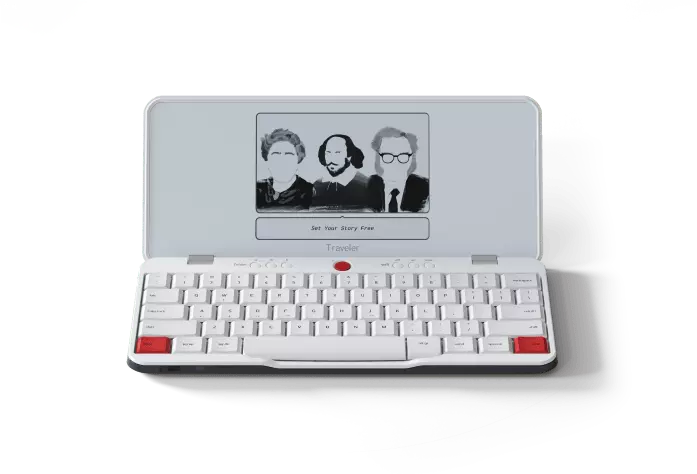
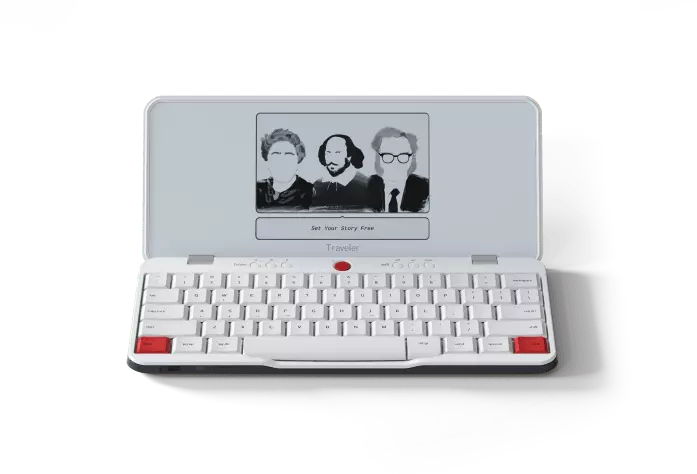
And sometimes, if I want to bring it on a plane, I've found it's replaced reading for me. Rather than pick up a book or bring a book on the plane, I bring Traveler and just kind of hang out in that space and see if anything comes up.

I've found that it's kind of like writing songs on a different instrument, you get different styles of music that you wouldn't have otherwise. I've found that writing from words towards music, I get different kinds of songs than I have in the past, which has been interesting.

In that way, like sitting at a piano, you just write differently than you do on a guitar, or even a bass, because of the things those instruments tend to encourage or that they can do.

It feels almost like a little synthesizer, a different kind of instrument that has unlocked a different kind of approach for me.

"I've found that it's kind of like writing songs on a different instrument, you get different styles of music that you wouldn't have otherwise... [Traveler] feels almost like a little synthesizer, a different kind of instrument that has unlocked a different kind of approach for me."

AC: As someone who doesn't know the first thing about writing music, that's fascinating. It's all magic to me.

AJ: Yeah.

AC: What else are you interested in writing?

AJ: I went to school for film directing. That was kind of what I thought I was going to do. And then my brother and I started the band and that kind of happened first and knocked me onto a different track for a little while after college.

Growing up, though, writing was my way into everything. In directing, I wanted to be in control of the thing that I wrote. And in music, it was the same — the songwriting really feels like it came from that same place. And then the idea of writing longer form, like fiction, almost feels just like the next step from song to EP to album to novel.

For whatever reason, that started feeling like a challenge that would be deeply related to the kinds of work that we do in the studio.

AC: Do you have any advice for aspiring songwriters?

AJ: This sounds like a cliche, but it's totally true: whatever success that I've had as a songwriter — judge that for yourself — but whatever success I have had, has been directly proportional to just writing the song that I wanted to hear.

What I mean by that is, even if you're being coldly, cynically, late-stage capitalist about it, it's by far the most success I've had. The good news is that you don't have to choose. And in fact, when you start making those little compromises, or even begin to inch in that direction, it just doesn't work. So you can forget about it.

Just make music you want to hear. And that will be the music that resonates with most people.

I think there's a temptation to have an imaginary focus group in your head of like 500 people. But the problem is all those people are fake. They're not real. None of those people are actually real people. You're a focus group of one, you're one real person. There are more real people in that focus group than in the imaginary one.

And I just don't think that we're that different, in the end. So that would be my advice.

AC: That seems like generally great creative advice. Because fiction writers talk about that too, right? Do you write to market or do you write the book you want to read. Same thing. And that imaginary focus group has been debilitating for me. I have to silence that focus group before I can write.

AJ: Absolutely.

"I think there's a temptation to have an imaginary focus group in your head of like 500 people. But the problem is all those people are fake... You're a focus group of one, you're one real person. There are more real people in that focus group than in the imaginary one."

--

Learn more about Abner James, his brother, and their band, Eighty Ninety, on Instagram.