overlaylink

Cómo crear criaturas fantásticas que parezcan reales

abril 29, 2024 | 6 lectura mínima
En el apasionante paisaje de la ficción fantástica moderna, el papel de las criaturas fantásticas es una piedra angular de la imaginación y la narración.

Desde los majestuosos dragones de Canción de Hielo y Fuego de George R. R. Martin hasta las décadas de admiración por los hobbits de J. R. R. Tolkien , estas criaturas son mucho más que simples adornos para los mundos que habitan. Funcionan como canales esenciales para explorar temas complejos, reflejar valores sociales y despertar la imaginación de los lectores.

El equipo de Freewrite está lleno de lectores (¡y escritores!) de fantasía, por lo que queríamos descubrir el truco para crear criaturas de fantasía dinámicas que dejen un impacto tanto en las narrativas que habitan como en las audiencias que encantan.

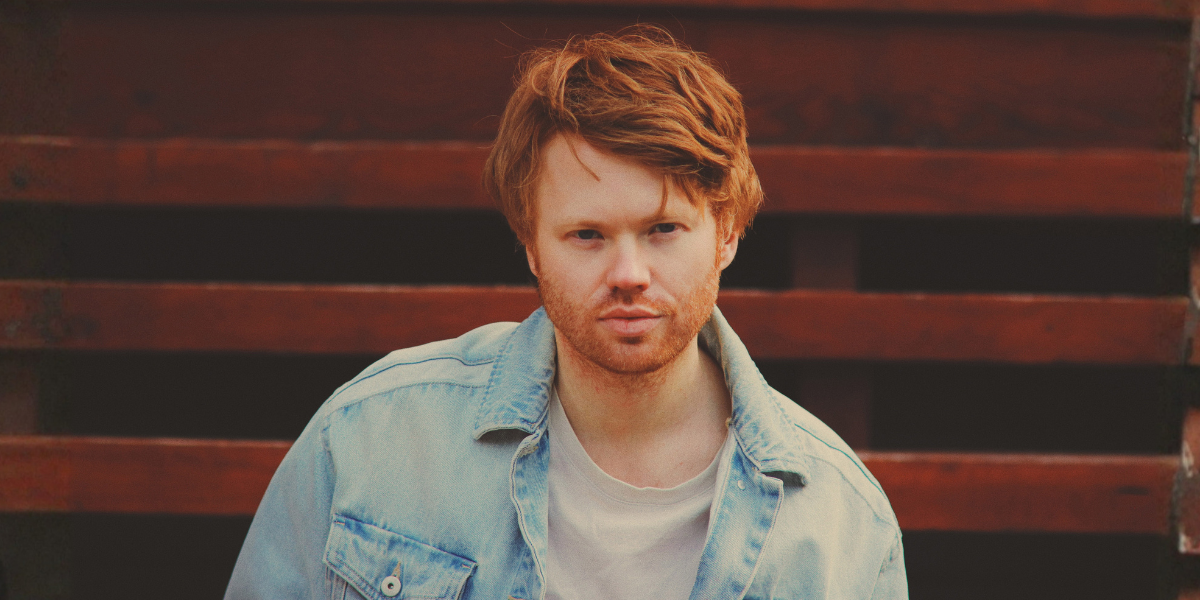
Para profundizar en el tema, hablamos con EK Wiggins, un autor de fantasía, creador de webtoon y escritor libre que escribe sobre dragones en la soleada California del Sur...

¿Por qué crees que la gente se siente atraída por la fantasía y, en particular, por las criaturas fantásticas?

Creo que es simple: la gente quiere escapar de la realidad y adentrarse en mundos e historias que dejen volar su imaginación. El hecho de que la fantasía (ya sea escrita, filmada o dibujada) sea una parte tan importante de la cultura actual significa que cualquiera puede encontrar algo que le atraiga. Todo el mundo puede encontrar algo que le transporte a mundos maravillosos y le distraiga de la vida por un momento.

Lo mismo ocurre con las criaturas fantásticas: las reglas son ilimitadas, se crean nuevos monstruos todo el tiempo y los viejos y familiares siguen siendo clásicos.

A la gente le encanta creer en criaturas fantásticas porque no son comunes: son únicas e inolvidables. Y la nueva fantasía mantiene el género fresco y floreciente.

Así me siento. Durante años, solo podía escribir no ficción para la escuela. ¿Para qué escribir no ficción cuando vivimos en la realidad?

¿Cuál es, en tu opinión, la criatura fantástica más influyente?

Dragones , sin lugar a dudas.

Son muy prominentes en la cultura fantástica de décadas pasadas, pero nunca resultan aburridos porque se recrean constantemente de forma original. Con producciones populares como La Casa del Dragón y El Señor de los Anillos: Los Anillos de Poder , por ejemplo, estos reptiles no desaparecerán pronto (¡si es que desaparecen alguna vez!).

Creo que me atraen principalmente por lo mucho que uno, como artista o escritor, puede reinventarlos sin dejar de ser familiares.

¡Y me encanta la cantidad de leyendas reales que describen y representan encuentros con estas bestias! Incluso hay pasajes de la Biblia que describen dragones o criaturas similares a ellos. Todo esto les aporta una historia y un realismo que otras criaturas no pueden igualar.


¿Cómo se ha representado al dragón a lo largo de la historia?

Los dragones eran comunes en los cuentos escritos y las leyendas verbales durante el Renacimiento. En Europa (y Occidente), se consideraban asesinos despiadados y guardianes feroces de sus posesiones, dominando con exuberancia a sus inocentes presas y tratando con dureza a los rebeldes.

Muchos de estos cuentos trataban de poderosos guerreros que se enfrentaban a estos monstruos brutos (por ejemplo, los manuscritos de Beowulf).

Por el contrario, en algunas culturas asiáticas, como China, los dragones eran vistos como símbolos de suerte y bendición. A menudo ejercían poderes que beneficiaban a la humanidad y, en ocasiones, se comunicaban con la gente. ¡Eran mucho más benévolos y amables que sus homólogos occidentales!

Los manuscritos de Beowulf y la Biblia describen y hablan directamente de dragones. El oponente escamoso de Beowulf y Satanás (representado en el Apocalipsis como un dragón rojo ardiente con siete cabezas y diez cuernos) son ejemplos históricos de dragones escritos. Existen muchos más, así como escritos sobre sierpes y otras criaturas similares a dragones.


Algunas criaturas fantásticas tienen raíces culturales. ¿Cómo se navega por ellas mientras se crea algo completamente nuevo?

Generalmente, si creo un personaje original con un trasfondo histórico o cultural, me pregunto inmediatamente si hay algo en él que contradiga las raíces de la criatura. Si es así, me pregunto si le he proporcionado o creado una historia de fondo sólida que pueda "anular" esa historia o si es lo suficientemente sólida como para ser una alternativa válida y sensata.

También depende de la cultura y de si quería mostrarlo. En mi opinión, es una especie de "área gris" que podría debatirse sin cesar...

No creo que sea el deber del autor rendir siempre homenaje a las raíces de un personaje, a menos que sea esencial para entender la historia, sea necesario para la trama o si el autor quiere honrar la cultura de la que proviene.

En muchas ocasiones, se han usado criaturas en la literatura sin reconocer sus orígenes, simplemente porque no hubo tiempo suficiente para incorporarlas o porque no eran relevantes para la historia en cuestión. Depende mucho de lo que escriba el escritor y de cómo se use el personaje.

¿Cómo crear criaturas que sean creíbles cuando son, por definición, completamente irreales?

Empiezo por decidir qué criatura es, de la forma más básica posible. ¿Será un sierpe? ¿Quizás un elfo? ¿Será un dragón? Determina cuál es tu base y construye a partir de ella.

A continuación, visualiza el aspecto de la criatura, la forma de su cuerpo, sus rasgos únicos y cómo se vería su rostro si la miraras fijamente a los ojos. Una vez visualizada, suelo dibujar un boceto para consolidar el diseño de la criatura.

Pero no te limites a escribir o dibujar tus criaturas fantásticas (¡o cualquier tipo de personaje!) — imagínalas.

Cualquiera puede imaginarse una criatura fantástica y escribir una descripción (como un troll de puente con sobrepeso o un gato atigrado parlante). Como escritores, nuestro trabajo no es simplemente escribir un estudio de personaje para el lector. El trabajo de un escritor es hacer que la criatura sea real.

Para lograrlo, es necesario comprender cómo siente, piensa e interactúa la criatura. Debe tener personalidad. Empiezo imaginando su comportamiento, actitud y rasgos de carácter.

Pregúntate cómo reaccionarían ante ti, tus emociones y tu personalidad, y cómo su personalidad complementaría o desentonaría con la tuya. ¡Imagina pasar un día conociéndolos! O imagina que los entrevistas.

En otras palabras: ¡no siempre se trata de qué es la criatura y cómo se ve, sino de quiénes son!

Supongo que el verdadero truco para crear criaturas impresionantes y aparentemente reales es bastante fácil: fingir que son reales.


¿En qué estás trabajando ahora mismo?

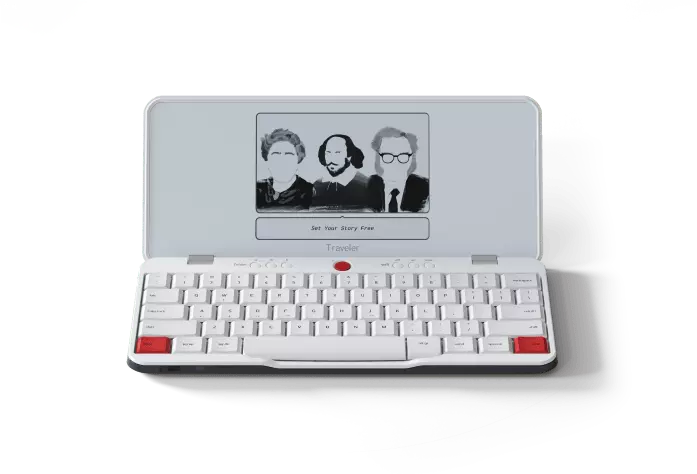
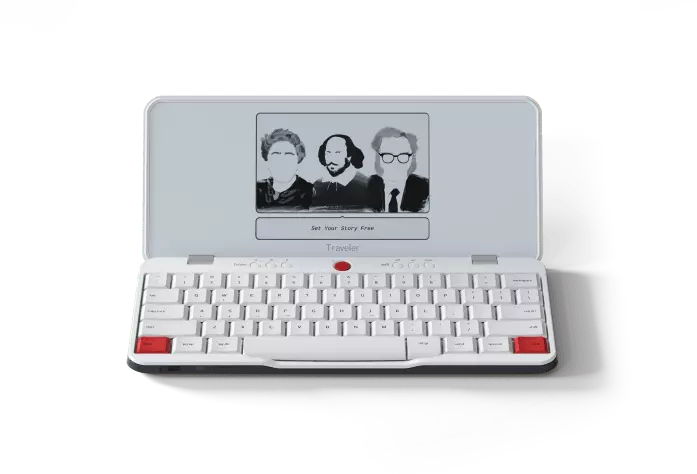
Actualmente estoy trabajando en varios proyectos, incluyendo mi primera novela de ciencia ficción distópica para jóvenes adultos , The Exodus Chronicles . ¡Esta es la primera novela que escribí enteramente en mi Traveler!

Traveler es mi favorito. Desde el coche hasta la bandeja plegable del avión, ¡Traveler me ha acompañado a todas partes! He escrito un manuscrito y medio (casi 140.000 palabras) con él.

Mi segundo proyecto es escribir y supervisar la producción de mi webtoon, "¡Neko-Neko es una muñeca gata!". Escribir un webtoon es muy interesante porque tienes que visualizar todos los personajes, emociones, escenas y diálogos en cada panel de forma concisa (casi como el director de una película).

Mi proyecto final es escribir el segundo libro de mi serie de fantasía juvenil Dragod Origins , que Lo publiqué en diciembre de 2023. La creación del mundo para el libro me llevó más de cinco años, y escribir el libro me llevó tres.

Escribir es mi pasatiempo favorito y aspiro a ser un novelista híbrido (tanto de manera tradicional como autopublicando mis libros) y un escritor de manga y webtoon serializados.

--


EK Wiggins es un autor de fantasía y webtoons que vive y trabaja en la soleada San Juan Capistrano, California. Su amor por las criaturas fantásticas, especialmente los dragones, lo inspiró a crear la historia y los dibujos originales de la serie Dragon Quest , que finalmente dieron origen al primer libro de Dragod Origins , publicado en 2023.

Cuando no está escribiendo, le encanta andar en bicicleta, escuchar música y tocar el piano, la guitarra acústica, la guitarra eléctrica, el banjo, el ukelele, la melódica y el acordeón concertina.

Descubre más sobre el universo fantástico de EK en su sitio web o sigue su sello independiente, Shadow Beast Publishing, en Instagram o Facebook . También puedes suscribirte a su boletín mensual por correo electrónico aquí .
noviembre 29, 2025 4 lectura mínima

The Great Freewrite Séance: A Ghost'ly Charity Auction Full Terms & Conditions

These Terms and Conditions (“Terms”) govern participation in The Great Freewrite Séance: A Ghost'ly Charity Auction (“Auction”), organized by Freewrite (“Organizer,” “we,” “us,” or “our”). By registering for, bidding in, or otherwise participating in the Auction, you (“Participant,” “Bidder,” or “Winner”) agree to be bound by these Terms.

1. Auction Overview

1.1. The Auction offers for sale a limited number of Freewrite Traveler Ghost Edition units (“Items” or “Ghost Traveler units”), each personally signed and drawn on by a featured author.

1.2. All proceeds, net of explicitly disclosed administrative costs, will be donated to the charity or charitable initiative (“Charity”) identified on each auction item’s page, as chosen by the respective author.

2. Eligibility

2.1. Participants must be at least 18 years old or the age of majority in their jurisdiction, whichever is higher.

2.2. Employees of Freewrite, the participating authors, or any affiliates directly involved in the Auction are not eligible to bid.

2.3. By participating, you represent that you are legally permitted to take part in online auctions and to pay for any bids you win.

3. Auction Registration

3.1. Participants must create an account on the auction platform or otherwise register using accurate, current, and complete information.

3.2. Freewrite reserves the right to verify identity and to disqualify any Participant who provides false or misleading information.

4. Bidding Rules

4.1. All bids are binding, final, and non-retractable.

4.2. Bidders are responsible for monitoring their bids; Freewrite is not liable for missed notifications or technical issues on the auction platform or the Participant’s device.

4.3. Freewrite reserves the right to:

  • set minimum bids or bid increments;
  • reject bids deemed in bad faith or intended to disrupt the Auction;
  • extend, pause, or cancel the Auction in case of technical difficulties, fraud, or events beyond reasonable control.

5. Winning Bids and Payment

5.1. The highest valid bid at the close of the Auction is the Winning Bid, and the corresponding Participant becomes the Winner.

5.2. Winners will receive payment instructions and must complete payment within 48 hours of the auction’s close unless otherwise stated.

5.3. Failure to complete payment on time may result in forfeiture, and Freewrite may offer the Item to the next highest bidder.

5.4. Accepted payment methods will be listed on the Auction platform. All payments must be made in the currency specified.

6. Item Description and Condition

6.1. Each Ghost Traveler unit is authentic, and the signatures, doodles, and messages are original works created by the participating author. These are authors, not artists. By bidding on the Item, you acknowledge that you are receiving a one-of-a-kind unit marked with unique art and messages and you agree to these terms and conditions.

6.2. Because Items are customized and signed by hand, variations, imperfections, or unique marks are to be expected. These are considered part of the Item’s character and not defects.

6.3. Items are provided “as-is” and “as-available.” Freewrite makes no warranties of merchantability or fitness for a particular purpose.

7. Shipping & Delivery

7.1. Shipping costs, import duties, and taxes may apply unless explicitly stated otherwise.

7.2. Freewrite will make reasonable efforts to ship Items within the estimated timeline but cannot guarantee delivery dates.

7.3. Title and risk of loss transfer to the Winner upon delivery to the carrier.

7.4. Freewrite is not responsible for delays, damage, or loss caused by the courier or customs agencies.

8. Charity Donation

8.1. Net proceeds from the Auction will be donated to the Charity designated on each Item page.

8.2. Donation amounts and recipients may be disclosed publicly unless prohibited by law.

8.3. Winners acknowledge that they are purchasing Items, not making a tax-deductible donation to Freewrite; therefore, Winners will not receive charitable tax receipts unless Freewrite explicitly states otherwise in compliance with applicable laws.

9. Intellectual Property

9.1. All trademarks, brand names, product names, and creative materials associated with Freewrite and the Ghost Traveler remain the exclusive property of Freewrite or their respective rights holders.

9.2. Participants may not reproduce, distribute, or publicly display the authors’ doodles without permission where such rights are applicable, except as allowed by law (e.g., resale of the physical Item).

10. Privacy

10.1. By participating, you consent to Freewrite’s collection, use, and storage of your personal data in accordance with our Privacy Policy.

10.2. Freewrite may publicly announce auction results, including Winner’s first name, last initial, city, state/country, and winning bid amount unless prohibited by law or unless you formally request anonymity when possible.

11. Prohibited Conduct

Participants may not:

  • engage in bid manipulation, fraud, or collusive bidding;
  • use automated systems (bots, scripts, scrapers) to place or monitor bids;
  • interfere with the Auction, platform, or other participants

Freewrite may ban or disqualify any Participant violating these rules.

12. Limitation of Liability

To the fullest extent permitted by law:

12.1. Freewrite is not liable for indirect, incidental, special, or consequential damages arising from the Auction or purchase of Items.

12.2. Freewrite’s total liability in connection with these Terms shall not exceed the amount of the Winning Bid actually paid by the Participant.

12.3. Freewrite is not responsible for technical malfunctions, internet outages, system failures, or other issues beyond its control.

13. Cancellation and Force Majeure

Freewrite may cancel, postpone, or modify the Auction due to unforeseen circumstances, including but not limited to natural disasters, system failures, strikes, or events affecting participating authors or the Charity.

14. Governing Law & Dispute Resolution

14.1. These Terms are governed by the laws of Michigan, without regard to conflict-of-law rules.

14.2. Any disputes arising under these Terms will be resolved through binding arbitration or the courts of the specified jurisdiction, as applicable.

14.3. Participants waive any right to participate in class-action lawsuits relating to the Auction.

15. Amendments

Freewrite may update these Terms at any time. Continued participation in the Auction after updates constitutes acceptance of the revised Terms.

16. Contact Information

For questions or concerns regarding the Auction or these Terms, contact: hello@getfreewrite.com.

noviembre 25, 2025 1 lectura mínima

This is a great gratitude writing exercise to be done alone or in a group, with people of any age.

How to Play

    1. Designate someone to read out each prompt below. (Feel free to add your own prompts.)
    2. After each prompt is read, set a timer for one minute. (With younger kids, this can be shortened. For older folks who want to freewrite meaningfully, more time can be added.)
    3. Each person freewrites by finishing the sentence and elaborating until the timer goes off. (For little kids, this can be done verbally with an adult recording their answers. Hilarity will ensue.)
    4. Remeber that freewriting — allowing yourself to write with abandon — enables you to let go, tapping into your subconscious to explore your thoughts more deeply.
    5. When everyone is done with all the prompts, take turns going through some your answers. Some people may be eager to share. Others may not want to. Respect their decision.

The Prompts

  • I'm grateful for... [After you've finished this prompt, repeat it five times. Challenge yourself and others not to repeat a singe word with each new answer.]
  • The silliest thing I'm grateful for is...
  • The littlest thing I'm grateful for is...
  • The biggest thing I'm grateful for is...
  • The grossest thing I'm grateful for is...
  • One thing I love about myself is...
  • My favorite thing that happened this year was...
  • My hope for next year is...

This writing exercise has resulted in some sweet answers — and many hilarious ones, too. If you try it out, do let us know.

Write on.

noviembre 21, 2025 4 lectura mínima

For the release of Sailfish, our new firmware update for Smart Typewriter Gen3 and Traveler, we created a brand-new boot-up animation to surprise and delight our writers.

We worked with talented Danish animator Mathias Lynge to bring our experience of the writer's journey to life.

We had a blast visualizing the writer's journey in this new way. Our engineers also had a blast (or something less than a blast) figuring out how to adjust this fun, playful animation to E Ink's very tricky specifications. Hello, refresh rate woes! But we think the result is pretty fun.

"The little animation made my day when I noticed. I love a good flourish."

- Freewrite user

The process of creating this animation was long and full of Zoom calls where we deeply discussed the writing process. We were struck through those conversations by how much overlap there is in creative processes of all disciplines.

So we sat down to chat with Mathias about his creative process and what it's like being a full-time animator.

ANNIE COSBY: Let's start with the basics. What kind of art do you make?

MATHIAS LYNGE: I'm a 2D animator and motion designer working freelance with a wide range of clients. The style varies depending on the project, but it’s usually either a hand-drawn look animated frame-by-frame on a drawing tablet, or a more digital, vectorized look made in After Effects.

While much of what I do is commercial work, I try to keep up with my own passion projects as well. That could be a 10-second Instagram loop of a nature scene, or an interesting character design I’ve sketched down with a pencil. It’s there that I get to sharpen my skills and try out new techniques, which often find their way into later client projects.

AC: You often share educational content on social media for other artists. Are you formally trained, or did you teach yourself?

ML: I’m mostly self-taught. I’ve been drawing for as long as I can remember, but it wasn’t until I went to university that I realized drawing could become a career.

When I first heard terms like “motion design” and “The 12 Principles of Animation” I was on a student exchange program at UCSB in California, where I had chosen a class called "Introduction to Animation." It was a big eye-opener for me, and from that point I was hooked.

But it’s mainly been online YouTube tutorials and my existing drawing experience that have taught me what I know.

Now, I have a big presence on social media, where I share my art as well as educational content centered around animation in Adobe After Effects, so I guess you could say that I'm also an animation influencer!

I’ve been drawing for as long as I can remember, but it wasn’t until I went to university that I realized drawing could become a career.

AC: That's actually how I first found your work. Do you have any specific artists who inspire you?

ML:In the world of 2D animation, I have a list of personal heroes that inspire me with their unique style: Reece Parker, Ariel Costa a.k.a. BlinkMyBrain, and Tony Babel, to name a few.

I also find a lot of inspiration from illustrators and painters I discover online, on platforms such as Pinterest. Last year I made a sparkling water animation that was heavily inspired by Cornwall-based artist Gordon Hunt. He makes these beautiful nature-inspired pointillist paintings that capture how light hits the ocean using colorful dots of paint. I tried to recreate that effect using After Effects to bring it to life, and it led me to a whole new way of animating within the program.

AC: Where else do you draw inspiration to create your work?

ML: I’m heavily inspired by the nature and cityscapes around me in Copenhagen, and I find that taking long walks through parks or down the streets of my neighborhood really sparks my imagination.

I’ll often carry around a sketchbook to quickly scribble down an idea or a loose sketch of something I find interesting, such as seeing how the light from a lamppost hits the surrounding leaves, or how the wind moves the tree in a certain way.

Then I’ll think to myself, “I wonder if I can recreate that motion using a specific technique in After Effects?”

I’m heavily inspired by the nature and cityscapes around me in Copenhagen...

AC: What does your daily routine look like as a full-time artist?

ML: It varies a lot, but I’m usually either working hard on a client project or tinkering away with a new animation tutorial for my social media channels.

I love being able to switch between the two, and when I’m going through a client dry spell, I find that staying creative and posting animation-related content helps keep me inspired while also putting things out into the world that may lead to my next client down the road.

AC: What's your #1 piece of advice for animators new to the industry?

ML: Keep experimenting and trying out new techniques. There’s no such thing as running out of creativity, and even though many of the things you try don’t necessarily go anywhere, it’s all experience that adds up and expands your toolbox. It’s a muscle that needs to be worked out regularly.

Plus, you’ll have more awesome animation to choose from when you’re putting together your next showreel or portfolio!

There’s no such thing as running out of creativity...

AC: What's one fun fact about you completely unrelated to animation?

ML:I’m a big sucker for history podcasts, especially if they are about ancient civilizations, such as The History of Rome by Mike Duncan.

I find it fascinating to hear how mankind was able to build such great empires without ever knowing what electricity, cars, or the internet are.

--

Follow along on Mathias's creative journey and find his free educational content on Instagram.

To learn more about working together, find him on LinkedIn or visit his website at www.mathiaslynge.com.

Learn more about Sailfish here.