overlaylink

The Freewrite 500 First Place: High Holy Days

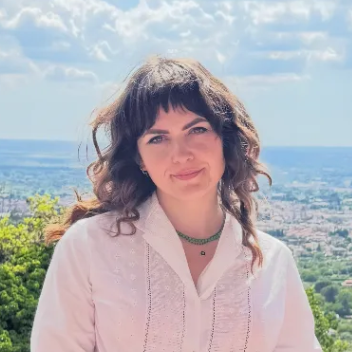
Brie Ripley Sparks
octobre 12, 2025 | 2 lire la lecture

The winning short story in the inaugural Freewrite 500 flash fiction competition is "High Holy Days" by Brie Ripley Sparks.

Read the story here and then check out our interview with Brie.

The halal butcher closes at nine, but the streetlights out back are always lit. A row of dumpsters lines a wall, fragrant with bones and gristle, and that’s where I leaned my bike.

He arrived late, as usual. Always in that long black coat buttoned tight even in summers. He waved with two fingers in a gesture that felt casual but practiced.

“Evening,” I said.

“Good evening to you, Bud,” he echoed. He had a way of saying it that made it sound like both greeting and judgment.

We traded neatly folded cash for a baggie full of greens. Swift and silent.

I sparked a joint, passed it over, and took my usual seat on a milk crate left next to the recycling bins. It was cracked but still pretty sturdy. He gently took the joint, sat on his usual milk crate, inhaled, coughed, then laughed.

“You hear about the new pope?”

I shrugged. “I don’t really read the news.”

“Chicago guy,” he said. “South Side. That’s where I’m from, actually.”

“Small world. You know him?” He shook his head. “Not personally. Still feels strange, though. Like finding out somebody from the neighborhood made it big.”

He leaned back against the brick wall, eyes half closed. For a second I imagined him in some other setting: marble floor, candles instead of fluorescents. He spoke with that odd mix of certainty and hesitation, like every sentence had to be measured for both truth and consequence.

“Chicago’s full of characters, huh?” I asked.

“Saints and sinners both.” He chuckled at himself, then took another drag.

The lot hummed with the buzz of the light, the faint metallic clatter from inside the butcher shop as someone hosed down a counter. Out here, it was just us. Two men with nothing in common, except the ritual of smoke and talk.

“Think he’ll be able to do anything about…all of this?” I asked, gesturing at the world around us. There were billboards for crypto scams and violence-baiting cable TV shows, but also woods and grassy fields nearby.

He tilted his head. “Maybe. But the world’s never short on that. Sometimes the job isn’t to fix it. It’s just to keep showing up.”

He said it like someone who’d spent a lifetime showing up in rooms no one else wanted to enter.

I took the joint back, pulled hard to put out the cherry, and made sure it was cold before I pressed it into his hand. “Keep that one. You’ll need it for your late night. It feels like you’ll have one of those again.”

He tucked it away without protest. That was our rhythm: I slipped him something extra, he slipped me some line that sounded half like a proverb, half like advice.

I swung my leg over the bike and pushed off.

“See you next week,” I heard from behind me.

I stuck a hand up in the air and waved at my favorite regular.

“Later, Father,” I yelled back with a smirk.
janvier 28, 2026 1 lire la lecture

Write every day with the Freewrite team in February.

janvier 09, 2026 2 lire la lecture

A new year means a whole new crop of work is entering the public domain. And that means endless opportunities for retellings, spoofs, adaptations, and fan fiction.

décembre 30, 2025 3 lire la lecture

It’s Freewrite’s favorite time of year. When dictionaries around the world examine language use of the previous year and select a “Word of the Year.”

Of course, there are many different dictionaries in use in the English language, and they all have different ideas about what word was the most influential or saw the most growth in the previous year. They individually review new slang and culturally relevant vocabulary, examine spikes or dips in usage, and pour over internet trend data.

Let’s see what some of the biggest dictionaries decided for 2025. And read to the end for a chance to submit your own Word of the Year — and win a Freewrite gift card.

[SUBMIT YOUR WORD OF THE YEAR]


Merriam-Webster: "slop"

Merriam-Webster chose "slop" as its Word of the Year for 2025 to describe "all that stuff dumped on our screens, captured in just four letters."

The dictionary lists "absurd videos, off-kilter advertising images, cheesy propaganda, fake news that looks pretty real, junky AI-written books, 'workslop' reports that waste coworkers’ time … and lots of talking cats" as examples of slop.

The original sense of the word "slop" from the 1700s was “soft mud” and eventually evolved to mean "food waste" and "rubbish." 2025 linked the term to AI, and the rest is history.

Honorable mentions: conclave, gerrymander, touch grass, performative, tariff, 67.

Dictionary.com: "67"

The team at Dictionary.com likes to pick a word that serves as “a linguistic time capsule, reflecting social trends and global events that defined the year.”

For 2025, they decided that “word” was actually a number. Or two numbers, to be exact.

If you’re an old, like me, and don’t know many school-age children, you may not have heard “67” in use. (Note that this is not “sixty-seven,” but “six, seven.”)

Dictionary.com claims the origin of “67” is a song called “Doot Doot (6 7)” by Skrilla, quickly made infamous by viral TikTok videos, most notably featuring a child who will for the rest of his life be known as the “6-7 Kid.” But according to my nine-year-old cousin, the origins of something so mystical can’t ever truly be known.

(My third grade expert also demonstrated the accompanying signature hand gesture, where you place both hands palms up and alternately move up and down.)

And if you happen to find yourself in a fourth-grade classroom, watch your mouth, because there’s a good chance this term has been banned for the teacher’s sanity.

Annoyed yet? Don’t be. As Dictionary.com points out, 6-7 is a rather delightful example at how fast language can develop as a new generation joins the conversation.

Dictionary.com honorable mentions: agentic, aura farming, broligarchy, clanker, Gen Z stare, kiss cam, overtourism, tariff, tradwife.

Oxford Dictionary: "rage bait"

With input from more than 30,000 users and expert analysis, Oxford Dictionary chose "rage bait" for their word of the year.

Specifically, the dictionary pointed to 2025’s news cycle, online manipulation tactics, and growing awareness of where we spend our time and attention online.

While closely paralleling its etymological cousin "clickbait," rage bait more specifically denotes content that evokes anger, discord, or polarization.

Oxford's experts report that use of the term has tripled in the last 12 months.

Oxford Dictionary's honorable mentions:aura farming, biohack.

Cambridge Dictionary: "parasocial"

The Cambridge Dictionary examined a sustained trend of increased searches to choose "parasocial" as its Word of the Year.

Believe it or not, this term was coined by sociologists in 1956, combining “social” with the Greek-derived prefix para-, which in this case means “similar to or parallel to, but separate from.”

But interest in and use of the term exploded this year, finally moving from a mainly academic context to the mainstream.

Cambridge Dictionary's honorable mentions: slop, delulu, skibidi, tradwife

Freewrite: TBD

This year, the Freewrite Fam is picking our own Word of the Year.

Click below to submit what you think the Word of 2025 should be, and we'll pick one submission to receive a Freewrite gift card.

[SUBMIT HERE] 

--

Sources