overlaylink

10 stratégies de soumission d'écrits pour vous faire publier

novembre 16, 2017 | 6 lire la lecture


L'article invité d'aujourd'hui est rédigé par l'éditrice et auteure Susan DeFreitas ( @manzanitafire ), dont le premier roman, Hot Season , a remporté le Gold IPPY Award 2017 de la meilleure fiction de Mountain-West.


Certains des écrivains les plus brillants ne parviennent pas à être publiés, non pas parce que leur travail n'est pas prêt à être publié, mais parce qu'ils ne parviennent pas à soumettre leur travail.

Peut-être êtes-vous l'un d'eux. Ou peut-être faites-vous partie de ceux qui soumettent une nouvelle , un essai ou une requête de temps en temps, en espérant le meilleur (mais, le plus souvent, sont rejetés).

Ou peut-être avez-vous développé une approche plus systématique des soumissions, mais n'avez pas encore réussi à obtenir le contrat de signature ou de publication que vous visez.

Il se peut que votre travail ne soit pas encore prêt à être publié ; d'un autre côté, il se peut que votre stratégie de soumission actuelle ne fonctionne pas.

Au cours de mes 20 années et plus en tant qu'écrivain, et près de 10 maintenant en tant qu'éditeur, j'ai appris quelques choses sur le processus de soumission, et quelques choses sur la publication aussi - et j'espère que ce que j'ai appris vous aidera à développer une stratégie de soumission plus efficace et plus efficiente.

1. Doublez

    L’édition est, au fond, une question de chiffres ; la plupart des revues et magazines littéraires reçoivent un millier de soumissions ou plus par an, avec des taux d’acceptation oscillant entre 0,5 et 2,5 pour cent.

    Ces chiffres devraient montrer clairement que pour obtenir des résultats, aussi brillant soit-il, votre travail doit être examiné dans de nombreux lieux différents. (La plupart des revues littéraires autorisent les soumissions simultanées, ce qui facilite la tâche ; la plupart des magazines de genre ne le font pas.)

    Bien sûr, il n'y a qu'un nombre limité d'heures dans la journée, la semaine, le mois et l'année, et si vous êtes déjà surchargé par d'autres obligations, la responsabilité de soumettre votre travail peut sembler écrasante , voire paralysante.

    Mais il existe une astuce simple pour éviter ce genre de paralysie : quel que soit le nombre de soumissions que vous recevez simultanément, doublez-le. Autrement dit, si vous n'avez rien en cours d'examen, soumettez une seule œuvre ; si un article est en attente de cinq publications, soumettez-le à cinq autres.

    2. Suivi

      Les nouveaux auteurs ont tendance à mal accepter les refus ; les auteurs plus expérimentés les remarquent à peine. Mais si vous ne prenez pas le temps de lire attentivement vos refus, vous risquez de passer à côté du fait qu'ils ont été rejetés avec regret.

      Il s'agit d'un de ces refus « gentils » ; il peut mentionner que, bien que les éditeurs aient apprécié l'article, ils ont finalement décidé qu'il ne convenait pas à leur publication. Ce type de refus s'accompagne souvent d'une invitation à soumettre d'autres travaux.

      Ce genre de refus peut être blessant, parfois plus qu'une lettre type (c'est presque pareil !). Mais il est important de comprendre ce que signifie réellement une belle lettre de refus.

      Kate Winterheimer, rédactrice en chef fondatrice de The Masters Review , souligne avoir publié de nombreux auteurs qui avaient été refusés à maintes reprises. « Je ne saurais trop insister sur le fait qu'il est absolument essentiel de continuer à soumettre des articles à la même revue littéraire », déclare-t-elle. « C'est terrible de penser qu'ils pourraient ne plus nous soumettre d'articles alors que leur travail est si proche et si pertinent, mais qu'il a été battu par d'autres articles. Nous avons publié plusieurs auteurs qui avaient initialement essuyé des refus de notre part. »

      Si vous aimez une publication et que les éditeurs vous aiment, continuez à leur envoyer votre travail.

      3. Réviser périodiquement

        Si vous preniez le temps de corriger votre travail à chaque fois que vous l'envoyez, vous ne l'enverriez jamais. (Les écrivains sont des perfectionnistes notoires.) Mais si vous avez essuyé cinq ou dix refus sur un texte, il est peut-être temps de le revoir avec un regard neuf et de voir s'il mériterait d'être révisé.

        Cette révision peut être structurelle – par exemple, une nouvelle fin – ou esthétique (presque n'importe quelle œuvre peut bénéficier d'une petite retouche). Quoi qu'il en soit, revoir l'œuvre peut être la clé pour être acceptée lors de votre prochaine série de soumissions.

        4. Envoyez un travail soigné

          Nous connaissons tous l’attrait brillant d’une œuvre fraîchement terminée – qui semble dépourvue de nombreux défauts de nos œuvres antérieures, moins sophistiquées – et dans le premier élan d’enthousiasme, il peut être tentant de l’envoyer pour examen.

          Cette stratégie est pertinente pour les essais et articles de non-fiction d'actualité, surtout s'ils s'inscrivent dans l'actualité. Mais pour la fiction et la poésie, ce premier enthousiasme cache souvent des défauts fondamentaux que vous auriez pu déceler lors de la révision.

          En cas de doute, soumettez votre travail le plus abouti, qui, en général, a tendance à être plus ancien.

          5. Soyez toujours en mouvement.

            De nombreux auteurs multiplient les soumissions de manière irrégulière, disons une fois par an. Les refus s'accumulent, et cet auteur les laisse s'accumuler jusqu'à ce que son article ne soit plus en circulation.

            Si c'est tout ce que vous pouvez faire, tant mieux. Mais si vous souhaitez vraiment être publié, il est judicieux d'observer ce que The Review Review appelle « l'ABC de la publication de magazines littéraires : toujours diffuser ».

            Une façon d'atteindre cet objectif est de soumettre une œuvre à la fois : pour chaque refus, une œuvre est envoyée. (Envie d'aller encore plus loin ? Pour chaque refus, soumettez à cinq publications supplémentaires.)

            6. Faites vos recherches

              C'est formidable d'avoir de grandes ambitions pour son travail. Mais si vous soumettez des articles depuis un certain temps et que vous ne les soumettez qu'aux publications les plus prestigieuses, il est peut-être temps de revoir votre stratégie de publication.

              Tout le monde souhaite être publié par The New Yorker (ou Asimov , selon le cas). Mais cela signifie aussi que tout le monde soumet des articles à ces publications. D'un point de vue purement statistique, vous vous devez de consulter les publications dont tout le monde ne connaît pas l'existence et de découvrir leur travail.

              Il existe de nombreuses publications de haute qualité, mais moins connues, et beaucoup d’entre elles paient même un tarif professionnel.

              7. Recherchez les limites

                Tout facteur qui limite le nombre de soumissions dans une pile de courriers électroniques donnée est votre ami.

                Ce facteur limitant pourrait être le fait que la revue n'est ouverte aux soumissions que pendant une semaine, deux fois par an. Ou que le concours est réservé aux femmes de moins de 35 ans, aux poètes du nord de l'État de New York – ou, mieux encore, aux poètes de moins de 35 ans du nord de l'État de New York !

                Même une catégorie aussi large que le genre a le potentiel de réduire de moitié votre concurrence. Par conséquent, lorsque vous examinez vos opportunités de soumission, recherchez les limites.

                8. Gardez une trace

                  Tout cela vous semble-t-il beaucoup à gérer ? C'est le cas.

                  Ajoutez le nombre de fois que vous avez soumis un article, son nombre de mots, quelques mots clés qui pourraient vous aider à cibler les soumissions, et vous obtenez tout un tas d'informations entre vos mains, c'est pourquoi je vous recommande d'utiliser une feuille de calcul pour suivre vos soumissions.

                  9. Soumettez tôt

                    Nous sommes tous des gens occupés, c'est pourquoi beaucoup d'entre nous attendent la date limite du concours ou la fin de la période de soumission pour soumettre leur candidature.

                    Mais les éditeurs et les lecteurs en général sont aussi des gens occupés, c'est pourquoi ils n'attendent généralement pas la fermeture du concours ou de la période de soumission pour commencer à lire, et la façon dont ils lisent au début de leur voyage à travers la boue n'est pas la façon dont ils lisent à la fin.

                    Si vous souhaitez mettre toutes les chances de votre côté pour un concours ou une publication donnée, envoyez votre travail dès l’ouverture des soumissions.

                    10. Soumettez souvent

                      Enfin, n'oubliez pas que la soumission est une activité essentielle pour tout écrivain qui aspire à devenir auteur. Il est important de se tenir informé des nouvelles opportunités de publication et de soumettre ses travaux suffisamment fréquemment pour en profiter dès qu'elles se présentent.

                      --

                      À vous de jouer. Quelles stratégies de soumission vous ont été utiles ? Dites-le-moi dans les commentaires ci-dessous.


                      Auteur Susan DeFreitas

                      Auteure, éditrice et éducatrice, Susan DeFreitas a publié (ou publiera prochainement) des œuvres dans The Writer's Chronicle, The Utne Reader, Story, Southwestern American Literature et Weber—The Contemporary West , ainsi que dans plus de vingt autres revues et anthologies. Elle est l'auteure du roman Hot Season (Harvard Square Editions), qui a remporté le Gold IPPY Award 2017 de la meilleure fiction de l'Ouest américain. Titulaire d'un master en beaux-arts de l'Université Pacific, elle vit à Portland, dans l'Oregon, où elle est éditrice chez Indigo Editing & Publications.
                      novembre 29, 2025 4 lire la lecture

                      The Great Freewrite Séance: A Ghost'ly Charity Auction Full Terms & Conditions

                      These Terms and Conditions (“Terms”) govern participation in The Great Freewrite Séance: A Ghost'ly Charity Auction (“Auction”), organized by Freewrite (“Organizer,” “we,” “us,” or “our”). By registering for, bidding in, or otherwise participating in the Auction, you (“Participant,” “Bidder,” or “Winner”) agree to be bound by these Terms.

                      1. Auction Overview

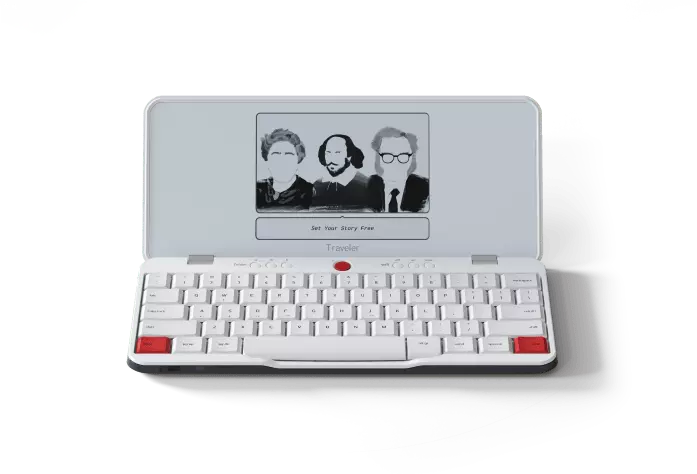
                      1.1. The Auction offers for sale a limited number of Freewrite Traveler Ghost Edition units (“Items” or “Ghost Traveler units”), each personally signed and drawn on by a featured author.

                      1.2. All proceeds, net of explicitly disclosed administrative costs, will be donated to the charity or charitable initiative (“Charity”) identified on each auction item’s page, as chosen by the respective author.

                      2. Eligibility

                      2.1. Participants must be at least 18 years old or the age of majority in their jurisdiction, whichever is higher.

                      2.2. Employees of Freewrite, the participating authors, or any affiliates directly involved in the Auction are not eligible to bid.

                      2.3. By participating, you represent that you are legally permitted to take part in online auctions and to pay for any bids you win.

                      3. Auction Registration

                      3.1. Participants must create an account on the auction platform or otherwise register using accurate, current, and complete information.

                      3.2. Freewrite reserves the right to verify identity and to disqualify any Participant who provides false or misleading information.

                      4. Bidding Rules

                      4.1. All bids are binding, final, and non-retractable.

                      4.2. Bidders are responsible for monitoring their bids; Freewrite is not liable for missed notifications or technical issues on the auction platform or the Participant’s device.

                      4.3. Freewrite reserves the right to:

                      • set minimum bids or bid increments;
                      • reject bids deemed in bad faith or intended to disrupt the Auction;
                      • extend, pause, or cancel the Auction in case of technical difficulties, fraud, or events beyond reasonable control.

                      5. Winning Bids and Payment

                      5.1. The highest valid bid at the close of the Auction is the Winning Bid, and the corresponding Participant becomes the Winner.

                      5.2. Winners will receive payment instructions and must complete payment within 48 hours of the auction’s close unless otherwise stated.

                      5.3. Failure to complete payment on time may result in forfeiture, and Freewrite may offer the Item to the next highest bidder.

                      5.4. Accepted payment methods will be listed on the Auction platform. All payments must be made in the currency specified.

                      6. Item Description and Condition

                      6.1. Each Ghost Traveler unit is authentic, and the signatures, doodles, and messages are original works created by the participating author. These are authors, not artists. By bidding on the Item, you acknowledge that you are receiving a one-of-a-kind unit marked with unique art and messages and you agree to these terms and conditions.

                      6.2. Because Items are customized and signed by hand, variations, imperfections, or unique marks are to be expected. These are considered part of the Item’s character and not defects.

                      6.3. Items are provided “as-is” and “as-available.” Freewrite makes no warranties of merchantability or fitness for a particular purpose.

                      7. Shipping & Delivery

                      7.1. Shipping costs, import duties, and taxes may apply unless explicitly stated otherwise.

                      7.2. Freewrite will make reasonable efforts to ship Items within the estimated timeline but cannot guarantee delivery dates.

                      7.3. Title and risk of loss transfer to the Winner upon delivery to the carrier.

                      7.4. Freewrite is not responsible for delays, damage, or loss caused by the courier or customs agencies.

                      8. Charity Donation

                      8.1. Net proceeds from the Auction will be donated to the Charity designated on each Item page.

                      8.2. Donation amounts and recipients may be disclosed publicly unless prohibited by law.

                      8.3. Winners acknowledge that they are purchasing Items, not making a tax-deductible donation to Freewrite; therefore, Winners will not receive charitable tax receipts unless Freewrite explicitly states otherwise in compliance with applicable laws.

                      9. Intellectual Property

                      9.1. All trademarks, brand names, product names, and creative materials associated with Freewrite and the Ghost Traveler remain the exclusive property of Freewrite or their respective rights holders.

                      9.2. Participants may not reproduce, distribute, or publicly display the authors’ doodles without permission where such rights are applicable, except as allowed by law (e.g., resale of the physical Item).

                      10. Privacy

                      10.1. By participating, you consent to Freewrite’s collection, use, and storage of your personal data in accordance with our Privacy Policy.

                      10.2. Freewrite may publicly announce auction results, including Winner’s first name, last initial, city, state/country, and winning bid amount unless prohibited by law or unless you formally request anonymity when possible.

                      11. Prohibited Conduct

                      Participants may not:

                      • engage in bid manipulation, fraud, or collusive bidding;
                      • use automated systems (bots, scripts, scrapers) to place or monitor bids;
                      • interfere with the Auction, platform, or other participants

                      Freewrite may ban or disqualify any Participant violating these rules.

                      12. Limitation of Liability

                      To the fullest extent permitted by law:

                      12.1. Freewrite is not liable for indirect, incidental, special, or consequential damages arising from the Auction or purchase of Items.

                      12.2. Freewrite’s total liability in connection with these Terms shall not exceed the amount of the Winning Bid actually paid by the Participant.

                      12.3. Freewrite is not responsible for technical malfunctions, internet outages, system failures, or other issues beyond its control.

                      13. Cancellation and Force Majeure

                      Freewrite may cancel, postpone, or modify the Auction due to unforeseen circumstances, including but not limited to natural disasters, system failures, strikes, or events affecting participating authors or the Charity.

                      14. Governing Law & Dispute Resolution

                      14.1. These Terms are governed by the laws of Michigan, without regard to conflict-of-law rules.

                      14.2. Any disputes arising under these Terms will be resolved through binding arbitration or the courts of the specified jurisdiction, as applicable.

                      14.3. Participants waive any right to participate in class-action lawsuits relating to the Auction.

                      15. Amendments

                      Freewrite may update these Terms at any time. Continued participation in the Auction after updates constitutes acceptance of the revised Terms.

                      16. Contact Information

                      For questions or concerns regarding the Auction or these Terms, contact: hello@getfreewrite.com.

                      novembre 25, 2025 1 lire la lecture

                      This is a great gratitude writing exercise to be done alone or in a group, with people of any age.

                      How to Play

                        1. Designate someone to read out each prompt below. (Feel free to add your own prompts.)
                        2. After each prompt is read, set a timer for one minute. (With younger kids, this can be shortened. For older folks who want to freewrite meaningfully, more time can be added.)
                        3. Each person freewrites by finishing the sentence and elaborating until the timer goes off. (For little kids, this can be done verbally with an adult recording their answers. Hilarity will ensue.)
                        4. Remeber that freewriting — allowing yourself to write with abandon — enables you to let go, tapping into your subconscious to explore your thoughts more deeply.
                        5. When everyone is done with all the prompts, take turns going through some your answers. Some people may be eager to share. Others may not want to. Respect their decision.

                      The Prompts

                      • I'm grateful for... [After you've finished this prompt, repeat it five times. Challenge yourself and others not to repeat a singe word with each new answer.]
                      • The silliest thing I'm grateful for is...
                      • The littlest thing I'm grateful for is...
                      • The biggest thing I'm grateful for is...
                      • The grossest thing I'm grateful for is...
                      • One thing I love about myself is...
                      • My favorite thing that happened this year was...
                      • My hope for next year is...

                      This writing exercise has resulted in some sweet answers — and many hilarious ones, too. If you try it out, do let us know.

                      Write on.

                      novembre 21, 2025 4 lire la lecture

                      For the release of Sailfish, our new firmware update for Smart Typewriter Gen3 and Traveler, we created a brand-new boot-up animation to surprise and delight our writers.

                      We worked with talented Danish animator Mathias Lynge to bring our experience of the writer's journey to life.

                      We had a blast visualizing the writer's journey in this new way. Our engineers also had a blast (or something less than a blast) figuring out how to adjust this fun, playful animation to E Ink's very tricky specifications. Hello, refresh rate woes! But we think the result is pretty fun.

                      "The little animation made my day when I noticed. I love a good flourish."

                      - Freewrite user

                      The process of creating this animation was long and full of Zoom calls where we deeply discussed the writing process. We were struck through those conversations by how much overlap there is in creative processes of all disciplines.

                      So we sat down to chat with Mathias about his creative process and what it's like being a full-time animator.

                      ANNIE COSBY: Let's start with the basics. What kind of art do you make?

                      MATHIAS LYNGE: I'm a 2D animator and motion designer working freelance with a wide range of clients. The style varies depending on the project, but it’s usually either a hand-drawn look animated frame-by-frame on a drawing tablet, or a more digital, vectorized look made in After Effects.

                      While much of what I do is commercial work, I try to keep up with my own passion projects as well. That could be a 10-second Instagram loop of a nature scene, or an interesting character design I’ve sketched down with a pencil. It’s there that I get to sharpen my skills and try out new techniques, which often find their way into later client projects.

                      AC: You often share educational content on social media for other artists. Are you formally trained, or did you teach yourself?

                      ML: I’m mostly self-taught. I’ve been drawing for as long as I can remember, but it wasn’t until I went to university that I realized drawing could become a career.

                      When I first heard terms like “motion design” and “The 12 Principles of Animation” I was on a student exchange program at UCSB in California, where I had chosen a class called "Introduction to Animation." It was a big eye-opener for me, and from that point I was hooked.

                      But it’s mainly been online YouTube tutorials and my existing drawing experience that have taught me what I know.

                      Now, I have a big presence on social media, where I share my art as well as educational content centered around animation in Adobe After Effects, so I guess you could say that I'm also an animation influencer!

                      I’ve been drawing for as long as I can remember, but it wasn’t until I went to university that I realized drawing could become a career.

                      AC: That's actually how I first found your work. Do you have any specific artists who inspire you?

                      ML:In the world of 2D animation, I have a list of personal heroes that inspire me with their unique style: Reece Parker, Ariel Costa a.k.a. BlinkMyBrain, and Tony Babel, to name a few.

                      I also find a lot of inspiration from illustrators and painters I discover online, on platforms such as Pinterest. Last year I made a sparkling water animation that was heavily inspired by Cornwall-based artist Gordon Hunt. He makes these beautiful nature-inspired pointillist paintings that capture how light hits the ocean using colorful dots of paint. I tried to recreate that effect using After Effects to bring it to life, and it led me to a whole new way of animating within the program.

                      AC: Where else do you draw inspiration to create your work?

                      ML: I’m heavily inspired by the nature and cityscapes around me in Copenhagen, and I find that taking long walks through parks or down the streets of my neighborhood really sparks my imagination.

                      I’ll often carry around a sketchbook to quickly scribble down an idea or a loose sketch of something I find interesting, such as seeing how the light from a lamppost hits the surrounding leaves, or how the wind moves the tree in a certain way.

                      Then I’ll think to myself, “I wonder if I can recreate that motion using a specific technique in After Effects?”

                      I’m heavily inspired by the nature and cityscapes around me in Copenhagen...

                      AC: What does your daily routine look like as a full-time artist?

                      ML: It varies a lot, but I’m usually either working hard on a client project or tinkering away with a new animation tutorial for my social media channels.

                      I love being able to switch between the two, and when I’m going through a client dry spell, I find that staying creative and posting animation-related content helps keep me inspired while also putting things out into the world that may lead to my next client down the road.

                      AC: What's your #1 piece of advice for animators new to the industry?

                      ML: Keep experimenting and trying out new techniques. There’s no such thing as running out of creativity, and even though many of the things you try don’t necessarily go anywhere, it’s all experience that adds up and expands your toolbox. It’s a muscle that needs to be worked out regularly.

                      Plus, you’ll have more awesome animation to choose from when you’re putting together your next showreel or portfolio!

                      There’s no such thing as running out of creativity...

                      AC: What's one fun fact about you completely unrelated to animation?

                      ML:I’m a big sucker for history podcasts, especially if they are about ancient civilizations, such as The History of Rome by Mike Duncan.

                      I find it fascinating to hear how mankind was able to build such great empires without ever knowing what electricity, cars, or the internet are.

                      --

                      Follow along on Mathias's creative journey and find his free educational content on Instagram.

                      To learn more about working together, find him on LinkedIn or visit his website at www.mathiaslynge.com.

                      Learn more about Sailfish here.