overlaylink

Cómo los grandes escritores desarrollan el tema de una historia

noviembre 07, 2017 | 9 lectura mínima


La publicación invitada de hoy es de Matt Grant. Matt es un escritor y editor residente en Brooklyn. Su trabajo ha aparecido en Literary Hub , Book Riot, HuffPost y BookBrowse. Encuentra a Matt en línea o síguelo en Twitter y Facebook .


Para muchos escritores, al escuchar la palabra "tema", se nos ponen los ojos vidriosos y se nos queda la boca abierta. La palabra puede evocar recuerdos de la clase de inglés del instituto, cuando los profesores nos obligaban a analizar sin cesar el tema, las imágenes y los motivos de una historia cuando lo único que queríamos era disfrutar de la escritura y los personajes. "¿Acaso una historia no puede ser simplemente una historia?", podríamos haber exclamado mientras hacíamos los deberes, agitando los puños al cielo.

Nos guste o no, la idea de los temas en las composiciones literarias es omnipresente y, sin duda, no desaparecerá. Pero, en lugar de ser algo de lo que haya que ser cauteloso, desarrollar un tema fuerte en su obra puede, de hecho, situarla por encima del resto. En su artículo de 2000 “Writers on Writing” en el New York Times , la novelista nominada al Premio Pulitzer Diane Johnson dice que el término “tema” “parece un término remanente de la clase de inglés de la escuela secundaria, útil para discutir novelas, pero no muy relevante para el proceso de escribirlas. Hay algo demasiado cercano a una 'tesis' al respecto; la idea de imponer una preconcepción es un anatema para una novelista a la que le gusta imaginar que está observando la vida y las costumbres sin ninguna intención didáctica y sin obligar a sus personajes a seguir un plan”.

Y, sin embargo, los mejores escritores adoptan temas en su obra y se entregan de lleno a la creación de uno. Esto se debe a que cada escritor escribe sobre algo , intencionalmente o no. Ese algo, la esencia de la historia, es su tema.

¿Cuál es el tema de una historia?

No dejes que el término, aparentemente académico, te desanime. El «tema» de una historia simplemente se refiere a su tema principal o idea central. Puede ser tan simple como palabras monosilábicas como «amor», «amistad», «familia», «venganza» o «soledad», o tan complejo como «el hombre contra la máquina», «la madurez», «la toxicidad de la nostalgia» o «el peligro de la ambición descontrolada».

“Supongo que el tema principal de una obra dada es la suma de todas sus ideas”, escribe Johnson. “Eso está implícito en esos concursos de chistes en internet sobre novelas fusionadas, donde la gente condensa la esencia de dos libros en uno, como 'El Faulkner maltés'. ('¿Es el pájaro negro un símbolo torturado de las luchas de Sam con la raza y la familia? ¿O es simplemente un cuervo que se burla de sus intentos de comprender? ¿O vale un millón?') O 'Trampa 22 entre el centeno'. ('Holden aprende que si estás loco, probablemente suspenderás la escuela preparatoria, pero si estás repitiendo la escuela preparatoria, probablemente no estés loco'. Pero cada novela es un 'panfleto esponjoso', como lo expresó E. M. Forster, un tejido de ideas tan denso y diverso que sería imposible desentrañarlas todas.

Por suerte, no necesitas desentrañar todas tus ideas, solo las principales. Te guste o no, tu historia tiene un tema, porque todas las historias, en última instancia, tienen una idea principal. Esto se debe a que, como escritores, nos impulsan las ideas. «Por supuesto, un escritor, como cualquiera, tiene un conjunto de ideas generales: la inhumanidad del hombre hacia el hombre, que la vida es una lucha o que la naturaleza es hermosa», escribe Johnson. «Algunas ideas serán ideas recibidas; otras pueden ser originales, idiosincrásicas o incluso sospechosas, como se dijo de Ayn Rand, por ejemplo, o de algunas de T. S. Eliot o Pound. En conjunto, se cree que los temas de un escritor lo caracterizan a pesar de sí mismo, excepto en el caso de genios versátiles como Shakespeare, invisibles en la densa maraña de sus contradicciones».

Depende de usted si invierte tiempo y energía en desarrollar y reflexionar sobre su tema, pero su historia solo mejorará si lo hace. Cuanto más sólido sea el tema de una historia y más en sintonía con él esté el escritor, mejor será la historia.

Identificando el tema

Antes de empezar a trabajar en tu novela, deberías identificar el tema de tu historia. Pregúntate de qué trata realmente tu historia, tras todas tus tramas y subtramas, tus personajes y tus descripciones. ¿Es una historia sobre cómo el amor lo puede todo? ¿Se trata de la compleja relación entre madres e hijas? El bien contra el mal es un tema común. ¿Tu historia trata sobre cómo el mal nunca triunfa y el bien siempre triunfa? ¿Se trata de cómo el mal triunfa a pesar del bien? Cualquiera de estos es un excelente ejemplo de tema. Por supuesto, tu historia puede tener más de un tema. Pero deberías al menos identificar un "tema principal", o idea principal, en la que se centrará tu historia.

También puede ser útil identificar la "columna vertebral" de la historia, o el hilo narrativo principal. La columna vertebral suele ser una sola frase que resume el tema principal de la historia. Esto te ayudará a retener la idea central a lo largo de la obra y evitará que te desvíes con subtramas, personajes secundarios y pasajes largos que no tienen relación. Por ejemplo, para un libro como El gran Gatsby, la columna vertebral podría ser "un rico magnate estadounidense en la era del jazz descubre que el dinero no puede comprar la felicidad" y el tema podría ser "El declive del sueño americano". Puede que estas frases suenen a simplificaciones excesivas. No te preocupes. El tema debe ser un resumen simple de la idea principal de tu historia.

Una vez que hayas identificado tu tema y tu columna vertebral, intenta encontrar todas las maneras en que tus personajes y tu trama se conectan con ese tema, tanto implícita como explícitamente. ¿Qué escenas se relacionan con tu tema a través de las interacciones de tu personaje principal? ¿Cómo lo refuerzan tu descripción y tus escenarios? Todo lo que no se conecte de alguna manera con tu tema merece la pena considerar si debería incluirse.

Tema de un cuento El Gran Gatsby

Cómo crear un tema

La pregunta entonces es, ¿cómo, exactamente, incorporas un tema a tu obra? Además de la caracterización , la principal forma de hacerlo es mediante motivos y símbolos . En conjunto, estos tres elementos son herramientas poderosas para asegurar que tu tema sea fácil de entender y esté presente constantemente en tu historia. Analicemos cada uno por separado.

Un motivo es una estructura, símbolo o recurso literario recurrente que ayuda a desarrollar e informar el tema. Cuanto más frecuente sea un motivo en una historia, más prominente será su papel en el tema. Por ejemplo, tomando El Gran Gatsby como ejemplo, algunos de sus motivos incluyen la geografía (la Costa Este representa la decadencia y el cinismo, mientras que el Oeste representa los valores "estadounidenses" más tradicionales y directos) y el clima (los patrones climáticos cambiantes reflejan el tono y el estado de ánimo cambiantes de los personajes y la historia).

Un símbolo , por otro lado, es una imagen, un personaje, un objeto o una figura que representa algo más allá de lo superficial. Al final del primer capítulo de Gatsby, el narrador, Nick Carraway, observa a Jay Gatsby salir de su mansión por la noche. Carraway considera llamarlo y presentarse, pero lo piensa mejor: «No lo llamé, pues de repente dio la impresión de que se alegraba de estar solo; extendió los brazos hacia el agua oscura de una manera curiosa y, a pesar de lo lejos que estaba de él, habría jurado que temblaba. Involuntariamente miré hacia el mar y no distinguí nada excepto una única luz verde, diminuta y lejana, que podría haber sido el final de un muelle. Cuando volví a buscar a Gatsby, había desaparecido, y me encontré solo de nuevo en la oscuridad inquieta».

Esta luz verde aparece varias veces a lo largo de la novela, sobre todo al final: «Gatsby creía en la luz verde, en el futuro orgásmico que año tras año se aleja ante nosotros». Claramente, la luz se asemeja a algo más que una simple luz verde. Representa a Daisy, quien a su vez representa el inalcanzable sueño americano de Gatsby. Además, el verde es el color del dinero y la envidia, dos cosas con las que Gatsby lidia a lo largo de la novela. La luz es un símbolo que profundiza en los temas de la historia.

El tema de una historia El gran Gatsby Green

Así, una serie de símbolos recurrentes (la lluvia, la luz, el color, etc.) se construyen hasta formar un motivo (el clima, la geografía), y una serie de motivos se construyen hasta formar un tema (la decadencia del sueño americano).

Cómo se relacionan los temas con el personaje

Además de los símbolos y motivos, tus personajes son tus principales medios para transmitir tu tema a tus lectores. Los personajes pueden representar diferentes aspectos de un tema o, en algunos casos, representarlo en su totalidad. Ya hemos mostrado cómo Daisy representa el sueño americano para Jay Gatsby. Ella es un personaje completo, el blanco de sus ambiciones románticas. Pero así como su relación está condenada al fracaso desde el principio, Daisy también representa un aspecto de la vida estadounidense que siempre será inalcanzable para Gatsby.

Los personajes también pueden tener conversaciones, pensamientos y comportamientos relacionados con el tema sin representarlo expresamente. Nick Carraway es un narrador, y sin embargo, es a través de sus ojos que vemos cómo se analiza la simbólica luz verde de Gatsby. Pero el propio Nick también lidia con la atracción que le produce la glamurosa vida de los nuevos ricos del West Egg. El atractivo e incurablemente deshonesto Jordan Baker lo seduce. Así, incluso como un personaje aparentemente secundario, Nick Carraway refleja el tema de Gatsby : la seducción del sueño americano.

Además, Johnson insiste en que la propia escritora influirá en sus personajes. Tus temas siempre reflejarán una parte de tu identidad como escritora. "¿Puede la novelista controlar por completo las ideas de su texto o disimularse entre ellas?", pregunta. "Existe el fenómeno, bien conocido por los escritores, de que los personajes, dada su capacidad, se desatan y hacen o dicen cosas que el escritor no previó. La escritura tiene su propia voluntad, como si fuera una ouija. Por otro lado, están las operaciones encubiertas de tu propio carácter —tus obsesiones personales, quizás— que determinan que, independientemente de cómo empieces, termines con el tipo de novela que solo tú escribirías. (Obviamente, estas dos son funciones la una de la otra: lo inesperado surge de un ámbito menos consciente de ti). Están la edad, el orden de nacimiento, la geografía. La nacionalidad es, sin duda, parte de los imperativos de nuestra naturaleza, algo que no podemos evitar y que nos ha programado".

Trabajar con múltiples temas

Una historia suele tener más de un tema, especialmente si se trata de una novela en lugar de un cuento . Los cuentos, debido a su extensión, tienden a tener un solo tema principal, mientras que una novela más larga tiene tiempo para desarrollar varios temas a la vez. Volviendo a nuestro ejemplo, El Gran Gatsby tiene varios temas. Además del declive del sueño americano, también están los temas de que "el dinero no compra la felicidad" y "el encanto del amor prohibido".

Está bien que tu historia tenga múltiples temas, pero ten cuidado de no exagerar. «Demasiados temas hacen que el novelista corra el riesgo de cometer una 'novela de ideas', un término que puede ocultar cierta reserva», escribe Johnson. «Como frase, 'novela de ideas' proviene de lo que ahora parece una tipología algo anticuada, utilizada para categorizar todas las novelas como 'de ideas', o como comedia costumbrista, de acción, romántica, etc., según el efecto general. Estas también eran formas abreviadas de referirse a un relato serio, aburrido, cómico, conmovedor de angustia personal, una historia de amor, etc.».

Lo que el autor quiere evitar es que parezca que una historia moraliza o hace proselitismo. El tema se relacionará con tus propias creencias y cosmovisión, pero no es una moraleja. Si el lector piensa que solo intentas convencerlo de tu forma de pensar en lugar de simplemente contar una buena historia, saldrá corriendo.

Los temas deben ser intencionales

Crear un tema no es casualidad. F. Scott Fitzgerald reflexionó detenidamente sobre los temas y símbolos que quería incorporar a El Gran Gatsby, y el resultado es uno de los mejores ejemplos de la literatura estadounidense moderna. Encontrar el tema adecuado requiere tiempo y esfuerzo, pero al final valdrá la pena.

El tema de una historia: Los ojos del gran Gatsby

Si intentas pensar en tu tema antes de empezar a escribir y no lo consigues, no te preocupes. No te obsesiones tanto con el tema que descuides una buena narrativa. A veces, el tema de tu historia no será evidente hasta que lleves varios borradores escritos. Eso también está bien. Como regla general, primero debes centrarte en la historia y luego en el tema.

“Las novelas nunca tratan de lo que tratan; es decir, siempre hay un significado más profundo o general”, escribe Johnson. “El autor puede no ser consciente de esto hasta que está bastante avanzado en la escritura. El patrón completo de una novela rara vez es evidente al principio, o incluso al final; es entonces cuando el escritor descubre de qué trata la novela, y la tarea se convierte en comprender y profundizar o perfeccionar lo ya escrito. Eso es encontrar el tema”.

¿Qué temas te parecen más cautivadores? ¿Cómo has incorporado temas a tus novelas? ¡Cuéntanoslo en los comentarios!


Matt Grant A Matt Grant le encanta escribir sobre escritura, negocios y todas las formas de cultura popular: libros, cine y televisión. Matt comenzó a escribir reseñas de DVD para Pop Matters en 2012 y, en 2016, hizo realidad el sueño de su vida al lanzar un negocio de escritura a tiempo parcial en www.mattgrantwriter.com . Desde entonces, su trabajo ha aparecido en Literary Hub , Book Riot, HuffPost y BookBrowse, y tiene varios clientes habituales . Su primer ensayo personal, "Lessons de natación", se publicará en LongReads a finales de agosto. Matt también está trabajando arduamente en su primera novela, una versión cómica de tropos fantásticos para jóvenes adultos. Cuando no escribe ni lee, Matt trabaja en desarrollo juvenil como director de programas extraescolares para una de las escuelas secundarias más grandes de Manhattan. Matt vive en Brooklyn con su esposa, Katelyn. Puedes encontrarlo en línea en www.mattgrantwriter.com , en Twitter @mattgrantwriter y en Facebook @mattgrantwriter .
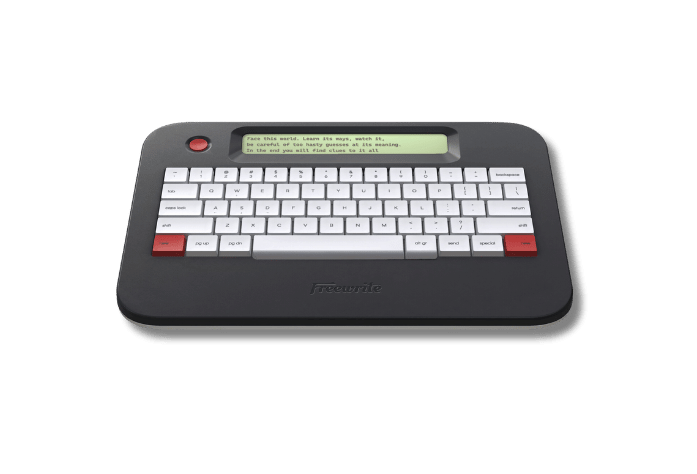
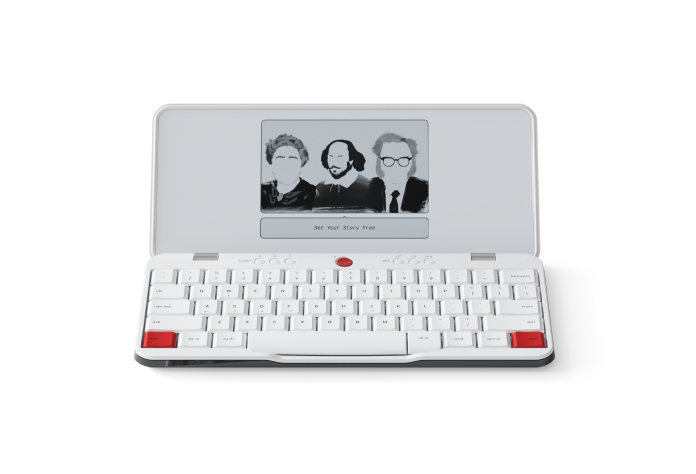
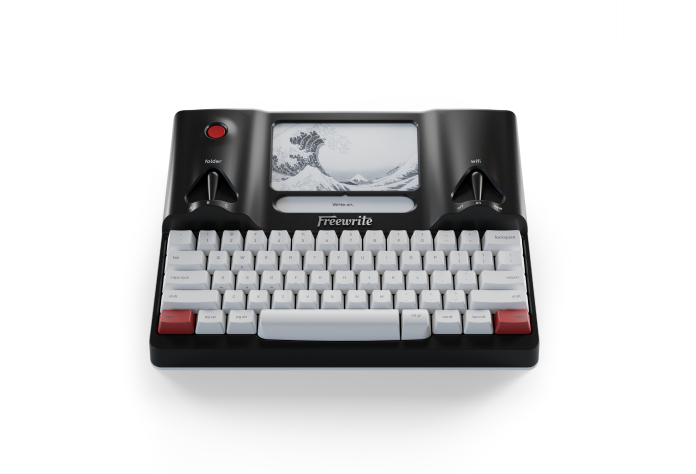
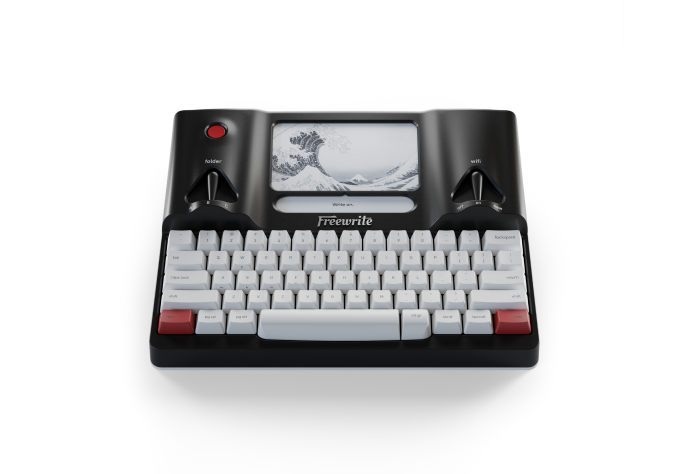
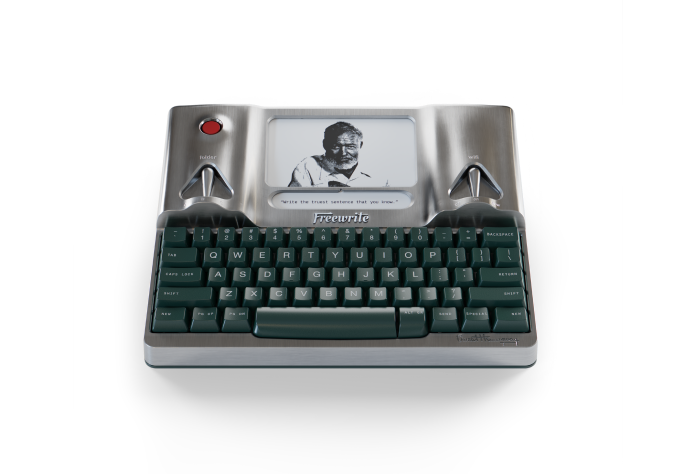
Freewrite - Máquina de escribir inteligente sin distracciones

diciembre 10, 2025 6 lectura mínima

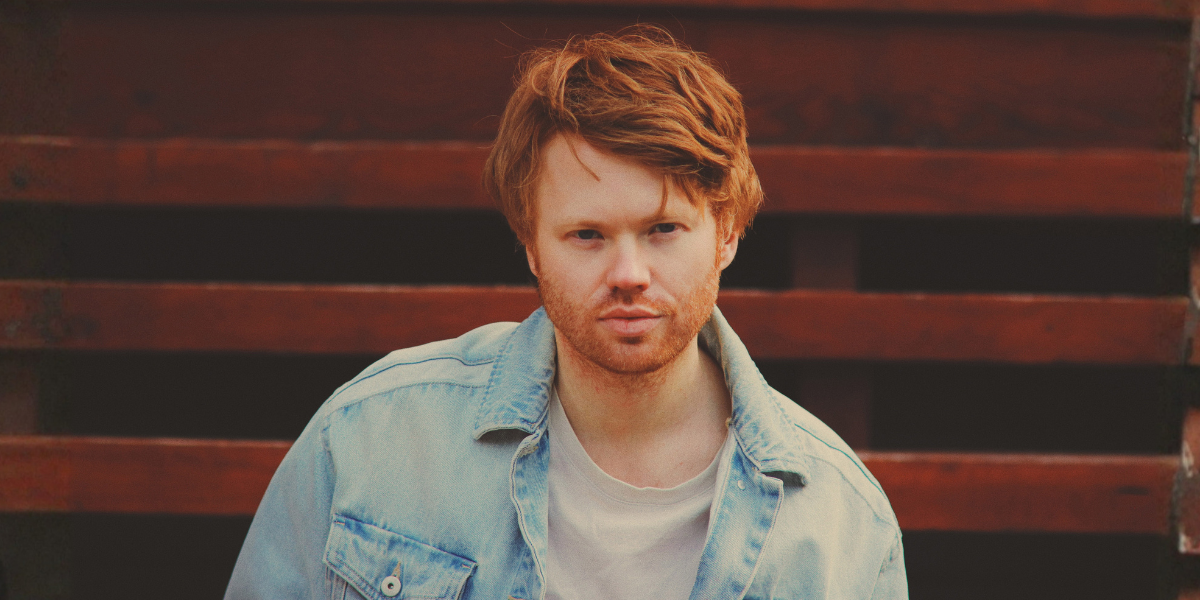
Singer-songwriter Abner James finds his creativity in the quiet freedom of analog tools. Learn how his creative process transcends different media.

Abner James went to school for film directing. But the success of the band he and his brother formed together, Eighty Ninety, knocked him onto a different trajectory.

The band has accrued more than 40 million streams since the release of their debut EP “Elizabeth," and their work was even co-signed by Taylor Swift when the singer added Eighty Ninety to her playlist "Songs Taylor Loves.”

Now, Abner is returning to long-form writing in addition to songwriting, and with a change in media comes an examination of the creative process. We sat down to chat about what's the same — and what's different. 

ANNIE COSBY: Tell us about your songwriting process.

ABNER JAMES: The way I tend to write my songs is hunched over a guitar and just seeing what comes. Sounds become words become shapes. It's a very physical process that is really about turning my brain off.

And one of the things that occurred to me when I was traveling, actually, was that I would love to be able to do that but from a writing perspective. What would happen if I sat down and approached writing in the same way that I approached music? In a more intuitive and free-form kind of way? What would that dig up?

AC: That's basically the ethos of Freewrite.

AJ: Yes. We had just put out a record, and I was thinking about how to get into writing for the next one. It occurred to me that regardless of how I started, I always finished on a screen. And I wondered: what's the acoustic guitar version of writing?

Where there's not blue light hitting me in the face. Even if I'm using my Notes app, it's the same thing. It really gets me into a different mindset.

 "I wondered: what's the acoustic guitar version of writing?"

I grew up playing piano. That was my first instrument. And I found an old typewriter at a thrift store, and I love it. It actually reminded me a lot of playing piano, the kind of physical, the feeling of it. And it was really fun, but pretty impractical, especially because I travel a fair amount.

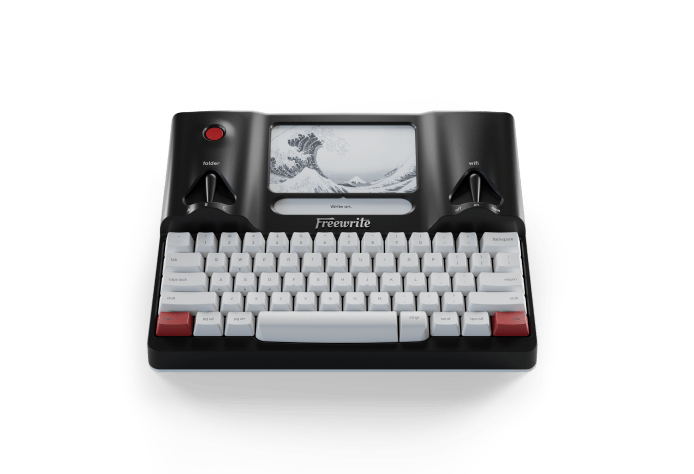
And so I wondered, is there such a thing as a digital typewriter? And I googled it, and I found Freewrite.

AC: What about Freewrite helps you write?

AJ:I think, pragmatically, just the E Ink screen is a huge deal, because it doesn't exhaust me in the same way. And the idea of having a tool specifically set aside for the process is appealing in an aesthetic way but also a mental-emotional way. When it comes out, it's kind of like ... It's like having an office you work out of. It's just for that.

"The way I tend to write my songs is hunched over a guitar and just seeing what comes. Sounds become words become shapes. It's a very physical process that is really about turning my brain off."

And all of the pragmatic limitations — like you're not getting texts on it, and you're not doing all that stuff on the internet — that's really helpful, too. But just having the mindset....

When I pick up a guitar, or I sit down at the piano, it very much puts me into that space. Having a tool just for words does the same thing. I find that to be really cool and inspiring.

"When I pick up a guitar, or I sit down at the piano, it very much puts me into that space. Having a tool just for words does the same thing."

AC: So mentally it gets you ready for writing.

AJ: Yeah, and also, when you write a Microsoft Word, it looks so finished that it's hard to keep going. If every time I strummed a chord, I was hearing it back, mixed and mastered and produced...?

It's hard to stay in that space when I'm seeing it fully written out and formatted in, like, Times New Roman, looking all seriously back at me.

AC: I get that. I have terrible instincts to edit stuff over and over again and never finish a story.

AJ:  Also, the way you just open it and it's ready to go. So you don't have the stages of the computer turning on, that kind of puts this pressure, this tension on.

It's working at the edges in all these different ways that on their own could feel a little bit like it's not really necessary. All these amorphous things where you could look at it and be like, well, I don't really need any of those. But they add up to a critical mass that actually is significant.

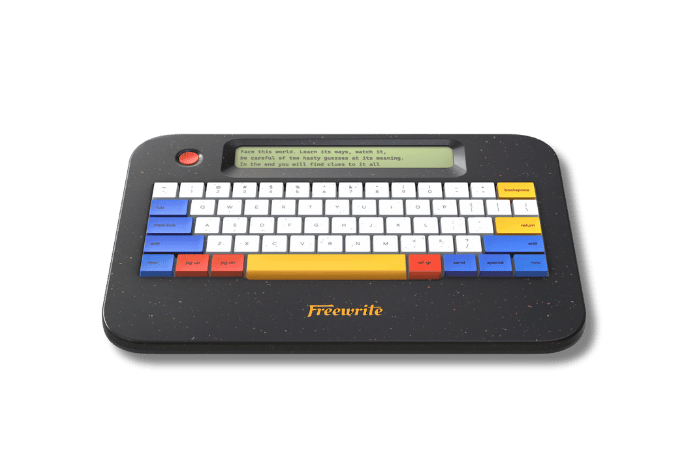
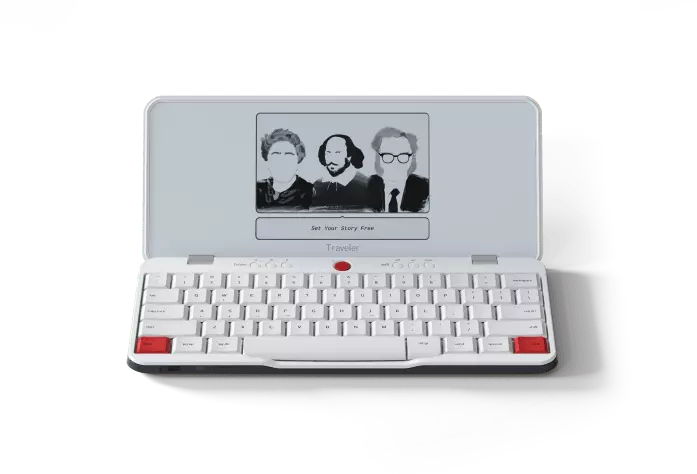
And sometimes, if I want to bring it on a plane, I've found it's replaced reading for me. Rather than pick up a book or bring a book on the plane, I bring Traveler and just kind of hang out in that space and see if anything comes up.

I've found that it's kind of like writing songs on a different instrument, you get different styles of music that you wouldn't have otherwise. I've found that writing from words towards music, I get different kinds of songs than I have in the past, which has been interesting.

In that way, like sitting at a piano, you just write differently than you do on a guitar, or even a bass, because of the things those instruments tend to encourage or that they can do.

It feels almost like a little synthesizer, a different kind of instrument that has unlocked a different kind of approach for me.

"I've found that it's kind of like writing songs on a different instrument, you get different styles of music that you wouldn't have otherwise... [Traveler] feels almost like a little synthesizer, a different kind of instrument that has unlocked a different kind of approach for me."

AC: As someone who doesn't know the first thing about writing music, that's fascinating. It's all magic to me.

AJ: Yeah.

AC: What else are you interested in writing?

AJ: I went to school for film directing. That was kind of what I thought I was going to do. And then my brother and I started the band and that kind of happened first and knocked me onto a different track for a little while after college.

Growing up, though, writing was my way into everything. In directing, I wanted to be in control of the thing that I wrote. And in music, it was the same — the songwriting really feels like it came from that same place. And then the idea of writing longer form, like fiction, almost feels just like the next step from song to EP to album to novel.

For whatever reason, that started feeling like a challenge that would be deeply related to the kinds of work that we do in the studio.

AC: Do you have any advice for aspiring songwriters?

AJ: This sounds like a cliche, but it's totally true: whatever success that I've had as a songwriter — judge that for yourself — but whatever success I have had, has been directly proportional to just writing the song that I wanted to hear.

What I mean by that is, even if you're being coldly, cynically, late-stage capitalist about it, it's by far the most success I've had. The good news is that you don't have to choose. And in fact, when you start making those little compromises, or even begin to inch in that direction, it just doesn't work. So you can forget about it.

Just make music you want to hear. And that will be the music that resonates with most people.

I think there's a temptation to have an imaginary focus group in your head of like 500 people. But the problem is all those people are fake. They're not real. None of those people are actually real people. You're a focus group of one, you're one real person. There are more real people in that focus group than in the imaginary one.

And I just don't think that we're that different, in the end. So that would be my advice.

AC: That seems like generally great creative advice. Because fiction writers talk about that too, right? Do you write to market or do you write the book you want to read. Same thing. And that imaginary focus group has been debilitating for me. I have to silence that focus group before I can write.

AJ: Absolutely.

"I think there's a temptation to have an imaginary focus group in your head of like 500 people. But the problem is all those people are fake... You're a focus group of one, you're one real person. There are more real people in that focus group than in the imaginary one."

--

Learn more about Abner James, his brother, and their band, Eighty Ninety, on Instagram.

noviembre 29, 2025 4 lectura mínima

The Great Freewrite Séance: A Ghost'ly Charity Auction Full Terms & Conditions

These Terms and Conditions (“Terms”) govern participation in The Great Freewrite Séance: A Ghost'ly Charity Auction (“Auction”), organized by Freewrite (“Organizer,” “we,” “us,” or “our”). By registering for, bidding in, or otherwise participating in the Auction, you (“Participant,” “Bidder,” or “Winner”) agree to be bound by these Terms.

1. Auction Overview

1.1. The Auction offers for sale a limited number of Freewrite Traveler Ghost Edition units (“Items” or “Ghost Traveler units”), each personally signed and drawn on by a featured author.

1.2. All proceeds, net of explicitly disclosed administrative costs, will be donated to the charity or charitable initiative (“Charity”) identified on each auction item’s page, as chosen by the respective author.

2. Eligibility

2.1. Participants must be at least 18 years old or the age of majority in their jurisdiction, whichever is higher.

2.2. Employees of Freewrite, the participating authors, or any affiliates directly involved in the Auction are not eligible to bid.

2.3. By participating, you represent that you are legally permitted to take part in online auctions and to pay for any bids you win.

3. Auction Registration

3.1. Participants must create an account on the auction platform or otherwise register using accurate, current, and complete information.

3.2. Freewrite reserves the right to verify identity and to disqualify any Participant who provides false or misleading information.

4. Bidding Rules

4.1. All bids are binding, final, and non-retractable.

4.2. Bidders are responsible for monitoring their bids; Freewrite is not liable for missed notifications or technical issues on the auction platform or the Participant’s device.

4.3. Freewrite reserves the right to:

  • set minimum bids or bid increments;
  • reject bids deemed in bad faith or intended to disrupt the Auction;
  • extend, pause, or cancel the Auction in case of technical difficulties, fraud, or events beyond reasonable control.

5. Winning Bids and Payment

5.1. The highest valid bid at the close of the Auction is the Winning Bid, and the corresponding Participant becomes the Winner.

5.2. Winners will receive payment instructions and must complete payment within 48 hours of the auction’s close unless otherwise stated.

5.3. Failure to complete payment on time may result in forfeiture, and Freewrite may offer the Item to the next highest bidder.

5.4. Accepted payment methods will be listed on the Auction platform. All payments must be made in the currency specified.

6. Item Description and Condition

6.1. Each Ghost Traveler unit is authentic, and the signatures, doodles, and messages are original works created by the participating author. These are authors, not artists. By bidding on the Item, you acknowledge that you are receiving a one-of-a-kind unit marked with unique art and messages and you agree to these terms and conditions.

6.2. Because Items are customized and signed by hand, variations, imperfections, or unique marks are to be expected. These are considered part of the Item’s character and not defects.

6.3. Items are provided “as-is” and “as-available.” Freewrite makes no warranties of merchantability or fitness for a particular purpose.

7. Shipping & Delivery

7.1. Shipping costs, import duties, and taxes may apply unless explicitly stated otherwise.

7.2. Freewrite will make reasonable efforts to ship Items within the estimated timeline but cannot guarantee delivery dates.

7.3. Title and risk of loss transfer to the Winner upon delivery to the carrier.

7.4. Freewrite is not responsible for delays, damage, or loss caused by the courier or customs agencies.

8. Charity Donation

8.1. Net proceeds from the Auction will be donated to the Charity designated on each Item page.

8.2. Donation amounts and recipients may be disclosed publicly unless prohibited by law.

8.3. Winners acknowledge that they are purchasing Items, not making a tax-deductible donation to Freewrite; therefore, Winners will not receive charitable tax receipts unless Freewrite explicitly states otherwise in compliance with applicable laws.

9. Intellectual Property

9.1. All trademarks, brand names, product names, and creative materials associated with Freewrite and the Ghost Traveler remain the exclusive property of Freewrite or their respective rights holders.

9.2. Participants may not reproduce, distribute, or publicly display the authors’ doodles without permission where such rights are applicable, except as allowed by law (e.g., resale of the physical Item).

10. Privacy

10.1. By participating, you consent to Freewrite’s collection, use, and storage of your personal data in accordance with our Privacy Policy.

10.2. Freewrite may publicly announce auction results, including Winner’s first name, last initial, city, state/country, and winning bid amount unless prohibited by law or unless you formally request anonymity when possible.

11. Prohibited Conduct

Participants may not:

  • engage in bid manipulation, fraud, or collusive bidding;
  • use automated systems (bots, scripts, scrapers) to place or monitor bids;
  • interfere with the Auction, platform, or other participants

Freewrite may ban or disqualify any Participant violating these rules.

12. Limitation of Liability

To the fullest extent permitted by law:

12.1. Freewrite is not liable for indirect, incidental, special, or consequential damages arising from the Auction or purchase of Items.

12.2. Freewrite’s total liability in connection with these Terms shall not exceed the amount of the Winning Bid actually paid by the Participant.

12.3. Freewrite is not responsible for technical malfunctions, internet outages, system failures, or other issues beyond its control.

13. Cancellation and Force Majeure

Freewrite may cancel, postpone, or modify the Auction due to unforeseen circumstances, including but not limited to natural disasters, system failures, strikes, or events affecting participating authors or the Charity.

14. Governing Law & Dispute Resolution

14.1. These Terms are governed by the laws of Michigan, without regard to conflict-of-law rules.

14.2. Any disputes arising under these Terms will be resolved through binding arbitration or the courts of the specified jurisdiction, as applicable.

14.3. Participants waive any right to participate in class-action lawsuits relating to the Auction.

15. Amendments

Freewrite may update these Terms at any time. Continued participation in the Auction after updates constitutes acceptance of the revised Terms.

16. Contact Information

For questions or concerns regarding the Auction or these Terms, contact: hello@getfreewrite.com.

noviembre 25, 2025 1 lectura mínima

This is a great gratitude writing exercise to be done alone or in a group, with people of any age.

How to Play

    1. Designate someone to read out each prompt below. (Feel free to add your own prompts.)
    2. After each prompt is read, set a timer for one minute. (With younger kids, this can be shortened. For older folks who want to freewrite meaningfully, more time can be added.)
    3. Each person freewrites by finishing the sentence and elaborating until the timer goes off. (For little kids, this can be done verbally with an adult recording their answers. Hilarity will ensue.)
    4. Remeber that freewriting — allowing yourself to write with abandon — enables you to let go, tapping into your subconscious to explore your thoughts more deeply.
    5. When everyone is done with all the prompts, take turns going through some your answers. Some people may be eager to share. Others may not want to. Respect their decision.

The Prompts

  • I'm grateful for... [After you've finished this prompt, repeat it five times. Challenge yourself and others not to repeat a singe word with each new answer.]
  • The silliest thing I'm grateful for is...
  • The littlest thing I'm grateful for is...
  • The biggest thing I'm grateful for is...
  • The grossest thing I'm grateful for is...
  • One thing I love about myself is...
  • My favorite thing that happened this year was...
  • My hope for next year is...

This writing exercise has resulted in some sweet answers — and many hilarious ones, too. If you try it out, do let us know.

Write on.