overlaylink

Camino a la publicación: Bobby Miller

Annie Cosby
marzo 20, 2025 | 6 lectura mínima

¿Un contrato editorial sin agente? ¿Una oferta de agente después del contrato?

Descubra cómo el escritor Bobby Miller tomó las riendas de su poco convencional aventura editorial.

"Una imaginación grande, enfermiza y gloriosa" - Rainn Wilson

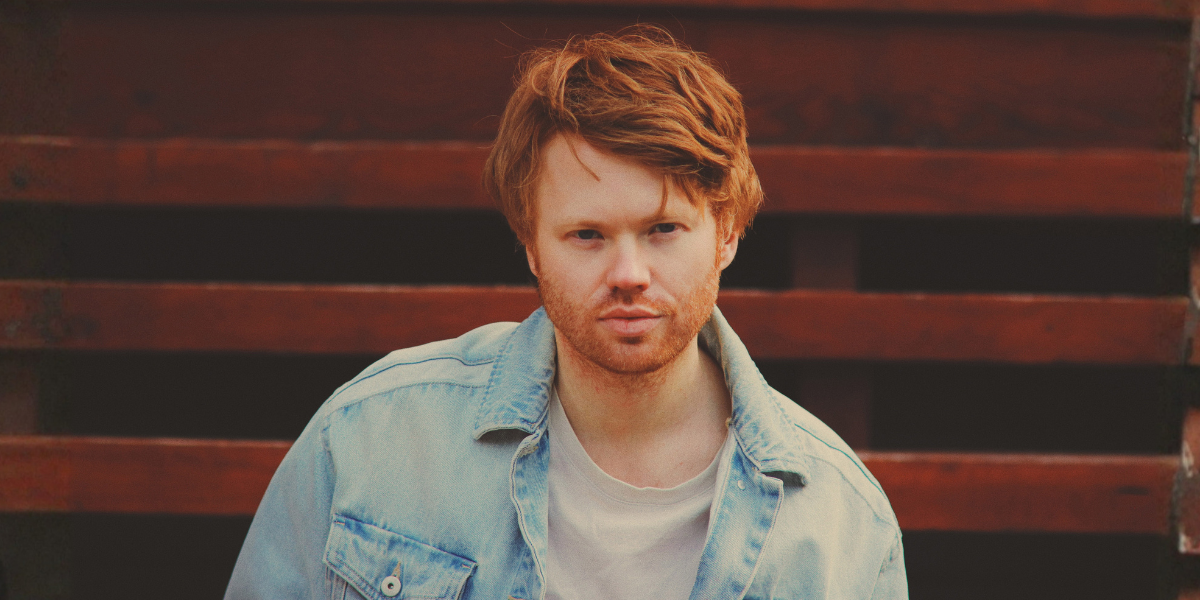
Bobby Miller, originario de Nueva Jersey, lleva años viviendo en Los Ángeles y haciendo películas. Le encanta combinar géneros, desde el terror hasta la comedia, y sus películas se han estrenado en Sundance, SXSW y Fantasía.

Pero no será hasta 2025 que el mundo leerá su inusual primera novela. Y eso se debe en gran medida al enfoque original de Bobby en el proceso editorial.

Tuve la oportunidad de conocer el "grande, enfermizo y glorioso" cerebro de Bobby sobre su enfoque hacia la publicación...

ANNIE COSBY: Llevas mucho tiempo escribiendo en diferentes industrias, pero Situación en Ninguna Parte es tu primera novela. ¡Felicidades! ¿Podrías darnos una breve introducción?

BOBBY MILLER: Si te gustó la sátira estadounidense de Idiocracy pero deseabas que hubiera más cuerpos explotando... ¡vaya si tengo una novela para ti!

AC: Sabes, la sátira no tiene suficientes cuerpos explosivos hoy en día, ¿verdad? ¿Cuánto tiempo te llevó escribir Situación en Ninguna Parte ?

BM: Empecé a escribir en agosto de 2021 y acepté un acuerdo con mi editorial en junio de 2024. Fueron aproximadamente tres años, pero hubo mucho tiempo de desarrollo antes de eso.

AC: ¿Y utilizaste Freewrite para escribirlo?

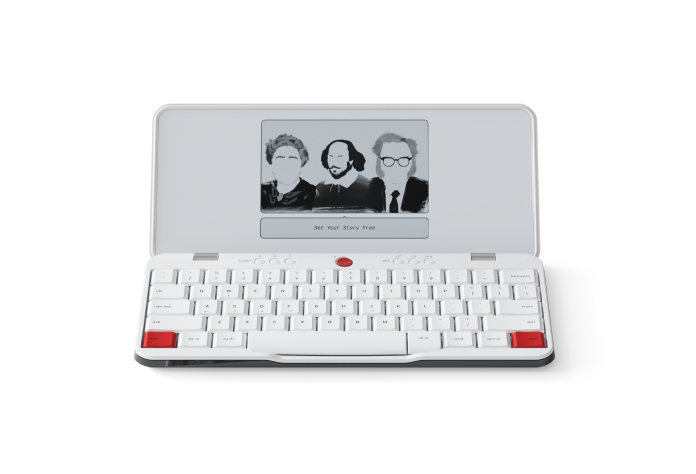
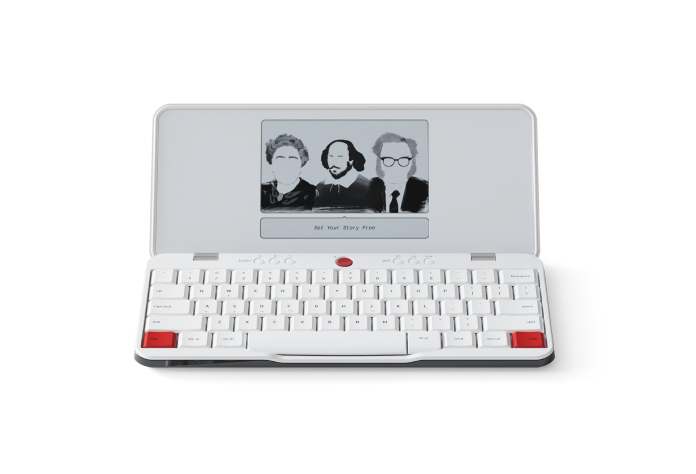
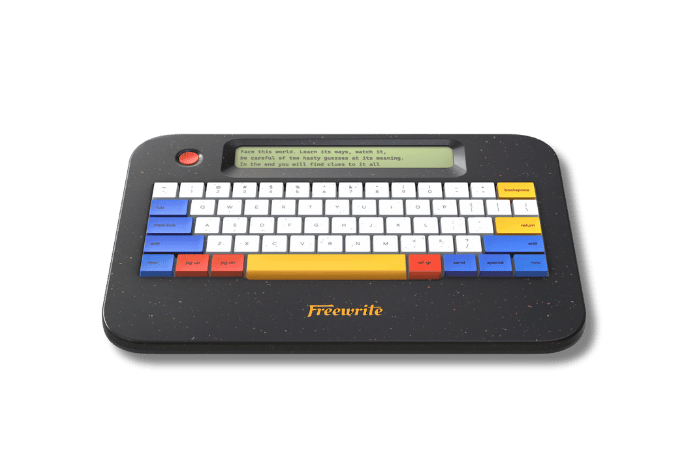
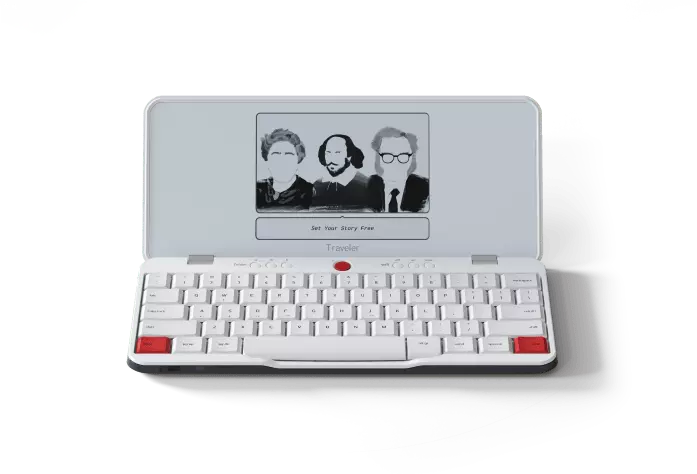
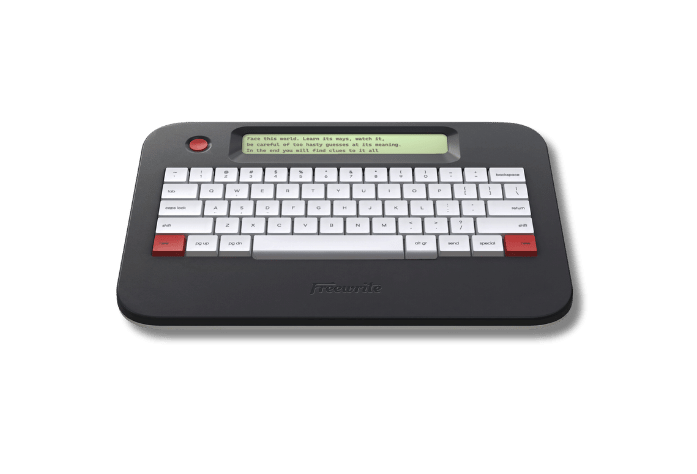
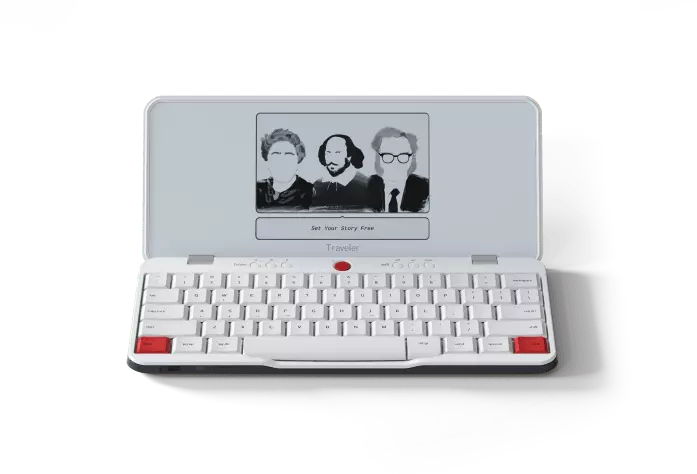
BM: Sí,  Escribí todo el primer borrador en Freewrite Traveler y fue una experiencia maravillosa.

Soy un gran fan de la mentalidad del " estado de flujo ", es decir, escribir sin mirar atrás. Sorprendentemente, también la usé bastante al reescribir.

Bobby solía escribir en plena noche con "un bebé que me despertaba" (su primogénito). Así que su Viajero solía ir acompañado de un monitor para bebés.

AC: También es sorprendente que consiguieras un contrato editorial sin siquiera tener un agente. Esa no es la vía tradicional para publicar. ¿Enviabas tus obras a editoriales y contactabas con agentes al mismo tiempo?

BM: Seguro que sí.

Soy un gran fanático de la mentalidad del “estado de flujo”, es decir, escribir sin mirar atrás.

AC: ¿Qué te hizo decidir hacerlo de esa manera?

BM: Leo mucho sobre la industria editorial y sigo a muchos autores en redes sociales. Parecía que se estaban realizando muchos trabajos interesantes en el ámbito independiente, y no se necesita un agente para enviar obras a muchas editoriales independientes.

Así que ya estaba totalmente decidido a independizarme incluso antes de empezar a escribir. Luego recibí algunas ofertas de editoriales independientes, como Maudlin House . Fueron el primer lugar en publicar uno de mis cuentos durante la pandemia.

En términos financieros, las ofertas para Situation Nowhere eran todas iguales, pero al final fue el entusiasmo del editor en jefe Mallory por el libro y el plan de acción lo que me convenció.

AC: Y luego recibiste una oferta de un agente, ¿verdad? ¿Cómo surgió?

BM: Ocurrió muy tarde, tanto que me estaba acostumbrando a no tener agente. Estuve seis meses buscando agentes. Tuve algunas insinuaciones, pero no me comprometieron.

Luego, mientras cerraba el trato con Maudlin House, apareció un agente, entusiasmado con el libro y mi escritura. No bromees, era mi primera opción, así que fue surrealista tener noticias suyas tantos meses después.

Acordamos que la vía independiente era la mejor para Situation Nowhere , pero quizá mi segundo libro sea diferente. ¿Quién sabe?

AC: Dicen que cada libro es diferente. ¿Cómo ha sido el proceso de publicación hasta ahora, en comparación con tus expectativas?

BM: Viniendo de la industria del cine y la televisión, publicar libros independientes ha sido un sueño hecho realidad. Maudlin House me ha apoyado muchísimo, me ha dado excelentes notas y comprende el libro.

Para quienes vengo de la industria del cine y la televisión, publicar libros independientes ha sido un sueño hecho realidad.

AC: ¡Qué interesante! Como autores, nos encanta quejarnos de la industria editorial, y claro, tiene muchos defectos. Pero también he oído que la industria cinematográfica es aún más despiadada y desmoralizante.

BM: En mi primera película, no creo que los financieros supieran lo que estábamos haciendo hasta que se proyectó en SXSW.

AC: ¡Eso sí que parece lo contrario de publicar! ¿Cómo fue tu proceso de edición en Situation Nowhere ?

BM: Varios autores me aconsejaron que trabajara con un editor ANTES de realizar consultas, especialmente porque era mi primera vez.

Trabajé con Sam Pink en la primera edición, y es un genio. Me ayudó a simplificar las cosas.

Después de que Maudlin House recogió el libro, también lo edité con Mallory y trabajé con más lectores, pero en ese momento, todos nos sentíamos bastante bien al respecto.

AC: ¿Tuviste alguna participación en otros materiales promocionales de la novela, como por ejemplo la portada?

BM: ¡Ah, sí! Había un par de artistas de portada. Alexander Naughton hace ilustraciones para un Substack que me gusta, y tenía una imagen de una cabeza explotando, que me pareció perfecta para este libro.

Nos hizo una portada completamente nueva, pero Maudlin estuvo muy abierto al proceso y fue muy amable con sus comentarios. Y no fueron comentarios tontos, sino muy bien pensados ​​y orientados al diseño.

¡Un saludo también para Bulent de Maudlin House!

AC: ¡Y Rainn Wilson te dedicó una excelente reseña! Bueno, es más bien un respaldo a tu "grande, enfermiza y gloriosa imaginación".

BM: Trabajé con Rainn en su empresa, SoulPancake, en 2013. Sabía que tenía un oscuro sentido del humor y pensé que podría gustarle el libro.

Sin embargo, no esperaba una sinopsis tan generosa. Recuerdo haberla enviado a mi editor y haberle dicho: "Tenemos que poner esto en la portada, ¿no?". Fue realmente emocionante.

AC: Como cineasta, ¿te parece divertido adaptar tu propia novela al cine?

BM: Esa es una pregunta difícil. Porque para mí, la novela es lo importante. Es la forma definitiva de la idea.

Creo que la única forma de que me resultara divertido sería si tratáramos el libro como si fuera el material original. En otras palabras, ¡sería completamente infiel a mi libro! Fingiría que lo escribió otro idiota.

Creo que es la única manera de que funcione para cine o televisión. Al menos conmigo haciendo la adaptación. Es un medio diferente y creo firmemente que las adaptaciones directas rara vez funcionan.

Si adaptara mi propio libro al cine, ¡sería completamente infiel a mi libro! Fingiría que lo escribió otro cretino.

BM: Más adelante en el proceso, usé Fiverr para obtener comentarios de los lectores. Me resultó útil y empezaría ese proceso antes. Arranca la curita y averigua qué opinan fuera de tu círculo de amigos.

AC: ¿Alguna otra cosa que quieras compartir?

BM: Este libro me salvó la vida, de verdad. Empecé a escribirlo al final de la pandemia, como padre primerizo y con mucha incertidumbre en el mundo.

Fue una alegría absurda trabajar en ello. Espero que sea un bálsamo para otros en estos tiempos caóticos.

Este libro me salvó la vida, de verdad. Empecé a escribirlo al final de la pandemia, como padre primerizo con mucha incertidumbre en el mundo... Espero que sea un bálsamo para otros en estos tiempos caóticos.

Si eres como yo y crees que Idiocracia describe con mayor precisión hacia dónde nos dirigimos que, digamos, 1984 o Un mundo feliz , ¡este libro es para ti! Bobby Miller captura el humor negro de un mundo estúpido y podrido.

Kent Osborne, guionista principal de Hora de aventuras

SITUACIÓN EN NINGUNA PARTE

UNA NOVELA CÓMICA DISTÓPICA PARA TIEMPOS DE LOCURA

Barry Gray no es la persona más brillante del sector, pero eso no le ha impedido convertirse en el director ejecutivo de mediana edad de Atlas Wake, la corporación detrás de la bebida energética más adictiva del mundo.

Tras una cita incómoda, Barry es "X-ed", un destino peor que ser cancelado... justo días antes del mayor lanzamiento de bebidas de la compañía. ¿El motivo? Una antigua publicación en redes sociales.

Mientras los ejecutivos de Atlas Wake se apresuran a encontrar un sustituto para Barry, se topan con Lo, un barista sarcástico sin experiencia en redes sociales. Lo asume con entusiasmo el puesto de director ejecutivo, anticipando montones de dinero, solo para sorprenderse con un descubrimiento impactante sobre la nueva bebida energética de la compañía: está causando furia.

Temiendo su nueva vida como paria social, Barry es rescatado por la Hermandad de los Resignados, un grupo de marginados X-ed que se esconden en las alcantarillas. Creen que Atlas Wake forma parte de una gigantesca conspiración en la que Lo está involucrado. Las historias se entrecruzan mientras nuestro equipo se enfrenta a un mundo dominado por las corporaciones al borde de la destrucción en esta historia distópica, de humor negro, sobre poder, engaño y supervivencia.
ORDENE AHORA EN SITUATIONNOWHERE.COM

diciembre 30, 2025 3 lectura mínima

It’s Freewrite’s favorite time of year. When dictionaries around the world examine language use of the previous year and select a “Word of the Year.”

Of course, there are many different dictionaries in use in the English language, and they all have different ideas about what word was the most influential or saw the most growth in the previous year. They individually review new slang and culturally relevant vocabulary, examine spikes or dips in usage, and pour over internet trend data.

Let’s see what some of the biggest dictionaries decided for 2025. And read to the end for a chance to submit your own Word of the Year — and win a Freewrite gift card.

[SUBMIT YOUR WORD OF THE YEAR]


Merriam-Webster: "slop"

Merriam-Webster chose "slop" as its Word of the Year for 2025 to describe "all that stuff dumped on our screens, captured in just four letters."

The dictionary lists "absurd videos, off-kilter advertising images, cheesy propaganda, fake news that looks pretty real, junky AI-written books, 'workslop' reports that waste coworkers’ time … and lots of talking cats" as examples of slop.

The original sense of the word "slop" from the 1700s was “soft mud” and eventually evolved to mean "food waste" and "rubbish." 2025 linked the term to AI, and the rest is history.

Honorable mentions: conclave, gerrymander, touch grass, performative, tariff, 67.

Dictionary.com: "67"

The team at Dictionary.com likes to pick a word that serves as “a linguistic time capsule, reflecting social trends and global events that defined the year.”

For 2025, they decided that “word” was actually a number. Or two numbers, to be exact.

If you’re an old, like me, and don’t know many school-age children, you may not have heard “67” in use. (Note that this is not “sixty-seven,” but “six, seven.”)

Dictionary.com claims the origin of “67” is a song called “Doot Doot (6 7)” by Skrilla, quickly made infamous by viral TikTok videos, most notably featuring a child who will for the rest of his life be known as the “6-7 Kid.” But according to my nine-year-old cousin, the origins of something so mystical can’t ever truly be known.

(My third grade expert also demonstrated the accompanying signature hand gesture, where you place both hands palms up and alternately move up and down.)

And if you happen to find yourself in a fourth-grade classroom, watch your mouth, because there’s a good chance this term has been banned for the teacher’s sanity.

Annoyed yet? Don’t be. As Dictionary.com points out, 6-7 is a rather delightful example at how fast language can develop as a new generation joins the conversation.

Dictionary.com honorable mentions: agentic, aura farming, broligarchy, clanker, Gen Z stare, kiss cam, overtourism, tariff, tradwife.

Oxford Dictionary: "rage bait"

With input from more than 30,000 users and expert analysis, Oxford Dictionary chose "rage bait" for their word of the year.

Specifically, the dictionary pointed to 2025’s news cycle, online manipulation tactics, and growing awareness of where we spend our time and attention online.

While closely paralleling its etymological cousin "clickbait," rage bait more specifically denotes content that evokes anger, discord, or polarization.

Oxford's experts report that use of the term has tripled in the last 12 months.

Oxford Dictionary's honorable mentions:aura farming, biohack.

Cambridge Dictionary: "parasocial"

The Cambridge Dictionary examined a sustained trend of increased searches to choose "parasocial" as its Word of the Year.

Believe it or not, this term was coined by sociologists in 1956, combining “social” with the Greek-derived prefix para-, which in this case means “similar to or parallel to, but separate from.”

But interest in and use of the term exploded this year, finally moving from a mainly academic context to the mainstream.

Cambridge Dictionary's honorable mentions: slop, delulu, skibidi, tradwife

Freewrite: TBD

This year, the Freewrite Fam is picking our own Word of the Year.

Click below to submit what you think the Word of 2025 should be, and we'll pick one submission to receive a Freewrite gift card.

[SUBMIT HERE] 

--

Sources

diciembre 18, 2025 5 lectura mínima

¿Qué pueden enseñar las cartas personales de Jane Austen a los escritores?

diciembre 10, 2025 6 lectura mínima

Singer-songwriter Abner James finds his creativity in the quiet freedom of analog tools. Learn how his creative process transcends different media.

Abner James went to school for film directing. But the success of the band he and his brother formed together, Eighty Ninety, knocked him onto a different trajectory.

The band has accrued more than 40 million streams since the release of their debut EP “Elizabeth," and their work was even co-signed by Taylor Swift when the singer added Eighty Ninety to her playlist "Songs Taylor Loves.”

Now, Abner is returning to long-form writing in addition to songwriting, and with a change in media comes an examination of the creative process. We sat down to chat about what's the same — and what's different. 

ANNIE COSBY: Tell us about your songwriting process.

ABNER JAMES: The way I tend to write my songs is hunched over a guitar and just seeing what comes. Sounds become words become shapes. It's a very physical process that is really about turning my brain off.

And one of the things that occurred to me when I was traveling, actually, was that I would love to be able to do that but from a writing perspective. What would happen if I sat down and approached writing in the same way that I approached music? In a more intuitive and free-form kind of way? What would that dig up?

AC: That's basically the ethos of Freewrite.

AJ: Yes. We had just put out a record, and I was thinking about how to get into writing for the next one. It occurred to me that regardless of how I started, I always finished on a screen. And I wondered: what's the acoustic guitar version of writing?

Where there's not blue light hitting me in the face. Even if I'm using my Notes app, it's the same thing. It really gets me into a different mindset.

 "I wondered: what's the acoustic guitar version of writing?"

I grew up playing piano. That was my first instrument. And I found an old typewriter at a thrift store, and I love it. It actually reminded me a lot of playing piano, the kind of physical, the feeling of it. And it was really fun, but pretty impractical, especially because I travel a fair amount.

And so I wondered, is there such a thing as a digital typewriter? And I googled it, and I found Freewrite.

AC: What about Freewrite helps you write?

AJ:I think, pragmatically, just the E Ink screen is a huge deal, because it doesn't exhaust me in the same way. And the idea of having a tool specifically set aside for the process is appealing in an aesthetic way but also a mental-emotional way. When it comes out, it's kind of like ... It's like having an office you work out of. It's just for that.

"The way I tend to write my songs is hunched over a guitar and just seeing what comes. Sounds become words become shapes. It's a very physical process that is really about turning my brain off."

And all of the pragmatic limitations — like you're not getting texts on it, and you're not doing all that stuff on the internet — that's really helpful, too. But just having the mindset....

When I pick up a guitar, or I sit down at the piano, it very much puts me into that space. Having a tool just for words does the same thing. I find that to be really cool and inspiring.

"When I pick up a guitar, or I sit down at the piano, it very much puts me into that space. Having a tool just for words does the same thing."

AC: So mentally it gets you ready for writing.

AJ: Yeah, and also, when you write a Microsoft Word, it looks so finished that it's hard to keep going. If every time I strummed a chord, I was hearing it back, mixed and mastered and produced...?

It's hard to stay in that space when I'm seeing it fully written out and formatted in, like, Times New Roman, looking all seriously back at me.

AC: I get that. I have terrible instincts to edit stuff over and over again and never finish a story.

AJ:  Also, the way you just open it and it's ready to go. So you don't have the stages of the computer turning on, that kind of puts this pressure, this tension on.

It's working at the edges in all these different ways that on their own could feel a little bit like it's not really necessary. All these amorphous things where you could look at it and be like, well, I don't really need any of those. But they add up to a critical mass that actually is significant.

And sometimes, if I want to bring it on a plane, I've found it's replaced reading for me. Rather than pick up a book or bring a book on the plane, I bring Traveler and just kind of hang out in that space and see if anything comes up.

I've found that it's kind of like writing songs on a different instrument, you get different styles of music that you wouldn't have otherwise. I've found that writing from words towards music, I get different kinds of songs than I have in the past, which has been interesting.

In that way, like sitting at a piano, you just write differently than you do on a guitar, or even a bass, because of the things those instruments tend to encourage or that they can do.

It feels almost like a little synthesizer, a different kind of instrument that has unlocked a different kind of approach for me.

"I've found that it's kind of like writing songs on a different instrument, you get different styles of music that you wouldn't have otherwise... [Traveler] feels almost like a little synthesizer, a different kind of instrument that has unlocked a different kind of approach for me."

AC: As someone who doesn't know the first thing about writing music, that's fascinating. It's all magic to me.

AJ: Yeah.

AC: What else are you interested in writing?

AJ: I went to school for film directing. That was kind of what I thought I was going to do. And then my brother and I started the band and that kind of happened first and knocked me onto a different track for a little while after college.

Growing up, though, writing was my way into everything. In directing, I wanted to be in control of the thing that I wrote. And in music, it was the same — the songwriting really feels like it came from that same place. And then the idea of writing longer form, like fiction, almost feels just like the next step from song to EP to album to novel.

For whatever reason, that started feeling like a challenge that would be deeply related to the kinds of work that we do in the studio.

AC: Do you have any advice for aspiring songwriters?

AJ: This sounds like a cliche, but it's totally true: whatever success that I've had as a songwriter — judge that for yourself — but whatever success I have had, has been directly proportional to just writing the song that I wanted to hear.

What I mean by that is, even if you're being coldly, cynically, late-stage capitalist about it, it's by far the most success I've had. The good news is that you don't have to choose. And in fact, when you start making those little compromises, or even begin to inch in that direction, it just doesn't work. So you can forget about it.

Just make music you want to hear. And that will be the music that resonates with most people.

I think there's a temptation to have an imaginary focus group in your head of like 500 people. But the problem is all those people are fake. They're not real. None of those people are actually real people. You're a focus group of one, you're one real person. There are more real people in that focus group than in the imaginary one.

And I just don't think that we're that different, in the end. So that would be my advice.

AC: That seems like generally great creative advice. Because fiction writers talk about that too, right? Do you write to market or do you write the book you want to read. Same thing. And that imaginary focus group has been debilitating for me. I have to silence that focus group before I can write.

AJ: Absolutely.

"I think there's a temptation to have an imaginary focus group in your head of like 500 people. But the problem is all those people are fake... You're a focus group of one, you're one real person. There are more real people in that focus group than in the imaginary one."

--

Learn more about Abner James, his brother, and their band, Eighty Ninety, on Instagram.