overlaylink

¿Es la serialización el futuro del sector editorial?

Sophie Campbell
agosto 11, 2024 | 7 lectura mínima

La primera vez que oí hablar de novelas por entregas, era adolescente. A finales de los 2000, mientras pasaba la mayor parte de mi tiempo libre después del colegio escribiendo cuentos, escuchando a Paramore y navegando por Tumblr, me encontré con un artículo sobre mi compañera adolescente escocesa, Estelle Maskame .

Estelle compartía el borrador de su novela capítulo por capítulo y recibía comentarios instantáneos de una gran cantidad de lectores en Wattpad , una plataforma de narración social donde escritores y lectores pueden conectarse, compartir sus historias y leer escritos de otros.

Seguí la historia y me quedé maravillado. Hasta entonces, no tenía ni idea de que los escritores pudieran tener tanta autonomía en la distribución de su obra y conseguir seguidores a una edad temprana sin el apoyo de una gran editorial. Y aquí estoy, 10 años después, todavía fascinado por la autopublicación y la serialización.

Maskame cosechó tal éxito con su novela de Wattpad , "¿Mencioné que te amo?" , que atrajo la atención de una importante editorial y el éxito general le llegó. Actualmente, a sus veintitantos años, ha publicado diez novelas.

La serialización no es algo nuevo. Pero con plataformas relativamente jóvenes y ya enormes como Substack (fundada en 2017) y Kindle Vella (fundada en 2021), además de Patreon , Wattpad y otras, un resurgimiento está cobrando impulso.

Esto nos lleva a preguntarnos: ¿es la serialización el futuro del mundo editorial?

Ejemplos históricos de la novela serializada

En realidad, la ficción serializada es anterior al modelo editorial tradicional con el que estamos más familiarizados hoy en día.

Mucho antes de la narración social y las plataformas de autopublicación, Internet e incluso los telegramas, los autores publicaban sus trabajos en periódicos y revistas literarias.

Las obras de Charles Dickens no se publicaron originalmente como libros completos. Los Papeles Póstumos del Club Pickwick y Grandes Esperanzas se publicaron inicialmente como seriales en entregas mensuales, vendidas a un chelín cada una .

De igual manera, los penny dreadfuls —series populares y asequibles que se vendían a un penique cada una— fueron enormemente populares en la Gran Bretaña del siglo XIX. Generalmente repletos de historias sensacionalistas de género policial, de terror y sobrenatural, los penny dreadfuls datan de la década de 1830, con raíces que se remontan a la novela gótica y más allá, a las tragedias jacobeas, el folclore macabro y las baladas .

Con la llegada de la radio y, posteriormente, de la televisión, la popularidad de los seriales en la literatura decayó. Sin embargo, el formato editorial nunca desapareció por completo y experimentó un breve resurgimiento en las décadas de 1970 y 1980. Incluso la venerada Miedo y asco en Las Vegas, de Hunter S. Thompson, se publicó por primera vez como serial en la revista Rolling Stone en 1971.

Desde finales de los 90, hemos estado en la ola del auge de las series de larga duración, con series como Los Soprano , Breaking Bad , Hijos de la Anarquía , Juego de Tronos y muchas más. Y sospecho que el apetito de los lectores refleja esta necesidad de contenido épico y episódico.

Desde su aparición, la ficción serial ha experimentado altibajos en su popularidad. Y ahora, creo que estamos viendo un repunte en la demanda. Pero esta vez, los autores también tienen mucha más propiedad, movilidad y mecanismos para monetizar su escritura.

El auge de la autoedición

Según WordsRated, el número de libros autopublicados publicados en los últimos cinco años ha aumentado un 264% . El mundo editorial siempre ha sido muy competitivo. Y con más apoyo, recursos y plataformas de autopublicación disponibles que nunca, no sorprende que cada vez más autores aspirantes opten por publicar su obra ellos mismos.

Con esta vía de publicación, los autores tienen el control total de su obra. Pero eso no significa que la autopublicación sea rápida ni fácil , ni mucho menos. Cuando trabajas con una editorial tradicional, solo necesitas ser el escritor. Cuando te autopublicas, necesitas ser el editor, el diseñador de portada, el promotor, el distribuidor... y la lista continúa. Pero, especialmente para los escritores que no han conseguido o no quieren un agente o una editorial, la autopublicación es atractiva porque les devuelve el control. Y con la publicación digital de series, la inversión inicial para empezar es mínima o nula.

Otra tendencia que coincide con la autopublicación es que los best-sellers publicados tradicionalmente nunca han sido tan cortos . Dado que nunca hemos tenido tanto acceso al contenido y, como resultado, nuestra capacidad de atención se reduce , ¿será por eso que los lectores prefieren libros físicos más cortos y lecturas breves en línea?

La Generación Z sin duda lo es. Según un estudio de Wattpad, «la Generación Z representa el 80 % de la audiencia de Wattpad, de 90 millones de personas en todo el mundo, quienes, en conjunto, pasan 23 000 millones de minutos al mes en el sitio, interactuando con historias originales ».

Es posible, sin embargo, que la ficción serializada no sea más que una moda pasajera que no perdure en nuestra cultura obsesionada con los maratones. Pero también es posible que la ficción serializada ofrezca una forma más accesible de leer en nuestros pequeños momentos de inactividad. Además, ¿podría la ficción serializada realmente ayudar a entrenar nuestros cerebros sobresaturados para saborear cada capítulo y ser pacientes hasta la siguiente entrega? Me inclino por lo segundo.

Autores que serializan sus novelas hoy

Zogarth , creador de Patreon, ha compartido más de 300 capítulos de las novelas de The Primal Hunter con más de 12 000 miembros, ganando 61 190 dólares al mes hasta agosto de 2024. Y Sleyca publica capítulos de Royal Road para que más de 8000 miembros los lean en la misma plataforma, ganando 36 120 dólares al mes.

Si bien las historias de éxito de esta magnitud son poco frecuentes, no son inauditas. Además, los escritores también están creando fandoms y alcanzando un éxito económico, entre modesto y sustancial, en otras plataformas, como Substack.

El autor, educador y activista ambiental Bill McKibben comenzó a publicar una novela llamada The Other Cheek en forma serializada en su boletín Substack, The Crucial Years .

Al escribir para Literary Hub , Bill comenta: «Prolongar la publicación tiene sus ventajas y desventajas, pero me gustaría que más escritores lo intentaran. Y la economía no es imposible: una suscripción al boletín de $6 al mes, que es el promedio de Substack, combinada con incluso unos pocos cientos de lectores, probablemente supera el anticipo para la mayoría de los novelistas».

Un enfoque híbrido para la publicación

Otra autora que triunfó en Substack es Elle Griffin ( The Elysian ). En 2023, Elle dio una charla TEDx titulada " ¿Qué pasaría si publicáramos libros episódicamente?". En esta charla, Elle comparte su propia experiencia de serializar novelas en Substack y retomar un método de publicación centenario con un toque moderno. La charla atrajo mucha atención, acumulando más de 41 millones de visualizaciones en YouTube.

Yendo directamente a la fuente, le pregunté a Elle si cree que la serialización es el futuro de la publicación.

En lugar de ver la autoedición como una alternativa directa a la publicación tradicional, Elle cree que podría ser una incorporación interesante o incluso un preludio que ayude a crear una audiencia antes del lanzamiento de un libro físico.

Ella dice: “La industria existente aún podría prosperar, pero los autores podrían tener un incentivo temprano que involucre a sus seguidores y aumente su potencial de ingresos”.

Una de las áreas en las que los autores autopublicados y de publicaciones seriadas tienen más dificultades es el marketing. Si no promocionas tu trabajo ni llegas a un público más amplio, no puedes atraer a lectores comprometidos. Aquí es donde las editoriales tradicionales con grandes presupuestos y equipos de marketing y relaciones públicas tienen ventaja. Pero Elle no tenía una audiencia definida antes de unirse a Substack, y ahora cuenta con 20.000 suscriptores.

También hay muchos autores que empezaron en Substack con cero suscriptores hace un año y ahora tienen entre 500 y 1000 suscriptores que siguen su ficción. No es necesario empezar con una gran audiencia para tener éxito, y también se puede tener una audiencia muy pequeña y aun así tener éxito.

Cómo la serialización puede disparar la productividad de la escritura

El escritor de ciencia ficción y fantasía Simon K Jones , a quien quizás reconozcas por The Writing Life Podcast que produjo durante varios años, también tiene experiencia en la serialización de novelas en Substack.

Al principio, este proyecto solo iba a ser un breve experimento allá por 2014 con una historia titulada "Un día de rostros". Pero rápidamente se convirtió en un ejercicio que impulsó la productividad de Simon y lo ayudó a desarrollar un saludable hábito de escritura.

“En aquel entonces, nunca había completado satisfactoriamente un proyecto extenso, con muchos borradores incompletos escondidos en cajones y en mi ordenador. Siempre me distraía con algo nuevo y brillante”, dice. Parece que un programa de escritura libre podría haberme venido bien. “En cuanto empecé a serializar, lo que para mí significa escribir y publicar un nuevo capítulo cada semana, fue como encender un interruptor en mi cerebro. Saber que hay lectores ahí fuera, esperando el siguiente capítulo, me devuelve a la página”.

Casi una década después, Simon ha publicado tres importantes seriales, ha publicado una versión de bolsillo de su novela No Adults Allowed y ahora está a mitad de camino de un serial mucho más grande llamado Tales from the Triverse .

Simon cree que el futuro de la publicación implicará una combinación de medios, no solo uno. «Cada uno hace cosas ligeramente diferentes y tiene su propio público, aunque con mucha convergencia… Los espacios en línea han propiciado un resurgimiento de la serialización de ficción en prosa en la última década, algo que me entusiasma mucho. Para los escritores, hay más maneras que nunca de publicar su obra».

Simon también expresa lo enormemente divertido que es el proceso de serializar. "También es una de las maneras más directas y emocionantes de interactuar con los lectores", dice. "Si alguien que lee esto tiene dificultades para completar proyectos o plasmar las palabras, le recomiendo encarecidamente que pruebe con una serialización. El ritmo constante de escritura y publicación puede impulsar la productividad de los escritores, algo que tal vez no creían posible. No se puede mejorar como escritor hasta que se empieza a escribir con regularidad".

¿La ficción serializada ha llegado para quedarse?

Con plataformas como Substack, Wattpad, Patreon y Kindle Vella, que permiten a los escritores compartir su trabajo con mayor libertad creativa y accesibilidad, creo que las series seguirán disfrutando de este resurgimiento de popularidad. Y tampoco creo que las grandes editoriales deban acobardarse.

Las series en línea deberían considerarse una incorporación bienvenida al mundo editorial, al igual que los ebooks, los audiolibros y los podcasts de ficción. Este enfoque híbrido y autodidacta para publicar en plataformas de narrativa social seguirá creciendo y, sin duda, evolucionando.

Cuando los escritores pueden crear rápidamente un perfil, comenzar a conectarse directamente con los lectores, obtener comentarios instantáneos al estilo de un grupo de discusión y construir un grupo de seguidores que los apoye e incluso pague, dispuestos a comprar su trabajo si deciden publicar un libro completo, es fácil ver por qué serializar novelas en línea es una propuesta tan atractiva.
noviembre 29, 2025 4 lectura mínima

The Great Freewrite Séance: A Ghost'ly Charity Auction Full Terms & Conditions

These Terms and Conditions (“Terms”) govern participation in The Great Freewrite Séance: A Ghost'ly Charity Auction (“Auction”), organized by Freewrite (“Organizer,” “we,” “us,” or “our”). By registering for, bidding in, or otherwise participating in the Auction, you (“Participant,” “Bidder,” or “Winner”) agree to be bound by these Terms.

1. Auction Overview

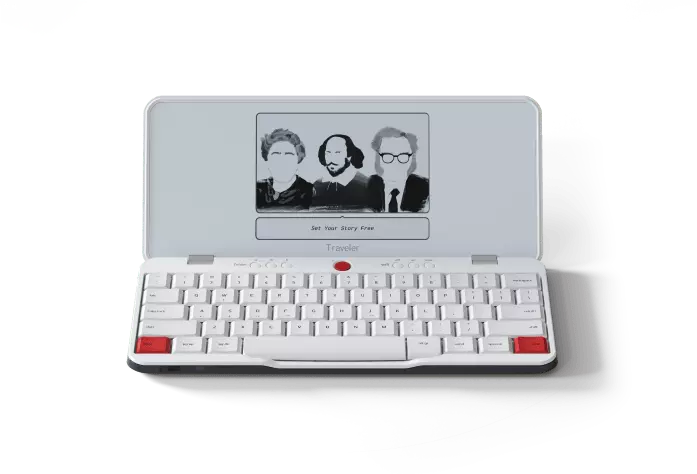
1.1. The Auction offers for sale a limited number of Freewrite Traveler Ghost Edition units (“Items” or “Ghost Traveler units”), each personally signed and drawn on by a featured author.

1.2. All proceeds, net of explicitly disclosed administrative costs, will be donated to the charity or charitable initiative (“Charity”) identified on each auction item’s page, as chosen by the respective author.

2. Eligibility

2.1. Participants must be at least 18 years old or the age of majority in their jurisdiction, whichever is higher.

2.2. Employees of Freewrite, the participating authors, or any affiliates directly involved in the Auction are not eligible to bid.

2.3. By participating, you represent that you are legally permitted to take part in online auctions and to pay for any bids you win.

3. Auction Registration

3.1. Participants must create an account on the auction platform or otherwise register using accurate, current, and complete information.

3.2. Freewrite reserves the right to verify identity and to disqualify any Participant who provides false or misleading information.

4. Bidding Rules

4.1. All bids are binding, final, and non-retractable.

4.2. Bidders are responsible for monitoring their bids; Freewrite is not liable for missed notifications or technical issues on the auction platform or the Participant’s device.

4.3. Freewrite reserves the right to:

  • set minimum bids or bid increments;
  • reject bids deemed in bad faith or intended to disrupt the Auction;
  • extend, pause, or cancel the Auction in case of technical difficulties, fraud, or events beyond reasonable control.

5. Winning Bids and Payment

5.1. The highest valid bid at the close of the Auction is the Winning Bid, and the corresponding Participant becomes the Winner.

5.2. Winners will receive payment instructions and must complete payment within 48 hours of the auction’s close unless otherwise stated.

5.3. Failure to complete payment on time may result in forfeiture, and Freewrite may offer the Item to the next highest bidder.

5.4. Accepted payment methods will be listed on the Auction platform. All payments must be made in the currency specified.

6. Item Description and Condition

6.1. Each Ghost Traveler unit is authentic, and the signatures, doodles, and messages are original works created by the participating author. These are authors, not artists. By bidding on the Item, you acknowledge that you are receiving a one-of-a-kind unit marked with unique art and messages and you agree to these terms and conditions.

6.2. Because Items are customized and signed by hand, variations, imperfections, or unique marks are to be expected. These are considered part of the Item’s character and not defects.

6.3. Items are provided “as-is” and “as-available.” Freewrite makes no warranties of merchantability or fitness for a particular purpose.

7. Shipping & Delivery

7.1. Shipping costs, import duties, and taxes may apply unless explicitly stated otherwise.

7.2. Freewrite will make reasonable efforts to ship Items within the estimated timeline but cannot guarantee delivery dates.

7.3. Title and risk of loss transfer to the Winner upon delivery to the carrier.

7.4. Freewrite is not responsible for delays, damage, or loss caused by the courier or customs agencies.

8. Charity Donation

8.1. Net proceeds from the Auction will be donated to the Charity designated on each Item page.

8.2. Donation amounts and recipients may be disclosed publicly unless prohibited by law.

8.3. Winners acknowledge that they are purchasing Items, not making a tax-deductible donation to Freewrite; therefore, Winners will not receive charitable tax receipts unless Freewrite explicitly states otherwise in compliance with applicable laws.

9. Intellectual Property

9.1. All trademarks, brand names, product names, and creative materials associated with Freewrite and the Ghost Traveler remain the exclusive property of Freewrite or their respective rights holders.

9.2. Participants may not reproduce, distribute, or publicly display the authors’ doodles without permission where such rights are applicable, except as allowed by law (e.g., resale of the physical Item).

10. Privacy

10.1. By participating, you consent to Freewrite’s collection, use, and storage of your personal data in accordance with our Privacy Policy.

10.2. Freewrite may publicly announce auction results, including Winner’s first name, last initial, city, state/country, and winning bid amount unless prohibited by law or unless you formally request anonymity when possible.

11. Prohibited Conduct

Participants may not:

  • engage in bid manipulation, fraud, or collusive bidding;
  • use automated systems (bots, scripts, scrapers) to place or monitor bids;
  • interfere with the Auction, platform, or other participants

Freewrite may ban or disqualify any Participant violating these rules.

12. Limitation of Liability

To the fullest extent permitted by law:

12.1. Freewrite is not liable for indirect, incidental, special, or consequential damages arising from the Auction or purchase of Items.

12.2. Freewrite’s total liability in connection with these Terms shall not exceed the amount of the Winning Bid actually paid by the Participant.

12.3. Freewrite is not responsible for technical malfunctions, internet outages, system failures, or other issues beyond its control.

13. Cancellation and Force Majeure

Freewrite may cancel, postpone, or modify the Auction due to unforeseen circumstances, including but not limited to natural disasters, system failures, strikes, or events affecting participating authors or the Charity.

14. Governing Law & Dispute Resolution

14.1. These Terms are governed by the laws of Michigan, without regard to conflict-of-law rules.

14.2. Any disputes arising under these Terms will be resolved through binding arbitration or the courts of the specified jurisdiction, as applicable.

14.3. Participants waive any right to participate in class-action lawsuits relating to the Auction.

15. Amendments

Freewrite may update these Terms at any time. Continued participation in the Auction after updates constitutes acceptance of the revised Terms.

16. Contact Information

For questions or concerns regarding the Auction or these Terms, contact: hello@getfreewrite.com.

noviembre 25, 2025 1 lectura mínima

This is a great gratitude writing exercise to be done alone or in a group, with people of any age.

How to Play

    1. Designate someone to read out each prompt below. (Feel free to add your own prompts.)
    2. After each prompt is read, set a timer for one minute. (With younger kids, this can be shortened. For older folks who want to freewrite meaningfully, more time can be added.)
    3. Each person freewrites by finishing the sentence and elaborating until the timer goes off. (For little kids, this can be done verbally with an adult recording their answers. Hilarity will ensue.)
    4. Remeber that freewriting — allowing yourself to write with abandon — enables you to let go, tapping into your subconscious to explore your thoughts more deeply.
    5. When everyone is done with all the prompts, take turns going through some your answers. Some people may be eager to share. Others may not want to. Respect their decision.

The Prompts

  • I'm grateful for... [After you've finished this prompt, repeat it five times. Challenge yourself and others not to repeat a singe word with each new answer.]
  • The silliest thing I'm grateful for is...
  • The littlest thing I'm grateful for is...
  • The biggest thing I'm grateful for is...
  • The grossest thing I'm grateful for is...
  • One thing I love about myself is...
  • My favorite thing that happened this year was...
  • My hope for next year is...

This writing exercise has resulted in some sweet answers — and many hilarious ones, too. If you try it out, do let us know.

Write on.

noviembre 21, 2025 4 lectura mínima

For the release of Sailfish, our new firmware update for Smart Typewriter Gen3 and Traveler, we created a brand-new boot-up animation to surprise and delight our writers.

We worked with talented Danish animator Mathias Lynge to bring our experience of the writer's journey to life.

We had a blast visualizing the writer's journey in this new way. Our engineers also had a blast (or something less than a blast) figuring out how to adjust this fun, playful animation to E Ink's very tricky specifications. Hello, refresh rate woes! But we think the result is pretty fun.

"The little animation made my day when I noticed. I love a good flourish."

- Freewrite user

The process of creating this animation was long and full of Zoom calls where we deeply discussed the writing process. We were struck through those conversations by how much overlap there is in creative processes of all disciplines.

So we sat down to chat with Mathias about his creative process and what it's like being a full-time animator.

ANNIE COSBY: Let's start with the basics. What kind of art do you make?

MATHIAS LYNGE: I'm a 2D animator and motion designer working freelance with a wide range of clients. The style varies depending on the project, but it’s usually either a hand-drawn look animated frame-by-frame on a drawing tablet, or a more digital, vectorized look made in After Effects.

While much of what I do is commercial work, I try to keep up with my own passion projects as well. That could be a 10-second Instagram loop of a nature scene, or an interesting character design I’ve sketched down with a pencil. It’s there that I get to sharpen my skills and try out new techniques, which often find their way into later client projects.

AC: You often share educational content on social media for other artists. Are you formally trained, or did you teach yourself?

ML: I’m mostly self-taught. I’ve been drawing for as long as I can remember, but it wasn’t until I went to university that I realized drawing could become a career.

When I first heard terms like “motion design” and “The 12 Principles of Animation” I was on a student exchange program at UCSB in California, where I had chosen a class called "Introduction to Animation." It was a big eye-opener for me, and from that point I was hooked.

But it’s mainly been online YouTube tutorials and my existing drawing experience that have taught me what I know.

Now, I have a big presence on social media, where I share my art as well as educational content centered around animation in Adobe After Effects, so I guess you could say that I'm also an animation influencer!

I’ve been drawing for as long as I can remember, but it wasn’t until I went to university that I realized drawing could become a career.

AC: That's actually how I first found your work. Do you have any specific artists who inspire you?

ML:In the world of 2D animation, I have a list of personal heroes that inspire me with their unique style: Reece Parker, Ariel Costa a.k.a. BlinkMyBrain, and Tony Babel, to name a few.

I also find a lot of inspiration from illustrators and painters I discover online, on platforms such as Pinterest. Last year I made a sparkling water animation that was heavily inspired by Cornwall-based artist Gordon Hunt. He makes these beautiful nature-inspired pointillist paintings that capture how light hits the ocean using colorful dots of paint. I tried to recreate that effect using After Effects to bring it to life, and it led me to a whole new way of animating within the program.

AC: Where else do you draw inspiration to create your work?

ML: I’m heavily inspired by the nature and cityscapes around me in Copenhagen, and I find that taking long walks through parks or down the streets of my neighborhood really sparks my imagination.

I’ll often carry around a sketchbook to quickly scribble down an idea or a loose sketch of something I find interesting, such as seeing how the light from a lamppost hits the surrounding leaves, or how the wind moves the tree in a certain way.

Then I’ll think to myself, “I wonder if I can recreate that motion using a specific technique in After Effects?”

I’m heavily inspired by the nature and cityscapes around me in Copenhagen...

AC: What does your daily routine look like as a full-time artist?

ML: It varies a lot, but I’m usually either working hard on a client project or tinkering away with a new animation tutorial for my social media channels.

I love being able to switch between the two, and when I’m going through a client dry spell, I find that staying creative and posting animation-related content helps keep me inspired while also putting things out into the world that may lead to my next client down the road.

AC: What's your #1 piece of advice for animators new to the industry?

ML: Keep experimenting and trying out new techniques. There’s no such thing as running out of creativity, and even though many of the things you try don’t necessarily go anywhere, it’s all experience that adds up and expands your toolbox. It’s a muscle that needs to be worked out regularly.

Plus, you’ll have more awesome animation to choose from when you’re putting together your next showreel or portfolio!

There’s no such thing as running out of creativity...

AC: What's one fun fact about you completely unrelated to animation?

ML:I’m a big sucker for history podcasts, especially if they are about ancient civilizations, such as The History of Rome by Mike Duncan.

I find it fascinating to hear how mankind was able to build such great empires without ever knowing what electricity, cars, or the internet are.

--

Follow along on Mathias's creative journey and find his free educational content on Instagram.

To learn more about working together, find him on LinkedIn or visit his website at www.mathiaslynge.com.

Learn more about Sailfish here.