overlaylink

¿Tengo que matar al ángel? Crianza como escritora y mensajes de Virginia Woolf

Taylor Rebhan
mayo 29, 2024 | 6 lectura mínima

Un fantasma

Virginia Woolf está obsesionada. Por una pregunta tan vieja como el tiempo.

En un documento leído en una sucursal de la Sociedad Nacional para el Servicio de la Mujer en 1931, Woolf se dirige a la multitud de mujeres y describe su fantasma: “La sombra de sus alas cayó sobre mi página; escuché el susurro de sus faldas en la habitación”.

Cada vez que Woolf toma su pluma, el fantasma está allí, susurrándole al oído, intentando guiar su pluma en un acto de posesión.

¿Quién es esta amenaza acechante que acechaba a Woolf mientras escribía?

Era profundamente comprensiva. Era inmensamente encantadora. Era completamente desinteresada. Se destacaba en las difíciles artes de la vida familiar. Se sacrificaba a diario. Si había pollo, cogía la pata; si había corriente de aire, se sentaba en ella... Nunca tuvo una mente ni un deseo propios, sino que prefería siempre compadecerse de las mentes y los deseos de los demás...

Ella es todo lo que la sociedad le dice a Woolf que debería ser.

Ella representa la tensión entre ser una madre cariñosa y una mujer trabajadora. Ella representa la pregunta constante: ¿Es posible ser escritora y madre?

Woolf la llamó "el ángel de la casa". Se inspiró en un poema homónimo de Coventry Patmore, publicado por primera vez en 1854. Pero lejos de ser una historia sobre la lucha por la identidad, el escritor de Patmore, de una extensión casi épica, veneraba a su esposa como la mujer perfecta y describía con profusión los entresijos de su felicidad doméstica. Se hizo fabulosamente famoso por su representación de la mujer ideal y los roles idealizados entre marido y mujer:

“El hombre debe estar complacido; pero complacerlo a él / es el placer de la mujer”.

Realmente inquietante.

Grandes esperanzas

Según Patmore y la sociedad en general, la esposa y madre perfecta era una ama de casa, niñera, cocinera y criada pura y virginal. Se sentía felizmente satisfecha con las labores del hogar, tanto emocionales como físicas. Para Woolf, este ideal de la época victoriana se cernía sobre ella menos como un halo y más como una guillotina. Porque, por encima de todo, el Ángel estaba completamente dedicado a sus hijos.

Esta idea inquebrantable e inquebrantable de devoción absoluta fue la que más persiguió a Woolf. Porque, según este ideal, el rol absorbente de la paternidad no deja espacio para el expansivo acto creativo de la escritura, que en sus profundidades consume al escritor por completo.

Así que Woolf hizo lo que tenía que hacer. Tras muchos forcejeos, agarró al Ángel por el cuello; tomó el tintero y se lo arrojó; la despachó, matándola al final.

Matar al ángel era necesario para que Woolf se convirtiera en “una mujer joven en un dormitorio con un tintero”.

No soy madre ni escritora.

No soy esposa ni escritora.

Simplemente ella misma.

En otras palabras: un escritor.


La pregunta de los cien años

Estamos en el siglo XXI . Las mujeres tienen derecho al voto desde hace un siglo, el control de la natalidad ha facilitado más que nunca la planificación familiar, y 75 millones de mujeres en Estados Unidos tienen empleo . Y, según una muestra de escritoras británicas entre la época medieval y la actualidad, la mitad eran madres . Eso significa una de cada dos.

Sin duda, los cambios de actitud hacia los roles de las mujeres han exorcizado a ángeles como Woolf de la pregunta.

No tan rápido.

A pesar de haberlo escrito hace casi cien años, la experiencia de Woolf en los últimos años de la Inglaterra victoriana aún resuena entre los escritores, en particular entre las mujeres, que aún lidian con los roles de género preestablecidos. Los Ángeles de la Casa podrían tener otro nombre —cambiar Ángeles por Esposas Tradicionales—, pero basta con echar un vistazo a la conversación cultural actual para saber que siguen vivos y coleando.

Y así, la eterna pregunta persiste: ¿Es posible ser escritor y padre?

Lo que dicen los escritores

Desde novelistas hasta poetas, cientos de escritores destacados han opinado sobre esta cuestión. No sorprende que sus respuestas sean tan variadas como los géneros que abordan.

Pero existen tendencias definidas en todo el espectro. La mayoría de los escritores se dividen en tres grupos:

  • No, no es posible (si quieres ser bueno).
  • Sí, es posible (pero con salvedades: y tendrás que hacer sacrificios).
  • No sólo es posible; te convertirá en un mejor escritor.

En el primer grupo, encontramos a escritores como Cyril Connolly, quien no solo se oponía a tener hijos, sino también a casarse a toda costa . Luego está el novelista y cuentista Richard Ford, quien hizo de "No tener hijos" su segunda regla en una lista de diez para escribir ficción. La novelista británica Doris Lessing declaró en una entrevista : "Nadie puede escribir con un niño cerca".

Pero aunque estas respuestas parecen definitivas, al profundizar un poco más, la complejidad de la pregunta se revela. Ford admitió que su Regla n.º 2 era profundamente personal: «Mi esposa y yo simplemente no creíamos ser buenos padres». Hablando por sí mismo y por nadie más, decidió que prefería ser bueno en una cosa que fracasar en dos. Es un sentimiento que refleja el sacrificio inherente que conlleva escribir y ser padre. Ambas requieren mucho trabajo; incluso se podría decir que son actos creativos.

La idea del sacrificio conduce al segundo grupo de escritores, que saben que es posible, pero admiten que la lucha es un acto de equilibrio de proporciones (y consecuencias) épicas.

En sus memorias A Life's Work: On Becoming a Mother , la escritora Rachel Cusk lucha con el mismo fantasma que Woolf:

Para ser madre, debo dejar el teléfono sin contestar, el trabajo sin hacer, los preparativos sin cumplir. Para ser yo misma, debo dejar llorar a la bebé, debo evitar que tenga hambre o dejarla salir por las noches, debo olvidarla para pensar en otras cosas. Lograr ser una cosa significa fracasar en ser la otra…

Cusk plasma su lucha en sus escritos como un tira y afloja constante entre su identidad como madre y su identidad como escritora. Pero con el tiempo, aprende que no tiene por qué haber una guerra entre ambas. Cusk escribe que estableció un límite entre la maternidad y la escritura, uno que transita a su antojo. No necesita sacrificar ni ignorar una ni la otra. Encontró la manera de ser ambas.

Algunos escritores de este grupo de "Sí, pero..." insisten en que ese mismo equilibrio y esfuerzo implican limitar el número de hijos, incluso a uno, como lo expresó célebremente Alice Walker y lo reiteró con polémica Lauren Sandler. Varios escritores han afirmado que se pierde un libro , o dos , por cada hijo.

Y es en el tercer grupo donde encontramos autores que consideran la idea absurda... o que ni siquiera la han considerado. Como señaló Zadie Smith (madre de dos de sus propios hijos) , nadie se ha preguntado nunca si autores masculinos como Tolstói o Dickens tuvieron una producción limitada. Muchas escritoras tienen varios hijos, y no por ello son menos hábiles ni prolíficas. Y, como ella misma afirma elocuentemente, no debería ser la única carga de un padre que trabaja compaginar ambas responsabilidades. Vale la pena luchar por una guardería asequible y unas comunidades que brinden apoyo y fomentarlas.

Para este grupo, la pregunta no es si, sino por qué no.


La respuesta final

Entonces, ¿es posible ser escritor y padre?

No es de sorprender que una pregunta tan íntima reciba respuestas tan individuales.

Detrás de la pregunta se esconde algo mucho más profundo. Mucha gente es médica y madre. Pilotos y madre. Administradores y madre. La lucha que nos atormenta —a todos los seres humanos, y especialmente a las mujeres— es si es posible ser buena escritora y buena madre. Es la voz en nuestra cabeza que cuestiona si podemos ser fieles a nosotros mismos y a los demás. Que nos miente sobre nuestras capacidades. Que nos susurra: «No puedes hacer ambas cosas».

Es el Ángel de la Casa. Y todos tenemos uno. El Ángel es la persona que creemos que deberíamos ser, quien nos impide ser todo lo que podríamos ser.

Tu Ángel podría ser las expectativas entre la carrera que amas y el libro que sabes que tienes dentro de ti.

Ella podría ser el equilibrio entre su próximo libro de poemas y su éxito como candidato “perfecto” al doctorado.

Podría ser el tiempo limitado que tienes y la atención que debes brindar como hijo “perfecto” a un familiar enfermo.

Al final, nos fijamos en los escritores que nos precedieron. Y hacemos lo que hizo Woolf.

Nos sentamos en la silla. Bloqueamos la voz. Estrangulamos la duda.

Matamos al Ángel. Luego, nos concentramos hasta que no quedamos más que nosotros y la página.

Y escribimos.

diciembre 10, 2025 6 lectura mínima

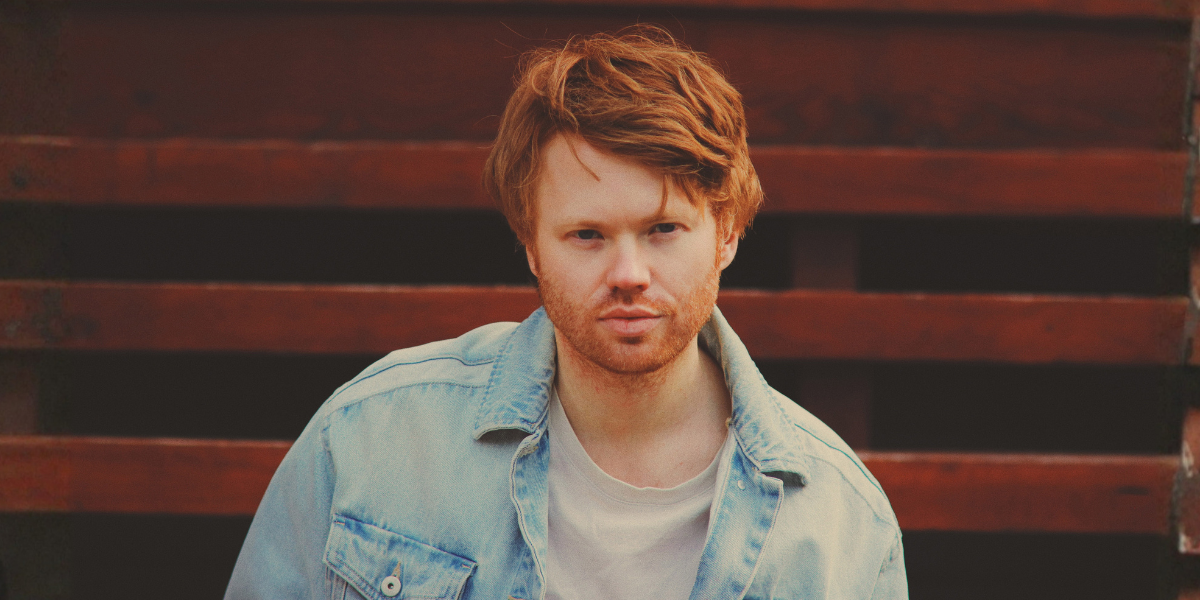
Singer-songwriter Abner James finds his creativity in the quiet freedom of analog tools. Learn how his creative process transcends different media.

Abner James went to school for film directing. But the success of the band he and his brother formed together, Eighty Ninety, knocked him onto a different trajectory.

The band has accrued more than 40 million streams since the release of their debut EP “Elizabeth," and their work was even co-signed by Taylor Swift when the singer added Eighty Ninety to her playlist "Songs Taylor Loves.”

Now, Abner is returning to long-form writing in addition to songwriting, and with a change in media comes an examination of the creative process. We sat down to chat about what's the same — and what's different. 

ANNIE COSBY: Tell us about your songwriting process.

ABNER JAMES: The way I tend to write my songs is hunched over a guitar and just seeing what comes. Sounds become words become shapes. It's a very physical process that is really about turning my brain off.

And one of the things that occurred to me when I was traveling, actually, was that I would love to be able to do that but from a writing perspective. What would happen if I sat down and approached writing in the same way that I approached music? In a more intuitive and free-form kind of way? What would that dig up?

AC: That's basically the ethos of Freewrite.

AJ: Yes. We had just put out a record, and I was thinking about how to get into writing for the next one. It occurred to me that regardless of how I started, I always finished on a screen. And I wondered: what's the acoustic guitar version of writing?

Where there's not blue light hitting me in the face. Even if I'm using my Notes app, it's the same thing. It really gets me into a different mindset.

 "I wondered: what's the acoustic guitar version of writing?"

I grew up playing piano. That was my first instrument. And I found an old typewriter at a thrift store, and I love it. It actually reminded me a lot of playing piano, the kind of physical, the feeling of it. And it was really fun, but pretty impractical, especially because I travel a fair amount.

And so I wondered, is there such a thing as a digital typewriter? And I googled it, and I found Freewrite.

AC: What about Freewrite helps you write?

AJ:I think, pragmatically, just the E Ink screen is a huge deal, because it doesn't exhaust me in the same way. And the idea of having a tool specifically set aside for the process is appealing in an aesthetic way but also a mental-emotional way. When it comes out, it's kind of like ... It's like having an office you work out of. It's just for that.

"The way I tend to write my songs is hunched over a guitar and just seeing what comes. Sounds become words become shapes. It's a very physical process that is really about turning my brain off."

And all of the pragmatic limitations — like you're not getting texts on it, and you're not doing all that stuff on the internet — that's really helpful, too. But just having the mindset....

When I pick up a guitar, or I sit down at the piano, it very much puts me into that space. Having a tool just for words does the same thing. I find that to be really cool and inspiring.

"When I pick up a guitar, or I sit down at the piano, it very much puts me into that space. Having a tool just for words does the same thing."

AC: So mentally it gets you ready for writing.

AJ: Yeah, and also, when you write a Microsoft Word, it looks so finished that it's hard to keep going. If every time I strummed a chord, I was hearing it back, mixed and mastered and produced...?

It's hard to stay in that space when I'm seeing it fully written out and formatted in, like, Times New Roman, looking all seriously back at me.

AC: I get that. I have terrible instincts to edit stuff over and over again and never finish a story.

AJ:  Also, the way you just open it and it's ready to go. So you don't have the stages of the computer turning on, that kind of puts this pressure, this tension on.

It's working at the edges in all these different ways that on their own could feel a little bit like it's not really necessary. All these amorphous things where you could look at it and be like, well, I don't really need any of those. But they add up to a critical mass that actually is significant.

And sometimes, if I want to bring it on a plane, I've found it's replaced reading for me. Rather than pick up a book or bring a book on the plane, I bring Traveler and just kind of hang out in that space and see if anything comes up.

I've found that it's kind of like writing songs on a different instrument, you get different styles of music that you wouldn't have otherwise. I've found that writing from words towards music, I get different kinds of songs than I have in the past, which has been interesting.

In that way, like sitting at a piano, you just write differently than you do on a guitar, or even a bass, because of the things those instruments tend to encourage or that they can do.

It feels almost like a little synthesizer, a different kind of instrument that has unlocked a different kind of approach for me.

"I've found that it's kind of like writing songs on a different instrument, you get different styles of music that you wouldn't have otherwise... [Traveler] feels almost like a little synthesizer, a different kind of instrument that has unlocked a different kind of approach for me."

AC: As someone who doesn't know the first thing about writing music, that's fascinating. It's all magic to me.

AJ: Yeah.

AC: What else are you interested in writing?

AJ: I went to school for film directing. That was kind of what I thought I was going to do. And then my brother and I started the band and that kind of happened first and knocked me onto a different track for a little while after college.

Growing up, though, writing was my way into everything. In directing, I wanted to be in control of the thing that I wrote. And in music, it was the same — the songwriting really feels like it came from that same place. And then the idea of writing longer form, like fiction, almost feels just like the next step from song to EP to album to novel.

For whatever reason, that started feeling like a challenge that would be deeply related to the kinds of work that we do in the studio.

AC: Do you have any advice for aspiring songwriters?

AJ: This sounds like a cliche, but it's totally true: whatever success that I've had as a songwriter — judge that for yourself — but whatever success I have had, has been directly proportional to just writing the song that I wanted to hear.

What I mean by that is, even if you're being coldly, cynically, late-stage capitalist about it, it's by far the most success I've had. The good news is that you don't have to choose. And in fact, when you start making those little compromises, or even begin to inch in that direction, it just doesn't work. So you can forget about it.

Just make music you want to hear. And that will be the music that resonates with most people.

I think there's a temptation to have an imaginary focus group in your head of like 500 people. But the problem is all those people are fake. They're not real. None of those people are actually real people. You're a focus group of one, you're one real person. There are more real people in that focus group than in the imaginary one.

And I just don't think that we're that different, in the end. So that would be my advice.

AC: That seems like generally great creative advice. Because fiction writers talk about that too, right? Do you write to market or do you write the book you want to read. Same thing. And that imaginary focus group has been debilitating for me. I have to silence that focus group before I can write.

AJ: Absolutely.

"I think there's a temptation to have an imaginary focus group in your head of like 500 people. But the problem is all those people are fake... You're a focus group of one, you're one real person. There are more real people in that focus group than in the imaginary one."

--

Learn more about Abner James, his brother, and their band, Eighty Ninety, on Instagram.

noviembre 29, 2025 4 lectura mínima

The Great Freewrite Séance: A Ghost'ly Charity Auction Full Terms & Conditions

These Terms and Conditions (“Terms”) govern participation in The Great Freewrite Séance: A Ghost'ly Charity Auction (“Auction”), organized by Freewrite (“Organizer,” “we,” “us,” or “our”). By registering for, bidding in, or otherwise participating in the Auction, you (“Participant,” “Bidder,” or “Winner”) agree to be bound by these Terms.

1. Auction Overview

1.1. The Auction offers for sale a limited number of Freewrite Traveler Ghost Edition units (“Items” or “Ghost Traveler units”), each personally signed and drawn on by a featured author.

1.2. All proceeds, net of explicitly disclosed administrative costs, will be donated to the charity or charitable initiative (“Charity”) identified on each auction item’s page, as chosen by the respective author.

2. Eligibility

2.1. Participants must be at least 18 years old or the age of majority in their jurisdiction, whichever is higher.

2.2. Employees of Freewrite, the participating authors, or any affiliates directly involved in the Auction are not eligible to bid.

2.3. By participating, you represent that you are legally permitted to take part in online auctions and to pay for any bids you win.

3. Auction Registration

3.1. Participants must create an account on the auction platform or otherwise register using accurate, current, and complete information.

3.2. Freewrite reserves the right to verify identity and to disqualify any Participant who provides false or misleading information.

4. Bidding Rules

4.1. All bids are binding, final, and non-retractable.

4.2. Bidders are responsible for monitoring their bids; Freewrite is not liable for missed notifications or technical issues on the auction platform or the Participant’s device.

4.3. Freewrite reserves the right to:

  • set minimum bids or bid increments;
  • reject bids deemed in bad faith or intended to disrupt the Auction;
  • extend, pause, or cancel the Auction in case of technical difficulties, fraud, or events beyond reasonable control.

5. Winning Bids and Payment

5.1. The highest valid bid at the close of the Auction is the Winning Bid, and the corresponding Participant becomes the Winner.

5.2. Winners will receive payment instructions and must complete payment within 48 hours of the auction’s close unless otherwise stated.

5.3. Failure to complete payment on time may result in forfeiture, and Freewrite may offer the Item to the next highest bidder.

5.4. Accepted payment methods will be listed on the Auction platform. All payments must be made in the currency specified.

6. Item Description and Condition

6.1. Each Ghost Traveler unit is authentic, and the signatures, doodles, and messages are original works created by the participating author. These are authors, not artists. By bidding on the Item, you acknowledge that you are receiving a one-of-a-kind unit marked with unique art and messages and you agree to these terms and conditions.

6.2. Because Items are customized and signed by hand, variations, imperfections, or unique marks are to be expected. These are considered part of the Item’s character and not defects.

6.3. Items are provided “as-is” and “as-available.” Freewrite makes no warranties of merchantability or fitness for a particular purpose.

7. Shipping & Delivery

7.1. Shipping costs, import duties, and taxes may apply unless explicitly stated otherwise.

7.2. Freewrite will make reasonable efforts to ship Items within the estimated timeline but cannot guarantee delivery dates.

7.3. Title and risk of loss transfer to the Winner upon delivery to the carrier.

7.4. Freewrite is not responsible for delays, damage, or loss caused by the courier or customs agencies.

8. Charity Donation

8.1. Net proceeds from the Auction will be donated to the Charity designated on each Item page.

8.2. Donation amounts and recipients may be disclosed publicly unless prohibited by law.

8.3. Winners acknowledge that they are purchasing Items, not making a tax-deductible donation to Freewrite; therefore, Winners will not receive charitable tax receipts unless Freewrite explicitly states otherwise in compliance with applicable laws.

9. Intellectual Property

9.1. All trademarks, brand names, product names, and creative materials associated with Freewrite and the Ghost Traveler remain the exclusive property of Freewrite or their respective rights holders.

9.2. Participants may not reproduce, distribute, or publicly display the authors’ doodles without permission where such rights are applicable, except as allowed by law (e.g., resale of the physical Item).

10. Privacy

10.1. By participating, you consent to Freewrite’s collection, use, and storage of your personal data in accordance with our Privacy Policy.

10.2. Freewrite may publicly announce auction results, including Winner’s first name, last initial, city, state/country, and winning bid amount unless prohibited by law or unless you formally request anonymity when possible.

11. Prohibited Conduct

Participants may not:

  • engage in bid manipulation, fraud, or collusive bidding;
  • use automated systems (bots, scripts, scrapers) to place or monitor bids;
  • interfere with the Auction, platform, or other participants

Freewrite may ban or disqualify any Participant violating these rules.

12. Limitation of Liability

To the fullest extent permitted by law:

12.1. Freewrite is not liable for indirect, incidental, special, or consequential damages arising from the Auction or purchase of Items.

12.2. Freewrite’s total liability in connection with these Terms shall not exceed the amount of the Winning Bid actually paid by the Participant.

12.3. Freewrite is not responsible for technical malfunctions, internet outages, system failures, or other issues beyond its control.

13. Cancellation and Force Majeure

Freewrite may cancel, postpone, or modify the Auction due to unforeseen circumstances, including but not limited to natural disasters, system failures, strikes, or events affecting participating authors or the Charity.

14. Governing Law & Dispute Resolution

14.1. These Terms are governed by the laws of Michigan, without regard to conflict-of-law rules.

14.2. Any disputes arising under these Terms will be resolved through binding arbitration or the courts of the specified jurisdiction, as applicable.

14.3. Participants waive any right to participate in class-action lawsuits relating to the Auction.

15. Amendments

Freewrite may update these Terms at any time. Continued participation in the Auction after updates constitutes acceptance of the revised Terms.

16. Contact Information

For questions or concerns regarding the Auction or these Terms, contact: hello@getfreewrite.com.

noviembre 25, 2025 1 lectura mínima

This is a great gratitude writing exercise to be done alone or in a group, with people of any age.

How to Play

    1. Designate someone to read out each prompt below. (Feel free to add your own prompts.)
    2. After each prompt is read, set a timer for one minute. (With younger kids, this can be shortened. For older folks who want to freewrite meaningfully, more time can be added.)
    3. Each person freewrites by finishing the sentence and elaborating until the timer goes off. (For little kids, this can be done verbally with an adult recording their answers. Hilarity will ensue.)
    4. Remeber that freewriting — allowing yourself to write with abandon — enables you to let go, tapping into your subconscious to explore your thoughts more deeply.
    5. When everyone is done with all the prompts, take turns going through some your answers. Some people may be eager to share. Others may not want to. Respect their decision.

The Prompts

  • I'm grateful for... [After you've finished this prompt, repeat it five times. Challenge yourself and others not to repeat a singe word with each new answer.]
  • The silliest thing I'm grateful for is...
  • The littlest thing I'm grateful for is...
  • The biggest thing I'm grateful for is...
  • The grossest thing I'm grateful for is...
  • One thing I love about myself is...
  • My favorite thing that happened this year was...
  • My hope for next year is...

This writing exercise has resulted in some sweet answers — and many hilarious ones, too. If you try it out, do let us know.

Write on.