overlaylink

Una mirada directa a la ficción súper extraña

Molly Tullis
septiembre 28, 2024 | 5 lectura mínima

Se dice que la verdad es más extraña que la ficción, pero ese no es el caso en algunos de los géneros más aventureros del mundo editorial.

Desde romances con extraterrestres hasta citas dobles con minotauros, si puedes imaginarlo, probablemente haya un libro al respecto.

Aunque el lector promedio de Barnes & Noble podría hacer una doble toma ante una portada de dibujos animados de una mujer humana y Mothman , los lectores están devorando estos libros y encontrando empoderamiento y consuelo en estas historias.

De hecho, algunos de los géneros más “extraños” se están convirtiendo en bestsellers y creando bases enteras de seguidores en torno a temas nicho, en parte debido al auge de las publicaciones independientes y los servicios de publicación directa Kindle de Amazon.

Hoy en día, la ficción "extraña" y "superextraña" solo resulta extraña y confusa para quienes no la entienden. Así que analicémosla y hablemos con algunos de los autores que escriben historias que nunca llegaron a formar parte del programa de literatura clásica de la universidad. (Pero, ¿quién sabe? Quizás sí lo sean en el futuro).

Más extraño que (la mayoría de) la ficción

Varias cualidades definen la ficción "extraña" y "rara", pero se está volviendo cada vez más popular en el mundo del romance. Las novelas románticas que no tienen dos protagonistas humanos —sí, has leído bien— suelen pertenecer a este género. Sin embargo, antes de que la gente empiece a quejarse, es fundamental destacar que todos los participantes de este género son conscientes, consienten y mayores de edad. Estas historias contienen temas poco convencionales, personajes peculiares y especies completamente diferentes que se burlan de la ficción o el romance tradicionales.

Los lectores de romance de monstruos, paranormal y extraterrestre adoran este género por múltiples razones: para muchos, puede ser increíblemente útil para sanar traumas o celebrar aspectos únicos de su identidad. Algunos lectores que han vivido situaciones traumáticas en su vida romántica podrían buscar una vía de escape que no implique a otra pareja humana, mientras que otros disfrutan leyendo sobre personajes que desafían por completo las anticuadas reglas de la heterosexualidad y la expresión de género, tan a menudo impuestas por nuestra sociedad patriarcal.

A veces, no es tan grave: los lectores pueden disfrutar leyendo sobre extraterrestres masculinos diseñados biológicamente para su placer.

El reciente éxito desbocado de estos subgéneros se puede atribuir al auge de las comunidades literarias en plataformas como TikTok e Instagram. Sin embargo, los lectores han recurrido a las novelas románticas de monstruos durante décadas, incluso desde la antigüedad.

R Los líderes han recurrido a los romances de monstruos durante décadas, y desde la antigüedad.

Los humanos siempre han sido raros

Puedes encontrar tropos y arcos argumentales similares en obras clásicas como Drácula de Bram Stoker , el clásico cuento de hadas de La Bella y la Bestia , Frankenstein de Mary Shelley y el mito griego del minotauro y el laberinto .

Si bien algunos de estos ejemplos históricos y otras obras publicadas del género abordan temas problemáticos de "otredad", como personajes BIPOC o LGBTQ+, también han brindado un espacio para que algunos lectores exploren sus identidades y generen empatía. Asimismo, el género de terror, con clásicos como Drácula y Frankenstein , ha sido analizado durante mucho tiempo por sus temáticas queer.

Aunque los temas modernos pueden parecer impactantes, estos libros “extraños” siempre han sido un refugio para aquellos que no se sienten vistos o cómodos con los libros románticos tradicionales o la ficción literaria.

El ascenso de los géneros “extraños” en el siglo XXI no es tanto una revelación sino más bien un renacimiento, salvo que, esta vez, ha salido a la luz y se muestra orgulloso.

El ascenso de los géneros “extraños” en el siglo XXI no es tanto una revelación sino más bien un renacimiento, salvo que, esta vez, ha salido a la luz y se muestra orgulloso.

Conozca a los autores que se ganan la vida con los monstruos

Clio Evans es una exitosa autora de novelas románticas de monstruos y extraterrestres, con más de 20 obras publicadas en su catálogo. Atribuye sus inicios en este género a algunas de las obras de ficción más clásicas.

Siempre me han fascinado los monstruos: vampiros, hombres lobo, de todo. Cuando me lancé a escribir novelas románticas de monstruos, estaba de luto y quería escribir algo sexy y divertido.

El romance de monstruos como género ha proporcionado ampliamente un espacio para que los lectores exploren y rompan con sus vidas cotidianas, lo que es una razón popular para que la gente lea cualquier cosa.

“Creo que lo mejor del romance con monstruos y extraterrestres es que realmente puedes dar rienda suelta a tu imaginación”, señaló Evans. “Puedes desafiar las normas y expectativas sociales y explorar fantasías sexuales: tentáculos, garras, nudos y todo lo demás”.

Si bien esto puede sorprender a los lectores primerizos, Evans explicó que muchos lectores eligen un libro de romance de monstruos por la novedad y se sorprenden con el contenido que contiene.

“Lo que he escuchado de muchos lectores es que inicialmente leyeron una novela romántica de monstruos o extraterrestres por el factor sorpresa, pero luego se convirtieron en grandes fanáticos del género debido a las emociones reflexivas y las exploraciones de identidades, perversiones, etc., dentro de los libros”.

C. Rochelle , una popular autora de novelas románticas de ciencia ficción, llama con orgullo a sus fans “Weird-Ho's”, una palabra compuesta de “weird” (raro) y “hoe” (zorra), en referencia al término “weirdo” (bicho raro).

Estos subgéneros han creado un espacio donde muchas personas pueden aprender sobre sí mismas y obtener una comprensión más profunda del mundo que las rodea. ¿Y no es esa una de las razones por las que amamos leer, después de todo?

Muchos lectores eligen un libro de romance de monstruos por la novedad y se sorprenden con el contenido que contiene.

Monstruos en Target

Ashley Bennett , popular autora de novelas románticas de monstruos, no cree que estas novelas ya se consideren un género poco convencional. «Ciertamente no es para todos, pero se ha popularizado en los últimos años gracias a TikTok y los vídeos virales».

Bennett comentó que una de las mejores cosas de escribir en este género es liberarse de las convenciones tradicionales. «Las interpretaciones divertidas de la anatomía son esenciales para el género».

Este tipo de libre expresión y creatividad ha atraído a muchos escritores y lectores a géneros editoriales más peculiares. Y si bien este auge se debe a la publicación independiente, las editoriales tradicionales también están empezando a tomar nota.

Ice Planet Barbarians de Ruby Dixon , una serie de más de 20 libros que presenta un romance extraterrestre, se volvió viral en TikTok en 2021. Se volvió tan viral que a Dixon le ofrecieron un contrato de publicación tradicional, y ahora puedes encontrar sus bárbaros en tu estantería de romance local en Target.

[Ruby Dixon's [La serie] se volvió tan viral que a Dixon le ofrecieron un contrato de publicación tradicional, y ahora puedes encontrar a sus bárbaros en tu estantería de novelas románticas local en Target.

--

Al final del día, estos subgéneros “extraños” modernos crean comunidades abrumadoramente inclusivas en comparación con los espacios literarios tradicionales, recuperando y abandonando algunos de los temas problemáticos de los romances de monstruos o subgéneros de la antigüedad.

En Morning Glory Milking Farm de CM Nascosta , el romance entre el minotauro y la mujer humana es consensuado, una gran mejora respecto del mito griego original del minotauro y el laberinto.

Evans cree que los subgéneros y la ficción extraña del mundo editorial sólo se expandirán.

Ya hemos visto cómo el romance entre monstruos y extraterrestres se ha convertido en parte de la industria cinematográfica convencional. Y, la verdad, no es una sorpresa. Los monstruos y los extraterrestres están de moda.

La próxima vez que busques un libro y busques una vía de escape, ¿por qué no pruebas con el Hombre Polilla o un extraterrestre? Sabes que será una historia de otro mundo.
diciembre 30, 2025 3 lectura mínima

It’s Freewrite’s favorite time of year. When dictionaries around the world examine language use of the previous year and select a “Word of the Year.”

Of course, there are many different dictionaries in use in the English language, and they all have different ideas about what word was the most influential or saw the most growth in the previous year. They individually review new slang and culturally relevant vocabulary, examine spikes or dips in usage, and pour over internet trend data.

Let’s see what some of the biggest dictionaries decided for 2025. And read to the end for a chance to submit your own Word of the Year — and win a Freewrite gift card.

[SUBMIT YOUR WORD OF THE YEAR]


Merriam-Webster: "slop"

Merriam-Webster chose "slop" as its Word of the Year for 2025 to describe "all that stuff dumped on our screens, captured in just four letters."

The dictionary lists "absurd videos, off-kilter advertising images, cheesy propaganda, fake news that looks pretty real, junky AI-written books, 'workslop' reports that waste coworkers’ time … and lots of talking cats" as examples of slop.

The original sense of the word "slop" from the 1700s was “soft mud” and eventually evolved to mean "food waste" and "rubbish." 2025 linked the term to AI, and the rest is history.

Honorable mentions: conclave, gerrymander, touch grass, performative, tariff, 67.

Dictionary.com: "67"

The team at Dictionary.com likes to pick a word that serves as “a linguistic time capsule, reflecting social trends and global events that defined the year.”

For 2025, they decided that “word” was actually a number. Or two numbers, to be exact.

If you’re an old, like me, and don’t know many school-age children, you may not have heard “67” in use. (Note that this is not “sixty-seven,” but “six, seven.”)

Dictionary.com claims the origin of “67” is a song called “Doot Doot (6 7)” by Skrilla, quickly made infamous by viral TikTok videos, most notably featuring a child who will for the rest of his life be known as the “6-7 Kid.” But according to my nine-year-old cousin, the origins of something so mystical can’t ever truly be known.

(My third grade expert also demonstrated the accompanying signature hand gesture, where you place both hands palms up and alternately move up and down.)

And if you happen to find yourself in a fourth-grade classroom, watch your mouth, because there’s a good chance this term has been banned for the teacher’s sanity.

Annoyed yet? Don’t be. As Dictionary.com points out, 6-7 is a rather delightful example at how fast language can develop as a new generation joins the conversation.

Dictionary.com honorable mentions: agentic, aura farming, broligarchy, clanker, Gen Z stare, kiss cam, overtourism, tariff, tradwife.

Oxford Dictionary: "rage bait"

With input from more than 30,000 users and expert analysis, Oxford Dictionary chose "rage bait" for their word of the year.

Specifically, the dictionary pointed to 2025’s news cycle, online manipulation tactics, and growing awareness of where we spend our time and attention online.

While closely paralleling its etymological cousin "clickbait," rage bait more specifically denotes content that evokes anger, discord, or polarization.

Oxford's experts report that use of the term has tripled in the last 12 months.

Oxford Dictionary's honorable mentions:aura farming, biohack.

Cambridge Dictionary: "parasocial"

The Cambridge Dictionary examined a sustained trend of increased searches to choose "parasocial" as its Word of the Year.

Believe it or not, this term was coined by sociologists in 1956, combining “social” with the Greek-derived prefix para-, which in this case means “similar to or parallel to, but separate from.”

But interest in and use of the term exploded this year, finally moving from a mainly academic context to the mainstream.

Cambridge Dictionary's honorable mentions: slop, delulu, skibidi, tradwife

Freewrite: TBD

This year, the Freewrite Fam is picking our own Word of the Year.

Click below to submit what you think the Word of 2025 should be, and we'll pick one submission to receive a Freewrite gift card.

[SUBMIT HERE] 

--

Sources

diciembre 18, 2025 5 lectura mínima

¿Qué pueden enseñar las cartas personales de Jane Austen a los escritores?

diciembre 10, 2025 6 lectura mínima

Singer-songwriter Abner James finds his creativity in the quiet freedom of analog tools. Learn how his creative process transcends different media.

Abner James went to school for film directing. But the success of the band he and his brother formed together, Eighty Ninety, knocked him onto a different trajectory.

The band has accrued more than 40 million streams since the release of their debut EP “Elizabeth," and their work was even co-signed by Taylor Swift when the singer added Eighty Ninety to her playlist "Songs Taylor Loves.”

Now, Abner is returning to long-form writing in addition to songwriting, and with a change in media comes an examination of the creative process. We sat down to chat about what's the same — and what's different. 

ANNIE COSBY: Tell us about your songwriting process.

ABNER JAMES: The way I tend to write my songs is hunched over a guitar and just seeing what comes. Sounds become words become shapes. It's a very physical process that is really about turning my brain off.

And one of the things that occurred to me when I was traveling, actually, was that I would love to be able to do that but from a writing perspective. What would happen if I sat down and approached writing in the same way that I approached music? In a more intuitive and free-form kind of way? What would that dig up?

AC: That's basically the ethos of Freewrite.

AJ: Yes. We had just put out a record, and I was thinking about how to get into writing for the next one. It occurred to me that regardless of how I started, I always finished on a screen. And I wondered: what's the acoustic guitar version of writing?

Where there's not blue light hitting me in the face. Even if I'm using my Notes app, it's the same thing. It really gets me into a different mindset.

 "I wondered: what's the acoustic guitar version of writing?"

I grew up playing piano. That was my first instrument. And I found an old typewriter at a thrift store, and I love it. It actually reminded me a lot of playing piano, the kind of physical, the feeling of it. And it was really fun, but pretty impractical, especially because I travel a fair amount.

And so I wondered, is there such a thing as a digital typewriter? And I googled it, and I found Freewrite.

AC: What about Freewrite helps you write?

AJ:I think, pragmatically, just the E Ink screen is a huge deal, because it doesn't exhaust me in the same way. And the idea of having a tool specifically set aside for the process is appealing in an aesthetic way but also a mental-emotional way. When it comes out, it's kind of like ... It's like having an office you work out of. It's just for that.

"The way I tend to write my songs is hunched over a guitar and just seeing what comes. Sounds become words become shapes. It's a very physical process that is really about turning my brain off."

And all of the pragmatic limitations — like you're not getting texts on it, and you're not doing all that stuff on the internet — that's really helpful, too. But just having the mindset....

When I pick up a guitar, or I sit down at the piano, it very much puts me into that space. Having a tool just for words does the same thing. I find that to be really cool and inspiring.

"When I pick up a guitar, or I sit down at the piano, it very much puts me into that space. Having a tool just for words does the same thing."

AC: So mentally it gets you ready for writing.

AJ: Yeah, and also, when you write a Microsoft Word, it looks so finished that it's hard to keep going. If every time I strummed a chord, I was hearing it back, mixed and mastered and produced...?

It's hard to stay in that space when I'm seeing it fully written out and formatted in, like, Times New Roman, looking all seriously back at me.

AC: I get that. I have terrible instincts to edit stuff over and over again and never finish a story.

AJ:  Also, the way you just open it and it's ready to go. So you don't have the stages of the computer turning on, that kind of puts this pressure, this tension on.

It's working at the edges in all these different ways that on their own could feel a little bit like it's not really necessary. All these amorphous things where you could look at it and be like, well, I don't really need any of those. But they add up to a critical mass that actually is significant.

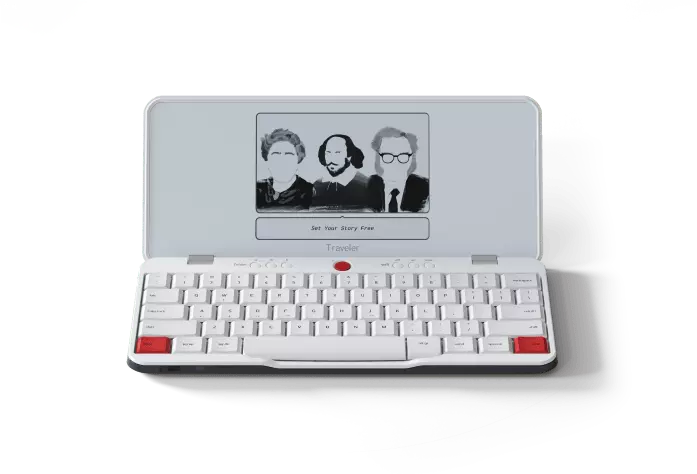
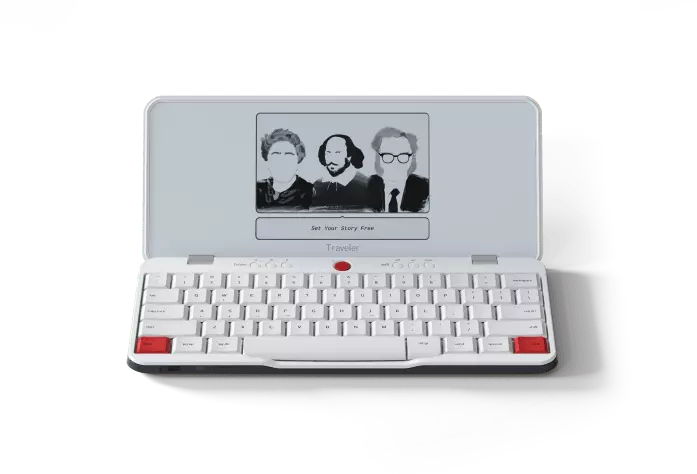
And sometimes, if I want to bring it on a plane, I've found it's replaced reading for me. Rather than pick up a book or bring a book on the plane, I bring Traveler and just kind of hang out in that space and see if anything comes up.

I've found that it's kind of like writing songs on a different instrument, you get different styles of music that you wouldn't have otherwise. I've found that writing from words towards music, I get different kinds of songs than I have in the past, which has been interesting.

In that way, like sitting at a piano, you just write differently than you do on a guitar, or even a bass, because of the things those instruments tend to encourage or that they can do.

It feels almost like a little synthesizer, a different kind of instrument that has unlocked a different kind of approach for me.

"I've found that it's kind of like writing songs on a different instrument, you get different styles of music that you wouldn't have otherwise... [Traveler] feels almost like a little synthesizer, a different kind of instrument that has unlocked a different kind of approach for me."

AC: As someone who doesn't know the first thing about writing music, that's fascinating. It's all magic to me.

AJ: Yeah.

AC: What else are you interested in writing?

AJ: I went to school for film directing. That was kind of what I thought I was going to do. And then my brother and I started the band and that kind of happened first and knocked me onto a different track for a little while after college.

Growing up, though, writing was my way into everything. In directing, I wanted to be in control of the thing that I wrote. And in music, it was the same — the songwriting really feels like it came from that same place. And then the idea of writing longer form, like fiction, almost feels just like the next step from song to EP to album to novel.

For whatever reason, that started feeling like a challenge that would be deeply related to the kinds of work that we do in the studio.

AC: Do you have any advice for aspiring songwriters?

AJ: This sounds like a cliche, but it's totally true: whatever success that I've had as a songwriter — judge that for yourself — but whatever success I have had, has been directly proportional to just writing the song that I wanted to hear.

What I mean by that is, even if you're being coldly, cynically, late-stage capitalist about it, it's by far the most success I've had. The good news is that you don't have to choose. And in fact, when you start making those little compromises, or even begin to inch in that direction, it just doesn't work. So you can forget about it.

Just make music you want to hear. And that will be the music that resonates with most people.

I think there's a temptation to have an imaginary focus group in your head of like 500 people. But the problem is all those people are fake. They're not real. None of those people are actually real people. You're a focus group of one, you're one real person. There are more real people in that focus group than in the imaginary one.

And I just don't think that we're that different, in the end. So that would be my advice.

AC: That seems like generally great creative advice. Because fiction writers talk about that too, right? Do you write to market or do you write the book you want to read. Same thing. And that imaginary focus group has been debilitating for me. I have to silence that focus group before I can write.

AJ: Absolutely.

"I think there's a temptation to have an imaginary focus group in your head of like 500 people. But the problem is all those people are fake... You're a focus group of one, you're one real person. There are more real people in that focus group than in the imaginary one."

--

Learn more about Abner James, his brother, and their band, Eighty Ninety, on Instagram.