overlaylink

Le pouvoir du porno : un aperçu du genre préféré des internautes

Molly Tullis
septembre 28, 2024 | 6 lire la lecture

En 2023, les romans d'amour ont généré plus de 1,44 milliard de dollars de revenus , ce qui en fait le genre de fiction le plus rentable.

Si le roman d'amour connaît un succès fulgurant depuis des décennies, ses ventes ont explosé ces dernières années. 39 millions d'exemplaires imprimés de romans d'amour ont été vendus au cours des 12 mois précédant mai 2023, soit une augmentation de 50 % par rapport à l'année précédente.

Alors, qu’est-ce qui se cache derrière cet ouragan éditorial ?

La numérisation de la romance

Le roman « romance à porte ouverte », ou « smut », est un genre de romans qui contiennent des scènes sexuelles explicites, en plus de leur intrigue. Le terme « érotique » désigne des livres presque entièrement composés de scènes explicites, avec une intrigue minimale et des détails supplémentaires. (Ces définitions seront importantes plus tard. Vous avez compris ?) Ces deux sous-catégories dominent actuellement l'industrie, et ce pour plusieurs raisons.

Tout d'abord, il faut considérer l'expansion des espaces de lecture en ligne, qui attirent désormais les jeunes lecteurs. Autrefois, la tranche d'âge des lecteurs de romance était de 35 à 54 ans, mais elle est désormais de 18 à 44 ans. Merci à BookTok et Bookstagram !

De plus, le monde est passé au numérique, et l'édition ne fait pas exception. Si les romans érotiques et les romances à cœur ouvert existent depuis l'Antiquité , ces dernières années, l'essor des livres numériques, des liseuses et de la Kindle Unlimited d'Amazon a entraîné une augmentation massive de leur disponibilité. Pourtant, le terme « érotique » est encore parfois utilisé avec mépris.

(Le mot « smut » est un mot du 16e siècle !)

Les lecteurs de romans d'amour (tous sous-genres confondus) ont toujours été majoritairement féminins et généralement victimes de stéréotypes et d'ostracisme. Prenons l'exemple de la dame aux chats solitaire. Mais ces dernières années, à mesure que les femmes ont pris leur Kindle et trouvé des espaces de rencontre, elles se sont réapproprié le mot « smut » et l'affichent désormais fièrement sur des produits dérivés : des t-shirts aux mugs en passant par les marque-pages « Smut Scholar » ou « Spicy Book Lover ».

En bref : Internet a rapidement et largement dé-stigmatisé les romances ouvertes, même si les éditeurs traditionnels les ignorent encore rapidement.

À l’avant-garde de cette croissance se trouvent les auteurs, principalement des femmes, qui publient de manière indépendante – familièrement et affectueusement appelés « indies ».

Certains de ces auteurs engrangent des sommes considérables, s'attirent des fans inconditionnels et bouleversent le monde littéraire traditionnel. Tandis que les acteurs plus conventionnels de l'édition continuent de faire la fine bouche, ces auteurs indépendants s'en donnent à cœur joie et emportent des lecteurs avec eux.

Alors que les acteurs plus conventionnels de l’industrie de l’édition continuent de faire la fine bouche, ces indépendants s’en moquent jusqu’à la banque – et emportent les lecteurs avec eux.

Les finances de Smut

Alors que la romance ouverte est passée du statut de « tabou » à celui de tendance, l’essor des plateformes numériques et de l’autoédition a permis aux écrivains et aux lecteurs de créer et d’apprécier ce qu’ils aiment, sans barrières.

Alessa Thorn est une auteure de romances paranormales et urbaines qui propose un contenu ouvert à tous. Depuis le début de sa carrière pendant la pandémie, elle a publié plus de 30 livres, cumulant des millions de pages lues (un indicateur pour les livres numériques sur la plateforme KDP d'Amazon) et des milliers de critiques positives. De plus, elle est entièrement auto-éditée.

« L'essor de l'autoédition a contribué à l'essor du genre », explique-t-elle. « Auparavant, très peu de maisons d'édition s'intéressaient à la publication de romances explicites. Les genres romantiques comme l'érotisme ou même le paranormal étaient à peine reconnus par l'industrie. L'autoédition a offert aux auteurs et aux lecteurs de ce genre un espace où s'approprier leurs propres œuvres, et a prouvé à maintes reprises l'appétit des lecteurs pour ce type de livres. »

Thorn est aujourd'hui auteure indépendante à temps plein, quelques années seulement après le lancement de sa carrière. Elle attribue la majeure partie de ses revenus aux ventes de livres autoédités et au marché du livre numérique, et utilise également la plateforme d'auteurs Ream pour publier des séries.

De même, C. Rochelle , auteur populaire de science-fiction et de romances paranormales, attribue sa carrière entièrement aux plateformes numériques.

« Personnellement, [ils] m'ont tout simplement autorisée à publier ! » déclare Rochelle. « Mon grand-père est mort avec des tonnes d'histoires inédites, faute d'avoir réussi à convaincre un éditeur. J'ai vu mon mari essayer de trouver un agent pendant des années. Je n'ai pas vu l'intérêt d'attendre que quelqu'un d'autre juge mes histoires dignes d'intérêt. »

Mon grand-père est mort avec des tonnes d'histoires inédites, faute d'avoir réussi à convaincre un éditeur. J'ai vu mon mari essayer de trouver un agent pendant des années. Je n'ai pas vu l'intérêt d'attendre que quelqu'un d'autre juge mes histoires dignes d'intérêt.

Combattre la stigmatisation

Bien que de nombreux lecteurs et écrivains se soient réappropriés le mot « smut », une partie de l’ancien stigmate persiste.

Les auteurs ont été la cible de campagnes de diffamation ou de haine, certains « promoteurs de romances propres » dénaturant intentionnellement les romans d'amour ouverts et affirmant à tort que ces livres contiennent du contenu illégal. Karina Halle , auteure de romances explicites à succès selon USA Today , a récemment été attaquée sur les réseaux sociaux.

Des utilisateurs en colère ont faussement présenté l'un de ses livres comme un « livre pédophile » afin de le faire interdire et de faire annuler Halle. La communauté littéraire dans son ensemble a largement soutenu Halle, car les accusations étaient totalement inexactes, mais les dégâts ont été suffisamment importants pour que Halle soit contrainte de contacter son avocat.

Presque tous les auteurs qui écrivent des romances à portes ouvertes ont été confrontés à ce genre de stigmatisation à des degrés divers de gravité.

Thorn a souligné que si le secteur a évolué au fil des ans et que le porno est devenu plus largement accepté, l'auto-édition, quel que soit le genre, reste stigmatisée. « J'ai appris à en rire, car je comprends que ceux qui critiquent le porno ont rarement une idée précise de ce que c'est. »

Bien que de nombreux lecteurs et écrivains se soient réappropriés le mot « smut », une partie de l’ancien stigmate persiste.

Le quotient féminin

Par-dessus tout, les romans d'amour à portes ouvertes constituent un genre littéraire florissant, dominé par les femmes. Comme beaucoup de carrières et d'activités féminines, ces histoires font l'objet de critiques inégales par rapport à leurs homologues masculins.

De nombreuses auteures qui écrivent des romances paranormales ou fantastiques comportant des scènes de portes ouvertes sont à tort qualifiées d'« érotiques ». Si le genre érotique est irréprochable, il diffère de la fantasy et de la romance paranormale, et cette classification erronée finit par semer la confusion chez les lecteurs et nuire à la carrière des auteurs. George RR Martin , quant à lui, n'a jamais été qualifié à tort d'écrivain érotique, même s'il écrit des romans fantastiques comportant des scènes de sexe explicites.

En d’autres termes : lorsque les femmes sont derrière la plume, le champ de leur travail tend à se limiter au contenu sexuel.

« L'un des principaux attraits de ce genre est qu'il offre aux femmes un espace sûr pour vivre leurs fantasmes et explorer », explique Thorn. « Lire ce genre d'histoires peut aider à guérir des traumatismes causés par la culture de la pureté, les mauvais partenaires et les abus sexuels. Lire des histoires de femmes qui prennent le contrôle de leur plaisir peut être incroyablement enrichissant. »

Rochelle a souligné que la romance est un genre en soi, un genre stimulant. « Ajoutez-y du piquant, parfois même explicite, et vous obtenez une révolution. Le message est clair : les auteurs et les lecteurs peuvent décider de la dynamique de leur relation, de leurs penchants et de leurs orientations sexuelles, au lieu de suivre les règles et les attentes supposées d'une société patriarcale et puritaine. »

Et je suis d'accord. Les lecteurs et les auteurs de romans d'amour à portes ouvertes redéfinissent un héritage de contenu explicite qui remonte à l'Antiquité. Sauf que cette fois, ils le remodèlent à leur image et bousculent les attentes de la société, tout en gagnant de l'argent et en s'amusant.

Les lecteurs et les auteurs de romans à portes ouvertes redéfinissent un héritage de contenu explicite qui remonte à l'Antiquité. Sauf que cette fois, ils le remodèlent à leur image et bousculent les attentes de la société, tout en gagnant de l'argent et en s'amusant.

« Il n’y a rien de plus terrifiant pour certains que des femmes qui sont sexuellement autonomes et qui partagent des histoires », a déclaré Thorn.

Des vieilles filles et des femmes célibataires aux lecteurs Kindle d'aujourd'hui, les auteurs et les lecteurs de romans d'amour ont toujours été radicaux. Ils ne sont pas près de ralentir, et leurs chiffres de vente le prouvent.

Surveillez ce genre au cours des prochaines années alors qu’il continue d’évoluer et de défendre des valeurs radicales et inclusives dans notre société – la porte est ouverte, après tout.
décembre 30, 2025 3 lire la lecture

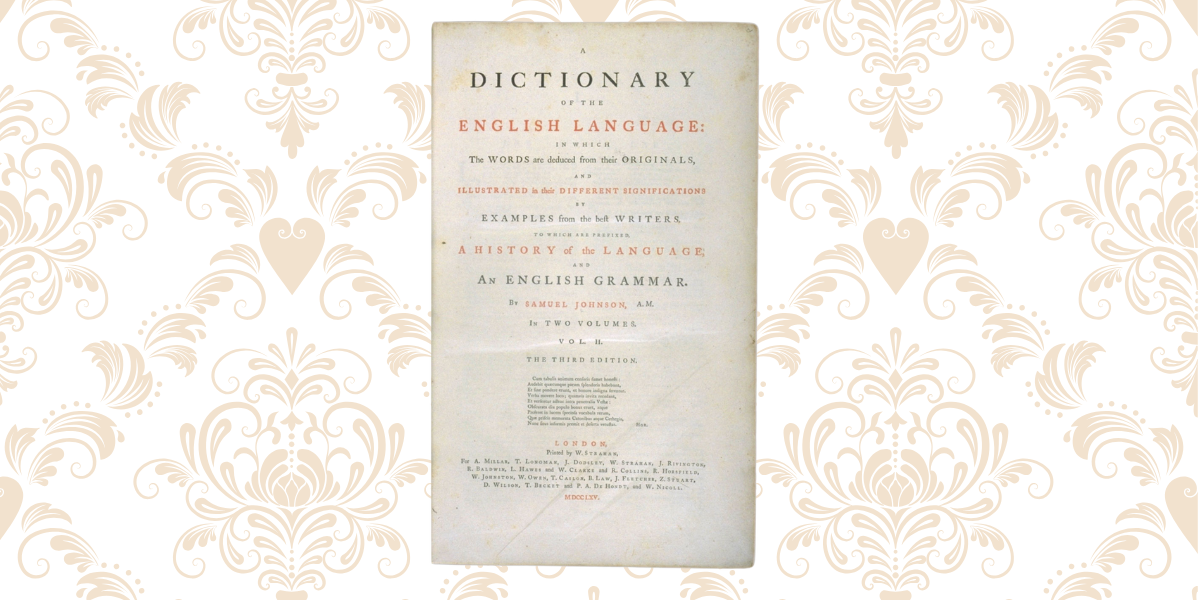
It’s Freewrite’s favorite time of year. When dictionaries around the world examine language use of the previous year and select a “Word of the Year.”

Of course, there are many different dictionaries in use in the English language, and they all have different ideas about what word was the most influential or saw the most growth in the previous year. They individually review new slang and culturally relevant vocabulary, examine spikes or dips in usage, and pour over internet trend data.

Let’s see what some of the biggest dictionaries decided for 2025. And read to the end for a chance to submit your own Word of the Year — and win a Freewrite gift card.

[SUBMIT YOUR WORD OF THE YEAR]


Merriam-Webster: "slop"

Merriam-Webster chose "slop" as its Word of the Year for 2025 to describe "all that stuff dumped on our screens, captured in just four letters."

The dictionary lists "absurd videos, off-kilter advertising images, cheesy propaganda, fake news that looks pretty real, junky AI-written books, 'workslop' reports that waste coworkers’ time … and lots of talking cats" as examples of slop.

The original sense of the word "slop" from the 1700s was “soft mud” and eventually evolved to mean "food waste" and "rubbish." 2025 linked the term to AI, and the rest is history.

Honorable mentions: conclave, gerrymander, touch grass, performative, tariff, 67.

Dictionary.com: "67"

The team at Dictionary.com likes to pick a word that serves as “a linguistic time capsule, reflecting social trends and global events that defined the year.”

For 2025, they decided that “word” was actually a number. Or two numbers, to be exact.

If you’re an old, like me, and don’t know many school-age children, you may not have heard “67” in use. (Note that this is not “sixty-seven,” but “six, seven.”)

Dictionary.com claims the origin of “67” is a song called “Doot Doot (6 7)” by Skrilla, quickly made infamous by viral TikTok videos, most notably featuring a child who will for the rest of his life be known as the “6-7 Kid.” But according to my nine-year-old cousin, the origins of something so mystical can’t ever truly be known.

(My third grade expert also demonstrated the accompanying signature hand gesture, where you place both hands palms up and alternately move up and down.)

And if you happen to find yourself in a fourth-grade classroom, watch your mouth, because there’s a good chance this term has been banned for the teacher’s sanity.

Annoyed yet? Don’t be. As Dictionary.com points out, 6-7 is a rather delightful example at how fast language can develop as a new generation joins the conversation.

Dictionary.com honorable mentions: agentic, aura farming, broligarchy, clanker, Gen Z stare, kiss cam, overtourism, tariff, tradwife.

Oxford Dictionary: "rage bait"

With input from more than 30,000 users and expert analysis, Oxford Dictionary chose "rage bait" for their word of the year.

Specifically, the dictionary pointed to 2025’s news cycle, online manipulation tactics, and growing awareness of where we spend our time and attention online.

While closely paralleling its etymological cousin "clickbait," rage bait more specifically denotes content that evokes anger, discord, or polarization.

Oxford's experts report that use of the term has tripled in the last 12 months.

Oxford Dictionary's honorable mentions:aura farming, biohack.

Cambridge Dictionary: "parasocial"

The Cambridge Dictionary examined a sustained trend of increased searches to choose "parasocial" as its Word of the Year.

Believe it or not, this term was coined by sociologists in 1956, combining “social” with the Greek-derived prefix para-, which in this case means “similar to or parallel to, but separate from.”

But interest in and use of the term exploded this year, finally moving from a mainly academic context to the mainstream.

Cambridge Dictionary's honorable mentions: slop, delulu, skibidi, tradwife

Freewrite: TBD

This year, the Freewrite Fam is picking our own Word of the Year.

Click below to submit what you think the Word of 2025 should be, and we'll pick one submission to receive a Freewrite gift card.

[SUBMIT HERE] 

--

Sources

décembre 18, 2025 6 lire la lecture

Que peuvent apprendre les lettres personnelles de Jane Austen aux écrivains ?

décembre 10, 2025 6 lire la lecture

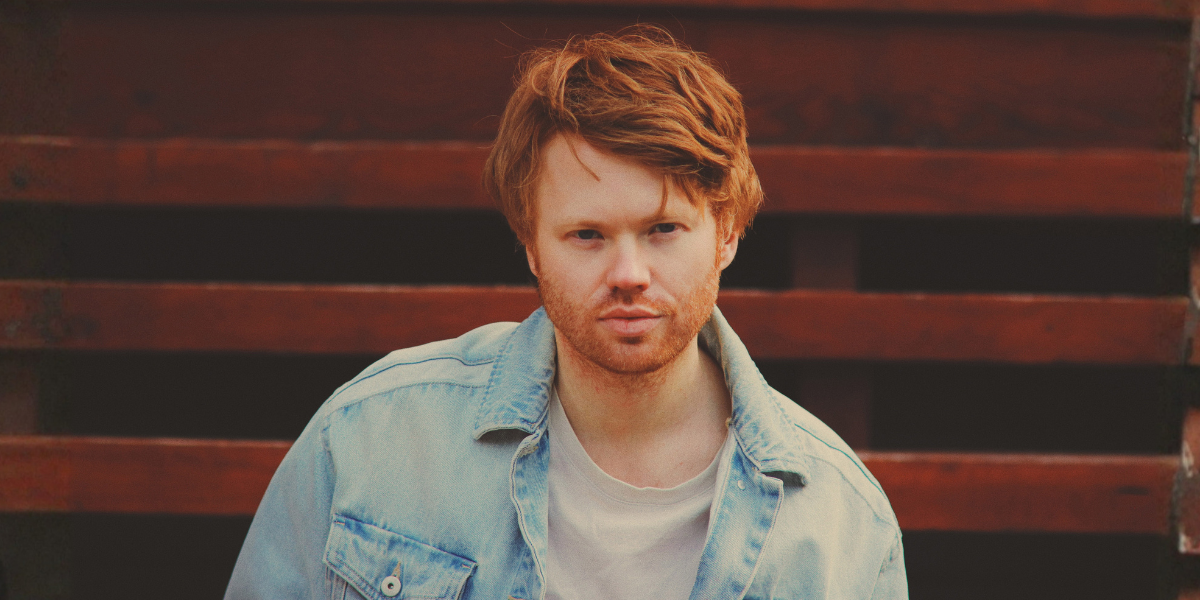
Singer-songwriter Abner James finds his creativity in the quiet freedom of analog tools. Learn how his creative process transcends different media.

Abner James went to school for film directing. But the success of the band he and his brother formed together, Eighty Ninety, knocked him onto a different trajectory.

The band has accrued more than 40 million streams since the release of their debut EP “Elizabeth," and their work was even co-signed by Taylor Swift when the singer added Eighty Ninety to her playlist "Songs Taylor Loves.”

Now, Abner is returning to long-form writing in addition to songwriting, and with a change in media comes an examination of the creative process. We sat down to chat about what's the same — and what's different. 

ANNIE COSBY: Tell us about your songwriting process.

ABNER JAMES: The way I tend to write my songs is hunched over a guitar and just seeing what comes. Sounds become words become shapes. It's a very physical process that is really about turning my brain off.

And one of the things that occurred to me when I was traveling, actually, was that I would love to be able to do that but from a writing perspective. What would happen if I sat down and approached writing in the same way that I approached music? In a more intuitive and free-form kind of way? What would that dig up?

AC: That's basically the ethos of Freewrite.

AJ: Yes. We had just put out a record, and I was thinking about how to get into writing for the next one. It occurred to me that regardless of how I started, I always finished on a screen. And I wondered: what's the acoustic guitar version of writing?

Where there's not blue light hitting me in the face. Even if I'm using my Notes app, it's the same thing. It really gets me into a different mindset.

 "I wondered: what's the acoustic guitar version of writing?"

I grew up playing piano. That was my first instrument. And I found an old typewriter at a thrift store, and I love it. It actually reminded me a lot of playing piano, the kind of physical, the feeling of it. And it was really fun, but pretty impractical, especially because I travel a fair amount.

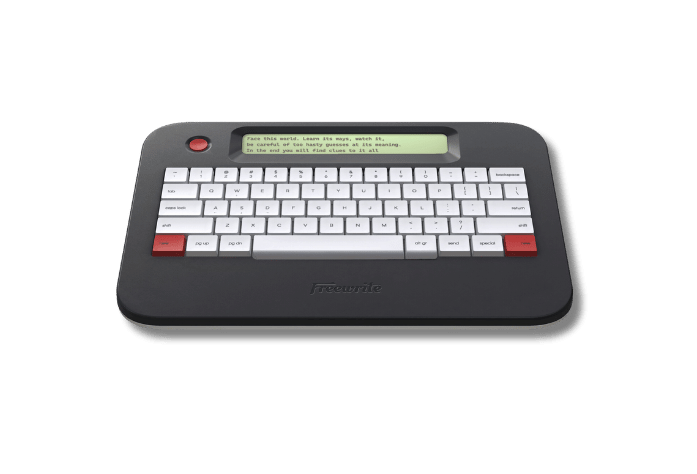
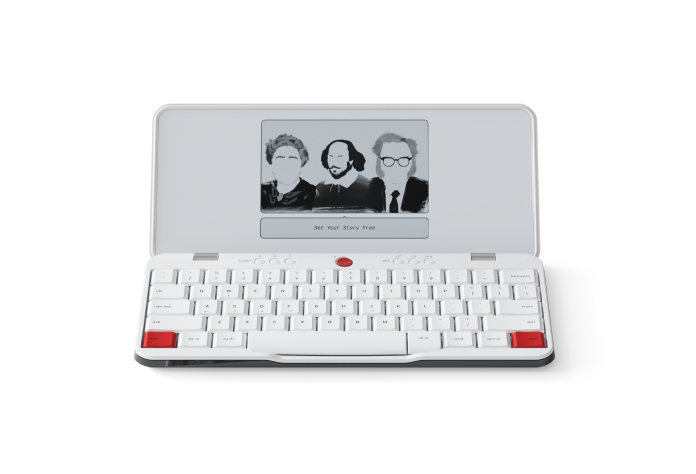
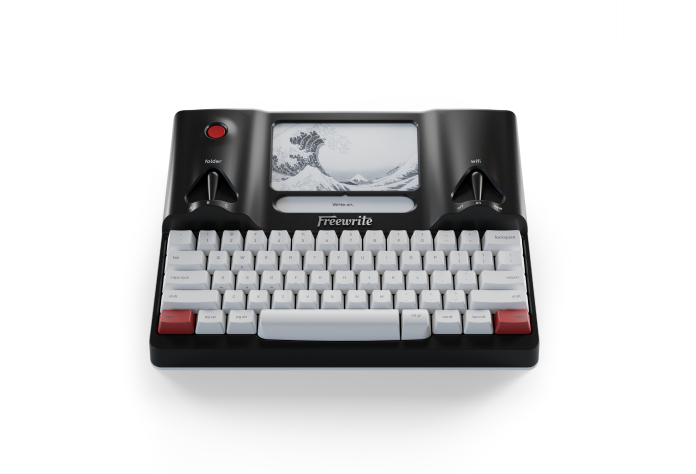
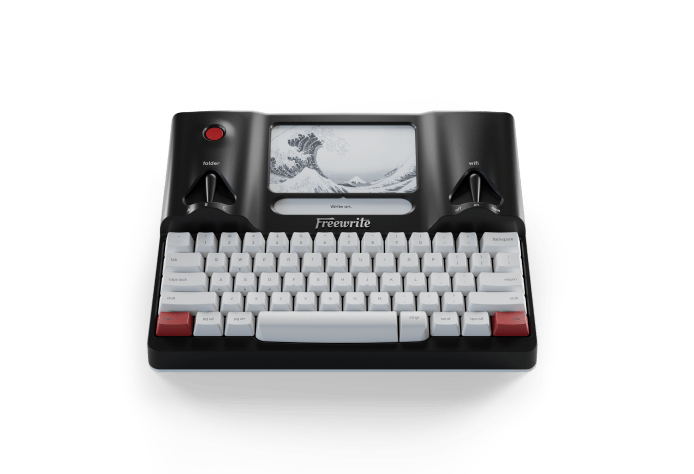
And so I wondered, is there such a thing as a digital typewriter? And I googled it, and I found Freewrite.

AC: What about Freewrite helps you write?

AJ:I think, pragmatically, just the E Ink screen is a huge deal, because it doesn't exhaust me in the same way. And the idea of having a tool specifically set aside for the process is appealing in an aesthetic way but also a mental-emotional way. When it comes out, it's kind of like ... It's like having an office you work out of. It's just for that.

"The way I tend to write my songs is hunched over a guitar and just seeing what comes. Sounds become words become shapes. It's a very physical process that is really about turning my brain off."

And all of the pragmatic limitations — like you're not getting texts on it, and you're not doing all that stuff on the internet — that's really helpful, too. But just having the mindset....

When I pick up a guitar, or I sit down at the piano, it very much puts me into that space. Having a tool just for words does the same thing. I find that to be really cool and inspiring.

"When I pick up a guitar, or I sit down at the piano, it very much puts me into that space. Having a tool just for words does the same thing."

AC: So mentally it gets you ready for writing.

AJ: Yeah, and also, when you write a Microsoft Word, it looks so finished that it's hard to keep going. If every time I strummed a chord, I was hearing it back, mixed and mastered and produced...?

It's hard to stay in that space when I'm seeing it fully written out and formatted in, like, Times New Roman, looking all seriously back at me.

AC: I get that. I have terrible instincts to edit stuff over and over again and never finish a story.

AJ:  Also, the way you just open it and it's ready to go. So you don't have the stages of the computer turning on, that kind of puts this pressure, this tension on.

It's working at the edges in all these different ways that on their own could feel a little bit like it's not really necessary. All these amorphous things where you could look at it and be like, well, I don't really need any of those. But they add up to a critical mass that actually is significant.

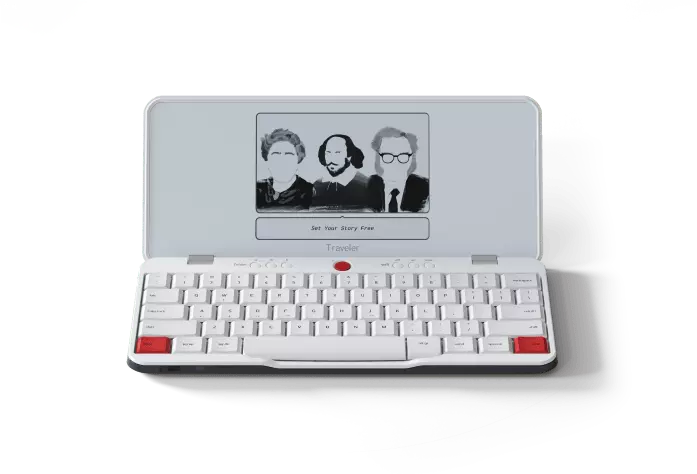
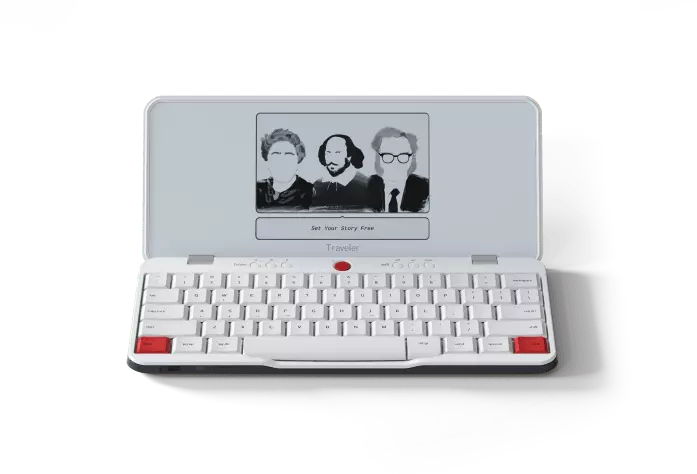
And sometimes, if I want to bring it on a plane, I've found it's replaced reading for me. Rather than pick up a book or bring a book on the plane, I bring Traveler and just kind of hang out in that space and see if anything comes up.

I've found that it's kind of like writing songs on a different instrument, you get different styles of music that you wouldn't have otherwise. I've found that writing from words towards music, I get different kinds of songs than I have in the past, which has been interesting.

In that way, like sitting at a piano, you just write differently than you do on a guitar, or even a bass, because of the things those instruments tend to encourage or that they can do.

It feels almost like a little synthesizer, a different kind of instrument that has unlocked a different kind of approach for me.

"I've found that it's kind of like writing songs on a different instrument, you get different styles of music that you wouldn't have otherwise... [Traveler] feels almost like a little synthesizer, a different kind of instrument that has unlocked a different kind of approach for me."

AC: As someone who doesn't know the first thing about writing music, that's fascinating. It's all magic to me.

AJ: Yeah.

AC: What else are you interested in writing?

AJ: I went to school for film directing. That was kind of what I thought I was going to do. And then my brother and I started the band and that kind of happened first and knocked me onto a different track for a little while after college.

Growing up, though, writing was my way into everything. In directing, I wanted to be in control of the thing that I wrote. And in music, it was the same — the songwriting really feels like it came from that same place. And then the idea of writing longer form, like fiction, almost feels just like the next step from song to EP to album to novel.

For whatever reason, that started feeling like a challenge that would be deeply related to the kinds of work that we do in the studio.

AC: Do you have any advice for aspiring songwriters?

AJ: This sounds like a cliche, but it's totally true: whatever success that I've had as a songwriter — judge that for yourself — but whatever success I have had, has been directly proportional to just writing the song that I wanted to hear.

What I mean by that is, even if you're being coldly, cynically, late-stage capitalist about it, it's by far the most success I've had. The good news is that you don't have to choose. And in fact, when you start making those little compromises, or even begin to inch in that direction, it just doesn't work. So you can forget about it.

Just make music you want to hear. And that will be the music that resonates with most people.

I think there's a temptation to have an imaginary focus group in your head of like 500 people. But the problem is all those people are fake. They're not real. None of those people are actually real people. You're a focus group of one, you're one real person. There are more real people in that focus group than in the imaginary one.

And I just don't think that we're that different, in the end. So that would be my advice.

AC: That seems like generally great creative advice. Because fiction writers talk about that too, right? Do you write to market or do you write the book you want to read. Same thing. And that imaginary focus group has been debilitating for me. I have to silence that focus group before I can write.

AJ: Absolutely.

"I think there's a temptation to have an imaginary focus group in your head of like 500 people. But the problem is all those people are fake... You're a focus group of one, you're one real person. There are more real people in that focus group than in the imaginary one."

--

Learn more about Abner James, his brother, and their band, Eighty Ninety, on Instagram.