overlaylink

Vivons-nous une crise de créativité ?

Emily Pogue
août 14, 2024 | 5 lire la lecture

« Toutes les grandes histoires ont déjà été racontées » est un sentiment que de nombreux auteurs ont eu à 23 heures (souvent autour d’un verre de vin) après avoir rejeté un autre brouillon.

À l'ère d'Internet, des réseaux sociaux et de l'IA, il peut sembler impossible de produire une approche originale. Et il y a peut-être une part de vérité derrière ce sentiment.

Les chercheurs ont confirmé que nous approchons d’un territoire inconnu : une crise de créativité.

Les signes avant-coureurs

La créativité peut se manifester sous de nombreuses formes différentes, il peut donc être difficile de mesurer la « compétence créative » d'une personne. Cependant, une méthode largement acceptée pour évaluer la créativité d'une personne est le test de pensée créative de Torrance .

Administrés à des dizaines de milliers d’étudiants depuis leur développement dans les années 1960, ces tests ont permis de prédire la réussite créative trois fois plus précisément que les tests de QI.

Alors, que pouvons-nous apprendre de près de 60 ans de données ? Selon une étude réalisée par l'Université William & Mary , nous n'allons pas dans la bonne direction. En 1990, on a constaté une baisse marquée des résultats aux tests, la sixième semblant être l'âge moyen de cette baisse.

Pourquoi cette baisse soudaine de créativité ? La chronologie suggère qu'un autre facteur pourrait être en jeu.

La perte de l'ennui

Si l'on compare l'été d'un enfant aujourd'hui à celui d'il y a trente ans, on pourrait croire qu'ils vivent sur des planètes différentes. Autrefois, les vacances d'été étaient consacrées à la création de maisons en carton pour les poupées, à l'escalade des arbres dans le jardin et… à l'ennui.

C'est vrai. Autrefois, tu étais (presque) impatient de retourner à l'école, car il ne te restait plus rien d'amusant à faire à la maison.

Comparez cela aux enfants d’aujourd’hui, qui sont inondés de divertissements préemballés — qu’il s’agisse d’un jouet high-tech, de l’iPad de papa ou du fait de regarder cet épisode de Bluey pour la huitième fois.

Les adultes ne sont pas épargnés par ce besoin constant d'être stimulés. Si nous avons un moment de libre (ce qui est rare pour beaucoup), nous le passons à parcourir les réseaux sociaux ou à regarder un huitième épisode de Friends .

Fini le temps où l'on se tournait les pouces : ces chiffres sont désormais bien trop occupés sur le clavier de notre téléphone.

Cette surstimulation et cette quasi-extinction de l'ennui ont des conséquences plus importantes qu'on ne le pense . Notre cerveau n'a jamais l'occasion de faire une pause.

Dans ce contexte, il n'est pas étonnant que notre créativité soit moins forte qu'avant. Pour retrouver un état d'esprit inventif, il peut être utile de prendre le temps de laisser son esprit vagabonder. Inspirez-vous d'Albert Einstein : ilpassait des heures à flotter sur son voilier , laissant son esprit vagabonder et mûrir ses idées.

Même si nous n'avons pas tous un voilier à disposition, ces moments d'ennui peuvent être assez simples. Vous pouvez faire une longue promenade sans casque, laissant libre cours à vos pensées. Ou prendre quelques minutes de plus sous la douche.

(Pour en savoir plus sur la disparition de l’ennui chez les humains modernes, lisez notre entretien avec l’auteure et chercheuse Celeste Headlee.)

Après ces expériences reposantes, votre esprit sera probablement prêt pour une certaine stimulation – c’est là qu’entre en jeu notre prochaine recommandation pour développer votre créativité.

La créativité consiste simplement à « connecter les choses »

Steve Jobs fut l'un des esprits les plus créatifs de l'histoire récente. Il a révolutionné l'innovation et transformé à jamais le regard que l'on porte sur les ordinateurs, la musique et les appareils mobiles.

Dans une interview accordée à Wired en 1996 , Jobs a évoqué ce que la pensée créative signifiait pour lui :

La créativité, c'est simplement relier les choses. Quand on demande aux créatifs comment ils ont fait quelque chose, ils se sentent un peu coupables, car ils ne l'ont pas vraiment fait, ils ont juste vu quelque chose. Au bout d'un moment, cela leur a semblé évident.

C'est un aspect important de la créativité à prendre en compte. Il n'existe pas de bouton pour l'activer ou la désactiver à tout moment. Cela se produit naturellement, souvent sans effort.

Mais nous pouvons faire des choix actifs pour aider ce processus naturel à se dérouler de manière plus fluide et plus fréquente.

À la recherche de nouvelles expériences

La designer UX Kelly Smith pousse l'idée de « connexion » de Jobs encore plus loin en nous faisant imaginer que notre esprit est composé d'un mur composé de mille points, chacun représentant une connaissance acquise. Chaque connexion entre les points représente une pensée créative.

Au bout d'un moment, nous aurons créé autant de combinaisons uniques que possible. Mais si nous ajoutons ne serait-ce qu'un point supplémentaire – une nouvelle information ou expérience – nous aurons débloqué des dizaines de modèles jusque-là inaccessibles.

Et c’est là que réside la deuxième façon de stimuler notre créativité : nous initier à de nouvelles expériences et à des perspectives différentes.

Comme le dit Jobs, les créatifs les plus performants « ont su relier leurs expériences et synthétiser de nouvelles idées… Beaucoup de gens dans notre secteur [tech] n'ont pas eu des expériences très diversifiées. Ils n'ont donc pas assez de points communs et se retrouvent avec des solutions très linéaires, sans perspective globale du problème. »

Ce n'est un secret pour personne : certaines des personnalités créatives les plus talentueuses possèdent des centres d'intérêt et des loisirs incroyablement variés. L'actrice oscarisée Susan Sarandon adore le ping-pong au point de cofonder une entreprise florissante de bars de ping-pong . Il y a aussi Mark Zuckerberg, cofondateur de Facebook et apparemment un excellent combattant d'arts martiaux mixtes (MMA) .

Certains produits que nous utilisons au quotidien ont même été inventés par des personnes aux expériences très variées. Par exemple, Georges de Mestral , un ingénieur suisse passionné de randonnée dans les Alpes, s'est demandé comment les barbillons adhéraient au pelage de son chien. L'observation des crochets de la plante au microscope l'a inspiré à reproduire le processus : sous forme de VELCRO.

Si nous voulons améliorer notre créativité, nous pouvons nous efforcer d'ajouter de nouveaux éléments à notre tableau de bord. Pensez à des loisirs que vous avez envisagés, mais que vous n'avez pas encore essayés. Pourriez-vous prévoir un moment pour les essayer ?

Même si vous ne vous y consacrez pas indéfiniment, vous créez de nouvelles possibilités de combinaisons entre vos connaissances. Vous préparez votre esprit à la réussite créative.

Trouver l'inspiration dans tous les aspects de la vie

Créer de nouvelles idées n'est pas réservé aux loisirs et au temps libre. Les écrivains en herbe peuvent être rassurés : les emplois qui leur permettent de payer leurs factures peuvent également stimuler leur créativité. Ce fut le cas du légendaire Stephen King, dont le premier livre, Carrie, s'est inspiré du nettoyage du vestiaire des filles alors qu'il était concierge dans une école .

John Grisham a également mis à profit son expérience d'avocat lorsqu'il a changé de carrière pour écrire des thrillers policiers à plein temps (et nous avons tous vu à quel point cela a fonctionné pour lui).

(Lisez la méthode de l'écrivain Michael Archambault qui consiste à emmener votre cerveau à des « rendez-vous » pour améliorer votre écriture.)

Essayer de nouveaux passe-temps, s’inspirer d’expériences professionnelles passées et se réserver du temps pour s’ennuyer sont autant de moyens efficaces pour commencer à développer votre potentiel créatif.

Après tout, si Einstein a pu trouver le temps de ne rien faire, nous le pouvons sûrement aussi.

décembre 30, 2025 3 lire la lecture

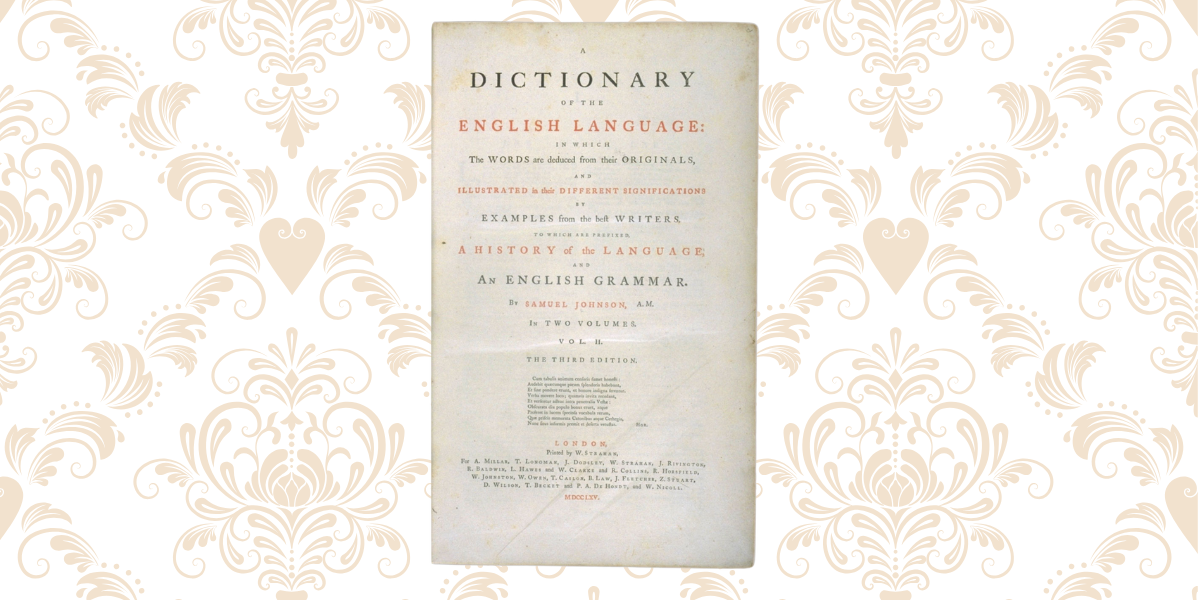
It’s Freewrite’s favorite time of year. When dictionaries around the world examine language use of the previous year and select a “Word of the Year.”

Of course, there are many different dictionaries in use in the English language, and they all have different ideas about what word was the most influential or saw the most growth in the previous year. They individually review new slang and culturally relevant vocabulary, examine spikes or dips in usage, and pour over internet trend data.

Let’s see what some of the biggest dictionaries decided for 2025. And read to the end for a chance to submit your own Word of the Year — and win a Freewrite gift card.

[SUBMIT YOUR WORD OF THE YEAR]


Merriam-Webster: "slop"

Merriam-Webster chose "slop" as its Word of the Year for 2025 to describe "all that stuff dumped on our screens, captured in just four letters."

The dictionary lists "absurd videos, off-kilter advertising images, cheesy propaganda, fake news that looks pretty real, junky AI-written books, 'workslop' reports that waste coworkers’ time … and lots of talking cats" as examples of slop.

The original sense of the word "slop" from the 1700s was “soft mud” and eventually evolved to mean "food waste" and "rubbish." 2025 linked the term to AI, and the rest is history.

Honorable mentions: conclave, gerrymander, touch grass, performative, tariff, 67.

Dictionary.com: "67"

The team at Dictionary.com likes to pick a word that serves as “a linguistic time capsule, reflecting social trends and global events that defined the year.”

For 2025, they decided that “word” was actually a number. Or two numbers, to be exact.

If you’re an old, like me, and don’t know many school-age children, you may not have heard “67” in use. (Note that this is not “sixty-seven,” but “six, seven.”)

Dictionary.com claims the origin of “67” is a song called “Doot Doot (6 7)” by Skrilla, quickly made infamous by viral TikTok videos, most notably featuring a child who will for the rest of his life be known as the “6-7 Kid.” But according to my nine-year-old cousin, the origins of something so mystical can’t ever truly be known.

(My third grade expert also demonstrated the accompanying signature hand gesture, where you place both hands palms up and alternately move up and down.)

And if you happen to find yourself in a fourth-grade classroom, watch your mouth, because there’s a good chance this term has been banned for the teacher’s sanity.

Annoyed yet? Don’t be. As Dictionary.com points out, 6-7 is a rather delightful example at how fast language can develop as a new generation joins the conversation.

Dictionary.com honorable mentions: agentic, aura farming, broligarchy, clanker, Gen Z stare, kiss cam, overtourism, tariff, tradwife.

Oxford Dictionary: "rage bait"

With input from more than 30,000 users and expert analysis, Oxford Dictionary chose "rage bait" for their word of the year.

Specifically, the dictionary pointed to 2025’s news cycle, online manipulation tactics, and growing awareness of where we spend our time and attention online.

While closely paralleling its etymological cousin "clickbait," rage bait more specifically denotes content that evokes anger, discord, or polarization.

Oxford's experts report that use of the term has tripled in the last 12 months.

Oxford Dictionary's honorable mentions:aura farming, biohack.

Cambridge Dictionary: "parasocial"

The Cambridge Dictionary examined a sustained trend of increased searches to choose "parasocial" as its Word of the Year.

Believe it or not, this term was coined by sociologists in 1956, combining “social” with the Greek-derived prefix para-, which in this case means “similar to or parallel to, but separate from.”

But interest in and use of the term exploded this year, finally moving from a mainly academic context to the mainstream.

Cambridge Dictionary's honorable mentions: slop, delulu, skibidi, tradwife

Freewrite: TBD

This year, the Freewrite Fam is picking our own Word of the Year.

Click below to submit what you think the Word of 2025 should be, and we'll pick one submission to receive a Freewrite gift card.

[SUBMIT HERE] 

--

Sources

décembre 18, 2025 6 lire la lecture

Que peuvent apprendre les lettres personnelles de Jane Austen aux écrivains ?

décembre 10, 2025 6 lire la lecture

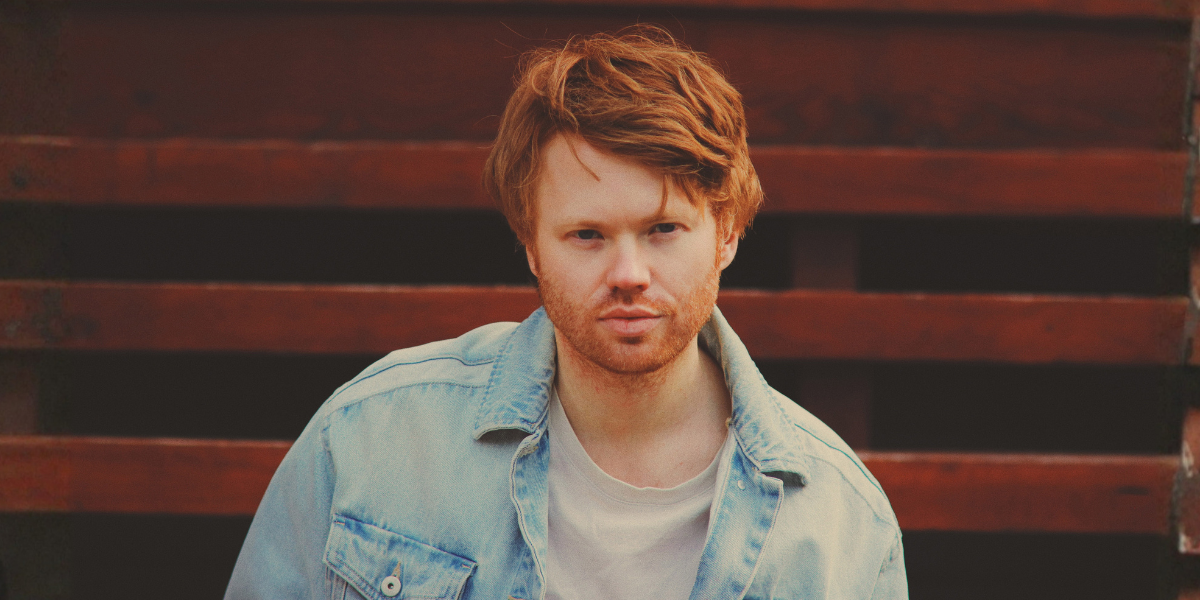
Singer-songwriter Abner James finds his creativity in the quiet freedom of analog tools. Learn how his creative process transcends different media.

Abner James went to school for film directing. But the success of the band he and his brother formed together, Eighty Ninety, knocked him onto a different trajectory.

The band has accrued more than 40 million streams since the release of their debut EP “Elizabeth," and their work was even co-signed by Taylor Swift when the singer added Eighty Ninety to her playlist "Songs Taylor Loves.”

Now, Abner is returning to long-form writing in addition to songwriting, and with a change in media comes an examination of the creative process. We sat down to chat about what's the same — and what's different. 

ANNIE COSBY: Tell us about your songwriting process.

ABNER JAMES: The way I tend to write my songs is hunched over a guitar and just seeing what comes. Sounds become words become shapes. It's a very physical process that is really about turning my brain off.

And one of the things that occurred to me when I was traveling, actually, was that I would love to be able to do that but from a writing perspective. What would happen if I sat down and approached writing in the same way that I approached music? In a more intuitive and free-form kind of way? What would that dig up?

AC: That's basically the ethos of Freewrite.

AJ: Yes. We had just put out a record, and I was thinking about how to get into writing for the next one. It occurred to me that regardless of how I started, I always finished on a screen. And I wondered: what's the acoustic guitar version of writing?

Where there's not blue light hitting me in the face. Even if I'm using my Notes app, it's the same thing. It really gets me into a different mindset.

 "I wondered: what's the acoustic guitar version of writing?"

I grew up playing piano. That was my first instrument. And I found an old typewriter at a thrift store, and I love it. It actually reminded me a lot of playing piano, the kind of physical, the feeling of it. And it was really fun, but pretty impractical, especially because I travel a fair amount.

And so I wondered, is there such a thing as a digital typewriter? And I googled it, and I found Freewrite.

AC: What about Freewrite helps you write?

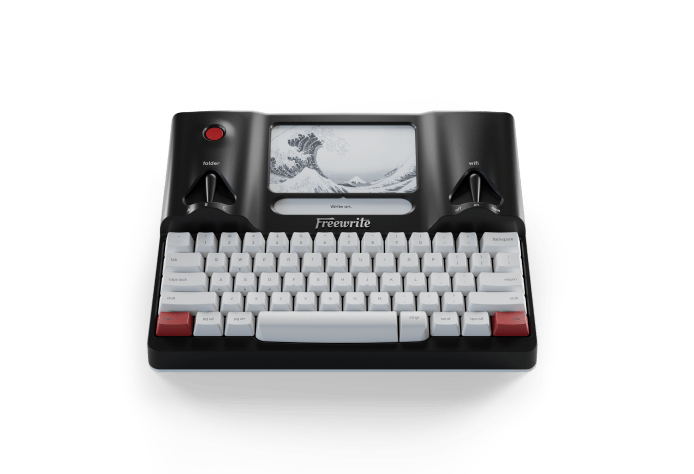
AJ:I think, pragmatically, just the E Ink screen is a huge deal, because it doesn't exhaust me in the same way. And the idea of having a tool specifically set aside for the process is appealing in an aesthetic way but also a mental-emotional way. When it comes out, it's kind of like ... It's like having an office you work out of. It's just for that.

"The way I tend to write my songs is hunched over a guitar and just seeing what comes. Sounds become words become shapes. It's a very physical process that is really about turning my brain off."

And all of the pragmatic limitations — like you're not getting texts on it, and you're not doing all that stuff on the internet — that's really helpful, too. But just having the mindset....

When I pick up a guitar, or I sit down at the piano, it very much puts me into that space. Having a tool just for words does the same thing. I find that to be really cool and inspiring.

"When I pick up a guitar, or I sit down at the piano, it very much puts me into that space. Having a tool just for words does the same thing."

AC: So mentally it gets you ready for writing.

AJ: Yeah, and also, when you write a Microsoft Word, it looks so finished that it's hard to keep going. If every time I strummed a chord, I was hearing it back, mixed and mastered and produced...?

It's hard to stay in that space when I'm seeing it fully written out and formatted in, like, Times New Roman, looking all seriously back at me.

AC: I get that. I have terrible instincts to edit stuff over and over again and never finish a story.

AJ:  Also, the way you just open it and it's ready to go. So you don't have the stages of the computer turning on, that kind of puts this pressure, this tension on.

It's working at the edges in all these different ways that on their own could feel a little bit like it's not really necessary. All these amorphous things where you could look at it and be like, well, I don't really need any of those. But they add up to a critical mass that actually is significant.

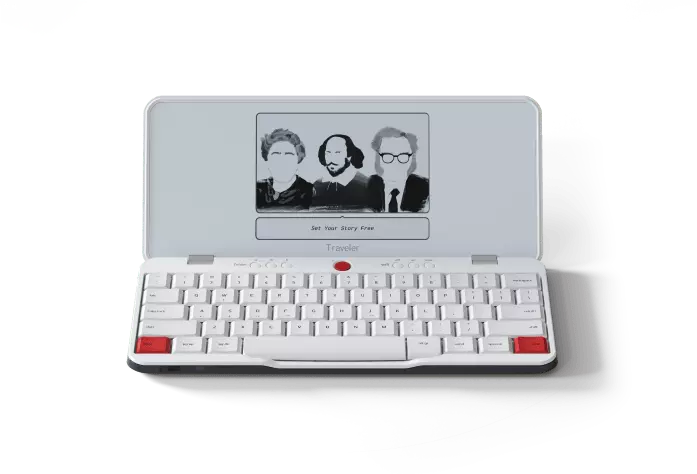
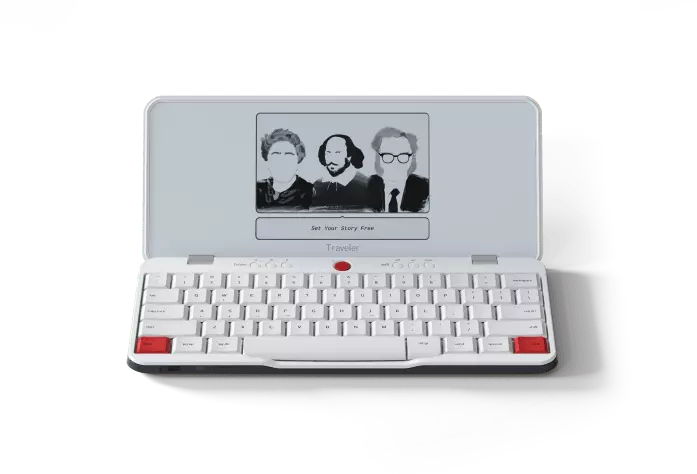
And sometimes, if I want to bring it on a plane, I've found it's replaced reading for me. Rather than pick up a book or bring a book on the plane, I bring Traveler and just kind of hang out in that space and see if anything comes up.

I've found that it's kind of like writing songs on a different instrument, you get different styles of music that you wouldn't have otherwise. I've found that writing from words towards music, I get different kinds of songs than I have in the past, which has been interesting.

In that way, like sitting at a piano, you just write differently than you do on a guitar, or even a bass, because of the things those instruments tend to encourage or that they can do.

It feels almost like a little synthesizer, a different kind of instrument that has unlocked a different kind of approach for me.

"I've found that it's kind of like writing songs on a different instrument, you get different styles of music that you wouldn't have otherwise... [Traveler] feels almost like a little synthesizer, a different kind of instrument that has unlocked a different kind of approach for me."

AC: As someone who doesn't know the first thing about writing music, that's fascinating. It's all magic to me.

AJ: Yeah.

AC: What else are you interested in writing?

AJ: I went to school for film directing. That was kind of what I thought I was going to do. And then my brother and I started the band and that kind of happened first and knocked me onto a different track for a little while after college.

Growing up, though, writing was my way into everything. In directing, I wanted to be in control of the thing that I wrote. And in music, it was the same — the songwriting really feels like it came from that same place. And then the idea of writing longer form, like fiction, almost feels just like the next step from song to EP to album to novel.

For whatever reason, that started feeling like a challenge that would be deeply related to the kinds of work that we do in the studio.

AC: Do you have any advice for aspiring songwriters?

AJ: This sounds like a cliche, but it's totally true: whatever success that I've had as a songwriter — judge that for yourself — but whatever success I have had, has been directly proportional to just writing the song that I wanted to hear.

What I mean by that is, even if you're being coldly, cynically, late-stage capitalist about it, it's by far the most success I've had. The good news is that you don't have to choose. And in fact, when you start making those little compromises, or even begin to inch in that direction, it just doesn't work. So you can forget about it.

Just make music you want to hear. And that will be the music that resonates with most people.

I think there's a temptation to have an imaginary focus group in your head of like 500 people. But the problem is all those people are fake. They're not real. None of those people are actually real people. You're a focus group of one, you're one real person. There are more real people in that focus group than in the imaginary one.

And I just don't think that we're that different, in the end. So that would be my advice.

AC: That seems like generally great creative advice. Because fiction writers talk about that too, right? Do you write to market or do you write the book you want to read. Same thing. And that imaginary focus group has been debilitating for me. I have to silence that focus group before I can write.

AJ: Absolutely.

"I think there's a temptation to have an imaginary focus group in your head of like 500 people. But the problem is all those people are fake... You're a focus group of one, you're one real person. There are more real people in that focus group than in the imaginary one."

--

Learn more about Abner James, his brother, and their band, Eighty Ninety, on Instagram.