














Kentucky farmer and poet Wendell Berry entranced readers across the globe with his poems extolling the power of knowing the natural world.
For writers who want to do the same, there’s deep knowledge to be gleaned from Berry.
Born in 1934 to a farming family that had worked the same Kentucky ground for generations, Wendell Berry went on to have Stanford fellowships, a post at NYU, and a nascent career among the literary establishments of the coasts. But he ultimately went home, bought a farm, and spent the rest of his life proving that a writer could be just as ambitious rooted in one place.
He spent the next six decades (and more than 50 books) making the case for living local: focusing on land, neighbors, and the slow accumulation of local knowledge, the type that can’t be googled or optimized. He was also, of course, a fierce activist warning against industrial agriculture, environmental heedlessness, and a culture that had lost touch with the physical world.
What can we learn about writing from Wendell’s lifelong experiment in a rooted, unhurried life tied to land and community?
Well, it turns out, quite a lot.

1. Writing is work.
"There are, it seems, two muses: the Muse of Inspiration, who gives us inarticulate visions and desires, and the Muse of Realization, who returns again and again to say, ‘It is yet more difficult than you thought.’ This is the muse of form. It may be then that form serves us best when it works as an obstruction, to baffle us and deflect our intended course... The mind that is not baffled is not employed. The impeded stream is the one that sings."
Berry believe that writing was work. Even more importantly, he preached that when the "form" — that is, the attempt to put visions and ideas into words — became difficult, that's when it is most important. That's the "real work."
"The mind that is not baffled is not employed."
2. Language is physical.
"At first glance, writing may seem not nearly so much an art of the body as, say, dancing or gardening or carpentry. And yet language is the most intimately physical of all the artistic means.”
According to Berry, physicality was one of the major things missing from our modern world. Our ability to go outside and be, physically, in nature. Our willingness to pay attention to the physical act of writing. This physicality is integral to the human experience, and it's all about paying attention. (More on that later.)
Writing is the same. Think about it: words, phrases, sentences, they all come from inside us. Literally inside our body — our brain, our heart, up through our threat as a blast of air, or as an electrical signal down through our arms into our fingers.
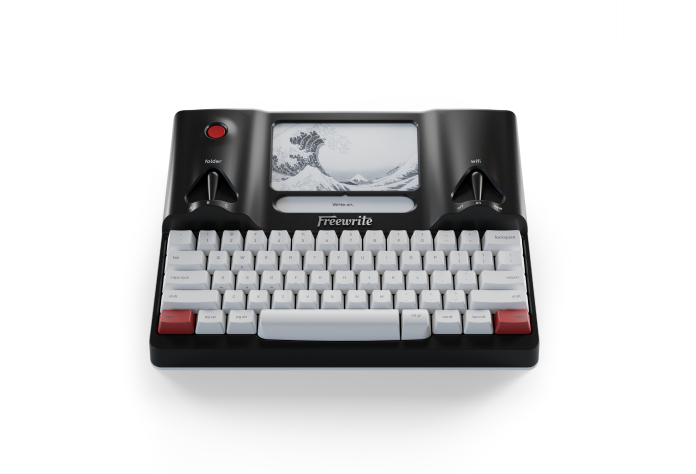
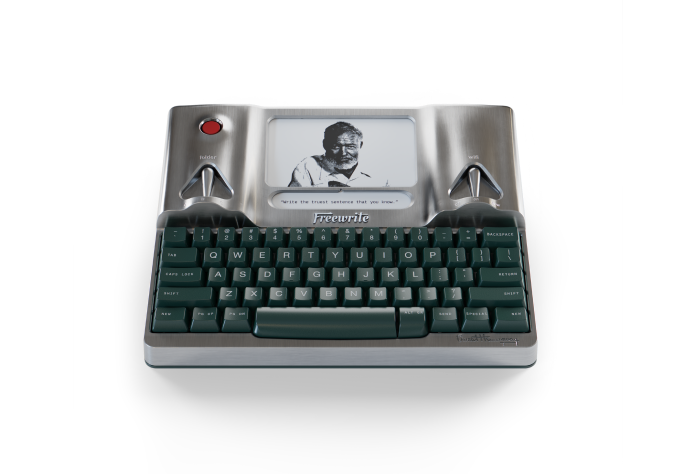
Some writers stay connected to this physicality from writing with pen and paper. Others find that deep connection in the physical feedback of a mechanical keyboard.
If you haven't explored the world of keyboards and key switches, you haven't scratched the surface of the options open to the modern writer in channeling a physical connection with writing.

3. Write for you.
"A poet could not write a poem in order to earn a place in literary history. His place in literary history is another subject, and such a distraction. He writes because he has a poem to write, he knows how, the work pleases him, and he has forgotten all else."
Berry's work, while famous and in textbooks around the world, is unpretentious and accessible. This is likely an effect of his belief that the end product or critical reception was inconsequential. He didn't worry about future readers or critics. He wrote because he had a poem to write.
For writers struggling with writer's block, which is often caused by stressful internal or external expectations or the fear of failure, this is invaluable advice.
Write because the work pleases you. Nothing else.
He didn't worry about future readers or critics. He wrote because he had a poem to write.

4. Inspiration lives in a lack of expectation.
"When the weather is good, sometimes when it is only tolerable, I am drawn to the woods on the local hillsides or along the streams… In such places, on the best of these sabbath days, I experience a lovely freedom from expectations — other people’s and also my own. I go free from the tasks and intentions of my workdays, and so my mind becomes hospitable to unintended thoughts: to what I am very willing to call inspiration."
Let's talk a little bit more about expectations. The same way Berry eschews the expectations of critics or future readers when he's writing, he also lets go of all expectations or rumination of the mind in order to invite inspiration.
He equates inspiration to "unintended thoughts," an idea shared by many prolific and beloved authors. (Think of Julia Cameron's concept of author dates. The idea is the same: feed your mind other things, whether it be creative works, or Wendell Berry's wilderness, and let your mind wander.)
Similarly, in What Are People For? Berry says:
"True solitude is found in the wild places, where one is without human obligation. One’s inner voices become audible. One feels the attraction of one’s most intimate sources."
It's no secret that the modern world is loud. For all the convenience technology brings to our everyday lives, it also brings unending notifications, blaring screens, and distraction.
So how, exactly, are we supposed to hear this inner voice?
5. "Make a place to sit down. Sit down. Be quiet.”
"Accept what comes from silence / Make the best you can of it. / Of the little words that come / out of the silence, like prayers / prayed back to the one who prays, / make a poem that does not disturb / the silence from which it came."
If you haven't read Berry's famous poem, "How to Be a Poet," you have homework. Read it here and then try our Wendell Berry-inspired writing exercise below.

Try It Yourself: Write Local
Try this Wendell Berry-inspired writing exercise to connect with your literal, geographical place in the world, find a little peace in your day, and invite your inner voice to overcome the deafening sounds of your phone, your computer, your TV...
1. Grab your Freewrite & find a place outside. Today.
Maybe you're going on an amazing trip to the mountains or the sea in a few months. That's great, but don't wait for that awe-inspiring view in order to write. This exercise is all about connecting to your everyday natural world.
With a writing instrument in hand, go outside today and find nature, no matter how small. It could be:
- Your backyard
- A local park
- Beneath a lone tree planted in a parking lot
- That thin strip of grass between the street and the sidewalk
- An open window
2. Make your chosen spot quiet.
We can hear you now: "But I can't turn off the traffic!"
No, but you can quiet your mind. That might mean turning your phone off, putting your computer in a different room, or asking those you live with for a few moments of solitude. (Parents, we can hear you rolling your eyes. Kids who are old enough can participate in this writing exercise!)
Do your best.

3. "Breathe with unconditional breath the unconditioned air..."
Once you're set up in your spot, and have shut off as many distractions as you can, take a deep breath. Slowly release it, feeling the breath leave your lungs.
Repeat 10 times.
3. Write.
Set a timer for 5, 10, or 15 minutes — however long you have — and start writing. Here are some prompts to get you started:
- Write an inventory of every item that is in your immediate vicinity.Everything from the weeds to the sunlight to the Big Mac wrapper.
- Catalogue every creature within one mile of you right now and give them a name.Not just "Rabbit," but a real, individual name. Be imaginative about what may be in the ground beneath you or in the sky above you.
- Write a list of all the things from the earth that have sustained you in the past month. Food, water, plants, animals, soaps, cosmetics, chemicals, etc.
- Pretend the spot you've chosen for this exercise is a living creature and write a short story from its point of view. What does this stretch of sidewalk see every day? Or how do people treat this park? How does the space itself feel about that?
-
Write a scene in which a character is performing a physical, repetitive chore, and focus on the rhythm and physical sensation. Some ideas: digging a hole in the garden, kneading dough, chopping wood. Does that physicality help quiet their mind (and yours)?
- Write a to-do list for Future You about what it takes to get to this point of absorption in your writing. Start with: "Sit down. Be quiet.”