overlaylink

El poder del entorno: usar descripciones vívidas para cautivar a sus lectores

julio 18, 2019 | 7 lectura mínima

Al empezar como escritor de ficción, te dirán que te centres en la trama, los diálogos y la caracterización, pero hay algo más que debería estar en esa lista, y que a menudo se relega a la categoría de "no tan importante". El poder de la descripción evocativa del entorno de tu historia suele pasarse por alto, pero no debería ser así.

Me licencié en Escritura Creativa a mediados de mis veinte, después de publicar mi primera novela. (Sí, sé que es un poco anticuado, ¡pero en aquel momento me pareció una buena idea!). Me sorprendió que la descripción vívida del entorno de la historia no surgiera hasta un módulo sobre «construcción de mundos» para la ficción fantástica.

El entorno narrativo no solo es importante en la ficción fantástica. Es importante en toda la ficción, ya que ofrece la oportunidad de cautivar a los lectores y dar vida a la historia. La buena ficción, en mi opinión, es aquella que te hace soñar con el entorno y los personajes mucho después de terminar el libro; y si no ofreces una descripción vívida del entorno a tus lectores, no podrán soñar con él.

Ahora que ya sabes por qué es tan importante crear descripciones vívidas y evocadoras de tu entorno, veamos qué hay detrás de crear el tipo de descripciones que permanecen en la mente de tus lectores.

Los ingredientes esenciales de los entornos vívidos

Si estás cocinando una comida compleja, sabes que debes medir los ingredientes exactos de la receta para que quede como se espera. Con descripciones vívidas de los escenarios, también necesitas incluir una variedad de ingredientes, aunque tienes un poco más de libertad con las cantidades. Los ingredientes de un escenario evocador son los mismos, ya sea que escribas fantasía, romance, ficción histórica o un thriller policial. Veamos qué necesitas.

Detalles sensoriales

Las mejores descripciones de escenarios utilizan muchos detalles sensoriales. Como humanos, exploramos nuestro mundo con nuestros cinco sentidos, por lo que es natural usarlos para crear detalles realistas y vívidos que los lectores puedan imaginar fácilmente.

Los detalles sensoriales —que evocan olores, colores, texturas, sonidos y sensaciones— pueden enriquecer al instante cualquier descripción de un entorno. Claro que cada entorno evoca diferentes sentidos, y no es necesario que cada descripción incluya los cinco sentidos.

Veamos la diferencia que los detalles sensoriales pueden añadir a tu escritura en el contraste entre estas dos descripciones:

  1. Alex siguió adelante. Había un sendero que atravesaba los árboles y se adentraba en unos arbustos.
  2. Un sendero de agujas de pino trituradas serpenteaba entre los árboles y se adentraba en un sombrío grupo de helechos y rododendros cubiertos de nieve. Un viento gélido y penetrante traía el penetrante aroma del pino y la humedad de las hojas podridas al suelo del bosque. La luz del sol se filtraba a través de las copas de los árboles y se reflejaba en las gotas de agua adheridas a la manga de la chaqueta de Alex. Una ramita se quebró bajo su bota, y se quedó paralizado, conteniendo la respiración mientras la cabeza del ciervo giraba bruscamente hacia él. Olfateó el aire y luego, como si percibiera el peligro, salió disparado entre la maleza; el sonido de sus cascos parecía repetirse con el latido frustrado del corazón de Alex.

Si te cuesta incorporar detalles sensoriales a tus escritos, podrías intentar llevar un diario sensorial. Con esto me refiero a llevar un cuaderno contigo y dedicar unos minutos cada día a describir tu entorno. Céntrate en:

  • Lo que puedes escuchar
  • Lo que puedes ver
  • Lo que puedes oler
  • Cómo se siente la superficie sobre la que estás sentado
  • Lo que puedes saborear (¡esto aplica incluso si no estás comiendo ni bebiendo nada!)

Metáforas y símiles

Metáfora:

  • Una palabra o frase para una cosa que se utiliza para referirse a otra cosa con el fin de mostrar o sugerir que son similares;
  • Un objeto, actividad o idea que se utiliza como símbolo de otra cosa.
  • Por ejemplo: “El amor es un campo de batalla”

Símil:

  • un tipo de lenguaje figurativo que describe algo comparándolo con otra cosa con las palabras como o tal como.
  • Por ejemplo: “La vida es como una caja de bombones”.

Como recursos literarios, las metáforas y los símiles son herramientas que todo escritor debería tener en su repertorio. Aunque pueden resultar aburridos con el uso excesivo, su familiaridad puede ayudar a conectar al instante al lector con el contexto que se describe, evocando poderosos detalles sensoriales sin necesidad de articular esos detalles.

Tanto las metáforas como los símiles se han utilizado ampliamente a lo largo de los siglos, con gran eficacia. Vea estos ejemplos:
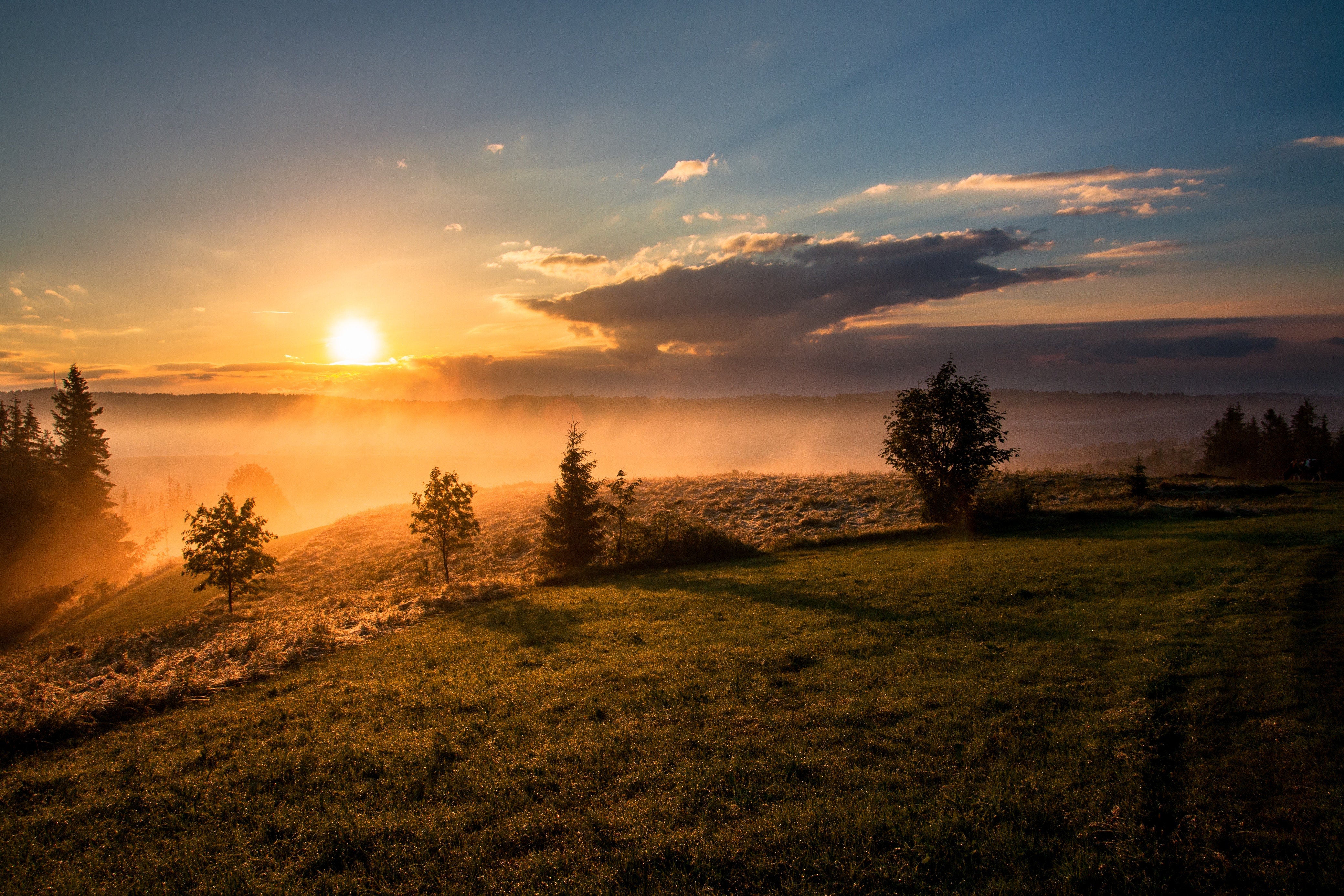
“El sol en el oeste era una gota de oro ardiente que se deslizaba cada vez más cerca del umbral del mundo”.

—El señor de las moscas, William Golding

Pequeñas llamas se agitaron en el tronco de un árbol y se extendieron entre las hojas y la maleza, dividiéndose y creciendo. Una llama rozó el tronco de un árbol y trepó como una ardilla brillante. El humo aumentó, se filtró y se expandió. La ardilla saltó en las alas del viento y se aferró a otro árbol en pie, devorando hacia abajo. Bajo la oscura bóveda de hojas y humo, el fuego se apoderó del bosque y comenzó a roer.

—El señor de las moscas, William Golding

Pero, suave, ¿qué luz se cuela por aquella ventana? ¡Es el este, y Julieta es el sol! —Romeo y Julieta, William Shakespeare

“En el cielo oriental había una mancha amarilla como una alfombra tendida a los pies del sol naciente...” — La roja insignia del valor, Stephen Crane

“El agua hacía un sonido como el de los gatitos lamiendo.” — El Yearling, Marjorie Kinnan Rawlings

Sin embargo, los símiles y las metáforas pueden abusar de ellos, por lo que es importante no recurrir a ellos en exceso al escribir descripciones vívidas del contexto de la historia. En cambio, deberías intentar equilibrar tu escritura con diversas técnicas figurativas.

Si tiene dificultades para encontrar metáforas y símiles para sus escritos, puede resultarle útil revisar algunos de sus libros favoritos y ver cómo los autores que admira utilizan estos recursos literarios.

Detalles atmosféricos

Crear una atmósfera en tu escenario puede llevar tus escenas al siguiente nivel. Describir una atmósfera puede añadir tensión, urgencia, aprensión, emoción, etc.

En Grandes esperanzas , Charles Dickens empleó imágenes atmosféricas en sus descripciones de la casa de la señorita Havisham para crear una vívida sensación de desesperación y decadencia. El narrador, Pip, la describe como « de ladrillo viejo y lúgubre... [con] muchísimas barras de hierro». Dickens escribe:

Algunas ventanas habían sido tapiadas; de las que quedaban, todas las inferiores tenían barrotes oxidados […] Mientras esperábamos en la puerta, miré […] y vi que al lado de la casa había una gran cervecería. No se elaboraba cerveza allí, y parecía que no se había hecho desde hacía mucho tiempo.

Lo primero que noté fue que los pasillos estaban a oscuras y que ella había dejado una vela encendida. La cogió, y recorrimos más pasillos y subimos una escalera, y aun así, todo estaba oscuro, y solo la vela nos iluminaba.

La atmósfera que crea Dickens es gótica, perfecta para la señorita Havisham, pero puedes usar detalles como estos para crear cualquier tipo de atmósfera.

Hay ciertos tipos de palabras que crean una atmósfera. Por ejemplo:

  • Muy
  • Crujiente
  • Descomunal
  • Silbido
  • Estremecimiento
  • Haciendo eco

Intenta observar cómo tus autores favoritos crean una atmósfera en sus novelas. ¿Por qué es tan efectivo? ¿Crees que algunos tipos de atmósfera se evocan con más frecuencia en los escenarios que otros?

Una nota sobre la autenticidad

Al escribir descripciones vívidas, es fácil dejarse llevar. Sin embargo, a menos que escribas ficción fantástica (donde puedes dar rienda suelta a tu imaginación) o crees tus propios pueblos ficticios, es importante que los escenarios que describas sean auténticos. Incluso si creas un pueblo o ciudad ficticios, debes hacerlos realistas.

Esto aplica especialmente si escribes ficción histórica, pero es importante para todo tipo de ficción. Crear una ambientación auténtica evita que el lector se distraiga de la historia con un detalle que no corresponde a la época o el lugar donde se desarrolla.

Por ejemplo, imagina que estás leyendo un libro ambientado en el Londres victoriano de 1855. El autor ha utilizado diálogos auténticos y un lenguaje muy evocador al describir el entorno. Estás absorto en la historia, inmerso en todos los detalles que te hacen sentir como si realmente pudieras oler las calles de Londres. Entonces, el autor presenta a un personaje que toma un tren en el metro de Londres. Solo que, casualmente, sabes que el metro de Londres no abrió hasta 1863. Este detalle discordante arruina de inmediato la sensación de autenticidad.

Siempre verifica los datos al escribir sobre escenarios que tus lectores puedan conocer. ¡Ni todas las habilidades descriptivas del mundo pueden salvar una novela imprecisa! Puede ser útil mantener un archivo con todos los detalles necesarios sobre los escenarios reales para asegurarte de que te ciñas a la realidad.

Practique la escritura de descripciones vívidas

Si quieres dominar el arte de la descripción vívida, necesitas perfeccionar tus habilidades antes de empezar a trabajar en tu novela. Hemos cubierto todos los ingredientes esenciales para una descripción evocadora de un entorno, ¡así que ahora te toca ponerlos en práctica!

 A continuación se muestran algunas indicaciones y ejercicios para comenzar:

  1. Siéntate en tu cafetería local y dedica diez minutos a describir el ambiente, los sonidos, los olores, las vistas, etc. Si quieres que sea más difícil, intenta enviarle tu descripción por correo electrónico a un amigo para ver si puede adivinar el lugar. Si no, sigue practicando.
  2. Busca un libro sobre la historia de tu pueblo o ciudad y elige una calle o lugar que haya cambiado significativamente en los últimos 100 años. Escribe una escena ambientada en ese lugar, pero describe la escena hace 100 años, luego hace 75 años, hace 50 años y hace 25 años. Si conoces a personas mayores que recuerden el lugar en el pasado, podrías compartir tu descripción con ellas para ver si añadirían o quitarían algún detalle.
  3. Crea un escenario ficticio para tu historia y dedica 30 minutos a escribir una escena con una descripción vívida. Asegúrate de evocar detalles sensoriales, crear una atmósfera y usar metáforas o símiles para dar vida a tu descripción.
  4. Aprende de uno de los grandes maestros de la escritura descriptiva: J. R. R. Tolkien. En el primer libro de la trilogía de El Señor de los Anillos , escribió: « A los árboles no les gustan los extraños. Te observan. Normalmente se conforman con observarte, mientras dure la luz del día ». Consigue un ejemplar de El Señor de los Anillos y busca un pasaje que describa un escenario. Estudia el lenguaje que usa Tolkien y cómo da vida a los lugares. ¿Qué tipo de palabras usa? ¿Por qué son tan poderosas? ¿Qué símiles y/o metáforas utiliza? ¿Puedes identificar otras técnicas en su escritura? Ahora, describe un escenario utilizando las mismas técnicas.
  5. Revisa una de tus historias o novelas pasadas y encuentra un par de escenas en las que no hayas usado muchas descripciones. Reescríbelas, poniendo en práctica lo que has aprendido sobre cómo crear descripciones vívidas.
noviembre 29, 2025 4 lectura mínima

The Great Freewrite Séance: A Ghost'ly Charity Auction Full Terms & Conditions

These Terms and Conditions (“Terms”) govern participation in The Great Freewrite Séance: A Ghost'ly Charity Auction (“Auction”), organized by Freewrite (“Organizer,” “we,” “us,” or “our”). By registering for, bidding in, or otherwise participating in the Auction, you (“Participant,” “Bidder,” or “Winner”) agree to be bound by these Terms.

1. Auction Overview

1.1. The Auction offers for sale a limited number of Freewrite Traveler Ghost Edition units (“Items” or “Ghost Traveler units”), each personally signed and drawn on by a featured author.

1.2. All proceeds, net of explicitly disclosed administrative costs, will be donated to the charity or charitable initiative (“Charity”) identified on each auction item’s page, as chosen by the respective author.

2. Eligibility

2.1. Participants must be at least 18 years old or the age of majority in their jurisdiction, whichever is higher.

2.2. Employees of Freewrite, the participating authors, or any affiliates directly involved in the Auction are not eligible to bid.

2.3. By participating, you represent that you are legally permitted to take part in online auctions and to pay for any bids you win.

3. Auction Registration

3.1. Participants must create an account on the auction platform or otherwise register using accurate, current, and complete information.

3.2. Freewrite reserves the right to verify identity and to disqualify any Participant who provides false or misleading information.

4. Bidding Rules

4.1. All bids are binding, final, and non-retractable.

4.2. Bidders are responsible for monitoring their bids; Freewrite is not liable for missed notifications or technical issues on the auction platform or the Participant’s device.

4.3. Freewrite reserves the right to:

  • set minimum bids or bid increments;
  • reject bids deemed in bad faith or intended to disrupt the Auction;
  • extend, pause, or cancel the Auction in case of technical difficulties, fraud, or events beyond reasonable control.

5. Winning Bids and Payment

5.1. The highest valid bid at the close of the Auction is the Winning Bid, and the corresponding Participant becomes the Winner.

5.2. Winners will receive payment instructions and must complete payment within 48 hours of the auction’s close unless otherwise stated.

5.3. Failure to complete payment on time may result in forfeiture, and Freewrite may offer the Item to the next highest bidder.

5.4. Accepted payment methods will be listed on the Auction platform. All payments must be made in the currency specified.

6. Item Description and Condition

6.1. Each Ghost Traveler unit is authentic, and the signatures, doodles, and messages are original works created by the participating author. These are authors, not artists. By bidding on the Item, you acknowledge that you are receiving a one-of-a-kind unit marked with unique art and messages and you agree to these terms and conditions.

6.2. Because Items are customized and signed by hand, variations, imperfections, or unique marks are to be expected. These are considered part of the Item’s character and not defects.

6.3. Items are provided “as-is” and “as-available.” Freewrite makes no warranties of merchantability or fitness for a particular purpose.

7. Shipping & Delivery

7.1. Shipping costs, import duties, and taxes may apply unless explicitly stated otherwise.

7.2. Freewrite will make reasonable efforts to ship Items within the estimated timeline but cannot guarantee delivery dates.

7.3. Title and risk of loss transfer to the Winner upon delivery to the carrier.

7.4. Freewrite is not responsible for delays, damage, or loss caused by the courier or customs agencies.

8. Charity Donation

8.1. Net proceeds from the Auction will be donated to the Charity designated on each Item page.

8.2. Donation amounts and recipients may be disclosed publicly unless prohibited by law.

8.3. Winners acknowledge that they are purchasing Items, not making a tax-deductible donation to Freewrite; therefore, Winners will not receive charitable tax receipts unless Freewrite explicitly states otherwise in compliance with applicable laws.

9. Intellectual Property

9.1. All trademarks, brand names, product names, and creative materials associated with Freewrite and the Ghost Traveler remain the exclusive property of Freewrite or their respective rights holders.

9.2. Participants may not reproduce, distribute, or publicly display the authors’ doodles without permission where such rights are applicable, except as allowed by law (e.g., resale of the physical Item).

10. Privacy

10.1. By participating, you consent to Freewrite’s collection, use, and storage of your personal data in accordance with our Privacy Policy.

10.2. Freewrite may publicly announce auction results, including Winner’s first name, last initial, city, state/country, and winning bid amount unless prohibited by law or unless you formally request anonymity when possible.

11. Prohibited Conduct

Participants may not:

  • engage in bid manipulation, fraud, or collusive bidding;
  • use automated systems (bots, scripts, scrapers) to place or monitor bids;
  • interfere with the Auction, platform, or other participants

Freewrite may ban or disqualify any Participant violating these rules.

12. Limitation of Liability

To the fullest extent permitted by law:

12.1. Freewrite is not liable for indirect, incidental, special, or consequential damages arising from the Auction or purchase of Items.

12.2. Freewrite’s total liability in connection with these Terms shall not exceed the amount of the Winning Bid actually paid by the Participant.

12.3. Freewrite is not responsible for technical malfunctions, internet outages, system failures, or other issues beyond its control.

13. Cancellation and Force Majeure

Freewrite may cancel, postpone, or modify the Auction due to unforeseen circumstances, including but not limited to natural disasters, system failures, strikes, or events affecting participating authors or the Charity.

14. Governing Law & Dispute Resolution

14.1. These Terms are governed by the laws of Michigan, without regard to conflict-of-law rules.

14.2. Any disputes arising under these Terms will be resolved through binding arbitration or the courts of the specified jurisdiction, as applicable.

14.3. Participants waive any right to participate in class-action lawsuits relating to the Auction.

15. Amendments

Freewrite may update these Terms at any time. Continued participation in the Auction after updates constitutes acceptance of the revised Terms.

16. Contact Information

For questions or concerns regarding the Auction or these Terms, contact: hello@getfreewrite.com.

noviembre 25, 2025 1 lectura mínima

This is a great gratitude writing exercise to be done alone or in a group, with people of any age.

How to Play

    1. Designate someone to read out each prompt below. (Feel free to add your own prompts.)
    2. After each prompt is read, set a timer for one minute. (With younger kids, this can be shortened. For older folks who want to freewrite meaningfully, more time can be added.)
    3. Each person freewrites by finishing the sentence and elaborating until the timer goes off. (For little kids, this can be done verbally with an adult recording their answers. Hilarity will ensue.)
    4. Remeber that freewriting — allowing yourself to write with abandon — enables you to let go, tapping into your subconscious to explore your thoughts more deeply.
    5. When everyone is done with all the prompts, take turns going through some your answers. Some people may be eager to share. Others may not want to. Respect their decision.

The Prompts

  • I'm grateful for... [After you've finished this prompt, repeat it five times. Challenge yourself and others not to repeat a singe word with each new answer.]
  • The silliest thing I'm grateful for is...
  • The littlest thing I'm grateful for is...
  • The biggest thing I'm grateful for is...
  • The grossest thing I'm grateful for is...
  • One thing I love about myself is...
  • My favorite thing that happened this year was...
  • My hope for next year is...

This writing exercise has resulted in some sweet answers — and many hilarious ones, too. If you try it out, do let us know.

Write on.

noviembre 21, 2025 4 lectura mínima

For the release of Sailfish, our new firmware update for Smart Typewriter Gen3 and Traveler, we created a brand-new boot-up animation to surprise and delight our writers.

We worked with talented Danish animator Mathias Lynge to bring our experience of the writer's journey to life.

We had a blast visualizing the writer's journey in this new way. Our engineers also had a blast (or something less than a blast) figuring out how to adjust this fun, playful animation to E Ink's very tricky specifications. Hello, refresh rate woes! But we think the result is pretty fun.

"The little animation made my day when I noticed. I love a good flourish."

- Freewrite user

The process of creating this animation was long and full of Zoom calls where we deeply discussed the writing process. We were struck through those conversations by how much overlap there is in creative processes of all disciplines.

So we sat down to chat with Mathias about his creative process and what it's like being a full-time animator.

ANNIE COSBY: Let's start with the basics. What kind of art do you make?

MATHIAS LYNGE: I'm a 2D animator and motion designer working freelance with a wide range of clients. The style varies depending on the project, but it’s usually either a hand-drawn look animated frame-by-frame on a drawing tablet, or a more digital, vectorized look made in After Effects.

While much of what I do is commercial work, I try to keep up with my own passion projects as well. That could be a 10-second Instagram loop of a nature scene, or an interesting character design I’ve sketched down with a pencil. It’s there that I get to sharpen my skills and try out new techniques, which often find their way into later client projects.

AC: You often share educational content on social media for other artists. Are you formally trained, or did you teach yourself?

ML: I’m mostly self-taught. I’ve been drawing for as long as I can remember, but it wasn’t until I went to university that I realized drawing could become a career.

When I first heard terms like “motion design” and “The 12 Principles of Animation” I was on a student exchange program at UCSB in California, where I had chosen a class called "Introduction to Animation." It was a big eye-opener for me, and from that point I was hooked.

But it’s mainly been online YouTube tutorials and my existing drawing experience that have taught me what I know.

Now, I have a big presence on social media, where I share my art as well as educational content centered around animation in Adobe After Effects, so I guess you could say that I'm also an animation influencer!

I’ve been drawing for as long as I can remember, but it wasn’t until I went to university that I realized drawing could become a career.

AC: That's actually how I first found your work. Do you have any specific artists who inspire you?

ML:In the world of 2D animation, I have a list of personal heroes that inspire me with their unique style: Reece Parker, Ariel Costa a.k.a. BlinkMyBrain, and Tony Babel, to name a few.

I also find a lot of inspiration from illustrators and painters I discover online, on platforms such as Pinterest. Last year I made a sparkling water animation that was heavily inspired by Cornwall-based artist Gordon Hunt. He makes these beautiful nature-inspired pointillist paintings that capture how light hits the ocean using colorful dots of paint. I tried to recreate that effect using After Effects to bring it to life, and it led me to a whole new way of animating within the program.

AC: Where else do you draw inspiration to create your work?

ML: I’m heavily inspired by the nature and cityscapes around me in Copenhagen, and I find that taking long walks through parks or down the streets of my neighborhood really sparks my imagination.

I’ll often carry around a sketchbook to quickly scribble down an idea or a loose sketch of something I find interesting, such as seeing how the light from a lamppost hits the surrounding leaves, or how the wind moves the tree in a certain way.

Then I’ll think to myself, “I wonder if I can recreate that motion using a specific technique in After Effects?”

I’m heavily inspired by the nature and cityscapes around me in Copenhagen...

AC: What does your daily routine look like as a full-time artist?

ML: It varies a lot, but I’m usually either working hard on a client project or tinkering away with a new animation tutorial for my social media channels.

I love being able to switch between the two, and when I’m going through a client dry spell, I find that staying creative and posting animation-related content helps keep me inspired while also putting things out into the world that may lead to my next client down the road.

AC: What's your #1 piece of advice for animators new to the industry?

ML: Keep experimenting and trying out new techniques. There’s no such thing as running out of creativity, and even though many of the things you try don’t necessarily go anywhere, it’s all experience that adds up and expands your toolbox. It’s a muscle that needs to be worked out regularly.

Plus, you’ll have more awesome animation to choose from when you’re putting together your next showreel or portfolio!

There’s no such thing as running out of creativity...

AC: What's one fun fact about you completely unrelated to animation?

ML:I’m a big sucker for history podcasts, especially if they are about ancient civilizations, such as The History of Rome by Mike Duncan.

I find it fascinating to hear how mankind was able to build such great empires without ever knowing what electricity, cars, or the internet are.

--

Follow along on Mathias's creative journey and find his free educational content on Instagram.

To learn more about working together, find him on LinkedIn or visit his website at www.mathiaslynge.com.

Learn more about Sailfish here.