overlaylink

Opciones lingüísticas: uso de recursos literarios para que su escritura destaque

agosto 22, 2019 | 8 lectura mínima

Los recursos literarios —técnicas específicas de escritura creativa que han sido utilizadas durante siglos por autores como Charles Dickens y J.K. Rowling— tienen el poder de transformar una obra de mediocre en una obra majestuosa. Sin embargo, es necesario saber usar los recursos literarios para evitar meteduras de pata involuntarias que alejen a los lectores.

Si eres escritor, ya usas recursos literarios, aunque no te des cuenta. Saber usarlos bien añade más impacto a tu historia y crea una narrativa más impactante que tus lectores apreciarán.

Hay docenas de recursos literarios diferentes que puedes usar en tus escritos; demasiados para cubrirlos en profundidad en este artículo. Revelaré mis tres recursos literarios favoritos, con ejemplos de cómo usarlos.

1. Aliteración

Recuerdas la aliteración del colegio, ¿verdad? La definición técnica de aliteración (según el diccionario en línea Merriam-Webster) es:

Sin duda, la aliteración es mi recurso literario favorito. Sinceramente, debo tener cuidado de no usarla demasiado . Cuando se usa un recurso literario con demasiada frecuencia, puede perder su eficacia, así que es importante encontrar el equilibrio adecuado.

Se encuentra mucha aliteración en rimas infantiles y títulos de libros. Veamos algunos ejemplos:

  • La pequeña señorita Moppet
  • Ella vende conchas marinas, sentada en la orilla del mar.
  • ¡Bee, bee, oveja negra!
  • Betty Botter compró un poco de mantequilla
  • ¿Cuánta madera roería una marmota? ¿Si una marmota roería madera? Una marmota roería toda la madera que pudiera. Si una marmota roería madera.
  • Peter Pan ( libro de JM Barrie )
  • Las Dos Torres ( libro dos de El Señor de los Anillos de J. R. R. Tolkien )
  • Nicholas Nickleby ( libro de Charles Dickens )
  • Sentido y sensibilidad y Orgullo y prejuicio ( libros de Jane Austen )

Sin embargo, la aliteración no se limita a las rimas y los títulos de libros. Puede añadir impacto a tu escritura, atrayendo la atención del lector hacia las frases que quieres enfatizar. Las frases que incluyen aliteración son más memorables.

Las estadísticas indican que es más probable recordar (y recitar) con precisión oraciones y frases que usan aliteración, incluso años después (Brooke Lea et al., 2008). Esta es una de las razones por las que se suele ver la aliteración en materiales de marketing y nombres de marcas, como PayPal, Coca-Cola, Dunkin' Donuts y Best Buy.

La aliteración puede crear un estado de ánimo y transmitir cosas como peligro por asociación. Por ejemplo, la repetición del sonido inicial de la "s" se asocia con el deslizamiento de una serpiente, lo que implica peligro.

Los zapatos de Simón resbalaron en la pendiente mojada y comenzó a deslizarse hacia el borde del acantilado. Por mucho que lo intentara, no podía recuperar el equilibrio. Un grito casi silencioso escapó de sus labios al precipitarse por la ladera.

2. Alusión

Alusión

La alusión suele confundirse con la ilusión , pero son cosas muy diferentes. Así define la alusión el Diccionario Merriam-Webster:

La alusión permite representar con claridad un estado de ánimo, un personaje, un entorno, etc., haciendo referencia a algo con lo que los lectores probablemente estén familiarizados (a menudo, una referencia cultural o histórica). Al usar la alusión en sus escritos, puede evitar descripciones largas y complejas.

Sin embargo, las alusiones pueden ser contraproducentes. Esto se debe a que no todas las referencias culturales o históricas son "perennes". "Perennes" se refiere a cosas atemporales. El problema es que no se puede garantizar que los lectores dentro de diez años comprendan las mismas referencias culturales que los lectores de hoy.

Veamos algunos ejemplos de cómo se podría utilizar la alusión:

Kevin restó importancia al cumplido. "No soy Stephen King", dijo riendo entre dientes. "No creo que llegue a encabezar las listas de los más vendidos pronto".

  • En este ejemplo, el personaje compara sus habilidades como escritor con las del exitoso y prolífico novelista Stephen King. Esta alusión es bastante recurrente, ya que es probable que la gente la entienda durante al menos algunas décadas, pero puede que aún haya lectores que no la conozcan.
Alex puso los ojos en blanco. "Bueno, eso sí que va a abrir la caja de Pandora, ¿no?"
  • Esta referencia a la Caja de Pandora es imperecedera porque la mayoría de las personas tendrán al menos algún entendimiento de a qué se refiere "Caja de Pandora".
Cuando Carrie salió del coche y miró a su alrededor, se encontró conteniendo las lágrimas. «Este lugar es como el Jardín del Edén», susurró.
  • Referencias bíblicas como ésta son casi universalmente entendidas, haciendo posible transmitir una imagen del contexto en una sola frase.
Jessica era una auténtica persona tipo Madre Teresa.
  • Se puede transmitir mucho sobre una persona al hacer alusión a una figura histórica que sea bien conocida por un conjunto particular de características.

He visto otros tipos de alusiones donde la referencia es más bien una broma interna, lo que puede alejar a los lectores que no la entienden. Úsalas solo cuando estés seguro de que tu público comprenderá las referencias que haces. Aquí tienes algunos ejemplos de cómo una alusión puede salir mal.

"Estaba seguro de que la Guerra Fría había terminado", murmuró Patrick, mientras presionaba el botón de encendido del control remoto del televisor y se desplomaba en su silla. No sabía por qué seguía sometiéndose a la tortura de ver las noticias de la noche.
  • Como miembro de la generación del milenio que creció con referencias a la Guerra Fría, entiendo la alusión en este pasaje. Sin embargo, las generaciones más jóvenes —y futuras— no lo entenderán.
  • En este pasaje, Patrick se refiere a la Guerra Fría como una forma de juzgar las disputas inútiles entre políticos. Si no se comprende el contexto cultural de la Guerra Fría —décadas de "guerra" en las que no hubo combates reales y se logró muy poco—, este pasaje carece de sentido.
—Sí, bueno, no todos podemos ser James Patterson, ¿verdad? —espetó Rick.
  • Trabajé durante un tiempo en la industria de la venta de libros y soy escritor, así que entiendo a qué intenta aludir el autor en esta oración, pero es más bien una broma interna que podría hacer que los lectores sientan que el autor los está excluyendo.
  • El autor best-seller James Patterson es conocido por publicar varios libros cada año, y la alusión de Rick a Patterson aquí es un comentario defensivo que depende de que el lector comprenda que el secreto del prolífico calendario de publicaciones de Patterson es que muchos de sus libros están escritos por otros autores.

3. Personificación

¿Cómo define el Diccionario Merriam-Webster la personificación?

personificación

La personificación, tanto en ficción como en poesía, es el acto de describir objetos, pensamientos y conceptos como si tuvieran cualidades humanas. Es una técnica poderosa que puede brindar a los lectores una forma de visualizar o comprender cosas abstractas de una manera más concreta. En efecto, es como si usted, como autor, trascendiera la página y atrajera a sus lectores al universo de su historia.

Además, la personificación permite dirigir a los lectores hacia una interpretación, comprensión o perspectiva específica sobre algo. Esto es especialmente cierto si se evitan los tipos de personificación populares (o abusivos) (como «La Madre Naturaleza tiene la última palabra» al describir la imprevisibilidad del clima) y, en su lugar, se ofrece algo más original y único:

Tony se rió mientras veía el pronóstico del tiempo. "Me alegro de no ir de campamento este año", anunció a la habitación vacía. "Parece que la Madre Naturaleza está dando el castigo que merece el homo sapiens por ser tan destructivo. Y ya era hora. Si la raza humana fuera mis hijos, les habría dado un infierno antes de que destruyeran el mundo por completo".

Cuando se hace bien, la personificación es poderosa. Veamos algunos ejemplos y por qué funcionan tan bien.

  • Mi computadora portátil hizo un berrinche y se negó a cooperar.
    • Describir un objeto inanimado como una computadora en términos que usarías para describir a un niño pequeño hace que la lucha del personaje sea cercana y transmite su frustración con la máquina. Esta frase es dramática, pero cualquiera que use computadoras comprenderá cómo las máquinas a menudo parecen tener mente propia.
  • El violento tornado gritó con furia mientras arrasaba la ciudad, arrancando techos y arrojándolos a un lado sin cuidado.
    • Podrías escribir esta oración sin la personificación: «El tornado arrancó docenas de tejados». Sin embargo, puedes visualizar la escena con más intensidad con la ayuda de la personificación. Esta le añade fuerza e impacto a la oración, convirtiéndola de insulsa a cautivadora.

Sin embargo, hay que tener cuidado con la personificación. A veces no tiene el mismo impacto:

  • Jessica suspiró. El gato simplemente no cooperaba.
    • Técnicamente, esto es personificación, ya que atribuye la cualidad humana de la cooperación a un animal. Sin embargo, a los gatos y a los perros se les suele considerar con cualidades humanas, por lo que este ejemplo de personificación no añade fuerza ni impacto; es más bien una afirmación, como si la frase dijera: «Su hijo simplemente no cooperaba».

Usando recursos literarios en tu escritura

Si quieres llevar tu escritura al siguiente nivel, necesitas usar recursos literarios. Solo he cubierto tres en este artículo, pero hay muchos más que puedes explorar. Los recursos literarios te permiten controlar cómo tus lectores interpretan escenas que podrían tener múltiples interpretaciones, añaden fuerza visual a tus párrafos y los sumergen más en el mundo de tu historia.

Haré una segunda parte de este artículo, analizando recursos literarios menos conocidos como la anáfora, la epístrofe, el quiasmo y la hipófora. Comenta abajo si hay otros recursos literarios que te gustaría que abordara en profundidad. Te dejaré algunos ejercicios prácticos que te ayudarán a dar vida a los recursos literarios en tus escritos.

Ejercicios prácticos

  • Elige una escena de tu proyecto de escritura actual y experimenta con la aliteración para destacar frases importantes. He descubierto que añadir la aliteración durante la edición es más efectivo. También deberías fijarte en cómo tus autores favoritos usan la aliteración en sus novelas. Observa cómo te afecta la aliteración mientras lees.
  • Busca un pasaje en un texto donde describas la naturaleza de un personaje. ¿Se te ocurre alguna persona cultural o histórica que encarne esas características y que tus lectores reconozcan? Reescribe el pasaje haciendo una alusión a esa persona y observa cómo eso cambia el impacto de la escena. Repite este ejercicio para escenas en las que puedas describir un entorno haciendo alusión a un lugar conocido, o una situación en la que puedas aludir a un acontecimiento histórico con el que se compare.
  • Aquí tienes una lista de ejemplos de personificación muy usados. Intenta retomar el concepto del ejemplo (como mostré con el de la Madre Naturaleza) y crear algo nuevo y único usando la personificación.
    • La primavera no tiene intención de llegar pronto.
    • Mira mi coche. Es una belleza, ¿verdad?
    • El viento susurraba a través de la hierba seca.
    • Las flores bailaban con la suave brisa.
    • El tiempo y la marea no esperan a nadie.
    • El fuego devoró todo el bosque.
    • Las ventanas de la casa vacía nos miraban fijamente.
    • Los árboles se pusieron firmes.
    • Los relámpagos bailaron en el cielo.
    • El viento aullaba en la noche.
    • Los faros del coche que se aproximaba me guiñaron el ojo.
    • La cámara la ama porque es muy bonita.
    • Las escaleras crujieron cuando caminábamos por ellas.
    • Las hojas se mecían con el viento.
    • El tiempo vuela cuando te diviertes.
    • Mis flores pedían agua.
    • La hiedra entrelazó sus dedos alrededor de la valla.
    • El trueno retumbaba en la distancia.

 Referencias

  1. Brooke Lea, David N. Rapp, Andrew Elfenbein, Aaron D. Mitchel, Russell Swinburne Romine (2008). Dulce Pensamiento Silencioso: Aliteración y Resonancia en la Comprensión Poética. Psychological Science, 19 (7), 709-716. DOI: 10.1111/j.1467-9280.2008.02146.x
diciembre 30, 2025 3 lectura mínima

It’s Freewrite’s favorite time of year. When dictionaries around the world examine language use of the previous year and select a “Word of the Year.”

Of course, there are many different dictionaries in use in the English language, and they all have different ideas about what word was the most influential or saw the most growth in the previous year. They individually review new slang and culturally relevant vocabulary, examine spikes or dips in usage, and pour over internet trend data.

Let’s see what some of the biggest dictionaries decided for 2025. And read to the end for a chance to submit your own Word of the Year — and win a Freewrite gift card.

[SUBMIT YOUR WORD OF THE YEAR]


Merriam-Webster: "slop"

Merriam-Webster chose "slop" as its Word of the Year for 2025 to describe "all that stuff dumped on our screens, captured in just four letters."

The dictionary lists "absurd videos, off-kilter advertising images, cheesy propaganda, fake news that looks pretty real, junky AI-written books, 'workslop' reports that waste coworkers’ time … and lots of talking cats" as examples of slop.

The original sense of the word "slop" from the 1700s was “soft mud” and eventually evolved to mean "food waste" and "rubbish." 2025 linked the term to AI, and the rest is history.

Honorable mentions: conclave, gerrymander, touch grass, performative, tariff, 67.

Dictionary.com: "67"

The team at Dictionary.com likes to pick a word that serves as “a linguistic time capsule, reflecting social trends and global events that defined the year.”

For 2025, they decided that “word” was actually a number. Or two numbers, to be exact.

If you’re an old, like me, and don’t know many school-age children, you may not have heard “67” in use. (Note that this is not “sixty-seven,” but “six, seven.”)

Dictionary.com claims the origin of “67” is a song called “Doot Doot (6 7)” by Skrilla, quickly made infamous by viral TikTok videos, most notably featuring a child who will for the rest of his life be known as the “6-7 Kid.” But according to my nine-year-old cousin, the origins of something so mystical can’t ever truly be known.

(My third grade expert also demonstrated the accompanying signature hand gesture, where you place both hands palms up and alternately move up and down.)

And if you happen to find yourself in a fourth-grade classroom, watch your mouth, because there’s a good chance this term has been banned for the teacher’s sanity.

Annoyed yet? Don’t be. As Dictionary.com points out, 6-7 is a rather delightful example at how fast language can develop as a new generation joins the conversation.

Dictionary.com honorable mentions: agentic, aura farming, broligarchy, clanker, Gen Z stare, kiss cam, overtourism, tariff, tradwife.

Oxford Dictionary: "rage bait"

With input from more than 30,000 users and expert analysis, Oxford Dictionary chose "rage bait" for their word of the year.

Specifically, the dictionary pointed to 2025’s news cycle, online manipulation tactics, and growing awareness of where we spend our time and attention online.

While closely paralleling its etymological cousin "clickbait," rage bait more specifically denotes content that evokes anger, discord, or polarization.

Oxford's experts report that use of the term has tripled in the last 12 months.

Oxford Dictionary's honorable mentions:aura farming, biohack.

Cambridge Dictionary: "parasocial"

The Cambridge Dictionary examined a sustained trend of increased searches to choose "parasocial" as its Word of the Year.

Believe it or not, this term was coined by sociologists in 1956, combining “social” with the Greek-derived prefix para-, which in this case means “similar to or parallel to, but separate from.”

But interest in and use of the term exploded this year, finally moving from a mainly academic context to the mainstream.

Cambridge Dictionary's honorable mentions: slop, delulu, skibidi, tradwife

Freewrite: TBD

This year, the Freewrite Fam is picking our own Word of the Year.

Click below to submit what you think the Word of 2025 should be, and we'll pick one submission to receive a Freewrite gift card.

[SUBMIT HERE] 

--

Sources

diciembre 18, 2025 5 lectura mínima

¿Qué pueden enseñar las cartas personales de Jane Austen a los escritores?

diciembre 10, 2025 6 lectura mínima

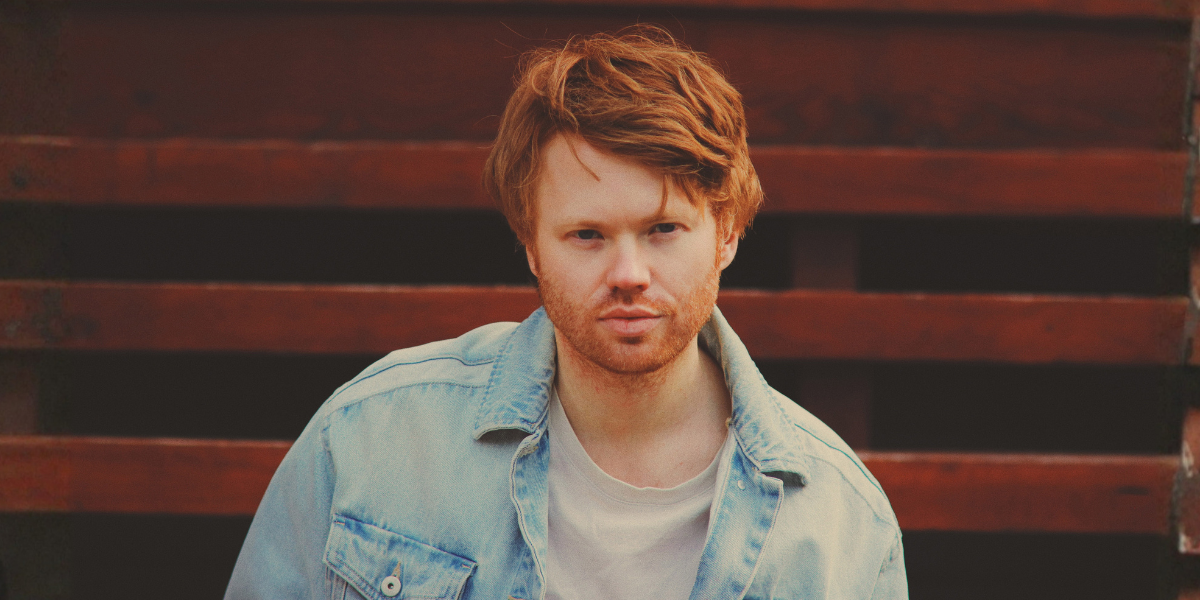
Singer-songwriter Abner James finds his creativity in the quiet freedom of analog tools. Learn how his creative process transcends different media.

Abner James went to school for film directing. But the success of the band he and his brother formed together, Eighty Ninety, knocked him onto a different trajectory.

The band has accrued more than 40 million streams since the release of their debut EP “Elizabeth," and their work was even co-signed by Taylor Swift when the singer added Eighty Ninety to her playlist "Songs Taylor Loves.”

Now, Abner is returning to long-form writing in addition to songwriting, and with a change in media comes an examination of the creative process. We sat down to chat about what's the same — and what's different. 

ANNIE COSBY: Tell us about your songwriting process.

ABNER JAMES: The way I tend to write my songs is hunched over a guitar and just seeing what comes. Sounds become words become shapes. It's a very physical process that is really about turning my brain off.

And one of the things that occurred to me when I was traveling, actually, was that I would love to be able to do that but from a writing perspective. What would happen if I sat down and approached writing in the same way that I approached music? In a more intuitive and free-form kind of way? What would that dig up?

AC: That's basically the ethos of Freewrite.

AJ: Yes. We had just put out a record, and I was thinking about how to get into writing for the next one. It occurred to me that regardless of how I started, I always finished on a screen. And I wondered: what's the acoustic guitar version of writing?

Where there's not blue light hitting me in the face. Even if I'm using my Notes app, it's the same thing. It really gets me into a different mindset.

 "I wondered: what's the acoustic guitar version of writing?"

I grew up playing piano. That was my first instrument. And I found an old typewriter at a thrift store, and I love it. It actually reminded me a lot of playing piano, the kind of physical, the feeling of it. And it was really fun, but pretty impractical, especially because I travel a fair amount.

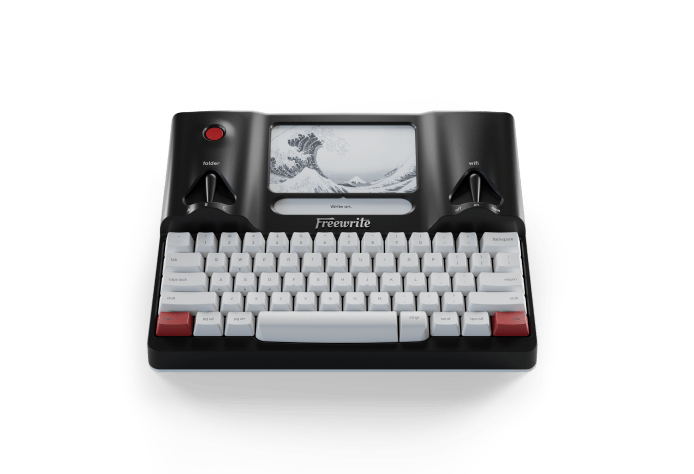
And so I wondered, is there such a thing as a digital typewriter? And I googled it, and I found Freewrite.

AC: What about Freewrite helps you write?

AJ:I think, pragmatically, just the E Ink screen is a huge deal, because it doesn't exhaust me in the same way. And the idea of having a tool specifically set aside for the process is appealing in an aesthetic way but also a mental-emotional way. When it comes out, it's kind of like ... It's like having an office you work out of. It's just for that.

"The way I tend to write my songs is hunched over a guitar and just seeing what comes. Sounds become words become shapes. It's a very physical process that is really about turning my brain off."

And all of the pragmatic limitations — like you're not getting texts on it, and you're not doing all that stuff on the internet — that's really helpful, too. But just having the mindset....

When I pick up a guitar, or I sit down at the piano, it very much puts me into that space. Having a tool just for words does the same thing. I find that to be really cool and inspiring.

"When I pick up a guitar, or I sit down at the piano, it very much puts me into that space. Having a tool just for words does the same thing."

AC: So mentally it gets you ready for writing.

AJ: Yeah, and also, when you write a Microsoft Word, it looks so finished that it's hard to keep going. If every time I strummed a chord, I was hearing it back, mixed and mastered and produced...?

It's hard to stay in that space when I'm seeing it fully written out and formatted in, like, Times New Roman, looking all seriously back at me.

AC: I get that. I have terrible instincts to edit stuff over and over again and never finish a story.

AJ:  Also, the way you just open it and it's ready to go. So you don't have the stages of the computer turning on, that kind of puts this pressure, this tension on.

It's working at the edges in all these different ways that on their own could feel a little bit like it's not really necessary. All these amorphous things where you could look at it and be like, well, I don't really need any of those. But they add up to a critical mass that actually is significant.

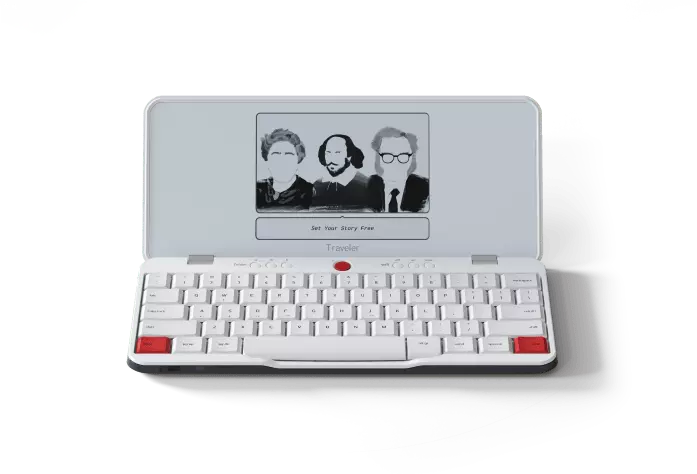
And sometimes, if I want to bring it on a plane, I've found it's replaced reading for me. Rather than pick up a book or bring a book on the plane, I bring Traveler and just kind of hang out in that space and see if anything comes up.

I've found that it's kind of like writing songs on a different instrument, you get different styles of music that you wouldn't have otherwise. I've found that writing from words towards music, I get different kinds of songs than I have in the past, which has been interesting.

In that way, like sitting at a piano, you just write differently than you do on a guitar, or even a bass, because of the things those instruments tend to encourage or that they can do.

It feels almost like a little synthesizer, a different kind of instrument that has unlocked a different kind of approach for me.

"I've found that it's kind of like writing songs on a different instrument, you get different styles of music that you wouldn't have otherwise... [Traveler] feels almost like a little synthesizer, a different kind of instrument that has unlocked a different kind of approach for me."

AC: As someone who doesn't know the first thing about writing music, that's fascinating. It's all magic to me.

AJ: Yeah.

AC: What else are you interested in writing?

AJ: I went to school for film directing. That was kind of what I thought I was going to do. And then my brother and I started the band and that kind of happened first and knocked me onto a different track for a little while after college.

Growing up, though, writing was my way into everything. In directing, I wanted to be in control of the thing that I wrote. And in music, it was the same — the songwriting really feels like it came from that same place. And then the idea of writing longer form, like fiction, almost feels just like the next step from song to EP to album to novel.

For whatever reason, that started feeling like a challenge that would be deeply related to the kinds of work that we do in the studio.

AC: Do you have any advice for aspiring songwriters?

AJ: This sounds like a cliche, but it's totally true: whatever success that I've had as a songwriter — judge that for yourself — but whatever success I have had, has been directly proportional to just writing the song that I wanted to hear.

What I mean by that is, even if you're being coldly, cynically, late-stage capitalist about it, it's by far the most success I've had. The good news is that you don't have to choose. And in fact, when you start making those little compromises, or even begin to inch in that direction, it just doesn't work. So you can forget about it.

Just make music you want to hear. And that will be the music that resonates with most people.

I think there's a temptation to have an imaginary focus group in your head of like 500 people. But the problem is all those people are fake. They're not real. None of those people are actually real people. You're a focus group of one, you're one real person. There are more real people in that focus group than in the imaginary one.

And I just don't think that we're that different, in the end. So that would be my advice.

AC: That seems like generally great creative advice. Because fiction writers talk about that too, right? Do you write to market or do you write the book you want to read. Same thing. And that imaginary focus group has been debilitating for me. I have to silence that focus group before I can write.

AJ: Absolutely.

"I think there's a temptation to have an imaginary focus group in your head of like 500 people. But the problem is all those people are fake... You're a focus group of one, you're one real person. There are more real people in that focus group than in the imaginary one."

--

Learn more about Abner James, his brother, and their band, Eighty Ninety, on Instagram.