overlaylink

Presagios en la ficción: trucos para mantener a los lectores en vilo

mayo 10, 2019 | 7 lectura mínima

En cuanto a recursos literarios, la anticipación es una técnica que todo escritor debe tener en su arsenal. Desde grandes figuras literarias como William Shakespeare y J.K. Rowling hasta maestros del guion como Alfred Hitchcock, la han utilizado para crear giros argumentales cautivadores que dejan a los lectores (y espectadores) perspicaces experimentando ese satisfactorio momento de revelación.

Si no estás muy seguro de qué es exactamente el presagio, aquí tienes una definición:
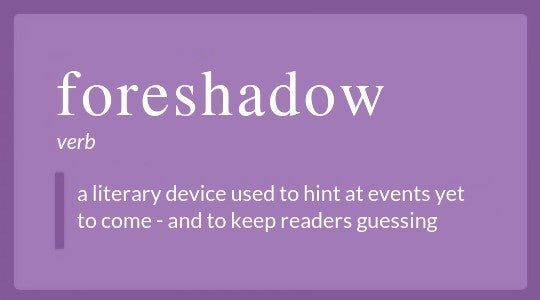

Presagiar

La anticipación crea tensión o añade suspense a tu historia, dejando una especie de rastro de migas de pan que tus lectores pueden (o no) captar. Si has leído una buena novela recientemente, es probable que el autor haya incluido algunos elementos de anticipación. Al leer, la anticipación se encuentra en escenas aparentemente aleatorias o inocentes que solo cobran sentido cuando la trama comienza a resolverse.

Sin embargo, al escribir, la anticipación no tiene nada de casual ni inocente. Debes planificar los elementos de la anticipación para que no parezcan demasiado obvios, pero tampoco tan sutiles que ninguno de tus lectores capte las jugosas migajas que les dejas. Entonces, ¿cómo funciona la anticipación al escribir?

Tipos de presagio

Cada autor tiene su propio estilo de escritura, por lo que la forma exacta de abordar la anticipación dependerá de tu estilo. Sin embargo, existen dos tipos principales de anticipación que puedes usar en tus historias: la anticipación directa y la anticipación indirecta.

Presagio directo

Si quieres mantener a tus lectores enganchados, la previsión directa es una excelente manera de lograrlo. Como su nombre indica, las pistas (o migas de pan) que dejas caer en tu historia son como pequeñas perlas de información que incitan a tus lectores a reflexionar sobre cómo encajan en la historia y adónde podrían llevarte. Los lectores astutos e intuitivos pueden incluso adivinar cómo se resolverá la trama gracias a la previsión directa.

Dentro del presagio directo, existen diferentes subtipos que puedes utilizar, como por ejemplo:

Pre-escena

Este es un tipo de presagio muy popular. Estas escenas suelen ser breves y relativamente discretas, pero revelan algo que resultará esencial para un giro argumental o una resolución posterior de la historia.

Los lectores suelen ser muy hábiles para identificar las escenas previas, así que si quieres usarlas con éxito, debes tener cuidado de no revelar demasiado. Las escenas previas efectivas transmiten información necesaria, pero incitan a los lectores a seguir leyendo para descubrir por qué los detalles son importantes o para comprobar si sus sospechas son correctas.

Por ejemplo, en tu novela, podrías tener una escena que comience en un bar lleno de gente. Tu héroe está sentado en la barra, disfrutando de su bebida y de la compañía de una hermosa joven. Tras terminar su bebida, se levanta para ir al baño. Inmediatamente, otro hombre se acerca a la joven y le entrega un papel antes de irse. Tu héroe regresa y la pareja sale del bar. Tus lectores intuyen que la joven está involucrada en algo sospechoso o no es tan inocente como parece; simplemente no saben qué va a pasar.

Mención de nombres

Si un personaje va a desempeñar un papel muy importante en tu historia, o si un lugar en particular va a ser significativo, mencionarlo puede anticipar los eventos futuros y señalar al lector la importancia de ese personaje o lugar. No sabrán por qué, pero es una pista más que les dejas.

Por ejemplo, si tu héroe le comenta a otro personaje que visitará a un amigo al día siguiente, pero no menciona a su amigo ni el lugar, tus lectores no le prestarán mucha atención. Si, por el contrario, tu héroe dice que se encontrará con Charlie McGuiness en la Capilla de la Santa Cruz, es más probable que tus lectores reconozcan estos detalles como significativos.

Profecía

Este es un antiguo tipo de presagio utilizado por autores como Orson Welles y William Shakespeare. En esencia, es una forma de comunicar directamente a los lectores que ocurrirá un determinado acontecimiento dramático en algún momento.

Algunos escritores consideran que esta es una práctica anticuada y contraria a la intuición, por lo que ya no es tan común como antes, pero aún puede ser poderosa. Les estás diciendo a tus lectores que algo específico va a suceder, pero no saben cuándo, cómo ni qué otras sorpresas les espera, así que los mantienes en una atmósfera de anticipación.

He aquí un ejemplo, de Macbeth de William Shakespeare (Acto 1, Escena 3):

"¡Salve, Macbeth! ¡A partir de ahora serás rey!"
[…]
Menor que Macbeth, y mayor.
No tan feliz, pero mucho más feliz.
Tendrás reyes, aunque no seas ninguno;
Así que ¡saluden a Macbeth y a Banquo!
¡Banquo y Macbeth, todos saluden!

Presagio indirecto

Si te interesa más la sutileza que dar pistas a tus lectores, la mejor opción es la previsión indirecta. Tú controlas el nivel de sutileza, y con este tipo de previsión, aunque tus lectores puedan reconocer las pistas como importantes, es probable que no puedan entender exactamente a qué estás insinuando.

Personalmente, como lector y escritor, encuentro más gratificante la predicción indirecta. En la era moderna de las redes sociales, algunas predicciones directas parecen más bien un cebo para el clic, y prefiero ser más sutil al escribir. Veamos algunos tipos de predicción indirecta (sutil):

Declaraciones inocuas

Este tipo de presagios puede quedar grabado en la mente de tus lectores, pero solo cobra sentido cuando todo se revela más adelante en la historia. Es menos probable que atraigan a tus lectores, pero cuando te hayas consolidado como escritor y tengas seguidores, estos se enorgullecerán de ser capaces de detectar las declaraciones inocuas que dejas caer en tus escritos e intentarán adivinar cuál será el desenlace.

He aquí un ejemplo de declaraciones inocuas en acción. En Star Wars: Episodio II, Obi-Wan Kenobi le comenta a Anakin Skywalker: "¿Por qué tengo la sensación de que serás mi muerte?". Solo más adelante en la serie, este presagio oculto cobra sentido.

Falacia patética

Cuando me encontré con este término, sinceramente no tenía ni idea de su significado. Sin embargo, una vez que lo descubrí, se convirtió en una de mis técnicas favoritas de presagio sutil. La falacia patética se refiere a la forma en que se pueden atribuir emociones humanas a cosas que no lo son, como el clima, por ejemplo.

Hay muchísimas maneras de usar esta técnica para predecir eventos futuros. Una ráfaga de viento gélido puede usarse para evocar un mal presagio o transmitir que algo aterrador va a suceder, por ejemplo. De igual manera, un arcoíris que aparece durante una tormenta feroz puede sugerir que se avecina un cambio o que algo más positivo surgirá de los problemas.

Charles Dickens usa el clima en Grandes esperanzas para transmitir algo de lo que siente el héroe, Pip. ¿Puedes adivinar qué intenta presagiar Dickens?

"Las ráfagas habían sido tan furiosas que a los edificios altos de la ciudad les habían arrancado el plomo de los tejados; y en el campo, los árboles habían sido arrancados y las aspas de los molinos de viento arrastradas; y desde la costa llegaban noticias sombrías de naufragios y muertes."

Colocación de objetos

Como es bien sabido, Antón Chéjov declaró una vez: «Si en el primer acto hay una pistola colgada en la pared, debe dispararse en el último». Si bien sin duda se refería a la dramaturgia, lo mismo aplica a cualquier tipo de historia y, en definitiva, esta es una herramienta que puede utilizarse para anticipar con gran eficacia.

Esto significa que, si ocurre algo muy importante al final de la historia, se puede prefigurarlo sutilmente haciendo alguna alusión al principio. En el ejemplo de Chéjov, se haría hincapié en una pistola que posteriormente sería crucial para la trama.

Esta es una técnica muy popular: seguramente debes haber leído un libro (o diez) en el que se menciona un objeto que realmente no parece tener sentido total en la escena actual, pero luego, más tarde, tienes ese momento de lucidez y te das cuenta de que "oh, ¡por eso estaba allí!".

También hay diferentes maneras de usar esta técnica. Veamos un par de ejemplos:

Tu héroe conduce al aeropuerto para recoger a su prometida, quien regresa de un viaje de negocios al extranjero. Habla por teléfono con su socio y mira el indicador de combustible, que indica casi vacío, y luego continúa con su conversación. En esta escena, se anticipa más la ausencia de algo (por ejemplo, un tanque de combustible lleno). Podrías usar esto con frascos de medicamentos o mostrar a tu personaje olvidando algo.
Tu heroína está sentada en su escritorio en la oficina de la universidad, corrigiendo trabajos académicos. Se le acaba el bolígrafo y abre un cajón para sacar uno nuevo. En el cajón, hay un sobre sin abrir, amarillento por el tiempo, con un nombre escrito. Cierra el cajón rápidamente. Tus lectores recordarán la carta, pero no saben por qué es importante.

Uso eficaz de la previsión

El tipo de presagio que uses y cómo lo uses dependerá de lo que quieras lograr. ¿Buscas crear suspense? Entonces deberías usar presagios más directos (para que tus lectores no se pierdan las pistas). Sin embargo, si quieres presagiar un evento futuro, es mejor adoptar un enfoque más sutil con presagios indirectos.

Un error que cometen muchos escritores es usar demasiados presagios. Un poco de presagio es mejor que mucho si se usa bien. Esto significa que debes ser más selectivo con respecto a para qué usas los presagios y en qué parte de tu historia los usas.

Los puntos de inflexión más importantes de tu historia deberían ser tu prioridad para anticipar la historia. Generalmente, hay alrededor de tres puntos de inflexión en un arco argumental: el momento en que la vida de tu personaje se ve afectada significativamente por algo; el punto intermedio del arco argumental donde tu personaje comienza a cuestionarse existencialmente; y el clímax de la historia.

Generalmente, habrá más presagios en la primera mitad de la historia, y los momentos de revelación llegarán en la segunda. Una buena manera de lograr un buen equilibrio (y asegurarse de no excederse con los presagios) es usar un diagrama de trama para identificar los mejores momentos para presagiar los puntos de inflexión más importantes de la historia.

Practica tu técnica para captar el presagio

No esperes dominar la predicción al instante. Maestros del suspense como Stephen King y Alfred Hitchcock perfeccionaron su arte a lo largo de muchos años, así que prepárate para dedicar tiempo a practicar tus habilidades de predicción.

También es buena idea intentar identificar la anticipación al leer las novelas de tus autores favoritos, ya que así podrás aprender de los maestros. Mientras lees, pregúntate por qué sus técnicas de anticipación son tan efectivas y practica replicarlas tú mismo.

Ya sea que prefieras usar presagios directos o indirectos, puedes mantener a tus lectores adivinando y aumentar tu confianza hasta que seas un maestro en presagios también.
diciembre 30, 2025 3 lectura mínima

It’s Freewrite’s favorite time of year. When dictionaries around the world examine language use of the previous year and select a “Word of the Year.”

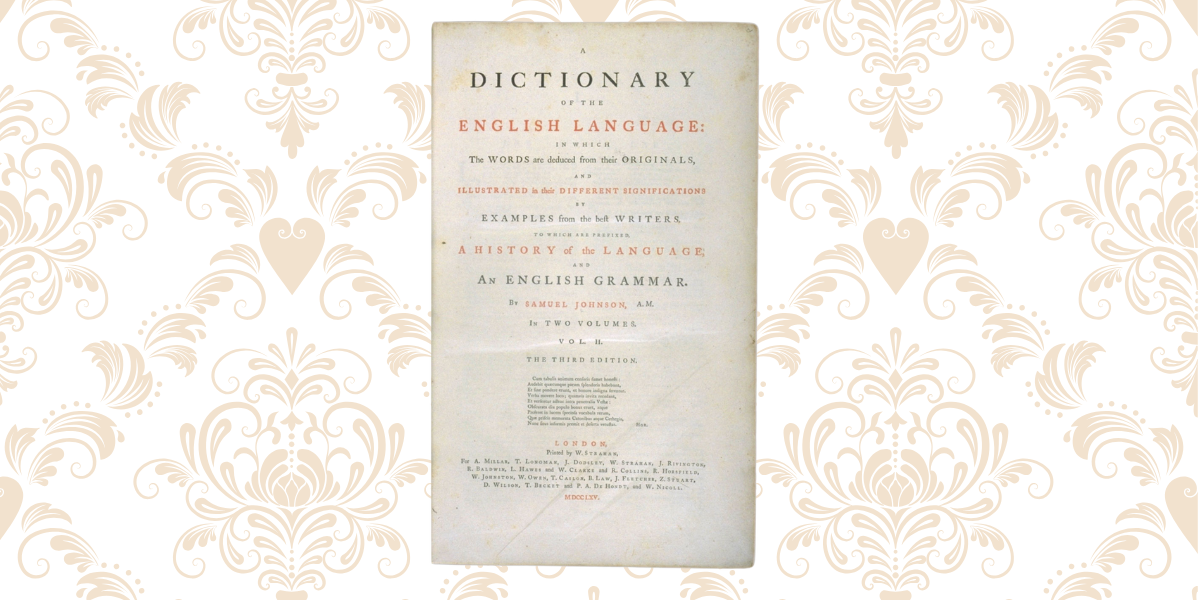
Of course, there are many different dictionaries in use in the English language, and they all have different ideas about what word was the most influential or saw the most growth in the previous year. They individually review new slang and culturally relevant vocabulary, examine spikes or dips in usage, and pour over internet trend data.

Let’s see what some of the biggest dictionaries decided for 2025. And read to the end for a chance to submit your own Word of the Year — and win a Freewrite gift card.

[SUBMIT YOUR WORD OF THE YEAR]


Merriam-Webster: "slop"

Merriam-Webster chose "slop" as its Word of the Year for 2025 to describe "all that stuff dumped on our screens, captured in just four letters."

The dictionary lists "absurd videos, off-kilter advertising images, cheesy propaganda, fake news that looks pretty real, junky AI-written books, 'workslop' reports that waste coworkers’ time … and lots of talking cats" as examples of slop.

The original sense of the word "slop" from the 1700s was “soft mud” and eventually evolved to mean "food waste" and "rubbish." 2025 linked the term to AI, and the rest is history.

Honorable mentions: conclave, gerrymander, touch grass, performative, tariff, 67.

Dictionary.com: "67"

The team at Dictionary.com likes to pick a word that serves as “a linguistic time capsule, reflecting social trends and global events that defined the year.”

For 2025, they decided that “word” was actually a number. Or two numbers, to be exact.

If you’re an old, like me, and don’t know many school-age children, you may not have heard “67” in use. (Note that this is not “sixty-seven,” but “six, seven.”)

Dictionary.com claims the origin of “67” is a song called “Doot Doot (6 7)” by Skrilla, quickly made infamous by viral TikTok videos, most notably featuring a child who will for the rest of his life be known as the “6-7 Kid.” But according to my nine-year-old cousin, the origins of something so mystical can’t ever truly be known.

(My third grade expert also demonstrated the accompanying signature hand gesture, where you place both hands palms up and alternately move up and down.)

And if you happen to find yourself in a fourth-grade classroom, watch your mouth, because there’s a good chance this term has been banned for the teacher’s sanity.

Annoyed yet? Don’t be. As Dictionary.com points out, 6-7 is a rather delightful example at how fast language can develop as a new generation joins the conversation.

Dictionary.com honorable mentions: agentic, aura farming, broligarchy, clanker, Gen Z stare, kiss cam, overtourism, tariff, tradwife.

Oxford Dictionary: "rage bait"

With input from more than 30,000 users and expert analysis, Oxford Dictionary chose "rage bait" for their word of the year.

Specifically, the dictionary pointed to 2025’s news cycle, online manipulation tactics, and growing awareness of where we spend our time and attention online.

While closely paralleling its etymological cousin "clickbait," rage bait more specifically denotes content that evokes anger, discord, or polarization.

Oxford's experts report that use of the term has tripled in the last 12 months.

Oxford Dictionary's honorable mentions:aura farming, biohack.

Cambridge Dictionary: "parasocial"

The Cambridge Dictionary examined a sustained trend of increased searches to choose "parasocial" as its Word of the Year.

Believe it or not, this term was coined by sociologists in 1956, combining “social” with the Greek-derived prefix para-, which in this case means “similar to or parallel to, but separate from.”

But interest in and use of the term exploded this year, finally moving from a mainly academic context to the mainstream.

Cambridge Dictionary's honorable mentions: slop, delulu, skibidi, tradwife

Freewrite: TBD

This year, the Freewrite Fam is picking our own Word of the Year.

Click below to submit what you think the Word of 2025 should be, and we'll pick one submission to receive a Freewrite gift card.

[SUBMIT HERE] 

--

Sources

diciembre 18, 2025 5 lectura mínima

¿Qué pueden enseñar las cartas personales de Jane Austen a los escritores?

diciembre 10, 2025 6 lectura mínima

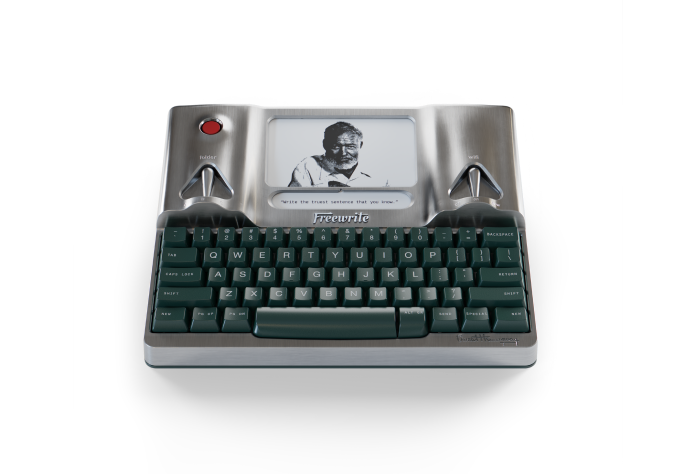
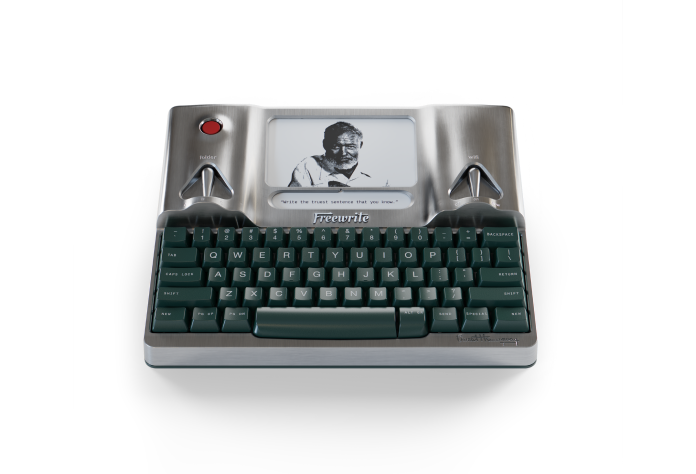
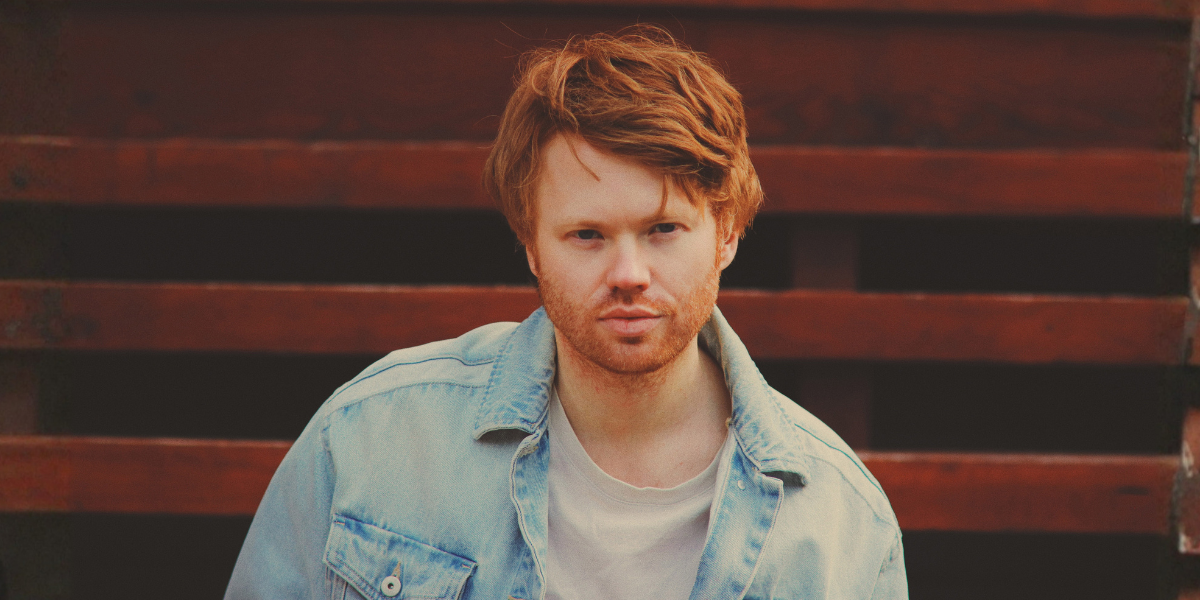
Singer-songwriter Abner James finds his creativity in the quiet freedom of analog tools. Learn how his creative process transcends different media.

Abner James went to school for film directing. But the success of the band he and his brother formed together, Eighty Ninety, knocked him onto a different trajectory.

The band has accrued more than 40 million streams since the release of their debut EP “Elizabeth," and their work was even co-signed by Taylor Swift when the singer added Eighty Ninety to her playlist "Songs Taylor Loves.”

Now, Abner is returning to long-form writing in addition to songwriting, and with a change in media comes an examination of the creative process. We sat down to chat about what's the same — and what's different. 

ANNIE COSBY: Tell us about your songwriting process.

ABNER JAMES: The way I tend to write my songs is hunched over a guitar and just seeing what comes. Sounds become words become shapes. It's a very physical process that is really about turning my brain off.

And one of the things that occurred to me when I was traveling, actually, was that I would love to be able to do that but from a writing perspective. What would happen if I sat down and approached writing in the same way that I approached music? In a more intuitive and free-form kind of way? What would that dig up?

AC: That's basically the ethos of Freewrite.

AJ: Yes. We had just put out a record, and I was thinking about how to get into writing for the next one. It occurred to me that regardless of how I started, I always finished on a screen. And I wondered: what's the acoustic guitar version of writing?

Where there's not blue light hitting me in the face. Even if I'm using my Notes app, it's the same thing. It really gets me into a different mindset.

 "I wondered: what's the acoustic guitar version of writing?"

I grew up playing piano. That was my first instrument. And I found an old typewriter at a thrift store, and I love it. It actually reminded me a lot of playing piano, the kind of physical, the feeling of it. And it was really fun, but pretty impractical, especially because I travel a fair amount.

And so I wondered, is there such a thing as a digital typewriter? And I googled it, and I found Freewrite.

AC: What about Freewrite helps you write?

AJ:I think, pragmatically, just the E Ink screen is a huge deal, because it doesn't exhaust me in the same way. And the idea of having a tool specifically set aside for the process is appealing in an aesthetic way but also a mental-emotional way. When it comes out, it's kind of like ... It's like having an office you work out of. It's just for that.

"The way I tend to write my songs is hunched over a guitar and just seeing what comes. Sounds become words become shapes. It's a very physical process that is really about turning my brain off."

And all of the pragmatic limitations — like you're not getting texts on it, and you're not doing all that stuff on the internet — that's really helpful, too. But just having the mindset....

When I pick up a guitar, or I sit down at the piano, it very much puts me into that space. Having a tool just for words does the same thing. I find that to be really cool and inspiring.

"When I pick up a guitar, or I sit down at the piano, it very much puts me into that space. Having a tool just for words does the same thing."

AC: So mentally it gets you ready for writing.

AJ: Yeah, and also, when you write a Microsoft Word, it looks so finished that it's hard to keep going. If every time I strummed a chord, I was hearing it back, mixed and mastered and produced...?

It's hard to stay in that space when I'm seeing it fully written out and formatted in, like, Times New Roman, looking all seriously back at me.

AC: I get that. I have terrible instincts to edit stuff over and over again and never finish a story.

AJ:  Also, the way you just open it and it's ready to go. So you don't have the stages of the computer turning on, that kind of puts this pressure, this tension on.

It's working at the edges in all these different ways that on their own could feel a little bit like it's not really necessary. All these amorphous things where you could look at it and be like, well, I don't really need any of those. But they add up to a critical mass that actually is significant.

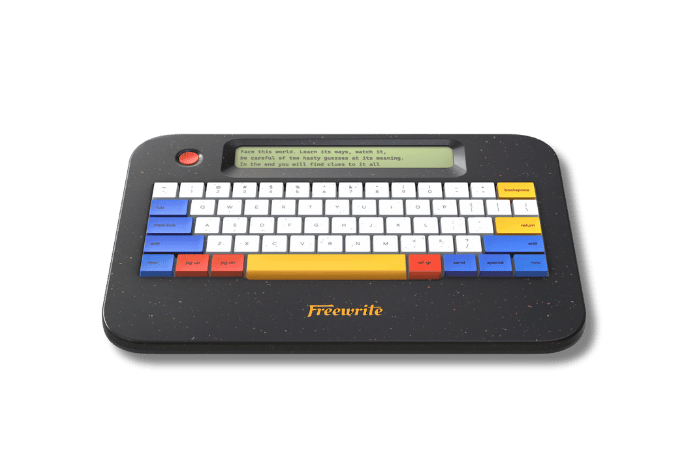
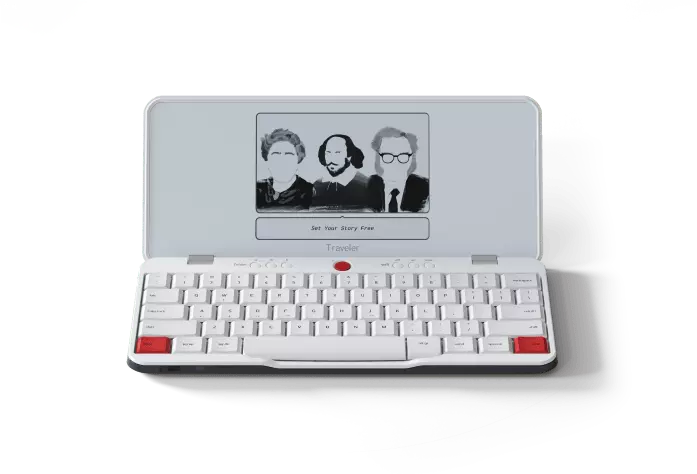
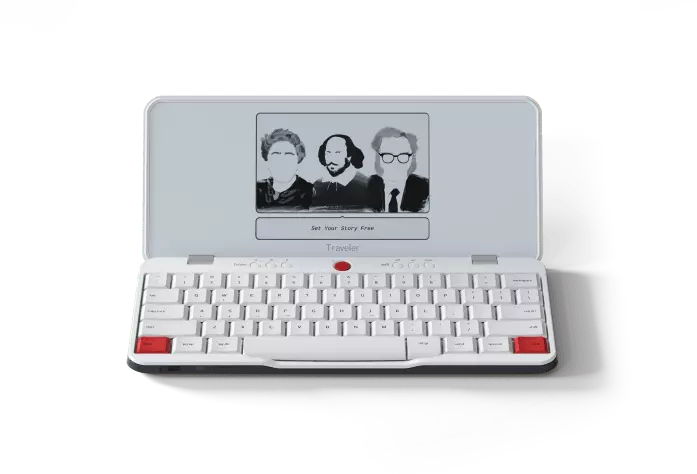
And sometimes, if I want to bring it on a plane, I've found it's replaced reading for me. Rather than pick up a book or bring a book on the plane, I bring Traveler and just kind of hang out in that space and see if anything comes up.

I've found that it's kind of like writing songs on a different instrument, you get different styles of music that you wouldn't have otherwise. I've found that writing from words towards music, I get different kinds of songs than I have in the past, which has been interesting.

In that way, like sitting at a piano, you just write differently than you do on a guitar, or even a bass, because of the things those instruments tend to encourage or that they can do.

It feels almost like a little synthesizer, a different kind of instrument that has unlocked a different kind of approach for me.

"I've found that it's kind of like writing songs on a different instrument, you get different styles of music that you wouldn't have otherwise... [Traveler] feels almost like a little synthesizer, a different kind of instrument that has unlocked a different kind of approach for me."

AC: As someone who doesn't know the first thing about writing music, that's fascinating. It's all magic to me.

AJ: Yeah.

AC: What else are you interested in writing?

AJ: I went to school for film directing. That was kind of what I thought I was going to do. And then my brother and I started the band and that kind of happened first and knocked me onto a different track for a little while after college.

Growing up, though, writing was my way into everything. In directing, I wanted to be in control of the thing that I wrote. And in music, it was the same — the songwriting really feels like it came from that same place. And then the idea of writing longer form, like fiction, almost feels just like the next step from song to EP to album to novel.

For whatever reason, that started feeling like a challenge that would be deeply related to the kinds of work that we do in the studio.

AC: Do you have any advice for aspiring songwriters?

AJ: This sounds like a cliche, but it's totally true: whatever success that I've had as a songwriter — judge that for yourself — but whatever success I have had, has been directly proportional to just writing the song that I wanted to hear.

What I mean by that is, even if you're being coldly, cynically, late-stage capitalist about it, it's by far the most success I've had. The good news is that you don't have to choose. And in fact, when you start making those little compromises, or even begin to inch in that direction, it just doesn't work. So you can forget about it.

Just make music you want to hear. And that will be the music that resonates with most people.

I think there's a temptation to have an imaginary focus group in your head of like 500 people. But the problem is all those people are fake. They're not real. None of those people are actually real people. You're a focus group of one, you're one real person. There are more real people in that focus group than in the imaginary one.

And I just don't think that we're that different, in the end. So that would be my advice.

AC: That seems like generally great creative advice. Because fiction writers talk about that too, right? Do you write to market or do you write the book you want to read. Same thing. And that imaginary focus group has been debilitating for me. I have to silence that focus group before I can write.

AJ: Absolutely.

"I think there's a temptation to have an imaginary focus group in your head of like 500 people. But the problem is all those people are fake... You're a focus group of one, you're one real person. There are more real people in that focus group than in the imaginary one."

--

Learn more about Abner James, his brother, and their band, Eighty Ninety, on Instagram.