overlaylink

La Muse est un mythe

Michel Archambault
juillet 25, 2024 | 3 lire la lecture

Tous les écrivains ont eu la même pensée : je vais m’asseoir et écrire… dès que je serai inspiré.

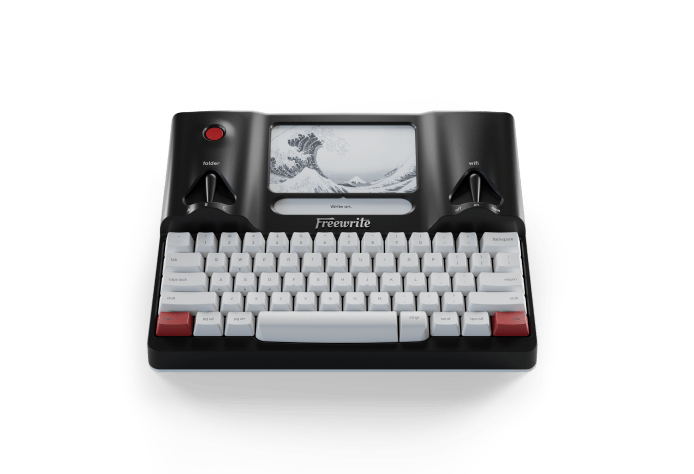
Lorsque la muse des mots a la gentillesse de m'accorder une visite, je prends un crayon ou je m'assois à mon Freewrite.

D'une seconde à l'autre...

Cette approche pose problème : ce moment d’inspiration spontanée est un mythe. Littéralement.

« Le Baiser de la Muse » de Paul Cézanne

Le mythe de l'inspiration soudaine

L'idée de muse est à l'origine du concept d'inspiration soudaine. Dans la mythologie grecque, les muses étaient décrites comme des déesses qui apportaient aux artistes, aux écrivains et aux musiciens des étincelles divines d'inspiration.

Avoir une poussée d’inspiration instantanée était littéralement un cadeau des dieux.

La notion d'inspiration soudaine a évolué au fil des ans. À l'époque romantique, de la fin du XVIIIe au début du XIXe siècle, la créativité était souvent décrite comme une force spontanée. Des poètes comme William Wordsworth étaient célèbres pour leurs descriptions saisissantes de ces moments d'inspiration exaltante.

Aujourd’hui, nous reconnaissons que même si l’idée d’une inspiration soudaine peut être séduisante, c’est le travail acharné qui donne vraiment vie aux mots.

Demandez simplement à l'auteur pour enfants EB White , qui a dit un jour :

« Un écrivain qui attend des conditions idéales pour travailler mourra sans avoir couché un mot sur le papier. »

Mais comment un écrivain se lance-t-il ? Comment cesser d'attendre l'inspiration et créer son propre élan ?

Apprendre à créer votre propre inspiration

En 1966, l'écrivain américain et lauréat du prix Nobel William Faulkner a déclaré :

« Je n'écris que lorsque l'inspiration me vient. Heureusement, elle me vient à neuf heures du matin. »

C'était la façon dont Faulkner disait qu'au lieu d'attendre que l'inspiration vienne par hasard, il se forçait à s'asseoir à 9 heures du matin tous les jours et à écrire quand même.

En d’autres termes : l’inspiration n’est pas un moment enchanté que vous devez capturer dans un bocal, mais plutôt un état d’esprit que vous pouvez créer.

La meilleure façon de capter l'insaisissable étincelle d'inspiration est de planifier. Un brin de planification, un peu de discipline et une routine bien établie suffisent à un écrivain pour créer sa propre inspiration, à la manière de Faulkner.

En d’autres termes : l’inspiration n’est pas un moment enchanté que vous devez capturer dans un bocal, mais plutôt un état d’esprit que vous pouvez créer.

Commencez par choisir un moment récurrent pour écrire. Cela peut être le matin, l'après-midi, le soir, ou même au milieu de la nuit. En faire une habitude récurrente vous permettra de vous asseoir et d'écrire plus facilement. Choisissez une durée qui vous aidera à rester concentré sur la tâche à accomplir ; elle peut être de quelques heures à 15 minutes seulement.

Vous pouvez également fixer un nombre minimum de mots pour chaque séance d'écriture. Le sentiment d'accomplissement ressenti lorsque vous atteignez votre objectif peut être une excellente source d'inspiration.

Voici quelques conseils supplémentaires pour rester concentré sur le processus d’écriture :
  • Fixez-vous des objectifs clairs pour votre séance d'écriture
  • Minimisez les distractions en écrivant dans un endroit calme sans interruption
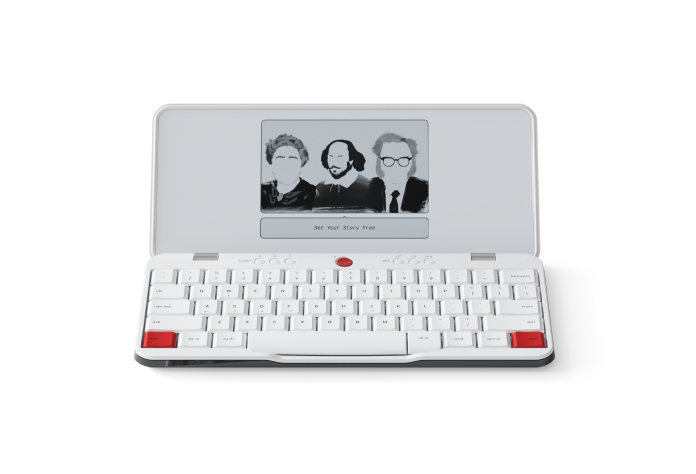
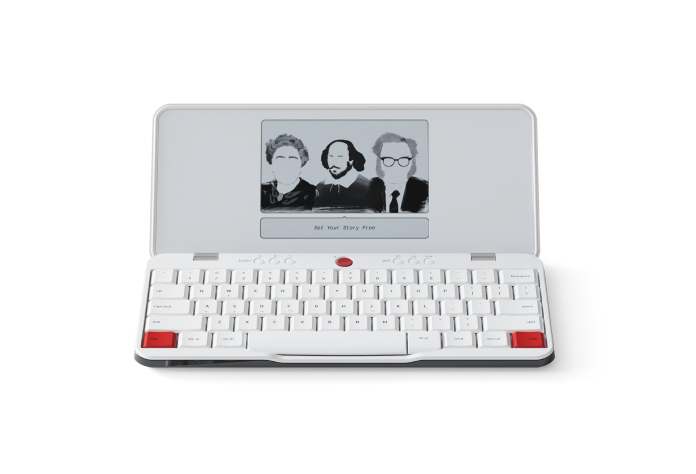
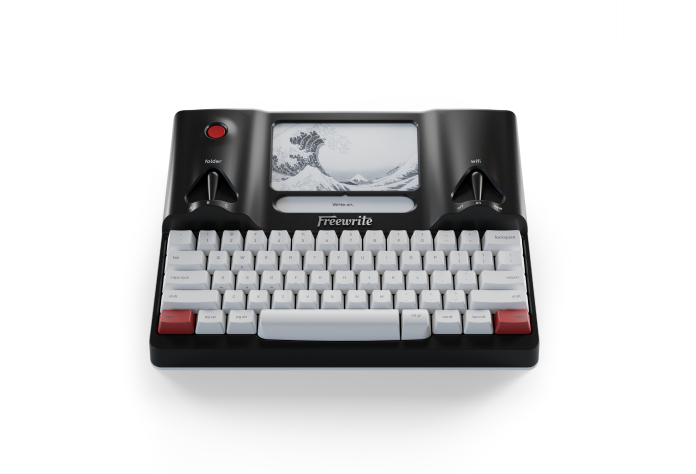
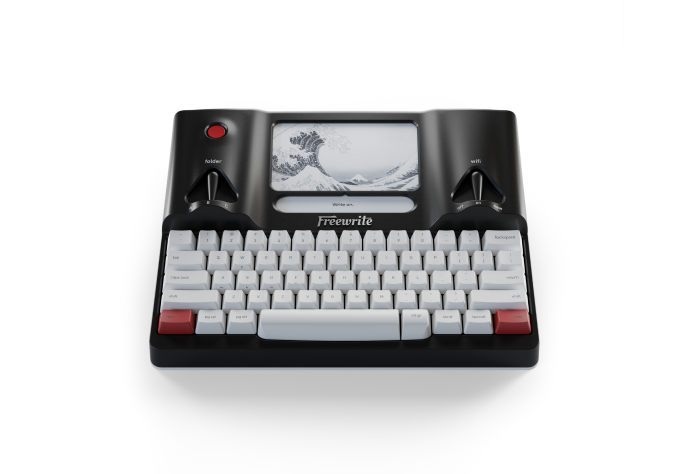
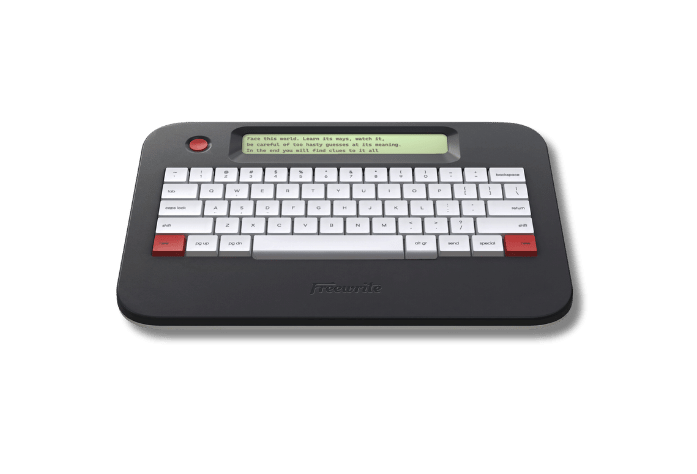
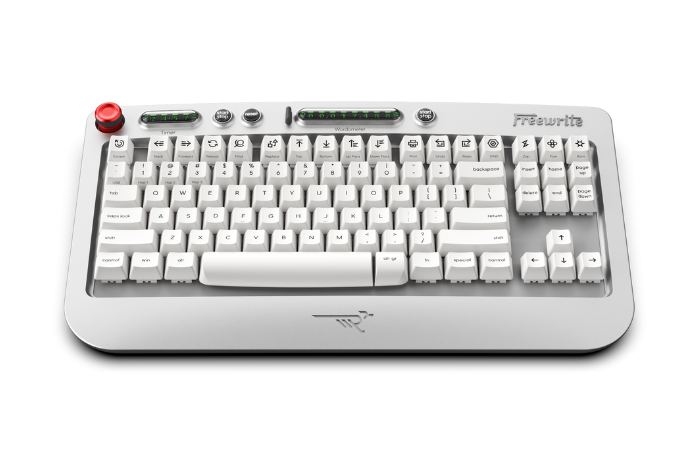
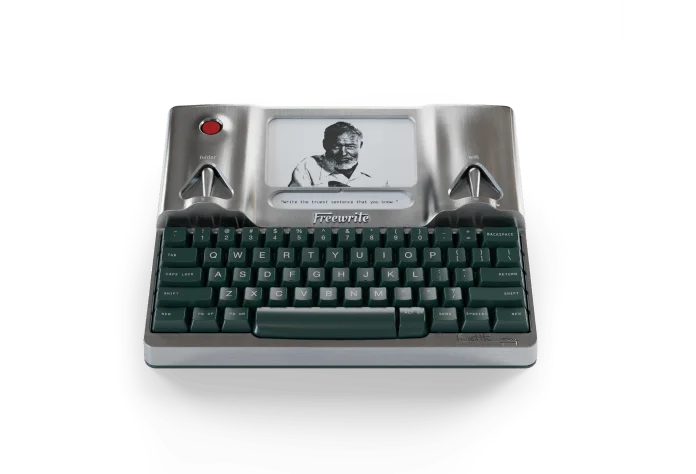
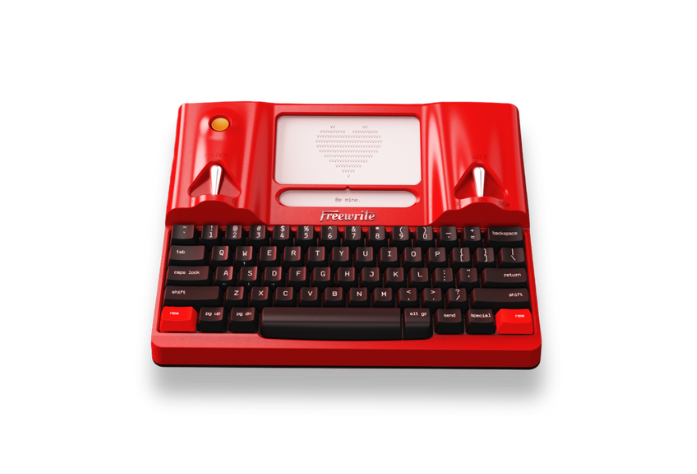
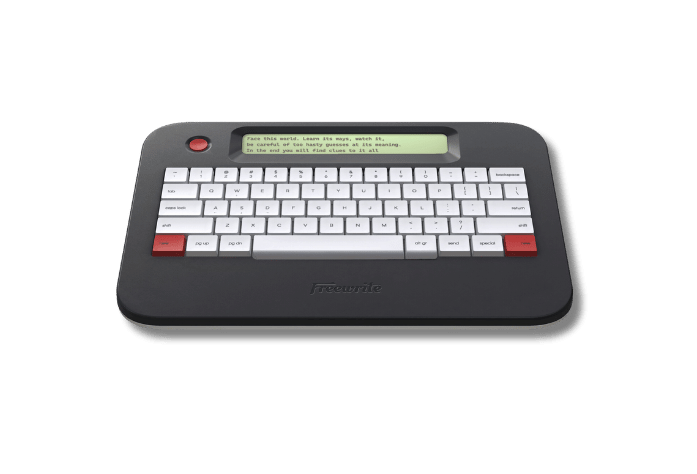
  • Utilisez un outil d'écriture sans distraction tel que la machine à écrire intelligente Freewrite
  • Gardez votre espace de travail bien rangé, avec tout ce dont vous avez besoin pour écrire à portée de main
  • Offrez-vous une petite récompense pour avoir terminé vos séances d'écriture
  • Faites en sorte que votre temps d’écriture soit non négociable et respectez votre emploi du temps.

« Les amateurs s’assoient et attendent l’inspiration ; le reste d’entre nous se lève et se met au travail. »

Stephen King

Apprécier le processus d'écriture

N’oubliez pas : l’inspiration n’est pas un peu de magie, c’est une habitude.

Établir un emploi du temps et vous forcer à écrire même lorsque vous n'en avez pas envie stimulera votre créativité et vous poussera vers l'inspiration intérieure.
RETOUR À « COMMENT ÊTRE CONSTAMMENT CRÉATIF »

janvier 09, 2026 2 lire la lecture

A new year means a whole new crop of work is entering the public domain. And that means endless opportunities for retellings, spoofs, adaptations, and fan fiction.

décembre 30, 2025 3 lire la lecture

It’s Freewrite’s favorite time of year. When dictionaries around the world examine language use of the previous year and select a “Word of the Year.”

Of course, there are many different dictionaries in use in the English language, and they all have different ideas about what word was the most influential or saw the most growth in the previous year. They individually review new slang and culturally relevant vocabulary, examine spikes or dips in usage, and pour over internet trend data.

Let’s see what some of the biggest dictionaries decided for 2025. And read to the end for a chance to submit your own Word of the Year — and win a Freewrite gift card.

[SUBMIT YOUR WORD OF THE YEAR]


Merriam-Webster: "slop"

Merriam-Webster chose "slop" as its Word of the Year for 2025 to describe "all that stuff dumped on our screens, captured in just four letters."

The dictionary lists "absurd videos, off-kilter advertising images, cheesy propaganda, fake news that looks pretty real, junky AI-written books, 'workslop' reports that waste coworkers’ time … and lots of talking cats" as examples of slop.

The original sense of the word "slop" from the 1700s was “soft mud” and eventually evolved to mean "food waste" and "rubbish." 2025 linked the term to AI, and the rest is history.

Honorable mentions: conclave, gerrymander, touch grass, performative, tariff, 67.

Dictionary.com: "67"

The team at Dictionary.com likes to pick a word that serves as “a linguistic time capsule, reflecting social trends and global events that defined the year.”

For 2025, they decided that “word” was actually a number. Or two numbers, to be exact.

If you’re an old, like me, and don’t know many school-age children, you may not have heard “67” in use. (Note that this is not “sixty-seven,” but “six, seven.”)

Dictionary.com claims the origin of “67” is a song called “Doot Doot (6 7)” by Skrilla, quickly made infamous by viral TikTok videos, most notably featuring a child who will for the rest of his life be known as the “6-7 Kid.” But according to my nine-year-old cousin, the origins of something so mystical can’t ever truly be known.

(My third grade expert also demonstrated the accompanying signature hand gesture, where you place both hands palms up and alternately move up and down.)

And if you happen to find yourself in a fourth-grade classroom, watch your mouth, because there’s a good chance this term has been banned for the teacher’s sanity.

Annoyed yet? Don’t be. As Dictionary.com points out, 6-7 is a rather delightful example at how fast language can develop as a new generation joins the conversation.

Dictionary.com honorable mentions: agentic, aura farming, broligarchy, clanker, Gen Z stare, kiss cam, overtourism, tariff, tradwife.

Oxford Dictionary: "rage bait"

With input from more than 30,000 users and expert analysis, Oxford Dictionary chose "rage bait" for their word of the year.

Specifically, the dictionary pointed to 2025’s news cycle, online manipulation tactics, and growing awareness of where we spend our time and attention online.

While closely paralleling its etymological cousin "clickbait," rage bait more specifically denotes content that evokes anger, discord, or polarization.

Oxford's experts report that use of the term has tripled in the last 12 months.

Oxford Dictionary's honorable mentions:aura farming, biohack.

Cambridge Dictionary: "parasocial"

The Cambridge Dictionary examined a sustained trend of increased searches to choose "parasocial" as its Word of the Year.

Believe it or not, this term was coined by sociologists in 1956, combining “social” with the Greek-derived prefix para-, which in this case means “similar to or parallel to, but separate from.”

But interest in and use of the term exploded this year, finally moving from a mainly academic context to the mainstream.

Cambridge Dictionary's honorable mentions: slop, delulu, skibidi, tradwife

Freewrite: TBD

This year, the Freewrite Fam is picking our own Word of the Year.

Click below to submit what you think the Word of 2025 should be, and we'll pick one submission to receive a Freewrite gift card.

[SUBMIT HERE] 

--

Sources

décembre 18, 2025 6 lire la lecture

Que peuvent apprendre les lettres personnelles de Jane Austen aux écrivains ?