overlaylink

Brownface et mauvaises critiques : les auteurs se comportent mal

Sophie Campbell
juin 17, 2024 | 7 lire la lecture

On imagine souvent les écrivains comme des êtres doux, sensibles et attentionnés. Qu'il s'agisse d'un auteur à succès écrivant son dernier chef-d'œuvre ou d'un écrivain en herbe partageant ses premières histoires en ligne, on peut imaginer quelqu'un sirotant une tasse de thé avec douceur et tapant sur une machine à écrire depuis une cabane au fond des bois.

Mais les écrivains, comme tout le monde, ne sont pas parfaits. Nous ne sommes en aucun cas exempts de conflits, de querelles mesquines et, parfois, de comportements tout à fait catastrophiques.

Comme le dit Anthony Arthur dans son livre Literary Feuds : « Nous nous demandons comment des gens qui décrivent de manière si vivante l’échec humain (ainsi que le triomphe) peuvent eux-mêmes ne pas atteindre la perfection. »

Du choquant au comique, plongeons dans les cas les plus connus d'auteurs se comportant mal.

Les auteurs modernes se comportent mal

L'auteur mystérieux aux multiples fausses identités

Les lecteurs et les auteurs sur Book Twitter (désormais X) connaissent bien les drames et les querelles. Mais cette histoire en particulier est un labyrinthe tentaculaire de catfishing, de mensonges et de grimaces .

Taylor Barton, auteur transgenre de livres dont The Ninth Life , a gagné en popularité sur Twitter. Sous plusieurs pseudonymes, dont Taylor Brooke et Brooklyn Ray, Barton a publié de la science-fiction, de la fantasy, des romances paranormales et des romans érotiques.

Il n'y a rien de mal ni de suspect à écrire sous plusieurs pseudonymes . De nombreux auteurs de romans et de nouvelles de genres variés le font pour différencier leurs œuvres et les adresser à différents types de lecteurs ou pour créer un sentiment d'anonymat au sein de certains genres. Mais la raison derrière l'utilisation de pseudonymes par Barton s'est avérée un peu plus sinistre.

En 2020, des membres de la communauté littéraire en ligne ont dénoncé des allégations de racisme et d'intimidation à l'encontre de Barton. Suite à ces accusations, Barton a présenté des excuses publiques, promis d'apprendre et de changer, et délivré un reçu pour un don de 500 dollars versé au Projet Trevor. Nombreux sont ceux qui ont toutefois souligné que le Projet Trevor n'était pas une organisation dédiée aux personnes de couleur, ce qui a remis en question les excuses de Barton après les allégations d'intimidation raciste.

Barton a ensuite été renvoyé de son éditeur et s'est rendu sur son autre compte Twitter, sous le pseudonyme de Brooklyn Ray, où le drame a continué et leurs excuses ont été pratiquement retirées.

Plus tard en 2021, les détectives ont commencé à établir des comparaisons entre Taylor Barton et le nouvel auteur Jupiter Wyse. Des similitudes ayant été constatées entre la décoration intérieure, les thèmes astraux et les exemples d'écriture des deux auteurs, la communauté littéraire s'est à nouveau plongée dans le drame.

L'utilisateur anonyme @AlertsBarton a également partagé un fil de discussion sur les liens entre Taylor Barton et les auteurs Hunter Barton, Stacey Anthony et Freydís Moon. Non seulement Taylor Barton semblait utiliser plusieurs fausses identités, mais, sous le nom de Freydís Moon/Jupiter Wyse, il se faisait passer pour une personne latino-américaine de couleur.

Cela a donné lieu à des accusations non seulement de catfishing, mais aussi de « brownface » (une personne blanche se faisant passer pour une personne à la peau brune), semblant tenter d'échapper à la condamnation subie par Barton suite à de précédentes accusations de racisme. Jupiter Wyse a ensuite été lui aussi écarté par son agent.

Avec autant de niveaux dans cette histoire, les utilisateurs de Twitter ont mené leurs propres enquêtes approfondies (l'un d'eux a créé un document Google de 69 pages sur le sujet ), et les YouTubeurs de livres ont également décortiqué l'histoire en détail.

En termes de drame littéraire sur Twitter, celui-ci remporte la palme.

Mauvaises critiques, catfishing et même harcèlement ?

L'écrivaine et journaliste Kathleen Hale est l'auteure de romans policiers pour jeunes adultes et d'un recueil d'essais intitulé « Kathleen Hale is a Crazy Stalker » . Le drame qui a suivi la sortie de son premier roman est une histoire qui dépasse la fiction.

Lorsque des exemplaires préliminaires de « No One Else Can Have You » ont été envoyés à des blogueurs littéraires populaires, Kathleen Hale a été mise en garde : ne lisez pas les critiques de Goodreads, et surtout ne les commentez pas. Dans un article pour le Guardian , Hale a déclaré : « Vivre d'écrivain, c'est travailler dans un secteur où la réussite ou l'échec d'un auteur dépend des réactions subjectives du public. » Elle savait que c'était une mauvaise idée de se plonger dans les critiques de son livre en ligne. Mais elle n'a pas pu résister.

Hale a trouvé une critique cinglante d'une étoile de la blogueuse littéraire Blythe Harris qui a déclaré : « Je trouve ce livre terriblement mal écrit et offensant ; son exécution, sous tous ses aspects, est horrible et, honnêtement, inexistante. » D'après les commentaires sur la plateforme, la critique de Harris semble avoir influencé d'autres critiques et dissuadé d'autres personnes de lire le livre.

Hale a commencé à être obsédée par cette critique – et est devenue obsédée par Harris elle-même. Elle « mangeait beaucoup de bonbons et se livrait à un léger harcèlement », parcourant les comptes Instagram et Twitter de Harris, lisant ses autres critiques et même étudiant des photos de pâtisseries et de vacances de l'inconnu. À mesure qu'elle s'intéressait de plus en plus à la personnalité virtuelle de Harris, elle a commencé à trouver des incohérences et à soupçonner Harris d'être un catfish. Finalement, Hale s'est « enivrée de bonne grâce » et a répondu à la critique de Harris, offensant au passage les blogueurs littéraires, ce qui a provoqué l'explosion de Twitter. Hale a tenté de résoudre le drame, mais n'a fait que creuser un fossé encore plus profond.

Convaincue d'avoir été victime d'un trolling sous une fausse identité, Hale a payé une vérification d'antécédents pour le savoir et a même retrouvé une adresse liée à Harris. Elle a réservé une voiture de location pour se rendre chez Harris et la rencontrer en personne.

L'article de Hale relatant son expérience a généré plus de 900 commentaires sur le Guardian, beaucoup la critiquant pour avoir violé la vie privée de Harris et l'accusant même de romancer le harcèlement. Sans surprise, le milieu littéraire a vivement réagi à cette mascarade.

Pour les écrivains et les aspirants auteurs, il est facile de comprendre la difficulté de Hale à rester à l'écart de Goodreads . Tenter d'éviter les critiques d'un livre dans lequel on s'est investi corps et âme doit ressembler à une tentative d'ignorer une envie irrépressible. Et découvrir d'emblée des critiques à une étoile doit être douloureux. Mais fouiller dans l'identité d'un critique, le contacter par téléphone sans son consentement et se présenter à son domicile sans prévenir est inexcusable.

Exemples historiques d'auteurs se comportant mal

Le conflit d'Ernest Hemingway avec William Faulkner

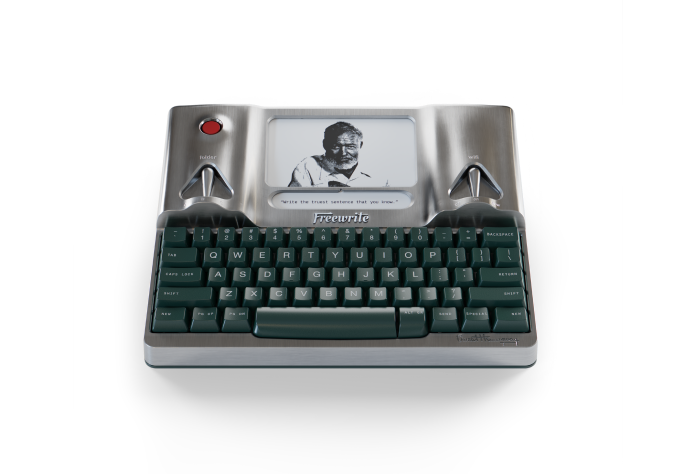
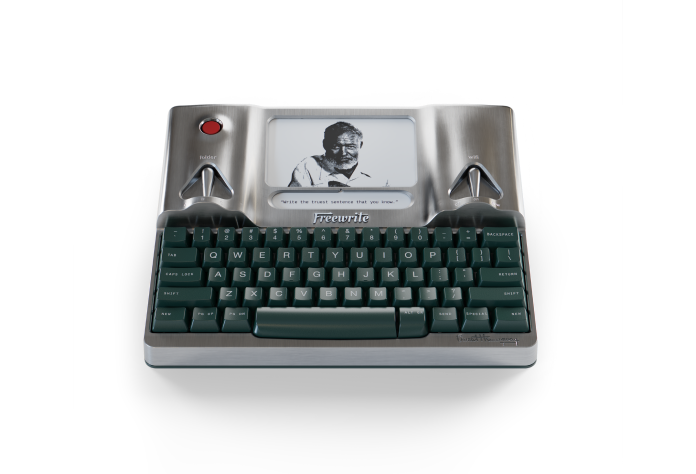
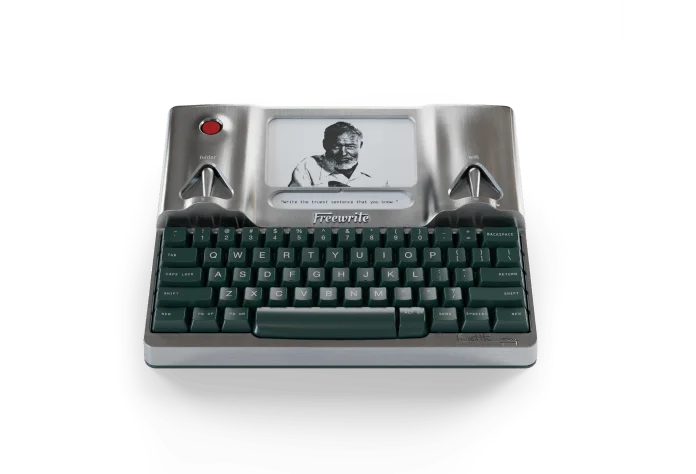
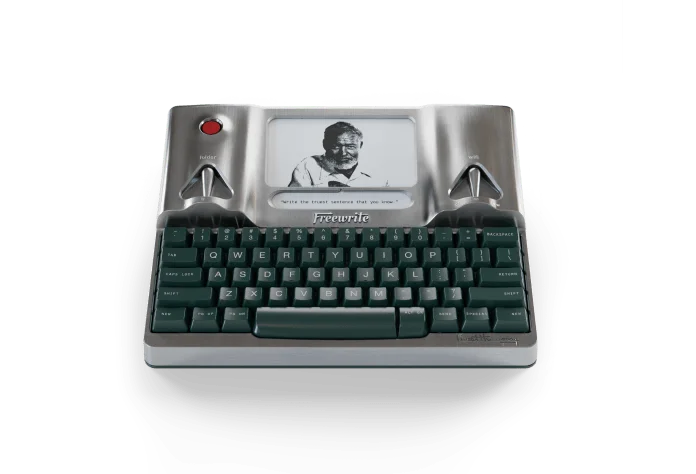
Les querelles littéraires sont bien antérieures à Book Twitter et BookTok . Même l'homonyme d' Hemingwrite s'est disputé avec d'autres auteurs.

On peut affirmer sans se tromper que William Faulkner, auteur de chefs-d'œuvre comme Le Bruit et la Fureur et Tandis que j'agonise , n'appréciait pas le style sobre d'Ernest Hemingway . AE Hotchner, biographe de Faulkner, confia à Hemingway : « M. Faulkner disait que vous ne vous exposiez jamais à une situation difficile. Il disait que vous n'aviez aucun courage et que vous n'aviez jamais utilisé un mot qui aurait pu renvoyer le lecteur au dictionnaire. »

Sans surprise, Hemingway s'en offusqua. Il répondit : « Pauvre Faulkner. Pense-t-il vraiment que les grandes émotions naissent de grands mots ? Il pense que je ne connais pas les mots à dix dollars. Je les connais tous, c'est sûr. Mais il existe des mots plus anciens, plus simples et plus efficaces, et ce sont ceux-là que j'utilise. »

Pour en rajouter, Hemingway a dit : « Avez-vous lu son dernier livre ? Il est devenu un auteur à la sauce, mais il était bon autrefois. Avant la sauce, ou quand il savait la manier. »

Si le blog Twitter avait existé à l'époque d'Hemingway, les lecteurs auraient pris leur pop-corn pour celui-ci. Nous aurions tous attendu avec impatience la prochaine série de sous-tweets qui dégénèrerait en véritable crise de colère.

Qui aurait pu l'emporter ? Avec sa réplique cinglante et ses insultes impertinentes, je parie sur Hemingway.

Les aventures macabres de Mary Shelley dans l'amour gothique

Dans le monde littéraire pré-Internet, les hommes n'étaient pas les seuls à se comporter mal. Mary Shelley, l'auteure de Frankenstein , avait elle aussi un côté rebelle. On raconte même qu'elle aurait perdu sa virginité sur la tombe de sa mère .

Les rumeurs les plus folles sur les personnages historiques sont souvent réduites à l'état de simples rumeurs. Pourtant, à bien y réfléchir, elles sont tout à fait typiques de la mère de l'horreur gothique. Les spécialistes pensent que Shelley a consommé sa relation avec son futur mari, le poète Percy Bysshe Shelley, sur le sol où sa mère bien-aimée et pionnière a été inhumée, dix jours seulement après sa naissance.

L'une de ces chercheuses est Charlotte Gordon, auteur de Romantic Outlaws: The Extraordinary Lives of Mary Wollstonecraft and Mary Shelley , qui a déclaré qu'il est « traditionnellement admis » que cette rumeur est, en fait, vraie .

« D'après une lettre écrite par Percy, c'est là qu'elle lui a déclaré son amour… », raconte Gordon. « On ne sait pas jusqu'où ils sont allés. Mais ils ont toujours appelé ce jour son anniversaire [celui de Percy]. »

Clairement fans de romantisme macabre, les aventures des Shelley dans les cimetières auraient pu donner du fil à retordre à Gomez et Morticia Addams.

Consommer une relation sur une tombe serait probablement considéré comme une insulte dans une société civilisée, un grand « va te faire foutre » au défunt. Mais quelque chose me dit que ce n'était pas l'intention de Shelley.

La tombe de la mère de Shelley a joué un rôle important dans son enfance. Elle se trouvait près de chez elle et sa famille lui rendait souvent visite durant son enfance. On raconte aussi qu'elle y a appris à lire en traçant les lettres sur la pierre tombale de sa mère et en lisant ses œuvres. La décision, bien qu'étrange, de perdre sa virginité à cet endroit était peut-être une façon pour Shelley d'honorer sa défunte mère, celle qu'elle n'a jamais rencontrée mais à laquelle elle souhaitait désespérément se connecter .

Je pourrais probablement penser à d’autres façons, moins effrayantes, de rendre hommage aux chers disparus, mais bon, chacun ses goûts.

Le monde littéraire a toujours prospéré grâce au théâtre

Certes, les drames littéraires, les histoires salaces et les querelles d'auteurs en ligne sont croustillants et souvent tout simplement épouvantables. Mais c'est grâce à l'aide – ou plutôt à l'entrave – d'Internet et des réseaux sociaux qu'ils sont devenus viraux.

Nos communautés littéraires hyperconnectées peuvent offrir au grand public une plateforme pour connaître un succès et une reconnaissance critique inimaginables il y a des siècles. Mais ce monde connecté en permanence peut aussi permettre aux auteurs de dévoiler leurs secrets, de les ressasser, de les analyser et de les remettre en question encore et encore.

Les réseaux sociaux peuvent amplifier le drame, mais ne vous y trompez pas : il y a toujours eu des auteurs qui se comportent mal.
décembre 30, 2025 3 lire la lecture

It’s Freewrite’s favorite time of year. When dictionaries around the world examine language use of the previous year and select a “Word of the Year.”

Of course, there are many different dictionaries in use in the English language, and they all have different ideas about what word was the most influential or saw the most growth in the previous year. They individually review new slang and culturally relevant vocabulary, examine spikes or dips in usage, and pour over internet trend data.

Let’s see what some of the biggest dictionaries decided for 2025. And read to the end for a chance to submit your own Word of the Year — and win a Freewrite gift card.

[SUBMIT YOUR WORD OF THE YEAR]


Merriam-Webster: "slop"

Merriam-Webster chose "slop" as its Word of the Year for 2025 to describe "all that stuff dumped on our screens, captured in just four letters."

The dictionary lists "absurd videos, off-kilter advertising images, cheesy propaganda, fake news that looks pretty real, junky AI-written books, 'workslop' reports that waste coworkers’ time … and lots of talking cats" as examples of slop.

The original sense of the word "slop" from the 1700s was “soft mud” and eventually evolved to mean "food waste" and "rubbish." 2025 linked the term to AI, and the rest is history.

Honorable mentions: conclave, gerrymander, touch grass, performative, tariff, 67.

Dictionary.com: "67"

The team at Dictionary.com likes to pick a word that serves as “a linguistic time capsule, reflecting social trends and global events that defined the year.”

For 2025, they decided that “word” was actually a number. Or two numbers, to be exact.

If you’re an old, like me, and don’t know many school-age children, you may not have heard “67” in use. (Note that this is not “sixty-seven,” but “six, seven.”)

Dictionary.com claims the origin of “67” is a song called “Doot Doot (6 7)” by Skrilla, quickly made infamous by viral TikTok videos, most notably featuring a child who will for the rest of his life be known as the “6-7 Kid.” But according to my nine-year-old cousin, the origins of something so mystical can’t ever truly be known.

(My third grade expert also demonstrated the accompanying signature hand gesture, where you place both hands palms up and alternately move up and down.)

And if you happen to find yourself in a fourth-grade classroom, watch your mouth, because there’s a good chance this term has been banned for the teacher’s sanity.

Annoyed yet? Don’t be. As Dictionary.com points out, 6-7 is a rather delightful example at how fast language can develop as a new generation joins the conversation.

Dictionary.com honorable mentions: agentic, aura farming, broligarchy, clanker, Gen Z stare, kiss cam, overtourism, tariff, tradwife.

Oxford Dictionary: "rage bait"

With input from more than 30,000 users and expert analysis, Oxford Dictionary chose "rage bait" for their word of the year.

Specifically, the dictionary pointed to 2025’s news cycle, online manipulation tactics, and growing awareness of where we spend our time and attention online.

While closely paralleling its etymological cousin "clickbait," rage bait more specifically denotes content that evokes anger, discord, or polarization.

Oxford's experts report that use of the term has tripled in the last 12 months.

Oxford Dictionary's honorable mentions:aura farming, biohack.

Cambridge Dictionary: "parasocial"

The Cambridge Dictionary examined a sustained trend of increased searches to choose "parasocial" as its Word of the Year.

Believe it or not, this term was coined by sociologists in 1956, combining “social” with the Greek-derived prefix para-, which in this case means “similar to or parallel to, but separate from.”

But interest in and use of the term exploded this year, finally moving from a mainly academic context to the mainstream.

Cambridge Dictionary's honorable mentions: slop, delulu, skibidi, tradwife

Freewrite: TBD

This year, the Freewrite Fam is picking our own Word of the Year.

Click below to submit what you think the Word of 2025 should be, and we'll pick one submission to receive a Freewrite gift card.

[SUBMIT HERE] 

--

Sources

décembre 18, 2025 6 lire la lecture

Que peuvent apprendre les lettres personnelles de Jane Austen aux écrivains ?

décembre 10, 2025 6 lire la lecture

Singer-songwriter Abner James finds his creativity in the quiet freedom of analog tools. Learn how his creative process transcends different media.

Abner James went to school for film directing. But the success of the band he and his brother formed together, Eighty Ninety, knocked him onto a different trajectory.

The band has accrued more than 40 million streams since the release of their debut EP “Elizabeth," and their work was even co-signed by Taylor Swift when the singer added Eighty Ninety to her playlist "Songs Taylor Loves.”

Now, Abner is returning to long-form writing in addition to songwriting, and with a change in media comes an examination of the creative process. We sat down to chat about what's the same — and what's different. 

ANNIE COSBY: Tell us about your songwriting process.

ABNER JAMES: The way I tend to write my songs is hunched over a guitar and just seeing what comes. Sounds become words become shapes. It's a very physical process that is really about turning my brain off.

And one of the things that occurred to me when I was traveling, actually, was that I would love to be able to do that but from a writing perspective. What would happen if I sat down and approached writing in the same way that I approached music? In a more intuitive and free-form kind of way? What would that dig up?

AC: That's basically the ethos of Freewrite.

AJ: Yes. We had just put out a record, and I was thinking about how to get into writing for the next one. It occurred to me that regardless of how I started, I always finished on a screen. And I wondered: what's the acoustic guitar version of writing?

Where there's not blue light hitting me in the face. Even if I'm using my Notes app, it's the same thing. It really gets me into a different mindset.

 "I wondered: what's the acoustic guitar version of writing?"

I grew up playing piano. That was my first instrument. And I found an old typewriter at a thrift store, and I love it. It actually reminded me a lot of playing piano, the kind of physical, the feeling of it. And it was really fun, but pretty impractical, especially because I travel a fair amount.

And so I wondered, is there such a thing as a digital typewriter? And I googled it, and I found Freewrite.

AC: What about Freewrite helps you write?

AJ:I think, pragmatically, just the E Ink screen is a huge deal, because it doesn't exhaust me in the same way. And the idea of having a tool specifically set aside for the process is appealing in an aesthetic way but also a mental-emotional way. When it comes out, it's kind of like ... It's like having an office you work out of. It's just for that.

"The way I tend to write my songs is hunched over a guitar and just seeing what comes. Sounds become words become shapes. It's a very physical process that is really about turning my brain off."

And all of the pragmatic limitations — like you're not getting texts on it, and you're not doing all that stuff on the internet — that's really helpful, too. But just having the mindset....

When I pick up a guitar, or I sit down at the piano, it very much puts me into that space. Having a tool just for words does the same thing. I find that to be really cool and inspiring.

"When I pick up a guitar, or I sit down at the piano, it very much puts me into that space. Having a tool just for words does the same thing."

AC: So mentally it gets you ready for writing.

AJ: Yeah, and also, when you write a Microsoft Word, it looks so finished that it's hard to keep going. If every time I strummed a chord, I was hearing it back, mixed and mastered and produced...?

It's hard to stay in that space when I'm seeing it fully written out and formatted in, like, Times New Roman, looking all seriously back at me.

AC: I get that. I have terrible instincts to edit stuff over and over again and never finish a story.

AJ:  Also, the way you just open it and it's ready to go. So you don't have the stages of the computer turning on, that kind of puts this pressure, this tension on.

It's working at the edges in all these different ways that on their own could feel a little bit like it's not really necessary. All these amorphous things where you could look at it and be like, well, I don't really need any of those. But they add up to a critical mass that actually is significant.

And sometimes, if I want to bring it on a plane, I've found it's replaced reading for me. Rather than pick up a book or bring a book on the plane, I bring Traveler and just kind of hang out in that space and see if anything comes up.

I've found that it's kind of like writing songs on a different instrument, you get different styles of music that you wouldn't have otherwise. I've found that writing from words towards music, I get different kinds of songs than I have in the past, which has been interesting.

In that way, like sitting at a piano, you just write differently than you do on a guitar, or even a bass, because of the things those instruments tend to encourage or that they can do.

It feels almost like a little synthesizer, a different kind of instrument that has unlocked a different kind of approach for me.

"I've found that it's kind of like writing songs on a different instrument, you get different styles of music that you wouldn't have otherwise... [Traveler] feels almost like a little synthesizer, a different kind of instrument that has unlocked a different kind of approach for me."

AC: As someone who doesn't know the first thing about writing music, that's fascinating. It's all magic to me.

AJ: Yeah.

AC: What else are you interested in writing?

AJ: I went to school for film directing. That was kind of what I thought I was going to do. And then my brother and I started the band and that kind of happened first and knocked me onto a different track for a little while after college.

Growing up, though, writing was my way into everything. In directing, I wanted to be in control of the thing that I wrote. And in music, it was the same — the songwriting really feels like it came from that same place. And then the idea of writing longer form, like fiction, almost feels just like the next step from song to EP to album to novel.

For whatever reason, that started feeling like a challenge that would be deeply related to the kinds of work that we do in the studio.

AC: Do you have any advice for aspiring songwriters?

AJ: This sounds like a cliche, but it's totally true: whatever success that I've had as a songwriter — judge that for yourself — but whatever success I have had, has been directly proportional to just writing the song that I wanted to hear.

What I mean by that is, even if you're being coldly, cynically, late-stage capitalist about it, it's by far the most success I've had. The good news is that you don't have to choose. And in fact, when you start making those little compromises, or even begin to inch in that direction, it just doesn't work. So you can forget about it.

Just make music you want to hear. And that will be the music that resonates with most people.

I think there's a temptation to have an imaginary focus group in your head of like 500 people. But the problem is all those people are fake. They're not real. None of those people are actually real people. You're a focus group of one, you're one real person. There are more real people in that focus group than in the imaginary one.

And I just don't think that we're that different, in the end. So that would be my advice.

AC: That seems like generally great creative advice. Because fiction writers talk about that too, right? Do you write to market or do you write the book you want to read. Same thing. And that imaginary focus group has been debilitating for me. I have to silence that focus group before I can write.

AJ: Absolutely.

"I think there's a temptation to have an imaginary focus group in your head of like 500 people. But the problem is all those people are fake... You're a focus group of one, you're one real person. There are more real people in that focus group than in the imaginary one."

--

Learn more about Abner James, his brother, and their band, Eighty Ninety, on Instagram.