overlaylink

8 des plus grandes écrivaines de l'histoire littéraire

Annie Cosby
mars 07, 2024 | 5 lire la lecture

Dans le vaste paysage littéraire, les femmes écrivaines ont longtemps été des pionnières, défiant les normes, brisant les barrières et façonnant le cours de l’histoire littéraire.

Leurs contributions ont non seulement enrichi le canon littéraire, mais ont également suscité des discussions cruciales sur le genre, l’identité et la société.

Jetons un œil à la vie et à l’œuvre de quelques-unes des grandes écrivaines de l’histoire pour voir comment elles ont transformé la littérature et laissé une marque indélébile sur le monde.

1. Sapho

Revenons en arrière. Très loin dans le temps. Vers 610 av. J.-C., à la naissance de Sappho.

Poétesse grecque originaire de l'île de Lesbos, Sappho est l'une des premières femmes poètes dont l'œuvre nous soit parvenue. Bien qu'une grande partie de son œuvre ait été perdue au fil des siècles, il en reste suffisamment pour comprendre comment Sappho a centré les personnages féminins et a été pionnière dans l'utilisation de la narration à la première personne.

Sappho est toujours considérée comme l'une des plus grandes poétesses lyriques de l'Antiquité, et tandis que certains l'appellent « l'Homère féminine », nous préférons le nom de Platon pour elle : « la dixième muse ».

2. Jane Austen

Impossible de parler d'écrivaines influentes sans mentionner Jane Austen. Son esprit vif et ses observations perspicaces des mœurs sociales continuent de résonner des siècles après son époque. Et elle écrivait à une époque incroyable pour une femme de faire carrière : elle n'avait même pas le droit de signer ses propres contrats ; son frère Henry devait s'en charger !

Les romans d'Austen, dont Orgueil et Préjugés et Raison et Sentiments , décortiquaient avec une perspicacité inégalée les complexités de l'amour, du mariage et des classes sociales dans l'Angleterre de la Régence. Certains la considèrent comme la mère du roman d'amour moderne, tandis que d'autres soutiennent que ses histoires sont des romans de mœurs et de valeurs. satire sociale.

Quel que soit votre point de vue, elle a incontestablement contribué à orienter la littérature populaire vers le réalisme et à introduire de nouveaux types de narration romanesque. Ses personnages vivants et sa maîtrise de la narration ont fait d'elle un succès à notre époque (mais pas son nom – elle a publié anonymement) et un géant de la littérature dont l'influence perdure encore aujourd'hui.

3. Mary Shelley

La jeune Mary Shelley a été pionnière d'un nouveau genre littéraire avec son roman de 1818, Frankenstein . Cette œuvre a fait d'elle la « mère de la science-fiction » pour des générations d'écrivains. Et c'était inscrit dans ses gènes : Shelley était issue d'une famille d'écrivains, sa mère, Mary Wollstonecraft, étant connue pour son manifeste féministe, A Vindication of the Rights of Women .

Frankenstein explorait des thèmes existentiels profonds, ainsi que l'éthique du progrès scientifique, et défiait les attentes de l'époque grâce à une structure narrative complexe. Plus important encore, il a inspiré des débats cruciaux sur la condition humaine.

4. Edith Wharton

Edith Wharton a été la première femme à remporter le Prix ​​Pulitzer de littérature. Son roman « L'Âge de l'innocence » s'est inspiré de l'expérience de Wharton auprès de la haute société new-yorkaise pour dresser un portrait saisissant de l'Âge d'or.

Son esprit vif et son honnêteté brute ne se sont pas arrêtés à L'Âge de l'innocence . Wharton allait écrire plus de 40 livres en 40 ans.

5. Virginia Woolf

Au début du XXe siècle, Virginia Woolf s'est imposée comme une figure pionnière de la littérature moderniste. À travers des œuvres comme Mrs. Dalloway et Vers le phare , elle a révolutionné la structure narrative en utilisant des techniques de flux de conscience pour explorer la vie intérieure de ses personnages.

Au-delà de ses expériences littéraires révolutionnaires, les essais féministes de Woolf, dont « A Room of One's Own », ont remis en question les notions dominantes du rôle des femmes dans la société, en prônant l'autonomie intellectuelle et créative.

6. Emily Dickinson

Dans le monde de la poésie, Emily Dickinson est une figure marquante dont les vers énigmatiques continuent de captiver les lecteurs par leurs profondes réflexions sur la condition humaine.

Malgré une vie recluse, la poésie de Dickinson explore les thèmes de l'amour, de la mort et de la nature avec une profondeur et une imagination sans pareilles. Son utilisation non conventionnelle de la forme et du langage repousse les limites de l'expression poétique, lui valant une place parmi les plus grands poètes de tous les temps.

7. Zora Neale Hurston

La Renaissance de Harlem des années 1920 et 1930 a vu naître aux États-Unis une vague d'écrivains noirs talentueux dont l'œuvre perdurera et continuera de trouver un écho auprès du public actuel. Parmi eux, Zora Neale Hurston.

Le roman de Hurston , Leurs yeux regardaient Dieu, reste une œuvre phare de la littérature américaine, célébrée pour sa riche représentation de la culture afro-américaine et son exploration de l'identité.

Grâce à sa prose vibrante et à sa célébration sans complexe de son héritage, Hurston a ouvert la voie aux futures générations d’écrivaines noires pour qu’elles puissent reprendre possession de leurs voix et de leurs récits.

8. Toni Morrison

Dans la seconde moitié du XXe siècle, le monde a découvert le formidable talent de Toni Morrison, dont les romans ont mis à nu les complexités de la race, de l'identité et du pouvoir aux États-Unis.

Avec des œuvres comme Beloved et The Bluest Eye , Morrison a mis les lecteurs au défi de faire face aux héritages de l’esclavage et du racisme, tout en célébrant la résilience de l’esprit humain.

Les histoires révolutionnaires de Morrison ont été acclamées par la critique dans le monde entier et, en 1993, elle est devenue la première femme afro-américaine à remporter le prix Nobel de littérature.

Le présent et le futur

La littérature contemporaine continue d’être façonnée par les voix d’écrivaines qui s’attaquent sans crainte à des problèmes sociaux urgents et repoussent les limites de la forme et du genre.

Des écrivains comme Chimamanda Ngozi Adichie , Celeste Ng , Zadie Smith , Arundhati Roy , Joan Didion , Roxane Gay , Donna Tartt , Jhumpa Lahiri et Angie Thomas ont acquis une renommée internationale pour leurs explorations perspicaces du genre, de l’identité, de la race et de la mondialisation.

Comme nous le rappelle l'œuvre des femmes qui les ont précédées, la littérature a le pouvoir d'inspirer, de provoquer et d'éclairer. Alors que nous célébrons cet héritage, rappelons-nous le potentiel transformateur de la littérature pour nous interpeller, nous élever et nous unir dans notre humanité commune.

Quelle est votre écrivaine préférée ?

« C'est une question impossible. Beaucoup de mes auteurs préférés sont des femmes. Si je devais n'en citer que quelques-unes… Je suis une grande fan de Jane Austen et j'adore Agatha Christie – c'est pourquoi j'ai choisi de l'ajouter à la sélection d'économiseurs d'écran Freewrite ! »

Annie Cosby, auteure et responsable marketing de Freewrite

" Kennedy Ryan ! "

Auteur Brittany Arreguin

Ursula Le Guin . L'une de mes citations préférées d'Ursula Le Guin est : « Un écrivain est une personne qui se soucie du sens des mots, de ce qu'ils disent et de la manière dont ils le disent. Les écrivains savent que les mots sont leur chemin vers la vérité et la liberté, et ils les utilisent donc avec prudence, réflexion, crainte et plaisir. En utilisant les mots avec discernement, ils renforcent leur âme… »

Auteur Monica Corwin

« Ursula Le Guin. »

Scénariste et producteur Bryan Young

« Victoria Schwab. Elle est magique et représente à 1000 % mon inspiration. »

Lindsey O.

"Shirley Jackson !"

Auteur Carolina Flórez-Cerchiaro

« Anne Rice. »

Lisa

« Maya Angelou. »

Raquel

"LM Montgomery.❤️❤️❤️"

Carol H.

décembre 30, 2025 3 lire la lecture

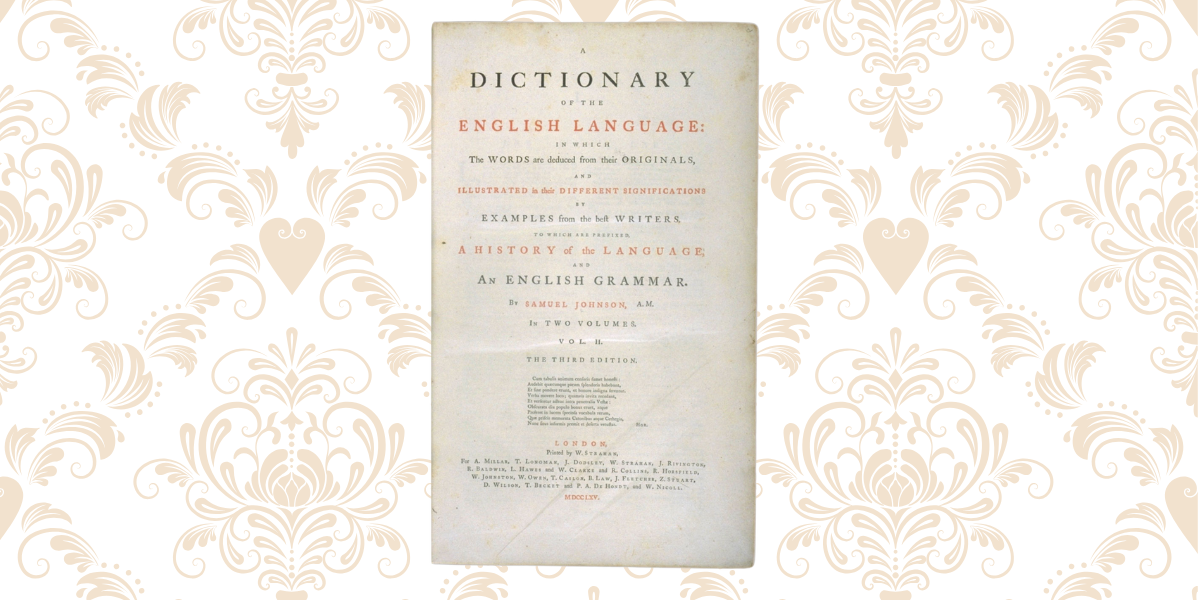
It’s Freewrite’s favorite time of year. When dictionaries around the world examine language use of the previous year and select a “Word of the Year.”

Of course, there are many different dictionaries in use in the English language, and they all have different ideas about what word was the most influential or saw the most growth in the previous year. They individually review new slang and culturally relevant vocabulary, examine spikes or dips in usage, and pour over internet trend data.

Let’s see what some of the biggest dictionaries decided for 2025. And read to the end for a chance to submit your own Word of the Year — and win a Freewrite gift card.

[SUBMIT YOUR WORD OF THE YEAR]


Merriam-Webster: "slop"

Merriam-Webster chose "slop" as its Word of the Year for 2025 to describe "all that stuff dumped on our screens, captured in just four letters."

The dictionary lists "absurd videos, off-kilter advertising images, cheesy propaganda, fake news that looks pretty real, junky AI-written books, 'workslop' reports that waste coworkers’ time … and lots of talking cats" as examples of slop.

The original sense of the word "slop" from the 1700s was “soft mud” and eventually evolved to mean "food waste" and "rubbish." 2025 linked the term to AI, and the rest is history.

Honorable mentions: conclave, gerrymander, touch grass, performative, tariff, 67.

Dictionary.com: "67"

The team at Dictionary.com likes to pick a word that serves as “a linguistic time capsule, reflecting social trends and global events that defined the year.”

For 2025, they decided that “word” was actually a number. Or two numbers, to be exact.

If you’re an old, like me, and don’t know many school-age children, you may not have heard “67” in use. (Note that this is not “sixty-seven,” but “six, seven.”)

Dictionary.com claims the origin of “67” is a song called “Doot Doot (6 7)” by Skrilla, quickly made infamous by viral TikTok videos, most notably featuring a child who will for the rest of his life be known as the “6-7 Kid.” But according to my nine-year-old cousin, the origins of something so mystical can’t ever truly be known.

(My third grade expert also demonstrated the accompanying signature hand gesture, where you place both hands palms up and alternately move up and down.)

And if you happen to find yourself in a fourth-grade classroom, watch your mouth, because there’s a good chance this term has been banned for the teacher’s sanity.

Annoyed yet? Don’t be. As Dictionary.com points out, 6-7 is a rather delightful example at how fast language can develop as a new generation joins the conversation.

Dictionary.com honorable mentions: agentic, aura farming, broligarchy, clanker, Gen Z stare, kiss cam, overtourism, tariff, tradwife.

Oxford Dictionary: "rage bait"

With input from more than 30,000 users and expert analysis, Oxford Dictionary chose "rage bait" for their word of the year.

Specifically, the dictionary pointed to 2025’s news cycle, online manipulation tactics, and growing awareness of where we spend our time and attention online.

While closely paralleling its etymological cousin "clickbait," rage bait more specifically denotes content that evokes anger, discord, or polarization.

Oxford's experts report that use of the term has tripled in the last 12 months.

Oxford Dictionary's honorable mentions:aura farming, biohack.

Cambridge Dictionary: "parasocial"

The Cambridge Dictionary examined a sustained trend of increased searches to choose "parasocial" as its Word of the Year.

Believe it or not, this term was coined by sociologists in 1956, combining “social” with the Greek-derived prefix para-, which in this case means “similar to or parallel to, but separate from.”

But interest in and use of the term exploded this year, finally moving from a mainly academic context to the mainstream.

Cambridge Dictionary's honorable mentions: slop, delulu, skibidi, tradwife

Freewrite: TBD

This year, the Freewrite Fam is picking our own Word of the Year.

Click below to submit what you think the Word of 2025 should be, and we'll pick one submission to receive a Freewrite gift card.

[SUBMIT HERE] 

--

Sources

décembre 18, 2025 6 lire la lecture

Que peuvent apprendre les lettres personnelles de Jane Austen aux écrivains ?

décembre 10, 2025 6 lire la lecture

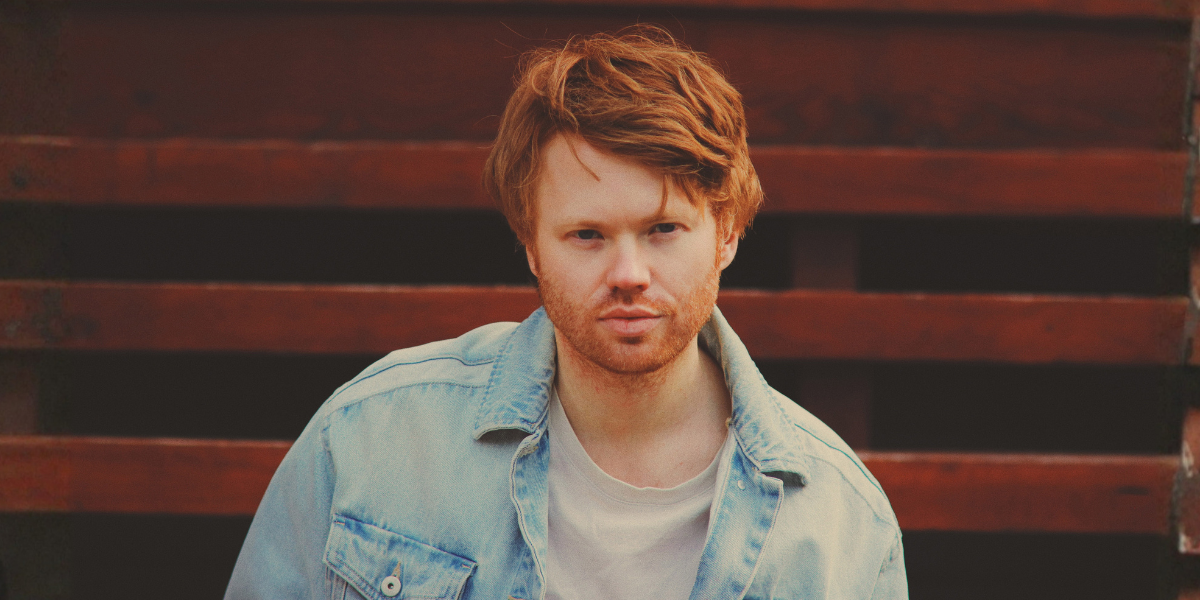
Singer-songwriter Abner James finds his creativity in the quiet freedom of analog tools. Learn how his creative process transcends different media.

Abner James went to school for film directing. But the success of the band he and his brother formed together, Eighty Ninety, knocked him onto a different trajectory.

The band has accrued more than 40 million streams since the release of their debut EP “Elizabeth," and their work was even co-signed by Taylor Swift when the singer added Eighty Ninety to her playlist "Songs Taylor Loves.”

Now, Abner is returning to long-form writing in addition to songwriting, and with a change in media comes an examination of the creative process. We sat down to chat about what's the same — and what's different. 

ANNIE COSBY: Tell us about your songwriting process.

ABNER JAMES: The way I tend to write my songs is hunched over a guitar and just seeing what comes. Sounds become words become shapes. It's a very physical process that is really about turning my brain off.

And one of the things that occurred to me when I was traveling, actually, was that I would love to be able to do that but from a writing perspective. What would happen if I sat down and approached writing in the same way that I approached music? In a more intuitive and free-form kind of way? What would that dig up?

AC: That's basically the ethos of Freewrite.

AJ: Yes. We had just put out a record, and I was thinking about how to get into writing for the next one. It occurred to me that regardless of how I started, I always finished on a screen. And I wondered: what's the acoustic guitar version of writing?

Where there's not blue light hitting me in the face. Even if I'm using my Notes app, it's the same thing. It really gets me into a different mindset.

 "I wondered: what's the acoustic guitar version of writing?"

I grew up playing piano. That was my first instrument. And I found an old typewriter at a thrift store, and I love it. It actually reminded me a lot of playing piano, the kind of physical, the feeling of it. And it was really fun, but pretty impractical, especially because I travel a fair amount.

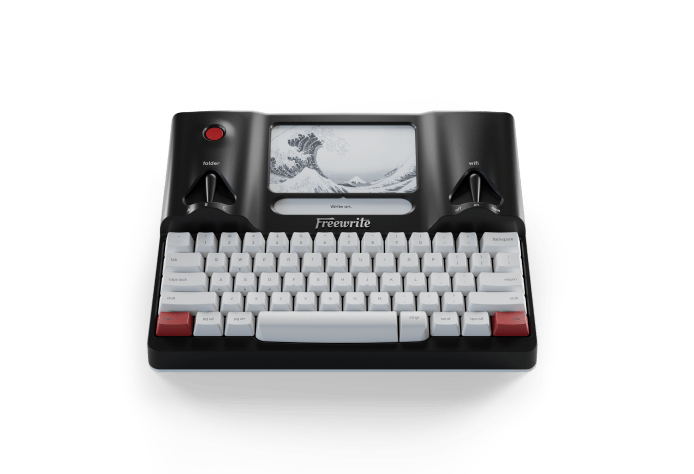
And so I wondered, is there such a thing as a digital typewriter? And I googled it, and I found Freewrite.

AC: What about Freewrite helps you write?

AJ:I think, pragmatically, just the E Ink screen is a huge deal, because it doesn't exhaust me in the same way. And the idea of having a tool specifically set aside for the process is appealing in an aesthetic way but also a mental-emotional way. When it comes out, it's kind of like ... It's like having an office you work out of. It's just for that.

"The way I tend to write my songs is hunched over a guitar and just seeing what comes. Sounds become words become shapes. It's a very physical process that is really about turning my brain off."

And all of the pragmatic limitations — like you're not getting texts on it, and you're not doing all that stuff on the internet — that's really helpful, too. But just having the mindset....

When I pick up a guitar, or I sit down at the piano, it very much puts me into that space. Having a tool just for words does the same thing. I find that to be really cool and inspiring.

"When I pick up a guitar, or I sit down at the piano, it very much puts me into that space. Having a tool just for words does the same thing."

AC: So mentally it gets you ready for writing.

AJ: Yeah, and also, when you write a Microsoft Word, it looks so finished that it's hard to keep going. If every time I strummed a chord, I was hearing it back, mixed and mastered and produced...?

It's hard to stay in that space when I'm seeing it fully written out and formatted in, like, Times New Roman, looking all seriously back at me.

AC: I get that. I have terrible instincts to edit stuff over and over again and never finish a story.

AJ:  Also, the way you just open it and it's ready to go. So you don't have the stages of the computer turning on, that kind of puts this pressure, this tension on.

It's working at the edges in all these different ways that on their own could feel a little bit like it's not really necessary. All these amorphous things where you could look at it and be like, well, I don't really need any of those. But they add up to a critical mass that actually is significant.

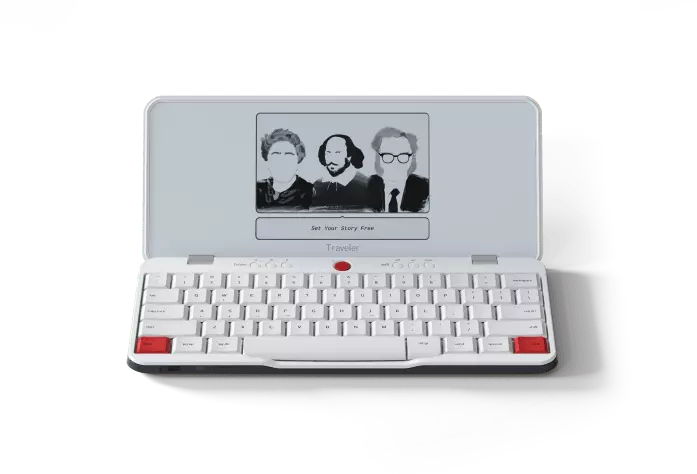
And sometimes, if I want to bring it on a plane, I've found it's replaced reading for me. Rather than pick up a book or bring a book on the plane, I bring Traveler and just kind of hang out in that space and see if anything comes up.

I've found that it's kind of like writing songs on a different instrument, you get different styles of music that you wouldn't have otherwise. I've found that writing from words towards music, I get different kinds of songs than I have in the past, which has been interesting.

In that way, like sitting at a piano, you just write differently than you do on a guitar, or even a bass, because of the things those instruments tend to encourage or that they can do.

It feels almost like a little synthesizer, a different kind of instrument that has unlocked a different kind of approach for me.

"I've found that it's kind of like writing songs on a different instrument, you get different styles of music that you wouldn't have otherwise... [Traveler] feels almost like a little synthesizer, a different kind of instrument that has unlocked a different kind of approach for me."

AC: As someone who doesn't know the first thing about writing music, that's fascinating. It's all magic to me.

AJ: Yeah.

AC: What else are you interested in writing?

AJ: I went to school for film directing. That was kind of what I thought I was going to do. And then my brother and I started the band and that kind of happened first and knocked me onto a different track for a little while after college.

Growing up, though, writing was my way into everything. In directing, I wanted to be in control of the thing that I wrote. And in music, it was the same — the songwriting really feels like it came from that same place. And then the idea of writing longer form, like fiction, almost feels just like the next step from song to EP to album to novel.

For whatever reason, that started feeling like a challenge that would be deeply related to the kinds of work that we do in the studio.

AC: Do you have any advice for aspiring songwriters?

AJ: This sounds like a cliche, but it's totally true: whatever success that I've had as a songwriter — judge that for yourself — but whatever success I have had, has been directly proportional to just writing the song that I wanted to hear.

What I mean by that is, even if you're being coldly, cynically, late-stage capitalist about it, it's by far the most success I've had. The good news is that you don't have to choose. And in fact, when you start making those little compromises, or even begin to inch in that direction, it just doesn't work. So you can forget about it.

Just make music you want to hear. And that will be the music that resonates with most people.

I think there's a temptation to have an imaginary focus group in your head of like 500 people. But the problem is all those people are fake. They're not real. None of those people are actually real people. You're a focus group of one, you're one real person. There are more real people in that focus group than in the imaginary one.

And I just don't think that we're that different, in the end. So that would be my advice.

AC: That seems like generally great creative advice. Because fiction writers talk about that too, right? Do you write to market or do you write the book you want to read. Same thing. And that imaginary focus group has been debilitating for me. I have to silence that focus group before I can write.

AJ: Absolutely.

"I think there's a temptation to have an imaginary focus group in your head of like 500 people. But the problem is all those people are fake... You're a focus group of one, you're one real person. There are more real people in that focus group than in the imaginary one."

--

Learn more about Abner James, his brother, and their band, Eighty Ninety, on Instagram.