overlaylink

Les 9 meilleurs livres d'écriture par des professionnels

septembre 20, 2017 | 6 lire la lecture


L'article invité du jour est celui de Matt Grant. Matt est un écrivain et éditeur basé à Brooklyn. Ses articles ont été publiés dans Literary Hub , Book Riot, HuffPost et BookBrowse. Retrouvez Matt en ligne ou suivez-le sur Twitter et Facebook .


En tant qu'écrivain, comme pour toute forme d'art, vous devez constamment perfectionner votre art. L'éducation joue un rôle important dans le développement personnel, mais il n'est pas nécessaire d'être candidat à un master en beaux-arts pour continuer à apprendre. Vous pouvez payer des cours (qui coûtent souvent une fortune) ou essayer de trouver des options gratuites en ligne.

Un excellent moyen de trouver des conseils gratuits (ou du moins à moindre coût !) et d'apprendre à son rythme est de lire des livres sur l'écriture. De nombreux écrivains, éditeurs, professeurs d'anglais et grammairiens de renom ont écrit des ouvrages sur leur art pour aider les écrivains à progresser. Et qui de mieux placé pour apprendre que les experts ?

Vous trouverez ci-dessous neuf livres à ajouter à votre étagère aujourd’hui qui vous aideront dans toutes les phases de votre parcours d’écriture.

Lire comme un écrivain Francine Prose

Lire comme un écrivain , Francine Prose

Techniquement, un livre sur la lecture, l'ouvrage de Prose est écrit à l'intention des écrivains. Son argument principal est qu'avant l'existence de l'enseignement de l'écriture créative, la seule façon pour les écrivains d'apprendre leur art était de lire d'autres auteurs. Ce livre pratique et direct vous permettra de mieux comprendre la bonne littérature en général, et les exigences d'une bonne écriture en particulier. Il comporte des sections sur les phrases, les paragraphes, la narration, les personnages, les dialogues, et plus encore. Elle agrémente ses conseils d'exemples tirés de grands noms de la littérature, incluant même une section complète à la fin intitulée « Livres à lire immédiatement ».

Comment lire la littérature comme un professeur Thomas Foster

Comment lire la littérature comme un professeur , Thomas C. Foster

Avez-vous déjà lu un « grand » roman et eu l'impression de passer à côté d'une dimension cachée ? Si le sous-texte vous échappe souvent et que vous avez du mal à déchiffrer les métaphores, ce livre est peut-être fait pour vous. Foster, professeur d'anglais à l'Université du Michigan-Flint, propose un guide ludique et accessible pour « lire entre les lignes ». Avec des chapitres intitulés « Nice to Eat You: Acts of Vampires » et « It's My Symbol and I'll Cry if I Want to », le livre de Foster propose une approche ludique et légère de l'analyse littéraire. C'est un guide utile pour déconstruire les motifs, thèmes, images et autres symboles des grands romans, que vous pourrez ensuite appliquer à votre propre œuvre.
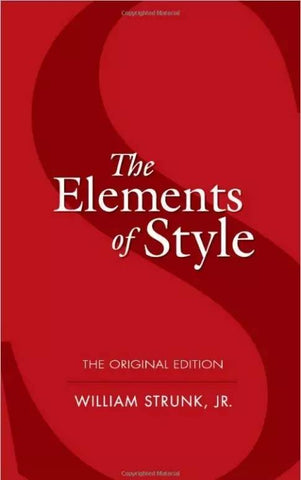
Les éléments du style William Strunk Jr.

Les éléments du style , William Strunk, Jr. et EB White

Aucune bibliothèque d'écrivain n'est complète sans un guide de style, et The Elements of Style est le guide de style de référence depuis 1918. Vous connaissez probablement EB White comme l'auteur des classiques pour enfants Charlotte's Web et Stuart Little. William Strunk Jr. était son professeur d'anglais à l'Université Cornell. Strunk a écrit la version originale, que White a ensuite enrichie. Cet ouvrage, d'un peu plus de 100 pages, est extrêmement pratique à transporter et se glisse facilement dans une poche. Il se concentre sur l'usage, la forme et répertorie même les mots fréquemment mal orthographiés.

Oiseau par oiseau Anne Lamott

Oiseau par oiseau : quelques instructions sur l'écriture et la vie , Anne Lamott

Le merveilleux livre de Lamott est à la fois un mémoire et un guide d'écriture. Son regard émouvant et sincère sur la vie d'écrivain est rafraîchissant. Elle y raconte une anecdote de son enfance : son frère de dix ans paniquait à cause d'un énorme rapport sur les oiseaux qu'il avait eu trois mois pour terminer. Débordée par la tâche et ne sachant pas par où commencer, Lamott se souvient de son père qui avait pris son frère dans ses bras et lui avait dit de procéder « oiseau par oiseau ». Le même conseil s'applique à l'écriture, explique Lamott, car les écrivains abordent leur travail mot par mot, phrase par phrase, livre par livre. De plus, « Oiseau par oiseau » vous détrompera de toute idée de succès littéraire instantané.

Quelques phrases courtes sur l'écriture de Verlyn Klinkenborg

Quelques phrases courtes sur l'écriture , Verlyn Klinkenborg

Klinkenborg est professeur d'écriture créative à l'Université Yale, et son livre, court et léger, est l'un des meilleurs ouvrages sur l'écriture que j'aie jamais lus. Rédigé en phrases courtes et percutantes, disposées comme de la poésie, « Plusieurs phrases courtes sur l'écriture » ​​vise à inciter les écrivains à se concentrer sur la rédaction de phrases claires et pertinentes. Et c'est tout. Klinkenborg soutient que de bonnes phrases mènent à une excellente écriture, et que de bonnes phrases peuvent rendre fascinant même le sujet le plus ennuyeux et le plus banal. Il encourage les écrivains à considérer chaque phrase comme une entité à part entière sur la page, distincte de tout ce qui la précède et la suit. À la fin, il inclut une série d'exemples de phrases ratées, tirés de ses années de professeur d'écriture. Je suis content qu'il ne soit pas le mien !

Bien écrire William Zinsser

Bien écrire , William Zinsser

On Writing Well de Zinsser est un manuel universitaire classique pour les cours d'écriture. Si vous avez dormi pendant votre cours d'anglais, c'est peut-être le moment de le relire. Ancien journaliste au New York Herald Tribune et auteur de 17 ouvrages de non-fiction, Zinsser est spécialisé dans la non-fiction. Les deux premières parties de son livre sont une version plus narrative de The Elements of Style, mais la troisième se concentre sur les différentes formes que peut prendre l'écriture non-fictionnelle. Zinsser montre les clés d'une bonne interview, d'un mémoire, d'un reportage sportif ou d'un récit de voyage. Ce volume est une lecture essentielle pour quiconque souhaite écrire une non-fiction de qualité et captivante.

Sur l'écriture de Stephen King

De l'écriture : Mémoires sur l'art , Stephen King

Si vous pensez que Stephen King connaît actuellement un renouveau avec les adaptations cinématographiques de La Tour sombre et de Ça , vous ne connaissez pas bien son œuvre. King est l'un des auteurs les plus influents et emblématiques du XXe siècle. Son empreinte est omniprésente, et ce depuis longtemps. Dans ce livre acclamé, « à la fois mémoire et master class, écrit par l'un des auteurs les plus vendus de tous les temps », King partage les habitudes et les pratiques qui ont consolidé sa place dans l'histoire littéraire américaine. Sa prose est agréable et se lit comme si vous parliez à un ami proche. « On Writing » est un excellent ouvrage pour les fans de King comme pour les écrivains en herbe.

Style de l'histoire, structure, substance et principes de l'écriture de scénarios Robert McKee

Histoire : style, structure, substance et principes de l'écriture de scénario , Robert McKee

Attendez une minute, vous vous demandez peut-être en quoi un livre sur l'écriture de scénarios est utile aux auteurs de prose. Lisez le brillant ouvrage de McKee et vous comprendrez pourquoi. Ce livre ne traite pas seulement de l'écriture de scénarios, mais aussi de la structure de toutes les grandes histoires. Après une introduction qui vous présente les principes d'une bonne narration (pourquoi certains éléments sont-ils captivants ?), McKee détaille, à l'aide d'exemples tirés de films parmi les plus influents de l'histoire du cinéma, les éléments narratifs essentiels. On y trouve l'incident déclencheur, la structure narrative en trois actes, la crise, le climax et la résolution finale. Si rien de tout cela ne vous dit quelque chose, procurez-vous ce guide essentiel pour les auteurs de tous genres qui souhaitent raconter des histoires bien structurées et captivantes.

Ce que nous voyons lorsque nous lisons Peter Mendelsund

Bonus : Ce que nous voyons quand nous lisons, Peter Mendelsund

Encore un livre sur la lecture ? Absolument ! Tous les écrivains sont de bons lecteurs. Ce livre passionnant, principalement illustré, aborde la phénoménologie de la lecture : comment les mots, sans images concrètes, peuvent néanmoins évoquer des images dans le cerveau du lecteur. C'est un rappel essentiel que le travail de l'écrivain consiste à donner vie aux images grâce à nos mots.

En cas de doute, la première chose à faire pour un écrivain est de se tourner vers les livres. Si nous n'avons pas tous accès en permanence à des experts en écriture pour leur demander conseil et leur avis, nous avons la meilleure alternative : leurs livres. Sans parler de tous les classiques de la littérature à travers l'histoire, dont la simple lecture peut vous apprendre beaucoup. Alors n'hésitez plus : rendez-vous dès aujourd'hui à votre bibliothèque ou librairie et choisissez quelques-uns de ces titres !

Et voilà, les livres de pros pour vous aider à écrire comme un pro. Quels sont vos livres d'écriture préférés ? Quels livres avons-nous oubliés ? Dites-le-nous dans les commentaires !


Matt Grant Matt Grant adore écrire sur l'écriture, les affaires et toutes les formes de culture populaire – livres, cinéma et télévision. Matt a commencé à rédiger des critiques de DVD pour Pop Matters en 2012 et, en 2016, il a réalisé son rêve de toujours en lançant une activité d'écriture à temps partiel sur www.mattgrantwriter.com . Depuis, ses écrits ont été publiés dans Literary Hub , Book Riot, HuffPost et BookBrowse, et il compte plusieurs clients fidèles . Son premier essai personnel, Swimming Lessons, paraîtra dans LongReads fin août. Matt travaille actuellement à son premier roman, une adaptation humoristique des codes de la fantasy pour jeunes adultes. Lorsqu'il n'écrit pas ou ne lit pas, Matt travaille dans le développement de la jeunesse en tant que directeur d'activités périscolaires pour l'un des plus grands collèges de Manhattan. Matt vit à Brooklyn avec sa femme, Katelyn. Vous pouvez le retrouver en ligne sur www.mattgrantwriter.com , sur Twitter @mattgrantwriter et sur Facebook @mattgrantwriter .
novembre 29, 2025 4 lire la lecture

The Great Freewrite Séance: A Ghost'ly Charity Auction Full Terms & Conditions

These Terms and Conditions (“Terms”) govern participation in The Great Freewrite Séance: A Ghost'ly Charity Auction (“Auction”), organized by Freewrite (“Organizer,” “we,” “us,” or “our”). By registering for, bidding in, or otherwise participating in the Auction, you (“Participant,” “Bidder,” or “Winner”) agree to be bound by these Terms.

1. Auction Overview

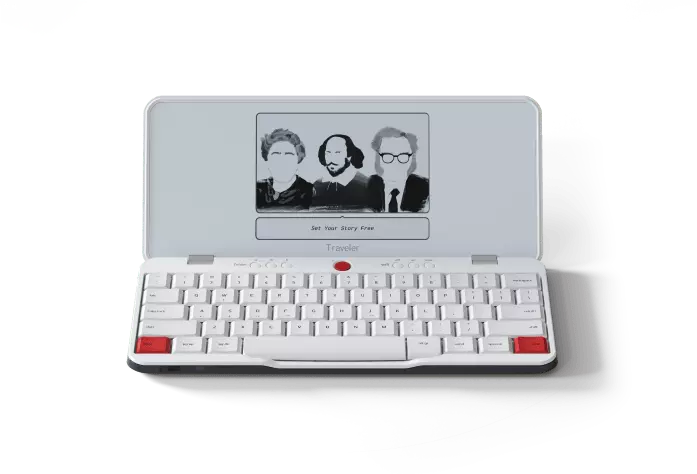
1.1. The Auction offers for sale a limited number of Freewrite Traveler Ghost Edition units (“Items” or “Ghost Traveler units”), each personally signed and drawn on by a featured author.

1.2. All proceeds, net of explicitly disclosed administrative costs, will be donated to the charity or charitable initiative (“Charity”) identified on each auction item’s page, as chosen by the respective author.

2. Eligibility

2.1. Participants must be at least 18 years old or the age of majority in their jurisdiction, whichever is higher.

2.2. Employees of Freewrite, the participating authors, or any affiliates directly involved in the Auction are not eligible to bid.

2.3. By participating, you represent that you are legally permitted to take part in online auctions and to pay for any bids you win.

3. Auction Registration

3.1. Participants must create an account on the auction platform or otherwise register using accurate, current, and complete information.

3.2. Freewrite reserves the right to verify identity and to disqualify any Participant who provides false or misleading information.

4. Bidding Rules

4.1. All bids are binding, final, and non-retractable.

4.2. Bidders are responsible for monitoring their bids; Freewrite is not liable for missed notifications or technical issues on the auction platform or the Participant’s device.

4.3. Freewrite reserves the right to:

  • set minimum bids or bid increments;
  • reject bids deemed in bad faith or intended to disrupt the Auction;
  • extend, pause, or cancel the Auction in case of technical difficulties, fraud, or events beyond reasonable control.

5. Winning Bids and Payment

5.1. The highest valid bid at the close of the Auction is the Winning Bid, and the corresponding Participant becomes the Winner.

5.2. Winners will receive payment instructions and must complete payment within 48 hours of the auction’s close unless otherwise stated.

5.3. Failure to complete payment on time may result in forfeiture, and Freewrite may offer the Item to the next highest bidder.

5.4. Accepted payment methods will be listed on the Auction platform. All payments must be made in the currency specified.

6. Item Description and Condition

6.1. Each Ghost Traveler unit is authentic, and the signatures, doodles, and messages are original works created by the participating author. These are authors, not artists. By bidding on the Item, you acknowledge that you are receiving a one-of-a-kind unit marked with unique art and messages and you agree to these terms and conditions.

6.2. Because Items are customized and signed by hand, variations, imperfections, or unique marks are to be expected. These are considered part of the Item’s character and not defects.

6.3. Items are provided “as-is” and “as-available.” Freewrite makes no warranties of merchantability or fitness for a particular purpose.

7. Shipping & Delivery

7.1. Shipping costs, import duties, and taxes may apply unless explicitly stated otherwise.

7.2. Freewrite will make reasonable efforts to ship Items within the estimated timeline but cannot guarantee delivery dates.

7.3. Title and risk of loss transfer to the Winner upon delivery to the carrier.

7.4. Freewrite is not responsible for delays, damage, or loss caused by the courier or customs agencies.

8. Charity Donation

8.1. Net proceeds from the Auction will be donated to the Charity designated on each Item page.

8.2. Donation amounts and recipients may be disclosed publicly unless prohibited by law.

8.3. Winners acknowledge that they are purchasing Items, not making a tax-deductible donation to Freewrite; therefore, Winners will not receive charitable tax receipts unless Freewrite explicitly states otherwise in compliance with applicable laws.

9. Intellectual Property

9.1. All trademarks, brand names, product names, and creative materials associated with Freewrite and the Ghost Traveler remain the exclusive property of Freewrite or their respective rights holders.

9.2. Participants may not reproduce, distribute, or publicly display the authors’ doodles without permission where such rights are applicable, except as allowed by law (e.g., resale of the physical Item).

10. Privacy

10.1. By participating, you consent to Freewrite’s collection, use, and storage of your personal data in accordance with our Privacy Policy.

10.2. Freewrite may publicly announce auction results, including Winner’s first name, last initial, city, state/country, and winning bid amount unless prohibited by law or unless you formally request anonymity when possible.

11. Prohibited Conduct

Participants may not:

  • engage in bid manipulation, fraud, or collusive bidding;
  • use automated systems (bots, scripts, scrapers) to place or monitor bids;
  • interfere with the Auction, platform, or other participants

Freewrite may ban or disqualify any Participant violating these rules.

12. Limitation of Liability

To the fullest extent permitted by law:

12.1. Freewrite is not liable for indirect, incidental, special, or consequential damages arising from the Auction or purchase of Items.

12.2. Freewrite’s total liability in connection with these Terms shall not exceed the amount of the Winning Bid actually paid by the Participant.

12.3. Freewrite is not responsible for technical malfunctions, internet outages, system failures, or other issues beyond its control.

13. Cancellation and Force Majeure

Freewrite may cancel, postpone, or modify the Auction due to unforeseen circumstances, including but not limited to natural disasters, system failures, strikes, or events affecting participating authors or the Charity.

14. Governing Law & Dispute Resolution

14.1. These Terms are governed by the laws of Michigan, without regard to conflict-of-law rules.

14.2. Any disputes arising under these Terms will be resolved through binding arbitration or the courts of the specified jurisdiction, as applicable.

14.3. Participants waive any right to participate in class-action lawsuits relating to the Auction.

15. Amendments

Freewrite may update these Terms at any time. Continued participation in the Auction after updates constitutes acceptance of the revised Terms.

16. Contact Information

For questions or concerns regarding the Auction or these Terms, contact: hello@getfreewrite.com.

novembre 25, 2025 1 lire la lecture

This is a great gratitude writing exercise to be done alone or in a group, with people of any age.

How to Play

    1. Designate someone to read out each prompt below. (Feel free to add your own prompts.)
    2. After each prompt is read, set a timer for one minute. (With younger kids, this can be shortened. For older folks who want to freewrite meaningfully, more time can be added.)
    3. Each person freewrites by finishing the sentence and elaborating until the timer goes off. (For little kids, this can be done verbally with an adult recording their answers. Hilarity will ensue.)
    4. Remeber that freewriting — allowing yourself to write with abandon — enables you to let go, tapping into your subconscious to explore your thoughts more deeply.
    5. When everyone is done with all the prompts, take turns going through some your answers. Some people may be eager to share. Others may not want to. Respect their decision.

The Prompts

  • I'm grateful for... [After you've finished this prompt, repeat it five times. Challenge yourself and others not to repeat a singe word with each new answer.]
  • The silliest thing I'm grateful for is...
  • The littlest thing I'm grateful for is...
  • The biggest thing I'm grateful for is...
  • The grossest thing I'm grateful for is...
  • One thing I love about myself is...
  • My favorite thing that happened this year was...
  • My hope for next year is...

This writing exercise has resulted in some sweet answers — and many hilarious ones, too. If you try it out, do let us know.

Write on.

novembre 21, 2025 4 lire la lecture

For the release of Sailfish, our new firmware update for Smart Typewriter Gen3 and Traveler, we created a brand-new boot-up animation to surprise and delight our writers.

We worked with talented Danish animator Mathias Lynge to bring our experience of the writer's journey to life.

We had a blast visualizing the writer's journey in this new way. Our engineers also had a blast (or something less than a blast) figuring out how to adjust this fun, playful animation to E Ink's very tricky specifications. Hello, refresh rate woes! But we think the result is pretty fun.

"The little animation made my day when I noticed. I love a good flourish."

- Freewrite user

The process of creating this animation was long and full of Zoom calls where we deeply discussed the writing process. We were struck through those conversations by how much overlap there is in creative processes of all disciplines.

So we sat down to chat with Mathias about his creative process and what it's like being a full-time animator.

ANNIE COSBY: Let's start with the basics. What kind of art do you make?

MATHIAS LYNGE: I'm a 2D animator and motion designer working freelance with a wide range of clients. The style varies depending on the project, but it’s usually either a hand-drawn look animated frame-by-frame on a drawing tablet, or a more digital, vectorized look made in After Effects.

While much of what I do is commercial work, I try to keep up with my own passion projects as well. That could be a 10-second Instagram loop of a nature scene, or an interesting character design I’ve sketched down with a pencil. It’s there that I get to sharpen my skills and try out new techniques, which often find their way into later client projects.

AC: You often share educational content on social media for other artists. Are you formally trained, or did you teach yourself?

ML: I’m mostly self-taught. I’ve been drawing for as long as I can remember, but it wasn’t until I went to university that I realized drawing could become a career.

When I first heard terms like “motion design” and “The 12 Principles of Animation” I was on a student exchange program at UCSB in California, where I had chosen a class called "Introduction to Animation." It was a big eye-opener for me, and from that point I was hooked.

But it’s mainly been online YouTube tutorials and my existing drawing experience that have taught me what I know.

Now, I have a big presence on social media, where I share my art as well as educational content centered around animation in Adobe After Effects, so I guess you could say that I'm also an animation influencer!

I’ve been drawing for as long as I can remember, but it wasn’t until I went to university that I realized drawing could become a career.

AC: That's actually how I first found your work. Do you have any specific artists who inspire you?

ML:In the world of 2D animation, I have a list of personal heroes that inspire me with their unique style: Reece Parker, Ariel Costa a.k.a. BlinkMyBrain, and Tony Babel, to name a few.

I also find a lot of inspiration from illustrators and painters I discover online, on platforms such as Pinterest. Last year I made a sparkling water animation that was heavily inspired by Cornwall-based artist Gordon Hunt. He makes these beautiful nature-inspired pointillist paintings that capture how light hits the ocean using colorful dots of paint. I tried to recreate that effect using After Effects to bring it to life, and it led me to a whole new way of animating within the program.

AC: Where else do you draw inspiration to create your work?

ML: I’m heavily inspired by the nature and cityscapes around me in Copenhagen, and I find that taking long walks through parks or down the streets of my neighborhood really sparks my imagination.

I’ll often carry around a sketchbook to quickly scribble down an idea or a loose sketch of something I find interesting, such as seeing how the light from a lamppost hits the surrounding leaves, or how the wind moves the tree in a certain way.

Then I’ll think to myself, “I wonder if I can recreate that motion using a specific technique in After Effects?”

I’m heavily inspired by the nature and cityscapes around me in Copenhagen...

AC: What does your daily routine look like as a full-time artist?

ML: It varies a lot, but I’m usually either working hard on a client project or tinkering away with a new animation tutorial for my social media channels.

I love being able to switch between the two, and when I’m going through a client dry spell, I find that staying creative and posting animation-related content helps keep me inspired while also putting things out into the world that may lead to my next client down the road.

AC: What's your #1 piece of advice for animators new to the industry?

ML: Keep experimenting and trying out new techniques. There’s no such thing as running out of creativity, and even though many of the things you try don’t necessarily go anywhere, it’s all experience that adds up and expands your toolbox. It’s a muscle that needs to be worked out regularly.

Plus, you’ll have more awesome animation to choose from when you’re putting together your next showreel or portfolio!

There’s no such thing as running out of creativity...

AC: What's one fun fact about you completely unrelated to animation?

ML:I’m a big sucker for history podcasts, especially if they are about ancient civilizations, such as The History of Rome by Mike Duncan.

I find it fascinating to hear how mankind was able to build such great empires without ever knowing what electricity, cars, or the internet are.

--

Follow along on Mathias's creative journey and find his free educational content on Instagram.

To learn more about working together, find him on LinkedIn or visit his website at www.mathiaslynge.com.

Learn more about Sailfish here.