



overlaylink

L'homme derrière le mythe d'Ernest Hemingway

juin 07, 2021 | 2 lire la lecture

Ceci est le troisième volet de la série Ernest Hemingway de Freewrite, à l'occasion du lancement prochain d' Hemingwrite . Lisez notre premier article, «  Comment écrire comme Hemingway – 12 conseils d'écriture », et notre deuxième, «  La routine d'écriture d'Hemingway ».

Même de son vivant, la société considérait Ernest Hemingway comme un écrivain hors du commun. Il ressentait une immense pression pour être à la hauteur de son image, mais malgré sa renommée et son génie, Hemingway restait, au fond, un homme.

Plus tôt cette année, les célèbres documentaristes Ken Burns et Lynn Novick ont ​​produit un film approfondi en trois parties sur la vie et l'héritage d'Hemingway. Burns et Novick interviewent des invités spéciaux, dont de nombreux historiens de Hemingway, et contextualisent des extraits de ses romans, nouvelles et essais emblématiques.

La série suit trois chapitres de la vie d'Hemingway :

1. Un écrivain (1899-1929)

Le passage d'Hemingway comme volontaire de la Croix-Rouge pendant la Première Guerre mondiale est bien connu, mais cette section met également en lumière des aspects moins connus de sa jeunesse. Il entretenait une relation tumultueuse avec ses parents, et notamment avec sa mère. Elle l'habillait, lui et sa sœur, avec les mêmes vêtements et lui laissait pousser les cheveux pour qu'ils apparaissent comme des jumeaux – une expérience qui a probablement inspiré sa fascination ultérieure pour l'androgynie.

Sa mère l'a également forcé à jouer du violoncelle, et plus tard dans sa vie, Hemingway a admis que les cours de musique ont contribué à son style d'écriture.

Cette section explore d'autres influences sur son écriture, comme son expérience dans le journalisme et ses échanges avec les écrivains de la Génération perdue à Paris. Dès son plus jeune âge, Hemingway remettait en question les « règles » tacites de l'écriture.

2. L'Avatar (1929-1944)

À ce moment-là, la première épouse d'Hemingway, Hadley, l'avait quitté, premier d'une série de relations amoureuses ratées. Il épousa sa seconde épouse, Pauline, mais le même schéma se reproduisit : il devint agité et entama une liaison avec Martha Gellhorn alors qu'il couvrait la guerre civile espagnole.

À ce stade, Hemingway avait atteint une renommée rare pour un écrivain de l'époque. Son roman le plus célèbre, Pour qui sonne le glas, s'est vendu à un demi-million d'exemplaires en neuf mois et a été nominé pour le prix Pulitzer.

3. La Page Blanche (1944-1961)

Cette période de la vie d'Hemingway est marquée par des tragédies. Après avoir rencontré Mary Welsh et s'être entiché d'elle, il subit une commotion cérébrale suite à un accident de voiture, l'une des nombreuses blessures crâniennes traumatiques qui ne le quitteront jamais. Il divorce de Martha Gellhorn et épouse Mary, et la famille Hemingway connaît une série d'accidents et de problèmes de santé.

Hemingway a écrit Le Vieil Homme et la Mer en huit semaines et a remporté le prix Pulitzer. Deux ans plus tard (et deux accidents d'avion presque mortels), il recevait le prix Nobel de littérature.

Explorez la vie complexe d'Hemingway à travers le documentaire de Burns et Novick (d'une durée totale de six heures, alors regardez-le absolument partie par partie) et ressortez de l'expérience avec une compréhension nuancée de la légende d'Hemingway.

-

inscrivez-vous à la liste d'attente de hemingwrite

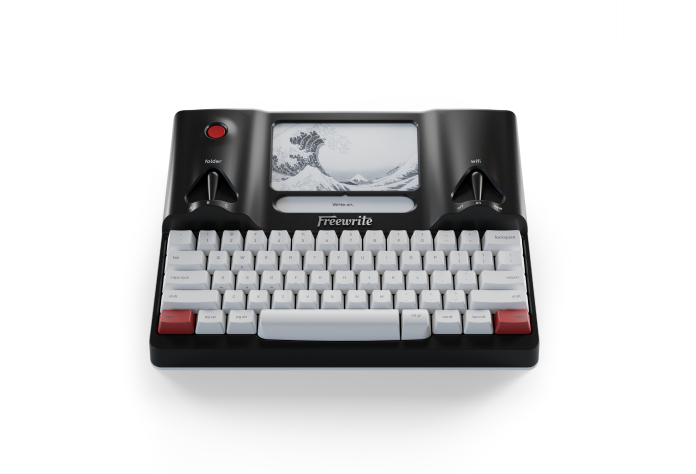
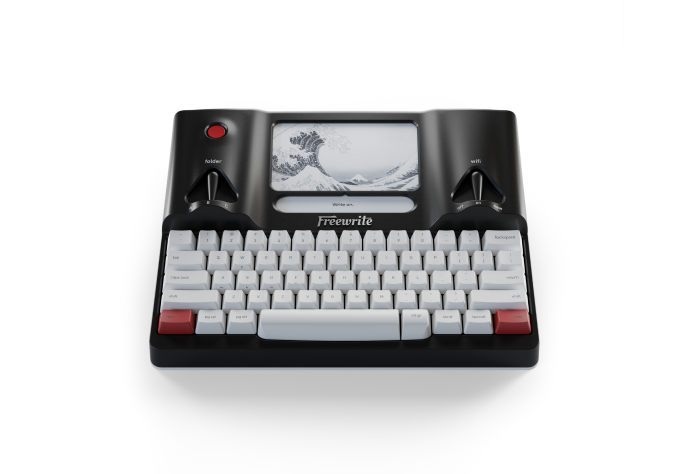
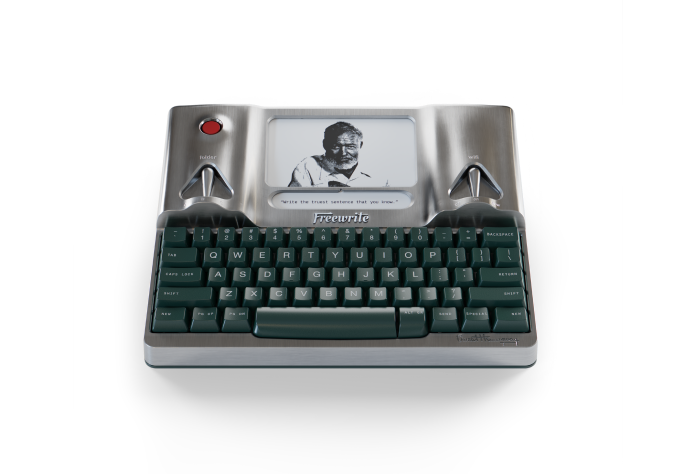
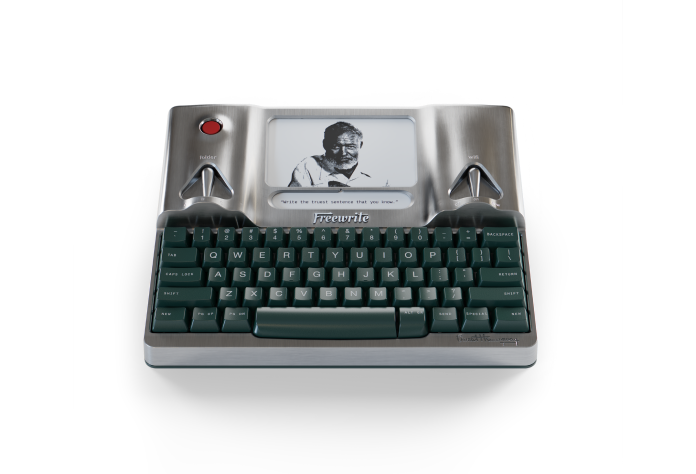
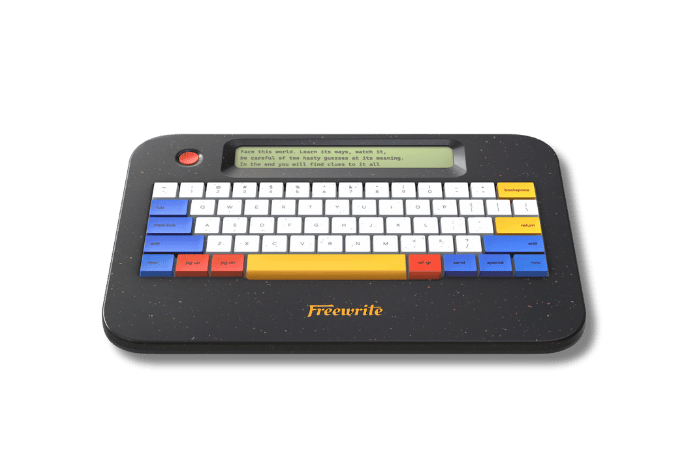
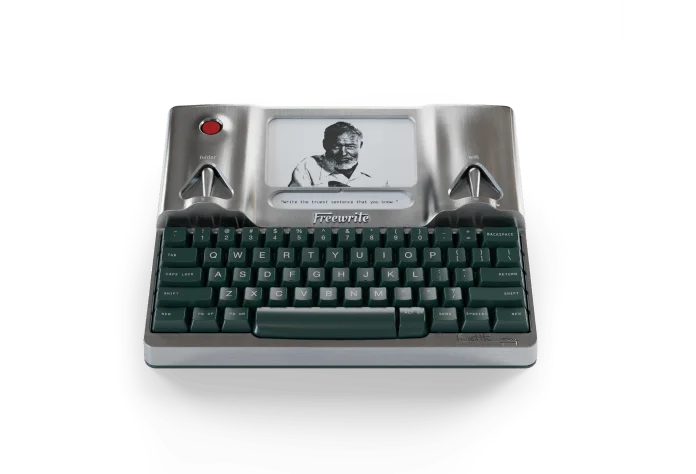
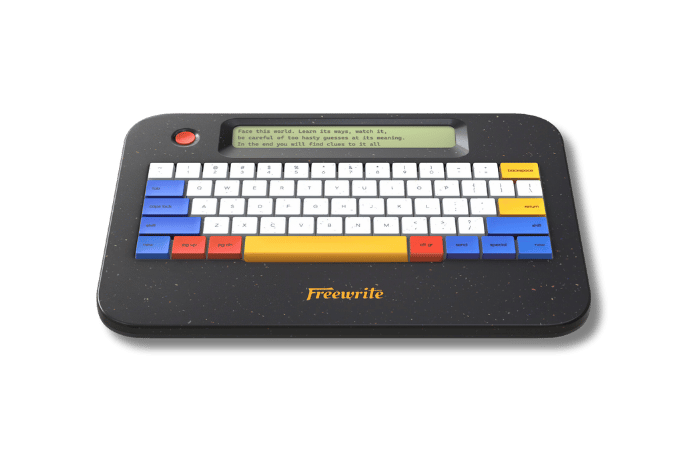
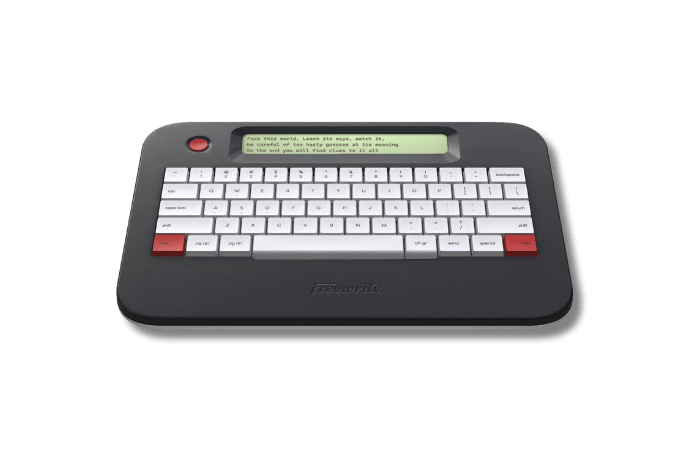
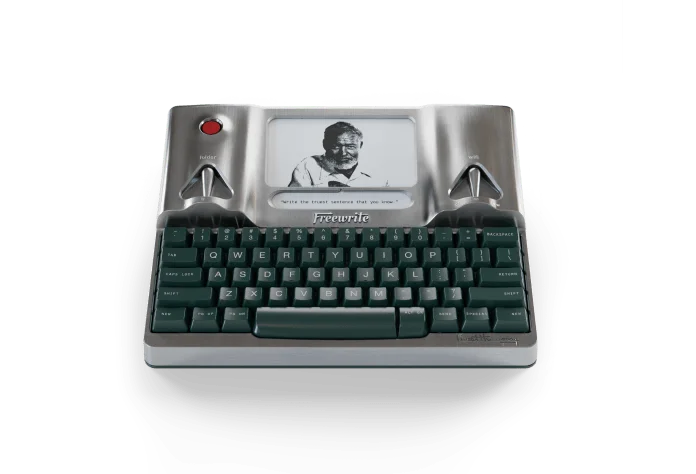
Hemingwrite , notre nouvelle édition signature Freewrite, sera bientôt disponible avec quelques surprises. Inscrivez-vous sur la liste d'attente.
janvier 09, 2026 2 lire la lecture

A new year means a whole new crop of work is entering the public domain. And that means endless opportunities for retellings, spoofs, adaptations, and fan fiction.

décembre 30, 2025 3 lire la lecture

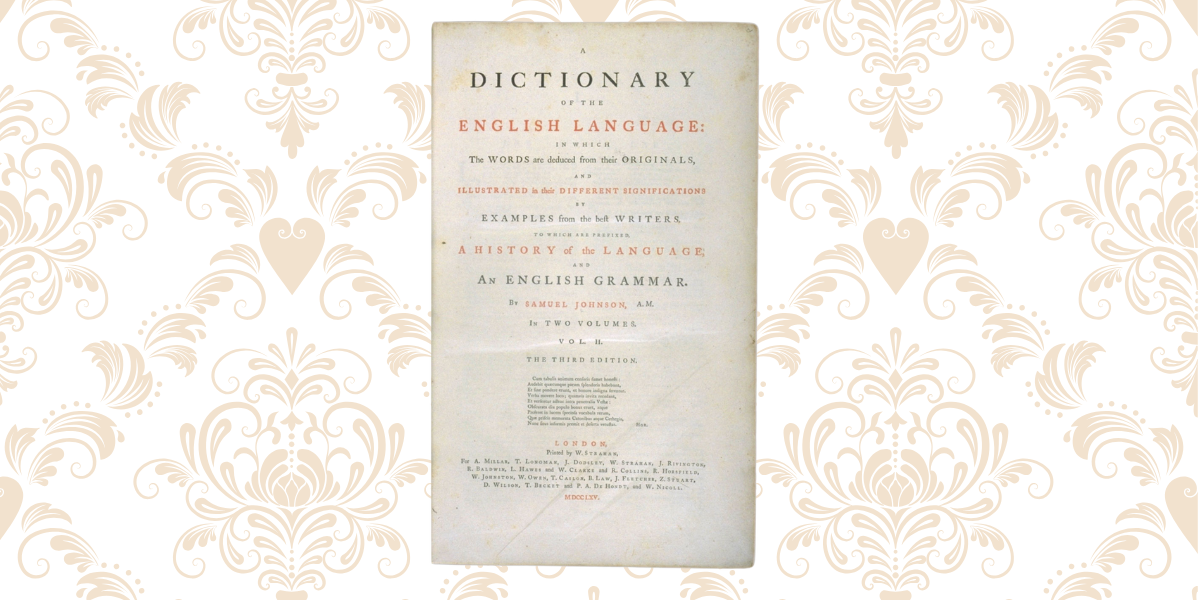
It’s Freewrite’s favorite time of year. When dictionaries around the world examine language use of the previous year and select a “Word of the Year.”

Of course, there are many different dictionaries in use in the English language, and they all have different ideas about what word was the most influential or saw the most growth in the previous year. They individually review new slang and culturally relevant vocabulary, examine spikes or dips in usage, and pour over internet trend data.

Let’s see what some of the biggest dictionaries decided for 2025. And read to the end for a chance to submit your own Word of the Year — and win a Freewrite gift card.

[SUBMIT YOUR WORD OF THE YEAR]


Merriam-Webster: "slop"

Merriam-Webster chose "slop" as its Word of the Year for 2025 to describe "all that stuff dumped on our screens, captured in just four letters."

The dictionary lists "absurd videos, off-kilter advertising images, cheesy propaganda, fake news that looks pretty real, junky AI-written books, 'workslop' reports that waste coworkers’ time … and lots of talking cats" as examples of slop.

The original sense of the word "slop" from the 1700s was “soft mud” and eventually evolved to mean "food waste" and "rubbish." 2025 linked the term to AI, and the rest is history.

Honorable mentions: conclave, gerrymander, touch grass, performative, tariff, 67.

Dictionary.com: "67"

The team at Dictionary.com likes to pick a word that serves as “a linguistic time capsule, reflecting social trends and global events that defined the year.”

For 2025, they decided that “word” was actually a number. Or two numbers, to be exact.

If you’re an old, like me, and don’t know many school-age children, you may not have heard “67” in use. (Note that this is not “sixty-seven,” but “six, seven.”)

Dictionary.com claims the origin of “67” is a song called “Doot Doot (6 7)” by Skrilla, quickly made infamous by viral TikTok videos, most notably featuring a child who will for the rest of his life be known as the “6-7 Kid.” But according to my nine-year-old cousin, the origins of something so mystical can’t ever truly be known.

(My third grade expert also demonstrated the accompanying signature hand gesture, where you place both hands palms up and alternately move up and down.)

And if you happen to find yourself in a fourth-grade classroom, watch your mouth, because there’s a good chance this term has been banned for the teacher’s sanity.

Annoyed yet? Don’t be. As Dictionary.com points out, 6-7 is a rather delightful example at how fast language can develop as a new generation joins the conversation.

Dictionary.com honorable mentions: agentic, aura farming, broligarchy, clanker, Gen Z stare, kiss cam, overtourism, tariff, tradwife.

Oxford Dictionary: "rage bait"

With input from more than 30,000 users and expert analysis, Oxford Dictionary chose "rage bait" for their word of the year.

Specifically, the dictionary pointed to 2025’s news cycle, online manipulation tactics, and growing awareness of where we spend our time and attention online.

While closely paralleling its etymological cousin "clickbait," rage bait more specifically denotes content that evokes anger, discord, or polarization.

Oxford's experts report that use of the term has tripled in the last 12 months.

Oxford Dictionary's honorable mentions:aura farming, biohack.

Cambridge Dictionary: "parasocial"

The Cambridge Dictionary examined a sustained trend of increased searches to choose "parasocial" as its Word of the Year.

Believe it or not, this term was coined by sociologists in 1956, combining “social” with the Greek-derived prefix para-, which in this case means “similar to or parallel to, but separate from.”

But interest in and use of the term exploded this year, finally moving from a mainly academic context to the mainstream.

Cambridge Dictionary's honorable mentions: slop, delulu, skibidi, tradwife

Freewrite: TBD

This year, the Freewrite Fam is picking our own Word of the Year.

Click below to submit what you think the Word of 2025 should be, and we'll pick one submission to receive a Freewrite gift card.

[SUBMIT HERE] 

--

Sources

décembre 18, 2025 6 lire la lecture

Que peuvent apprendre les lettres personnelles de Jane Austen aux écrivains ?