overlaylink

Le guide littéraire de Taylor Swift

Annie Cosby
mai 17, 2024 | 6 lire la lecture

En tant que parolière, Taylor Swift a enchanté le public du monde entier. Mais saviez-vous qu'elle a également tissé un subtil mélange de références littéraires tout au long de sa discographie ?

Lectrice invétérée, Swift évoque souvent les grands noms de la littérature qui ont influencé son écriture, ainsi que ses habitudes de lecture enfantine. Elle admet même avoir écrit un livre de 400 pages sur ses amis et sa famille lorsqu'elle était enfant . Voilà une fille qui nous ressemble.

(Bien que nous essayions toujours de pardonner cette phrase du Département des poètes torturés à propos des machines à écrire .)

Que vous l'aimiez ou la détestiez (nous parlons à vous, papas, Brad et Chad), vous serez impressionnés par ces références littéraires cachées dans les chansons de Swift…

Attention spoiler : il y a beaucoup de spoilers sur la littérature classique ci-dessous. Ne faites pas semblant de les lire.

1. Roméo et Juliette

Commençons par l'évidence. Dans son tube de 2008 « Love Story », Swift s'inspire du récit emblématique des amants maudits du Barde, tissant une romance contemporaine qui fait écho aux thèmes de l'amour interdit et des conflits familiaux.

Les paroles nomment Roméo et laissent peu de place à l'imagination, ce qui est logique, car Swift venait à peine de sortir des cours d'anglais du lycée à l'époque.

Elle a même admis avoir adoré l'histoire dans une interview avec Pandora Music , « sauf la fin ». Elle a donc donné à Roméo et à son amour une nouvelle fin dans la chanson.


2. Gatsby le Magnifique

Des allusions au roman fondateur de F. Scott Fitzgerald apparaissent dans plusieurs chansons de Swift. La première, tirée de son sixième album, Reputation , est évidente (« feeling so Gatsby »), en référence à l'organisation d'une fête extravagante.

Mais la référence suivante, sur l'album Evermore (2020), témoigne de son évolution en tant que parolière et nécessite un peu plus d'approfondissement. Dans la chanson « Happiness », elle chante :

« J’espère qu’elle sera une belle idiote. »

Ceci est tiré directement de la bouche du personnage de Gatsby , Daisy Buchanan , qui exprime son désarroi quant aux perspectives de vie de sa fille en tant que femme :

« J'espère qu'elle sera une idiote – c'est la meilleure chose qu'une fille puisse être dans ce monde, une belle petite idiote. »

Dans cette même chanson, Swift redouble son ode à Fitzgerald, faisant référence à la lumière verte symbolique du roman.

3. Jane Eyre

De nombreux auditeurs attentifs ont comparé l'imagerie de Swift dans « Invisible String » à un célèbre vers de Jane Eyre de Charlotte Brontë. Dans ce classique, M. Rochester dit à Jane :

« J’éprouve parfois un sentiment étrange à votre égard, surtout lorsque vous êtes près de moi, comme maintenant : c’est comme si j’avais une corde quelque part sous mes côtes gauches, étroitement et inextricablement nouée à une corde similaire située dans le quartier correspondant de votre petite silhouette. »

D'autres y voient une référence au fil rouge des proverbes chinois , censé relier ceux qui sont destinés à se rencontrer. Quelle que soit l'origine de cette image, elle est indéniablement puissante.

Il existe d'autres parallèles entre les paroles de Swift et celles de Jane Eyre , notamment dans leur représentation de la « folle » archétypale. Crucifiée par les médias au fil des ans pour sa « folie », Swift chante :

« Chaque fois que tu me traites de fou / Je deviens encore plus fou. »

Tout comme la première épouse de M. Rochester, jugée « folle » et enfermée au grenier. Dans le roman, après avoir fui la propriété, Jane envoie des lettres, pour découvrir plus tard que la maison a brûlé. La chanson « Evermore » de Swift contient une image parallèle à ce vers :

« Écrire des lettres adressées au feu. »

De plus, la façon dont Swift brise le quatrième mur et s’adresse à l’auditeur dans le titre de sa chanson « Dear Reader » est probablement une référence à l’une des phrases les plus célèbres de la littérature anglaise , tirée directement de Jane Eyre :

« Lecteur, je l’ai épousé. »

4. Le soleil se lève aussi

Parmi les innombrables influences tissées dans ses chansons, l’héritage du géant littéraire et lauréat du prix Nobel Ernest Hemingway apparaît comme un fil conducteur subtil mais significatif.

Beaucoup de gens associent à tort un passage de la chanson de Swift « The Last Great American Dynasty », dans laquelle un chien est teint en vert, au voisin excentrique d'Hemingway, célèbre pour avoir teint ses chats. Mais c'est Rebekah Harkness elle-même, la mondaine au cœur de la chanson de Swift, qui a commis son propre crime en teignant ses animaux. (Dans la vraie vie, il s'agissait bien d'un chat, et non d'un chien .)

Mais il existe de véritables références à l’œuvre d’Hemingway dans la discographie de Swift.

Dans « The 1 », Swift chante : « Mais ça aurait été amusant / Si tu avais été l'élu. » Cela fait écho au roman d'Hemingway des années 1920, Le Soleil se lève aussi , qui se termine par cette scène poignante :

« Oh Jake », dit Brett, « on aurait pu passer un super moment ensemble. » … La voiture ralentit brusquement, serrant Brett contre moi. « Oui », dis-je. « C'est beau, non ? »

Remarquez-vous un autre parallèle ? Ce vers de « Invisible String » revient : « N'est-il pas trop beau de penser / Tout au long de ce chemin, il y avait un / Invisible String te liant à moi. »

5. La lettre écarlate

Des références au classique de Nathaniel Hawthorne apparaissent à la fois dans « New Romantics » et « Love Story ». Dans le premier, Swift chante sur la façon de mettre en valeur « nos différentes lettres écarlates » et dans le second, la narratrice se qualifie de lettre écarlate.

6. Un conte de deux villes

Au début de « Getaway Car », un favori de Swiftie tiré de Reputation (2017), Swift revisite une phrase d'ouverture littéraire mondialement connue. Le livre dit : « C'était la meilleure des époques, c'était la pire des époques… »

Swift chante une phrase similaire avec une touche de rimes astucieuse.

7. Peter Pan

Le classique de J.M. Barrie est à nouveau mis à l'honneur dans « Cardigan » de Swift, qui exprime une fois de plus son désir de transformer la fin en un chef-d'œuvre littéraire tragique et apprécié. Cette fois, c'est à l'histoire d'amour entre Peter Pan et Wendy que Swift souhaite donner une fin plus heureuse.

8. Rébecca

On adore les références effrayantes. Et Taylor interprète Rebecca comme telle. Elle a même confirmé dans une interview à Rolling Stone avoir lu Rebecca avant d'écrire son album Evermore .

Ce classique de Daphné Du Maurier, paru en 1938, suit l'histoire d'une femme qui épouse un homme toujours amoureux de sa défunte épouse, Rebecca. Le rebondissement ? Il a tué sa précédente épouse.

Dans Rebecca , le personnage principal est inexpérimenté par rapport à son nouveau mari et, comme la narratrice de la chanson « Tolerate It » de Swift, elle se compare à un enfant dans leur relation. Dans une interview accordée à Apple Music , Swift a admis que l'histoire lui rappelait ce qu'elle avait ressenti lors de relations précédentes.

Dans la chanson de Swift « No Body No Crime », parue sur le même album, la manière dont le mari est tué est étonnamment familière aux lecteurs de Rebecca . Swift parle d'un permis bateau, tandis que dans Rebecca , le corps du personnage tragique est finalement retrouvé sur un bateau coulé.

9. Le jardin secret

Les paroles sur l'évasion dans des jardins secrets dans son esprit sur le récent album de Swift , The Tortured Poets Department, font référence au livre classique pour enfants de Frances Hodgson Burnett.

Les paroles continuent de le confirmer en disant :

« J’en ai lu un livre quand j’étais un enfant précoce. »

10. Toute la vie d'Emily Dickinson

Celui-ci est épicé et l'un des préférés des fans de Swift sur Internet. Peu après la sortie d'Evermore en 2020, les fans de Swift ont commencé à remarquer des parallèles avec la vie et les écrits d'Emily Dickinson.

Non seulement cela semblait évoquer la même morosité du 19e siècle pour laquelle Dickinson est connu, mais Evermore a également été annoncé le 10 décembre, jour de l'anniversaire de Dickinson.

Un morceau en particulier a captivé l'imagination des Swifties du monde entier : « Ivy ». La chanson raconte l'histoire d'une femme mariée ayant une liaison avec un autre. Les spécialistes pensent aujourd'hui que Dickinson était amoureux d'une femme nommée Sue Gilbert, son amie d'enfance, qui était également mariée au frère de Dickinson.

La série télévisée Dickinson , retraçant la vie du poète, a même inclus la chanson de Swift au générique après une scène importante. Plus récemment, des généalogistes ont découvert que Swift était un parent éloigné de Dickinson .

Mais c'est un vers simple qui confirme le lien pour la plupart des auditeurs. L'un des poèmes que Dickinson aurait écrit par amour pour sa belle-sœur, « J'ai une sœur dans notre maison », se termine par ce simple vers :

"Sue - pour toujours !"

décembre 30, 2025 3 lire la lecture

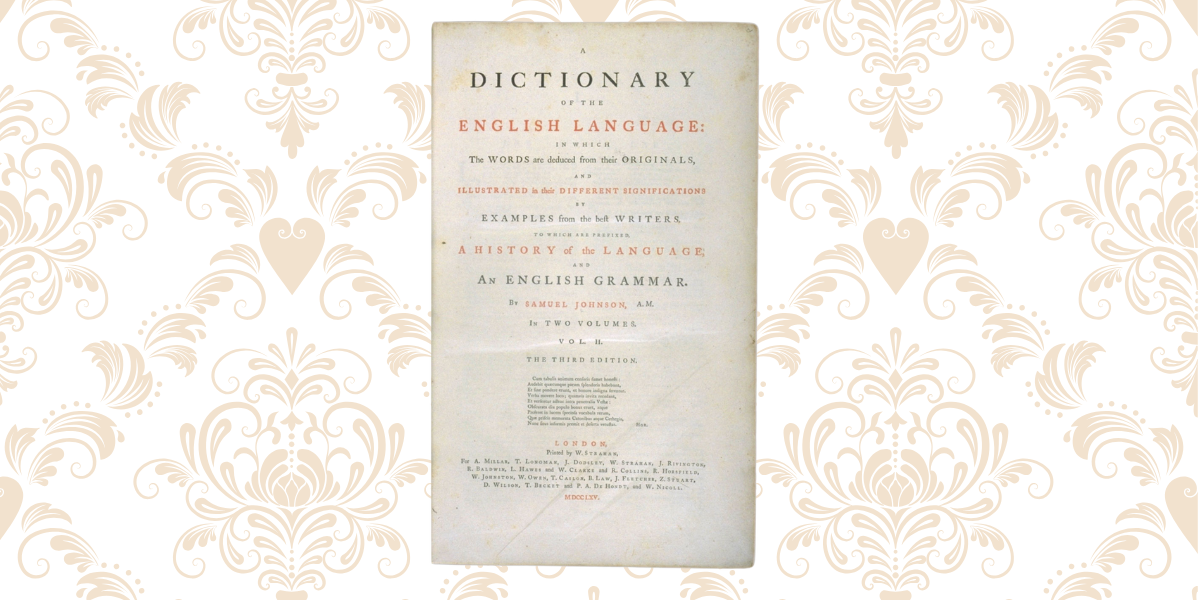
It’s Freewrite’s favorite time of year. When dictionaries around the world examine language use of the previous year and select a “Word of the Year.”

Of course, there are many different dictionaries in use in the English language, and they all have different ideas about what word was the most influential or saw the most growth in the previous year. They individually review new slang and culturally relevant vocabulary, examine spikes or dips in usage, and pour over internet trend data.

Let’s see what some of the biggest dictionaries decided for 2025. And read to the end for a chance to submit your own Word of the Year — and win a Freewrite gift card.

[SUBMIT YOUR WORD OF THE YEAR]


Merriam-Webster: "slop"

Merriam-Webster chose "slop" as its Word of the Year for 2025 to describe "all that stuff dumped on our screens, captured in just four letters."

The dictionary lists "absurd videos, off-kilter advertising images, cheesy propaganda, fake news that looks pretty real, junky AI-written books, 'workslop' reports that waste coworkers’ time … and lots of talking cats" as examples of slop.

The original sense of the word "slop" from the 1700s was “soft mud” and eventually evolved to mean "food waste" and "rubbish." 2025 linked the term to AI, and the rest is history.

Honorable mentions: conclave, gerrymander, touch grass, performative, tariff, 67.

Dictionary.com: "67"

The team at Dictionary.com likes to pick a word that serves as “a linguistic time capsule, reflecting social trends and global events that defined the year.”

For 2025, they decided that “word” was actually a number. Or two numbers, to be exact.

If you’re an old, like me, and don’t know many school-age children, you may not have heard “67” in use. (Note that this is not “sixty-seven,” but “six, seven.”)

Dictionary.com claims the origin of “67” is a song called “Doot Doot (6 7)” by Skrilla, quickly made infamous by viral TikTok videos, most notably featuring a child who will for the rest of his life be known as the “6-7 Kid.” But according to my nine-year-old cousin, the origins of something so mystical can’t ever truly be known.

(My third grade expert also demonstrated the accompanying signature hand gesture, where you place both hands palms up and alternately move up and down.)

And if you happen to find yourself in a fourth-grade classroom, watch your mouth, because there’s a good chance this term has been banned for the teacher’s sanity.

Annoyed yet? Don’t be. As Dictionary.com points out, 6-7 is a rather delightful example at how fast language can develop as a new generation joins the conversation.

Dictionary.com honorable mentions: agentic, aura farming, broligarchy, clanker, Gen Z stare, kiss cam, overtourism, tariff, tradwife.

Oxford Dictionary: "rage bait"

With input from more than 30,000 users and expert analysis, Oxford Dictionary chose "rage bait" for their word of the year.

Specifically, the dictionary pointed to 2025’s news cycle, online manipulation tactics, and growing awareness of where we spend our time and attention online.

While closely paralleling its etymological cousin "clickbait," rage bait more specifically denotes content that evokes anger, discord, or polarization.

Oxford's experts report that use of the term has tripled in the last 12 months.

Oxford Dictionary's honorable mentions:aura farming, biohack.

Cambridge Dictionary: "parasocial"

The Cambridge Dictionary examined a sustained trend of increased searches to choose "parasocial" as its Word of the Year.

Believe it or not, this term was coined by sociologists in 1956, combining “social” with the Greek-derived prefix para-, which in this case means “similar to or parallel to, but separate from.”

But interest in and use of the term exploded this year, finally moving from a mainly academic context to the mainstream.

Cambridge Dictionary's honorable mentions: slop, delulu, skibidi, tradwife

Freewrite: TBD

This year, the Freewrite Fam is picking our own Word of the Year.

Click below to submit what you think the Word of 2025 should be, and we'll pick one submission to receive a Freewrite gift card.

[SUBMIT HERE] 

--

Sources

décembre 18, 2025 6 lire la lecture

Que peuvent apprendre les lettres personnelles de Jane Austen aux écrivains ?

décembre 10, 2025 6 lire la lecture

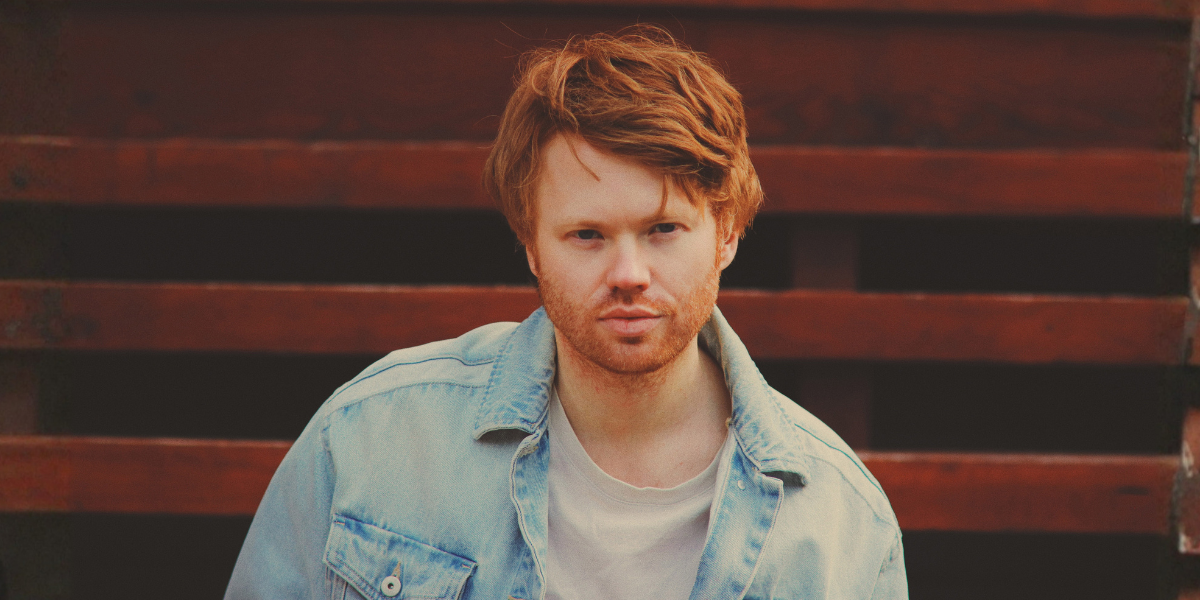
Singer-songwriter Abner James finds his creativity in the quiet freedom of analog tools. Learn how his creative process transcends different media.

Abner James went to school for film directing. But the success of the band he and his brother formed together, Eighty Ninety, knocked him onto a different trajectory.

The band has accrued more than 40 million streams since the release of their debut EP “Elizabeth," and their work was even co-signed by Taylor Swift when the singer added Eighty Ninety to her playlist "Songs Taylor Loves.”

Now, Abner is returning to long-form writing in addition to songwriting, and with a change in media comes an examination of the creative process. We sat down to chat about what's the same — and what's different. 

ANNIE COSBY: Tell us about your songwriting process.

ABNER JAMES: The way I tend to write my songs is hunched over a guitar and just seeing what comes. Sounds become words become shapes. It's a very physical process that is really about turning my brain off.

And one of the things that occurred to me when I was traveling, actually, was that I would love to be able to do that but from a writing perspective. What would happen if I sat down and approached writing in the same way that I approached music? In a more intuitive and free-form kind of way? What would that dig up?

AC: That's basically the ethos of Freewrite.

AJ: Yes. We had just put out a record, and I was thinking about how to get into writing for the next one. It occurred to me that regardless of how I started, I always finished on a screen. And I wondered: what's the acoustic guitar version of writing?

Where there's not blue light hitting me in the face. Even if I'm using my Notes app, it's the same thing. It really gets me into a different mindset.

 "I wondered: what's the acoustic guitar version of writing?"

I grew up playing piano. That was my first instrument. And I found an old typewriter at a thrift store, and I love it. It actually reminded me a lot of playing piano, the kind of physical, the feeling of it. And it was really fun, but pretty impractical, especially because I travel a fair amount.

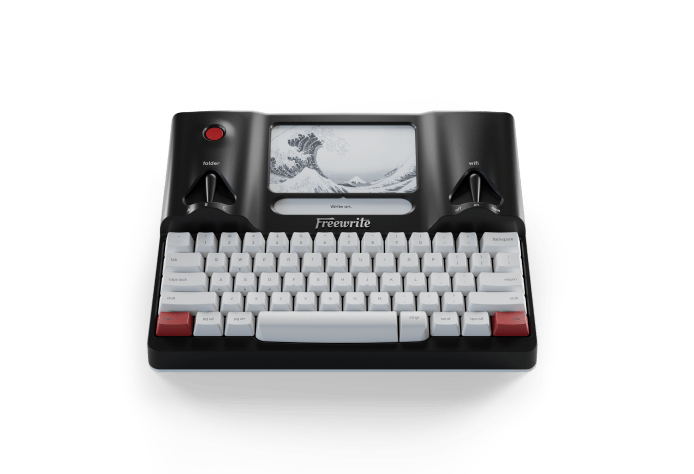
And so I wondered, is there such a thing as a digital typewriter? And I googled it, and I found Freewrite.

AC: What about Freewrite helps you write?

AJ:I think, pragmatically, just the E Ink screen is a huge deal, because it doesn't exhaust me in the same way. And the idea of having a tool specifically set aside for the process is appealing in an aesthetic way but also a mental-emotional way. When it comes out, it's kind of like ... It's like having an office you work out of. It's just for that.

"The way I tend to write my songs is hunched over a guitar and just seeing what comes. Sounds become words become shapes. It's a very physical process that is really about turning my brain off."

And all of the pragmatic limitations — like you're not getting texts on it, and you're not doing all that stuff on the internet — that's really helpful, too. But just having the mindset....

When I pick up a guitar, or I sit down at the piano, it very much puts me into that space. Having a tool just for words does the same thing. I find that to be really cool and inspiring.

"When I pick up a guitar, or I sit down at the piano, it very much puts me into that space. Having a tool just for words does the same thing."

AC: So mentally it gets you ready for writing.

AJ: Yeah, and also, when you write a Microsoft Word, it looks so finished that it's hard to keep going. If every time I strummed a chord, I was hearing it back, mixed and mastered and produced...?

It's hard to stay in that space when I'm seeing it fully written out and formatted in, like, Times New Roman, looking all seriously back at me.

AC: I get that. I have terrible instincts to edit stuff over and over again and never finish a story.

AJ:  Also, the way you just open it and it's ready to go. So you don't have the stages of the computer turning on, that kind of puts this pressure, this tension on.

It's working at the edges in all these different ways that on their own could feel a little bit like it's not really necessary. All these amorphous things where you could look at it and be like, well, I don't really need any of those. But they add up to a critical mass that actually is significant.

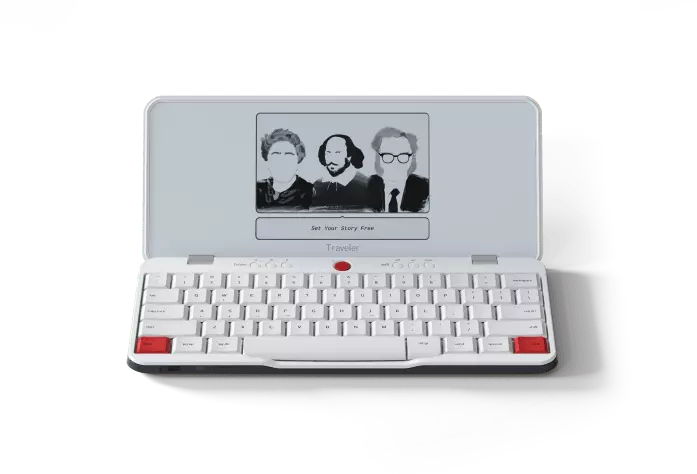
And sometimes, if I want to bring it on a plane, I've found it's replaced reading for me. Rather than pick up a book or bring a book on the plane, I bring Traveler and just kind of hang out in that space and see if anything comes up.

I've found that it's kind of like writing songs on a different instrument, you get different styles of music that you wouldn't have otherwise. I've found that writing from words towards music, I get different kinds of songs than I have in the past, which has been interesting.

In that way, like sitting at a piano, you just write differently than you do on a guitar, or even a bass, because of the things those instruments tend to encourage or that they can do.

It feels almost like a little synthesizer, a different kind of instrument that has unlocked a different kind of approach for me.

"I've found that it's kind of like writing songs on a different instrument, you get different styles of music that you wouldn't have otherwise... [Traveler] feels almost like a little synthesizer, a different kind of instrument that has unlocked a different kind of approach for me."

AC: As someone who doesn't know the first thing about writing music, that's fascinating. It's all magic to me.

AJ: Yeah.

AC: What else are you interested in writing?

AJ: I went to school for film directing. That was kind of what I thought I was going to do. And then my brother and I started the band and that kind of happened first and knocked me onto a different track for a little while after college.

Growing up, though, writing was my way into everything. In directing, I wanted to be in control of the thing that I wrote. And in music, it was the same — the songwriting really feels like it came from that same place. And then the idea of writing longer form, like fiction, almost feels just like the next step from song to EP to album to novel.

For whatever reason, that started feeling like a challenge that would be deeply related to the kinds of work that we do in the studio.

AC: Do you have any advice for aspiring songwriters?

AJ: This sounds like a cliche, but it's totally true: whatever success that I've had as a songwriter — judge that for yourself — but whatever success I have had, has been directly proportional to just writing the song that I wanted to hear.

What I mean by that is, even if you're being coldly, cynically, late-stage capitalist about it, it's by far the most success I've had. The good news is that you don't have to choose. And in fact, when you start making those little compromises, or even begin to inch in that direction, it just doesn't work. So you can forget about it.

Just make music you want to hear. And that will be the music that resonates with most people.

I think there's a temptation to have an imaginary focus group in your head of like 500 people. But the problem is all those people are fake. They're not real. None of those people are actually real people. You're a focus group of one, you're one real person. There are more real people in that focus group than in the imaginary one.

And I just don't think that we're that different, in the end. So that would be my advice.

AC: That seems like generally great creative advice. Because fiction writers talk about that too, right? Do you write to market or do you write the book you want to read. Same thing. And that imaginary focus group has been debilitating for me. I have to silence that focus group before I can write.

AJ: Absolutely.

"I think there's a temptation to have an imaginary focus group in your head of like 500 people. But the problem is all those people are fake... You're a focus group of one, you're one real person. There are more real people in that focus group than in the imaginary one."

--

Learn more about Abner James, his brother, and their band, Eighty Ninety, on Instagram.