overlaylink

Histoires d'écriture libre : comment l'auteur Ivo Senden a terminé son roman sur une écriture libre, partie 1

mai 08, 2017 | 3 lire la lecture

Ceci est la première partie de l'histoire d'Ivo Senden Freewrite, cliquez ici pour la deuxième partie
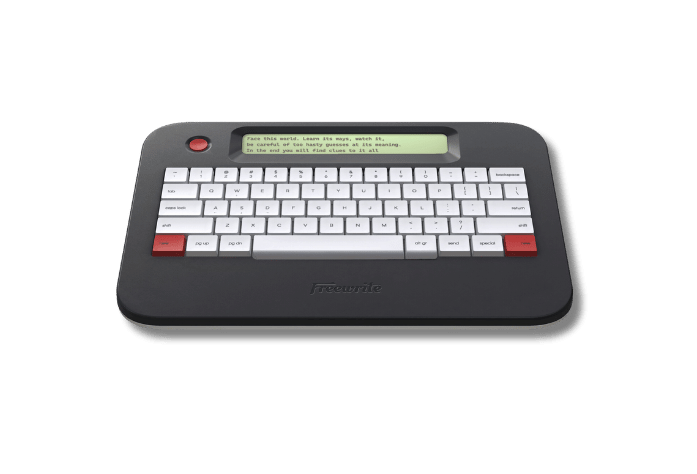
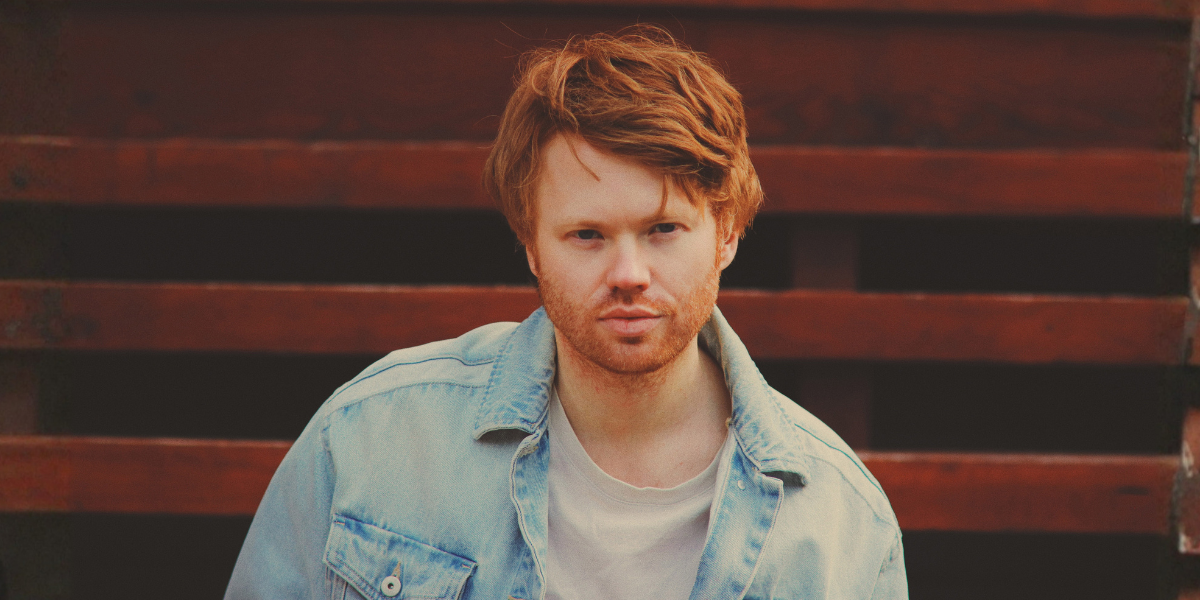
Ivo Senden est un auteur de fiction basé aux Pays-Bas. Écrivain de formation, Senden a grandi avec un sens de l'imagination débordant qui l'a poussé à écrire des nouvelles et à tenir un journal dès son plus jeune âge. Il a mis à profit son inclination pour la créativité et ses expériences de vie pour créer des récits d'aventure et des romans aux décors réalistes, historiques ou contemporains. Senden a été publié pour la première fois à 31 ans, avec une nouvelle sur l'histoire d'un ancien théâtre. Lorsqu'il a commandé le Freewrite en mai 2016, il travaillait sur son troisième livre, Gevallen Land, et tenait un journal relatant les premières expériences de son fils. Senden aimait se remémorer son passage à l'âge adulte dans son propre journal. Il espère qu'en en tenant un pour son fils, il le verra lui aussi comme un cadeau éclairant pour ses projets futurs.

Peu avant la publication de Gevallen Land en décembre 2016, Senden a commencé à travailler sur un autre roman. Bien qu'il n'ait pas encore défini d'objectifs précis d'écriture ou de publication, il apprécie énormément son art. Senden compte continuer à écrire des romans tant qu'il se sentira inspiré par de bonnes idées. Pour lui, un appareil offrant un confort et un plaisir optimaux est indispensable pour pouvoir exploiter son imagination et sa créativité en permanence, dès que l'envie lui en prend.

Deux des plus grands défis auxquels Ivo Senden est confronté en tant qu'écrivain sont la facilité d'utilisation des appareils et la liberté de localisation. Nombre d'écrivains se sentent esclaves de ce monstre qu'est l'inspiration. Senden ne fait pas exception à la règle, préférant écrire ailleurs que sur son canapé ou dans son salon. Après avoir terminé son premier livre sur un PC traditionnel, il est passé à un ordinateur portable pour avoir plus de liberté dans le choix de ses lieux de travail. Bien qu'un ordinateur portable soit plus portable qu'un PC, il peut être difficile d'écrire à la volée avec un ordinateur portable traditionnel. Les ordinateurs portables peuvent être encombrants en raison de leur taille et de leur faible autonomie. Ils sont également difficiles à utiliser pour taper pendant de longues périodes, car ils n'offrent aucune fonctionnalité ergonomique. À un moment donné, Senden a opté pour un clavier Bluetooth pour améliorer son confort d'écriture longue durée, mais il a estimé que ce n'était qu'une amélioration modeste.

Senden a également souligné que les ordinateurs portables ne sont pas adaptés à une utilisation en extérieur. Les écrans ne fonctionnent pas bien en lumière naturelle ou vive, et Senden ressentait la fatigue oculaire familière associée aux longues heures passées à fixer un écran LCD clignotant. En tant qu'écrivain souvent en phase de flux, l'écran LCD de son ordinateur portable le laissait épuisé. Il souffrait souvent de fatigue oculaire et de maux de tête après de longues sessions. Sans compter que la faible autonomie d'un ordinateur portable oblige souvent les utilisateurs à rester connectés à une source d'alimentation.

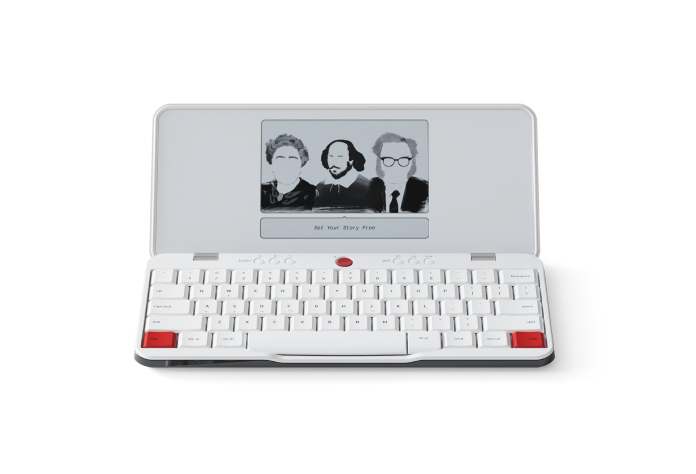
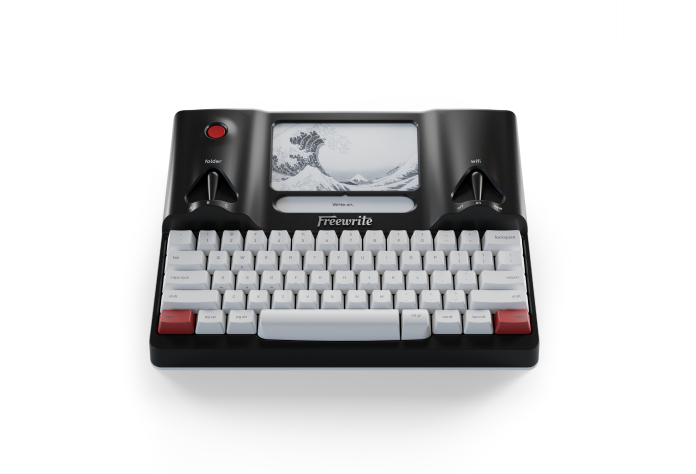
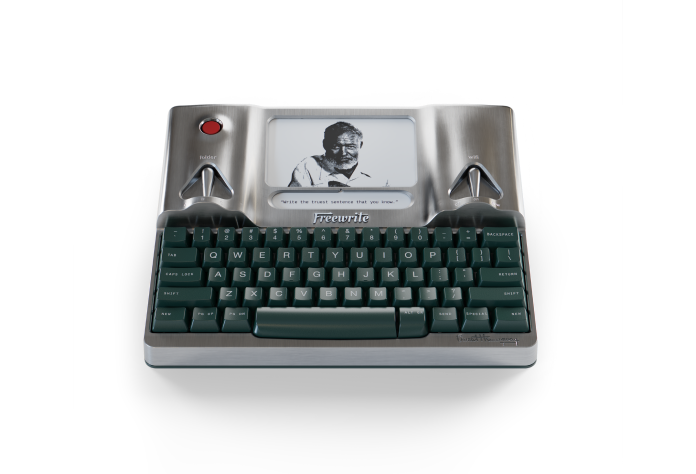
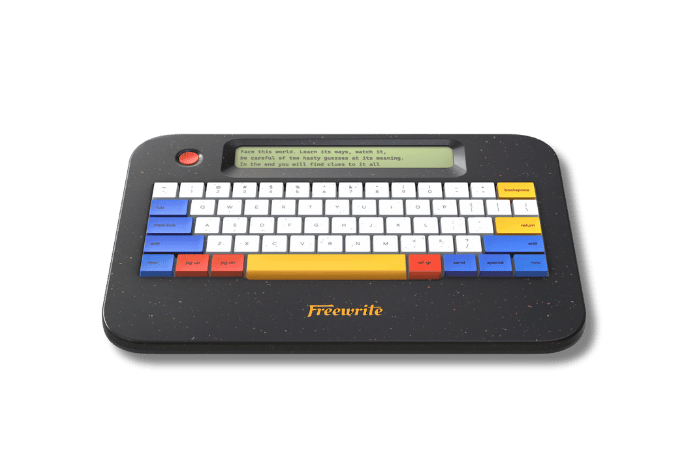
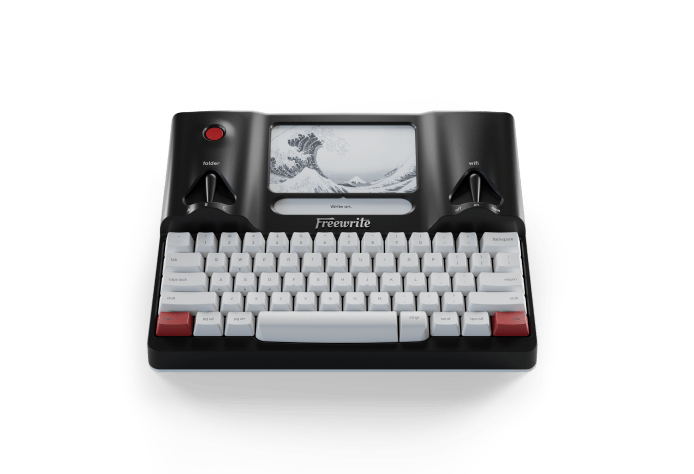
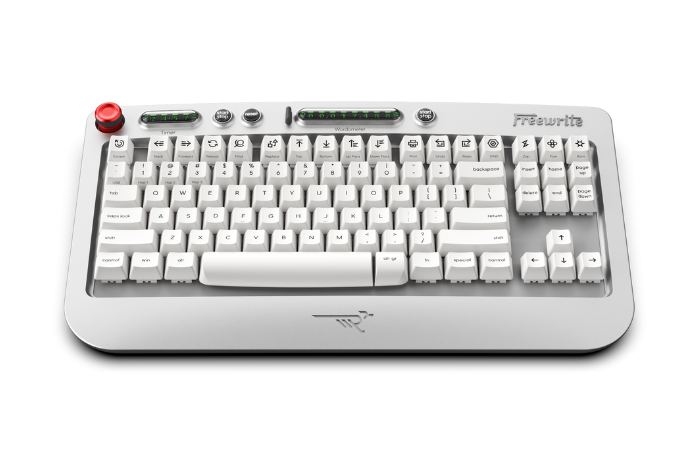
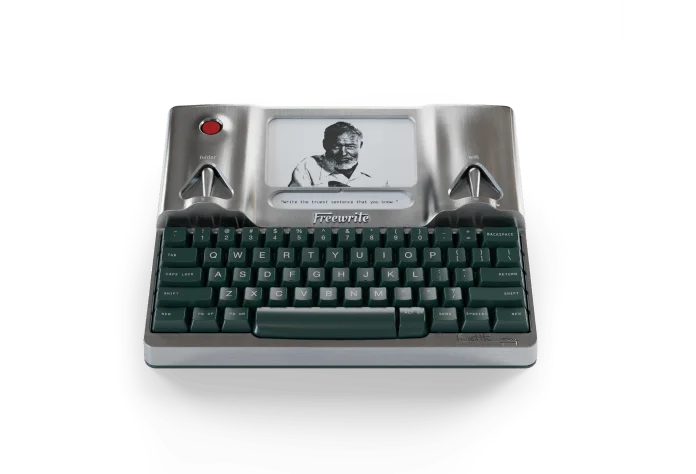
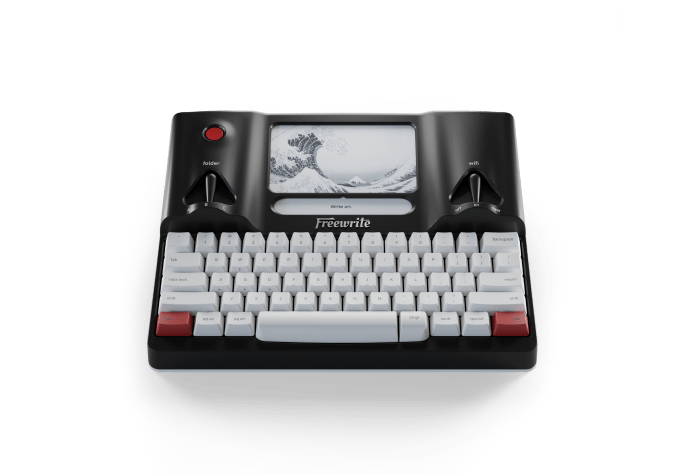
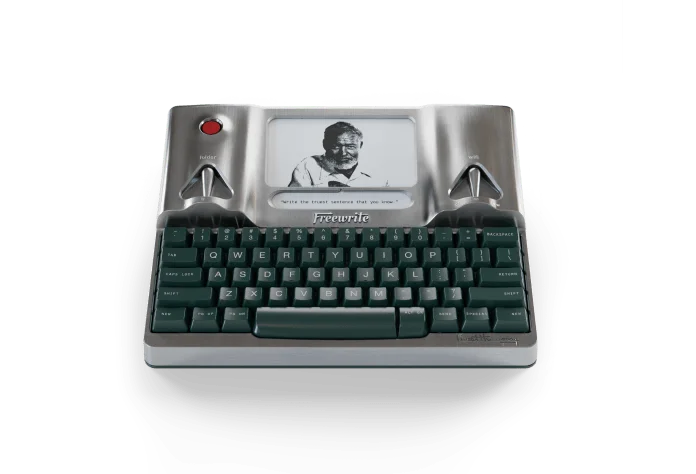
Senden savait que ses proches seraient sceptiques quant aux capacités « limitées » du Freewrite. Cependant, la question de savoir si les capacités du Freewrite sont limitées est une simple question de perspective. Des jeux en ligne aux achats en ligne, en passant par l'appel des réseaux sociaux, les distractions ne manquent pas dans notre monde moderne. Le Freewrite est essentiellement un traitement de texte hautement fonctionnel qui aide l'utilisateur à éliminer ces distractions en ligne. Pour un écrivain sérieux, un outil facile à utiliser et sans distraction est un véritable atout pour une productivité durable. Le Freewrite est spécialement conçu pour répondre aux plaintes courantes des écrivains. Son design minimaliste élimine les distractions des PC et ordinateurs portables traditionnels, offre à l'écrivain le choix de l'emplacement et assure un stockage sécurisé des documents.

Ceci est la première partie de l'histoire d'Ivo Senden Freewrite, cliquez ici pour la deuxième partie
avril 15, 2026 4 lire la lecture

Break up with Final Draft for good. Get the best screenplay workflow in Hollywood: Freewrite + Highland Pro.

avril 01, 2026 0 lire la lecture
mars 22, 2026 3 lire la lecture

If you're new here, freewriting is “an unfiltered and non-stop writing practice.” It’s sometimes known as stream-of-consciousness writing.

To do it, you simply need to write continuously, without pausing to rephrase, self-edit, or spellcheck. Freewriting is letting your words flow in their raw, natural state.

When writing the first draft of a novel, freewriting is the approach we, and many authors, recommend because it frees you from many of the stumbling blocks writers face.

This method helps you get to a state of feeling focused and uninhibited, so you can power through to the finish line.

How Freewriting Gives You Mental Clarity

Freewriting is like thinking with your hands. Some writers have described it as "telling yourself the story for the first time."

Writing for Inside Higher Ed, Steven Mintz says, “Writing is not simply a matter of expressing pre-existing thoughts clearly. It’s the process through which ideas are produced and refined.” And that’s the magic of putting pen to paper, or fingertips to keyboard. The way you learned to ride a bike by wobbling until suddenly you were pedaling? The way you learned certain skills by doing as well as revising? It works for writing, too.

The act of writing turns on your creative brain and kicks it into high gear. You’re finally able to articulate that complex idea the way you want to express it when you write, not when you stare at a blank page and inwardly think until the mythical perfect sentence comes to mind.

Writing isn’t just the way we express ideas, but it’s how we extract them in the first place. Writing is thinking.

Or, as Flannery O'Connor put it:

“I write because I don't know what I think until I read what I say.”

Writing isn’t just the way we express ideas, but it’s how we extract them in the first place. Writing is thinking.


Freewriting to Freethinking

But how and why does it work? Freewriting makes fresh ideas tumble onto the page because this type of writing helps you get into a meditative flow state, where the distractions of the world around you slip away.

Julie Cameron, acclaimed author of The Artist’s Way, proposed the idea that flow-state creativity comes from a divine source. And sure, it certainly feels like wizardry when the words come pouring out and scenes seem to arrange themselves on the page fully formed. But that magic, in-the-zone writing feeling doesn’t have to happen only once in a blue moon. It’s time to bust that myth.

By practicing regular freewriting and getting your mind (and hands) used to writing unfiltered, uncensored, and uninterrupted, you start freethinking and letting the words flow. And the science backs it up.

According to Psychology Today, the dorsolateral prefrontal cortex goes quiet during flow state. This part of the brain is in charge of “self-monitoring and impulse control” – in other words, the DLPFC is the tiny home of your loud inner critic. And while that mean little voice in your head takes a long-overdue nap, you’re free to write without doubt or negative self-talk.

“With this area [of the brain] deactivated, we’re far less critical and far more courageous, both augmenting our ability to imagine new possibilities and share those possibilities with the world.”

Freewriting helps us connect with ourselves and our own thoughts, stories, beliefs, fears, and desires. But working your creative brain is like working a muscle. It needs regular flexing to stay strong.

So, if freewriting helps us think and organize our thoughts and ideas, what happens if we stop writing? If we only consume and hardly ever create, do we lose the ability to think for ourselves? Up next, read "Are We Living through a Creativity Crisis?"


Learn More About Freewriting

Get the ultimate guide to boosting creativity and productivity with freewriting absolutely free right here.You'll learn how to overcome perfectionism, enhance flow, and reignite the joy of writing.

SYSF-book-mockup.webp