overlaylink

Préfiguration dans la fiction : astuces pour garder vos lecteurs en haleine

mai 10, 2019 | 7 lire la lecture

En matière de procédés littéraires, la préfiguration est une technique indispensable à tout écrivain. Des grands noms de la littérature comme William Shakespeare et J.K. Rowling aux maîtres du scénario comme Alfred Hitchcock, tous ont eu recours à la préfiguration pour créer des rebondissements captivants qui laissent aux lecteurs (et aux spectateurs) un moment de révélation satisfaisant.

Si vous n'êtes pas tout à fait sûr de ce qu'est exactement la préfiguration, voici une définition :
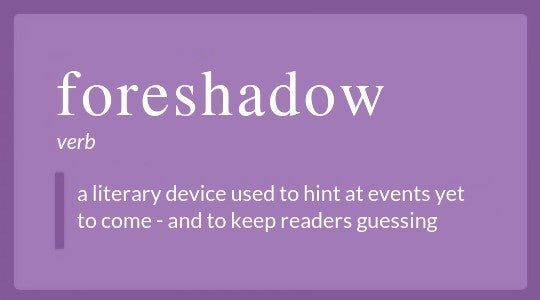

Annoncer

Les présages créent de la tension ou du suspense dans votre récit, en posant une sorte de fil d'Ariane que vos lecteurs pourront (ou non) saisir. Si vous avez lu un bon roman récemment, il est probable que l'auteur y ait ajouté des éléments de présage. Lors de votre lecture, les présages se manifestent dans des scènes apparemment anodines ou inoffensives qui ne prennent sens que lorsque l'intrigue commence à se résoudre.

Cependant, lorsqu'on écrit, la préfiguration n'a rien d'anodin ni d'innocent. Il faut planifier les éléments de préfiguration de manière à ce qu'ils ne paraissent pas trop évidents, mais il ne faut pas non plus qu'ils soient si subtils qu'aucun de vos lecteurs ne perçoivent les précieuses informations que vous leur laissez. Alors, comment fonctionne la préfiguration à l'écrit ?

Types de préfiguration

Chaque auteur a son propre style d'écriture ; la façon précise d'aborder la préfiguration dépend donc de votre style. Cependant, il existe deux principaux types de préfiguration que vous pouvez utiliser dans vos histoires : la préfiguration directe et la préfiguration indirecte.

Préfiguration directe

Pour captiver vos lecteurs, la préfiguration directe est une excellente méthode. Comme son nom l'indique, les indices (ou miettes de pain) que vous insérez dans votre récit sont comme de petites pépites d'information qui incitent vos lecteurs à réfléchir à leur place dans l'histoire et à leur finalité. Les lecteurs astucieux et intuitifs peuvent même deviner le dénouement de l'intrigue grâce à la préfiguration directe.

Dans la préfiguration directe, il existe différents sous-types que vous pouvez utiliser, tels que :

Pré-scène

Il s'agit d'un type de préfiguration très populaire. Ces scènes sont souvent courtes et relativement discrètes, mais révèlent un élément essentiel pour un rebondissement ou une résolution ultérieure de l'histoire.

Les lecteurs deviennent souvent très doués pour repérer les préscènes. Pour les exploiter au mieux, veillez donc à ne pas en dévoiler trop. Des préscènes efficaces transmettent les informations nécessaires, mais incitent vos lecteurs à poursuivre leur lecture pour comprendre l'importance des détails ou vérifier si leurs soupçons sont fondés.

Par exemple, dans votre roman, vous pourriez avoir une scène qui s'ouvre dans un bar bondé. Votre héros est assis au bar, savourant son verre en compagnie d'une belle jeune femme. Après avoir terminé son verre, il se lève pour aller aux toilettes. Aussitôt, un autre homme s'approche de la jeune femme et lui glisse un papier avant de quitter le bar. Votre héros revient, le couple quitte le bar. Vos lecteurs savent instinctivement que la jeune femme est impliquée dans une affaire suspecte ou qu'elle n'est pas aussi innocente qu'elle le paraît – ils ignorent simplement ce qui va advenir.

Nommer

Si un personnage est appelé à jouer un rôle crucial dans votre histoire, ou si un lieu en particulier est significatif, citer un nom peut préfigurer les événements futurs et signaler au lecteur l'importance de ce personnage ou de ce lieu. Il ne comprendra pas pourquoi, mais c'est une nouvelle piste que vous lui laissez.

Par exemple, si votre héros annonce à un autre personnage qu'il va rendre visite à un ami le lendemain, sans toutefois le nommer ni préciser le lieu, vos lecteurs n'y prêteront pas vraiment attention. En revanche, s'il annonce plutôt qu'il rencontre Charlie McGuiness à la chapelle Holy Rood, vos lecteurs seront plus susceptibles de reconnaître l'importance de ces détails.

Prophétie

Il s'agit d'un ancien type de préfiguration, utilisé par des auteurs comme Orson Welles et William Shakespeare. Il s'agit essentiellement d'une manière d'annoncer directement à vos lecteurs qu'un événement dramatique spécifique va se produire à un moment donné.

Certains auteurs considèrent cette pratique dépassée et contre-intuitive, elle est donc moins courante qu'avant, mais elle peut néanmoins s'avérer efficace. Vous annoncez à vos lecteurs qu'un événement précis va se produire, mais ils ne savent ni quand, ni comment, ni quelles autres surprises vous réservez, ce qui les maintient dans un état d'anticipation.

Voici un exemple, tiré de Macbeth de William Shakespeare (acte 1, scène 3) :

« Salut, Macbeth, tu seras roi désormais !
[…]
Moins que Macbeth, et plus grand.
Pas si heureux, mais beaucoup plus heureux.
Tu auras des rois, même si tu n'en es pas un.
Alors salut à Macbeth et Banquo !
Banquo et Macbeth, salut à tous !

Préfiguration indirecte

Si vous privilégiez la subtilité plutôt que de fournir des indices à vos lecteurs, la préfiguration indirecte est la solution. Vous maîtrisez le niveau de subtilité, et avec ce type de préfiguration, même si vos lecteurs perçoivent les miettes de pain comme importantes, ils ne parviendront probablement pas à comprendre précisément ce que vous insinuez.

Personnellement, en tant que lecteur et écrivain, je trouve les présages indirects plus gratifiants. À l'ère des réseaux sociaux, certains présages directs ressemblent davantage à des pièges à clics, et je préfère être plus subtil dans mes écrits. Examinons quelques types de présages indirects (subtils) :

Déclarations anodines

Ce sont des présages qui peuvent rester gravés dans la mémoire de vos lecteurs, mais qui ne prennent sens que plus tard dans l'histoire. Ils ont moins de chances de captiver vos lecteurs, mais une fois que vous serez reconnu comme écrivain et que vous aurez des fans, ceux-ci seront fiers de pouvoir repérer les déclarations anodines que vous glissez dans votre texte et tenteront d'en deviner le dénouement.

Voici un exemple de déclaration anodine. Dans Star Wars : Épisode II, Obi-Wan Kenobi dit à Anakin Skywalker : « Pourquoi ai-je l'impression que tu vas me tuer ? » Ce n'est que plus tard dans la série que cette préfiguration cachée prend tout son sens.

Erreur pathétique

Quand j'ai découvert ce terme pour la première fois, je n'avais honnêtement aucune idée de sa signification. Une fois que je l'ai compris, c'est devenu l'une de mes techniques de préfiguration subtiles préférées. Le sophisme pathétique désigne la façon dont on peut attribuer des émotions humaines à des choses qui ne le sont pas, comme la météo, par exemple.

Il existe de nombreuses façons d'utiliser cette technique pour préfigurer des événements futurs. Une rafale de vent glacial peut, par exemple, évoquer un pressentiment ou annoncer un événement effrayant. De même, un arc-en-ciel apparaissant pendant une violente tempête peut suggérer un changement imminent ou l'émergence d'une issue plus positive.

Charles Dickens utilise le temps qu'il fait dans Les Grandes Espérances pour exprimer ce que ressent le héros, Pip. Pouvez-vous deviner ce que Dickens essaie de préfigurer ?

« Les rafales avaient été si furieuses que les toits des hauts bâtiments de la ville avaient été arrachés du plomb ; à la campagne, des arbres avaient été arrachés et des ailes de moulins à vent emportées ; et de sombres récits de naufrages et de morts étaient parvenus de la côte. »

Placement des objets

Anton Tchekhov a déclaré un jour : « Si au premier acte vous avez un pistolet accroché au mur, alors il doit tirer au dernier acte. » S'il faisait sans doute référence à l'écriture dramatique, cela s'applique à tout type de récit – et, en fin de compte, c'est un outil qui peut être utilisé pour préfigurer efficacement.

Cela signifie que si un événement majeur se produit tard dans l'histoire, vous pouvez le préfigurer subtilement en y faisant allusion dès le début. Dans l'exemple de Tchekhov, vous mettriez l'accent sur un pistolet qui deviendrait plus tard un élément central de l'intrigue.

C'est une technique extrêmement populaire - vous avez sûrement dû lire un livre (ou dix) dans lequel il est fait mention d'un objet qui ne semble pas vraiment avoir de sens dans la scène actuelle, mais ensuite, plus tard, vous avez ce moment ah-ha où vous réalisez : « oh, c'est pour ça qu'il était là ! »

Il existe différentes façons d'utiliser cette technique. Voici quelques exemples :

● Votre héros se rend à l'aéroport pour récupérer sa fiancée qui revient d'un voyage d'affaires à l'étranger. Il parle au téléphone avec son associé et jette un coup d'œil à la jauge d'essence, qui indique presque vide, puis poursuit sa conversation. Dans cette scène, c'est plutôt l'absence de quelque chose (par exemple un réservoir plein) que vous préfigurez. Vous pourriez utiliser cela avec des flacons de médicaments, ou montrer votre personnage en train d'oublier un objet.
● Votre héroïne est assise à son bureau dans son bureau universitaire, en train de corriger des travaux de fin d'études. Son stylo est vide et elle ouvre un tiroir pour en prendre un nouveau. Dans le tiroir, il y a une enveloppe non ouverte, jaunie par le temps, avec un nom écrit dessus. Elle ferme rapidement le tiroir. Vos lecteurs se souviendront de la lettre, mais ils ne savent pas pourquoi elle est importante.

Utilisation efficace de la préfiguration

Le type et la manière de préfigurer votre lecture dépendront de l'objectif recherché. Vous souhaitez créer du suspense ? Optez alors pour une préfiguration plus directe (afin que votre lecteur ne manque pas d'indices). En revanche, pour préfigurer un événement futur, privilégiez une approche plus subtile, avec une préfiguration indirecte.

L'une des erreurs que commettent de nombreux auteurs est d'utiliser trop de présages. Mieux vaut un peu de présage que beaucoup, à condition de bien l'utiliser. Il est donc essentiel de choisir avec plus de discernement les utilisations et les moments de votre récit où vous les utilisez.

Les tournants majeurs de votre histoire doivent être votre priorité. Un arc narratif compte généralement trois tournants : le moment où la vie de votre personnage est profondément affectée par un événement ; le milieu de l'arc narratif où votre personnage commence à se questionner sur lui-même de manière existentielle ; et le point culminant de l'histoire.

En général, la première moitié de votre récit sera plus propice aux présages, tandis que les moments de révélation surviendront dans la seconde. Un bon moyen d'équilibrer les choses (et de ne pas abuser des présages) est d'utiliser un schéma narratif pour identifier les moments clés des tournants majeurs de votre récit.

Pratiquez votre technique pour saisir les présages

Ne vous attendez pas à maîtriser la préfiguration instantanément. Des maîtres du suspense comme Stephen King et Alfred Hitchcock ont ​​perfectionné leur art au fil des ans ; prévoyez donc de passer du temps à vous entraîner à la préfiguration.

C'est une bonne idée d'essayer d'identifier les présages lorsque vous lisez les romans de vos auteurs préférés, car cela vous permettra d'apprendre des maîtres eux-mêmes. Pendant votre lecture, demandez-vous pourquoi leurs techniques de présage sont si efficaces et entraînez-vous à les reproduire vous-même.

Que vous préfériez utiliser une préfiguration directe ou indirecte, vous pouvez laisser vos lecteurs dans l'incertitude et renforcer votre confiance jusqu'à ce que vous soyez également un maître de la préfiguration.
décembre 30, 2025 3 lire la lecture

It’s Freewrite’s favorite time of year. When dictionaries around the world examine language use of the previous year and select a “Word of the Year.”

Of course, there are many different dictionaries in use in the English language, and they all have different ideas about what word was the most influential or saw the most growth in the previous year. They individually review new slang and culturally relevant vocabulary, examine spikes or dips in usage, and pour over internet trend data.

Let’s see what some of the biggest dictionaries decided for 2025. And read to the end for a chance to submit your own Word of the Year — and win a Freewrite gift card.

[SUBMIT YOUR WORD OF THE YEAR]


Merriam-Webster: "slop"

Merriam-Webster chose "slop" as its Word of the Year for 2025 to describe "all that stuff dumped on our screens, captured in just four letters."

The dictionary lists "absurd videos, off-kilter advertising images, cheesy propaganda, fake news that looks pretty real, junky AI-written books, 'workslop' reports that waste coworkers’ time … and lots of talking cats" as examples of slop.

The original sense of the word "slop" from the 1700s was “soft mud” and eventually evolved to mean "food waste" and "rubbish." 2025 linked the term to AI, and the rest is history.

Honorable mentions: conclave, gerrymander, touch grass, performative, tariff, 67.

Dictionary.com: "67"

The team at Dictionary.com likes to pick a word that serves as “a linguistic time capsule, reflecting social trends and global events that defined the year.”

For 2025, they decided that “word” was actually a number. Or two numbers, to be exact.

If you’re an old, like me, and don’t know many school-age children, you may not have heard “67” in use. (Note that this is not “sixty-seven,” but “six, seven.”)

Dictionary.com claims the origin of “67” is a song called “Doot Doot (6 7)” by Skrilla, quickly made infamous by viral TikTok videos, most notably featuring a child who will for the rest of his life be known as the “6-7 Kid.” But according to my nine-year-old cousin, the origins of something so mystical can’t ever truly be known.

(My third grade expert also demonstrated the accompanying signature hand gesture, where you place both hands palms up and alternately move up and down.)

And if you happen to find yourself in a fourth-grade classroom, watch your mouth, because there’s a good chance this term has been banned for the teacher’s sanity.

Annoyed yet? Don’t be. As Dictionary.com points out, 6-7 is a rather delightful example at how fast language can develop as a new generation joins the conversation.

Dictionary.com honorable mentions: agentic, aura farming, broligarchy, clanker, Gen Z stare, kiss cam, overtourism, tariff, tradwife.

Oxford Dictionary: "rage bait"

With input from more than 30,000 users and expert analysis, Oxford Dictionary chose "rage bait" for their word of the year.

Specifically, the dictionary pointed to 2025’s news cycle, online manipulation tactics, and growing awareness of where we spend our time and attention online.

While closely paralleling its etymological cousin "clickbait," rage bait more specifically denotes content that evokes anger, discord, or polarization.

Oxford's experts report that use of the term has tripled in the last 12 months.

Oxford Dictionary's honorable mentions:aura farming, biohack.

Cambridge Dictionary: "parasocial"

The Cambridge Dictionary examined a sustained trend of increased searches to choose "parasocial" as its Word of the Year.

Believe it or not, this term was coined by sociologists in 1956, combining “social” with the Greek-derived prefix para-, which in this case means “similar to or parallel to, but separate from.”

But interest in and use of the term exploded this year, finally moving from a mainly academic context to the mainstream.

Cambridge Dictionary's honorable mentions: slop, delulu, skibidi, tradwife

Freewrite: TBD

This year, the Freewrite Fam is picking our own Word of the Year.

Click below to submit what you think the Word of 2025 should be, and we'll pick one submission to receive a Freewrite gift card.

[SUBMIT HERE] 

--

Sources

décembre 18, 2025 6 lire la lecture

Que peuvent apprendre les lettres personnelles de Jane Austen aux écrivains ?

décembre 10, 2025 6 lire la lecture

Singer-songwriter Abner James finds his creativity in the quiet freedom of analog tools. Learn how his creative process transcends different media.

Abner James went to school for film directing. But the success of the band he and his brother formed together, Eighty Ninety, knocked him onto a different trajectory.

The band has accrued more than 40 million streams since the release of their debut EP “Elizabeth," and their work was even co-signed by Taylor Swift when the singer added Eighty Ninety to her playlist "Songs Taylor Loves.”

Now, Abner is returning to long-form writing in addition to songwriting, and with a change in media comes an examination of the creative process. We sat down to chat about what's the same — and what's different. 

ANNIE COSBY: Tell us about your songwriting process.

ABNER JAMES: The way I tend to write my songs is hunched over a guitar and just seeing what comes. Sounds become words become shapes. It's a very physical process that is really about turning my brain off.

And one of the things that occurred to me when I was traveling, actually, was that I would love to be able to do that but from a writing perspective. What would happen if I sat down and approached writing in the same way that I approached music? In a more intuitive and free-form kind of way? What would that dig up?

AC: That's basically the ethos of Freewrite.

AJ: Yes. We had just put out a record, and I was thinking about how to get into writing for the next one. It occurred to me that regardless of how I started, I always finished on a screen. And I wondered: what's the acoustic guitar version of writing?

Where there's not blue light hitting me in the face. Even if I'm using my Notes app, it's the same thing. It really gets me into a different mindset.

 "I wondered: what's the acoustic guitar version of writing?"

I grew up playing piano. That was my first instrument. And I found an old typewriter at a thrift store, and I love it. It actually reminded me a lot of playing piano, the kind of physical, the feeling of it. And it was really fun, but pretty impractical, especially because I travel a fair amount.

And so I wondered, is there such a thing as a digital typewriter? And I googled it, and I found Freewrite.

AC: What about Freewrite helps you write?

AJ:I think, pragmatically, just the E Ink screen is a huge deal, because it doesn't exhaust me in the same way. And the idea of having a tool specifically set aside for the process is appealing in an aesthetic way but also a mental-emotional way. When it comes out, it's kind of like ... It's like having an office you work out of. It's just for that.

"The way I tend to write my songs is hunched over a guitar and just seeing what comes. Sounds become words become shapes. It's a very physical process that is really about turning my brain off."

And all of the pragmatic limitations — like you're not getting texts on it, and you're not doing all that stuff on the internet — that's really helpful, too. But just having the mindset....

When I pick up a guitar, or I sit down at the piano, it very much puts me into that space. Having a tool just for words does the same thing. I find that to be really cool and inspiring.

"When I pick up a guitar, or I sit down at the piano, it very much puts me into that space. Having a tool just for words does the same thing."

AC: So mentally it gets you ready for writing.

AJ: Yeah, and also, when you write a Microsoft Word, it looks so finished that it's hard to keep going. If every time I strummed a chord, I was hearing it back, mixed and mastered and produced...?

It's hard to stay in that space when I'm seeing it fully written out and formatted in, like, Times New Roman, looking all seriously back at me.

AC: I get that. I have terrible instincts to edit stuff over and over again and never finish a story.

AJ:  Also, the way you just open it and it's ready to go. So you don't have the stages of the computer turning on, that kind of puts this pressure, this tension on.

It's working at the edges in all these different ways that on their own could feel a little bit like it's not really necessary. All these amorphous things where you could look at it and be like, well, I don't really need any of those. But they add up to a critical mass that actually is significant.

And sometimes, if I want to bring it on a plane, I've found it's replaced reading for me. Rather than pick up a book or bring a book on the plane, I bring Traveler and just kind of hang out in that space and see if anything comes up.

I've found that it's kind of like writing songs on a different instrument, you get different styles of music that you wouldn't have otherwise. I've found that writing from words towards music, I get different kinds of songs than I have in the past, which has been interesting.

In that way, like sitting at a piano, you just write differently than you do on a guitar, or even a bass, because of the things those instruments tend to encourage or that they can do.

It feels almost like a little synthesizer, a different kind of instrument that has unlocked a different kind of approach for me.

"I've found that it's kind of like writing songs on a different instrument, you get different styles of music that you wouldn't have otherwise... [Traveler] feels almost like a little synthesizer, a different kind of instrument that has unlocked a different kind of approach for me."

AC: As someone who doesn't know the first thing about writing music, that's fascinating. It's all magic to me.

AJ: Yeah.

AC: What else are you interested in writing?

AJ: I went to school for film directing. That was kind of what I thought I was going to do. And then my brother and I started the band and that kind of happened first and knocked me onto a different track for a little while after college.

Growing up, though, writing was my way into everything. In directing, I wanted to be in control of the thing that I wrote. And in music, it was the same — the songwriting really feels like it came from that same place. And then the idea of writing longer form, like fiction, almost feels just like the next step from song to EP to album to novel.

For whatever reason, that started feeling like a challenge that would be deeply related to the kinds of work that we do in the studio.

AC: Do you have any advice for aspiring songwriters?

AJ: This sounds like a cliche, but it's totally true: whatever success that I've had as a songwriter — judge that for yourself — but whatever success I have had, has been directly proportional to just writing the song that I wanted to hear.

What I mean by that is, even if you're being coldly, cynically, late-stage capitalist about it, it's by far the most success I've had. The good news is that you don't have to choose. And in fact, when you start making those little compromises, or even begin to inch in that direction, it just doesn't work. So you can forget about it.

Just make music you want to hear. And that will be the music that resonates with most people.

I think there's a temptation to have an imaginary focus group in your head of like 500 people. But the problem is all those people are fake. They're not real. None of those people are actually real people. You're a focus group of one, you're one real person. There are more real people in that focus group than in the imaginary one.

And I just don't think that we're that different, in the end. So that would be my advice.

AC: That seems like generally great creative advice. Because fiction writers talk about that too, right? Do you write to market or do you write the book you want to read. Same thing. And that imaginary focus group has been debilitating for me. I have to silence that focus group before I can write.

AJ: Absolutely.

"I think there's a temptation to have an imaginary focus group in your head of like 500 people. But the problem is all those people are fake... You're a focus group of one, you're one real person. There are more real people in that focus group than in the imaginary one."

--

Learn more about Abner James, his brother, and their band, Eighty Ninety, on Instagram.