overlaylink

Le travail et la tristesse

mars 02, 2016 | 6 lire la lecture

Ceci est un article invité de Lancelot Schaubert. Schaubert est l'auteur du roman à paraître « Faceless » et vit à Brooklyn avec sa femme et son épagneul d'attaque. La ville de Joplin, dans le Missouri, lui a commandé un roman-photo qui met en scène et enchanté l'histoire de leur ville. Il a vendu des articles à Writer's Digest (un à paraître et un au Poet's Market 2016), à l'édition World Series de Poker Pro, à McSweeney's, au site de campagne de Bernie Sanders, et à d'autres. Ses fictions et poèmes ont été publiés ou paraîtront prochainement dans The Misty Review, Carnival, Encounter (qui en a acheté une douzaine ou plus) et bien d'autres. Il adore la soupe. Envoyez-lui de la soupe.

Vous pouvez en apprendre davantage sur lui sur http://lanceschaubert.org/ ou le laisser vous envoyer directement ses meilleurs travaux .

________________________________

Croyez-vous au syndrome de la page blanche ?

Non. Mais peut-être pas pour la raison que vous imaginez.

L'auteur de fantasy Patrick Rothfuss a répété des milliers de fois que les plombiers ne souffrent pas du syndrome de la page blanche. J'apprécie cela, d'autant plus que mon plombier était aussi mon sensei de shoto jitsu – il excellait dans les deux disciplines et y consacrait beaucoup de temps, à la fois ceinture noire de l'année et homme à tout faire du coin. Ed Daniels. Ed Daniels n'a jamais été « bloqué ». Rothfuss a développé ce point lors d'un de ses streams Twitch Worldbuilders l'automne dernier. Il pense que ce que certains attribuent au syndrome de la page blanche est une dépression clinique.

On pourrait même dire que les plombiers ne souffrent pas de blocage du plombier, à moins qu'ils ne soient, en tant qu'êtres humains, cliniquement déprimés. Analysons cela en détail.

Le syndrome de la page blanche, à mon avis, se résume à l'une de ces deux choses : la paresse ou la dépression .

Commençons par la dépression. Rothfuss avait raison d'évoquer le nombre d'écrivains qui se sont suicidés, passivement ou activement, au cours de l'histoire. Une profonde tristesse est inhérente au gène de l'écriture, car nous passons beaucoup de temps dans notre état d'esprit. Certains pensent que la dépression est un trait évolutif qui nous aide à réévaluer notre situation : nous nous retirons dans un lieu calme pour nous remettre en question, mieux comprendre notre situation actuelle, puis avancer plus forts et plus agiles. Les moines ? Ils auraient pu appeler cela le silence et la solitude – la posture de prière de celui qui utilise la méditation pour rester présent dans « ce monde, celui de mon Père ».

Où que vous vous situiez sur ce spectre, vous ne pouvez pas nier que passer autant de temps à imaginer d'autres mondes peut vous vider de votre joie de vivre. Et vous vous retrouvez coincé. Vous êtes coincé non pas parce que vous êtes écrivain. Vous êtes coincé parce que vous êtes un être humain. Mon ami, TA Giltner, qui enseigne la religion à l'Université de Saint-Louis, dit à tous ses étudiants de première année le premier jour de cours : « Levez la main si vous voulez être un bon médecin. Un bon avocat. Un bon scientifique. » Ils lèvent la main. « Gardez la main si vous pensez que ce cours est inutile pour y parvenir. » Ils baissent la main. « Ce cours ne traite pas de religion. Il s'agit de devenir un être humain respectable. Vous voulez être médecins, avocats et scientifiques, mais vous ne voulez pas être de bons êtres humains ? Bonne chance. »

L’expression « bon médecin » suppose l’existence d’un « bon être humain ».

Les écrivains aussi. Sans une humanité saine, patiente, joyeuse et bienveillante, aucun d'entre nous ne deviendra un bon écrivain. Et encore moins un excellent écrivain. Et cela inclut cette terrible maladie qui m'a frappé au lycée et qui me frappe encore parfois aujourd'hui : la dépression. Pour surmonter ce syndrome de la page blanche, il faut faire ce que tout être humain fait : se retrouver en cherchant de l'aide. J'ai un conseiller qui m'a aidée à sortir de l'enfer qu'a été mon année 2015 et mon écriture s'est améliorée.

Mais encore une fois, ce n’est pas spécifique aux écrivains.

Quant à la paresse, je suis convaincu que ceux qui minimisent leur propre dépression en la glorifiant avec des étiquettes comme « panique de l'écrivain » facilitent la tâche aux paresseux. Je sais, j'en étais un. J'étais un adolescent paresseux qui n'avait guère de raison d'être paresseux, compte tenu de la pauvreté de certaines de mes premières années. Pour une raison ou une autre, peut-être parce qu'elles suivent la trajectoire inverse de ces carrières de footballeurs professionnels qui s'épanouissent tôt et s'éteignent tout aussi vite, les carrières d'écrivains mettent beaucoup de temps à mûrir, à guérir et à hiberner. Avec la richesse et les privilèges – que vous soyez un enfant de famille ou simplement plus blanc que votre voisin –, les écrivains ont inventé les méthodes de procrastination les plus absurdes du marché, allant jusqu'à écrire sur le fait de ne pas écrire sur le fait de ne pas écrire sur les réseaux sociaux. Et puis ils détournent ce terme utilisé pour minimiser la dépression clinique des pros ou des grands et disent : « J'ai le syndrome de la page blanche. »

Êtes-vous déprimé ? Si c'est le cas, demandez de l'aide et du soutien, mais cela n'a rien à voir avec le fait d'être écrivain.

Si vous n'êtes pas déprimé, alors vous êtes paresseux. Je suis convaincu que la plupart des écrivains doivent d'abord apprendre à écrire. Je suis convaincu qu'ils doivent commencer par apprendre à se démener pour survivre et ensuite prospérer. Cela implique probablement de trouver un emploi à bas salaire ou de trouver un moyen de générer soi-même un revenu passif plutôt que d'en hériter ou de le léguer à une génération future sous forme de dettes. Cela peut aussi signifier trouver une joie simple à tailler les bordures ou à sortir les poubelles. Si c'est votre cas, vous n'avez pas le syndrome de la page blanche, désolé. Vous avez une aversion pour le travail acharné. Et ce n'est qu'en apprenant à travailler, à aimer votre travail, à vous épanouir même dans un environnement maudit et hostile que vous parviendrez à bien écrire. Stephen King est très productif précisément parce qu'il a travaillé comme un dingue dans une laverie automatique, comme professeur et comme ramoneur, et qu'il a ensuite appliqué ces compétences à l'écriture.

Une fois que vous avez appris à travailler, appliquez ce travail à vos études et à votre pratique. Ensuite, vous lisez « Des Écritures » et « Éléments de style » du monde. Ensuite, vous réécrivez littéralement vos brouillons de zéro. Puis, vous exploitez ce que vous avez toujours rêvé de faire et vous le transmettez à la Terre.

Mais ne l'appelons plus bloc.

Si vous êtes déprimé, demandez de l’aide.

Et si vous êtes paresseux, taisez-vous et mettez-vous au travail.

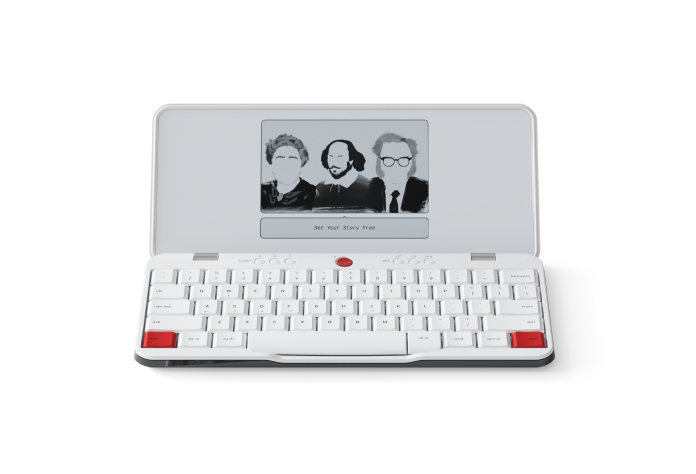
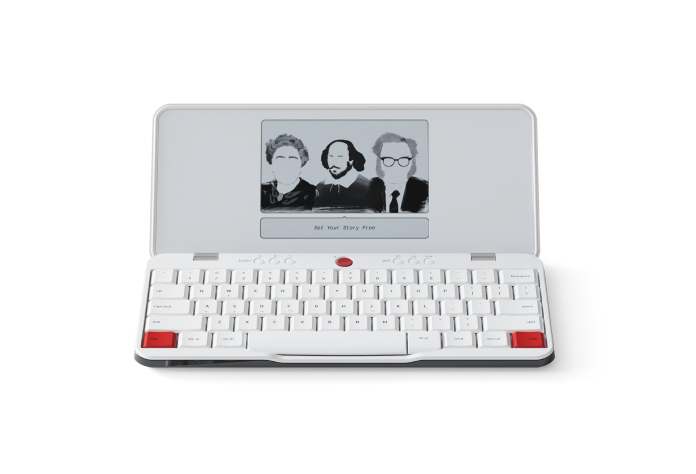
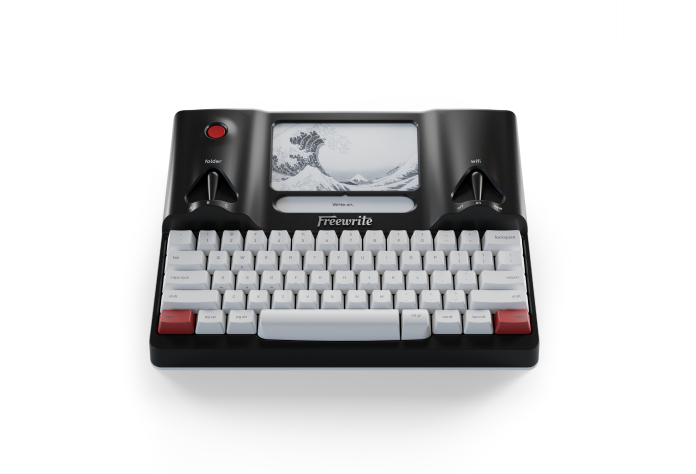
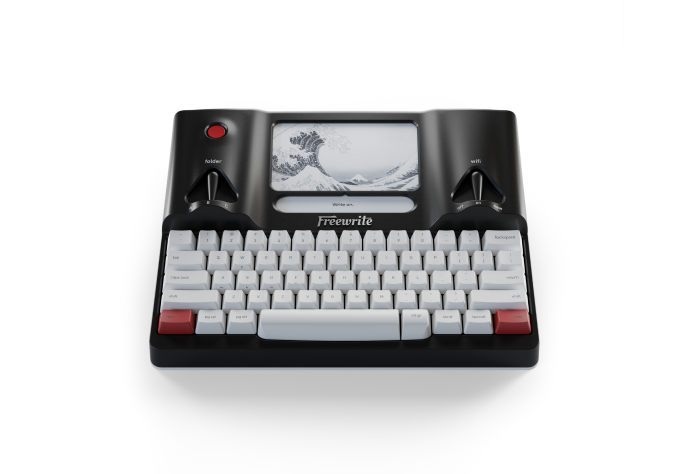
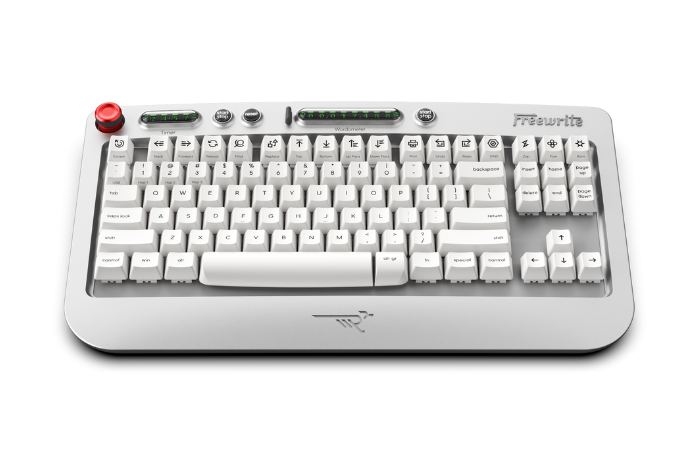
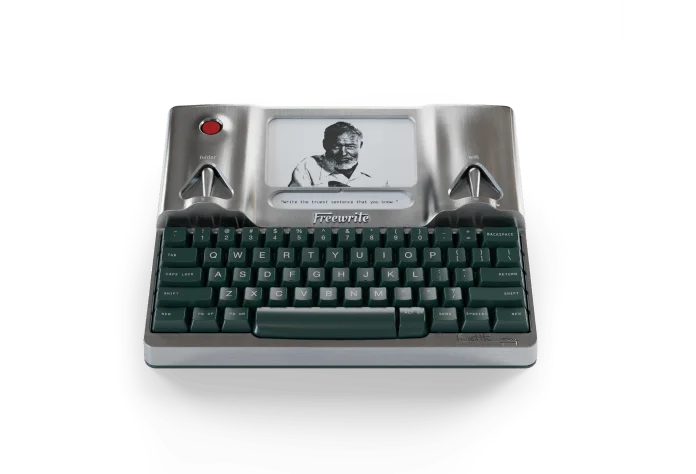
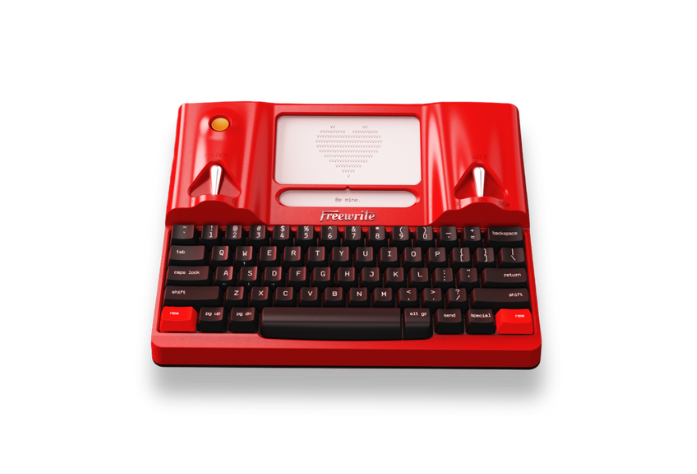
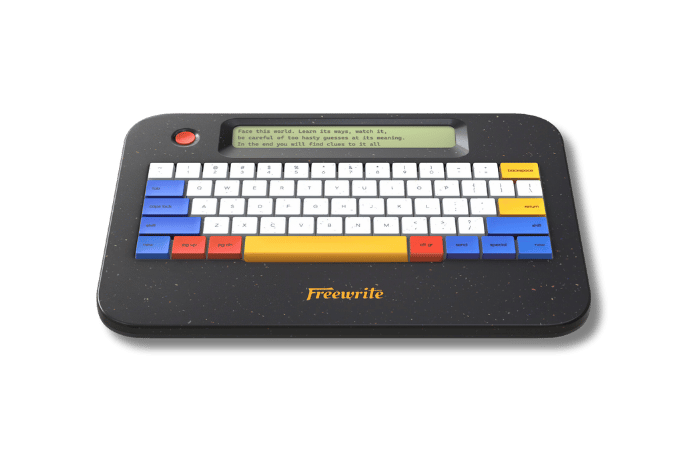
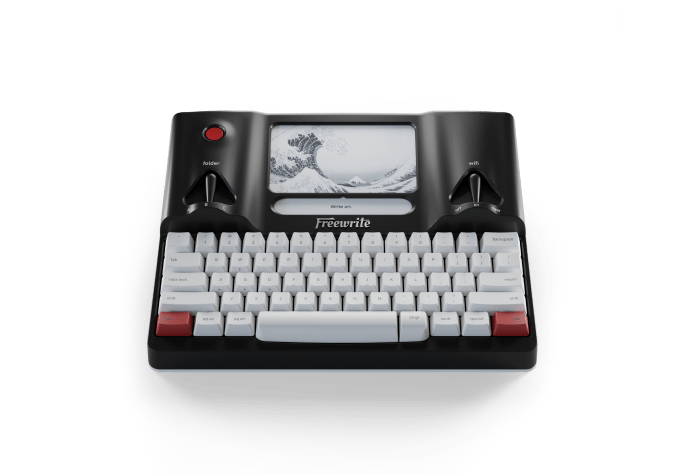
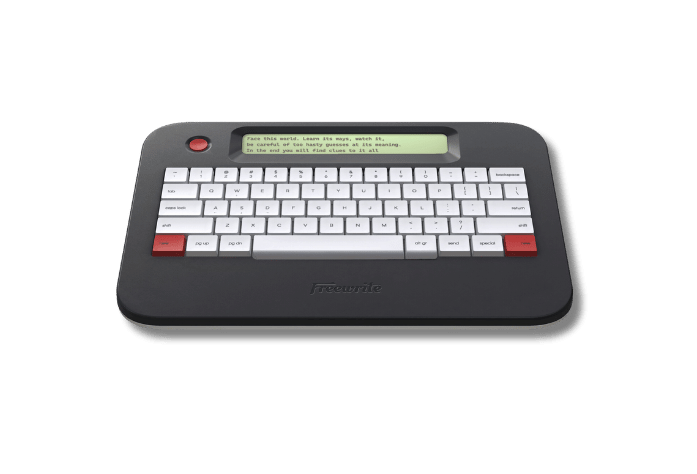
Je dois préciser que j'ai rédigé la première version de ce texte sur un Freewrite. Je le teste aujourd'hui, car j'ai suivi cette équipe depuis le début de leurs contributions. Je suis connu pour me déconnecter de la matrice plus souvent que mes pairs et me rendre dans le nord de l'État de New York ou dans le nord-ouest de l'Arkansas pour m'enfermer dans un trou de hobbit et taper sur ma Smith Corona ou griffonner sur les bribes de texte que je trouve. Peut-être que le Freewrite m'aidera.

Mais la frappe elle-même ? Ça m'a pris trente minutes, penchée sur cette table basse en métal dans le hall de leurs bureaux, ici, dans le quartier de Flatiron. J'ai mal au dos, j'ai mal à la tête, et je vais devoir relire ça avant qu'ils ne le publient. Et pourtant, ce n'était pas si terrible cette fois-ci, car pour une fois, je n'étais pas concentrée sur la machine, le son, Internet, ni sur le rechargement du papier et du ruban. Moi et les mots, chérie, moi et les mots.

Est-ce que ça valait le coup ?

Le ciel était gris quand j'ai commencé, mais le soleil se reflète sur les fenêtres de l'immeuble voisin. Et j'ai pris plaisir à travailler. Je ne m'inquiète pas des récompenses futures. Je ne me fais aucune illusion de grandeur. En ce moment, je n'ai en tête aucun fantôme d'amoureux du lycée, de brute ou de professeur dur à cuire que je dois maintenant impressionner. Seuls le travail et le plaisir que j'y prends comptent.

Lancelot ne prenait plaisir ni à remporter des tournois, ni à la couronne ni au prix. C'était la vertu qu'il recherchait, la vertu comme fin en soi. Il prenait plaisir à bander son arc et à décocher une flèche, à déjouer les autres chevaliers, et à franchir le gantelet plus vite et avec moins de blessures que la fois précédente.

La discipline elle-même apporte la joie.
novembre 29, 2025 4 lire la lecture

The Great Freewrite Séance: A Ghost'ly Charity Auction Full Terms & Conditions

These Terms and Conditions (“Terms”) govern participation in The Great Freewrite Séance: A Ghost'ly Charity Auction (“Auction”), organized by Freewrite (“Organizer,” “we,” “us,” or “our”). By registering for, bidding in, or otherwise participating in the Auction, you (“Participant,” “Bidder,” or “Winner”) agree to be bound by these Terms.

1. Auction Overview

1.1. The Auction offers for sale a limited number of Freewrite Traveler Ghost Edition units (“Items” or “Ghost Traveler units”), each personally signed and drawn on by a featured author.

1.2. All proceeds, net of explicitly disclosed administrative costs, will be donated to the charity or charitable initiative (“Charity”) identified on each auction item’s page, as chosen by the respective author.

2. Eligibility

2.1. Participants must be at least 18 years old or the age of majority in their jurisdiction, whichever is higher.

2.2. Employees of Freewrite, the participating authors, or any affiliates directly involved in the Auction are not eligible to bid.

2.3. By participating, you represent that you are legally permitted to take part in online auctions and to pay for any bids you win.

3. Auction Registration

3.1. Participants must create an account on the auction platform or otherwise register using accurate, current, and complete information.

3.2. Freewrite reserves the right to verify identity and to disqualify any Participant who provides false or misleading information.

4. Bidding Rules

4.1. All bids are binding, final, and non-retractable.

4.2. Bidders are responsible for monitoring their bids; Freewrite is not liable for missed notifications or technical issues on the auction platform or the Participant’s device.

4.3. Freewrite reserves the right to:

  • set minimum bids or bid increments;
  • reject bids deemed in bad faith or intended to disrupt the Auction;
  • extend, pause, or cancel the Auction in case of technical difficulties, fraud, or events beyond reasonable control.

5. Winning Bids and Payment

5.1. The highest valid bid at the close of the Auction is the Winning Bid, and the corresponding Participant becomes the Winner.

5.2. Winners will receive payment instructions and must complete payment within 48 hours of the auction’s close unless otherwise stated.

5.3. Failure to complete payment on time may result in forfeiture, and Freewrite may offer the Item to the next highest bidder.

5.4. Accepted payment methods will be listed on the Auction platform. All payments must be made in the currency specified.

6. Item Description and Condition

6.1. Each Ghost Traveler unit is authentic, and the signatures, doodles, and messages are original works created by the participating author. These are authors, not artists. By bidding on the Item, you acknowledge that you are receiving a one-of-a-kind unit marked with unique art and messages and you agree to these terms and conditions.

6.2. Because Items are customized and signed by hand, variations, imperfections, or unique marks are to be expected. These are considered part of the Item’s character and not defects.

6.3. Items are provided “as-is” and “as-available.” Freewrite makes no warranties of merchantability or fitness for a particular purpose.

7. Shipping & Delivery

7.1. Shipping costs, import duties, and taxes may apply unless explicitly stated otherwise.

7.2. Freewrite will make reasonable efforts to ship Items within the estimated timeline but cannot guarantee delivery dates.

7.3. Title and risk of loss transfer to the Winner upon delivery to the carrier.

7.4. Freewrite is not responsible for delays, damage, or loss caused by the courier or customs agencies.

8. Charity Donation

8.1. Net proceeds from the Auction will be donated to the Charity designated on each Item page.

8.2. Donation amounts and recipients may be disclosed publicly unless prohibited by law.

8.3. Winners acknowledge that they are purchasing Items, not making a tax-deductible donation to Freewrite; therefore, Winners will not receive charitable tax receipts unless Freewrite explicitly states otherwise in compliance with applicable laws.

9. Intellectual Property

9.1. All trademarks, brand names, product names, and creative materials associated with Freewrite and the Ghost Traveler remain the exclusive property of Freewrite or their respective rights holders.

9.2. Participants may not reproduce, distribute, or publicly display the authors’ doodles without permission where such rights are applicable, except as allowed by law (e.g., resale of the physical Item).

10. Privacy

10.1. By participating, you consent to Freewrite’s collection, use, and storage of your personal data in accordance with our Privacy Policy.

10.2. Freewrite may publicly announce auction results, including Winner’s first name, last initial, city, state/country, and winning bid amount unless prohibited by law or unless you formally request anonymity when possible.

11. Prohibited Conduct

Participants may not:

  • engage in bid manipulation, fraud, or collusive bidding;
  • use automated systems (bots, scripts, scrapers) to place or monitor bids;
  • interfere with the Auction, platform, or other participants

Freewrite may ban or disqualify any Participant violating these rules.

12. Limitation of Liability

To the fullest extent permitted by law:

12.1. Freewrite is not liable for indirect, incidental, special, or consequential damages arising from the Auction or purchase of Items.

12.2. Freewrite’s total liability in connection with these Terms shall not exceed the amount of the Winning Bid actually paid by the Participant.

12.3. Freewrite is not responsible for technical malfunctions, internet outages, system failures, or other issues beyond its control.

13. Cancellation and Force Majeure

Freewrite may cancel, postpone, or modify the Auction due to unforeseen circumstances, including but not limited to natural disasters, system failures, strikes, or events affecting participating authors or the Charity.

14. Governing Law & Dispute Resolution

14.1. These Terms are governed by the laws of Michigan, without regard to conflict-of-law rules.

14.2. Any disputes arising under these Terms will be resolved through binding arbitration or the courts of the specified jurisdiction, as applicable.

14.3. Participants waive any right to participate in class-action lawsuits relating to the Auction.

15. Amendments

Freewrite may update these Terms at any time. Continued participation in the Auction after updates constitutes acceptance of the revised Terms.

16. Contact Information

For questions or concerns regarding the Auction or these Terms, contact: hello@getfreewrite.com.

novembre 25, 2025 1 lire la lecture

This is a great gratitude writing exercise to be done alone or in a group, with people of any age.

How to Play

    1. Designate someone to read out each prompt below. (Feel free to add your own prompts.)
    2. After each prompt is read, set a timer for one minute. (With younger kids, this can be shortened. For older folks who want to freewrite meaningfully, more time can be added.)
    3. Each person freewrites by finishing the sentence and elaborating until the timer goes off. (For little kids, this can be done verbally with an adult recording their answers. Hilarity will ensue.)
    4. Remeber that freewriting — allowing yourself to write with abandon — enables you to let go, tapping into your subconscious to explore your thoughts more deeply.
    5. When everyone is done with all the prompts, take turns going through some your answers. Some people may be eager to share. Others may not want to. Respect their decision.

The Prompts

  • I'm grateful for... [After you've finished this prompt, repeat it five times. Challenge yourself and others not to repeat a singe word with each new answer.]
  • The silliest thing I'm grateful for is...
  • The littlest thing I'm grateful for is...
  • The biggest thing I'm grateful for is...
  • The grossest thing I'm grateful for is...
  • One thing I love about myself is...
  • My favorite thing that happened this year was...
  • My hope for next year is...

This writing exercise has resulted in some sweet answers — and many hilarious ones, too. If you try it out, do let us know.

Write on.

novembre 21, 2025 4 lire la lecture

For the release of Sailfish, our new firmware update for Smart Typewriter Gen3 and Traveler, we created a brand-new boot-up animation to surprise and delight our writers.

We worked with talented Danish animator Mathias Lynge to bring our experience of the writer's journey to life.

We had a blast visualizing the writer's journey in this new way. Our engineers also had a blast (or something less than a blast) figuring out how to adjust this fun, playful animation to E Ink's very tricky specifications. Hello, refresh rate woes! But we think the result is pretty fun.

"The little animation made my day when I noticed. I love a good flourish."

- Freewrite user

The process of creating this animation was long and full of Zoom calls where we deeply discussed the writing process. We were struck through those conversations by how much overlap there is in creative processes of all disciplines.

So we sat down to chat with Mathias about his creative process and what it's like being a full-time animator.

ANNIE COSBY: Let's start with the basics. What kind of art do you make?

MATHIAS LYNGE: I'm a 2D animator and motion designer working freelance with a wide range of clients. The style varies depending on the project, but it’s usually either a hand-drawn look animated frame-by-frame on a drawing tablet, or a more digital, vectorized look made in After Effects.

While much of what I do is commercial work, I try to keep up with my own passion projects as well. That could be a 10-second Instagram loop of a nature scene, or an interesting character design I’ve sketched down with a pencil. It’s there that I get to sharpen my skills and try out new techniques, which often find their way into later client projects.

AC: You often share educational content on social media for other artists. Are you formally trained, or did you teach yourself?

ML: I’m mostly self-taught. I’ve been drawing for as long as I can remember, but it wasn’t until I went to university that I realized drawing could become a career.

When I first heard terms like “motion design” and “The 12 Principles of Animation” I was on a student exchange program at UCSB in California, where I had chosen a class called "Introduction to Animation." It was a big eye-opener for me, and from that point I was hooked.

But it’s mainly been online YouTube tutorials and my existing drawing experience that have taught me what I know.

Now, I have a big presence on social media, where I share my art as well as educational content centered around animation in Adobe After Effects, so I guess you could say that I'm also an animation influencer!

I’ve been drawing for as long as I can remember, but it wasn’t until I went to university that I realized drawing could become a career.

AC: That's actually how I first found your work. Do you have any specific artists who inspire you?

ML:In the world of 2D animation, I have a list of personal heroes that inspire me with their unique style: Reece Parker, Ariel Costa a.k.a. BlinkMyBrain, and Tony Babel, to name a few.

I also find a lot of inspiration from illustrators and painters I discover online, on platforms such as Pinterest. Last year I made a sparkling water animation that was heavily inspired by Cornwall-based artist Gordon Hunt. He makes these beautiful nature-inspired pointillist paintings that capture how light hits the ocean using colorful dots of paint. I tried to recreate that effect using After Effects to bring it to life, and it led me to a whole new way of animating within the program.

AC: Where else do you draw inspiration to create your work?

ML: I’m heavily inspired by the nature and cityscapes around me in Copenhagen, and I find that taking long walks through parks or down the streets of my neighborhood really sparks my imagination.

I’ll often carry around a sketchbook to quickly scribble down an idea or a loose sketch of something I find interesting, such as seeing how the light from a lamppost hits the surrounding leaves, or how the wind moves the tree in a certain way.

Then I’ll think to myself, “I wonder if I can recreate that motion using a specific technique in After Effects?”

I’m heavily inspired by the nature and cityscapes around me in Copenhagen...

AC: What does your daily routine look like as a full-time artist?

ML: It varies a lot, but I’m usually either working hard on a client project or tinkering away with a new animation tutorial for my social media channels.

I love being able to switch between the two, and when I’m going through a client dry spell, I find that staying creative and posting animation-related content helps keep me inspired while also putting things out into the world that may lead to my next client down the road.

AC: What's your #1 piece of advice for animators new to the industry?

ML: Keep experimenting and trying out new techniques. There’s no such thing as running out of creativity, and even though many of the things you try don’t necessarily go anywhere, it’s all experience that adds up and expands your toolbox. It’s a muscle that needs to be worked out regularly.

Plus, you’ll have more awesome animation to choose from when you’re putting together your next showreel or portfolio!

There’s no such thing as running out of creativity...

AC: What's one fun fact about you completely unrelated to animation?

ML:I’m a big sucker for history podcasts, especially if they are about ancient civilizations, such as The History of Rome by Mike Duncan.

I find it fascinating to hear how mankind was able to build such great empires without ever knowing what electricity, cars, or the internet are.

--

Follow along on Mathias's creative journey and find his free educational content on Instagram.

To learn more about working together, find him on LinkedIn or visit his website at www.mathiaslynge.com.

Learn more about Sailfish here.