overlaylink

32 citations inspirantes d'Hemingway pour vous donner envie d'écrire

juin 15, 2021 | 4 lire la lecture

« Écrire, dans le meilleur des cas, est une vie solitaire. » – Ernest Hemingway

Parfois, écrire peut être une entreprise solitaire. C'est particulièrement difficile lorsqu'on lutte contre le syndrome de la page blanche et qu'on essaie de ne pas se comparer aux autres écrivains.

Mais lorsque vous vous sentez seul, rappelez-vous que vous êtes en bonne compagnie. Tous les grands écrivains avant vous ont trouvé l'écriture parfois difficile, mais ils n'ont jamais abandonné. Voici une compilation de citations d'Ernest Hemingway pour vous rappeler de garder la tête haute.

32 citations inspirantes d'Hemingway pour vous donner envie d'écrire

  1. « Il n’y a rien de noble à être supérieur à son prochain ; la vraie noblesse est d’être supérieur à son ancien moi. »

  2. « Nous sommes tous des apprentis dans un métier où personne ne devient jamais maître. »

  3. « J'ai appris à ne jamais vider le puits de mon écriture, mais à toujours m'arrêter lorsqu'il y avait encore quelque chose dans la partie profonde du puits, et à le laisser se remplir à nouveau la nuit grâce aux sources qui l'alimentaient. »

  4. « Il n’y a pas d’ami aussi fidèle qu’un livre. »

  5. « Le monde brise tout le monde, et après cela, beaucoup sont forts là où ils sont brisés. »

  6. « Le premier jet de quoi que ce soit est de la merde. »

  7. « Ne t'inquiète pas. Tu as toujours écrit et tu continueras à écrire. »

  8. « Inquiétez-vous un peu chaque jour et, dans votre vie, vous perdrez quelques années. Si quelque chose ne va pas, corrigez-le si vous le pouvez. Mais apprenez à ne pas vous inquiéter : l’inquiétude ne résout jamais rien. »

  9. « Quand les gens parlent, écoutez-les attentivement. La plupart des gens n'écoutent jamais. »

  10. Vous savez que la fiction, ou plutôt la prose, est probablement le métier d'écrivain le plus rude. On n'a pas la référence, la vieille référence essentielle. On a la feuille blanche, le crayon, et l'obligation d'inventer plus vrai que les choses ne peuvent l'être. Il faut prendre ce qui n'est pas palpable et le rendre totalement palpable, tout en le faisant paraître normal, pour qu'il puisse faire partie de l'expérience de celui qui le lit.

  11. « Il vous suffit d'écrire une seule phrase vraie. Écrivez la phrase la plus vraie que vous connaissez. »

  12. « Tous les bons livres se ressemblent en ce sens qu'ils sont plus vrais que s'ils avaient réellement existé. Après en avoir lu un, vous aurez le sentiment que tout ce qui vous est arrivé, et après, tout vous appartient : le bon et le mauvais, l'extase, le remords et la tristesse, les gens, les lieux et le temps qu'il faisait. Si vous parvenez à transmettre cela aux gens, alors vous êtes un écrivain. »

  13. « Chaque jour est un nouveau jour. Mieux vaut avoir de la chance. Mais je préfère être précis. Ainsi, quand la chance arrive, on est prêt. »

  14. « Le courage est la grâce sous pression. »

  15. « Un homme peut être détruit mais pas vaincu. »

  16. « La vie de chaque homme se termine de la même manière. Seuls les détails de sa vie et de sa mort distinguent un homme d'un autre. »

  17. « Ne confondez jamais mouvement et action . »

  18. « En tant qu’écrivain, vous ne devez pas juger, vous devez comprendre. »

  19. « Oubliez votre tragédie personnelle. On est tous harcelés dès le début, et il faut être terriblement blessé avant de pouvoir écrire sérieusement. Mais quand on est blessé, il faut en profiter, ne pas tricher. »

  20. « Il n'y a pas une seule vérité. Tout est vrai. »

  21. « Mon objectif est de mettre sur papier ce que je vois et ce que je ressens de la manière la plus simple et la plus efficace. »

  22. « Écrivez clairement et avec force ce qui vous fait mal . »

  23. « Pour écrire sur la vie, il faut d’abord la vivre. »

  24. « Ce n'est pas le moment de penser à ce que vous n'avez pas. Pensez à ce que vous pouvez faire avec ce que vous avez. »

  25. « Ce n'est pas leur affaire que tu doives apprendre à écrire. Laisse-les croire que tu es né comme ça . »

  26. « Toute ma vie, j’ai regardé les mots comme si je les voyais pour la première fois. »

  27. « Le cadeau le plus essentiel pour un bon écrivain est un détecteur de merde intégré et résistant aux chocs. »

  28. « Lorsqu'il écrit un roman, un écrivain doit créer des personnages vivants ; des personnes, pas des personnages. Un personnage est une caricature. »

  29. Il n'y a pas de règle pour écrire. Parfois, c'est facile et parfait ; parfois, c'est comme percer la roche et la faire exploser avec des charges .

  30. « Si un écrivain cesse d'observer, il est fini. L'expérience se communique par de petits détails observés avec précision. »

  31. « N'oubliez pas de noter la météo dans votre foutu carnet : la météo est très importante. »

  32. « J'écris une page de chef-d'œuvre pour quatre-vingt-onze pages de merde . J'essaie de mettre cette merde à la poubelle. »

Un peu d'inspiration ? C'est l'esprit.

Écrire est un jeu d'esprit, et nous savons que vous êtes prêt à relever le défi. Continuez à écrire et ne nous oubliez pas quand vous serez célèbre.

-

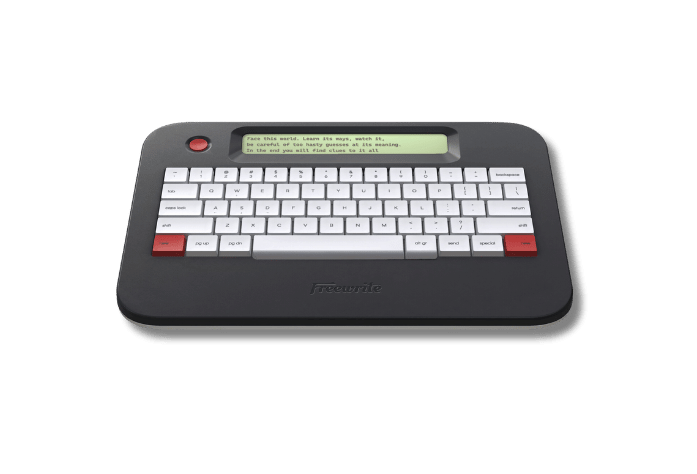
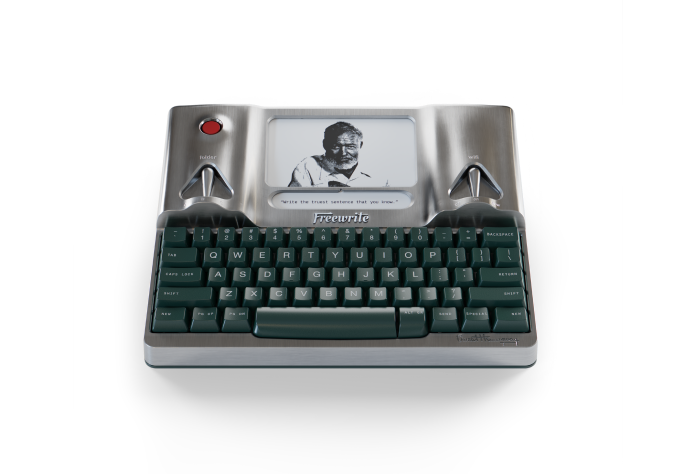
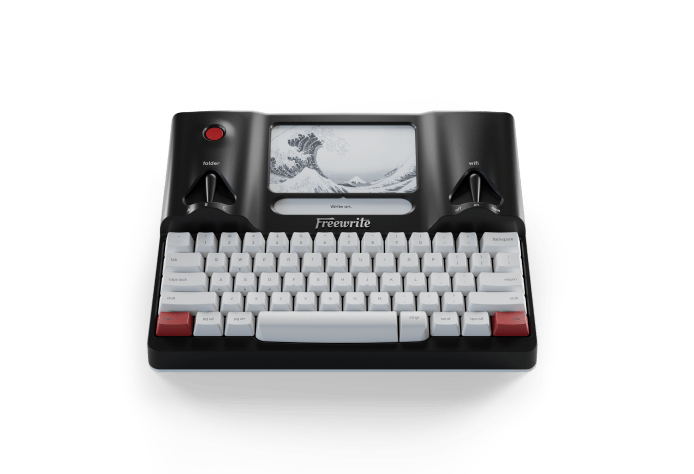
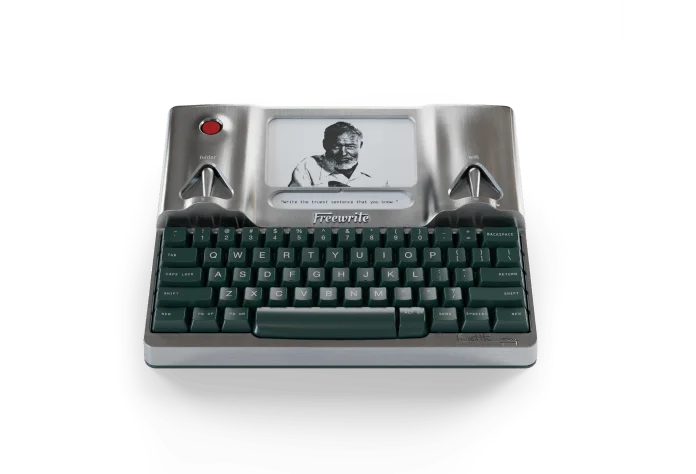
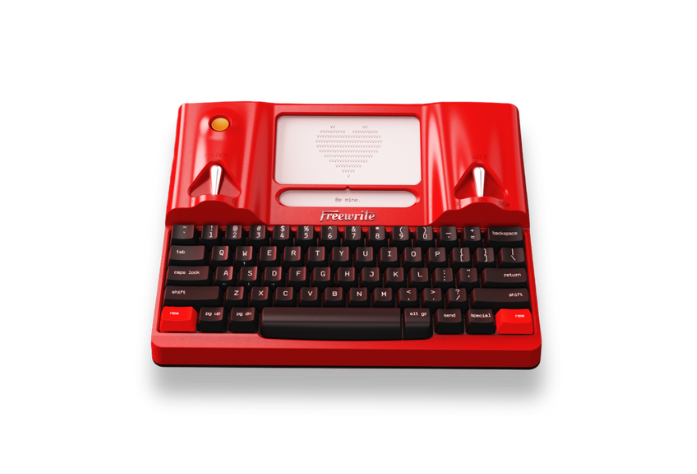
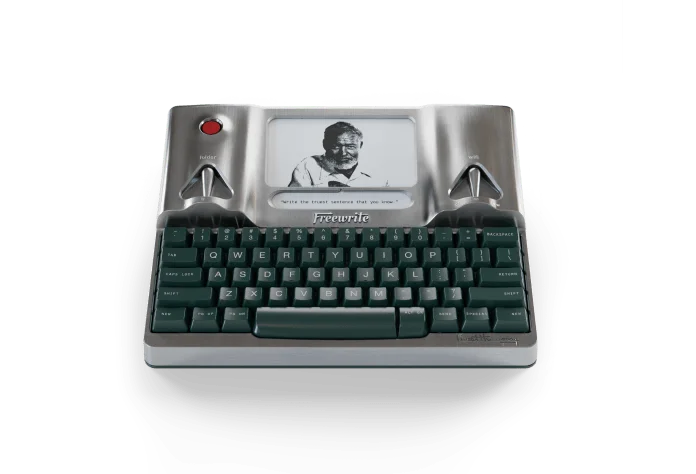
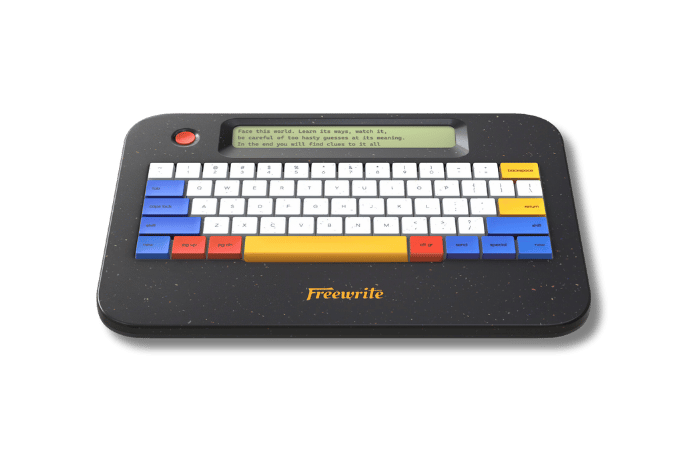
Êtes-vous fan d'Hemingway ? L' Hemingwrite , notre édition Freewrite signature d'Ernest Hemingway, sera bientôt disponible. Inscrivez-vous sur la liste d'attente : les quantités sont extrêmement limitées.

septembre 02, 2026 6 lire la lecture

Kentucky farmer and poet Wendell Berry entranced readers across the globe with his poems extolling the power of knowing the natural world. 

For writers who want to do the same, there’s deep knowledge to be gleaned from Berry.

août 26, 2026 5 lire la lecture

Freewriter Mike Somerby left a lucrative marketing career in e-commerce to start a print-only literary magazine by and for Montanans. Yes, you read that right.

We sat down with Mike to find out how ... and why.

Mike Somerby identifies as a writer — with some reservation.

"I think all who write are 'writers,'" he says, "even if the writing itself amounts to a simple letter to a friend or a personal journal entry."

We couldn't agree more. And we're thrilled that this particular writer writes his essays on Freewrite. Maybe that's why we felt comfortable asking him:

What inspires a professional brand marketer to leave his 9-5 and jump feet-first into the literary world of Bozeman, Montana?

Luckily, he was happy to tell us.

AC: Before we get into the lit mag, it actually isn't your first foray into the literary community, right?

MS: For about ten years — the lion's share of my professional chapter — I worked, in some capacity, as a brand marketer. Last spring, while enduring a particularly grueling stint as CMO for a Montanan e-commerce brand (yes, those exist), I found myself revisited by the remarks of an old journalism school professor: from his perspective, journalism students who apply their storytelling talents toward PR and marketing have crossed over to "the dark side."

While I find this a touch heavy-handed, I get the point, and I believe his notion resurfaced to meet the moment: we live in a world sorely hurting for analog (human) creativity and high-quality longform.

So I quit, traveled west with my dog in a 1986 U-Haul I'd converted into a camper, and plotted.

Step one: I founded Pulphead, a lounge (named after John Jeremiah Sullivan’s seminal 2011 essay collection) where Bozeman writers commune and grind out their prose until 2 a.m. Entry is a flat $5, which comes with unlimited drip coffee and tea.

Step two: leverage the Pulphead regulars and its online following to secure contributors for my new literary magazine, ANEMONE. Thus far, everything is going to plan.

We live in a world sorely hurting for analog (human) creativity and high-quality longform.

AC: Why do you think it's so important to create and preserve these spaces for authentic writing?

MS: Writing is a solitary act. Nonetheless, younger generations, in particular, struggle to forge IRL community in the way older generations might understand as an ordinary facet of being human.

By building a space that is as homey as it is supportive of their literary interests, we’re not only helping these individuals find their birds of a feather, but also providing them with a dojo that mandates setting aside blocks of time away from phones, home lives, and the other distractions. Win-win?

Incidentally, Livingston boasts the highest per-capita concentration of professional writers anywhere in the country. Couple this with another statistic — that Montana has more bookstores per capita than any other state — and it becomes clear southwest Montana is as fertile a place as any to invest in literature and its related industries.


AC: That's so interesting. What have you learned from being in community with creatives in Bozeman?

MS: In terms of writing, I've learned plenty. What has excited me most, however, is what I’ve learned from a small group of Indigenous women who come to the shop to write poetry and make beaded clothing in the traditions of their respective tribes (most notably, Crow, Cheyenne, Shoshone).

This is a group I’d otherwise have limited opportunity to engage with outside of Pulphead, and learning about their traditions, beliefs, hopes — even a little vocabulary — through firsthand conversation has proved incredibly edifying.

AC: And you mentioned you've seen Freewrites pop up in Pulphead. You use one, right?

MS: Yes. About seven years ago, not long after moving to Montana from New York, I purchased an Olivetti Lettera 32 typewriter from eBay. It appeared that a romanticizing of my newfound remoteness had rekindled my interest in writing.

I loved the mechanical feel and distraction-free interface, but the inability to edit line by line proved a notable annoyance for a mind habituated to modern computers. A few years down the road, some digging for alternatives led me to a blog post about smart/electronic typewriters. Voilà.

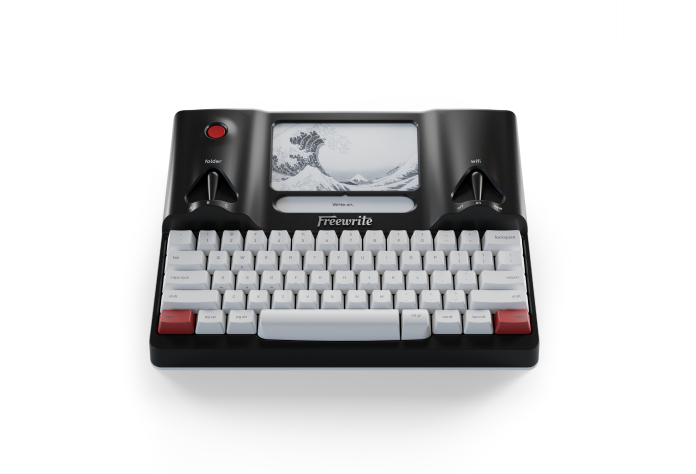
I purchased a Freewrite Gen3 Smart Typewriter, and I've been hooked ever since.

AC: That's awesome. So tell us about ANEMONE. What is it?

MS: ANEMONE is a print-only magazine (printed in a traditional broadsheet newspaper format). As for for theme, broadly, the world as told by Montanans. Short fiction, creative nonfiction, poetry, reportage, photography, and visiual illustrations comprise the submission categories.

AC: Print-only!

MS: Print is only dying because we let it.

AC: Is there a story about the name?

MS: Most people know the word anemone to describe a family of flowers — a 200-plus-species family of buttercups, comprising varieties both wild and domesticated. Dubbed “windflowers,” their delicate petals are said to blow open in the breeze; the ancient Greek word anemos means “wind.” I was drawn to the metaphorical value of beauty and how it can be revealed to us through an invisible force.

To add another layer, when I was a boy my father and I would spend weekends at the beaches north of San Francisco, where I was born and raised until I was seven. We would study the massive turqoise, kelly green, and purple sea anemones clinging to rocks left exposed by the receding Pacific tides (as to why, I can't say, outside of them looking funny, almost alien). A good memory.

Finally, “Anemone” is the name of an exquisite song by The Brian Jonestown Massacre, an irreverent and controversial rock band led by Anton Newcombe, an obsessive creative who rejects the surrender of culture and art to commercial interests. The track has a hold on me. It's like a portal to another era.

AC: Why do you think this sort of analog creativity is important?

MS:  I'm told the unending deluge of digital interface is leaving humans less and less capable of “deep work.” Will we ever know the difference?

Will we recognize what a society incapable of deep work looks like compared with those that came before it? Or will the transition manifest as a gradual degradation of quality, much as Coca-Cola was slowly, but surely, divorced from real sugar, such that to taste what Coke used to be like, one must order a Mexican Coke, still made with real cane sugar?

For me, analog perspective (and any creativity wrung from it) is rooted in continuity, tangibility, lived experience, slowness, spatial relation, nuance, emphasis on process, and grace for imperfection — antithetical to one of replicability, speed, binary outcomes, predictability, and optimization.

I prefer the former, and I suspect those who prefer the latter don't read or write much — life is a beautiful, taxing mess, and good writers find merit in this duality.

For me, analog perspective (and any creativity wrung from it) is rooted in continuity, tangibility, lived experience, slowness, spatial relation, nuance, emphasis on process, and grace for imperfection — antithetical to one of replicability, speed, binary outcomes, predictability, and optimization.

AC: Who is invited to submit to ANEMONE?

MS: We do limit submissions to Montanans, past and present, though we will feature writers from other states should the content of their writing bear an obvious relation to Montana — a requirement not imposed on Montanan writers.

All information regarding submissions can be found at www.anemonereview.com, along with all other facets of the magazine.

août 26, 2026 1 lire la lecture

Love the Freewrite 500? Here are 3 more writing contests for competitive short fiction writers.

1) Writers' Hour Magazine Prompts

The London Writer's Salon (a global writing group — no London residence necessary!) regularly host a writing contest via their Writers' Hour Magazine. Want to know a secret? Their September theme is all about freewriting.

Join them for a free workshop, Introduction to Freewriting, on Thursday, September 3, and get all the details about the contest.

The winner of the contest will win something Freewrite-shaped. 👀

2) NYC Midnight Challenges

This organization (again, no affiliation with NYC necessary) regularly hosts short story contests. Their next challenge is all about writing a rhyming story.

Learn more and register here.

Note: NYC Midnight writing contests generally have a fee to enter.

3) Henshaw Press Short Story Competition

This short story competition is open to anyone over age 16. And the best part? There is a cash prize, and profits go to charity.

Learn more here.